

Antonio Marinetti, Known As “il Chiozzotto” (chioggia, 1719 – Venice, 1796), Four Saints
Antonio Marinetti, known as “il Chiozzotto” (Chioggia, January 22, 1719 – Venice, January 12, 1796)
Four Saints
(4) Oil on canvas mounted on cardboard, 11 x 9 cm
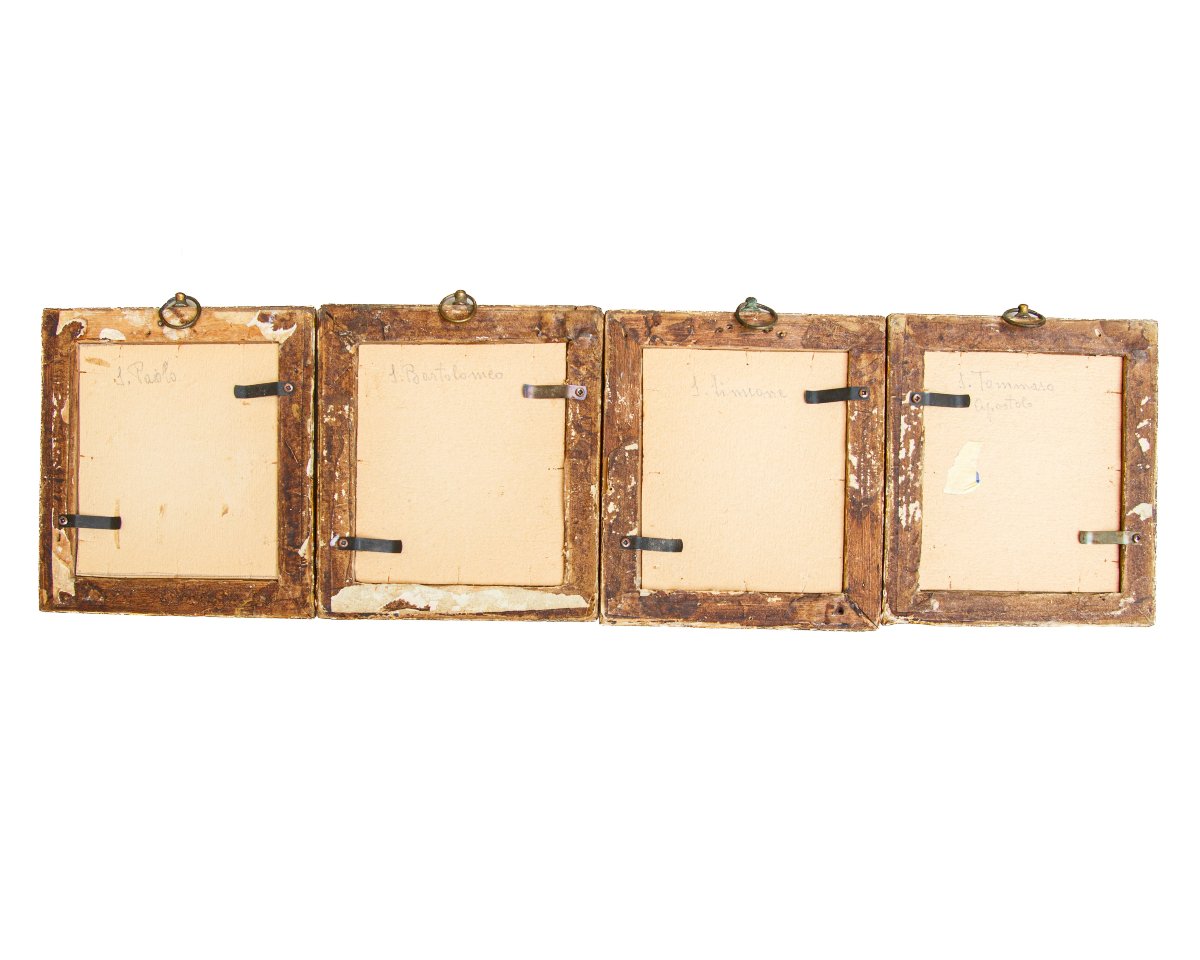
Framed (1), 14 x 12.5 cm
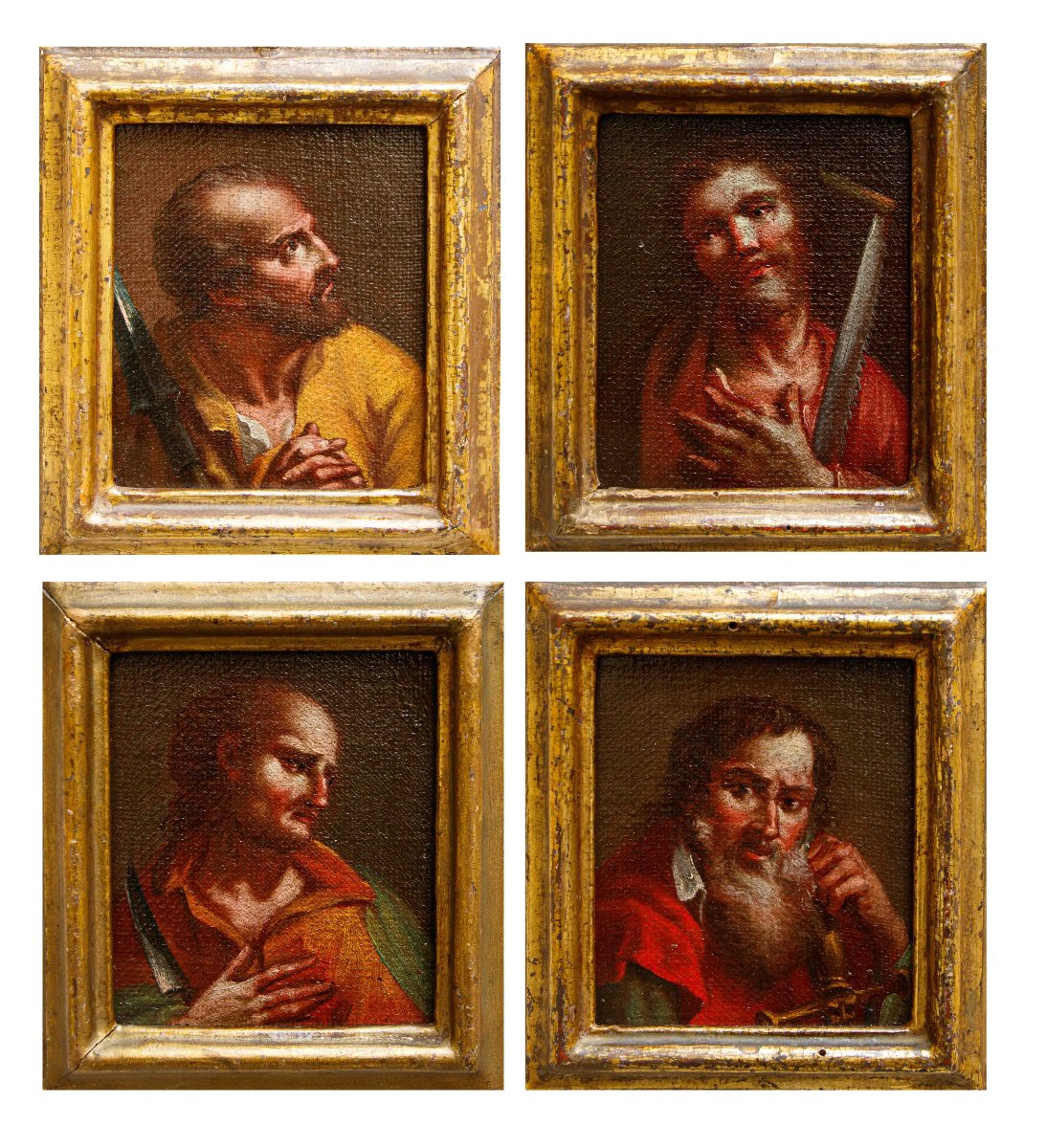
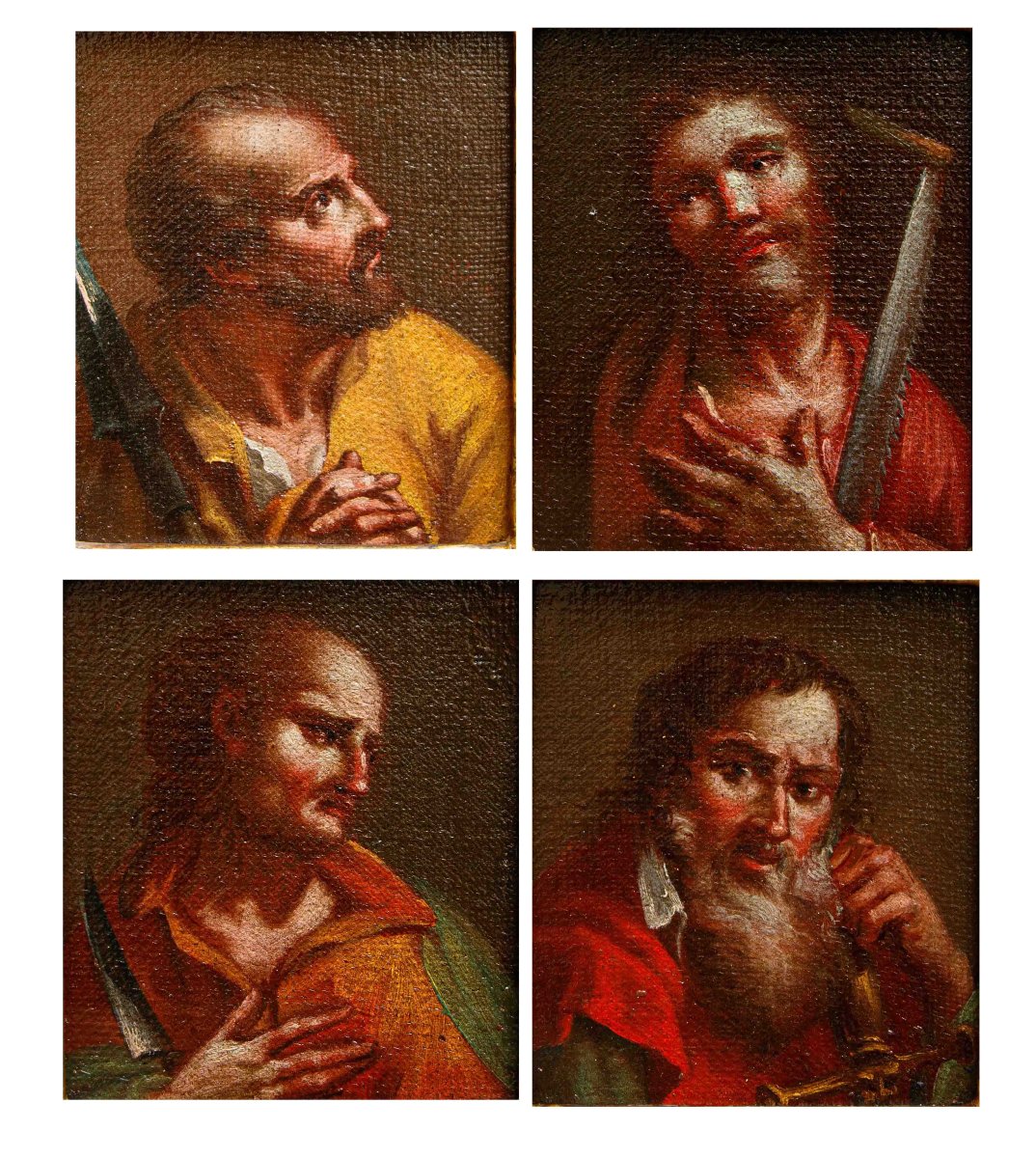
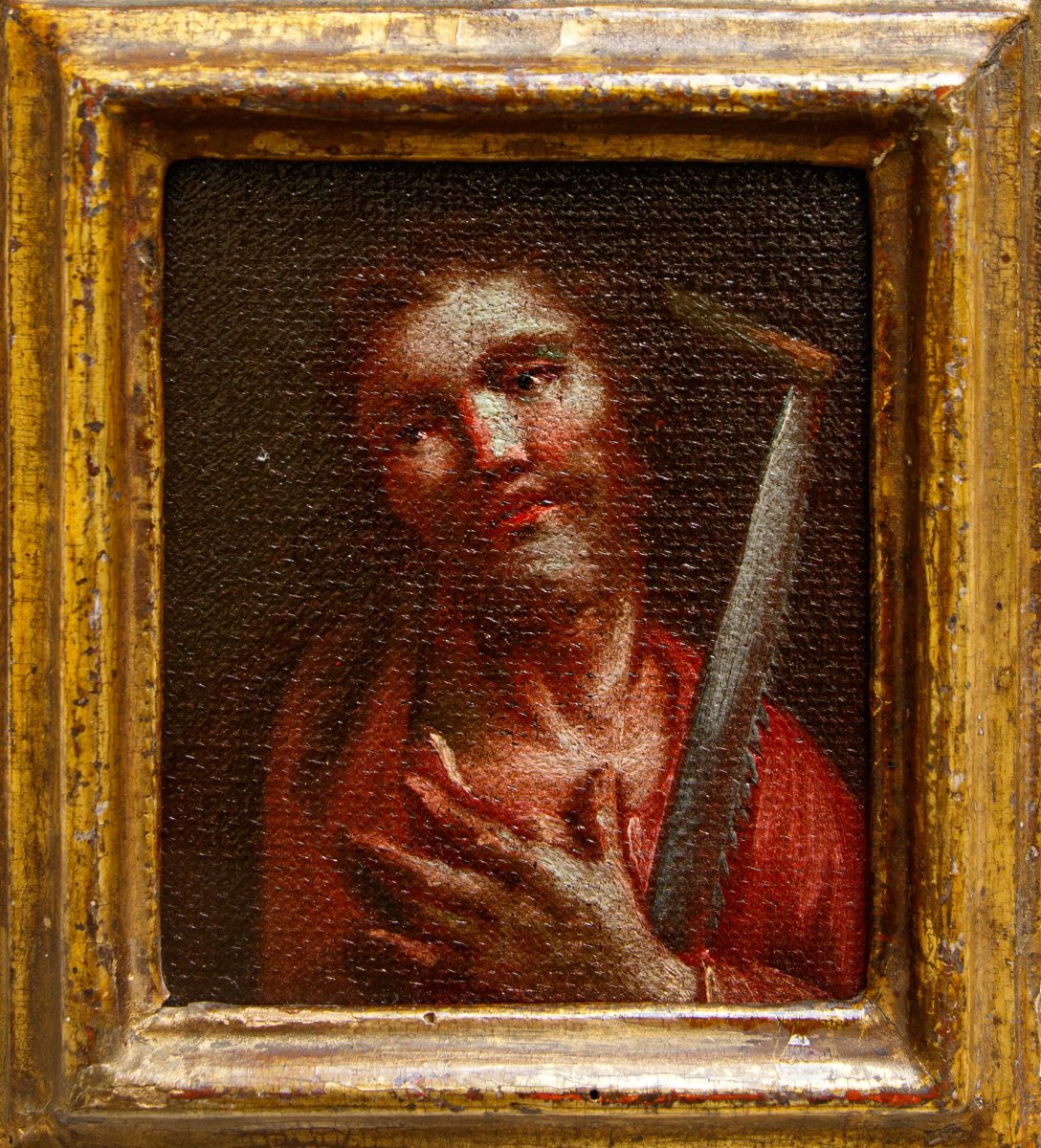
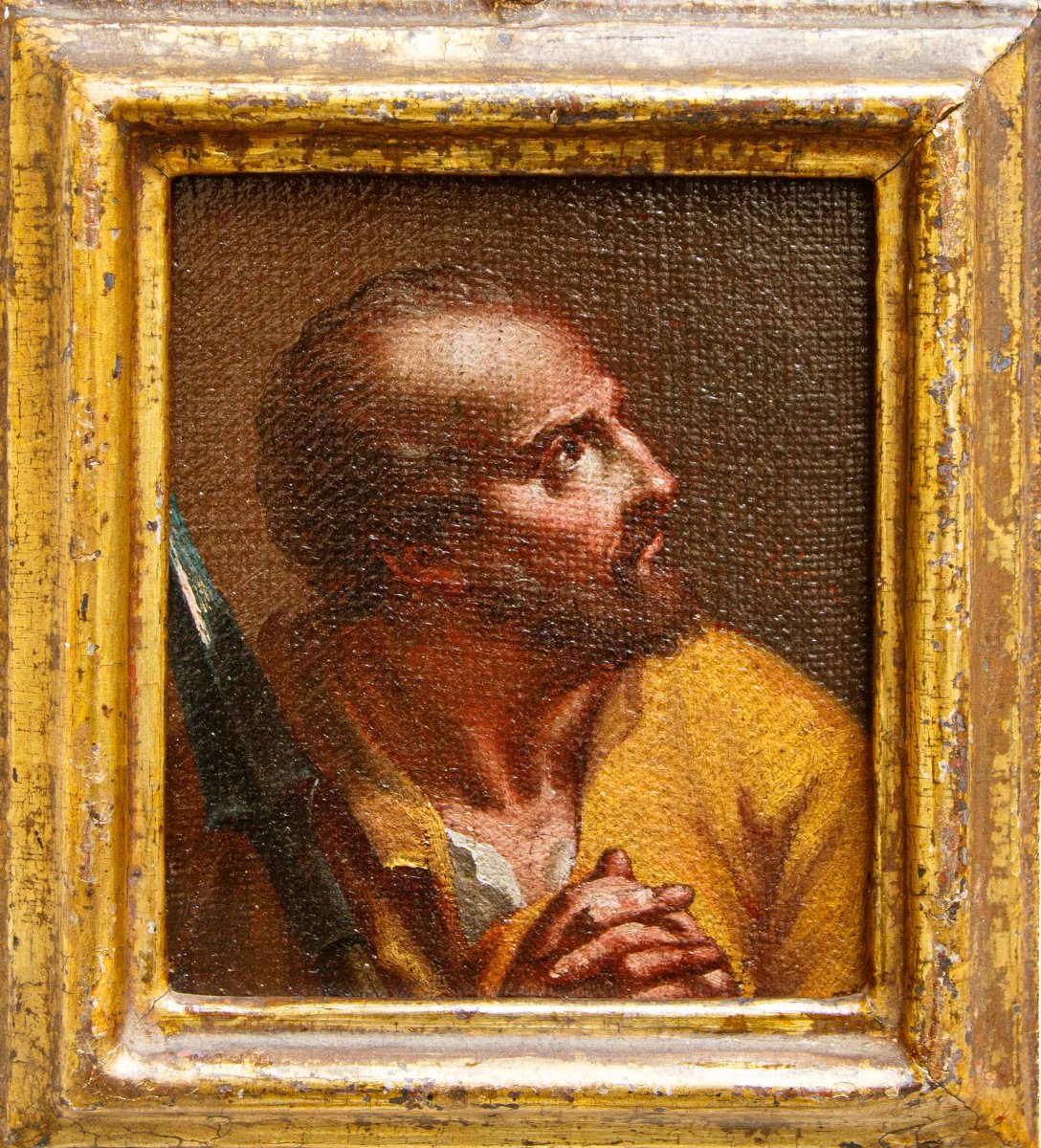
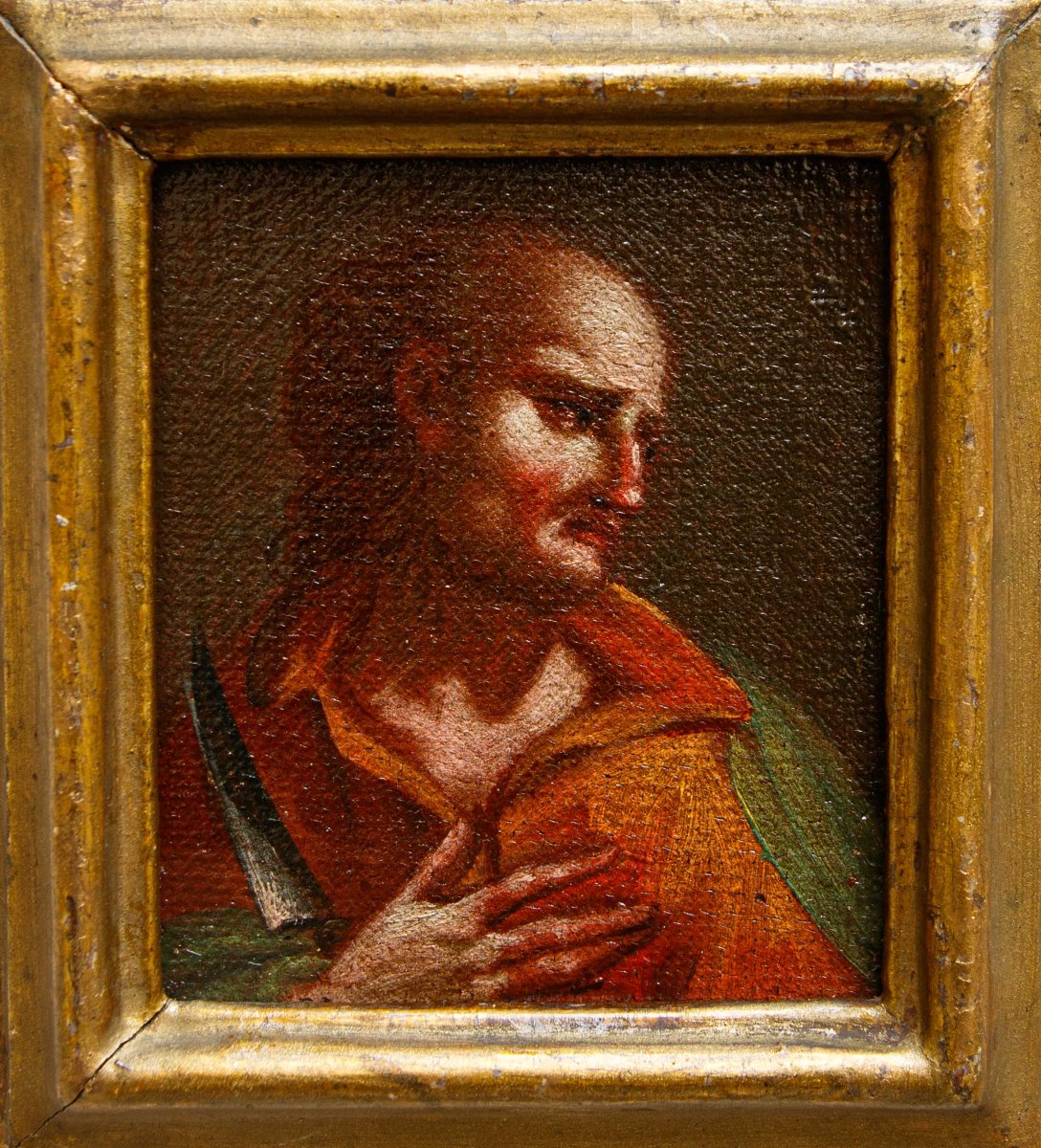
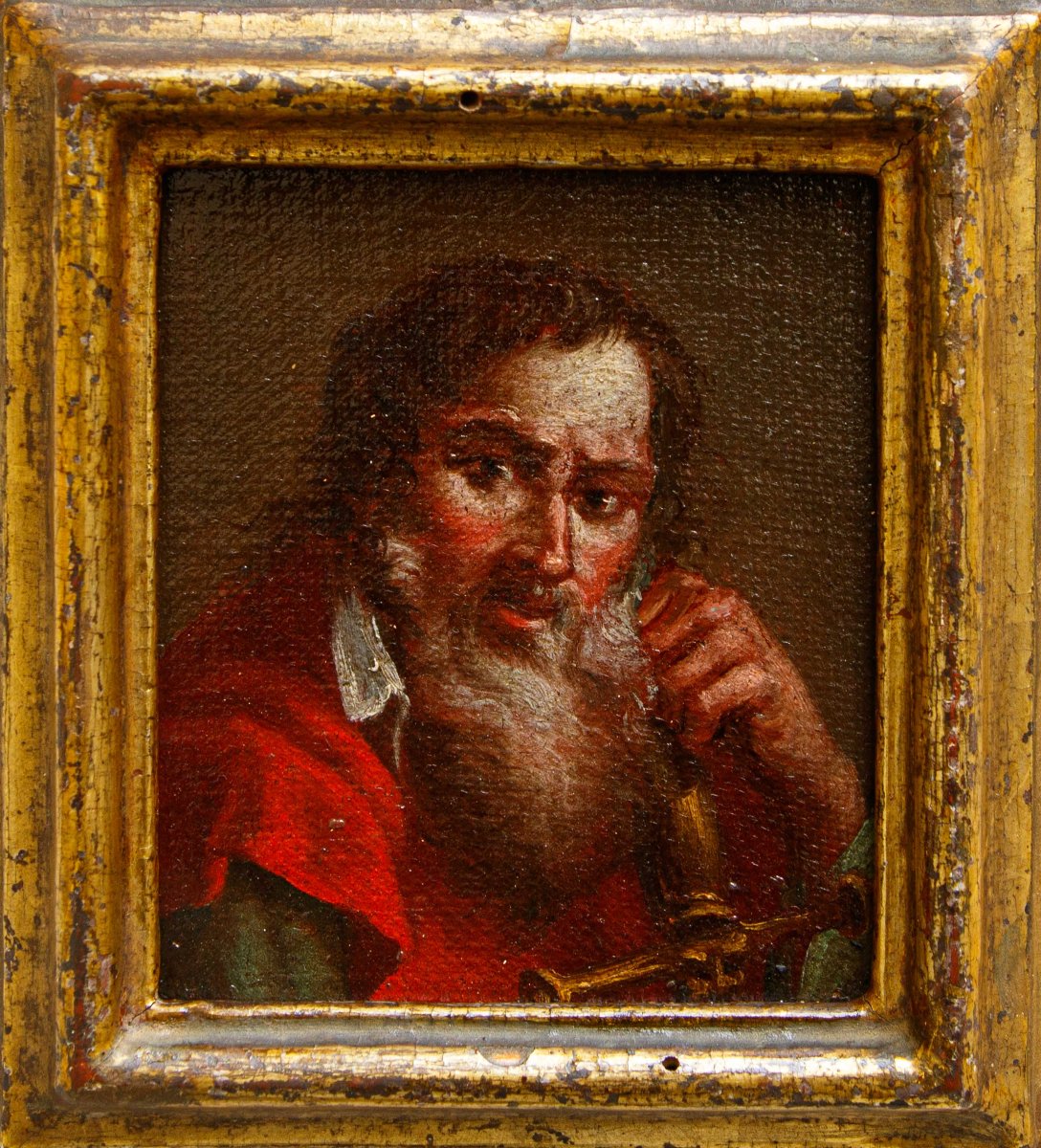
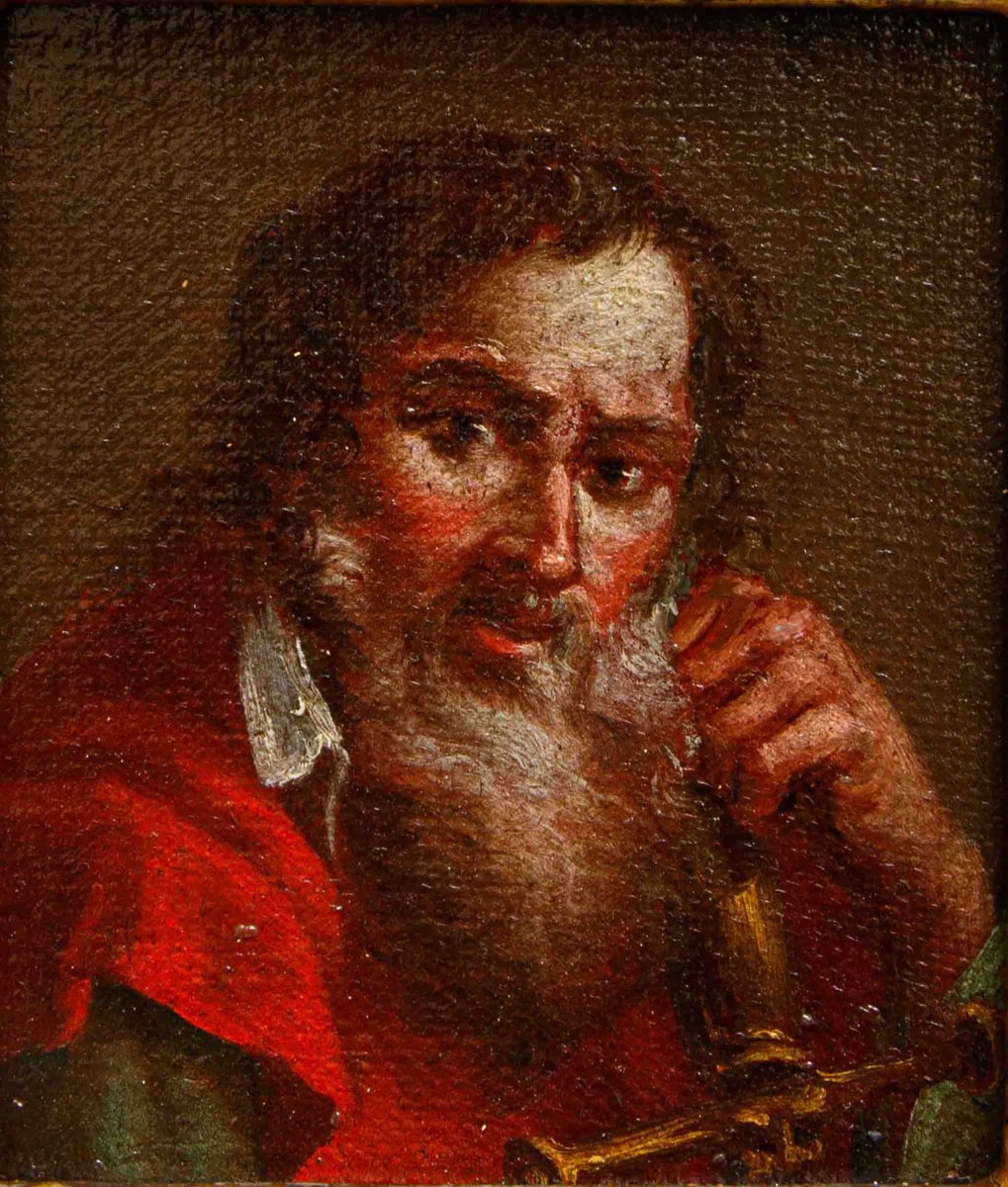
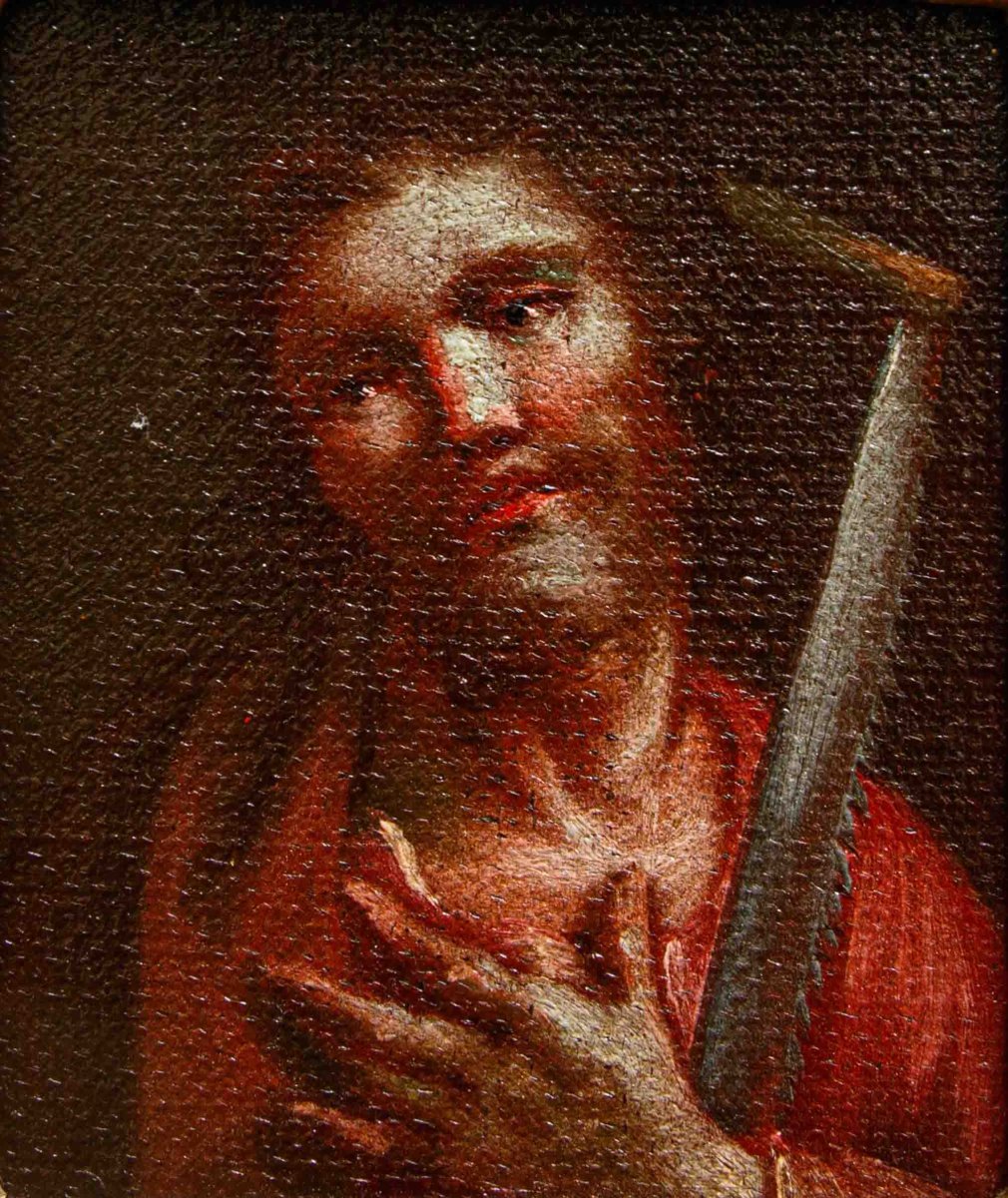
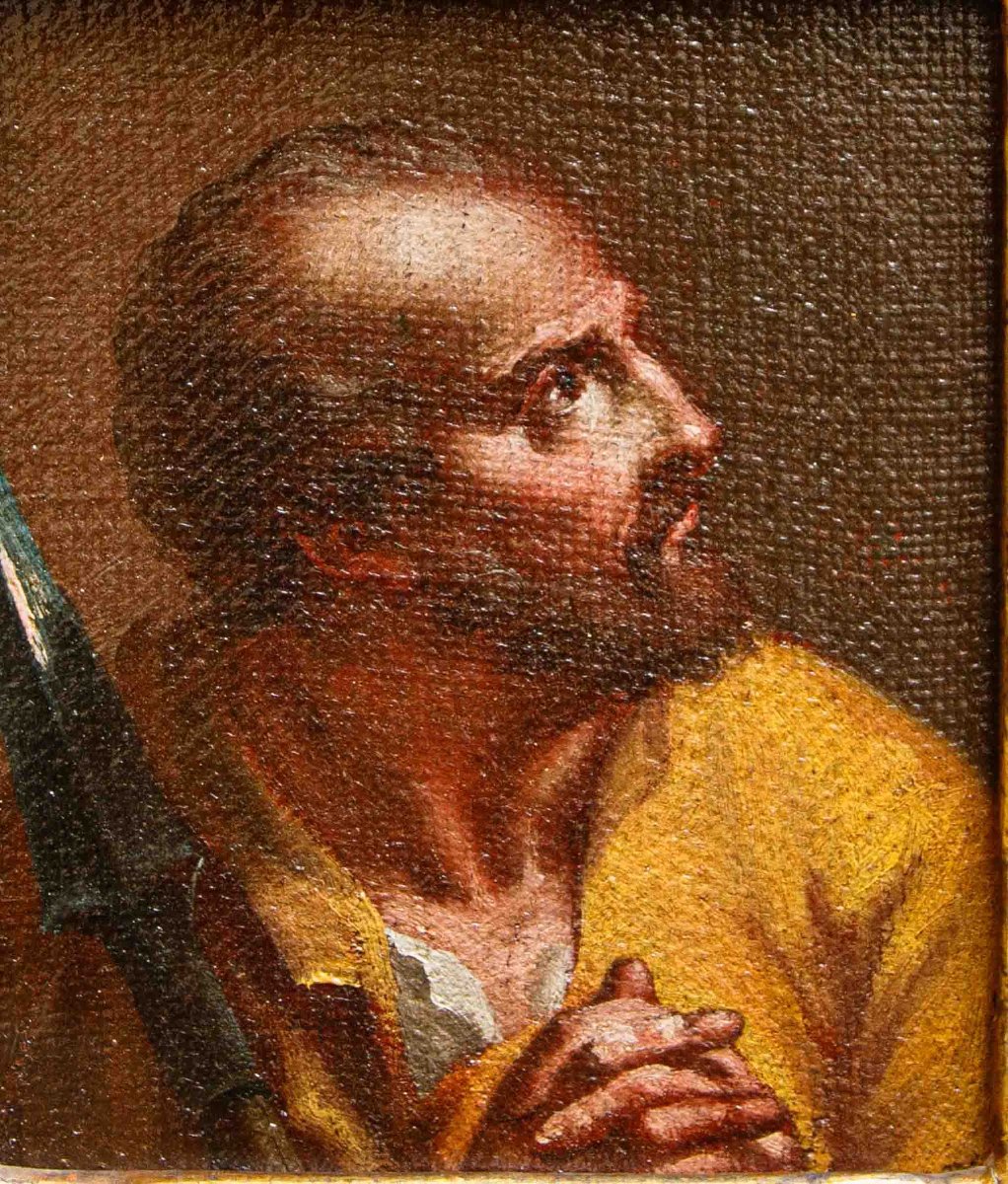
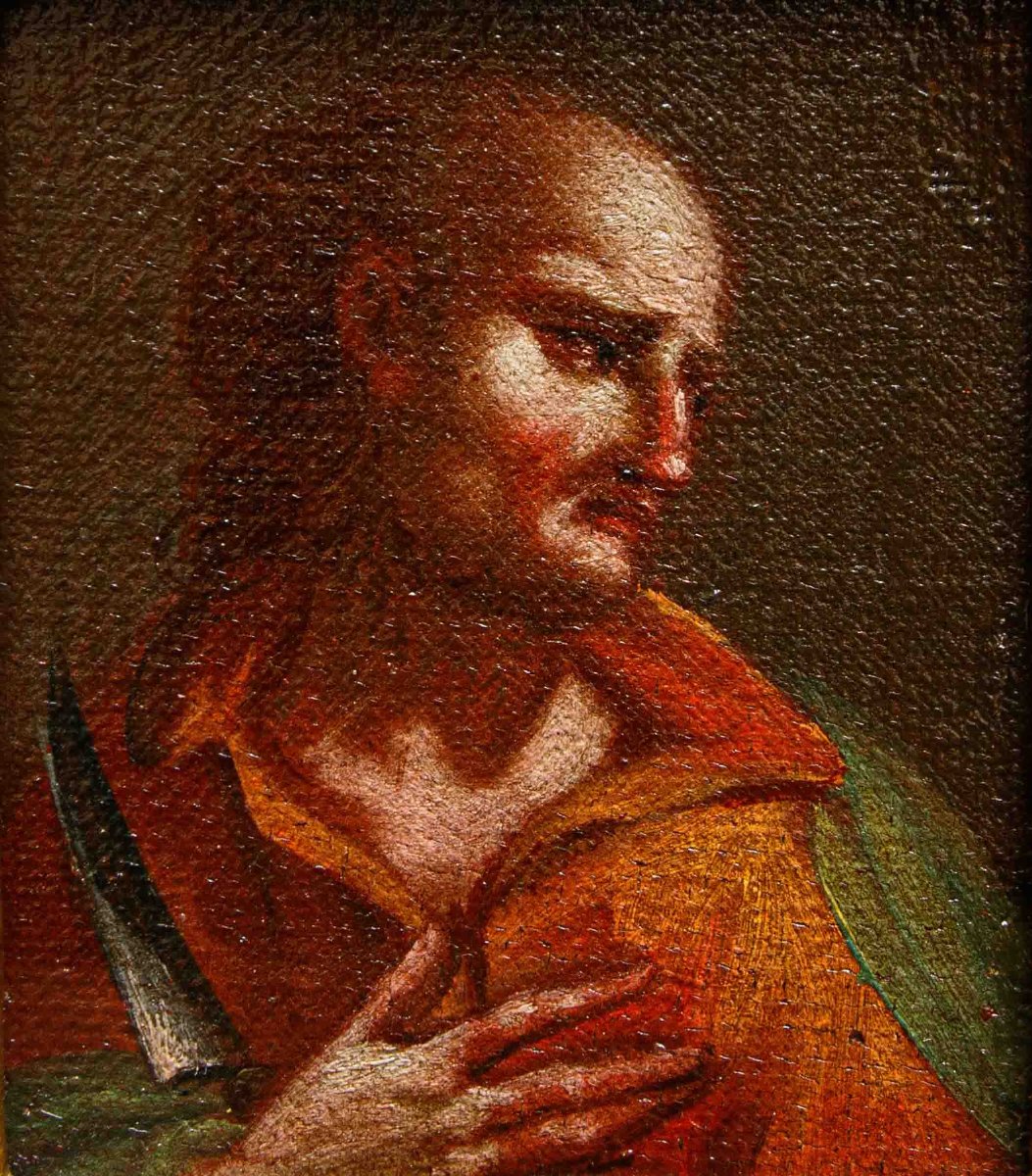
Four small oil paintings, mounted on cardboard and conceived as a series of half-figures, depict four saints from the circle of the Apostles, recognizable by the instruments of their martyrdom. The figure in the orange robe, clutching a knife, is Saint Bartholomew, who was flayed alive in Armenia; the man resting his hand on his chest and holding a sword is Saint Paul, beheaded in Rome and often depicted alongside the Twelve in pictorial cycles, even though he is not one of them; the figure looking upward, with clasped hands and a spear behind him, is Saint Thomas, who was pierced with a spear in Mylapore, India; finally, the serrated blade accompanying the fourth face, with its sorrowful expression, is the saw of Saint Simon the Zealot, whose martyrdom by sawing is recounted in the *Legenda Aurea*.
They are part of the catalog of Antonio Marinetti, known as “il Chiozzotto.” Born in Chioggia in January 1719 and baptized in the parish of Sant’Andrea, he moved to Venice around the mid-1740s, where, according to his first biographer, Anton Maria Longhi, his father introduced him to the school of Giambattista Piazzetta. His skill in imitating his master’s style soon earned him independent commissions, beginning with works for the church of San Niccolò in Chioggia, which were moved to the church of Sant’Andrea during the Napoleonic plundering. Devoting himself almost exclusively to religious subjects—including altarpieces and half-length figures of saints—Chiozzotto served a rather conservative clientele and did not significantly alter his artistic style over time. Compared to Piazzetta’s model, the dynamism is tempered by a marked pictorial simplification: the highly accentuated chiaroscuro sets the figures apart from the dark background, the movements are restrained, and the expressions tend toward sentimentality—traits clearly evident in these saints with tearful eyes and complexions enlivened by rosy touches.
The most compelling comparison is with the *Boy with an Apple* from Ca’ Rezzonico, which shares with our paintings the rendering of the faces, the impasto brushwork in the garments, and the close-up composition of the figure. Equally useful are the two busts of saints, Saint Jerome and Saint Joseph, preserved in the Filippini Oratory in Chioggia, which offer a direct typological comparison in terms of the half-length composition and the poignant characterization of the figures. Nor should we forget that Piazzetta had conceived a series dedicated to the four Evangelists, known today through the engravings by Marco Alvise Pitteri: it is likely that his youngest pupil drew inspiration from this to conceive a series of isolated figures, intended to be viewed as a whole.
Critical opinion regarding this painter has fluctuated: praised by Longhi in 1762 and throughout the nineteenth century, Marinetti was partially rehabilitated by Donatella Tomasini in 1983, who acknowledged his skill and a style that, while not original, was consistent with the tastes of his time. In this sense, the group under consideration here well represents his small-format devotional work.
Period: 18th century
Style: Other Style
Condition: Good condition
Material: Oil painting
Width: 9
Height: 11
Reference (ID): 1838556
Availability: In stock