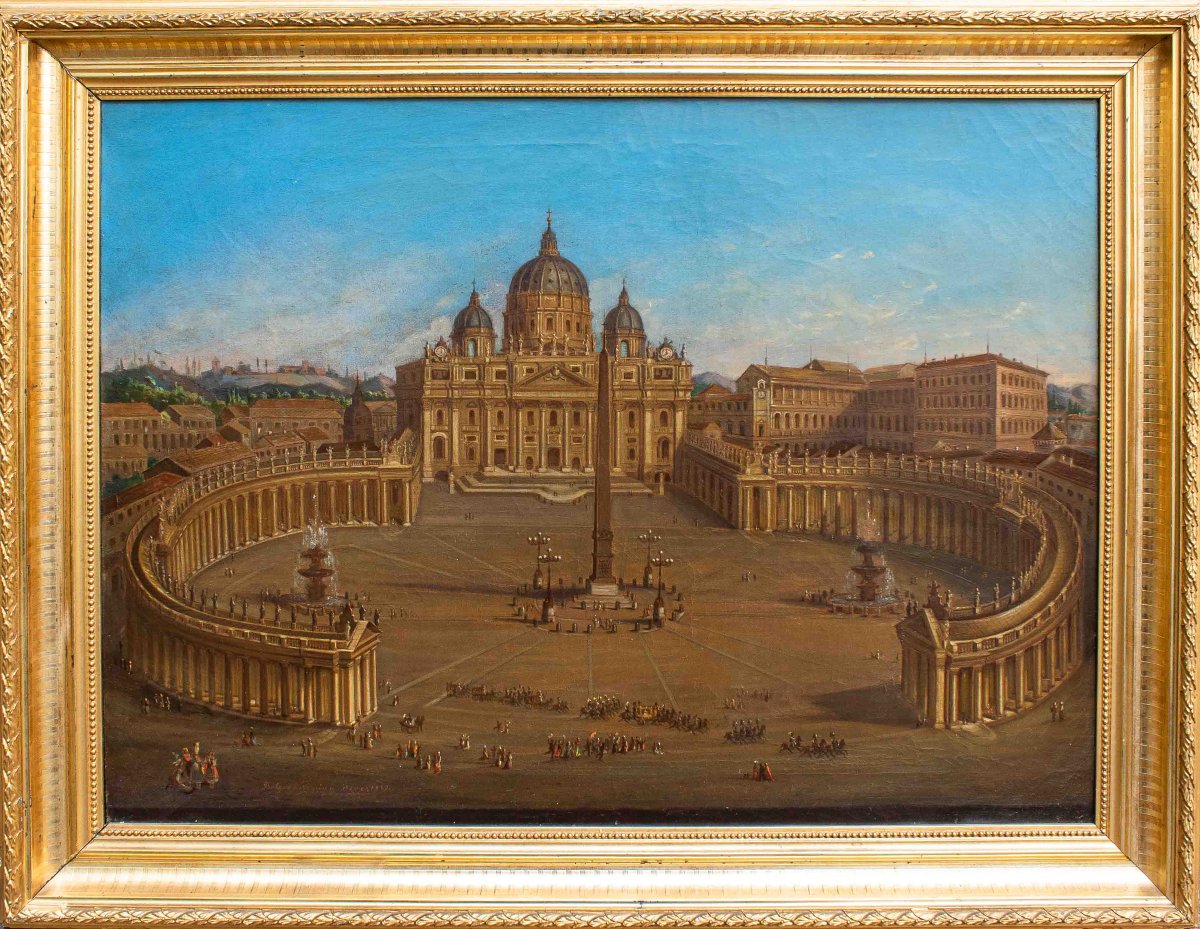
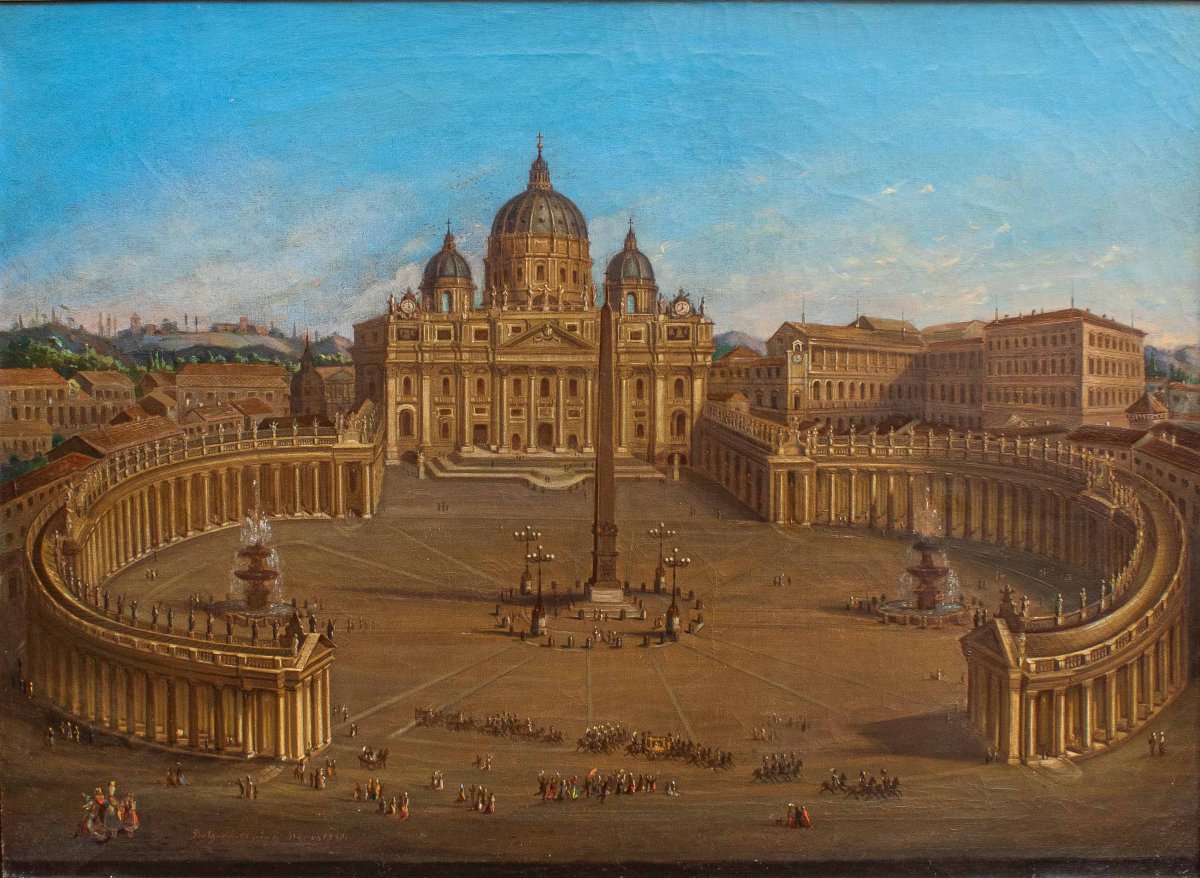


Joseph Bolzern (kriens, 1828 – Rome, 1901), St. Peter’s Basilica And The Colonnade In Front Of It
Joseph Bolzern (Kriens, 1828 – Rome, 1901)
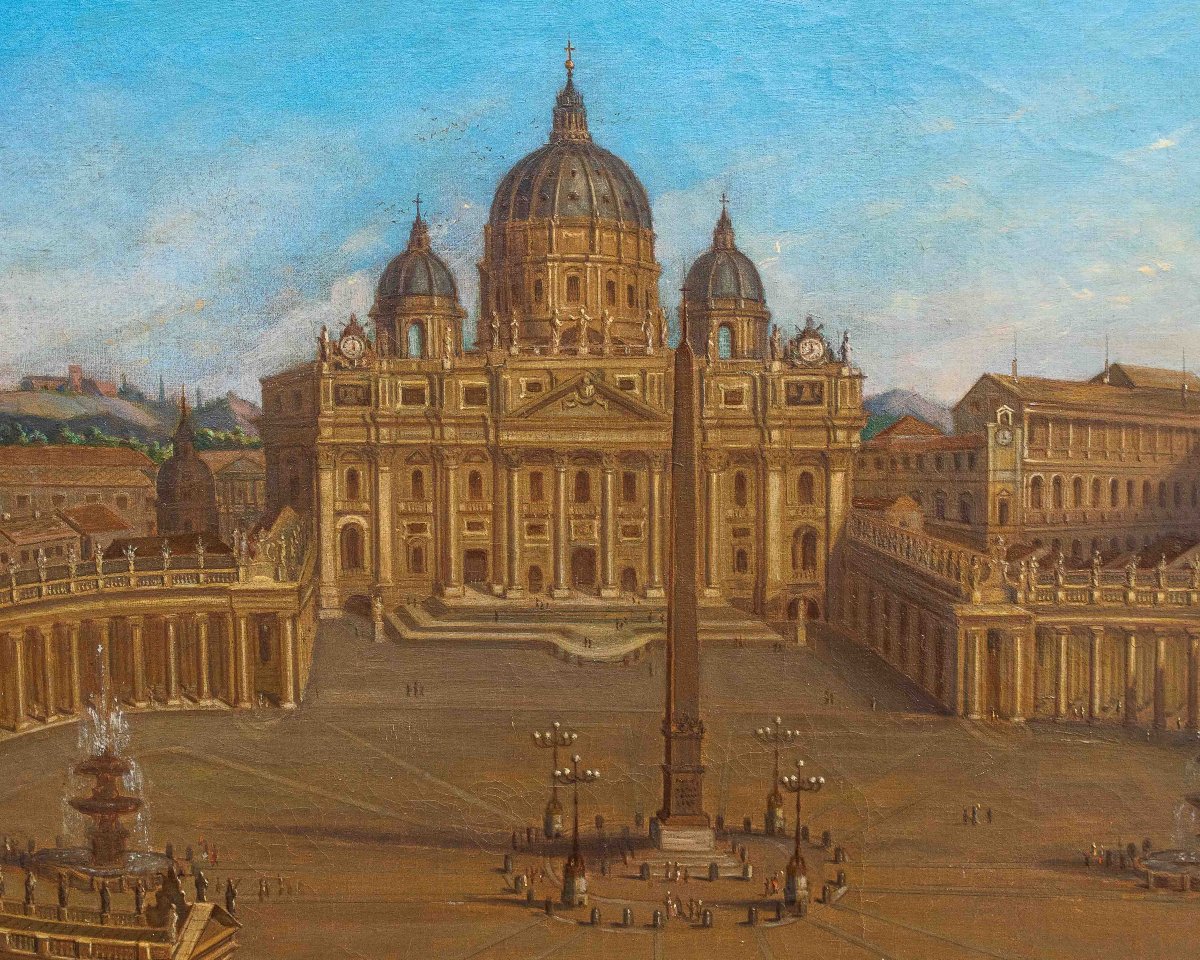
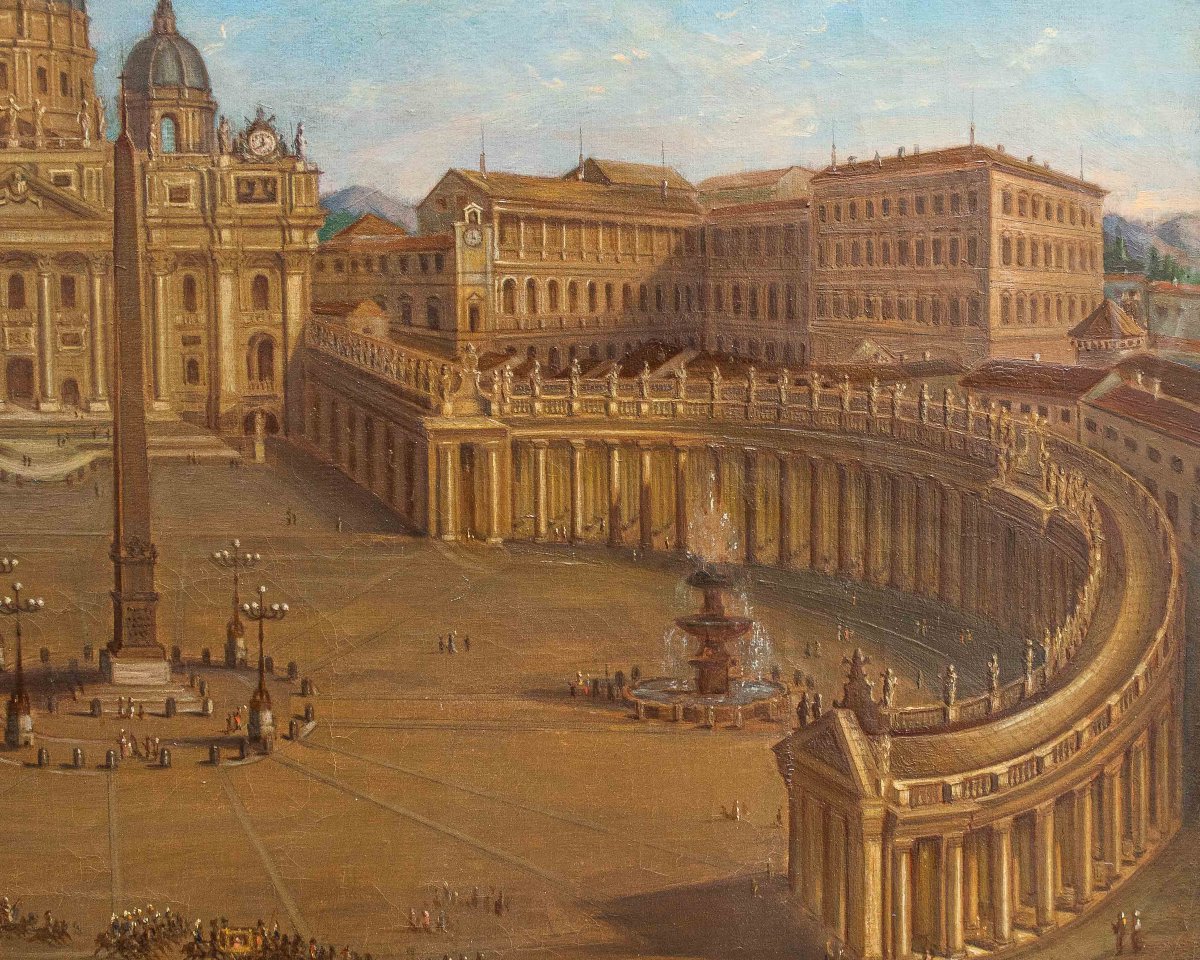
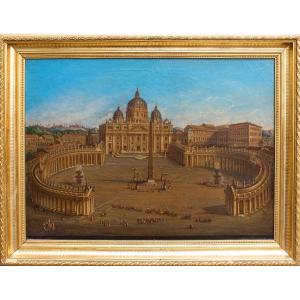
St. Peter’s Basilica and the Colonnade in Front of It
Oil on canvas, 53.5 × 70.5 cm
with frame, 67.5 × 85 cm
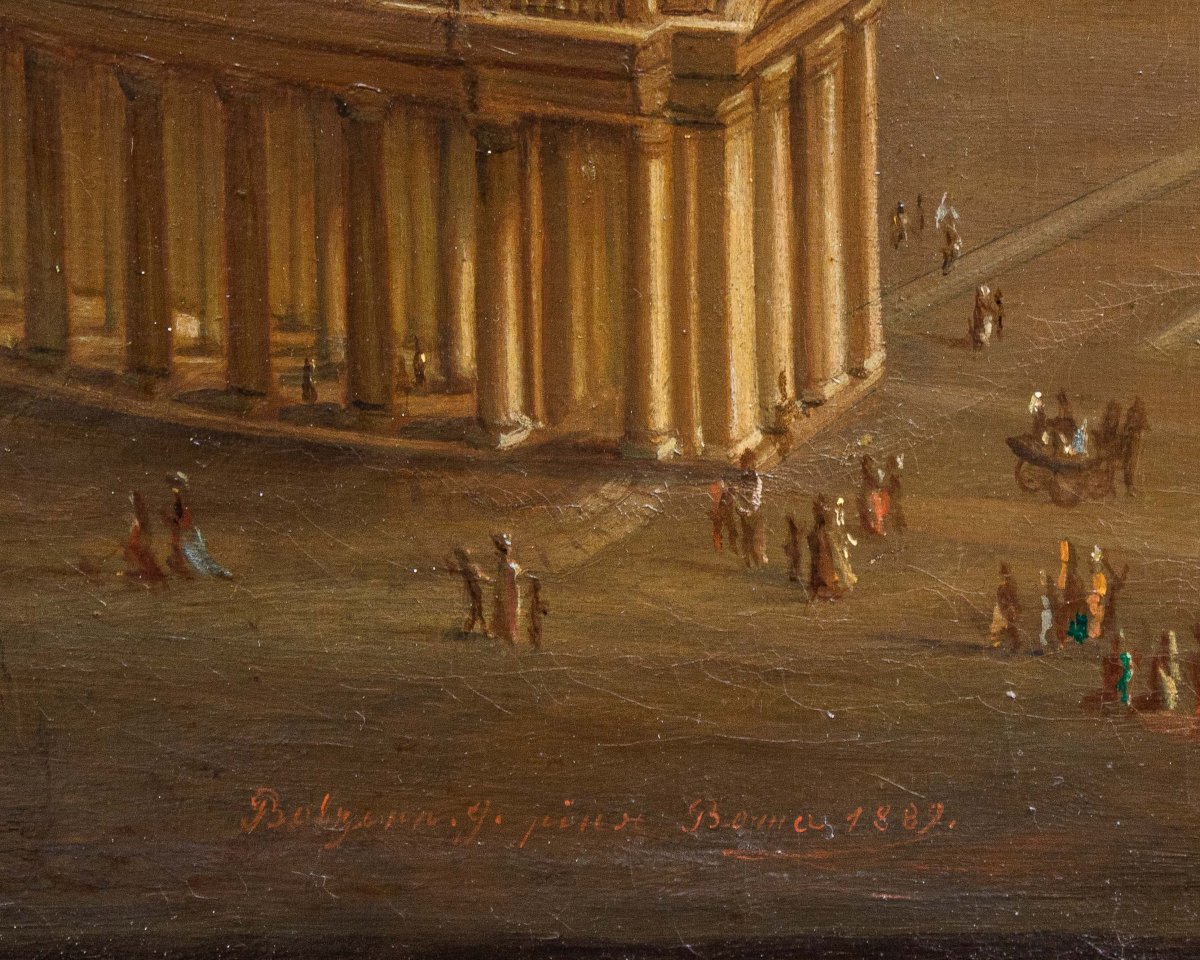
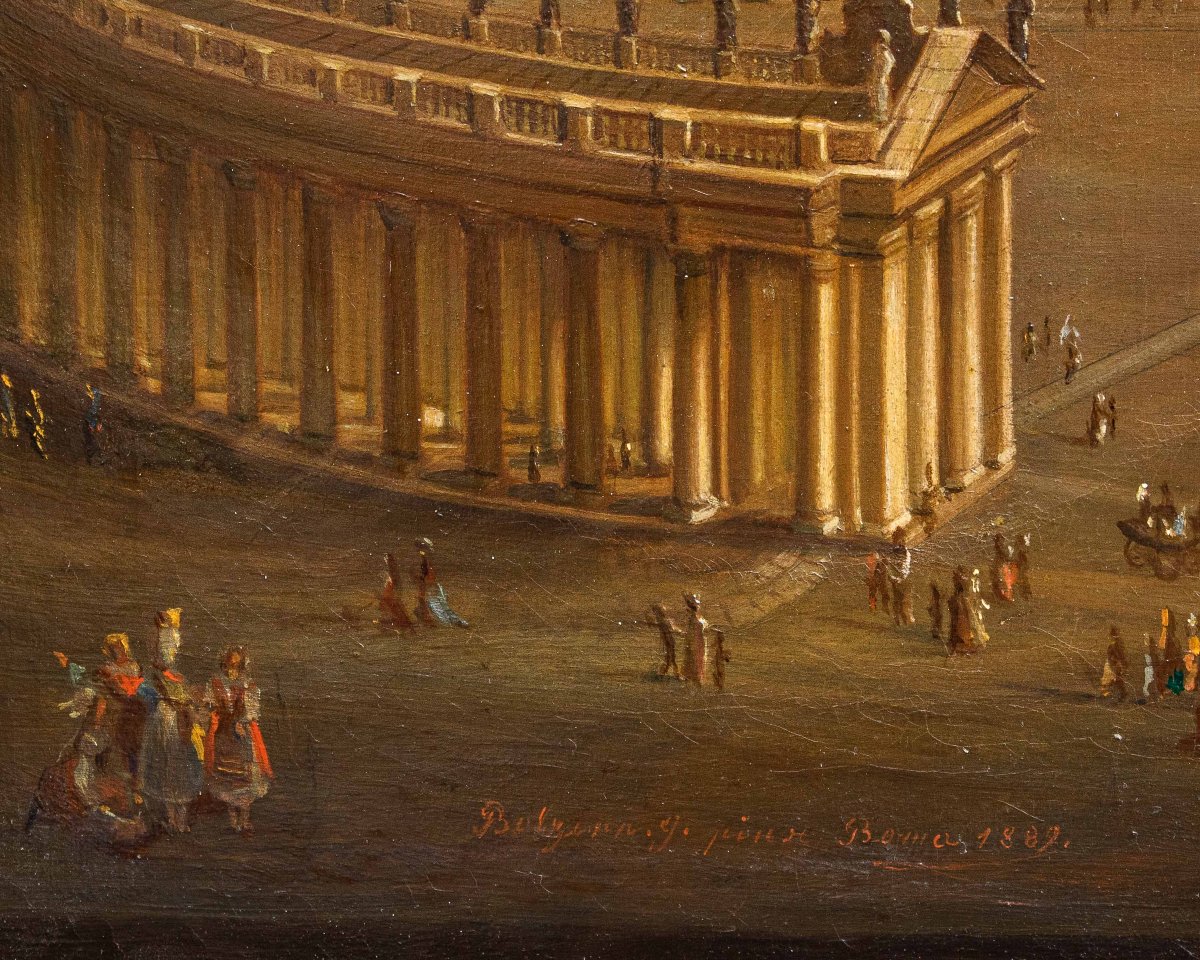
Signed and dated lower left:
Bolzern. J. pinx Rome 1889
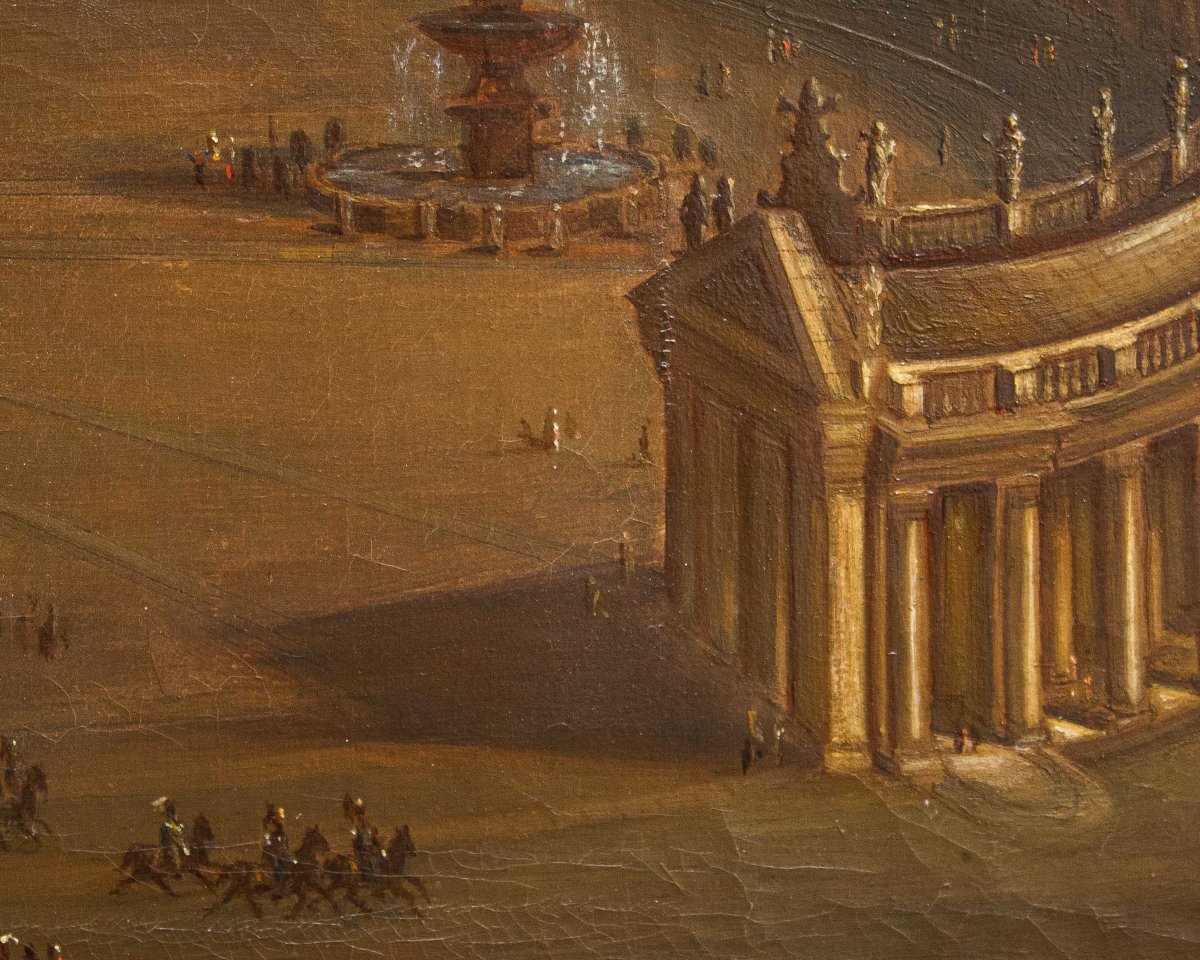
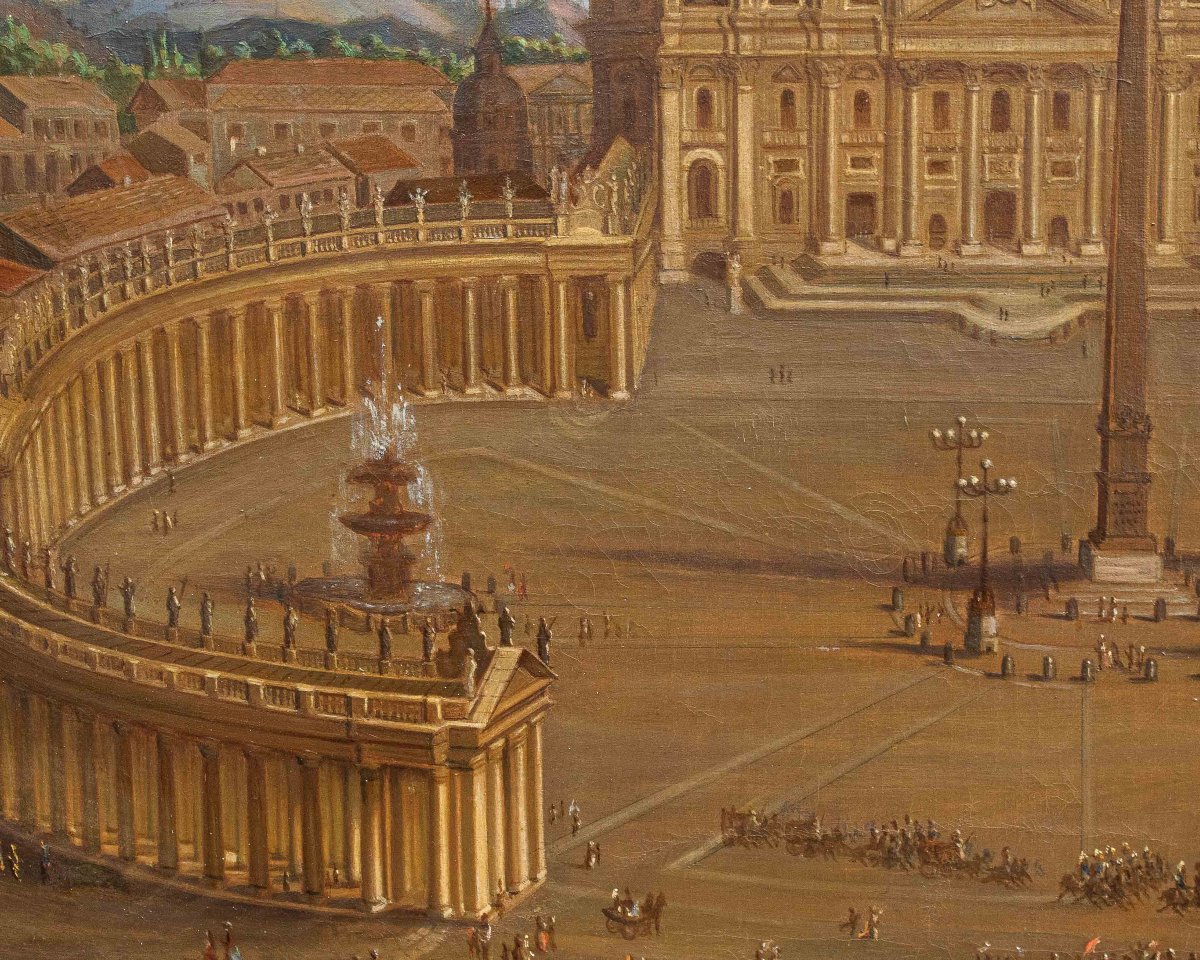
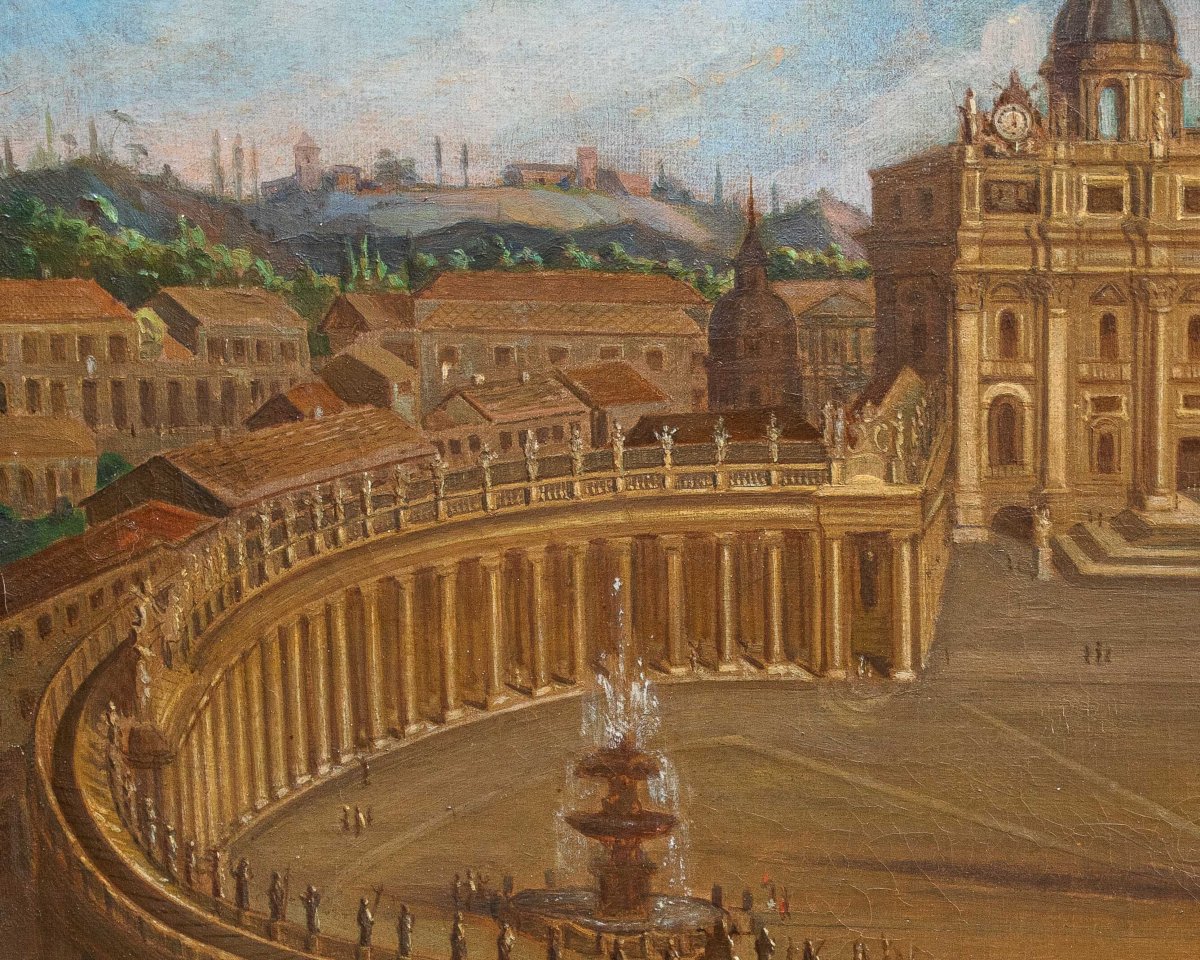
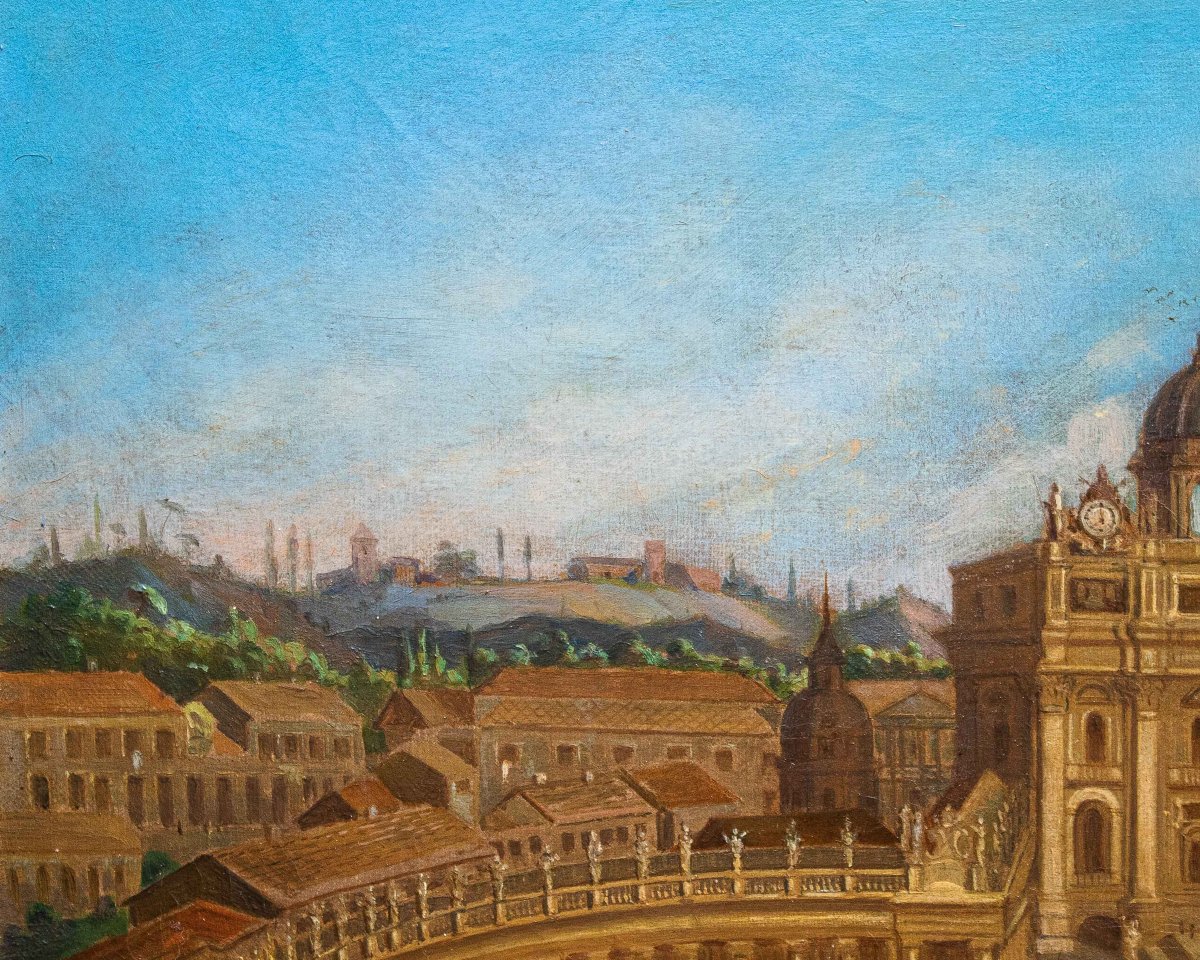
An undisputed symbol of Rome’s history, St. Peter’s Square owes its final layout to a long and carefully considered development. Surrounding one of the capital’s thirteen oldest obelisks—the Egyptian obelisk of red granite from the city of Hieropolis—the square has paid homage to the Petrine martyrion (memorial) with transcendent beauty since the Constantinopolitan era. It was, however, only beginning in the seventeenth century that the plan to make St. Peter’s the symbolic center of Christianity took shape, reshaping the ancient layout of the old basilica, the so-called “Paradise” quadriportico connected to it, and the entire plaza in front of it. Pope Julius II entrusted Bramante with the redesign of the longitudinal façade of the main structure, thereby requiring a complete rethinking of the entire square. The memory of the ancient Circus of Nero was supplanted by the redesign of the square with a centralized focal point, but Bramante was unable to complete the project due to his untimely death. Of the subsequent projects to reorganize the basilica—to which Michelangelo, Fra’ Giocondo (1433–1515), Giuliano da Sangallo (1445–1516), Raphael (1483–1520), and Antonio da Sangallo (1485–1546), consist of models and drawings of various designs presented to the reigning pope. Once the last remnants of the Constantinopolitan basilica had been definitively demolished at the behest of Paul V, Maderno began work on the extension, which was overshadowed by the arrival of Bernini, who pressed forward with innovative proposals for both the interior and exterior of the basilica. The distinctive elliptical shape of Bernini’s imposing colonnade still dominates the collective imagination of the Vatican today, evocatively completing the doctrinal metaphor of the square. Commissioned from Bernini by Pope Alexander VII, the colonnade still consists of 284 columns arranged in four rows. After eleven years of work (1656–1667) and more than forty thousand cubic meters of travertine brought from Tivoli by land or hauled along the banks of the Tiber by horses, the square finally shone with renewed splendor.
Reproduced in minute detail, St. Peter’s Basilica and its colonnade were a daily sight for forty years for Joseph Bolzern (Kriens, 1828 – Rome, 1901), the artist who created the work. A painter of Swiss origin born on April 4, 1828, in Kriens (a small municipality in the Canton of Lucerne), he was a skilled painter and lithographer. His career began in the Canton of Bern, where, after initially training as a lithographer, he became a drawing instructor. His life changed completely when he decided to move to Rome and join the Swiss Guard. There, for over forty years, he served to protect the papal throne, using his free time for creative work—painting scenes of the Eternal City, such as the one under consideration here, as well as altarpieces for Swiss and German churches.
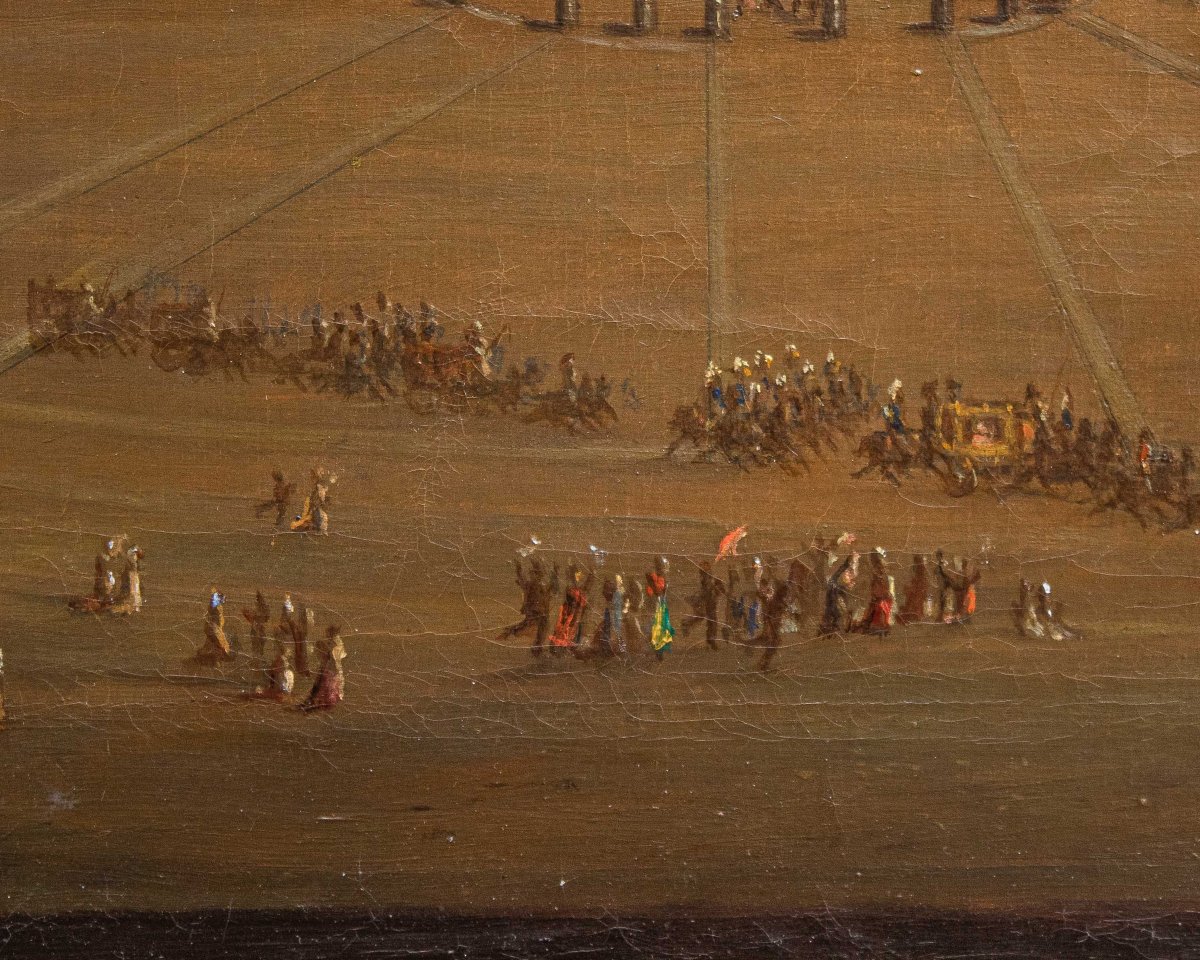
With this painting, the artist seems to want to celebrate not only the grandeur of a place so important to Christianity, but also the work carried out by the Swiss Guards and their deep bond with the pope through a simple, everyday scene. At the bottom center of the painting, one can indeed see a gilded carriage followed by a battalion of mounted soldiers; this is Pope Leo XIII (who ascended to the papal throne in 1878 and reigned until his death in 1903), being welcomed by a small crowd of jubilant faithful.
Period: 19th century
Style: Other Style
Condition: Good condition
Material: Oil painting
Width: 70,5
Height: 53,5
Reference (ID): 1817227
Availability: In stock