

Gerolamo Induno (milan, 1825–1890), Horse
Gerolamo Induno (Milan 1825 – 1890)
Horse
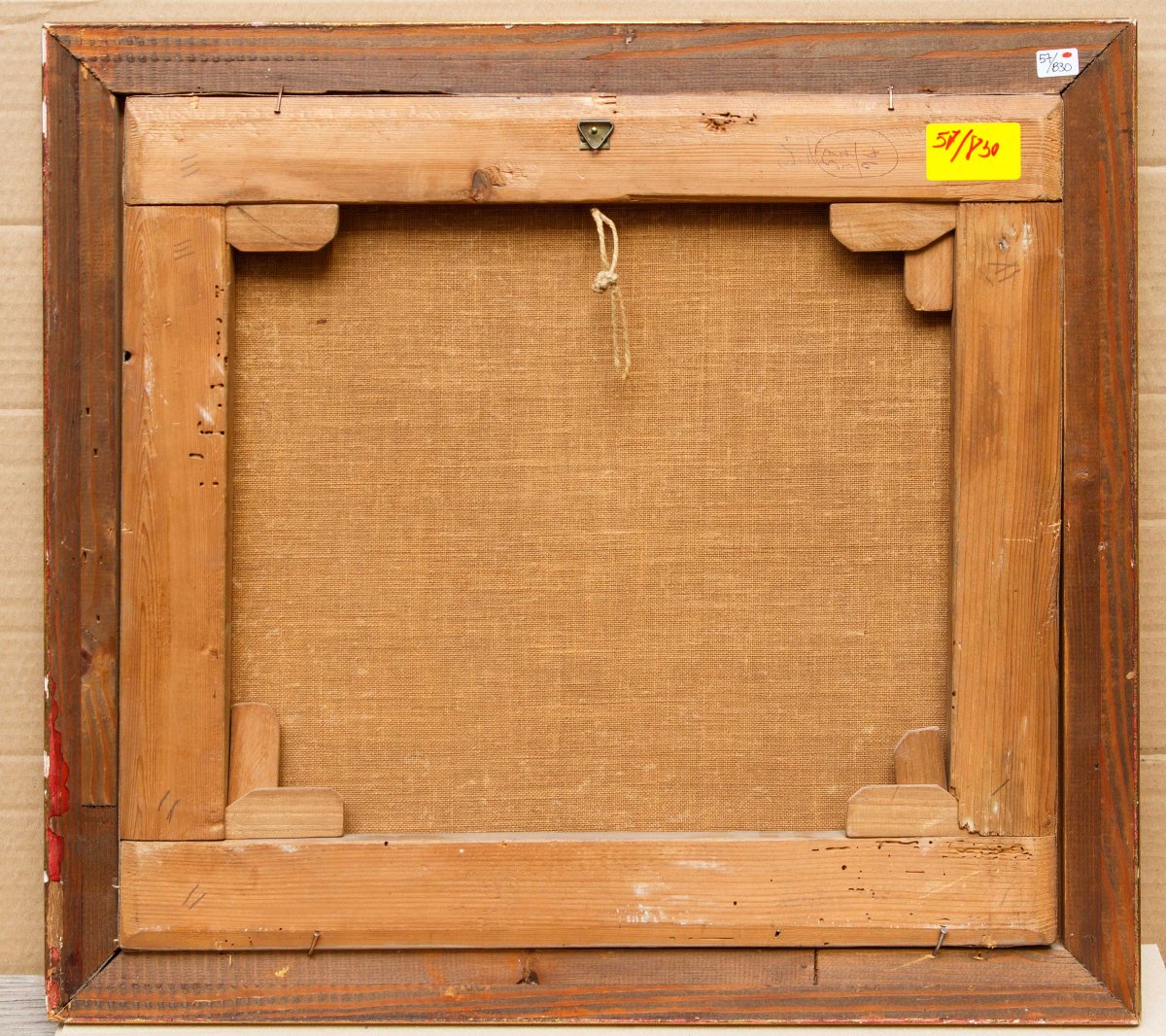
Oil on canvas, 45 x 50 cm – with frame, 53 x 59 cm
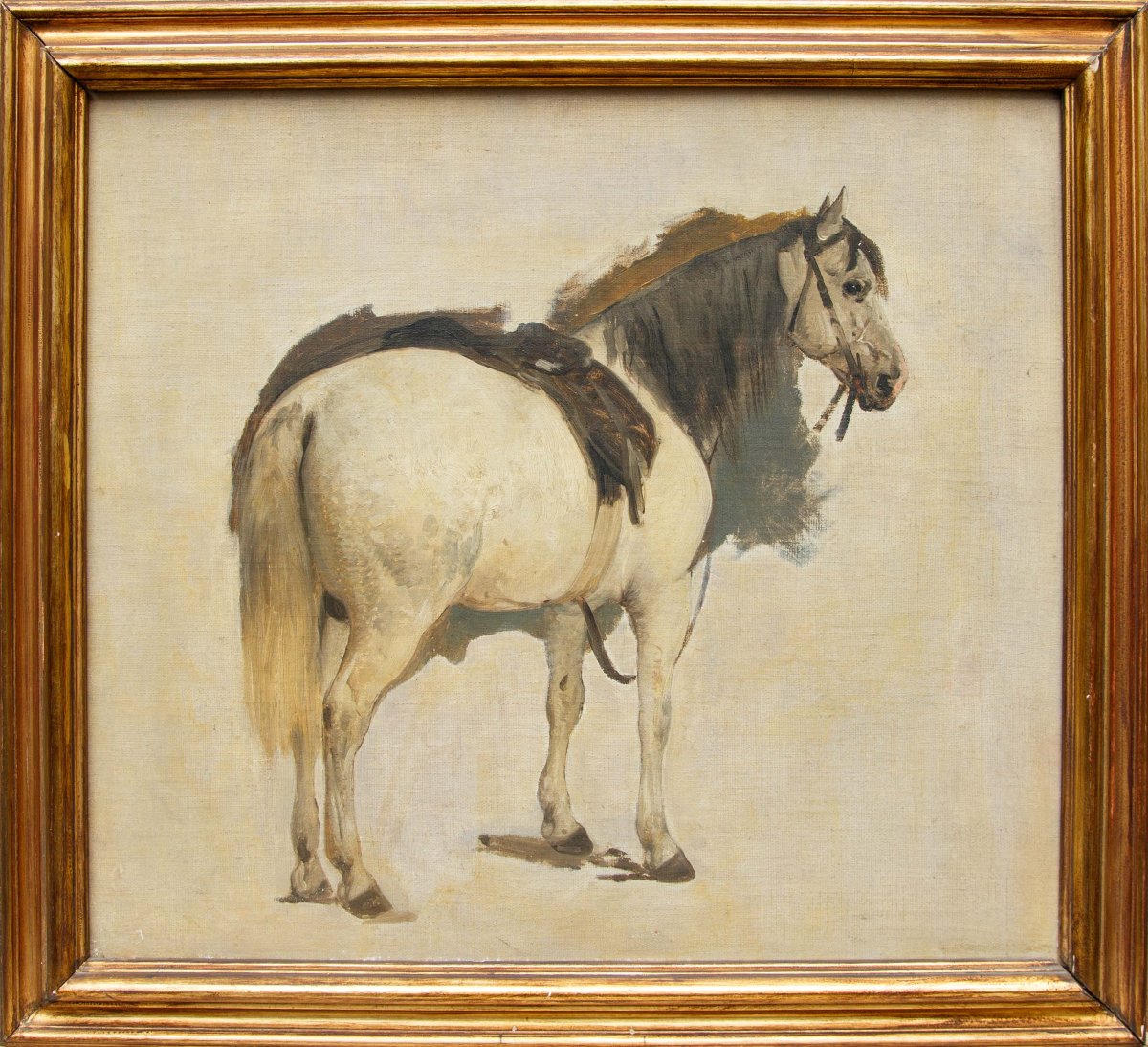
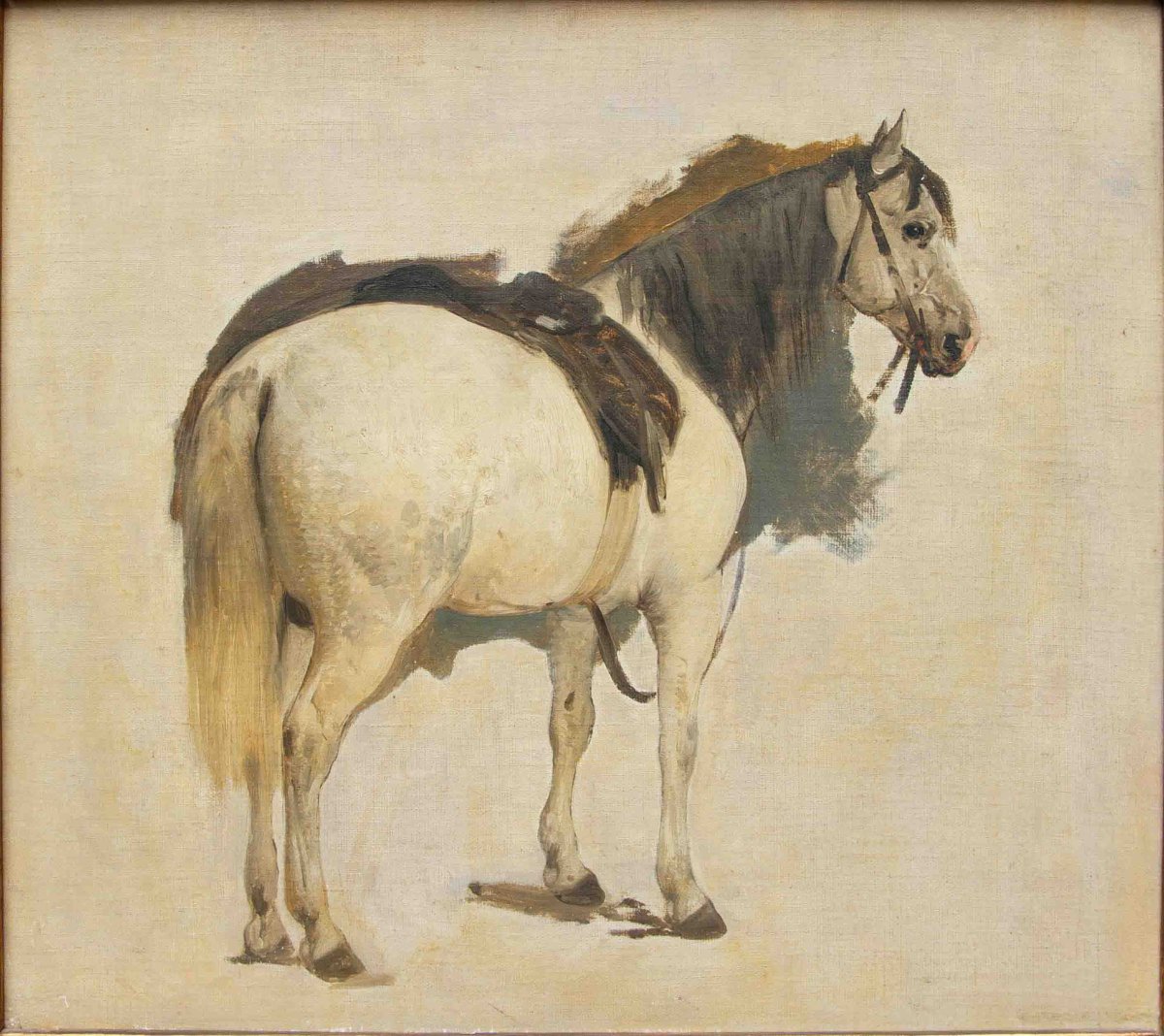
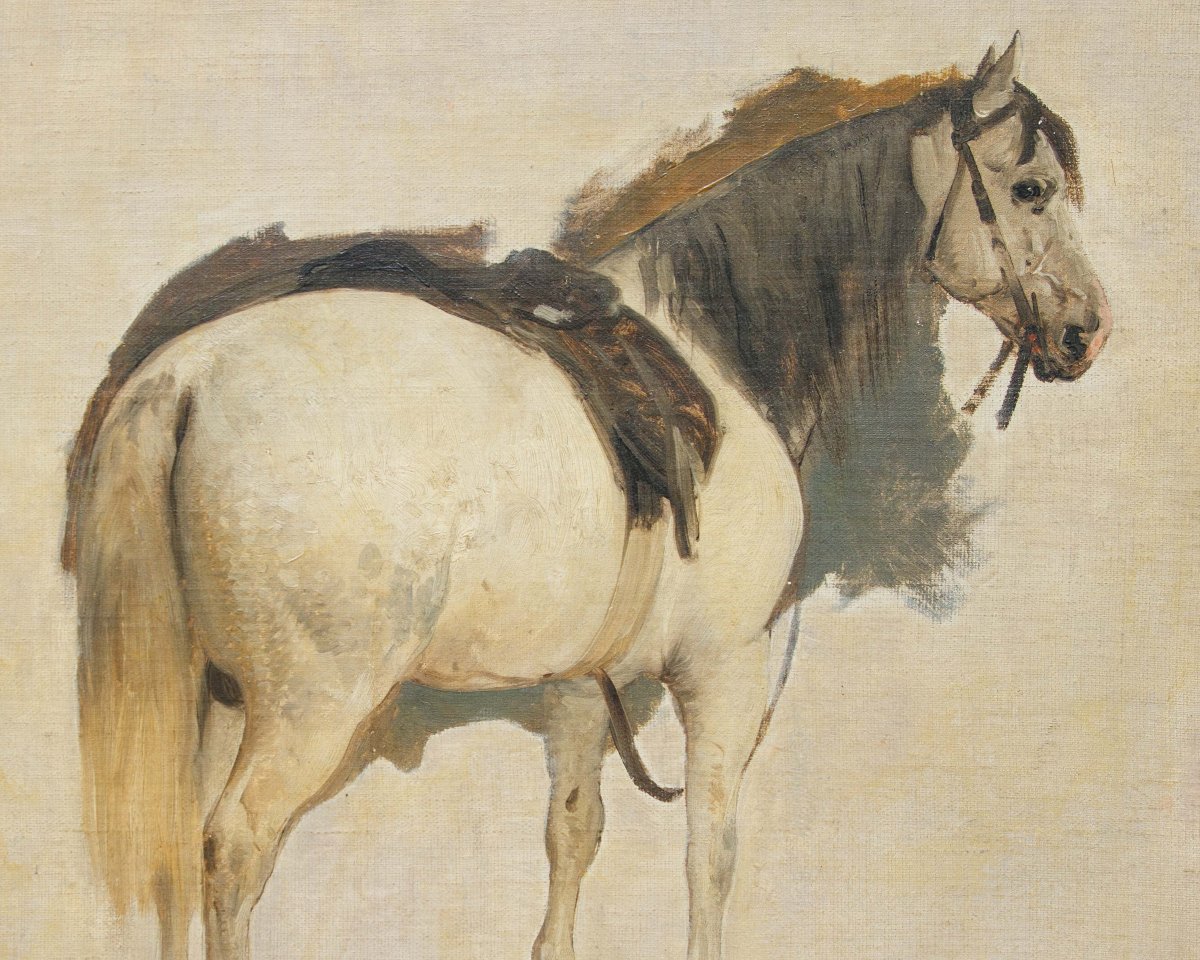
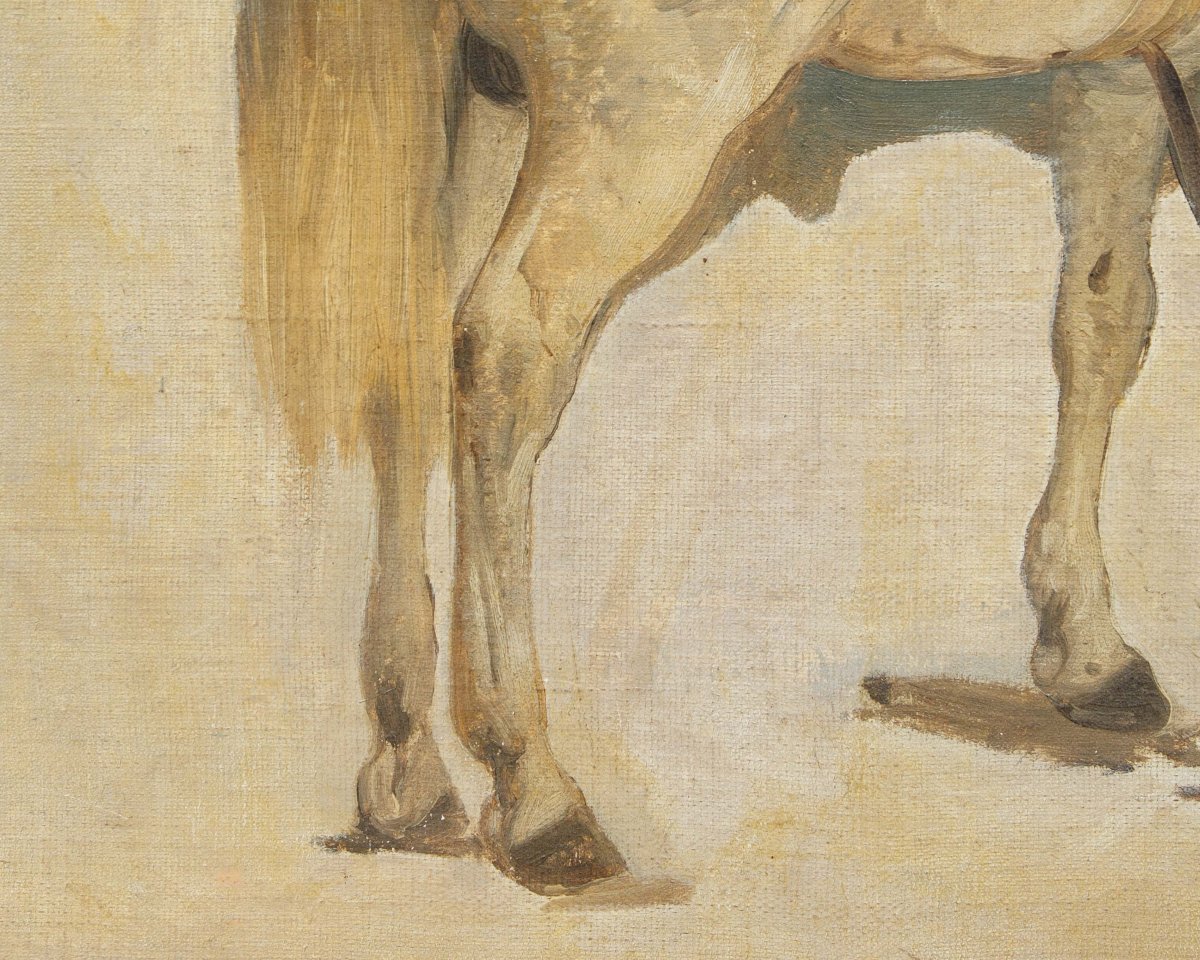
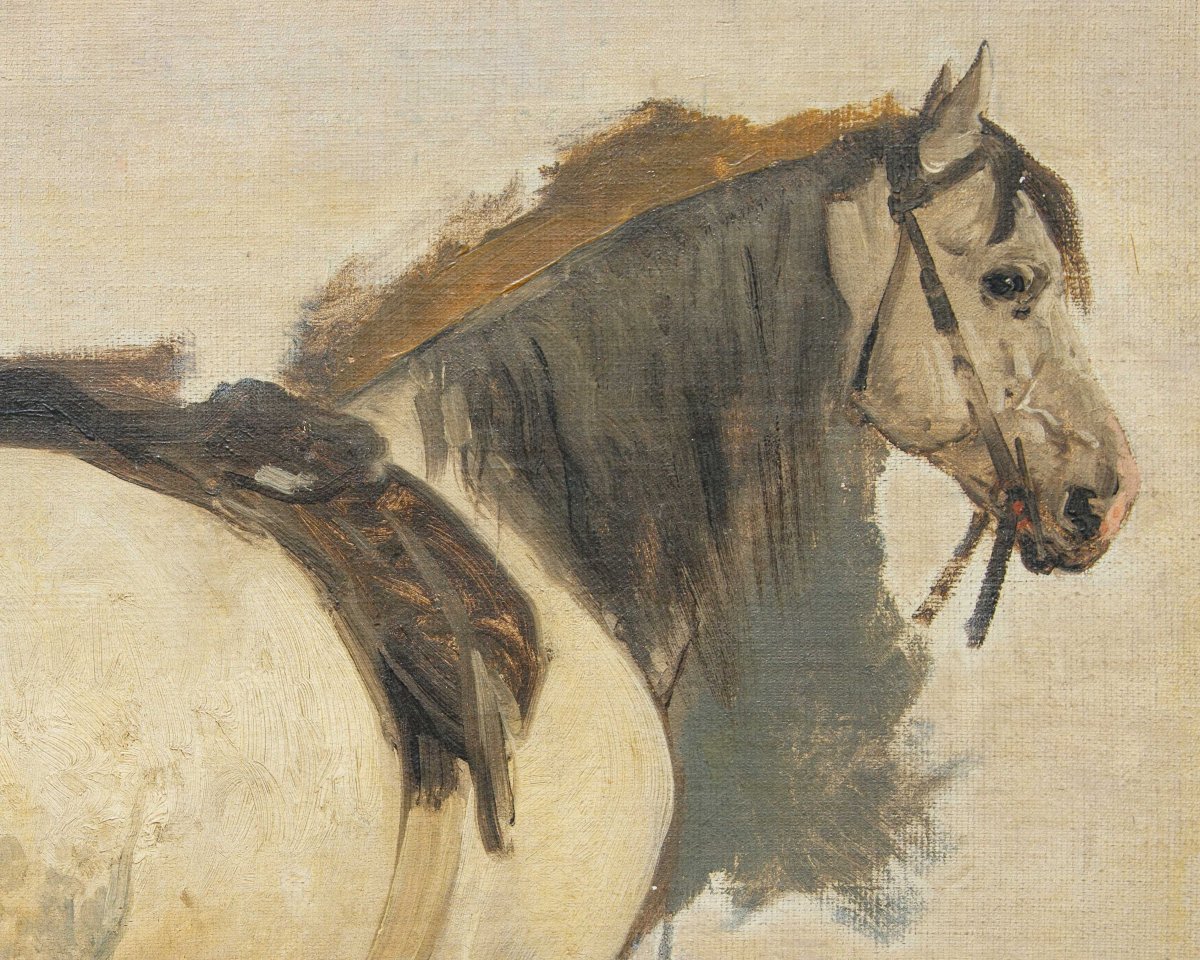
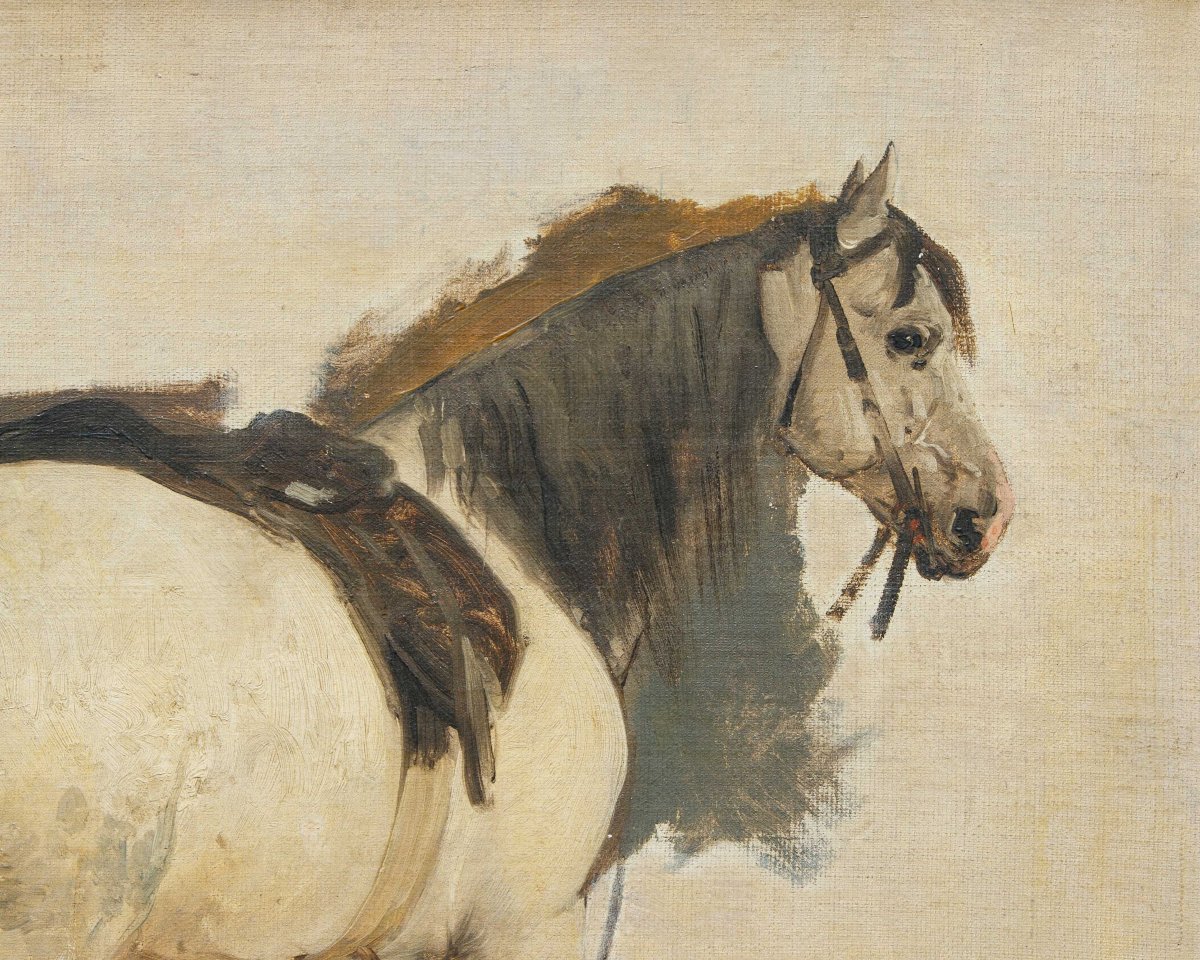
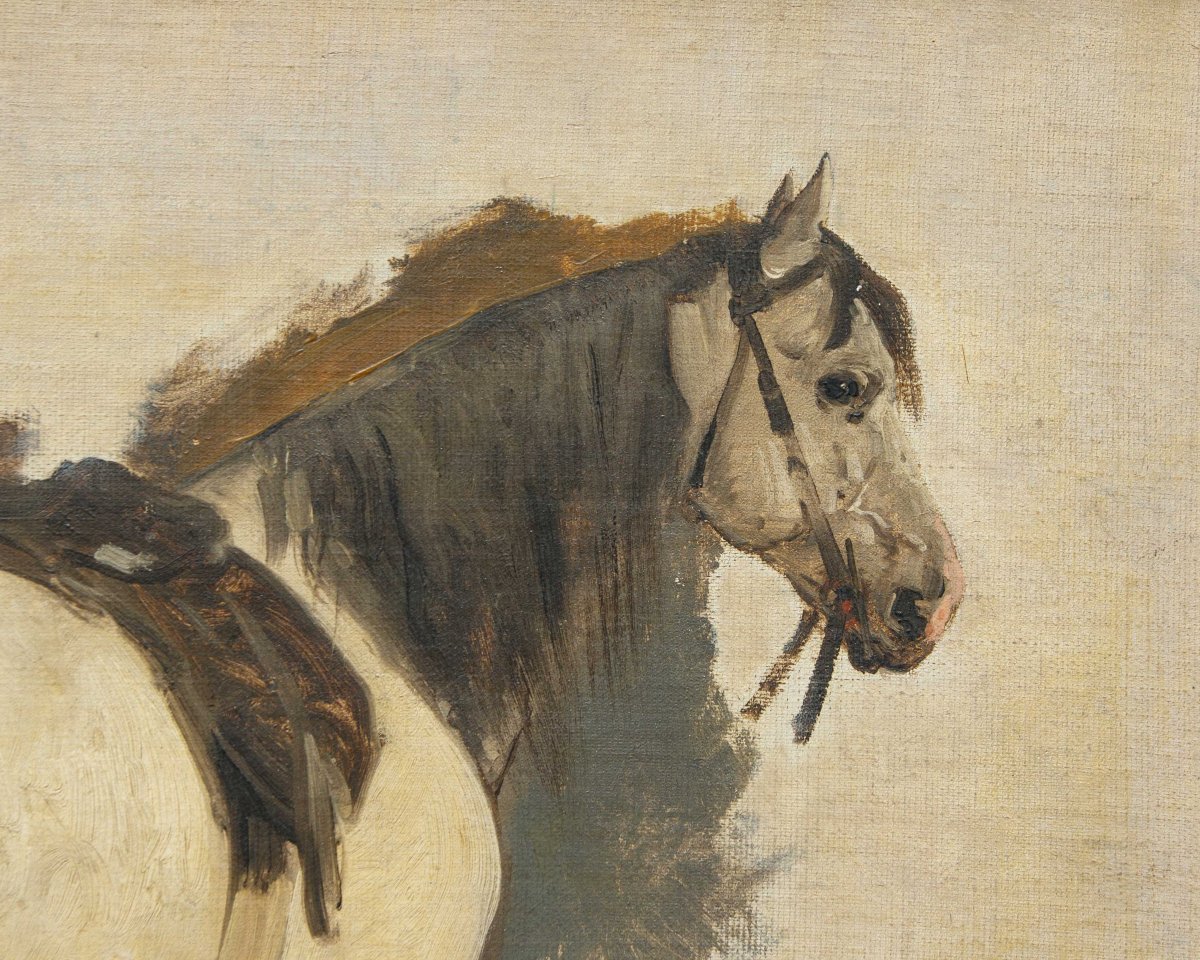
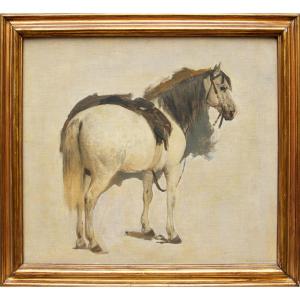
The sketch depicts a saddled white horse, seen three-quarters and caught in a waiting pose. The saddle is barely hinted at, the dark mane and tail give the whole a sense of weight and physical presence. There is no rhetoric in this study: there is the concentration of those who observe a living subject and fix it on the canvas before it moves. From 1854 to 1855 Induno took part in the Crimean campaign in Alessandro La Marmora's Bersaglieri corps and, as a soldier-painter, executed drawings, studies and image reports which upon returning home he used for paintings highly appreciated for the patriotic sentiments expressed there. This sketch finds direct confirmation in the work Episode of the Crimean Campaign (formerly the Patriotic Collection of Milan), where the animal appears on the left, an immobile witness to the drama in a snowy landscape. The same posture of the steed returns in Cavalry Troops Stop at a House, another canvas in which Induno uses the preparatory study to construct a choral scene with a broader narrative scope. The comparison between the sketch and the finished works reveals the artist's working method: the study is the starting point, the raw material from which to extract the convincing detail that will give credibility to the whole. Girolamo Induno was born in Milan in 1825 and was introduced to painting by his older brother Domenico; between 1839 and 1846 he attended Luigi Sabatelli's courses at the Brera Academy, immediately achieving considerable success. His education was immediately intertwined with the political tensions of the pre-unification decade: after the experience of the barricades of Milan in 1848 and the defense of the Roman Republic in 1849, he became one of the best-known and most popular figures as a soldier-painter, drawing inspiration from his experiences for numerous works created in the following decades as well. Wounded during the defense of Palazzo Barberini attacked by the French, Induno remained in Rome for some time, protected first by the friars of Fatebenefratelli and then by Count Giulio Litta, until he returned to Milan to continue his painting activity. The Life of Gerolamo Induno is an adventure novel: an active participant in the anti-Austrian uprisings of 1848, he shared exile with his brother in Switzerland before returning to Italy. The painter did not limit himself to bearing witness to historical events: he also fought valiantly in the Crimean War in 1855, earning recognition for his courage, and his art during this period evolved, alternating the depiction of battles with intimate and incisive portraits of historical figures, including numerous portraits of Garibaldi, who called him one of the most "intrepid and valiant fighters in Rome." Induno's connection with Garibaldi's demands was never merely instrumental or celebratory. In 1859 he enlisted as a Garibaldian officer in the Alpine Hunters group, continuing to record the chronicle of the events he experienced in his drawings. Having enlisted in Garibaldi's ranks, he definitively confirmed himself as the official interpreter of the Risorgimento epic, both for his historical themes, such as General Giuseppe Garibaldi's Embarkation in Genoa and the Battle of Magenta, now in the Museum of the Risorgimento in Milan, and for those in which patriotic motifs are mixed with themes of genre painting. Among the works that best embody this dual vocation, The Departure of Garibaldi's Man, now in the Pinacoteca di Brera, condenses in a farewell scene all the emotional weight of the Risorgimento season: the hero who leaves, the family who remains, the private sacrifice that supports the public cause. A similar tension runs through Triste presentimento, also preserved in the Pinacoteca di Brera and dated 1862. In a modest room, sitting on the bed, the girl contemplates the portrait of her beloved, a patriot who left for war, as attested by the bust of Garibaldi, the prints with Hayez's Kiss and a battle scene hanging in the window. In the same Braidense collection there are works that document the most epic aspect of his production, such as A Great Sacrifice, while the Quirinale Palace houses Garibaldi and Medici by Vittorio Emanuele II, further proof of the institutional recognition that Induno's painting obtained from the highest commissions of the young kingdom. Cavallo fits into this logic naturally: it is not a work intended for the general public, but a working tool that reveals the painter at the moment of his greatest freedom. In the speed of the writing, in the choice to isolate the subject without context, in the care taken to convey the weight and breath of the animal, we recognize the hand of an artist who had learned to see in the field and who never stopped doing so. Taking part in the Piedmontese expedition to Crimea, Induno filled entire albums with sketches and notes for paintings, which later gave rise to a large part of his pictorial production.
Horse
Oil on canvas, 45 x 50 cm – with frame, 53 x 59 cm
The sketch depicts a saddled white horse, seen three-quarters and caught in a waiting pose. The saddle is barely hinted at, the dark mane and tail give the whole a sense of weight and physical presence. There is no rhetoric in this study: there is the concentration of those who observe a living subject and fix it on the canvas before it moves. From 1854 to 1855 Induno took part in the Crimean campaign in Alessandro La Marmora's Bersaglieri corps and, as a soldier-painter, executed drawings, studies and image reports which upon returning home he used for paintings highly appreciated for the patriotic sentiments expressed there. This sketch finds direct confirmation in the work Episode of the Crimean Campaign (formerly the Patriotic Collection of Milan), where the animal appears on the left, an immobile witness to the drama in a snowy landscape. The same posture of the steed returns in Cavalry Troops Stop at a House, another canvas in which Induno uses the preparatory study to construct a choral scene with a broader narrative scope. The comparison between the sketch and the finished works reveals the artist's working method: the study is the starting point, the raw material from which to extract the convincing detail that will give credibility to the whole. Girolamo Induno was born in Milan in 1825 and was introduced to painting by his older brother Domenico; between 1839 and 1846 he attended Luigi Sabatelli's courses at the Brera Academy, immediately achieving considerable success. His education was immediately intertwined with the political tensions of the pre-unification decade: after the experience of the barricades of Milan in 1848 and the defense of the Roman Republic in 1849, he became one of the best-known and most popular figures as a soldier-painter, drawing inspiration from his experiences for numerous works created in the following decades as well. Wounded during the defense of Palazzo Barberini attacked by the French, Induno remained in Rome for some time, protected first by the friars of Fatebenefratelli and then by Count Giulio Litta, until he returned to Milan to continue his painting activity. The Life of Gerolamo Induno is an adventure novel: an active participant in the anti-Austrian uprisings of 1848, he shared exile with his brother in Switzerland before returning to Italy. The painter did not limit himself to bearing witness to historical events: he also fought valiantly in the Crimean War in 1855, earning recognition for his courage, and his art during this period evolved, alternating the depiction of battles with intimate and incisive portraits of historical figures, including numerous portraits of Garibaldi, who called him one of the most "intrepid and valiant fighters in Rome." Induno's connection with Garibaldi's demands was never merely instrumental or celebratory. In 1859 he enlisted as a Garibaldian officer in the Alpine Hunters group, continuing to record the chronicle of the events he experienced in his drawings. Having enlisted in Garibaldi's ranks, he definitively confirmed himself as the official interpreter of the Risorgimento epic, both for his historical themes, such as General Giuseppe Garibaldi's Embarkation in Genoa and the Battle of Magenta, now in the Museum of the Risorgimento in Milan, and for those in which patriotic motifs are mixed with themes of genre painting. Among the works that best embody this dual vocation, The Departure of Garibaldi's Man, now in the Pinacoteca di Brera, condenses in a farewell scene all the emotional weight of the Risorgimento season: the hero who leaves, the family who remains, the private sacrifice that supports the public cause. A similar tension runs through Triste presentimento, also preserved in the Pinacoteca di Brera and dated 1862. In a modest room, sitting on the bed, the girl contemplates the portrait of her beloved, a patriot who left for war, as attested by the bust of Garibaldi, the prints with Hayez's Kiss and a battle scene hanging in the window. In the same Braidense collection there are works that document the most epic aspect of his production, such as A Great Sacrifice, while the Quirinale Palace houses Garibaldi and Medici by Vittorio Emanuele II, further proof of the institutional recognition that Induno's painting obtained from the highest commissions of the young kingdom. Cavallo fits into this logic naturally: it is not a work intended for the general public, but a working tool that reveals the painter at the moment of his greatest freedom. In the speed of the writing, in the choice to isolate the subject without context, in the care taken to convey the weight and breath of the animal, we recognize the hand of an artist who had learned to see in the field and who never stopped doing so. Taking part in the Piedmontese expedition to Crimea, Induno filled entire albums with sketches and notes for paintings, which later gave rise to a large part of his pictorial production.
9 000 €
Period: 19th century
Style: Other Style
Condition: Good condition
Material: Oil painting
Width: 50
Height: 45
Reference (ID): 1775151
Availability: In stock
Print