

Francesco Gonin (turin, December 16, 1808 – Giaveno, September 14, 1889), Attributed To Pietro Rossi
Francesco Gonin (Turin, December 16, 1808 – Giaveno, September 14, 1889), attributed to
Pietro Rossi Is Invited to Take Command of the Venetian Army to Fight Against the Scaligeri
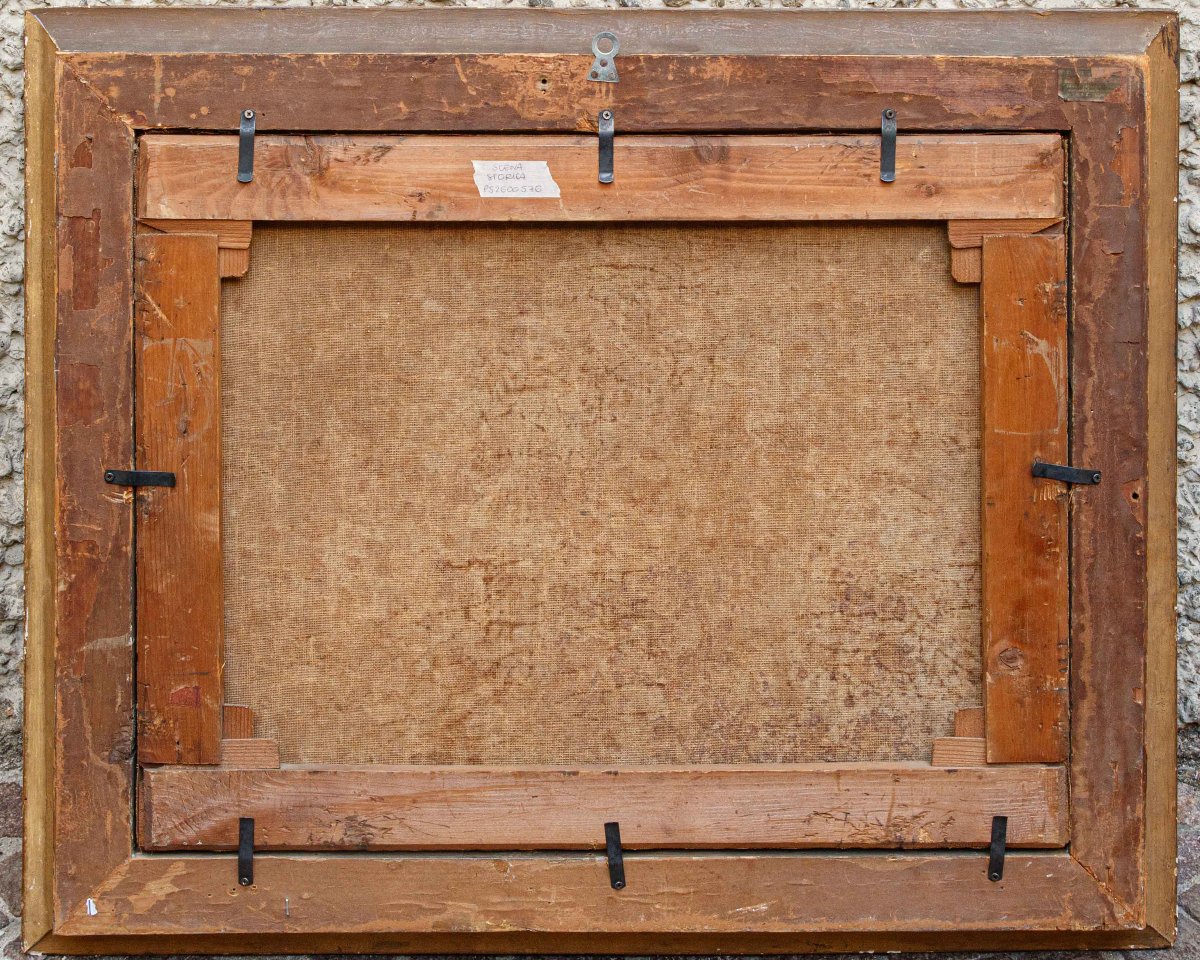
oil on canvas, 50 x 64 cm – with frame, 66 x 81 cm
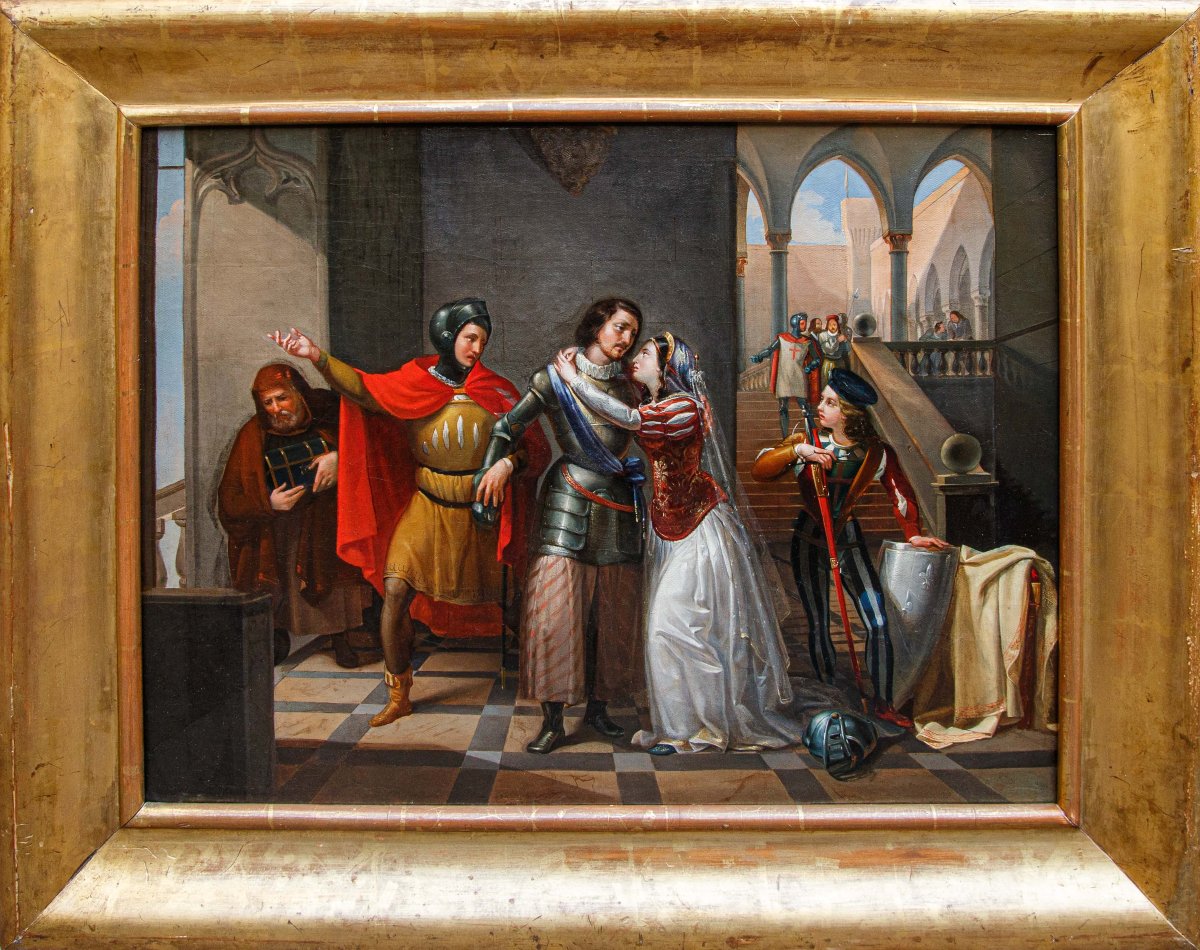
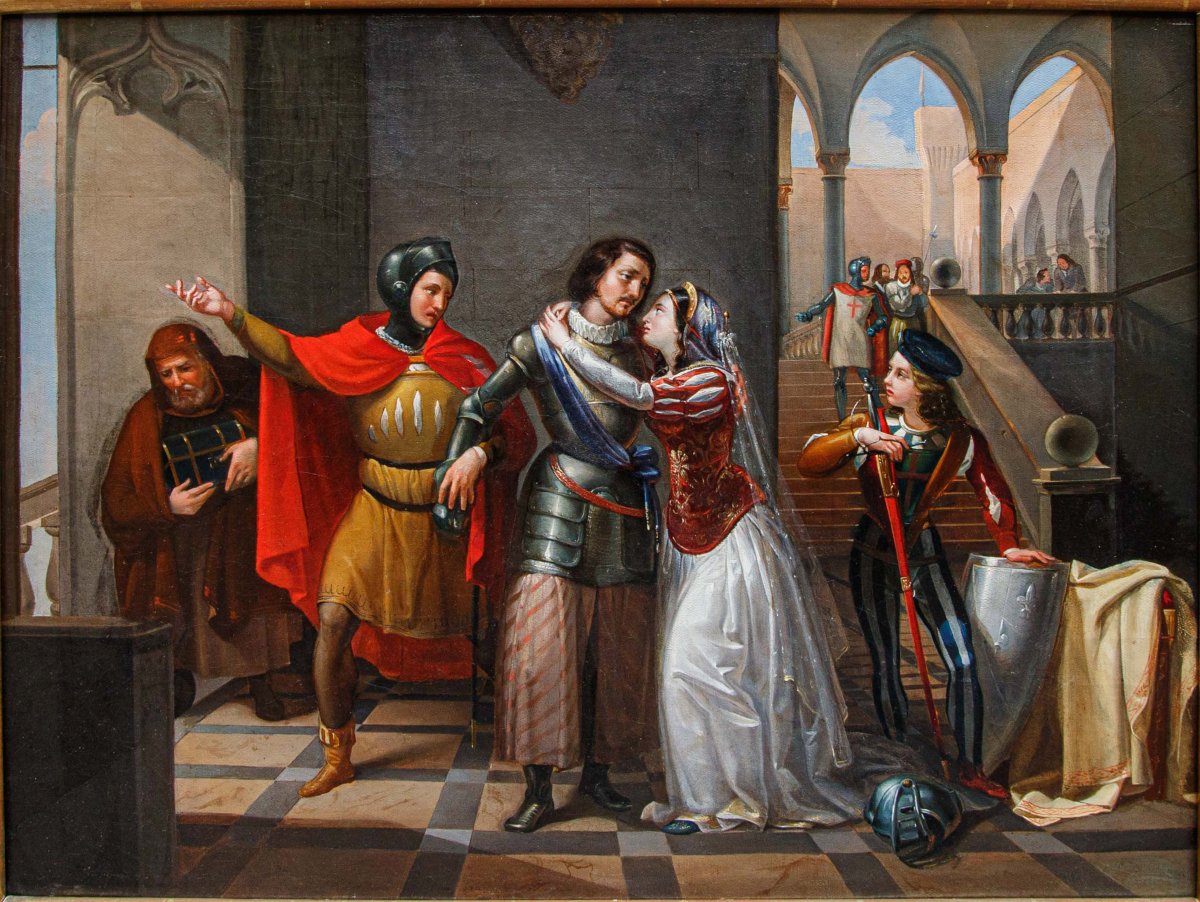
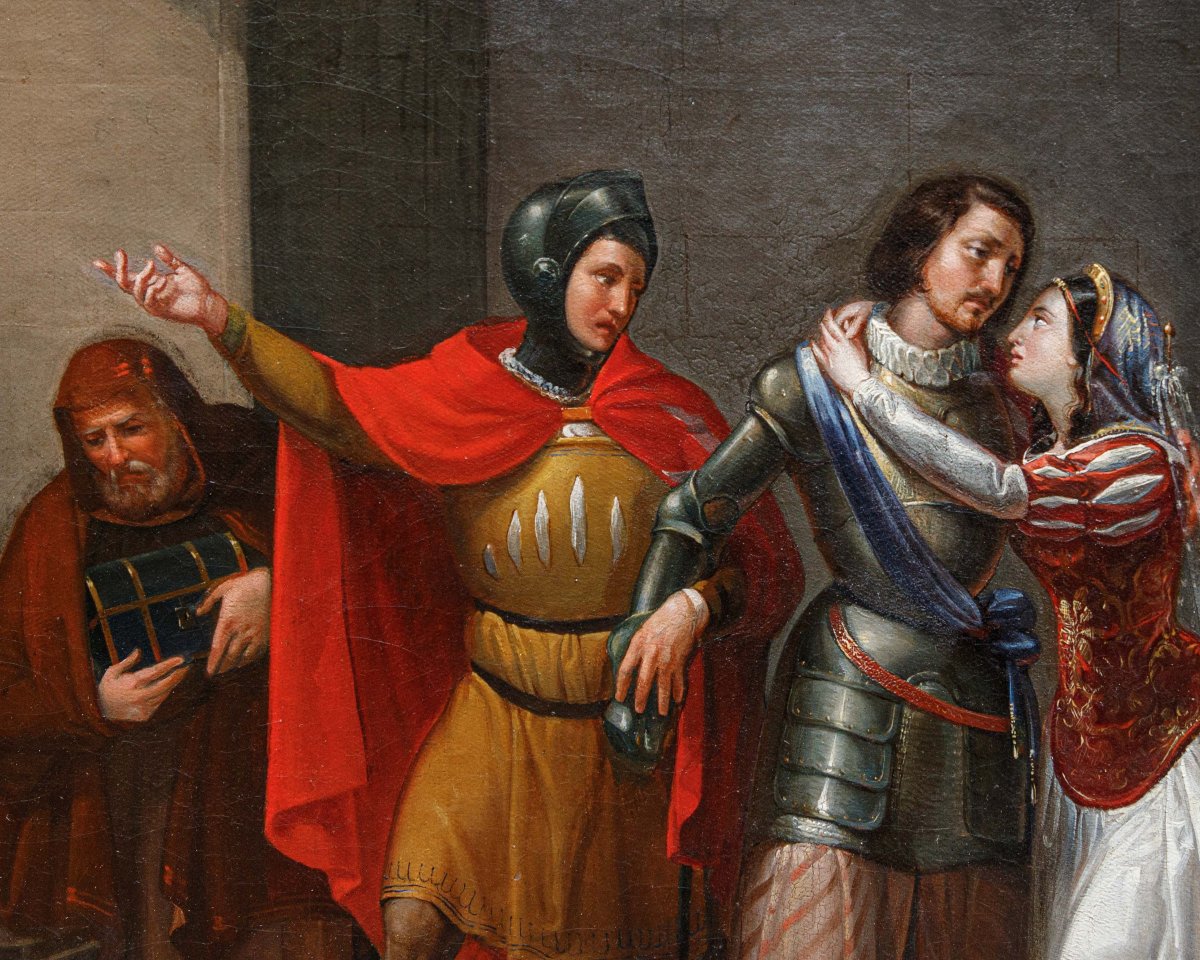
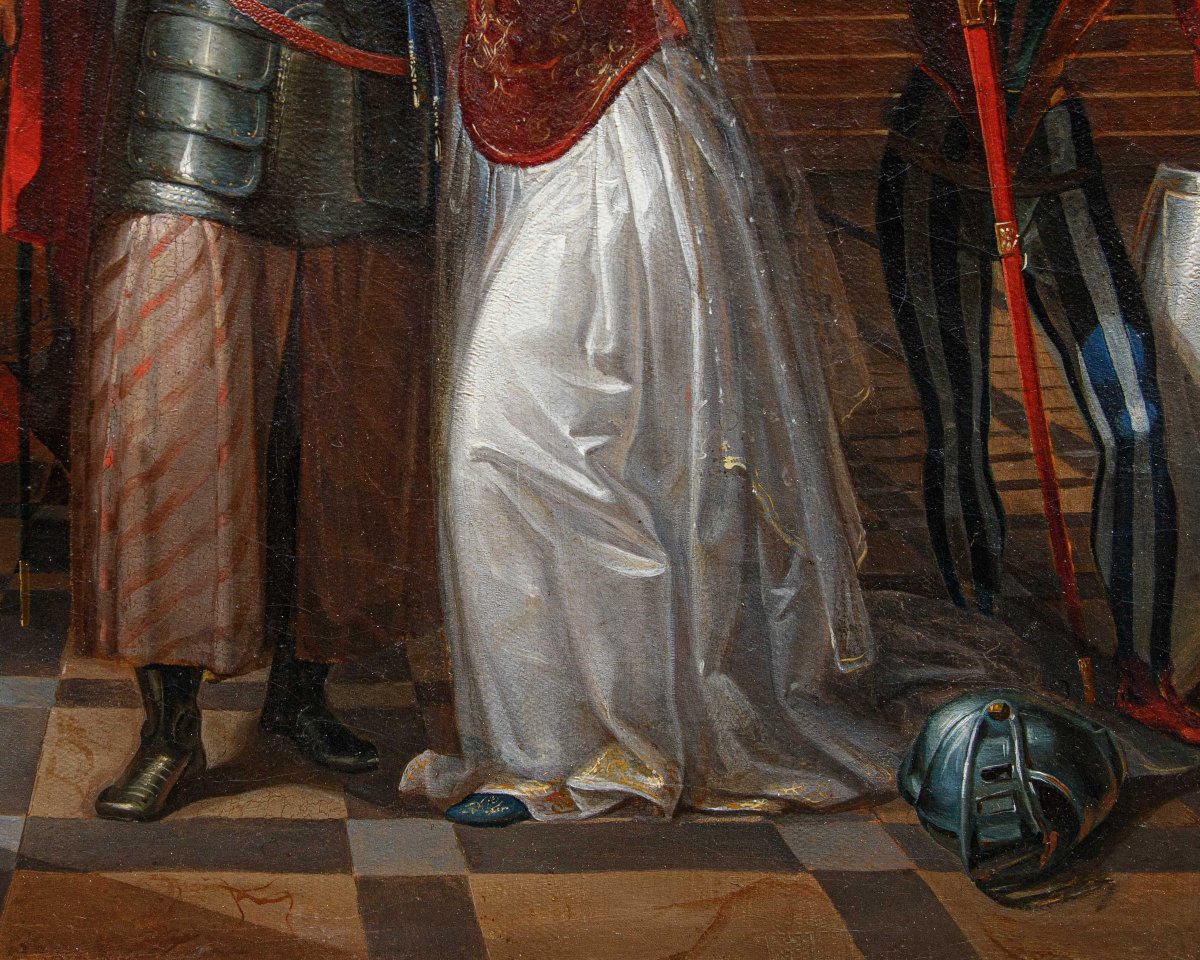
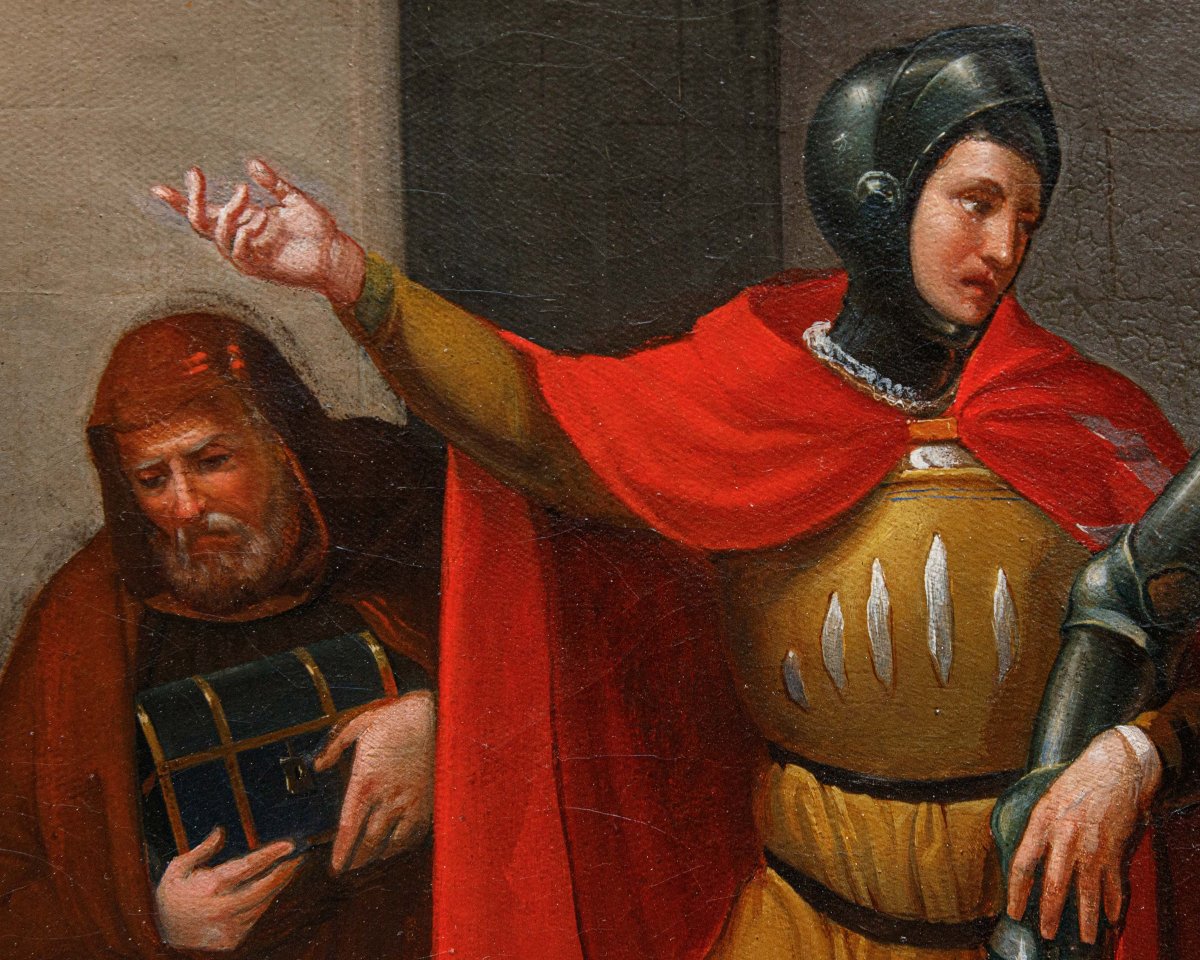
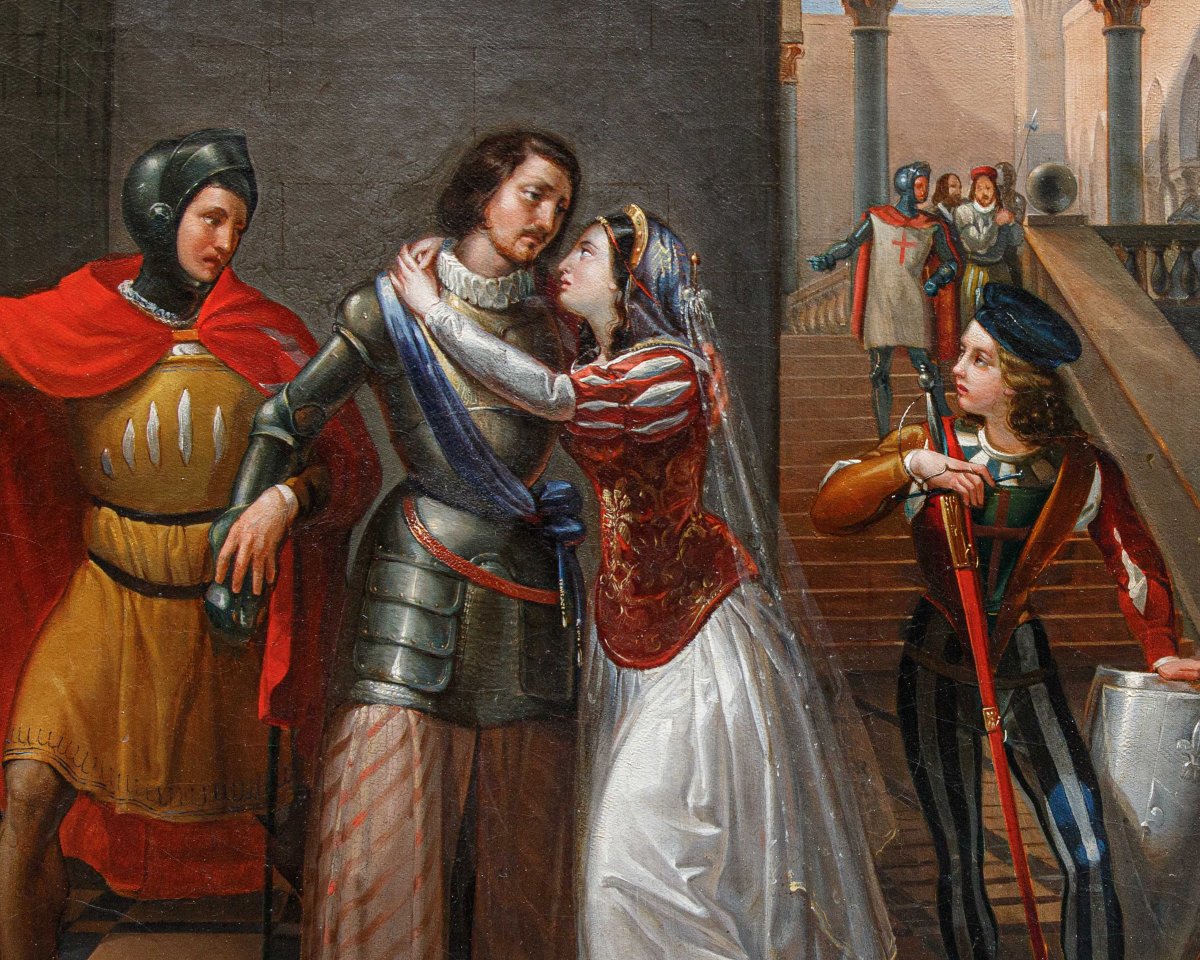
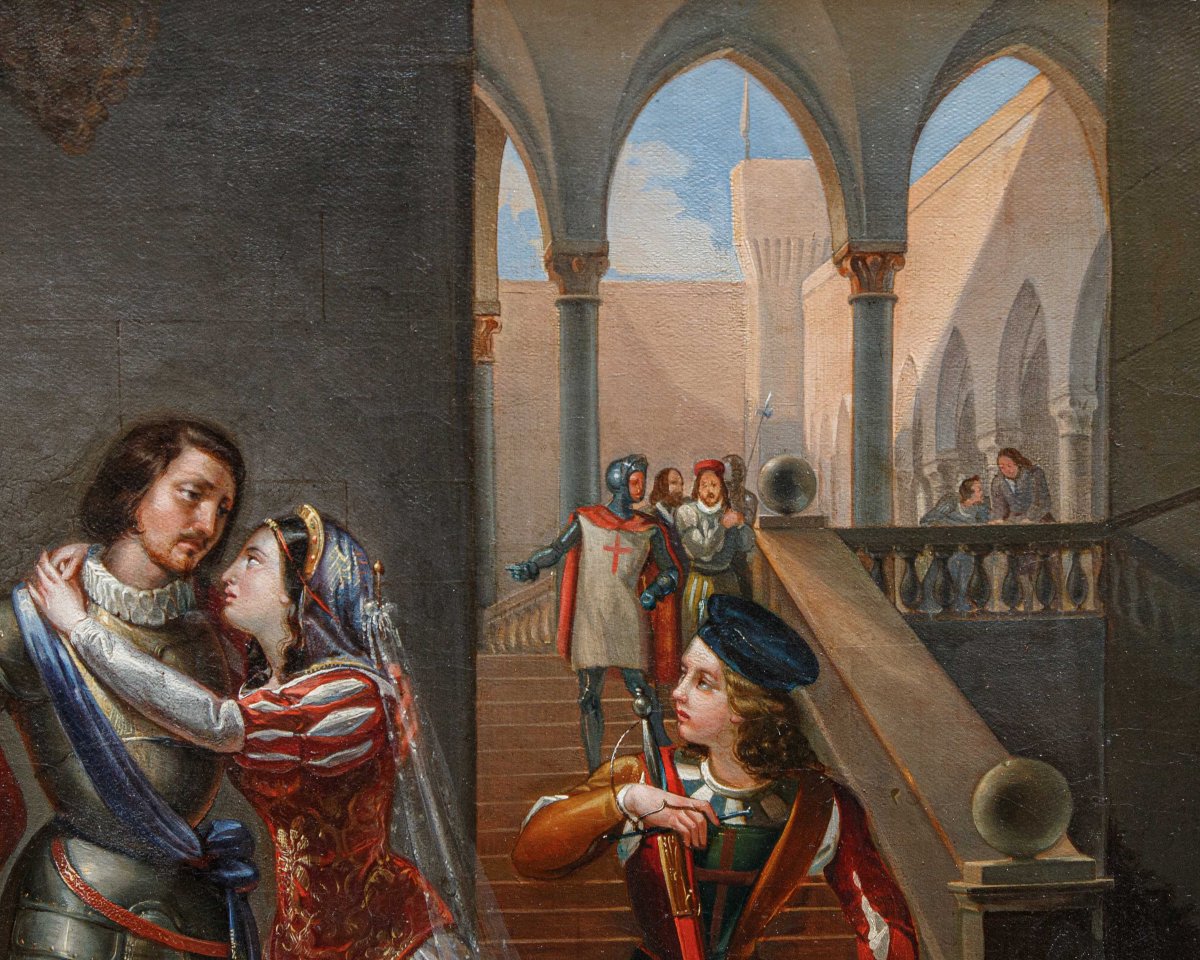
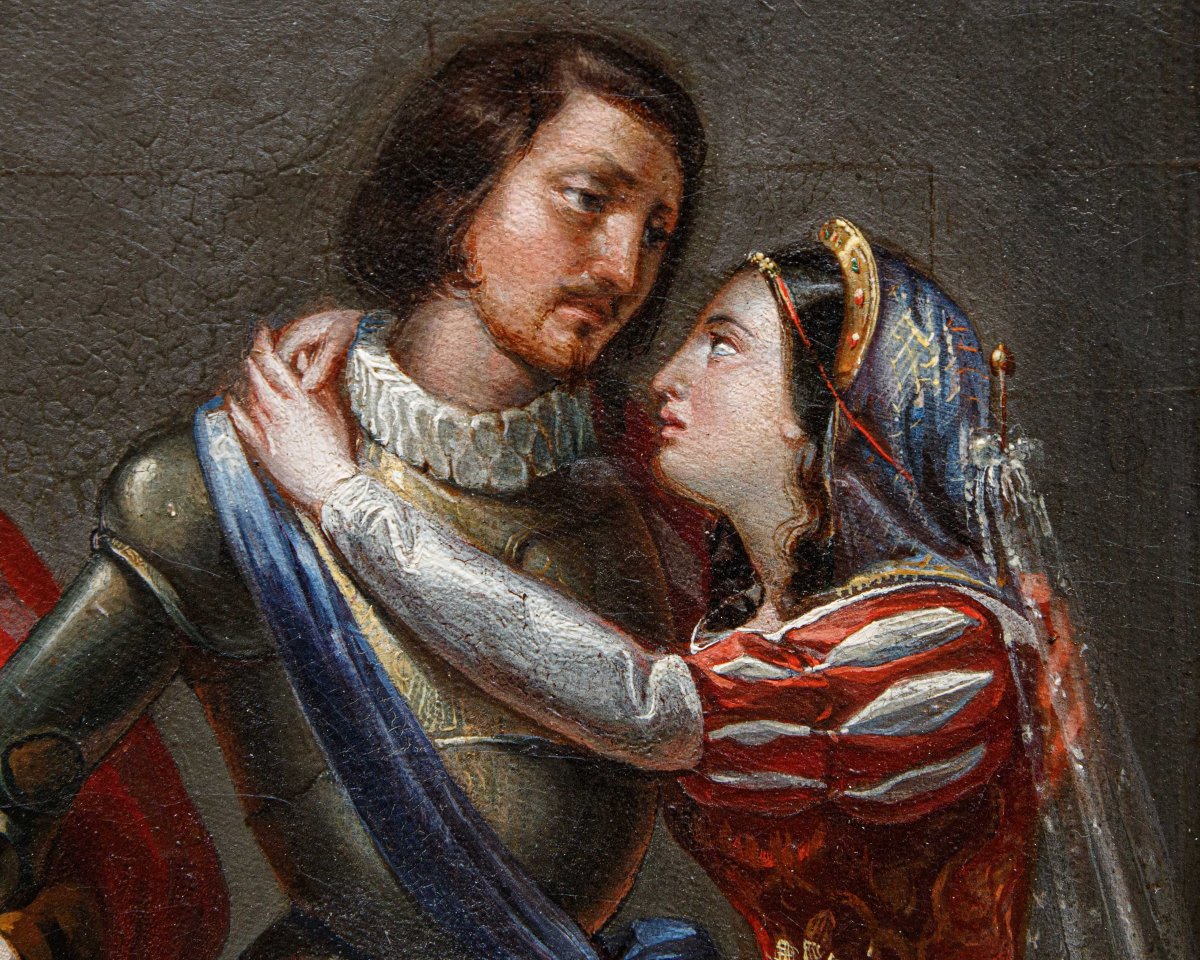
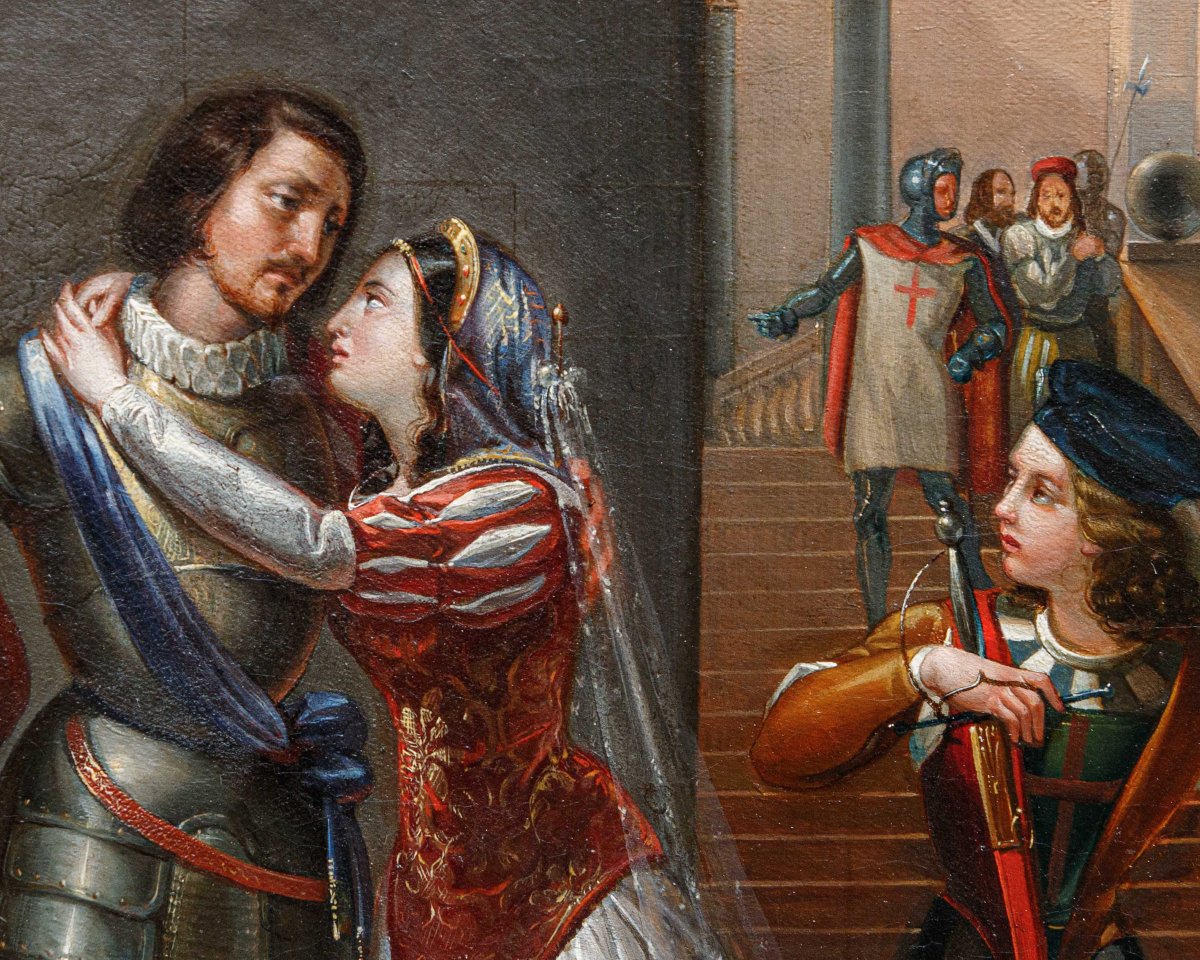
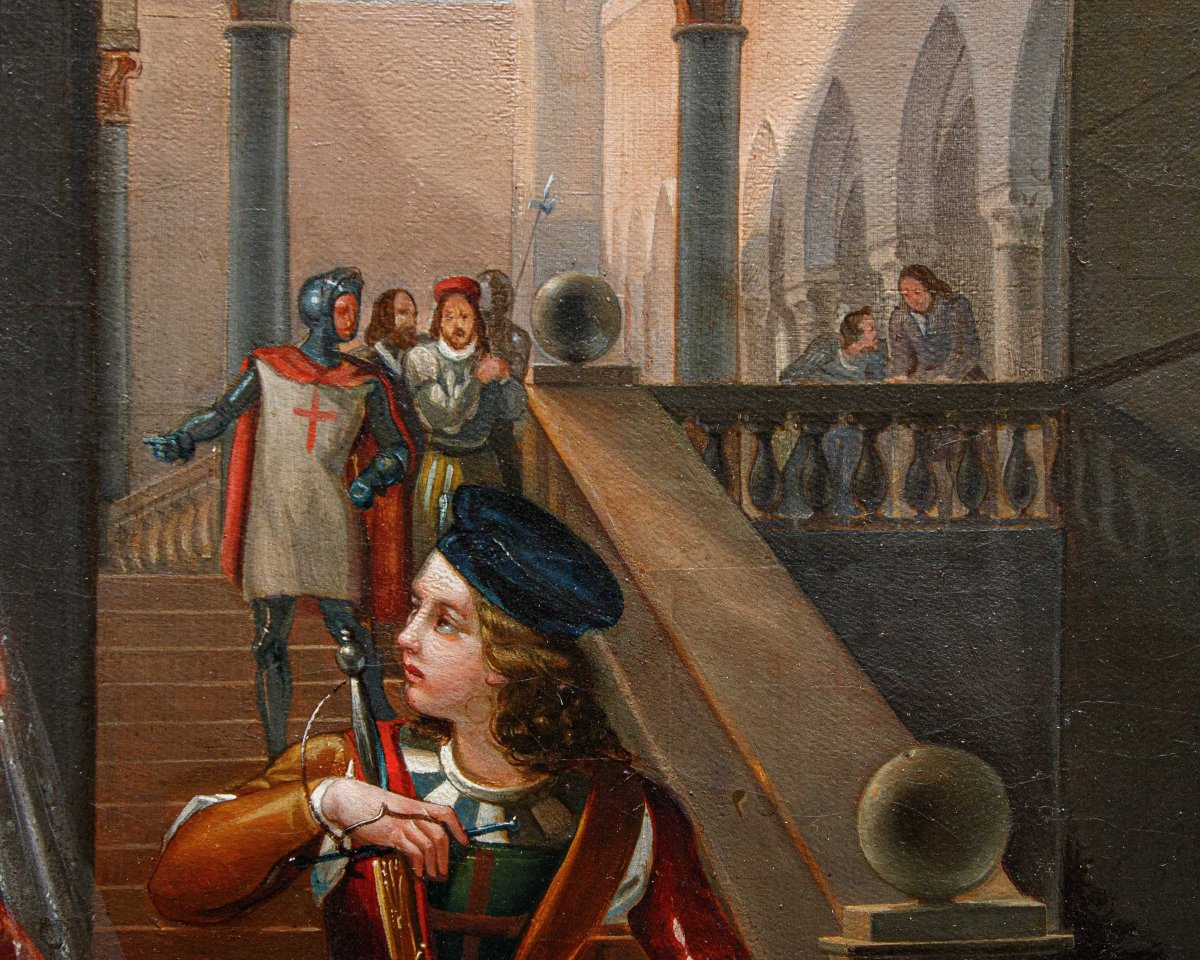
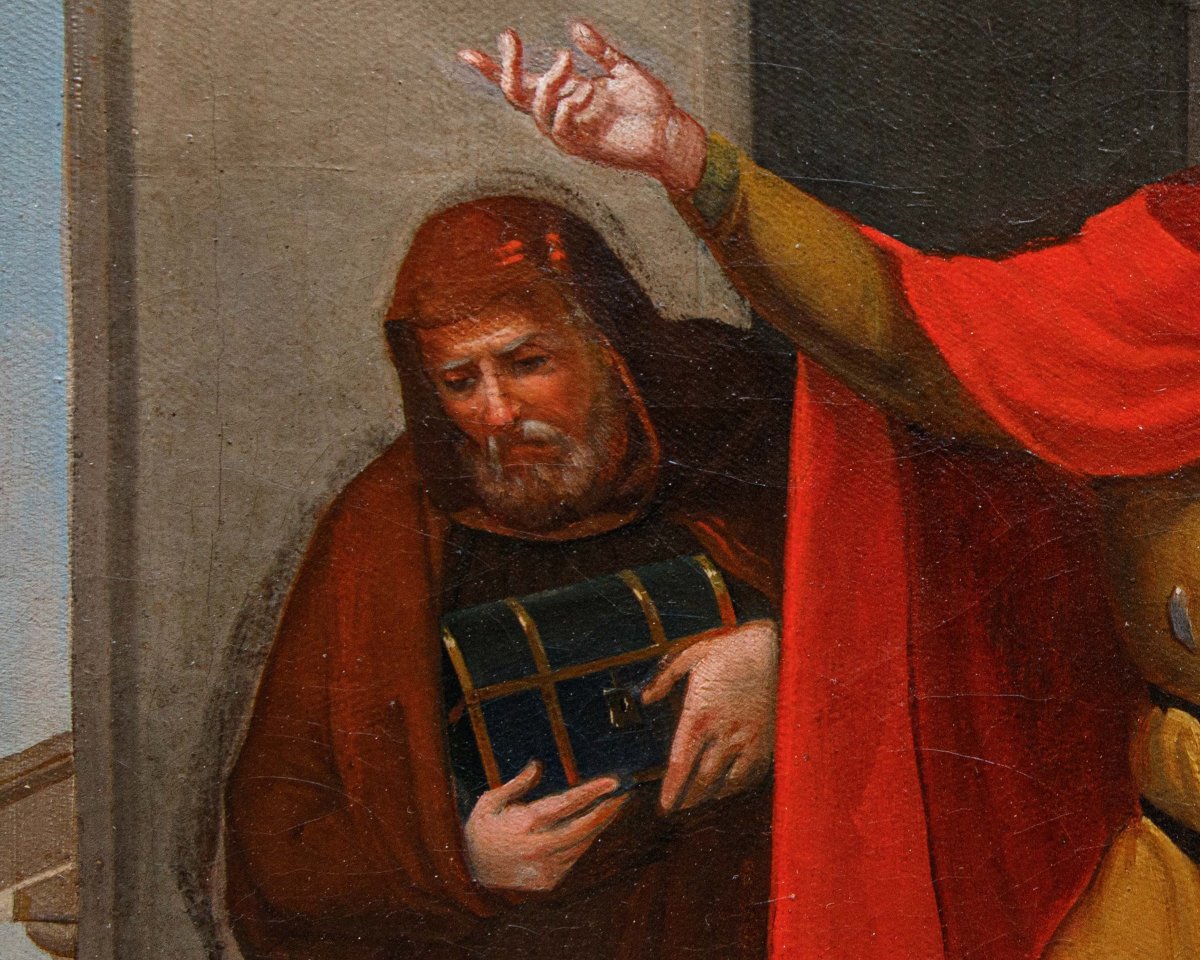
The painting depicts the moment when Pietro Rossi, Lord of Parma, receives the invitation from the Republic of Venice to lead the Venetian army against the Scaligeri, while he is still engaged in the defense of Pontremoli, which is under siege by Veronese troops. The scene, set in an austere architectural interior marked by arches and a checkered floor, centers on the gesture of a messenger who holds back the soldier and points toward the palace exit, while the female members of his family—wives and daughters—crowd around the commander, their pleading expressions attempting to dissuade him from leaving. The contrast between the call of public duty and private affections is conveyed through the characters’ intense faces, illuminated by a warm light that accentuates their pathos, and through the vivid, old-fashioned costumes, reminiscent of the theatrical and literary fashions of the time. The episode, drawn from a 14th-century chronicle cited by Sismondi in his *History of the Italian Republics of the Middle Ages* and, more specifically, Laugier’s *Histoire de la République de Venise*, became a highly popular subject in Risorgimento painting, which recognized in it the exaltation of individual sacrifice for the collective cause and the emphasis placed on family sentiments as a reflection of civic virtues.
The attribution to Francesco Gonin is confirmed by a series of stylistic affinities found in his other works. The rendering of the faces—in particular, the poignant intensity of the gazes and the soft chiaroscuro of the features—closely resembles *Paolo and Francesca*, now in a private collection, where the ability to condense the characters’ inner conflict into a single expression is equally evident. Similarly, *Gertrude Decides to Become a Nun*, also in a private collection, shares with our painting an emphasis on theatrical gesture and the pyramidal composition of the figures, as well as a similar use of white drapery to isolate and highlight the central female figure. In *The Heroic Death of the Mounted Carabiniere*, by Giovanni Battista Scapaccino, we find the same patriotic spirit, with the celebration of a recent historical episode interpreted as a heroic sacrifice, rendered in a figurative language similar to that used in the painting of Pietro Rossi. Finally, the hall featuring the personifications of the elements at the Porta Nuova station in Turin attests to the solidity of the architectural rendering and the mastery of perspective in the spaces, qualities that are also evident in the compositional layout of the painting under consideration.
Francesco Gonin trained at the Academy of Painting and Sculpture in Turin—now the Accademia Albertina—between 1820 and 1828, studying under Lorenzo Pécheux and Giovanni Battista Biscarra. He specialized in historical portraits, landscapes, and genre scenes, combining his work as a painter with that of an illustrator for literary works. He collaborated with the studio of Rodolfo Morgari, a painter and restorer for the Royal Palaces, and around 1830 he became friends with Massimo d’Azeglio, for whom he redrew the illustrations for *Ettore Fieramosca* in 1833. A stay in Milan in 1835 brought him into contact with Alessandro Manzoni, who entrusted him with the illustrations for *The Betrothed*, published in installments between 1839 and 1842. Numerous portraits and frescoes by him adorn the Savoy residences, including Racconigi Castle and the Royal Palace in Turin, as well as several city churches and the Porta Nuova train station. Through this body of work, Gonin rightfully takes his place within the tradition of Italian Risorgimento painting, capable of combining historical rigor with a Romantic sensibility for human emotions and patriotic values, thereby helping to spread—through images and illustrations—a shared visual language of the nascent national identity.
Period: 19th century
Style: Other Style
Condition: Good condition
Material: Oil painting
Width: 64
Height: 50
Reference (ID): 1801991
Availability: In stock