



18th Century, Piedmontese School, *the Commedia Dell'arte On Stage*—*the Storyteller*
18th century, Piedmontese School
Commedia dell’Arte on Stage – The Storyteller
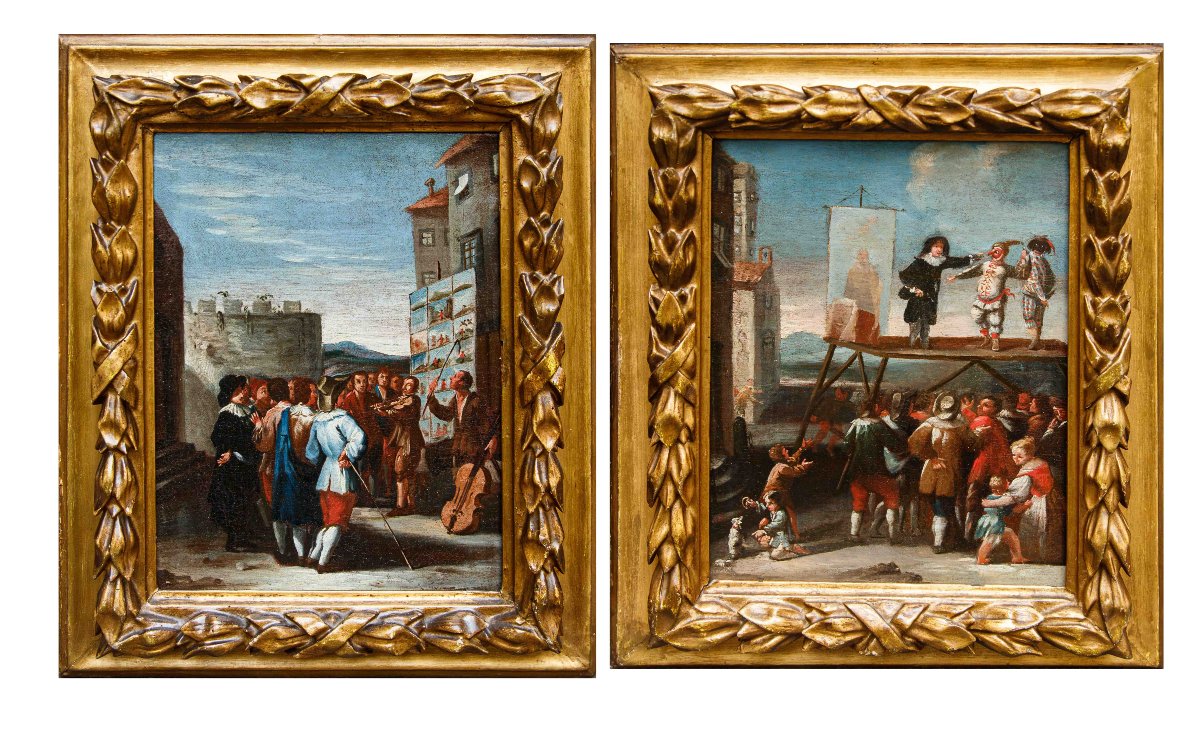
Oil on canvas, 32 x 25 cm – with frame, 46 x 30 cm
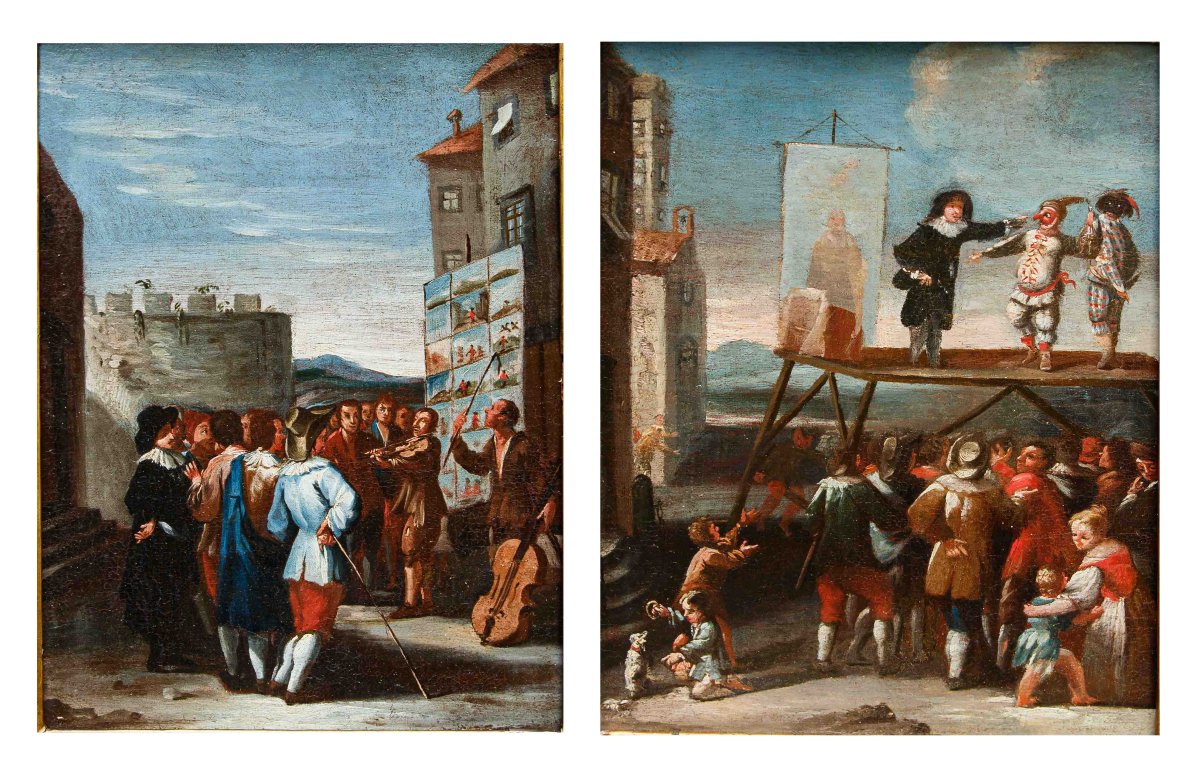
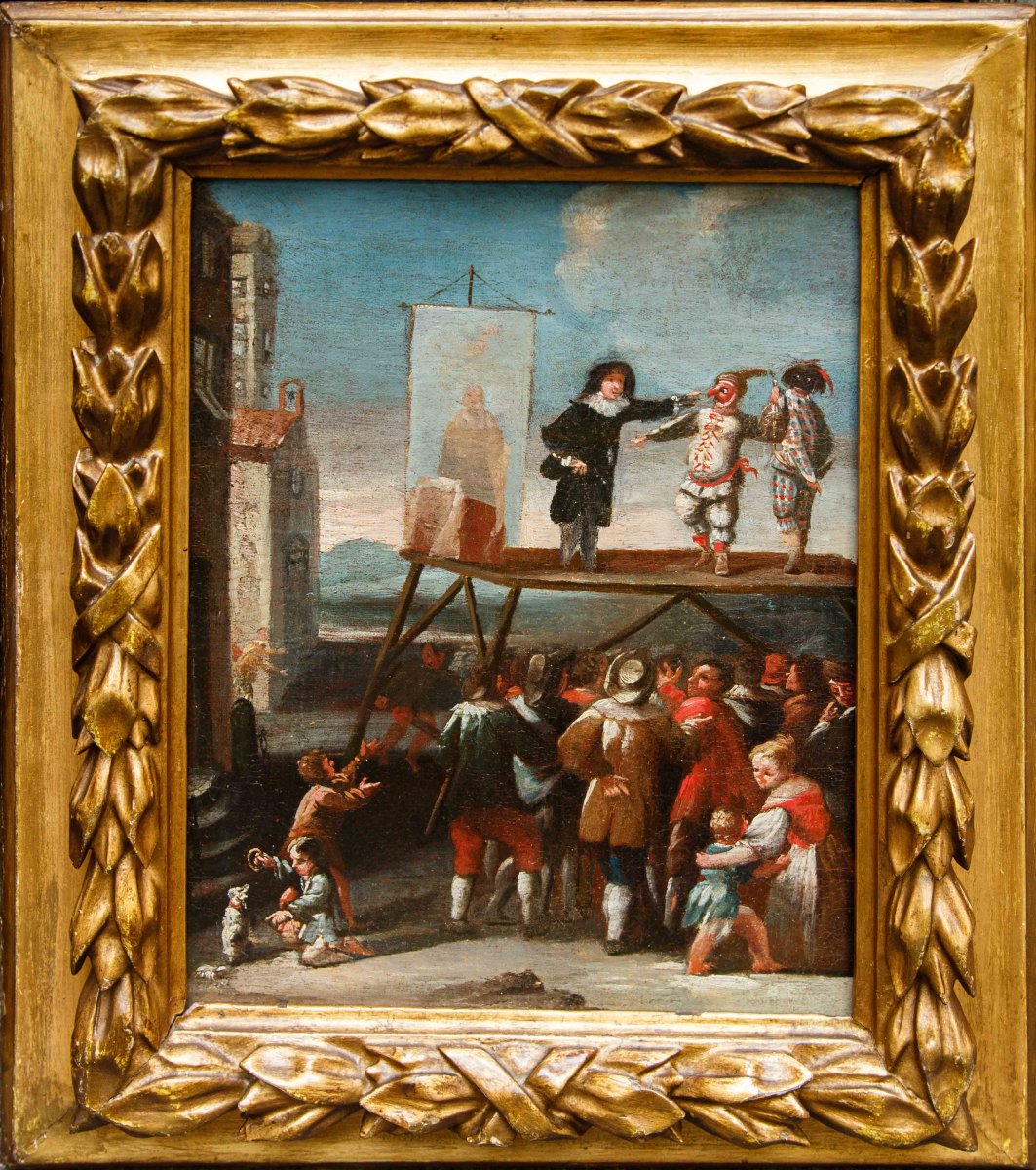
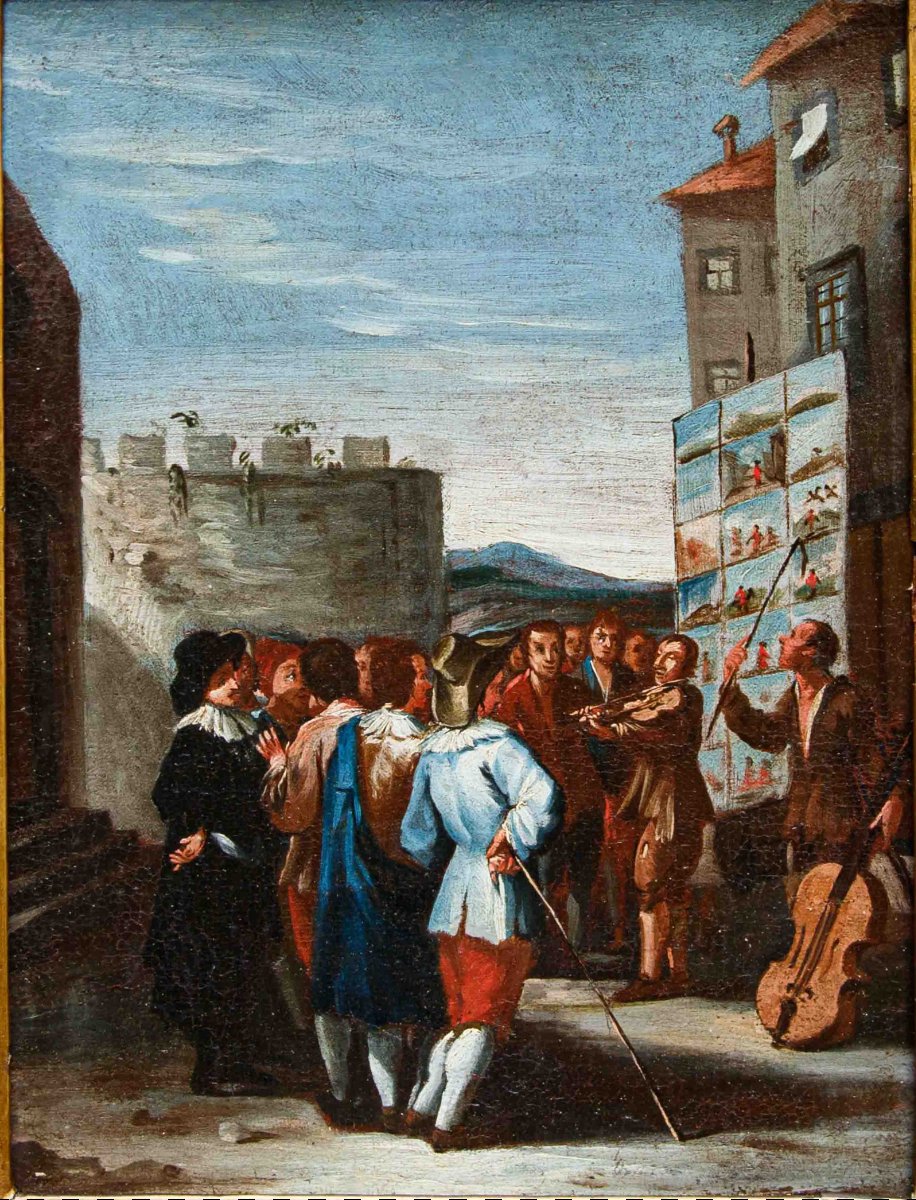
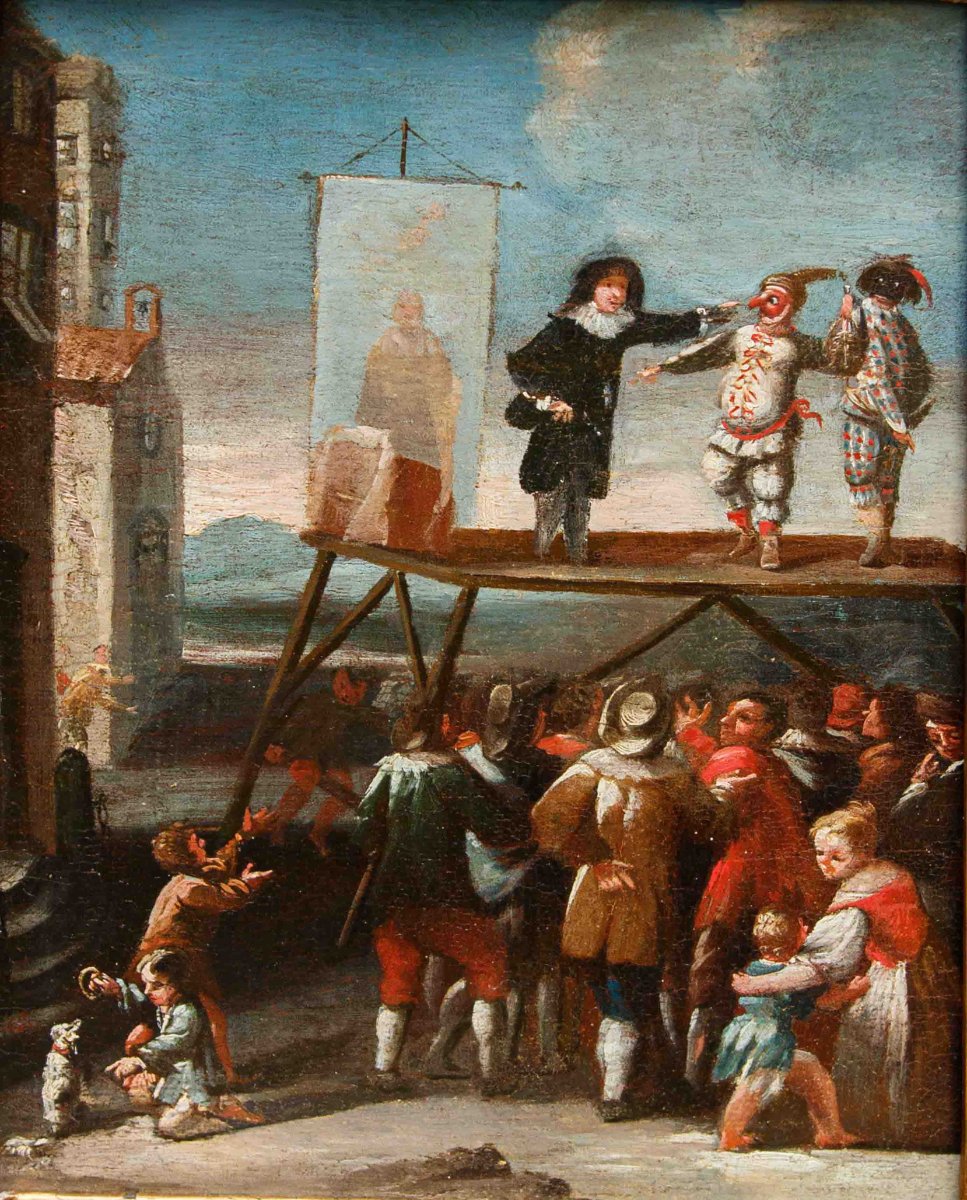
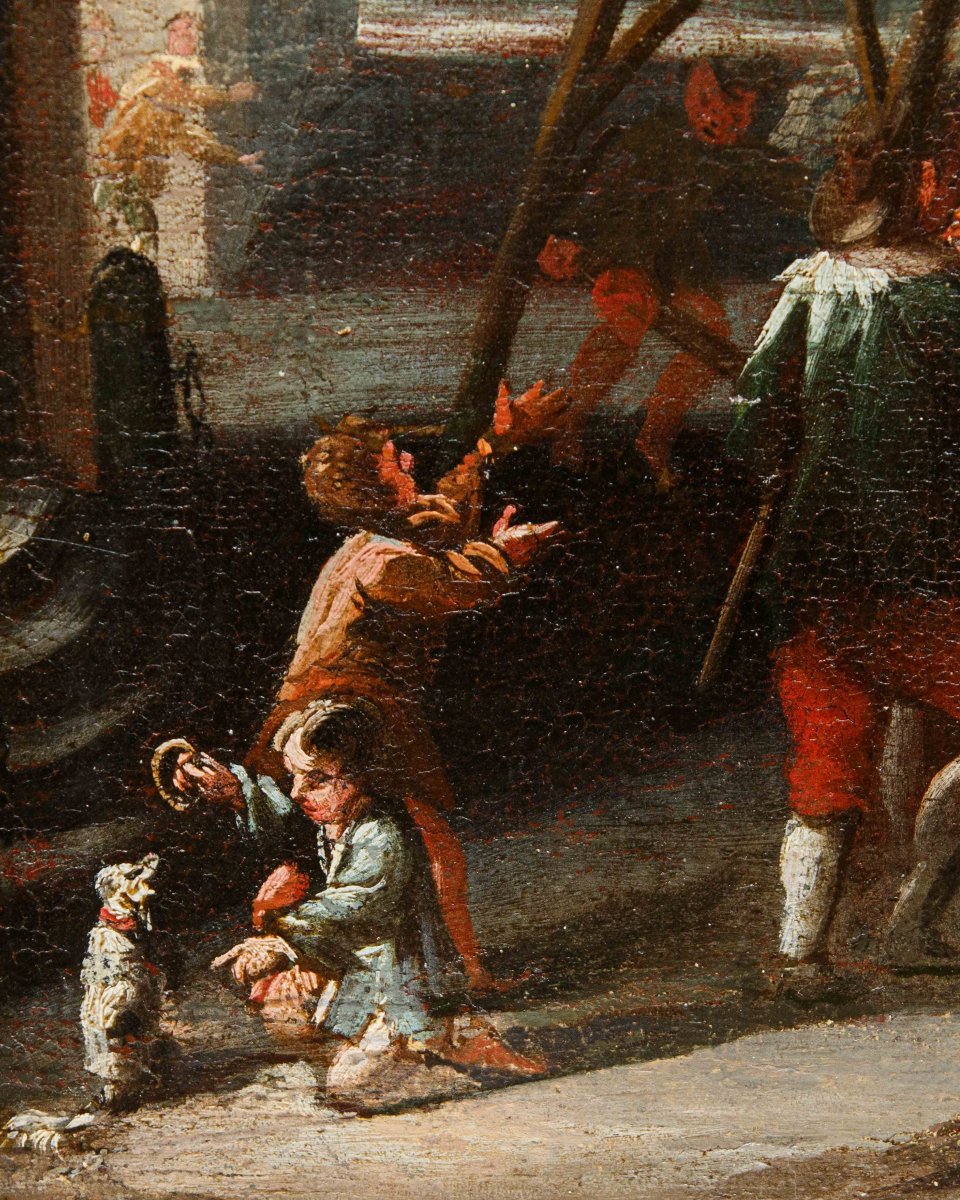
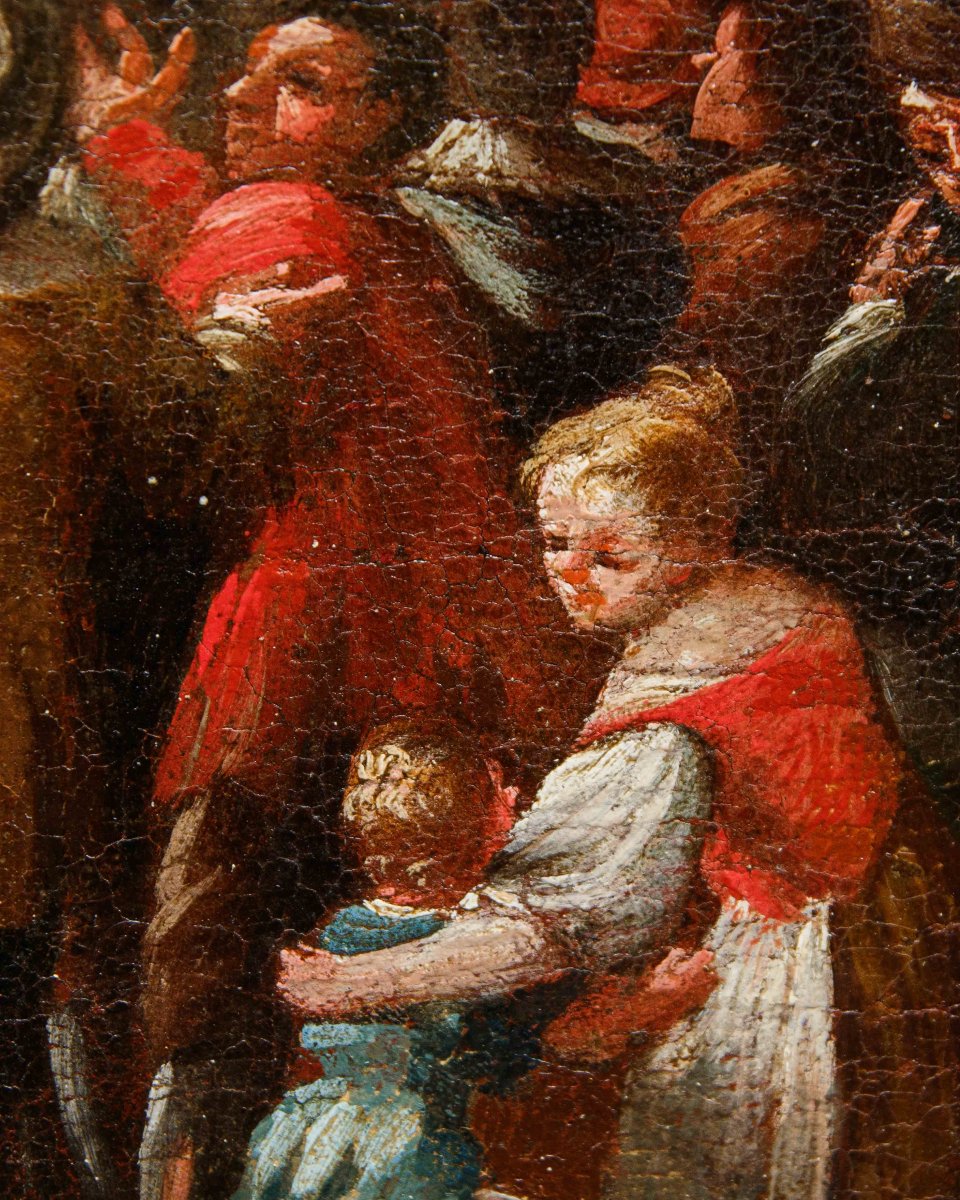
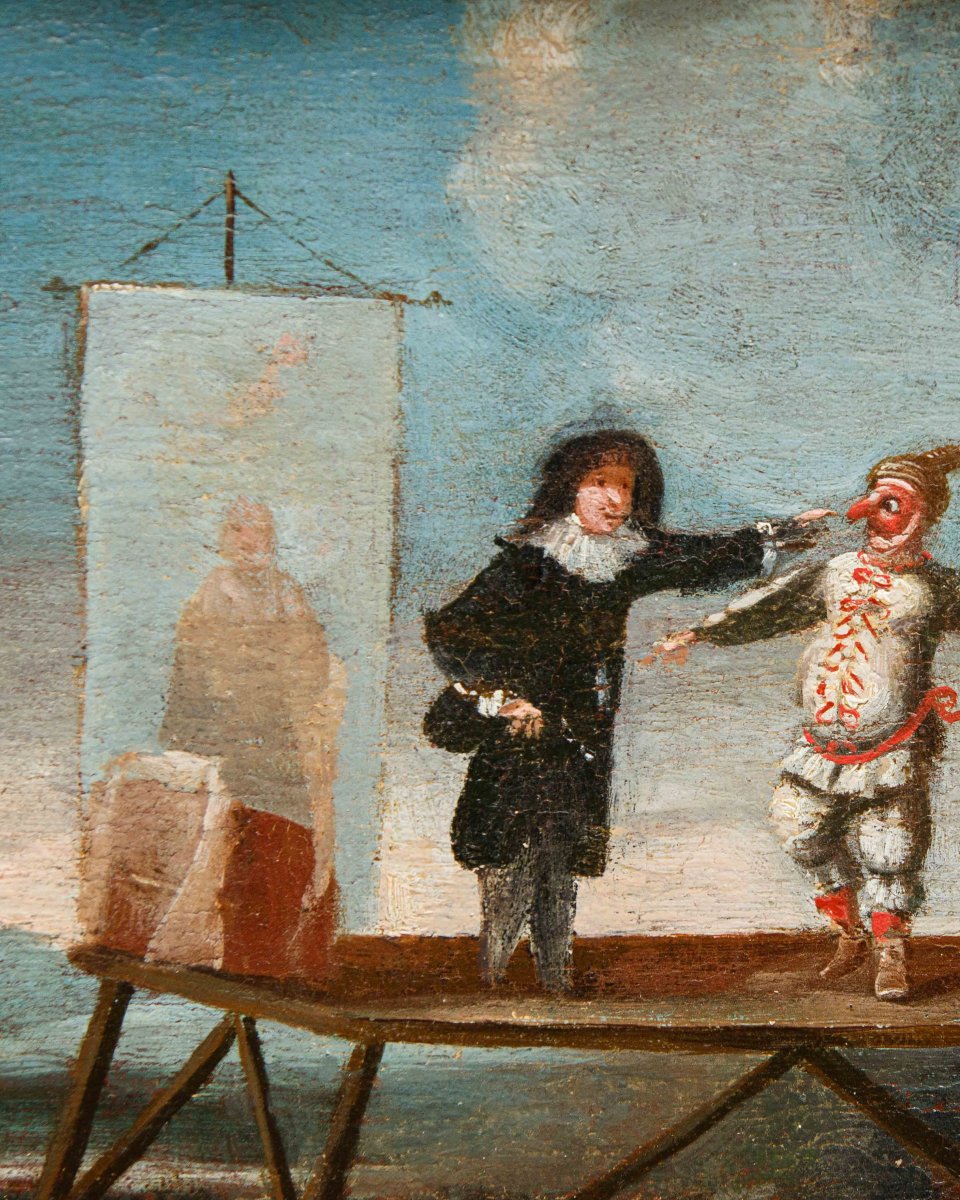
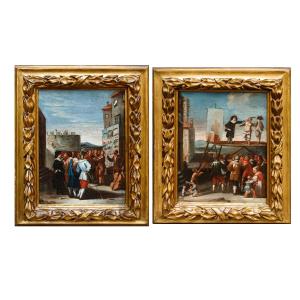
These two canvases, created by the skilled brush of an 18th-century Piedmontese master, offer a lively and valuable glimpse into everyday life and street entertainment in 18th-century Italy. The works belong to the successful tradition of “genre painting,” which found its greatest exponents in Turin and Piedmont in Pietro Domenico Olivero (1679–1755) and his ideal successor, Giovanni Michele Graneri (1708–1762). The artist behind these paintings demonstrates a deep assimilation of the lessons of the two aforementioned masters. From Olivero, he inherits the ability to orchestrate group scenes with minute figures rendered with extreme precision, almost in an anecdotal style. From Graneri, on the other hand, he seems to have adopted a more narrative and, at times, satirical approach, as well as a color palette that plays on the contrasts between shadowed areas and the flashes of light that illuminate the protagonists’ garments. The scenes are set in urban outdoor settings reminiscent of the squares or suburbs of 18th-century Turin, characterized by austere architecture and crenellated towers that serve as natural theatrical backdrops. This painting depicts a typical moment in the dissemination of news and folk tales: the Cantastorie. A man, standing on the right, points with a long stick to a display board divided into vignettes (a precursor to the comic strip), which visually illustrates the story being told or sung. Beside him, two musicians—one playing the violin and one the cello—accompany the performance, drawing the attention of a group of passersby. The variety of clothing—from nobles in dark suits with wide white collars to commoners in simpler, more colorful attire—reflects street theater’s ability to bring together different social classes. The second scene depicts a full-fledged theatrical performance staged on a makeshift raised wooden stage. Here, the protagonists are the masks of the Commedia dell’Arte: one can clearly recognize a character reminiscent of Pulcinella (or a similar mask such as the proto-Gianduja or a local variant) with his typical hooked nose, interacting with a man in dark clothing and another actor in multicolored attire (Arlecchino). Below, the crowd watches spellbound; in the foreground, the figure of a woman holding a child stands out—a detail that lends realism and tenderness to the scene. On the left, a touch of everyday life: a child plays with a small dog, oblivious to the official performance on stage. These paintings are not merely fine works of art, but true visual chronicles. The Piedmontese painter succeeds in capturing the ephemeral nature of street theater, documenting not only the costumes and musical instruments of the era but also the common “spirit” of the times. The brushwork is vibrant and textured, effectively conveying the dusty yet lively atmosphere of 18th-century fairs. In conclusion, the pair of canvases represents a significant testament to the vitality of genre painting in Piedmont, serving as a cultural bridge between Olivero’s keen observation of reality and Graneri’s theatrical and popular storytelling, celebrating the world of the comedians as a mirror of the society of the time.
Period: 18th century
Style: Other Style
Condition: Good condition
Material: Oil painting
Width: 25
Height: 32
Reference (ID): 1830636
Availability: In stock