

Venus On The Waves, François Boucher (paris, 1703 – 1770) Circle
Artist: François Boucher (paris, 1703 - 1770) Cercle
François Boucher (Paris, 1703–1770) circle
Venus on the Water
Oil on canvas
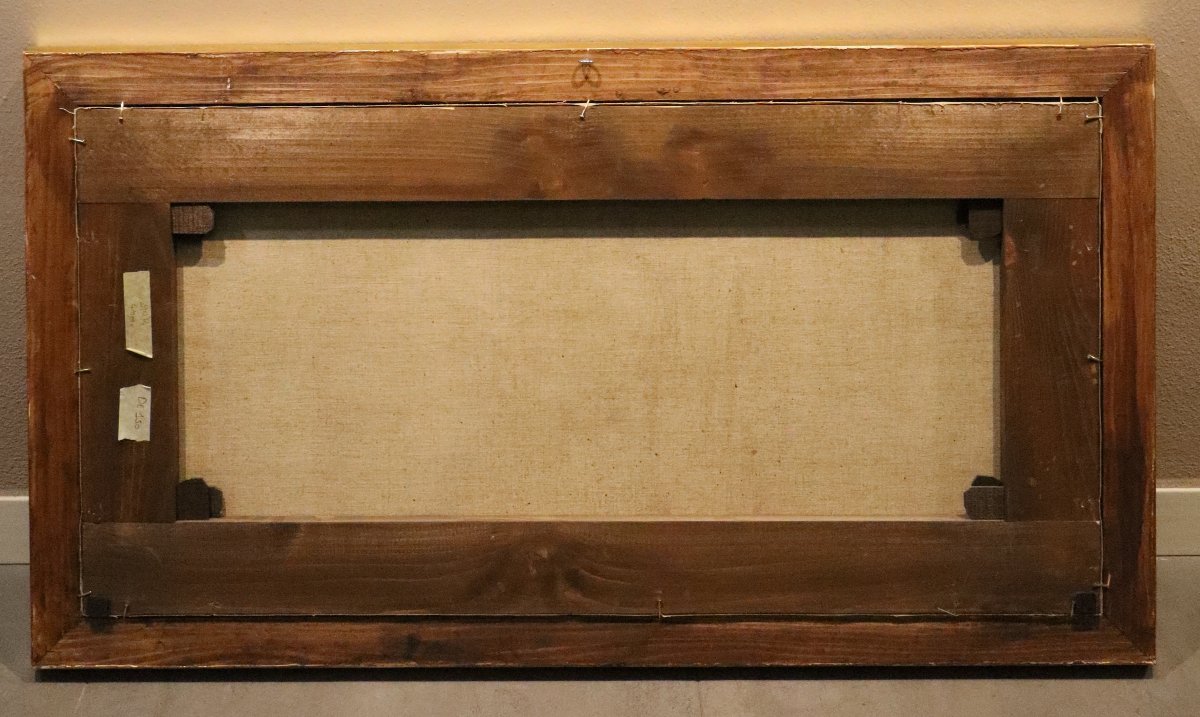
49 x 98 cm. — With frame: 61 x 110 cm.
DETAILS OF THE WORK (CLICK HERE)
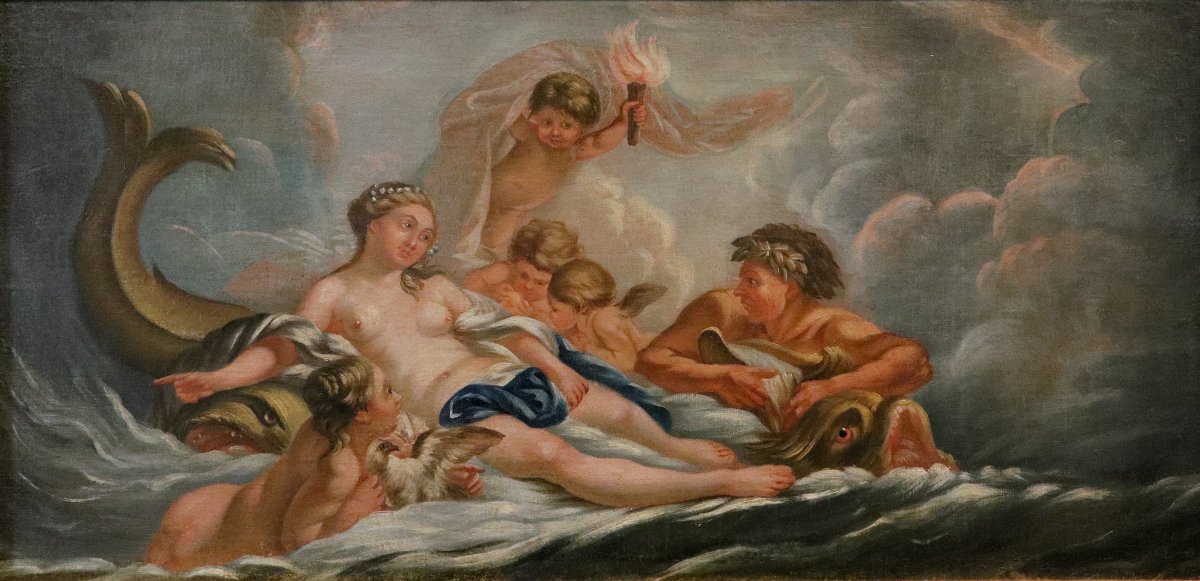
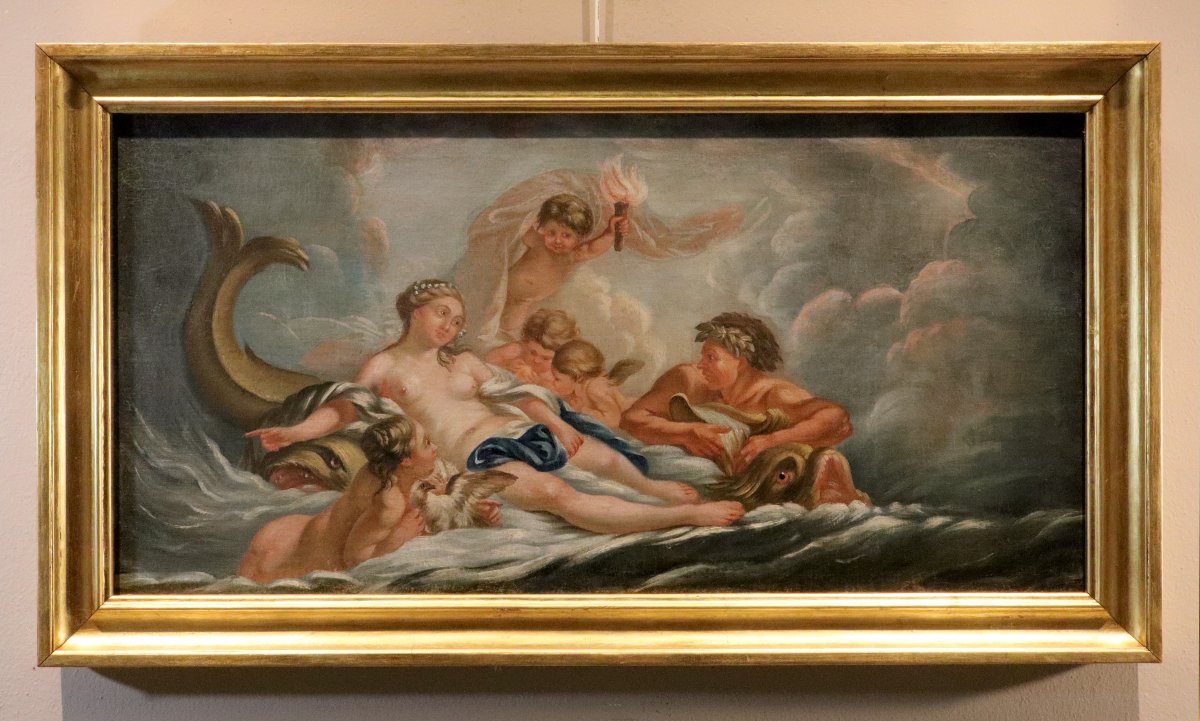
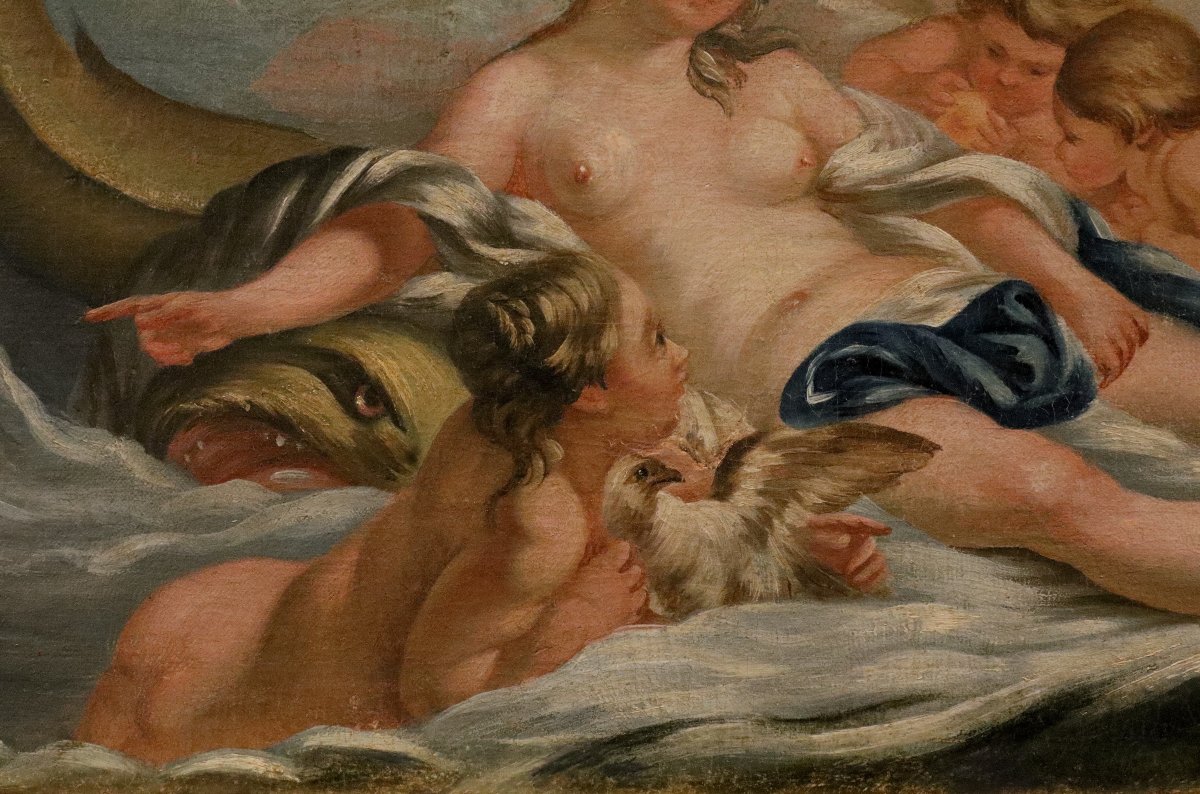
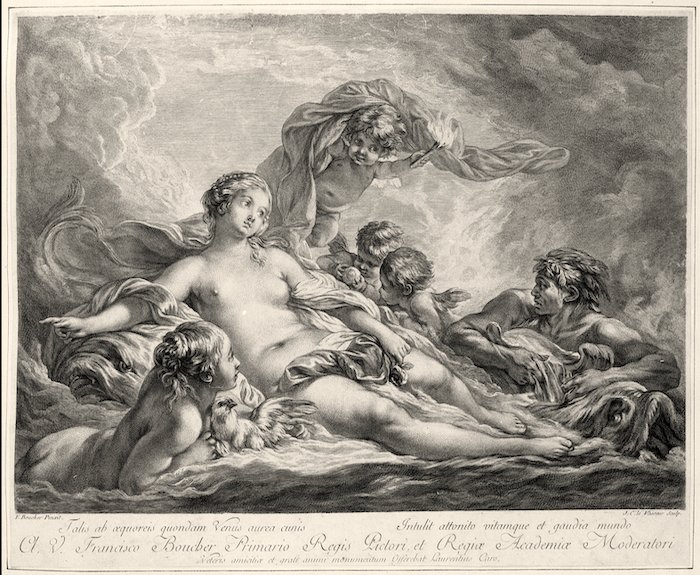
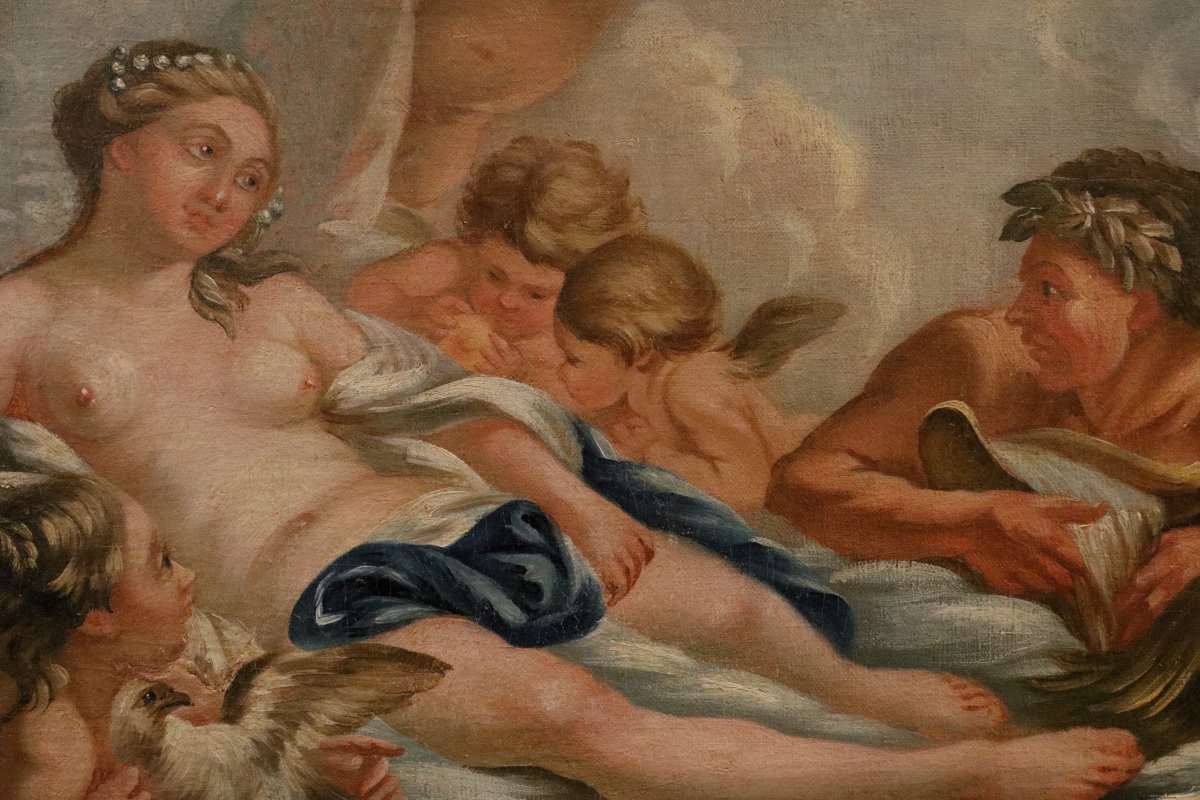
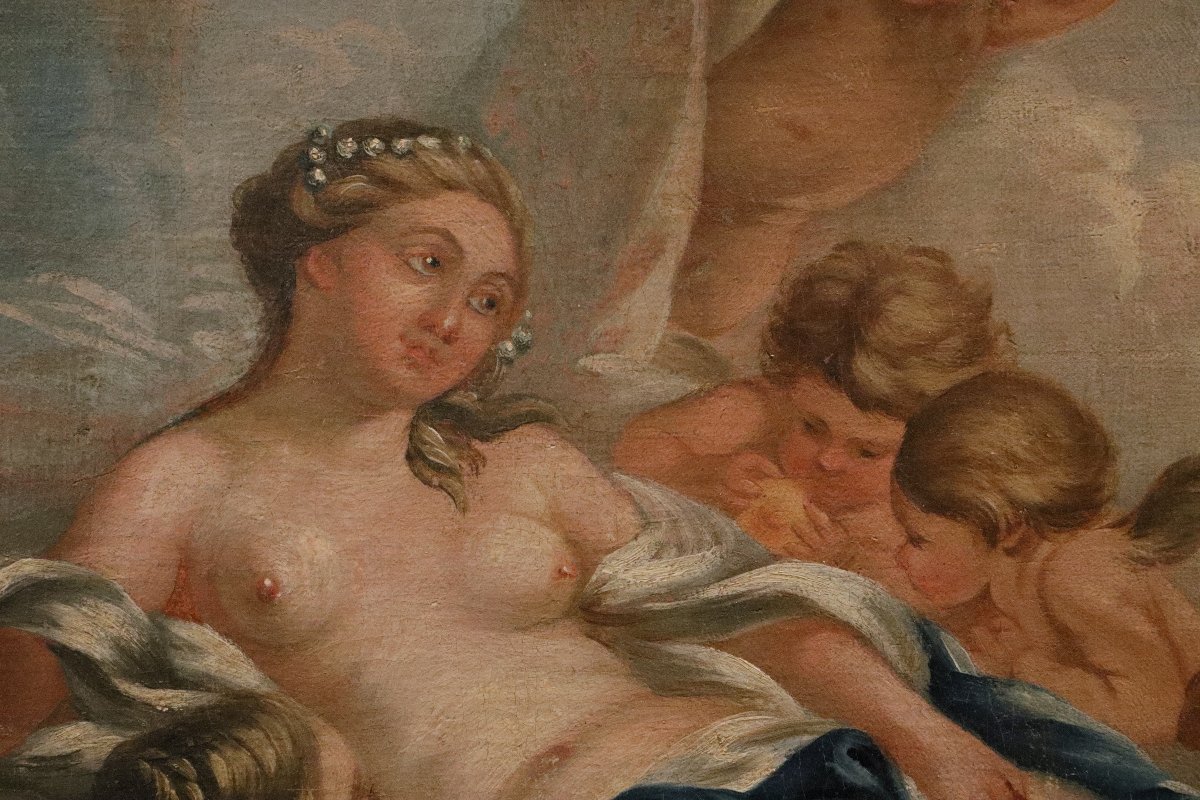
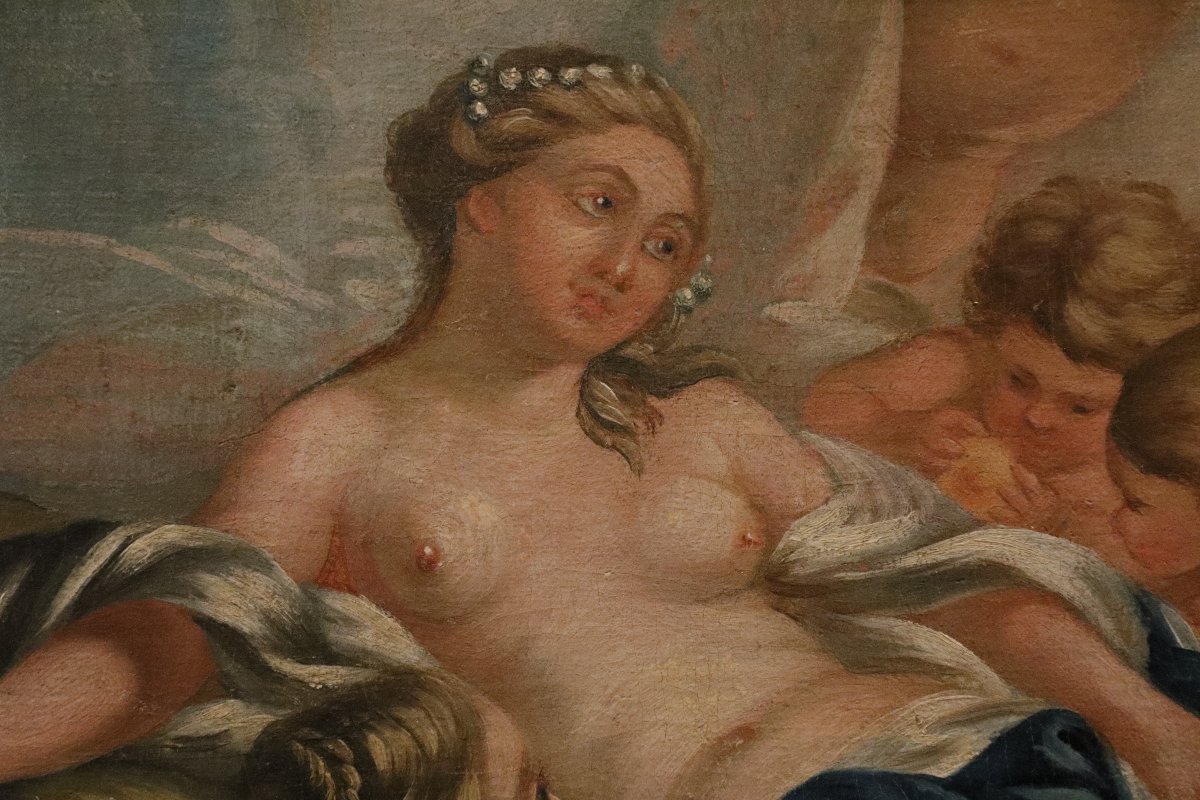
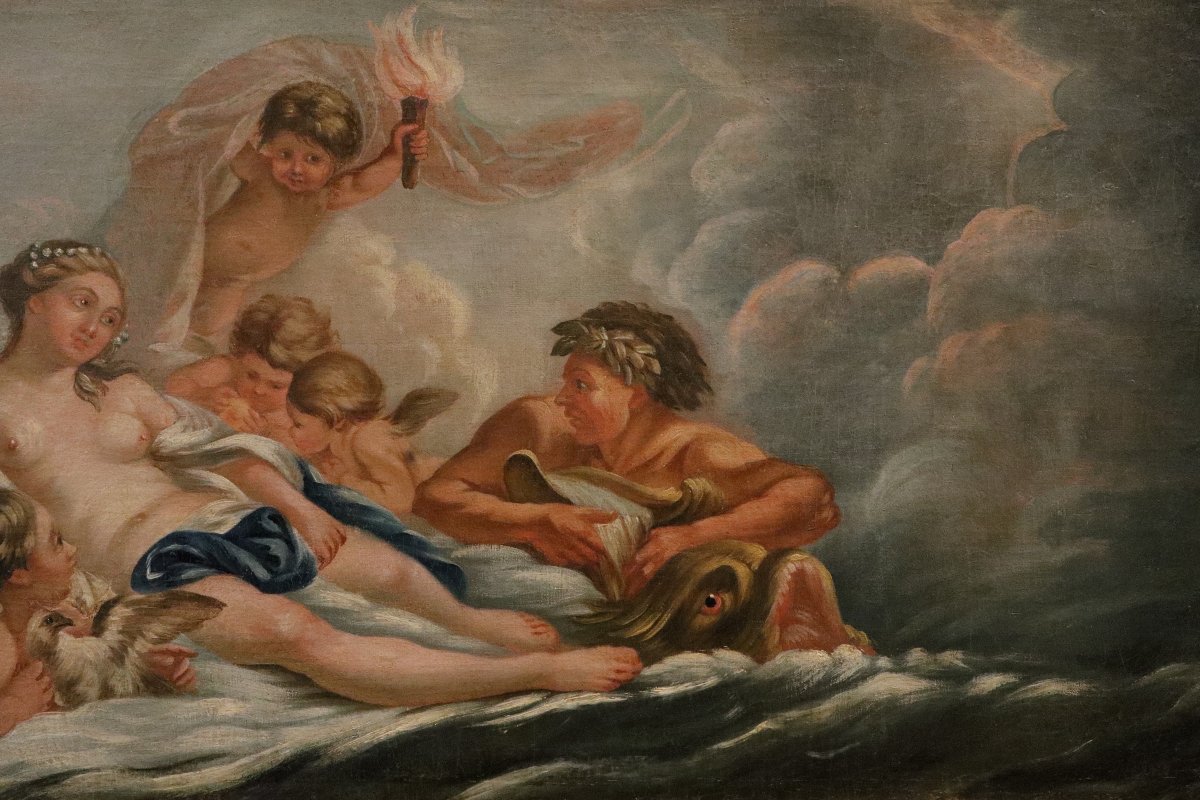
This delightful painting, depicting the goddess Venus reclining on the waves of the sea, surrounded by celestial cherubs, nymphs, and mythological sea creatures emerging from the water, is based on a composition created by the French Rococo painter François Boucher (Paris, 1703–1770) and made famous by the 18th-century engraving by Jean-Charles Le Vasseur (1734–1816).
Historical copies of this specific print are preserved in prestigious art collections worldwide, including the Edmond de Rothschild Collection at the Louvre Museum in Paris [1].
This was one of Boucher’s favorite subjects, as it fully reflected the Rococo style—the lightest and yet most elegant of all styles—capable of interpreting in painting the aesthetic ideals of the French aristocracy of the Ancien Régime.
Unlike the Renaissance Venuses (which were more solemn and statuesque), Boucher’s Venus embodies the ideal of 18th-century femininity, with her supple body, snow-white skin, and a pose that evokes a playful and mischievous sensuality. For the court of Louis XV (and in particular for Boucher’s patron, Madame de Pompadour), classical myth served as a cultured pretext for celebrating hedonism, earthly love, and elite luxury.
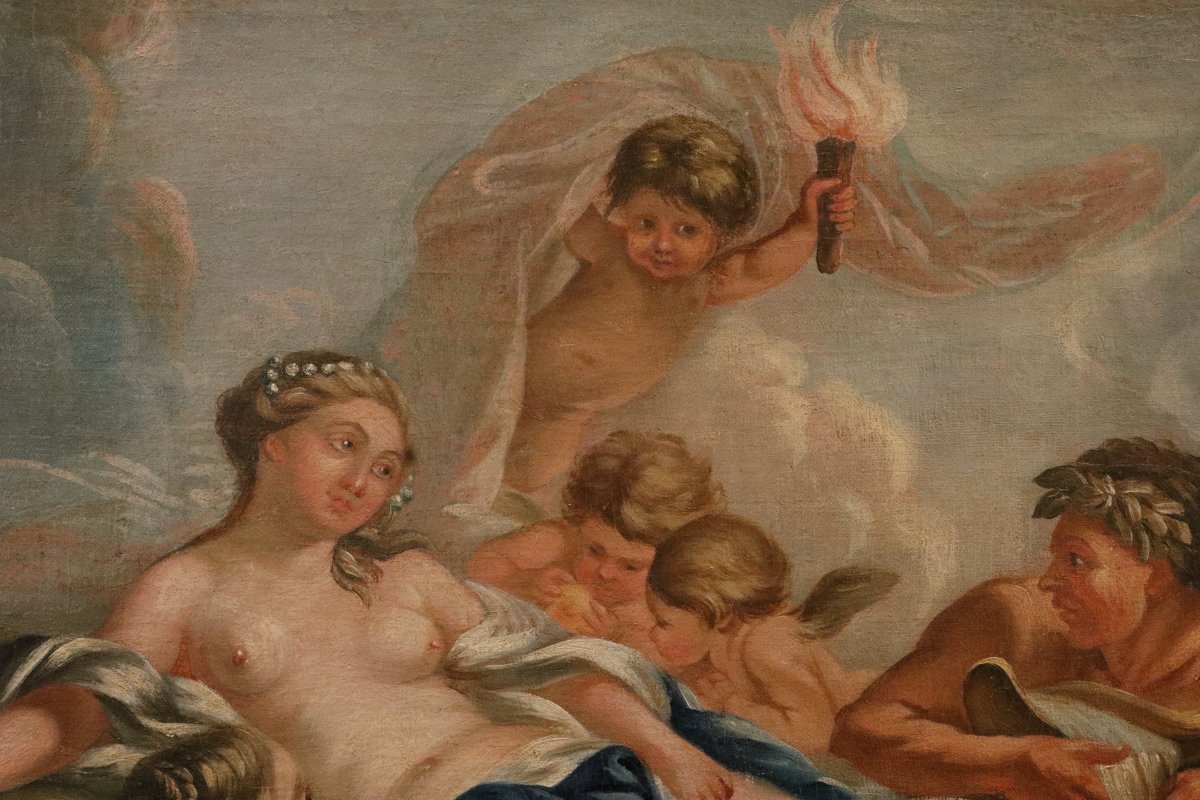
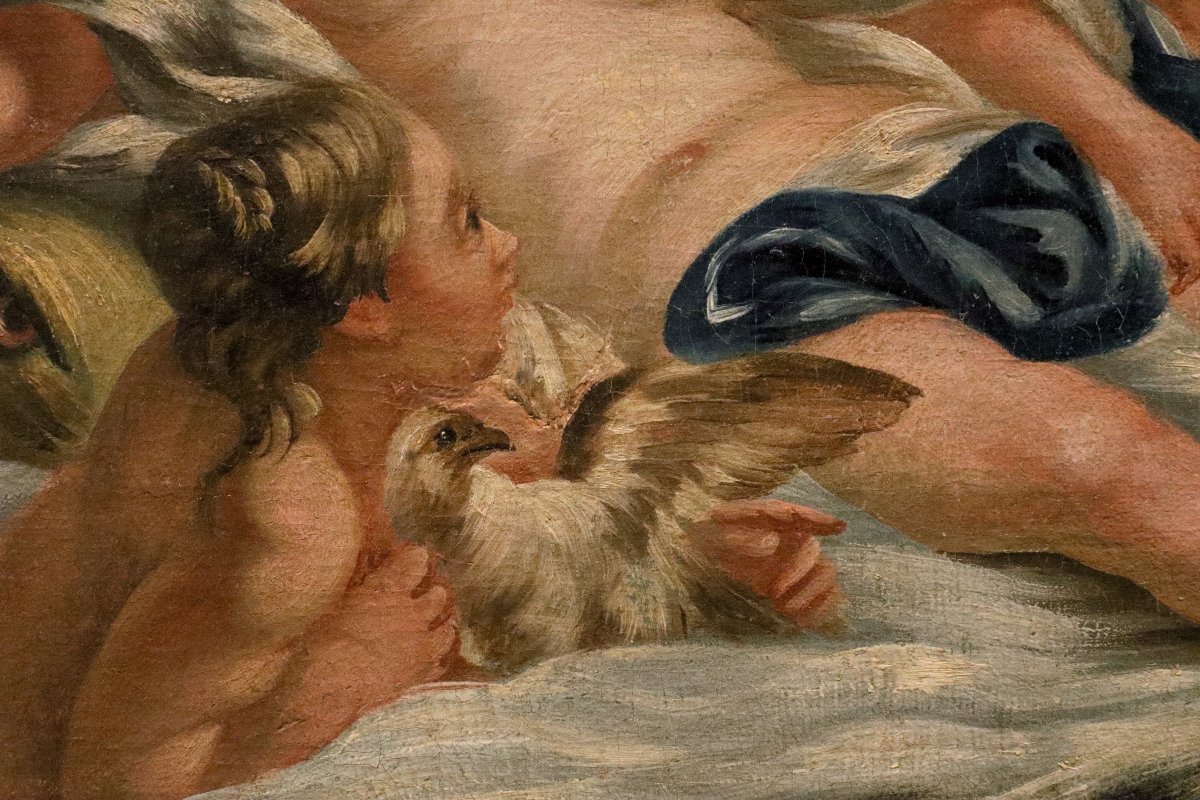
The cherubs flying around the goddess, playing with light fabrics that float in the air, symbolize the various nuances of amorous desire and romantic love. The nymphs and tritons surrounding Venus offer pearls, shells, and corals, as if to submit to the goddess, representing all of nature bowing down and paying homage to the sovereign of love.
The entire scene is steeped in an ethereal and theatrical atmosphere, dominated by pastel tones that fade from flesh-toned pink to the brown of the storm clouds in the background.
François Boucher and his workshop devoted much of their work to this type of subject matter—the quintessential symbol of the frivolous pleasures of life to which the aristocracy aspired—thanks to the master’s great fame and the abundant requests from collectors. Our work, which can be dated to the second half of the 18th century, can be attributed to a student or studio assistant of the French painter.
[1] Vénus sur les eaux
Artist: François Boucher / Engraver: Jean Charles LE VASSEUR
Musée du Louvre (https://collections.louvre.fr/en/ark:/53355/cl020521157 )
ADDITIONAL INFORMATION:
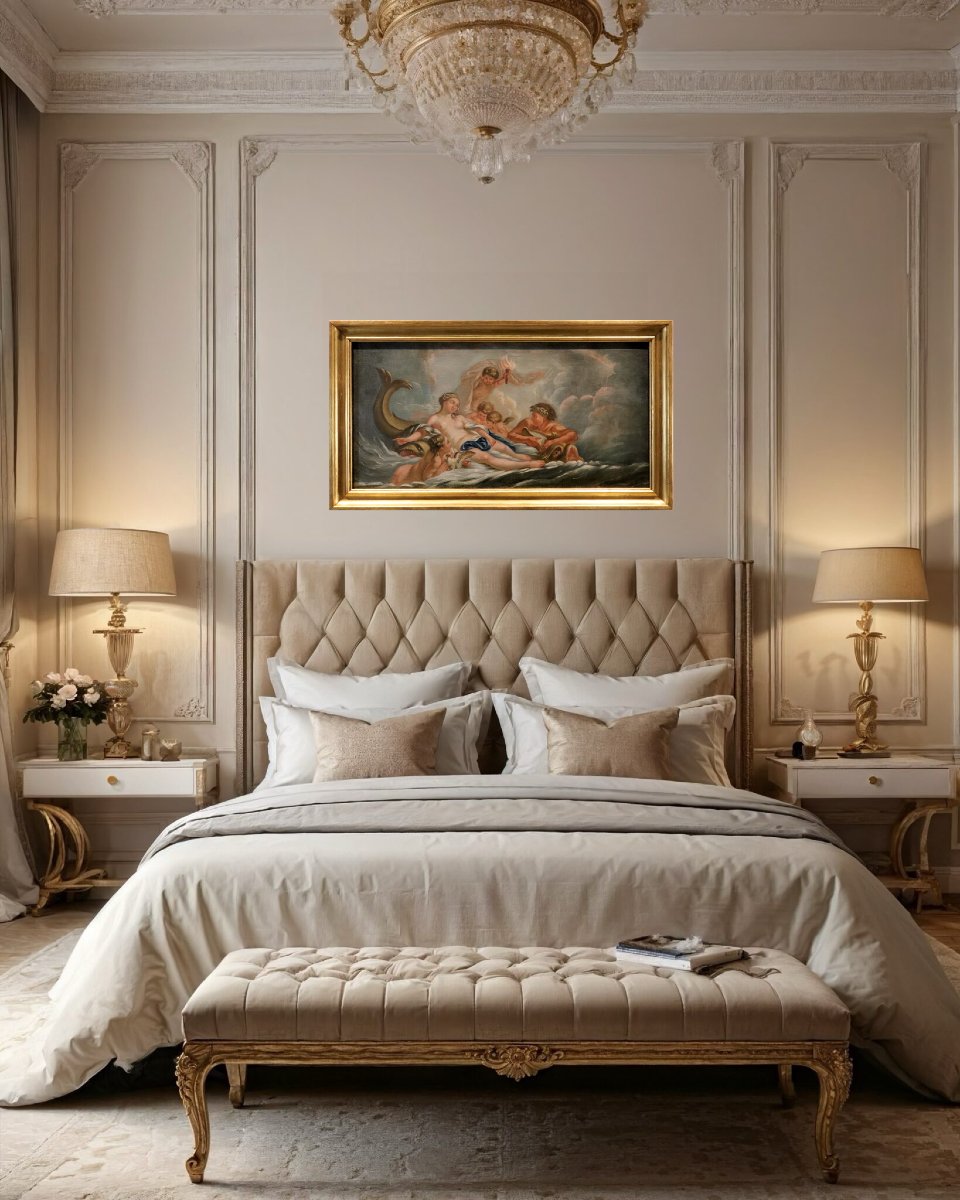
The painting is framed in a beautiful gilded wooden frame and is sold with a certificate of authenticity and a descriptive iconographic sheet.
We handle and arrange shipping for purchased works, both within Italy and internationally, using professional, insured carriers.
Please contact us for any information; we will be happy to assist you.
Follow us on:
https://www.instagram.com/galleriacastelbarco/?hl=it
https://www.facebook.com/galleriacastelbarco/
Venus on the Water
Oil on canvas
49 x 98 cm. — With frame: 61 x 110 cm.
DETAILS OF THE WORK (CLICK HERE)
This delightful painting, depicting the goddess Venus reclining on the waves of the sea, surrounded by celestial cherubs, nymphs, and mythological sea creatures emerging from the water, is based on a composition created by the French Rococo painter François Boucher (Paris, 1703–1770) and made famous by the 18th-century engraving by Jean-Charles Le Vasseur (1734–1816).
Historical copies of this specific print are preserved in prestigious art collections worldwide, including the Edmond de Rothschild Collection at the Louvre Museum in Paris [1].
This was one of Boucher’s favorite subjects, as it fully reflected the Rococo style—the lightest and yet most elegant of all styles—capable of interpreting in painting the aesthetic ideals of the French aristocracy of the Ancien Régime.
Unlike the Renaissance Venuses (which were more solemn and statuesque), Boucher’s Venus embodies the ideal of 18th-century femininity, with her supple body, snow-white skin, and a pose that evokes a playful and mischievous sensuality. For the court of Louis XV (and in particular for Boucher’s patron, Madame de Pompadour), classical myth served as a cultured pretext for celebrating hedonism, earthly love, and elite luxury.
The cherubs flying around the goddess, playing with light fabrics that float in the air, symbolize the various nuances of amorous desire and romantic love. The nymphs and tritons surrounding Venus offer pearls, shells, and corals, as if to submit to the goddess, representing all of nature bowing down and paying homage to the sovereign of love.
The entire scene is steeped in an ethereal and theatrical atmosphere, dominated by pastel tones that fade from flesh-toned pink to the brown of the storm clouds in the background.
François Boucher and his workshop devoted much of their work to this type of subject matter—the quintessential symbol of the frivolous pleasures of life to which the aristocracy aspired—thanks to the master’s great fame and the abundant requests from collectors. Our work, which can be dated to the second half of the 18th century, can be attributed to a student or studio assistant of the French painter.
[1] Vénus sur les eaux
Artist: François Boucher / Engraver: Jean Charles LE VASSEUR
Musée du Louvre (https://collections.louvre.fr/en/ark:/53355/cl020521157 )
ADDITIONAL INFORMATION:
The painting is framed in a beautiful gilded wooden frame and is sold with a certificate of authenticity and a descriptive iconographic sheet.
We handle and arrange shipping for purchased works, both within Italy and internationally, using professional, insured carriers.
Please contact us for any information; we will be happy to assist you.
Follow us on:
https://www.instagram.com/galleriacastelbarco/?hl=it
https://www.facebook.com/galleriacastelbarco/
7 500 €
Period: 17th century
Style: Louis 15th - Transition
Condition: Excellent condition
Material: Oil painting
Width: encadré 110 cm.
Height: encadré 61 cm.
Reference (ID): 1837862
Availability: In stock
Print