

18th-century Cantor's Stool Made Of Solid Oak,
18th-century cantor's stool made of solid oak
Structure and TypologyModel:
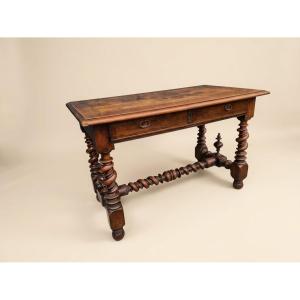
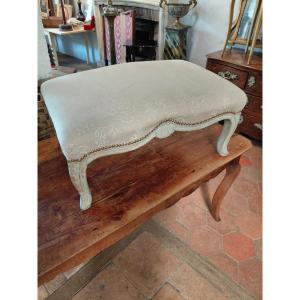
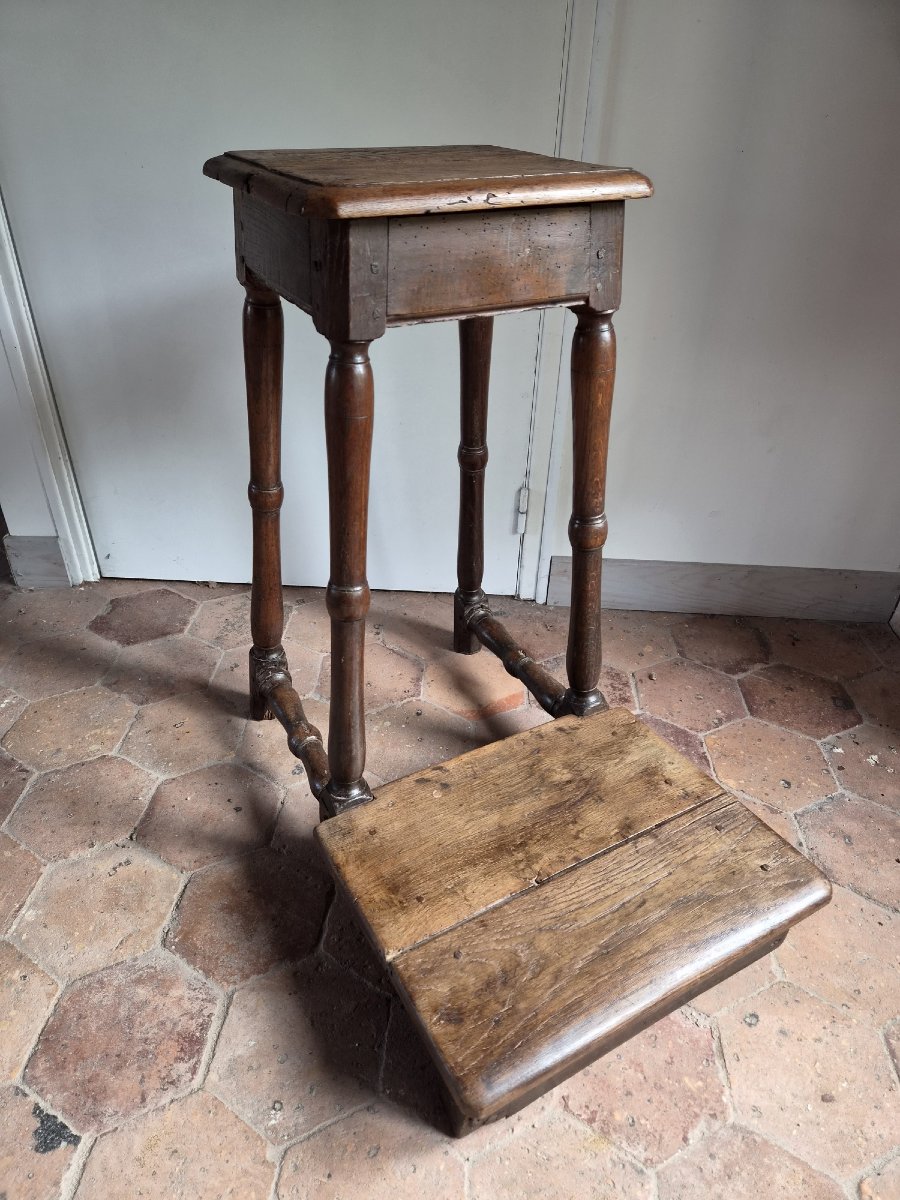
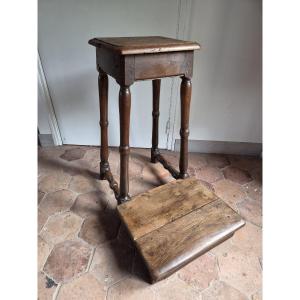
Stool known as an “early period” cantor’s stool (Louis XIII / Regency style), designed as a footrest or raised seat
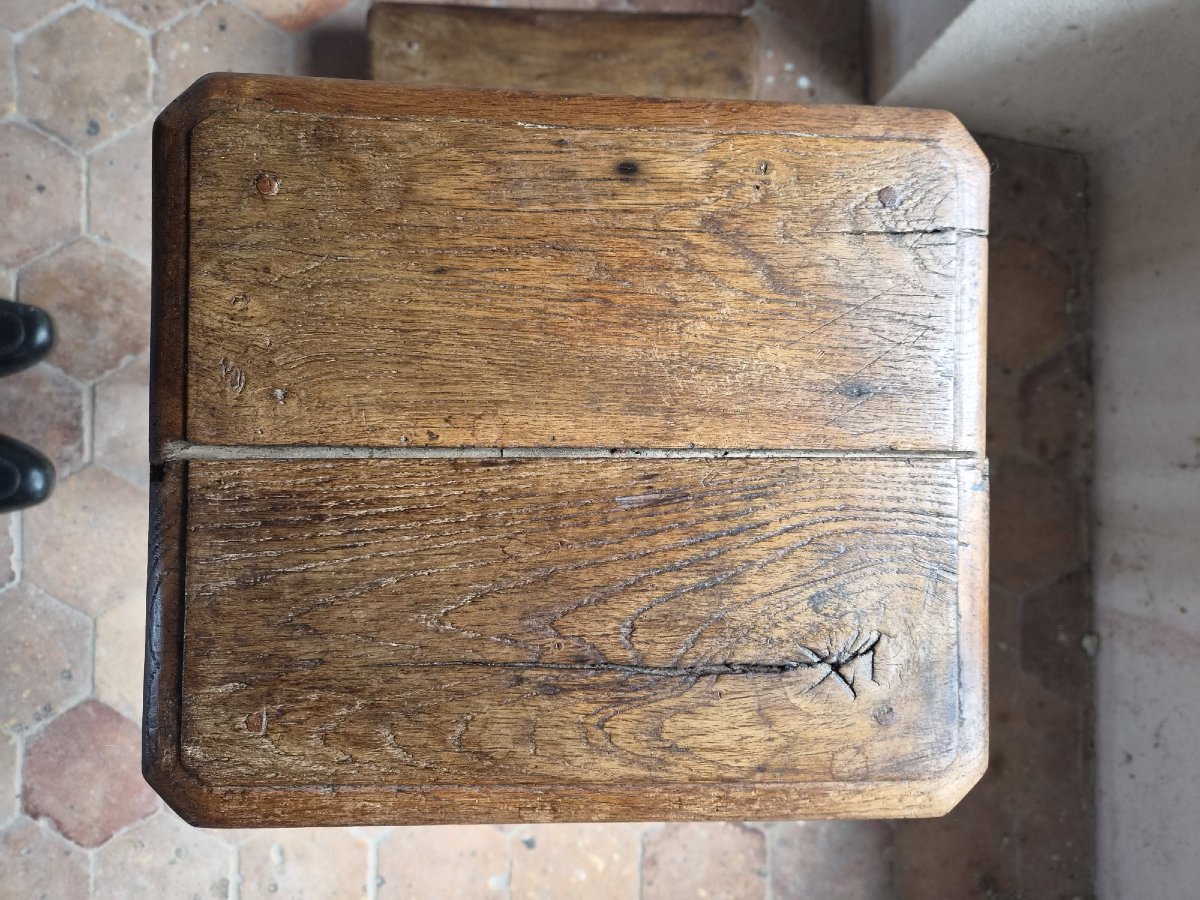
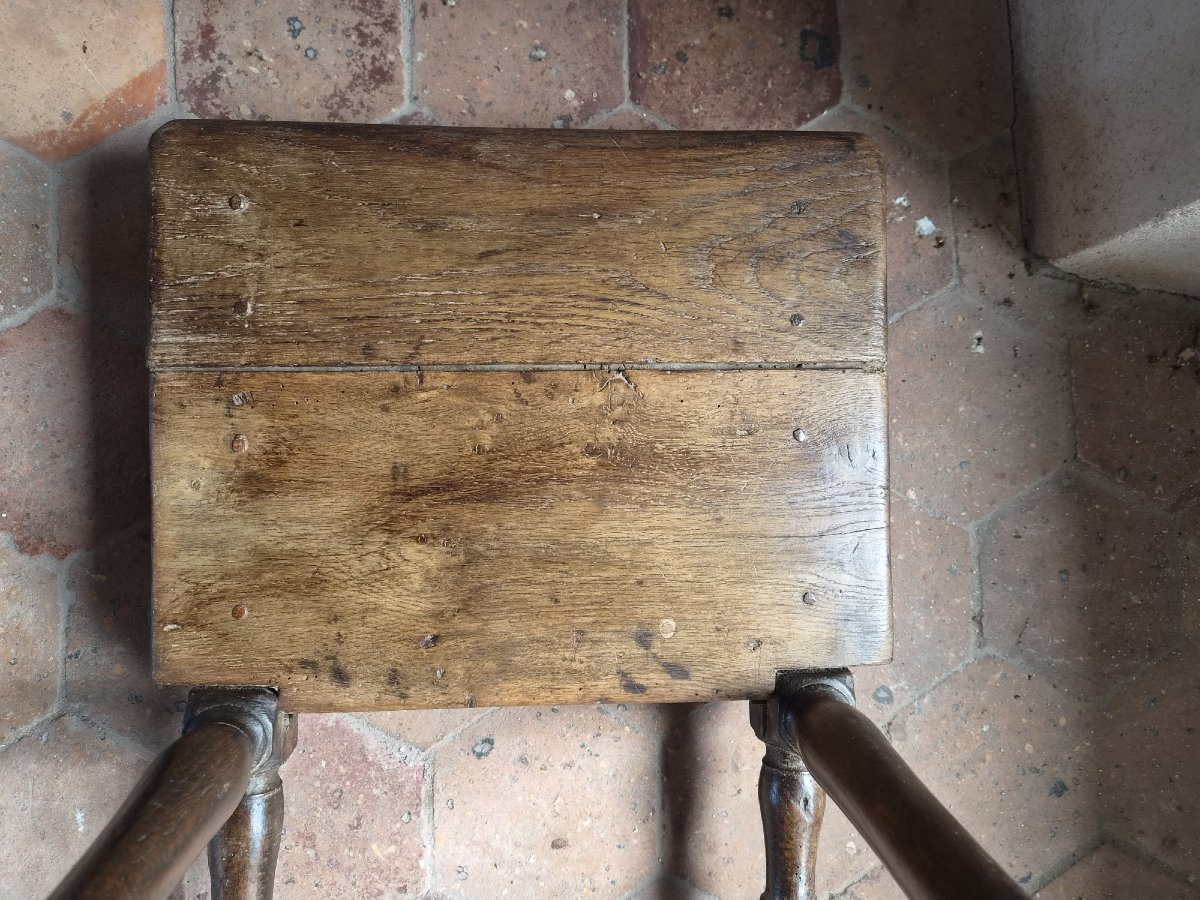
Upper seat: Square top made of solid oak, composed of two joined planks, with rounded corners Footrest: A wide, projecting base or lower step completes the structure, originally used to rest the feet to insulate them from the coolness of the church floor tiles or to kneel on.
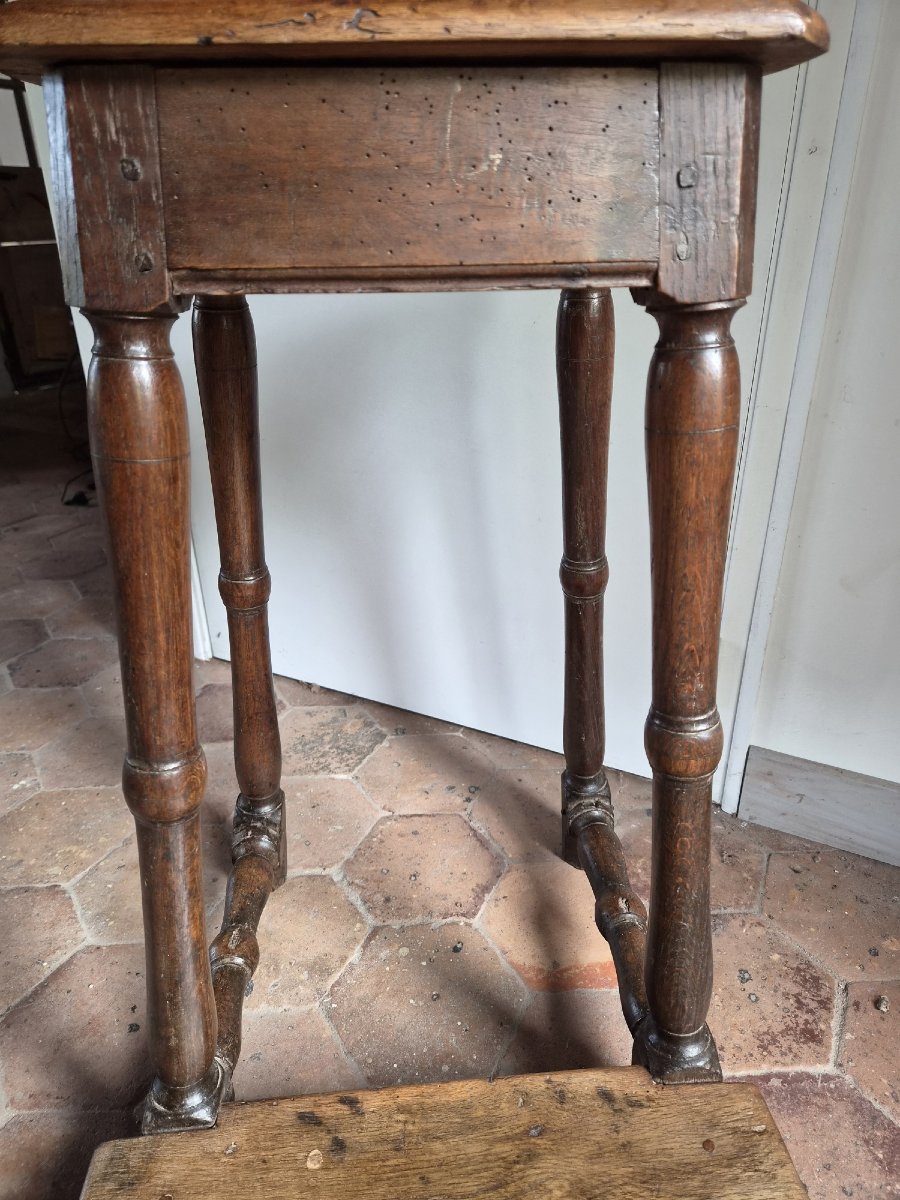
Base and AssemblyLegs: Fourtall solid oak posts, beautifully turned into balusters,adding elegance to this rustic and sturdy piece of furniture.
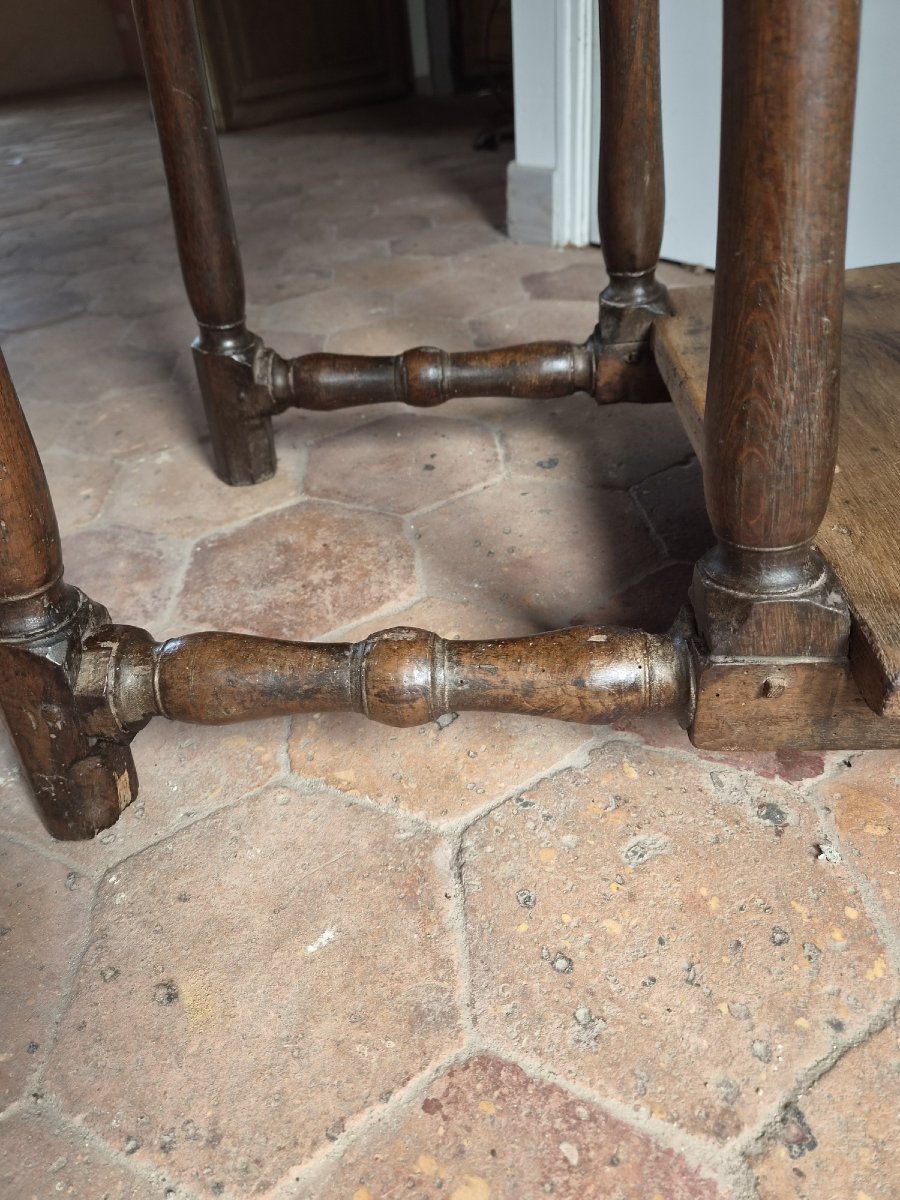
Crossbars: A low H-shaped crossbar connecting the posts, also turned, ensuring the rigidity of the entire structure and the connection to the step.
Assembly: Handcrafted construction entirely fastened with tenons and mortises, typical of 18th-century regional cabinetmaking.
Material, Patina, and Condition Wood: Solid oak with a large cross-section and a distinct, dense grain, particularly visible in the cross-sectional views of the top and the footrest.
Color and Patina: A warm, natural dark brown hue, featuring a superbpatina from age and use, particularly pronounced on the that have been rubbed over the centuries.
Signs of Age: Presence of natural shrinkage cracks and an old knot on the top surface. These have been stabilized, visible on the upper rim of the stool (under the top), attestingto its authenticity and age. Normalwear and tear at the corners and lower ends of the crossbars incontact with the terracotta tile floor.
Structure and TypologyModel:
Stool known as an “early period” cantor’s stool (Louis XIII / Regency style), designed as a footrest or raised seat
Upper seat: Square top made of solid oak, composed of two joined planks, with rounded corners Footrest: A wide, projecting base or lower step completes the structure, originally used to rest the feet to insulate them from the coolness of the church floor tiles or to kneel on.
Base and AssemblyLegs: Fourtall solid oak posts, beautifully turned into balusters,adding elegance to this rustic and sturdy piece of furniture.
Crossbars: A low H-shaped crossbar connecting the posts, also turned, ensuring the rigidity of the entire structure and the connection to the step.
Assembly: Handcrafted construction entirely fastened with tenons and mortises, typical of 18th-century regional cabinetmaking.
Material, Patina, and Condition Wood: Solid oak with a large cross-section and a distinct, dense grain, particularly visible in the cross-sectional views of the top and the footrest.
Color and Patina: A warm, natural dark brown hue, featuring a superbpatina from age and use, particularly pronounced on the that have been rubbed over the centuries.
Signs of Age: Presence of natural shrinkage cracks and an old knot on the top surface. These have been stabilized, visible on the upper rim of the stool (under the top), attestingto its authenticity and age. Normalwear and tear at the corners and lower ends of the crossbars incontact with the terracotta tile floor.
350 €
Period: 18th century
Style: Louis 14th, Regency
Condition: Good condition
Material: Solid wood
Length: 67 cm
Width: 42 cm
Height: 70 cm
Reference (ID): 1837228
Availability: In stock
Print