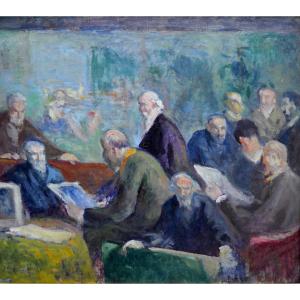


Maximilien Luce (1858–1941) “the Jury After The Exhibition” Paris Pissarro Signac France
Maximilien LUCE (1858–1941)
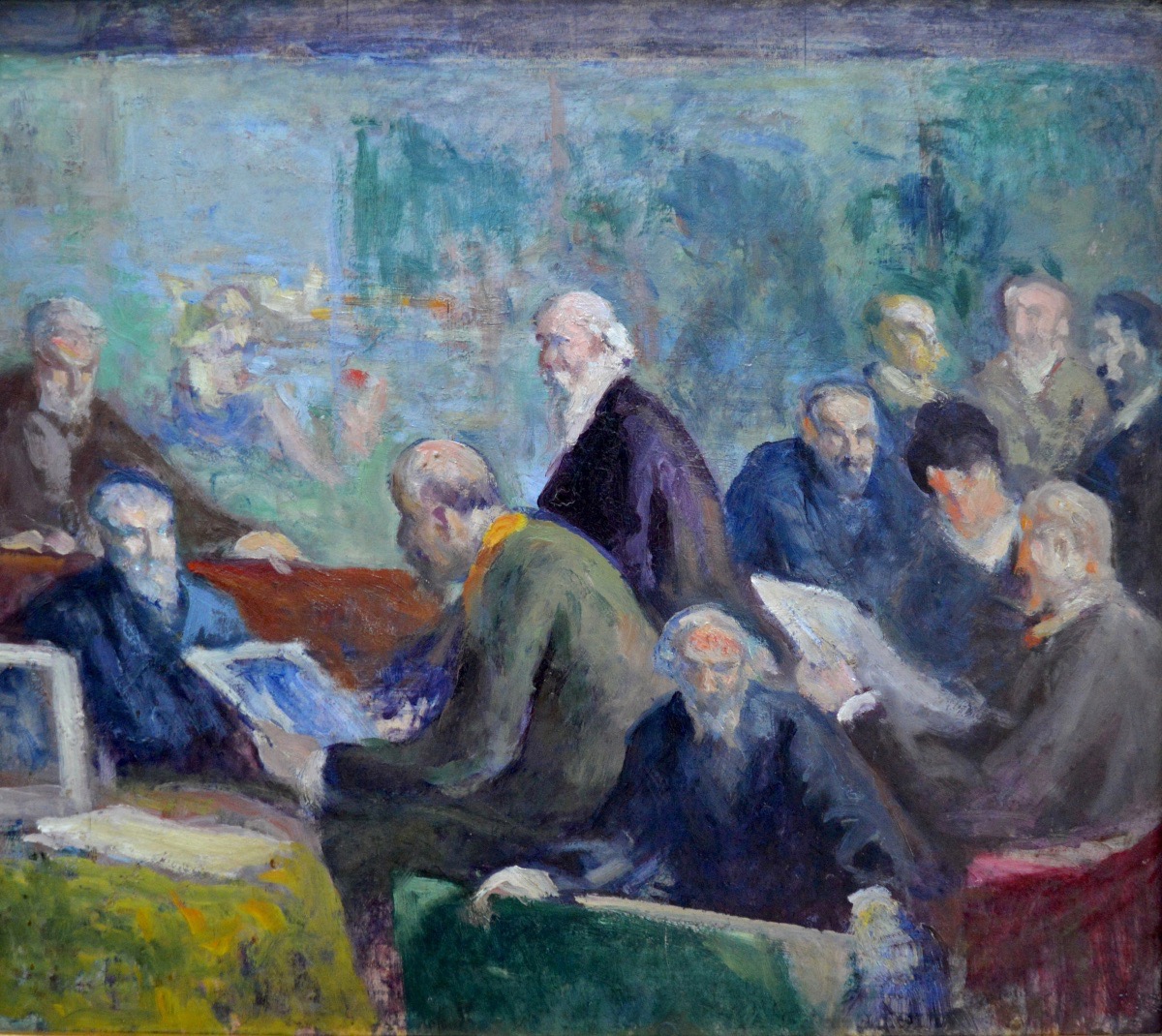
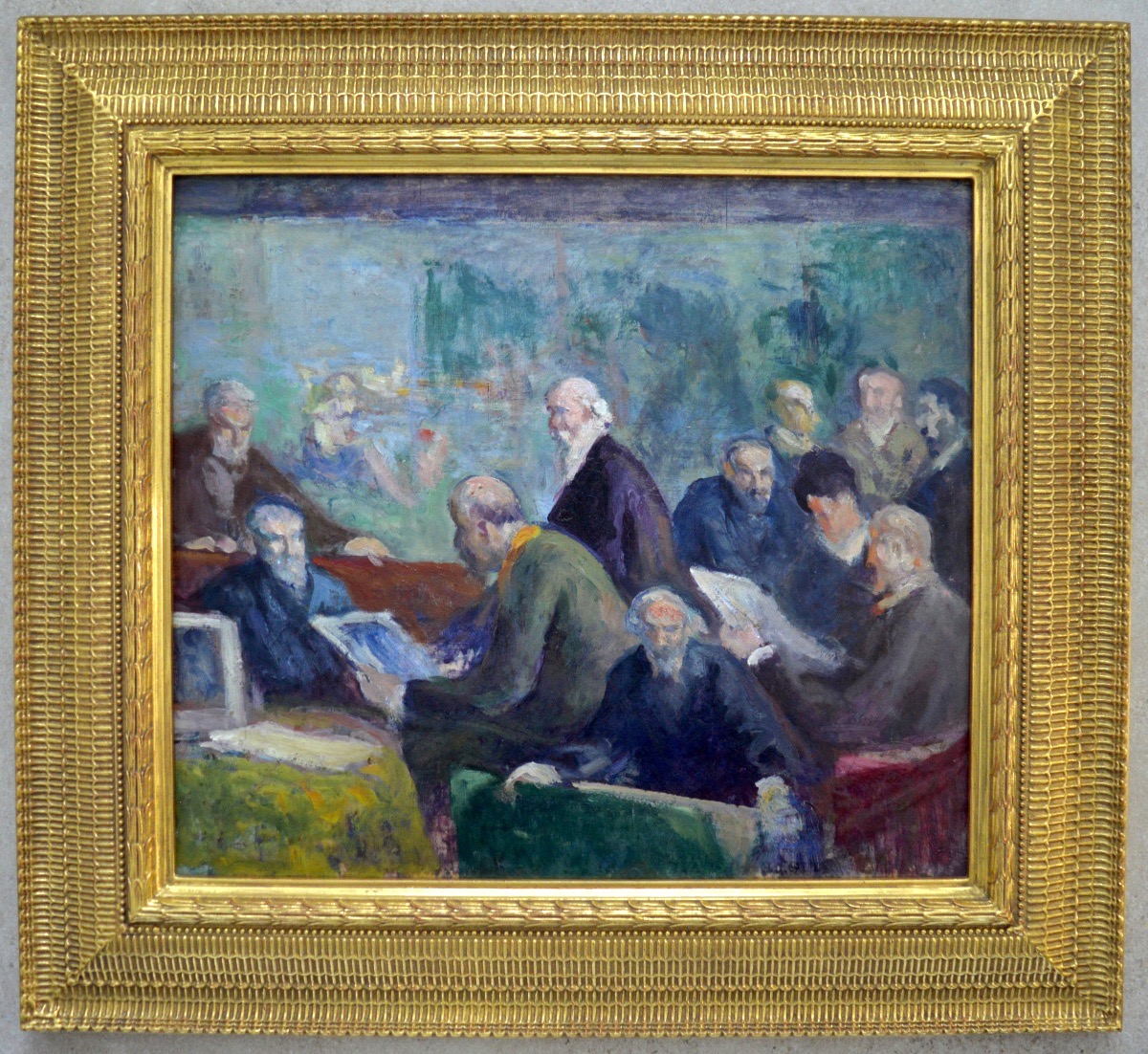
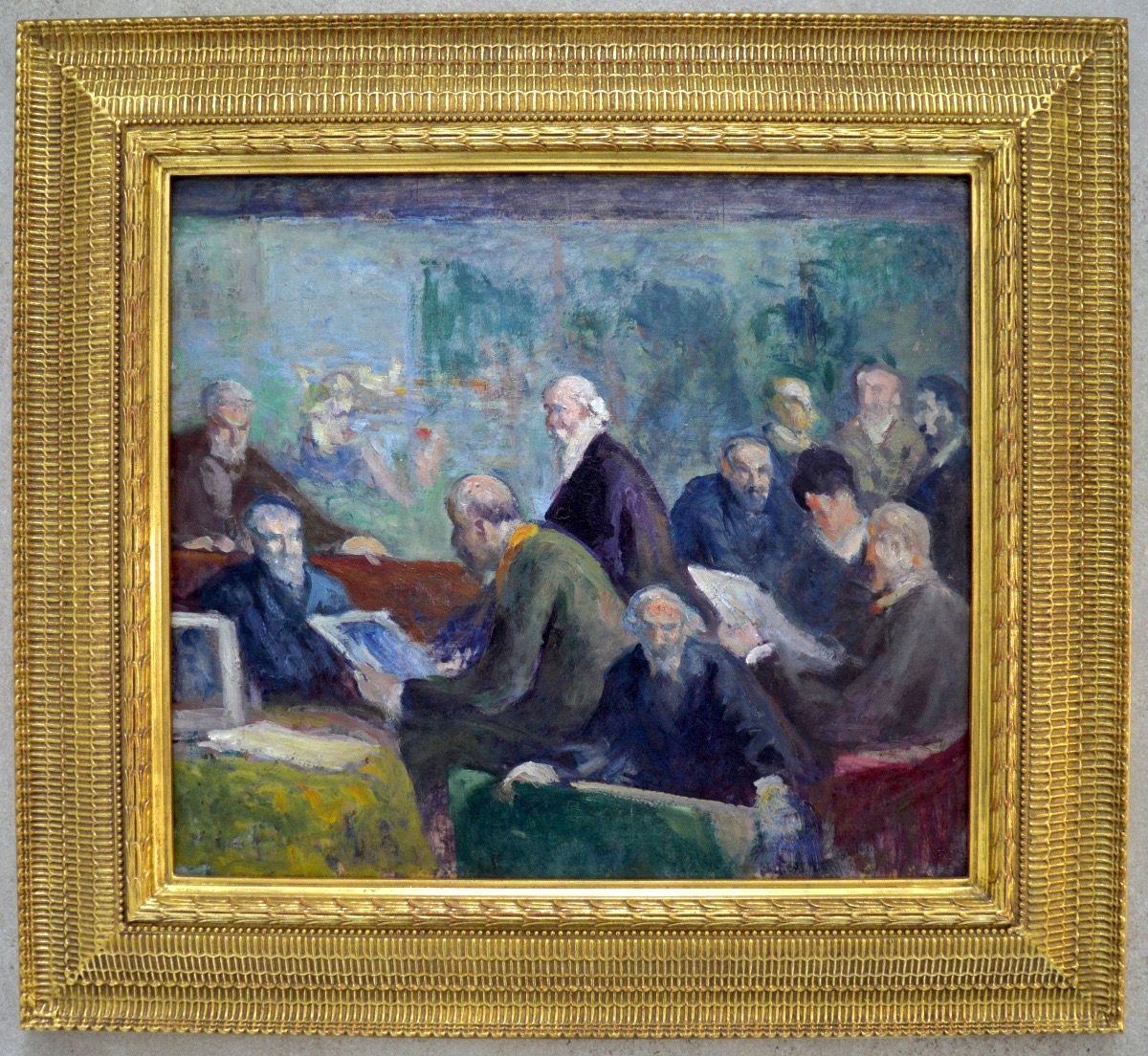
“The Jury After the Exhibition”
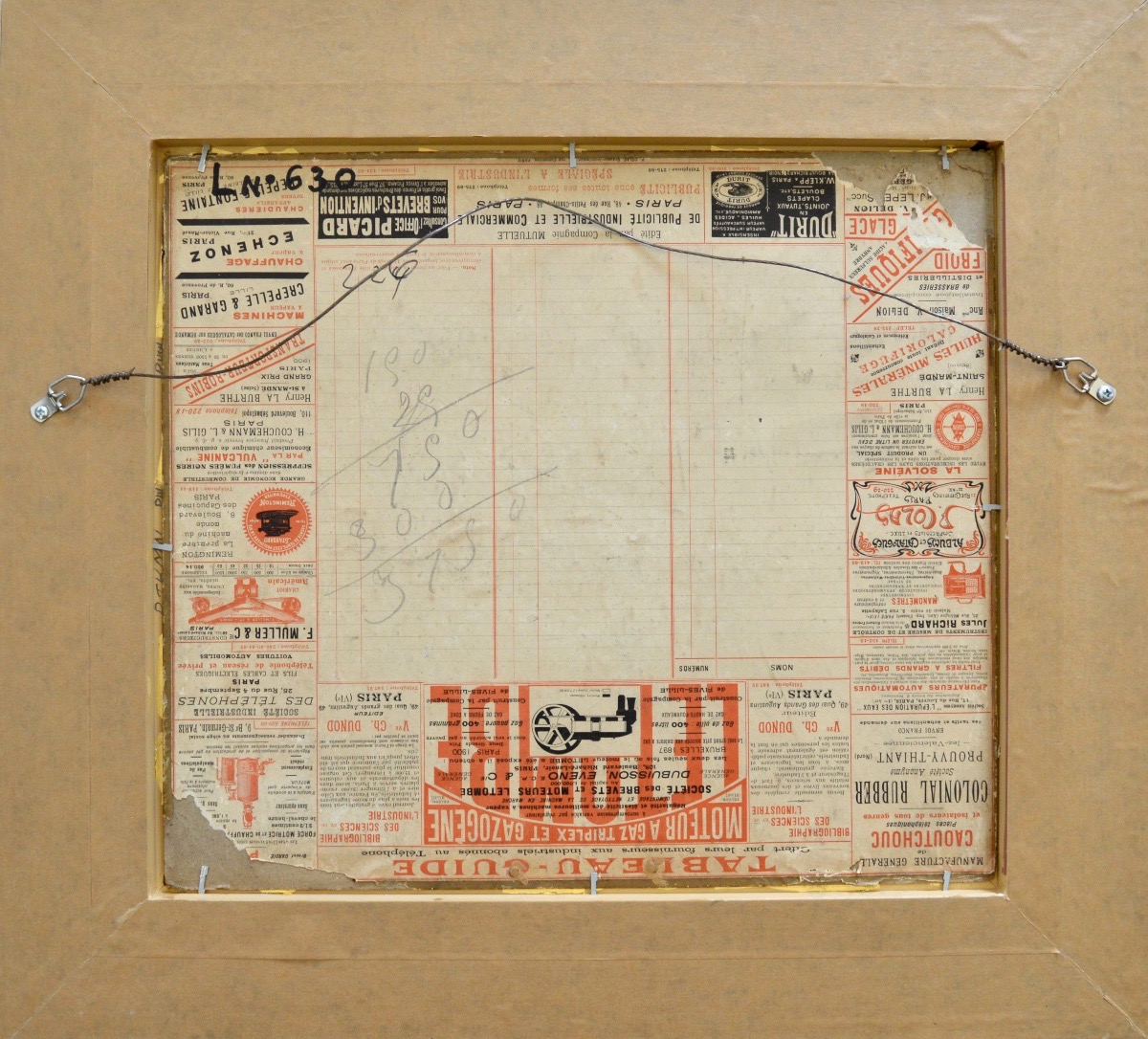
Oil on cardboard (former guide panel),
Unsigned,
Provenance:
- Studio of the artist Maximilien Luce,
- Collection of Frédéric Luce,
- Private collection,
- Artcurial auction, June 4, 2007, in Paris,
- Private collection,
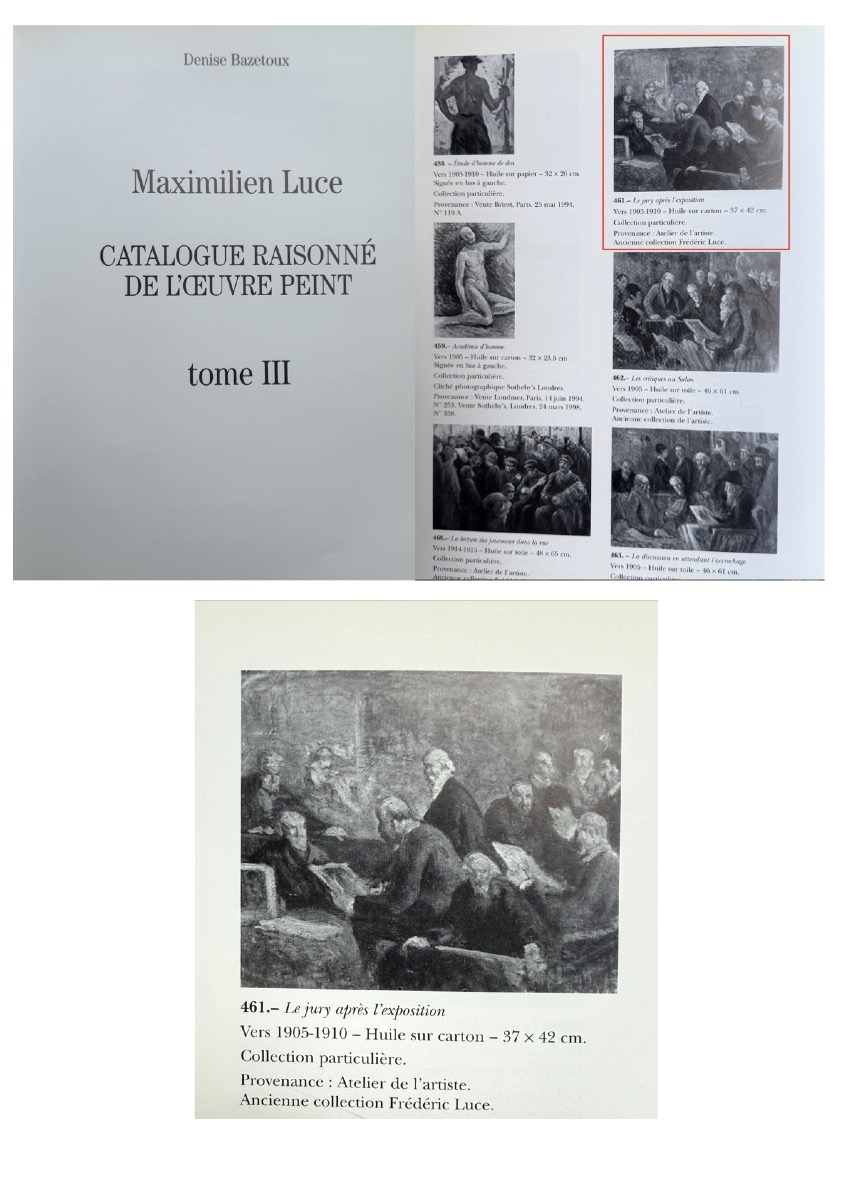
Bibliography: Denise Bazetoux, “Maximilien Luce, Catalogue Raisonné of Paintings,” Volume III, Avril Graphiques Editions, Paris, 2005, no. 461, reproduced on page 130.
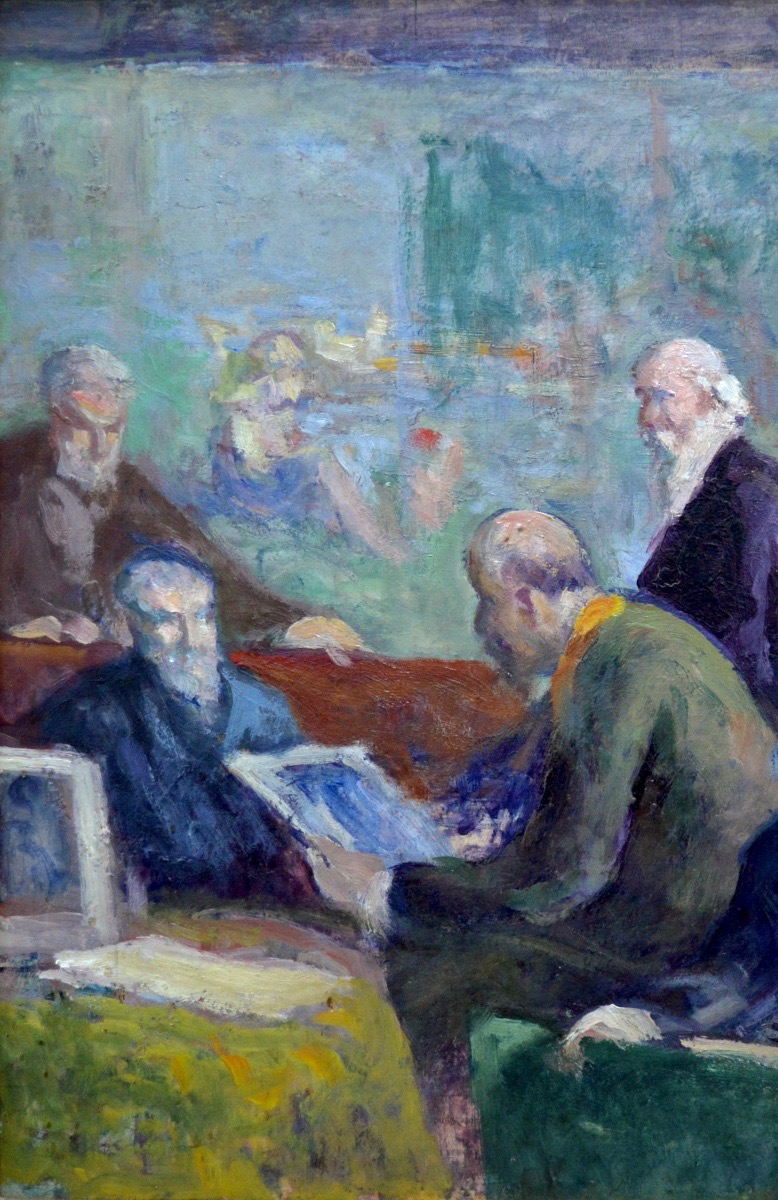
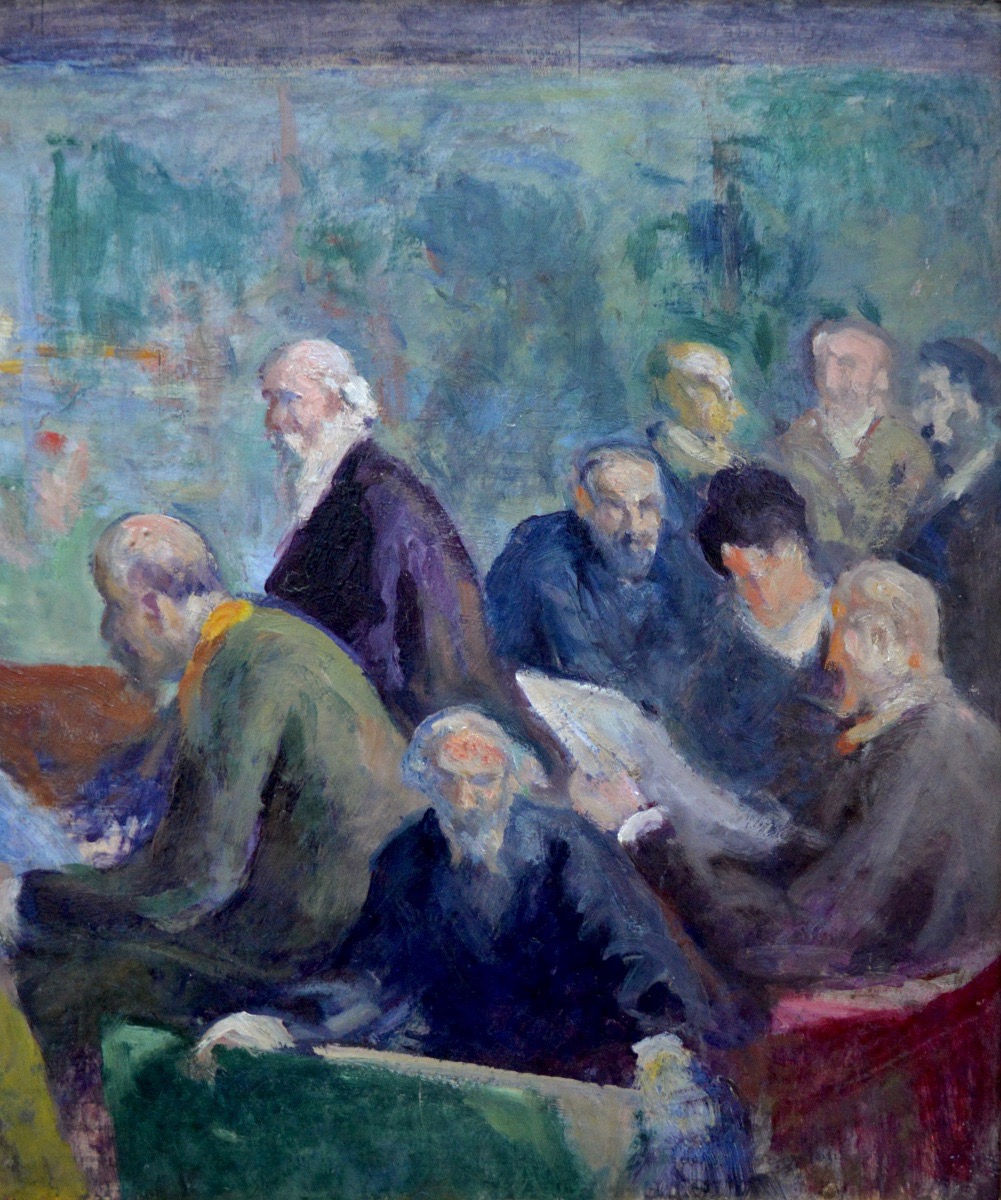
A beautiful and rare work by the French painter Maximilien Luce that immerses the viewer in the intimacy and excitement of the early 20th-century art world. This composition depicts a group of experts, artists, and critics gathered in a hushed atmosphere, captured in the midst of deliberation. Has the painter not depicted in his composition his fellow Neo-Impressionist comrades-in-arms, such as Camille Pissarro, Paul Signac, and Henri Edmond Cross?
True to his Post-Impressionist sensibility, Luce uses a vibrant brushstroke and a rich palette to sculpt the contrasts of light, lending this interior scene a remarkable dramatic and human intensity. This painting captures a pivotal moment in Parisian artistic life, documented with the sociological precision that characterizes the artist’s perspective.
Indeed, Maximilien Luce was a passionate anarchist activist and a pillar of the Society of Independent Artists. The fundamental principle of their Salon, founded in 1884, was “no jury, no prizes.” This painting is above all a satire or a detached and ironic look at the juries of the official Salons of the time, whose academicism was rejected by the Impressionists and Pointillists.
Between 1905 and 1910, the artist devoted a series of three works, listed in the catalogue raisonné, to this specific theme of the exhibition jury.
Maximilien Luce (1858–1941) stands out as one of the most unique and principled figures in modern French art. Coming from working-class Paris, he approached painting through the demanding lens of printmaking before joining the chromatic revolution led by Seurat and Signac, becoming an indispensable pillar of Neo-Impressionism. But whereas his peers sometimes focused on pure optical speculation, Luce infused his canvases with a powerful human and social dimension. A man of struggle, deeply connected to the anarchist circles of the time—a connection that earned him a stint in jail during the political crackdown of 1894—he made the working class and labor his favorite subjects. His brush, initially disciplined by the rigor of Pointillism, broke free over the years to adopt a broader, more lyrical, and passionate touch. From the twilight glows of Belgian foundries to the capital’s construction sites, Luce magnifies the harshness of workers’ daily lives through a dazzling mastery of light and contrast. Remaining faithful to his ideals of freedom until the twilight of his life, he resigned as president of the Société des Artistes Indépendants at the start of the Occupation in protest against discrimination, leaving behind the body of work of a virtuoso colorist and an uncompromising humanist.
Note: A previous restoration, which does not affect the work, is visible in the upper left corner.
Dimensions: 37 x 42 cm unframed and 53 x 58 cm with its modern gilded wooden frame.
For more information, please contact us.
Period: 20th century
Style: Modern Art
Condition: Good condition
Material: Oil painting on cardboard
Reference (ID): 1837117
Availability: In stock