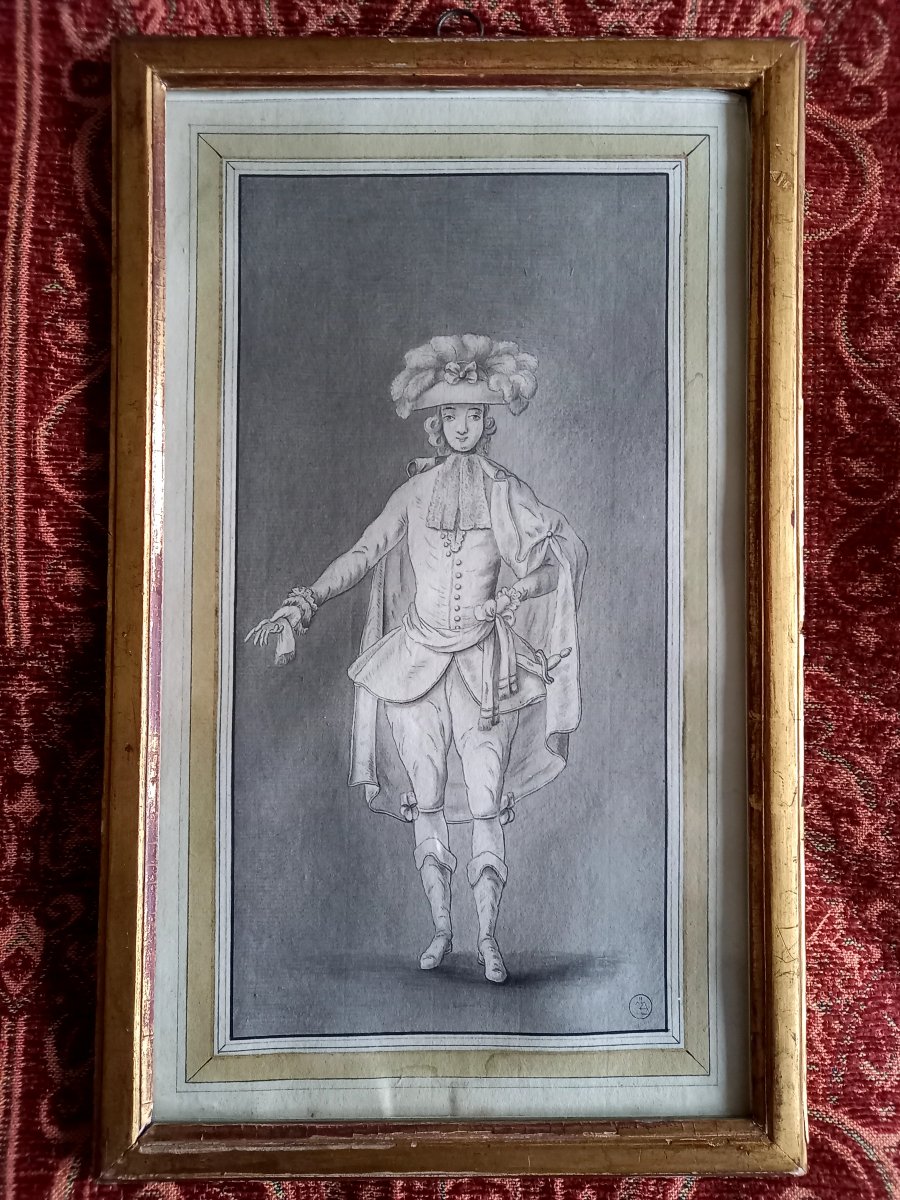
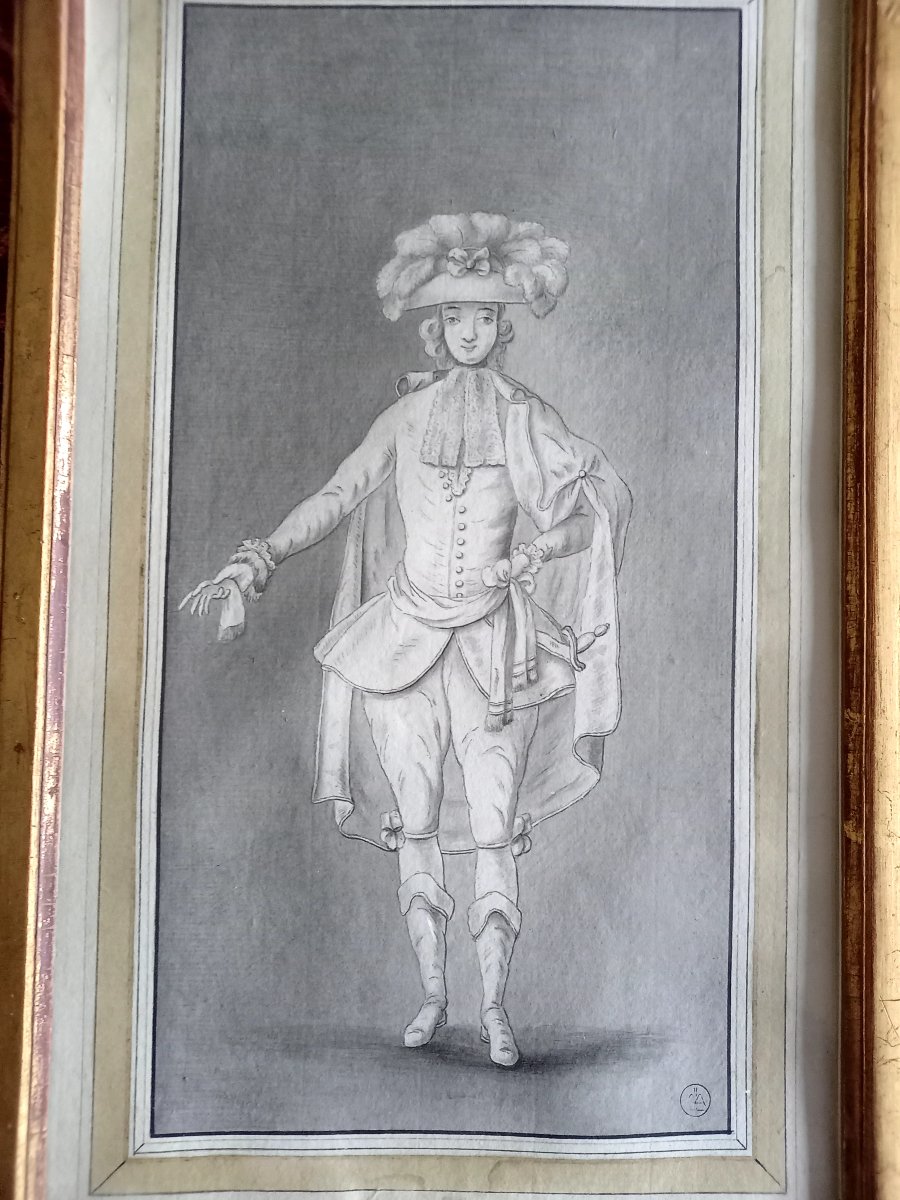
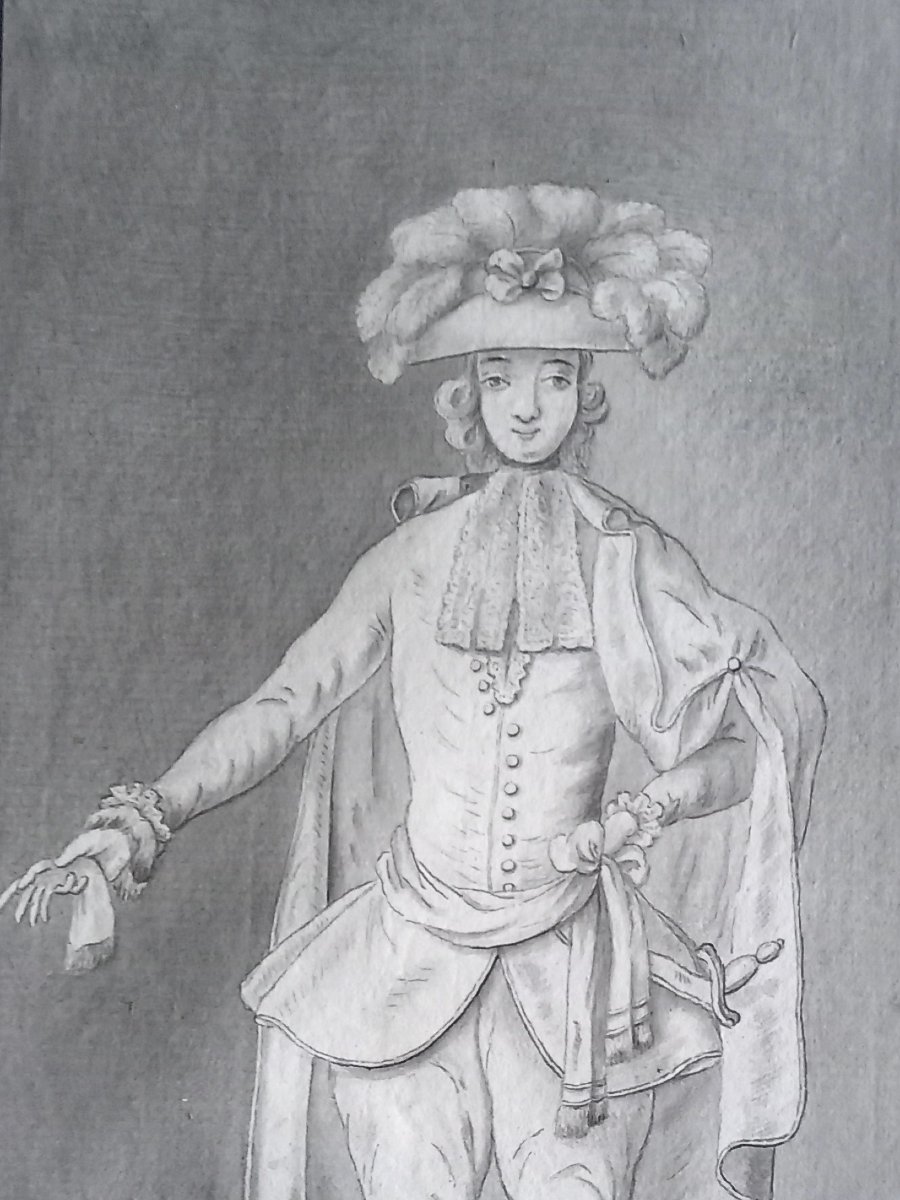
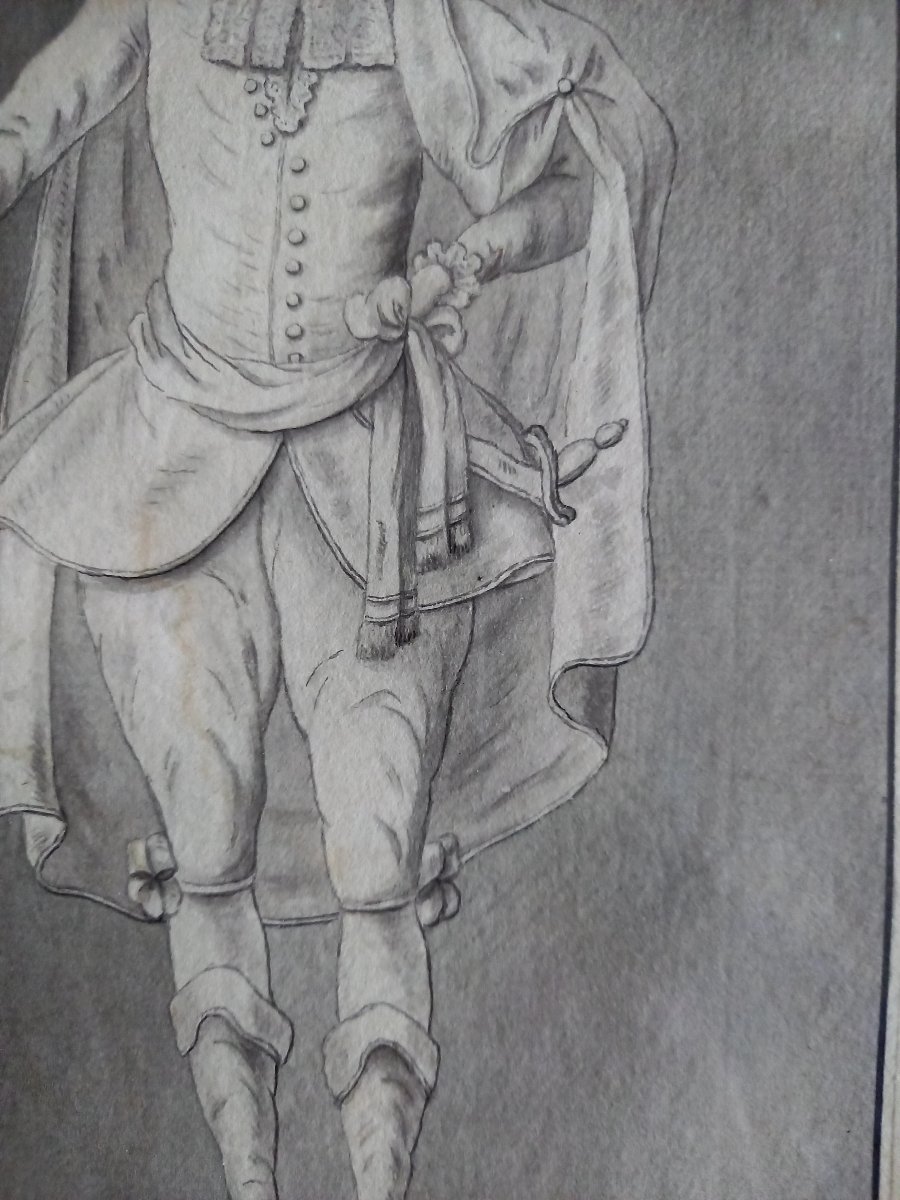
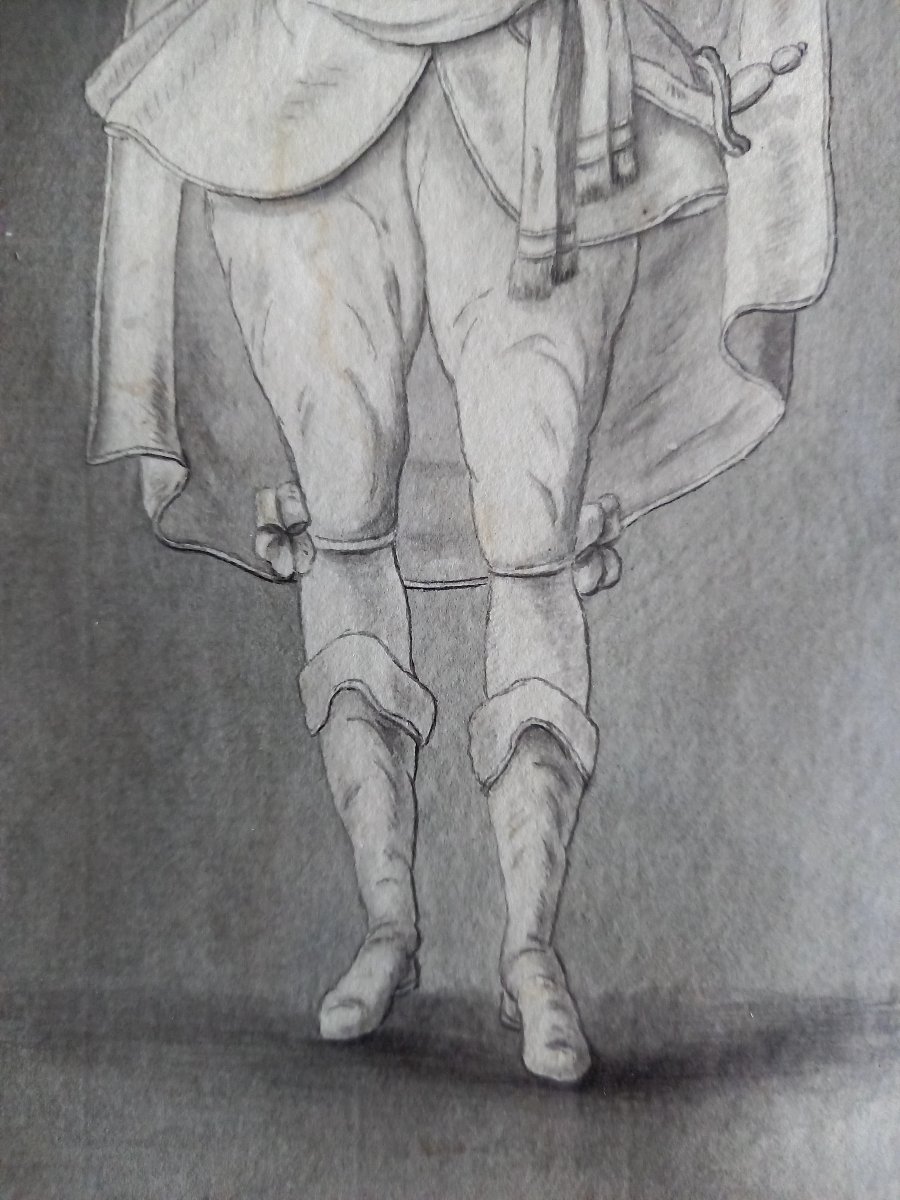


18th Century. France. Reception Habit Of The Order Of Saint Lazarus Of Jerusalem.
The Order of Saint Lazarus of Jerusalem was originally a hospitaller and military order that emerged in the Holy Land and was distinguished by its care for lepers, as the knights themselves were afflicted by this terrible scourge.
The French language retains—albeit somewhat forgotten—this concept in the place name “lazaret,” a place of confinement set apart from the city, often found in Mediterranean ports.
The end of the Crusades and changes in the monarchies—particularly in the Kingdom of France—led this order to become an honorary one, used by the King as a means of integrating distinguished servants of the state into the nobility.
In the 18th century, the Grand Master was the Dauphin of France.
It is therefore natural to see ceremonial regalia within the order emerge that were closer to pomp and ceremony than to the harsh conditions of the order’s early days.
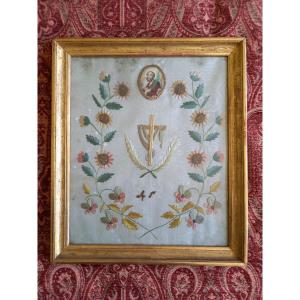
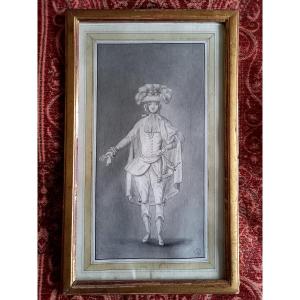
This drawing, certainly from the second half of the 18th century, depicts a style almost reminiscent of the opera—graceful and richly adorned with feathers—a testament to the social prestige that the novice was to acquire by wearing it.
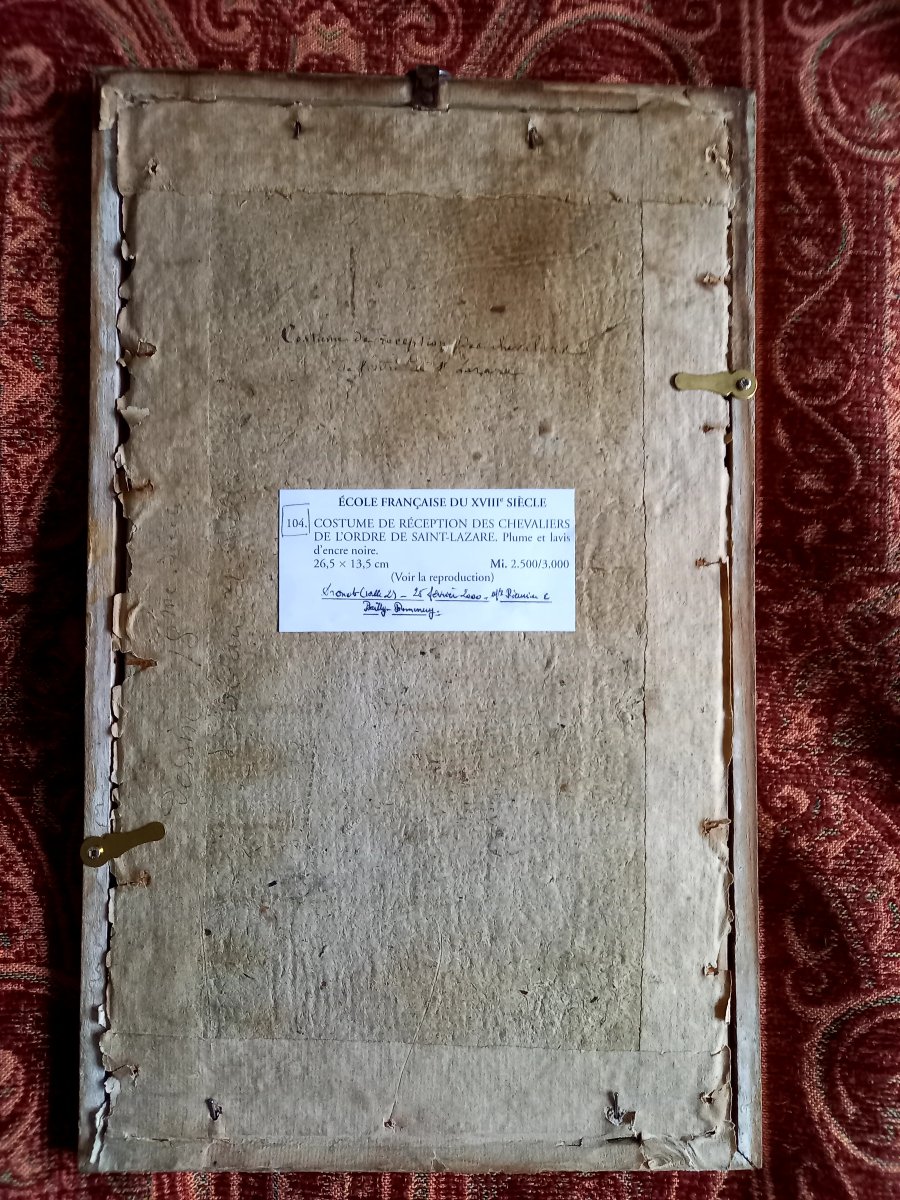
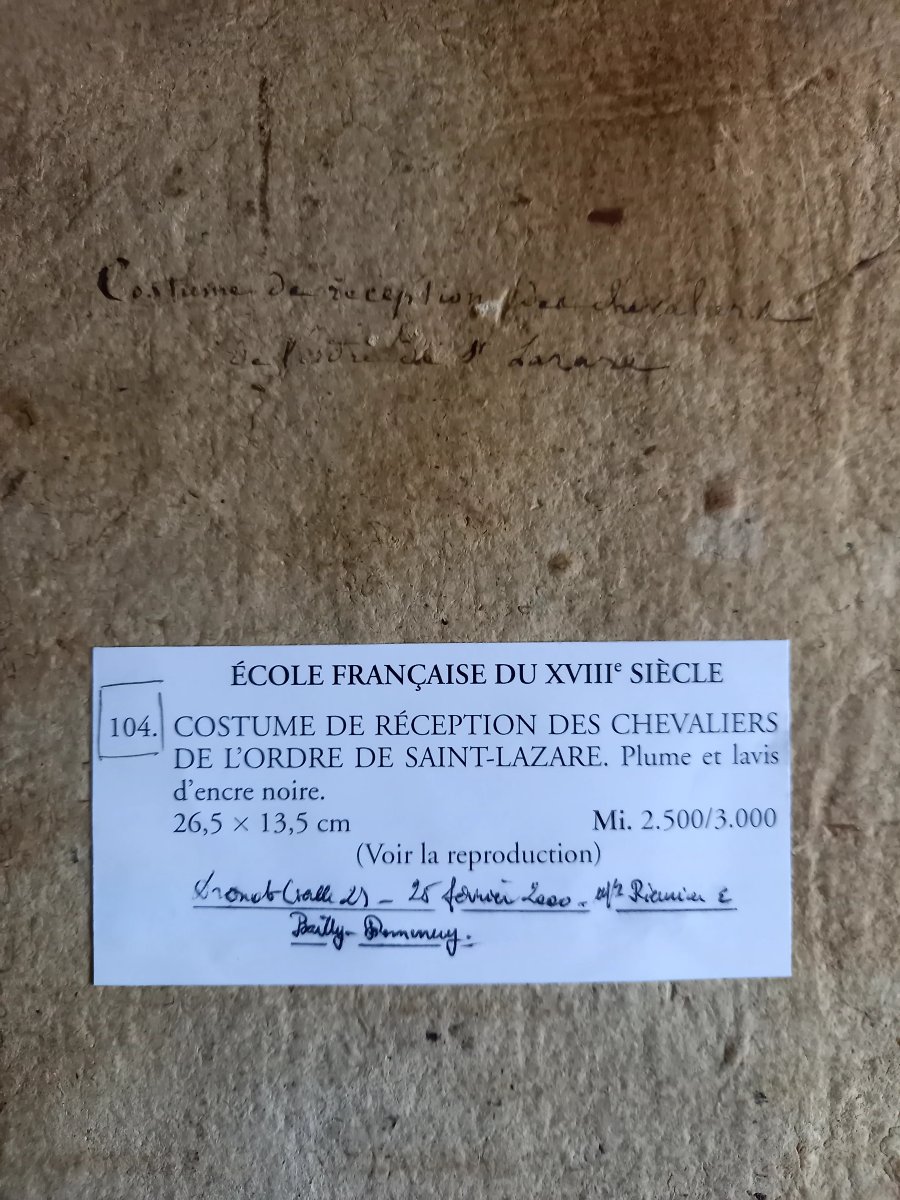
We cannot attribute this costume to this role on our own; it has been inscribed in ink since the 18th century on the backing board.
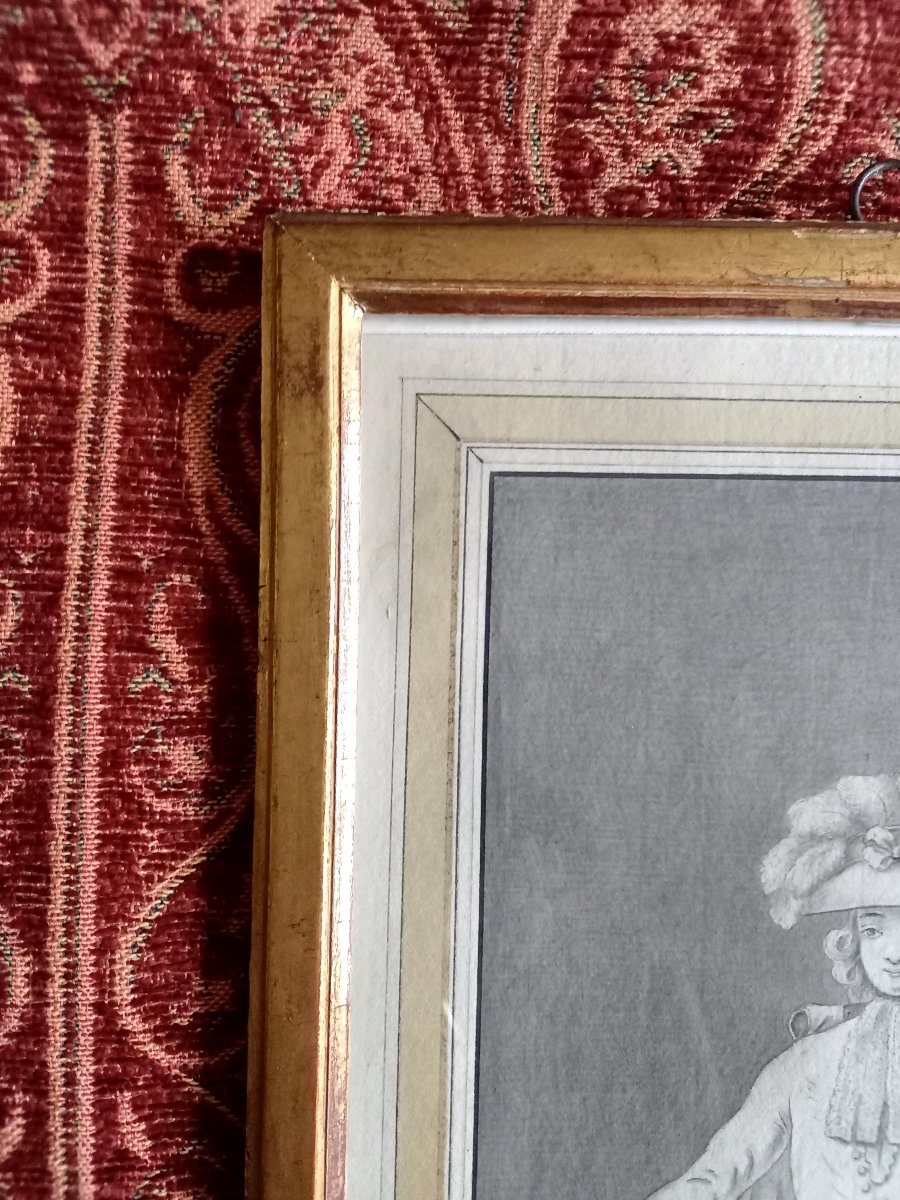
Indeed, the drawing has been presented since that century in this dowel-mounted frame, complete with its original backing throughout.
It is a genuine document on the traditions of this centuries-old order, which, after a period of dormancy in the early 19th century, was revived in the eastern Mediterranean basin, and has returned to France: in fact, brothers are present notably in Marseille and Ajaccio, ports where the order once had a strong presence.
The French language retains—albeit somewhat forgotten—this concept in the place name “lazaret,” a place of confinement set apart from the city, often found in Mediterranean ports.
The end of the Crusades and changes in the monarchies—particularly in the Kingdom of France—led this order to become an honorary one, used by the King as a means of integrating distinguished servants of the state into the nobility.
In the 18th century, the Grand Master was the Dauphin of France.
It is therefore natural to see ceremonial regalia within the order emerge that were closer to pomp and ceremony than to the harsh conditions of the order’s early days.
This drawing, certainly from the second half of the 18th century, depicts a style almost reminiscent of the opera—graceful and richly adorned with feathers—a testament to the social prestige that the novice was to acquire by wearing it.
We cannot attribute this costume to this role on our own; it has been inscribed in ink since the 18th century on the backing board.
Indeed, the drawing has been presented since that century in this dowel-mounted frame, complete with its original backing throughout.
It is a genuine document on the traditions of this centuries-old order, which, after a period of dormancy in the early 19th century, was revived in the eastern Mediterranean basin, and has returned to France: in fact, brothers are present notably in Marseille and Ajaccio, ports where the order once had a strong presence.
580 €
Period: 18th century
Style: Louis 15th - Transition
Condition: Excellent condition
Material: Paper
Width: 22 cm cadre compris
Height: 35 cm ( cadre compris)
Reference (ID): 1836370
Availability: In stock
Print