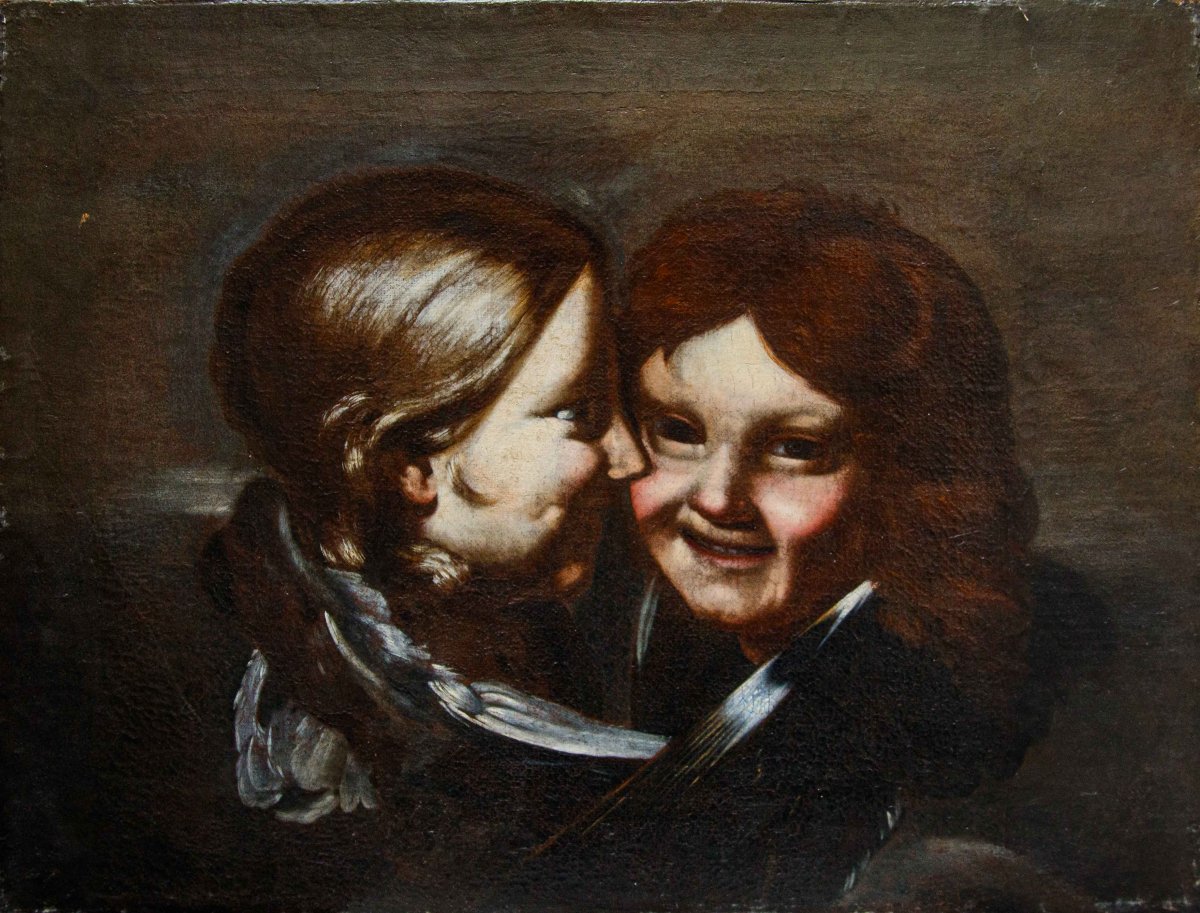
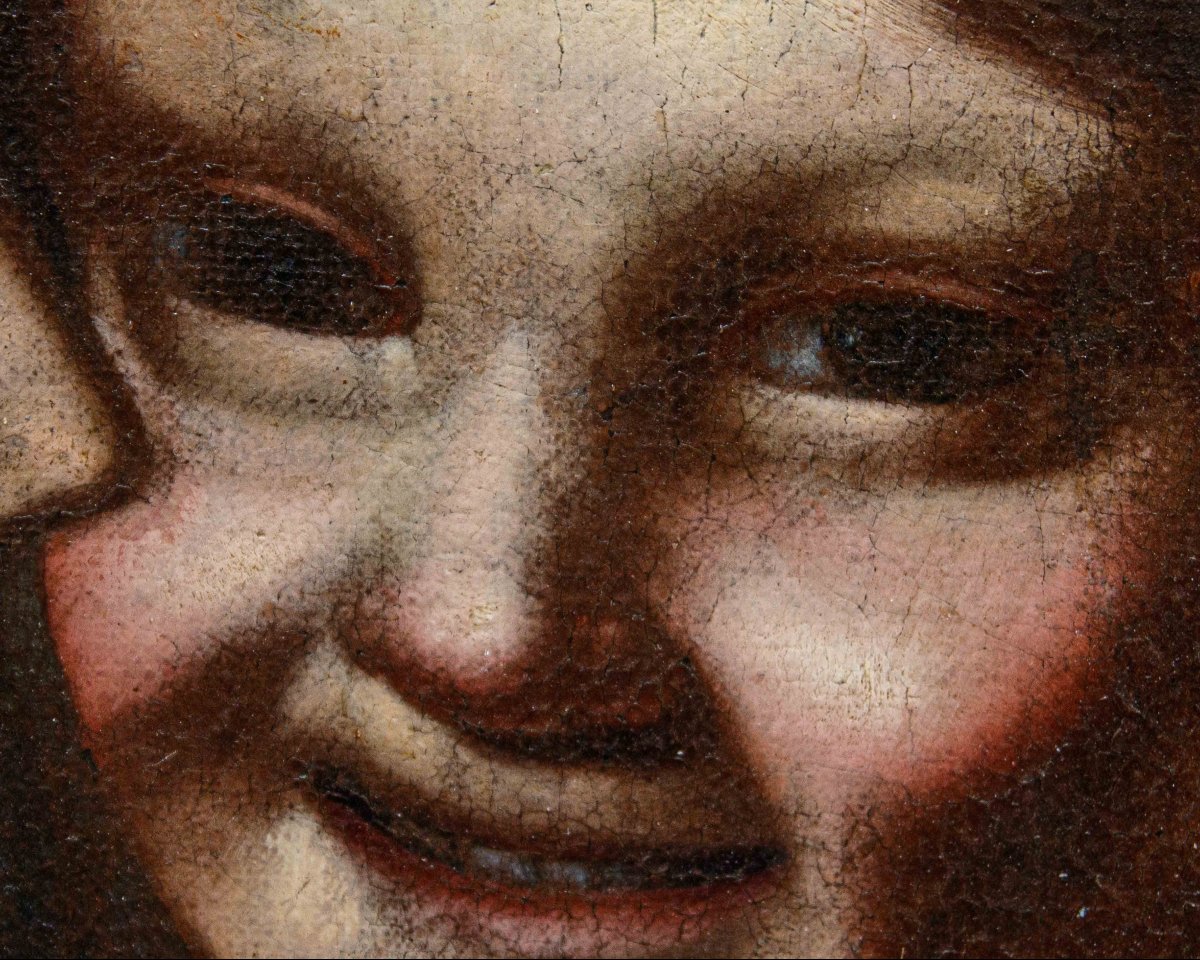
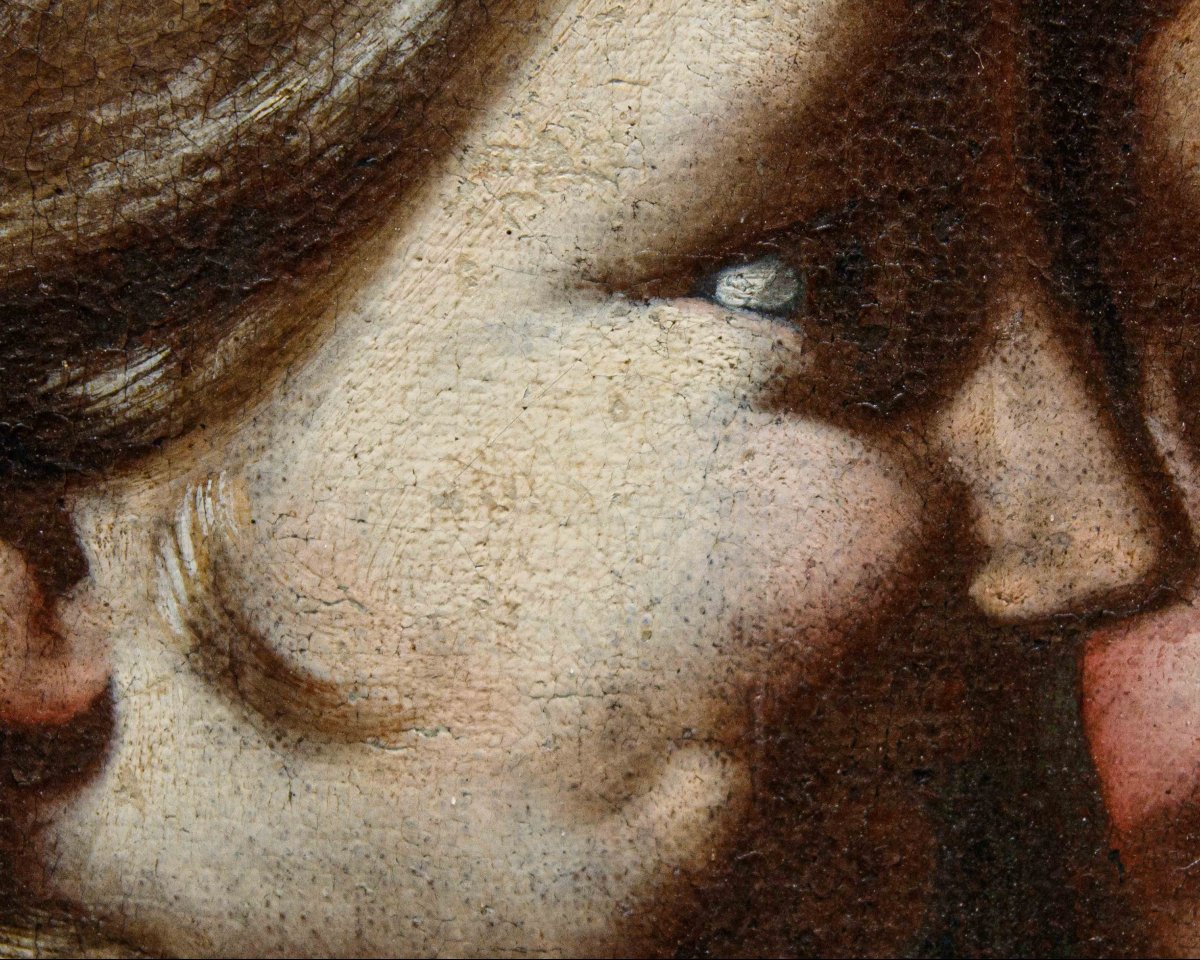
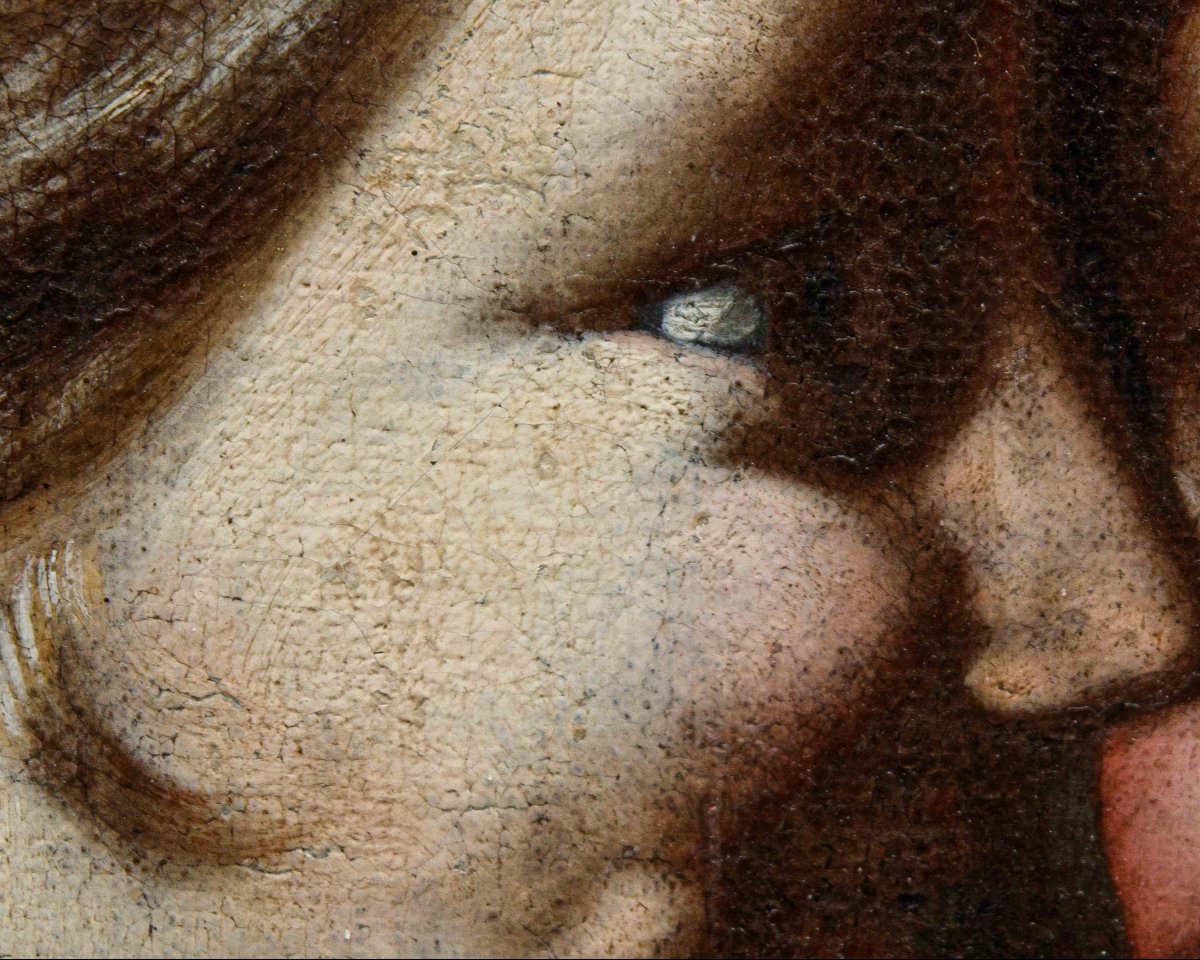
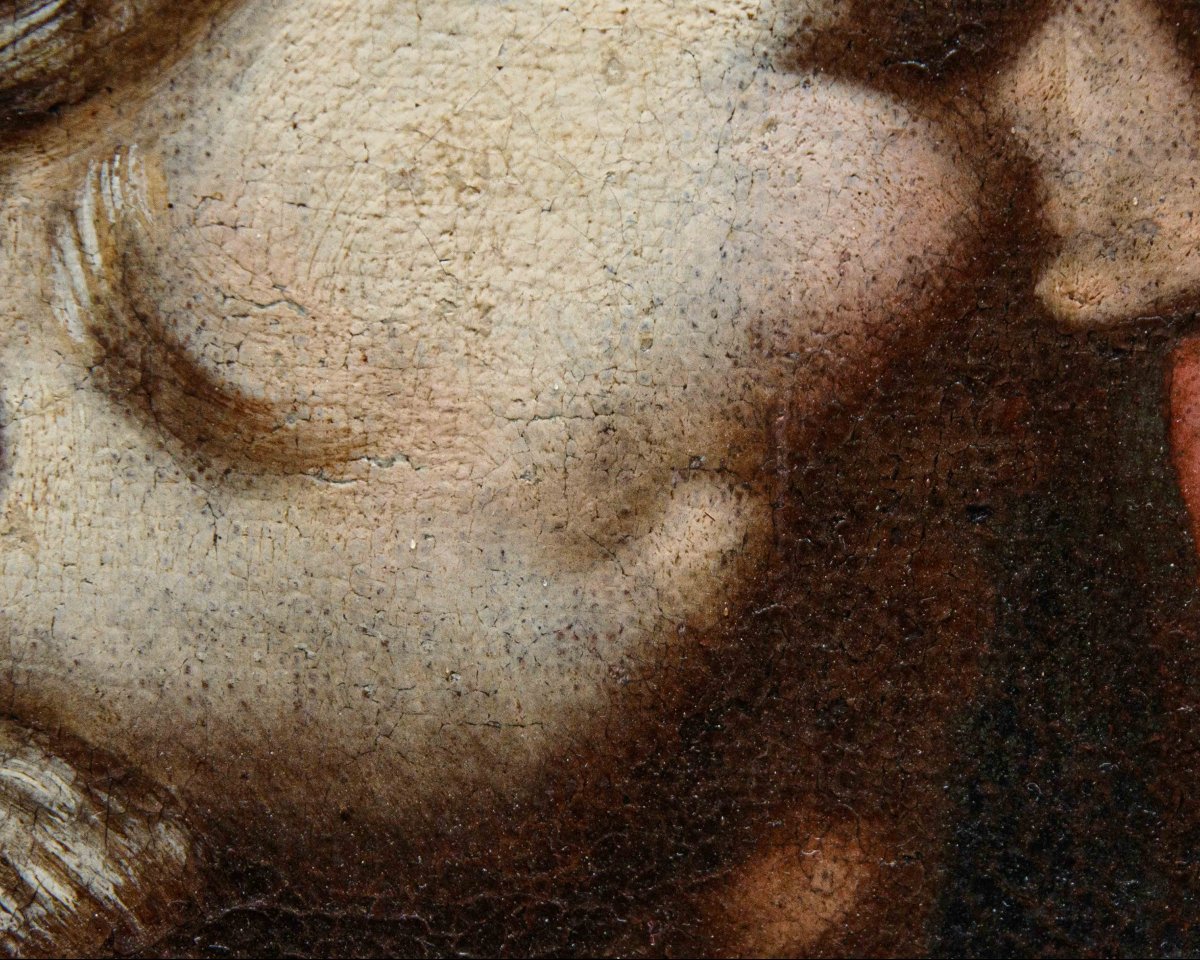


Giovanni Antonio Galli, Known As “lo Spadarino” (rome, 1585–1652) (attrib.), Pair Of Cherubs
Giovanni Antonio Galli, known as “lo Spadarino”(Rome, 1585 – 1652) (attrib.)
Pair of putti
Oil on canvas, 49 × 63 cm – with frame 67 × 81 cm
Giovanni Antonio Galli was born in Rome, near the parish church of S. Lorenzo in Damaso, on January 16, 1585, to Salvatore Galli and his wife Brigida. His father’s trade as a swordmaker gave rise to the nickname “Spadarino,” which was given to both Giovanni Antonio and his older brother, Giacomo—who was also a painter but primarily a woodcarver and gilder of ceilings, with whom the artist had previously been confused. The artist’s first master was Agostino Tassi, alongside whom Spadarino executed, in the 1610s, the cycle of frescoes for the Quirinal Palace. Regarding Spadarino’s work at the Quirinale, Roberto Longhi, in 1943, identified his hand in the two oval panels depicting The Finding of Moses and Moses and the Midianites on the right wall of the room now known as the Corazzieri Room; Giuliano Briganti also attributed to him the four cherubs above, and Marsicola added the figure of Virtue to the left of *The Finding of Moses*.
After an initial period of training under Tassi, Spadarino continued his apprenticeship at the prolific workshop of the Flemish painter Gherardo delle Notti, who was active in Rome. It must have been Gherardo delle Notti who introduced Galli to the Medici circle: in Florence, on September 17, 1619, he received payment for a large painting—the subject of which is unknown—arranged through the Ticci, bankers to the Medici, and on June 1, 1620, the final payment for a Crucifixion; these works were intended for the Guicciardini Chapel at S. Felicita (Corti, 1989, pp. 130–132). Among Spadarino’s masters, Longhi (1943, p. 28) also included Carlo Saraceni, under whose influence the Roman painter is said to have created *Jesus Among the Scribes*, now in the Royal Palace of Naples, and *St. Anthony of Padua with the Child*, in the Church of Ss. Cosmas and Damian in Rome. The most important commission Galli managed to secure in the early phase of his career was undoubtedly the altarpiece depicting the Martyrdom of Saints Valeria and Marziale for St. Peter’s, the final payment for which dates back to January 1633. Based on this work—considered until now to be the only one that can be dated with certainty—Longhi (1943) compiled the first catalog of the artist’s works, which also included *The Alms of St. Thomas of Villanova* (Ancona, Pinacoteca Podesti), *The Charity of St. Omobono* in the Roman church of the same name, and *The Adulteress* (Verona, Civic Museum)—all works attributable to the painter’s early period.
From 1628 to 1652, the year of his death, Galli lived on Via Ripetta, as recorded in the parish registers of S. Maria del Popolo. On November 26, 1638, Galli was commissioned to paint the frescoes in what are now the Manzoni and Garibaldi Rooms of Palazzo Madama, which were completed in 1641. From June 17, 1647, to July 3, 1649, Galli was paid for creating the cartoons for the mosaics in the choir chapel of St. Peter’s: it is likely that, for this extremely important commission, the artist was recommended by Virgilio Spada, who received, as a token of gratitude, the *Two Cherubs* still on display today in the Spada Gallery. The theme of the cherubs was repeated in various forms by Galli, evidently following the success of the painting in the Spada Gallery. Two canvases with this subject were, in fact, still in the painter’s studio, as evidenced by his inventory of possessions.
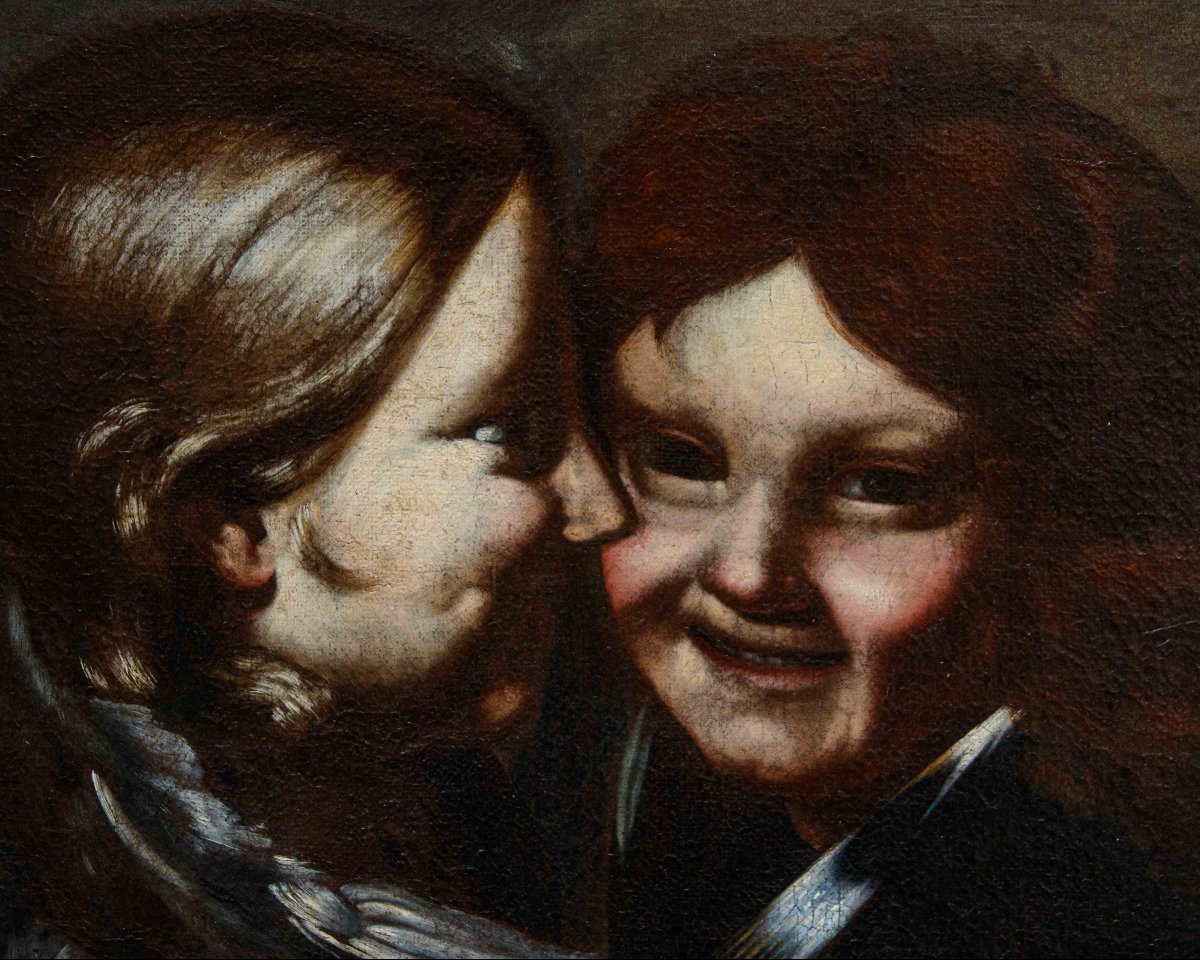
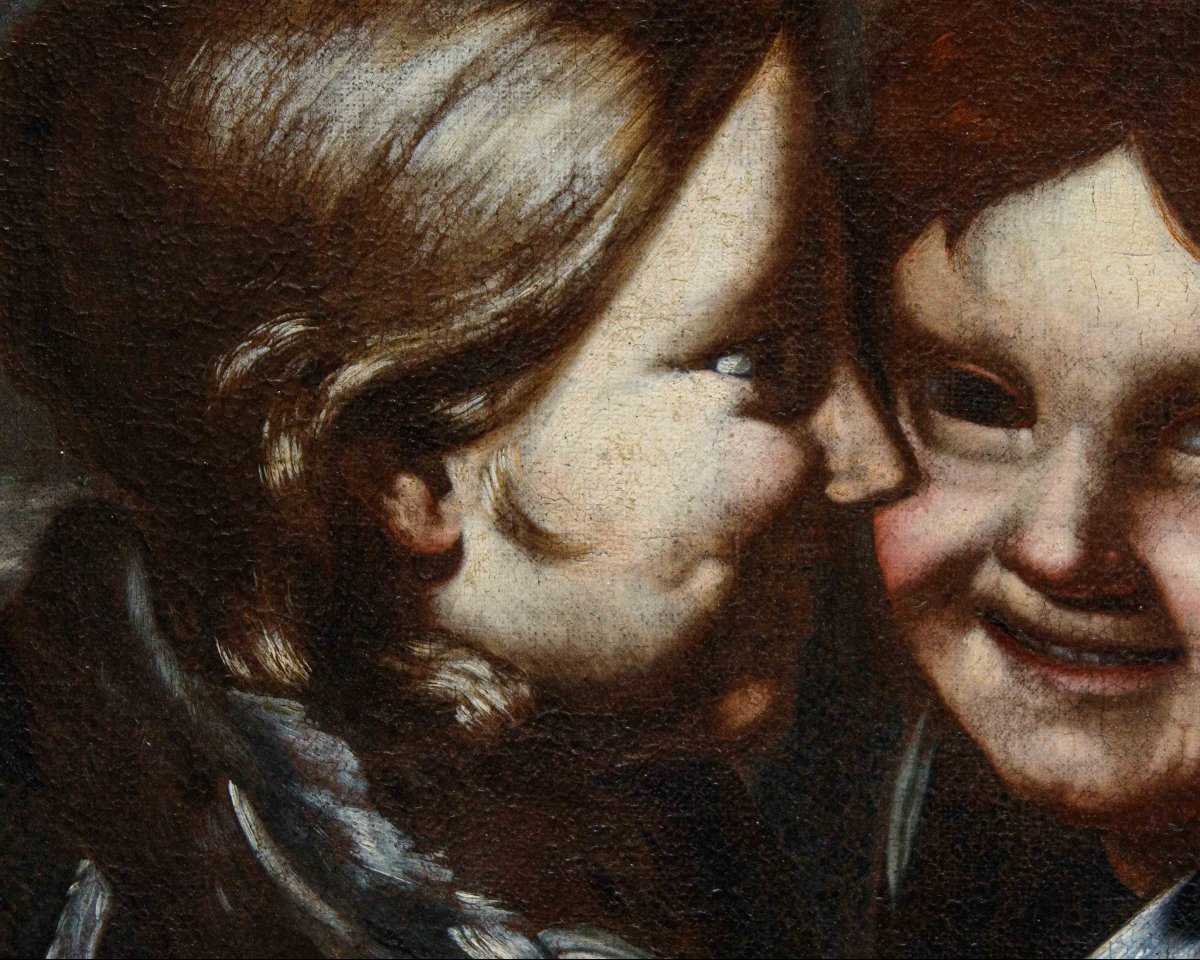
The work in question may correspond to one of the various versions the artist executed of this highly successful subject. The two heads of cherubs with wings emerge from a dark background, suspended in time. The first putto, with long blond hair, is depicted in profile; the second, with brown hair, turns his smiling gaze toward the viewer. The faces are rendered with a sculptural modeling that confidently defines the volumes through a pronounced chiaroscuro contrast. As previously mentioned, the artist produced other paintings on a similar theme, depicting two, three, or more cherub heads (notable examples include one formerly in the collection of the Marquises Turinetti of Cambiano in Piedmont, Zeri Photo Library, card no. 45906, and one currently part of the collections of the Civic Museums of Macerata), attesting to the success achieved by this particular iconography, intended primarily for private patrons. The pronounced chiaroscuro of the painting and the captivating play of light that characterize the work demonstrate how the artist, active throughout his entire career, made Caravaggio’s style his own—a style mediated by the teachings of his master, Gherardo delle Notti.
Period: 17th century
Style: Other Style
Condition: Good condition
Material: Oil painting
Width: 63
Height: 49
Reference (ID): 1836024
Availability: In stock