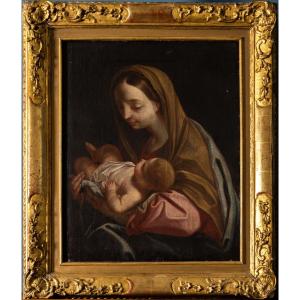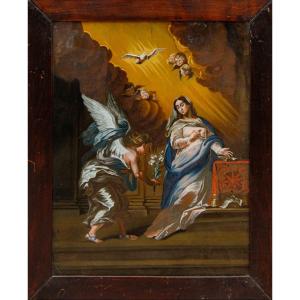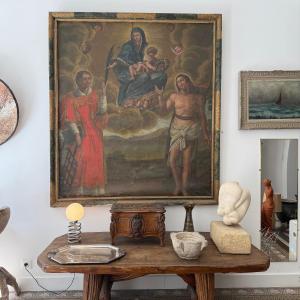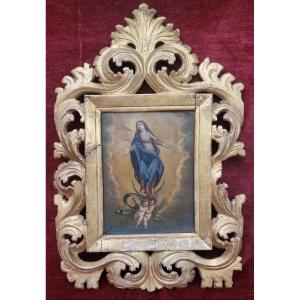


Francesco Bruno (1648–1726), The Virgin Receives The Eucharist From Saint John The Evangelist
Francesco Bruno (Porto Maurizio, 1648 – 1726)
The Virgin Receives the Eucharist from St. John the Evangelist
Oil on canvas, 95 x 72 cm – with frame, 123 x 100 cm
Oral communication from Prof. Sava
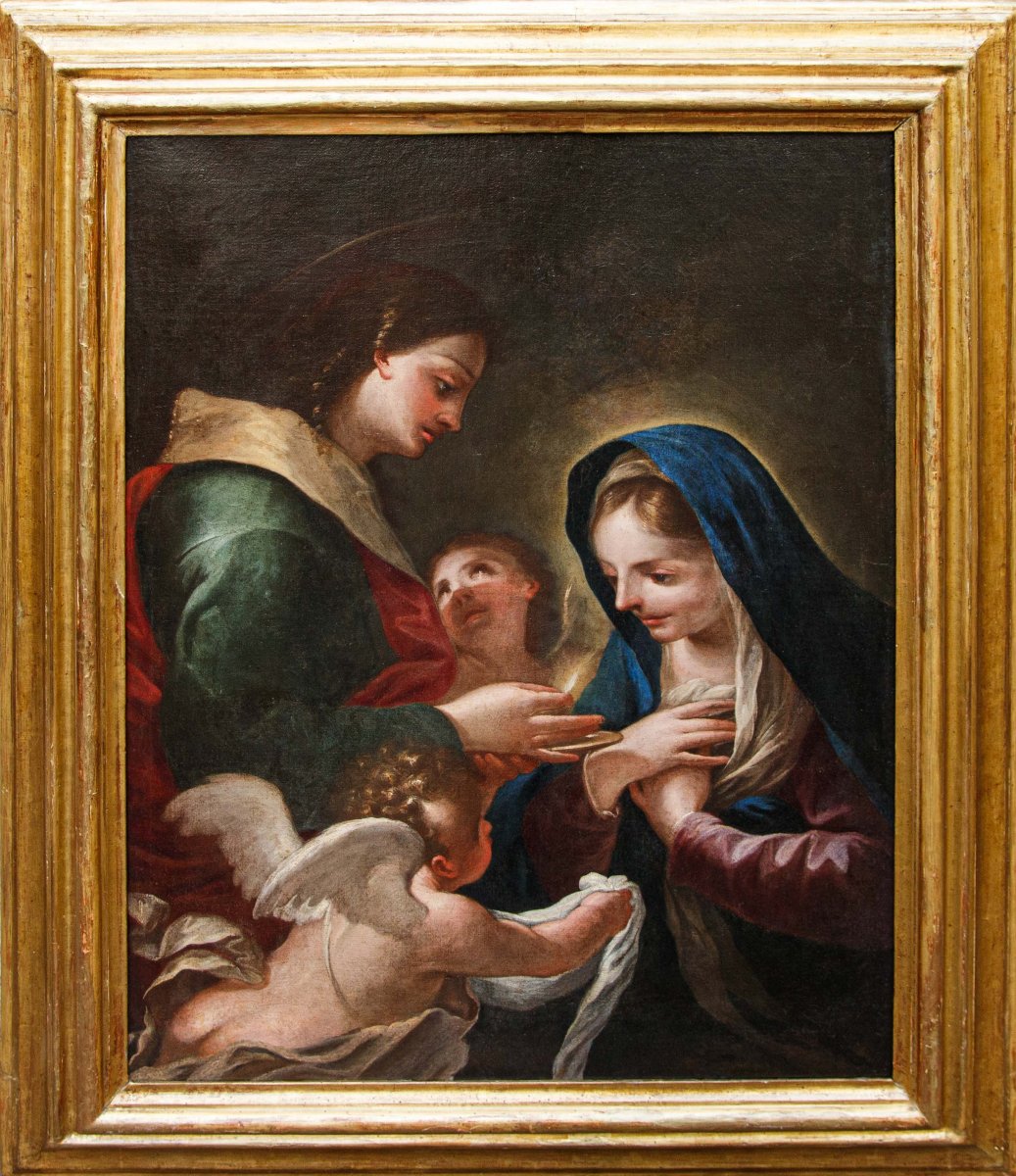
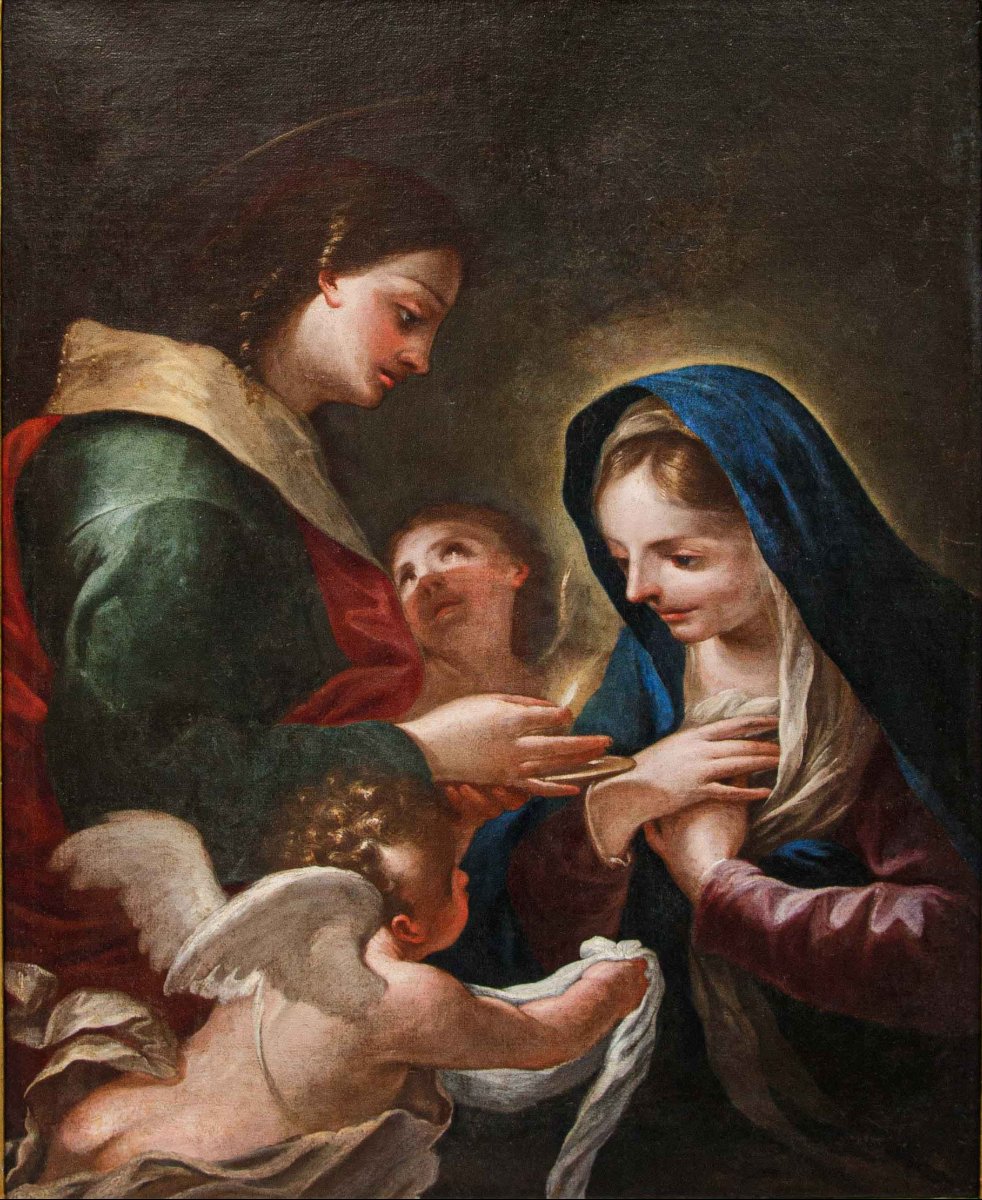
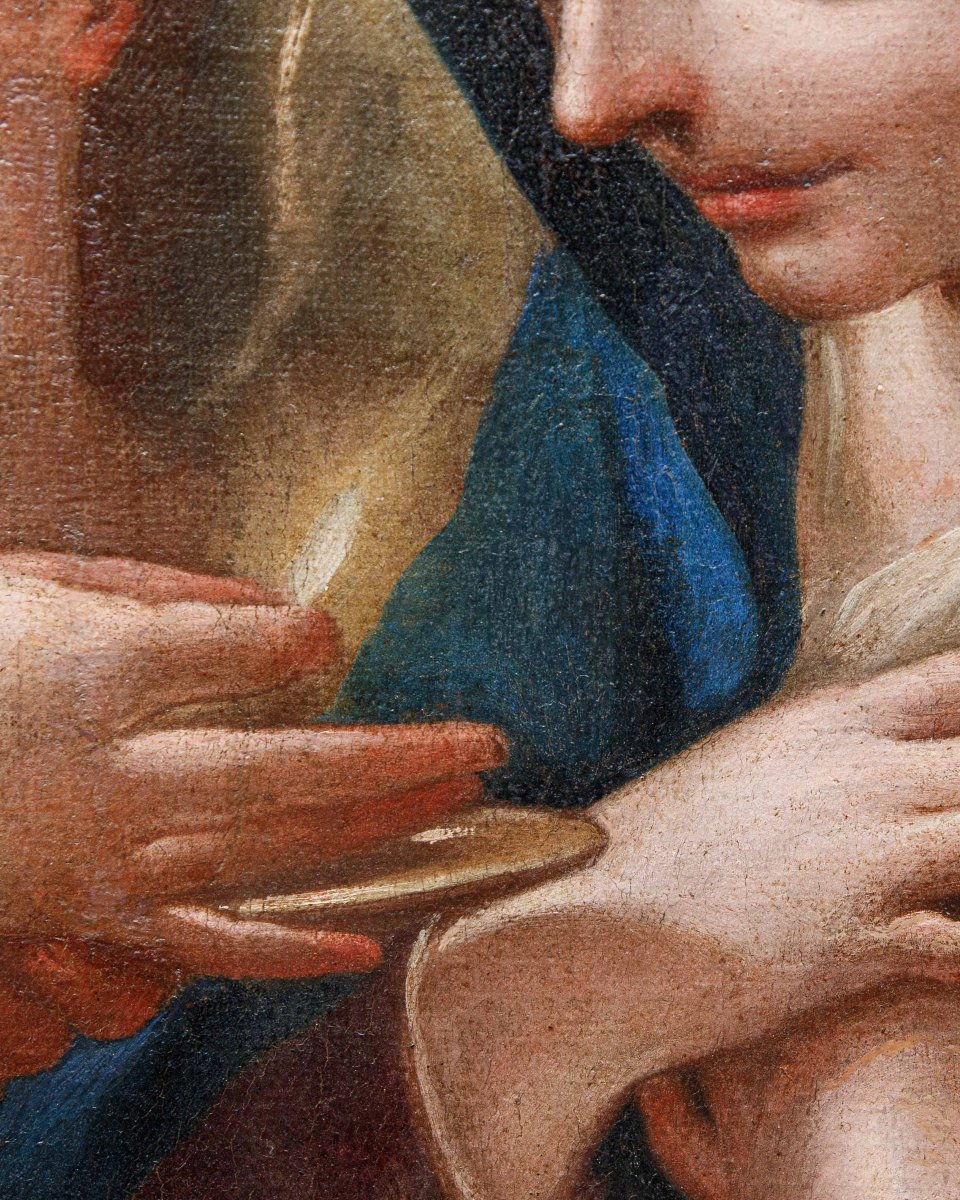
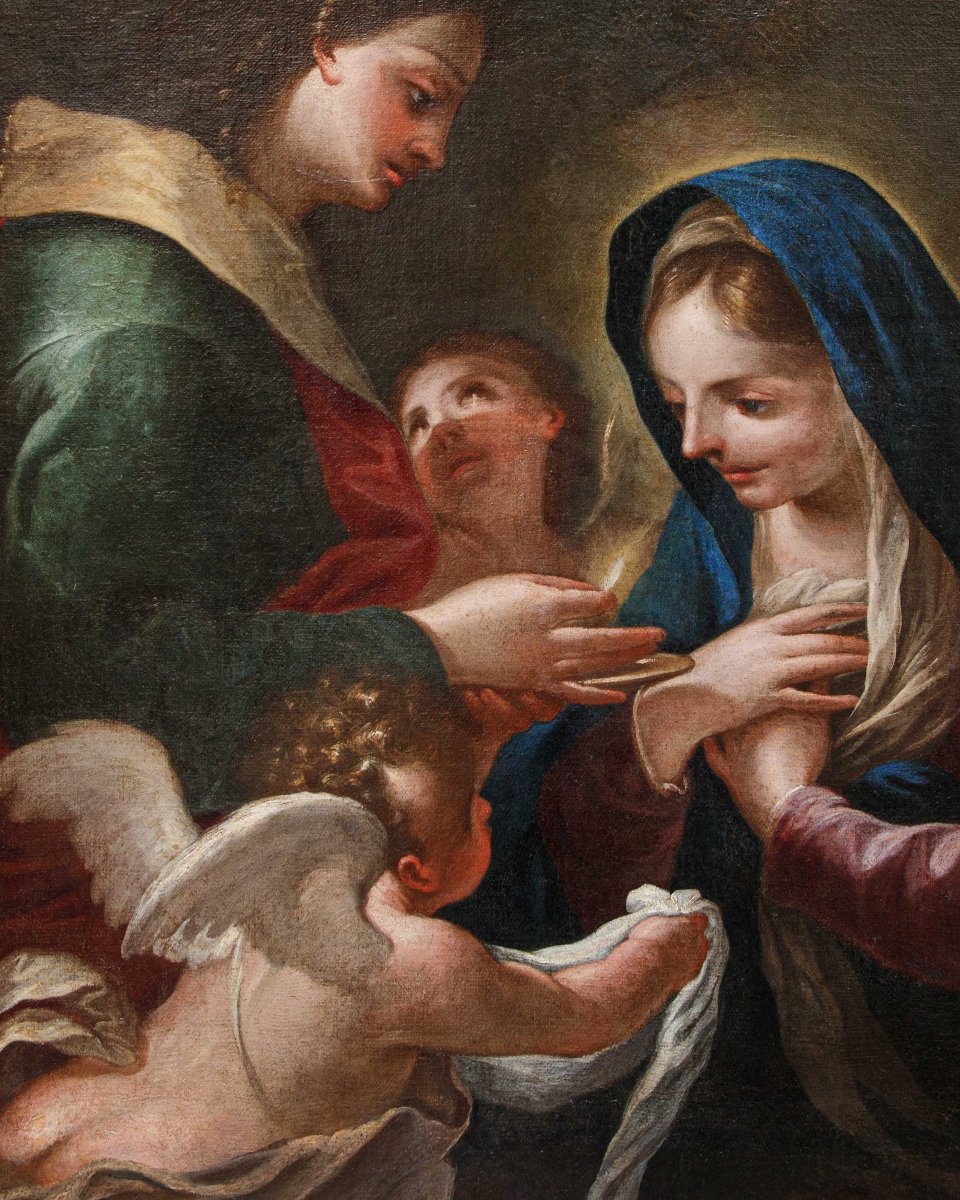
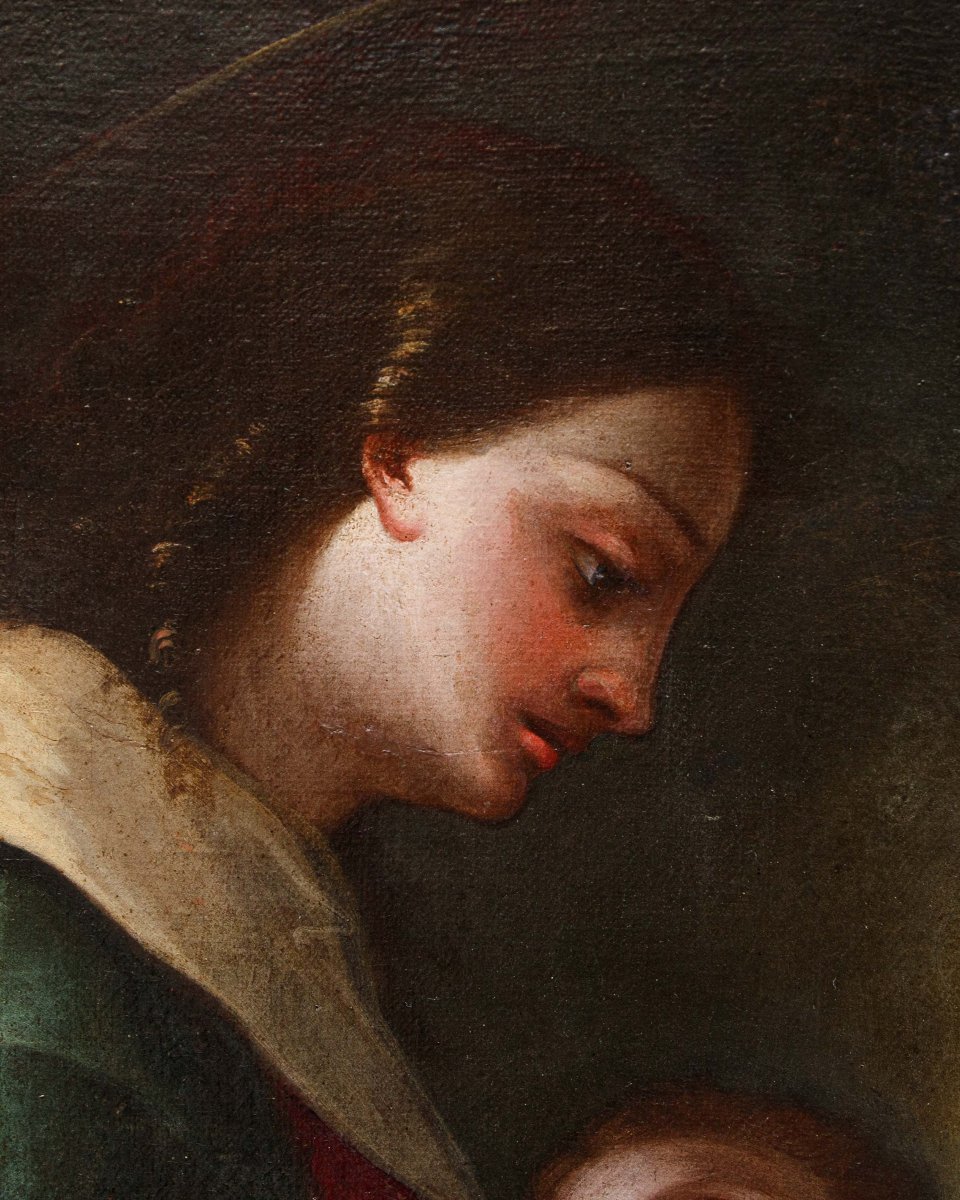
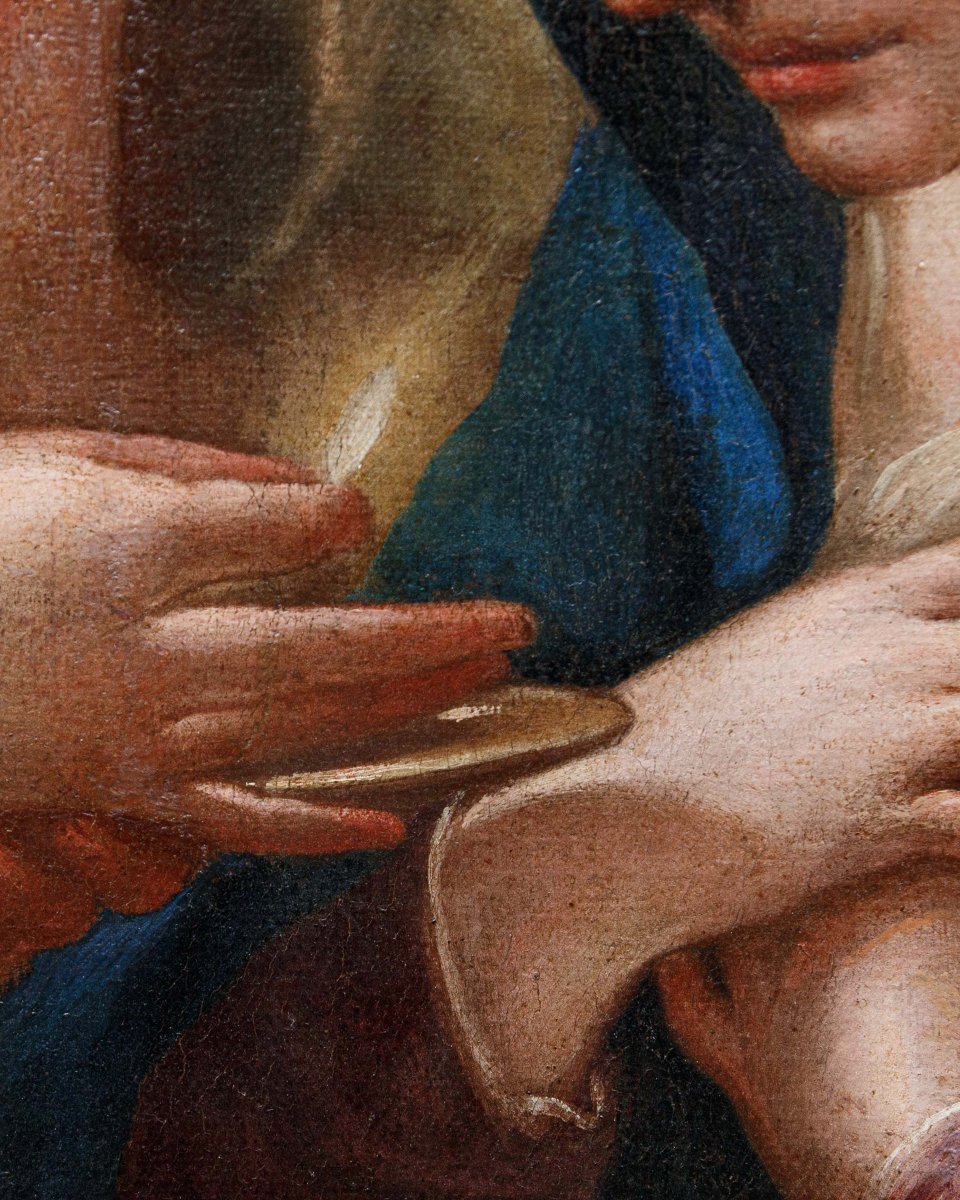
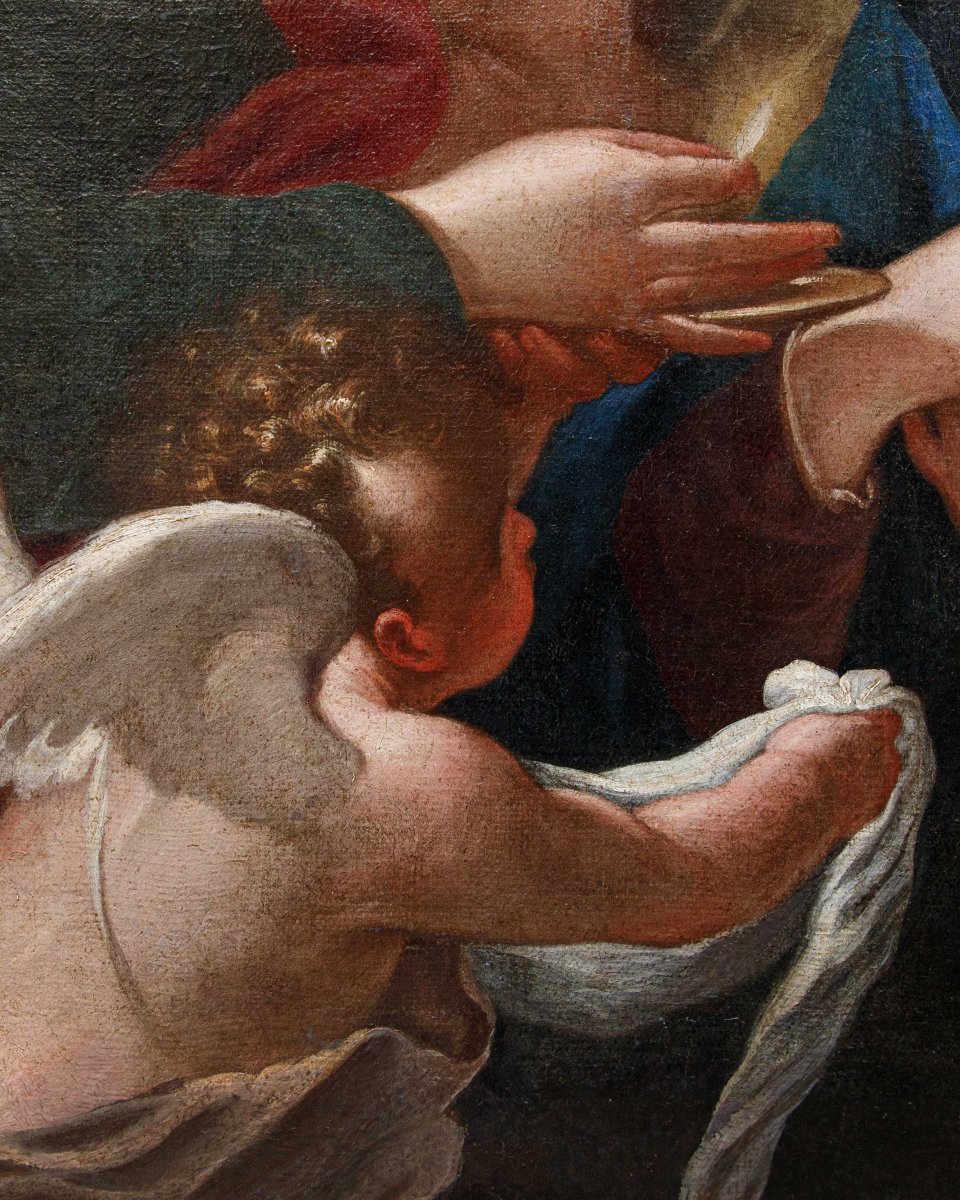
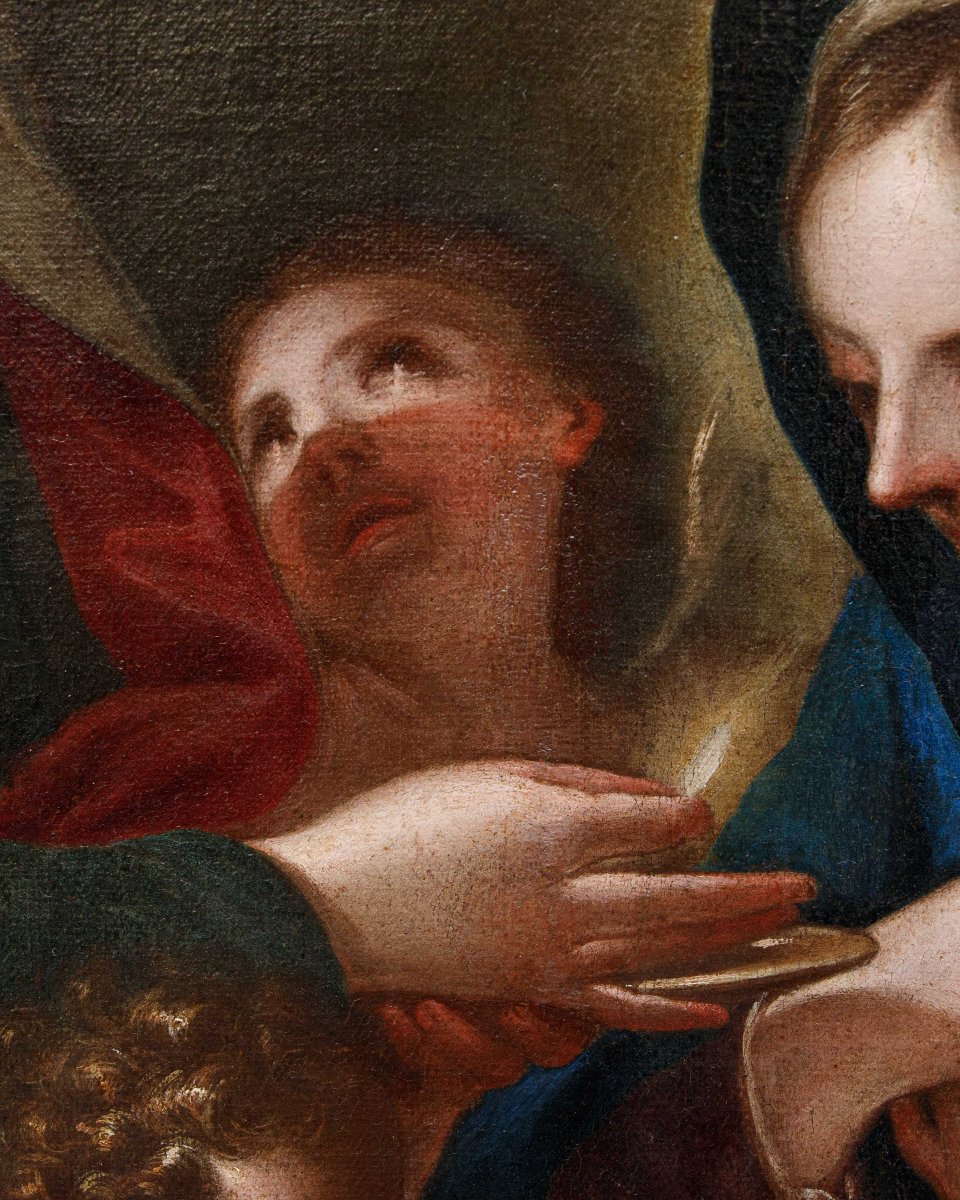
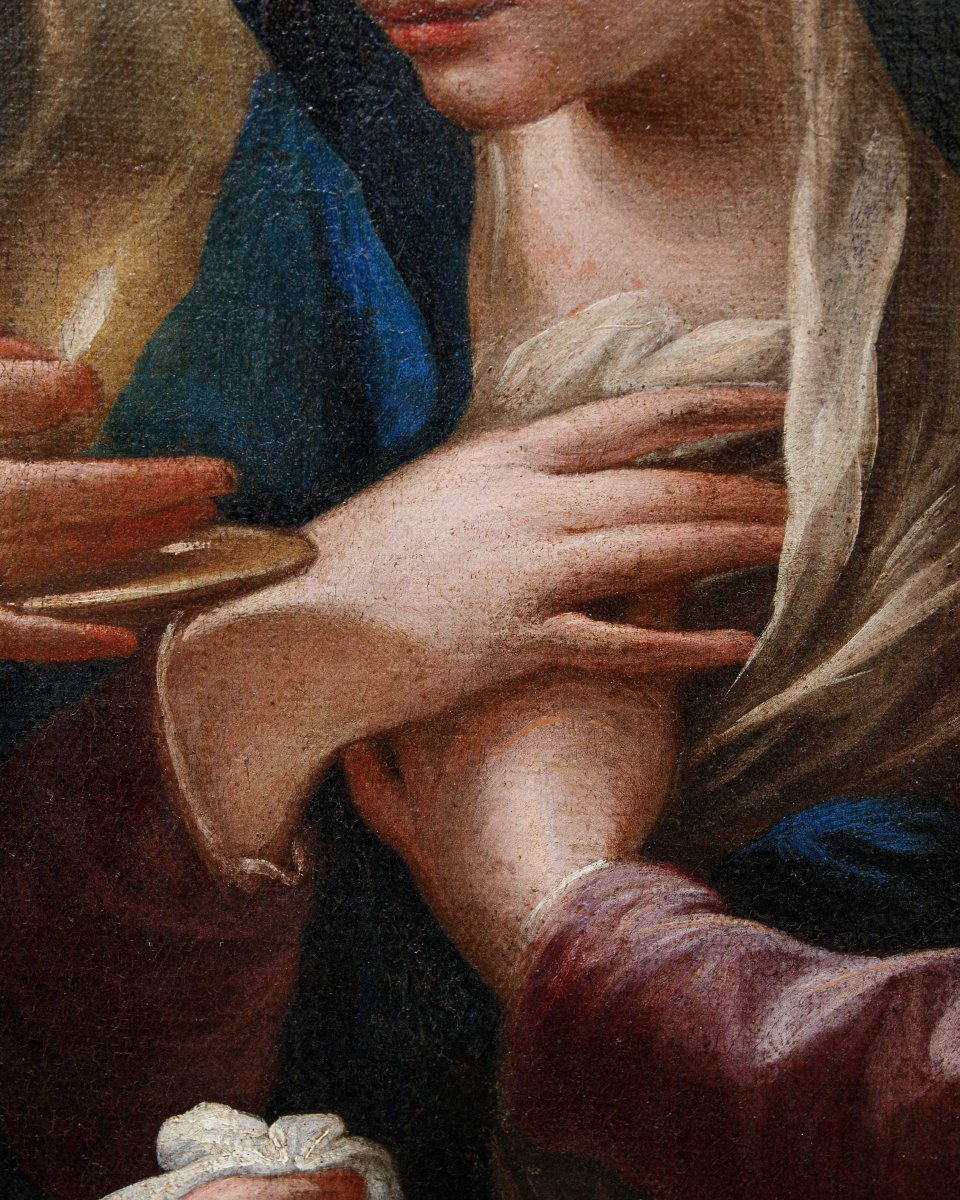
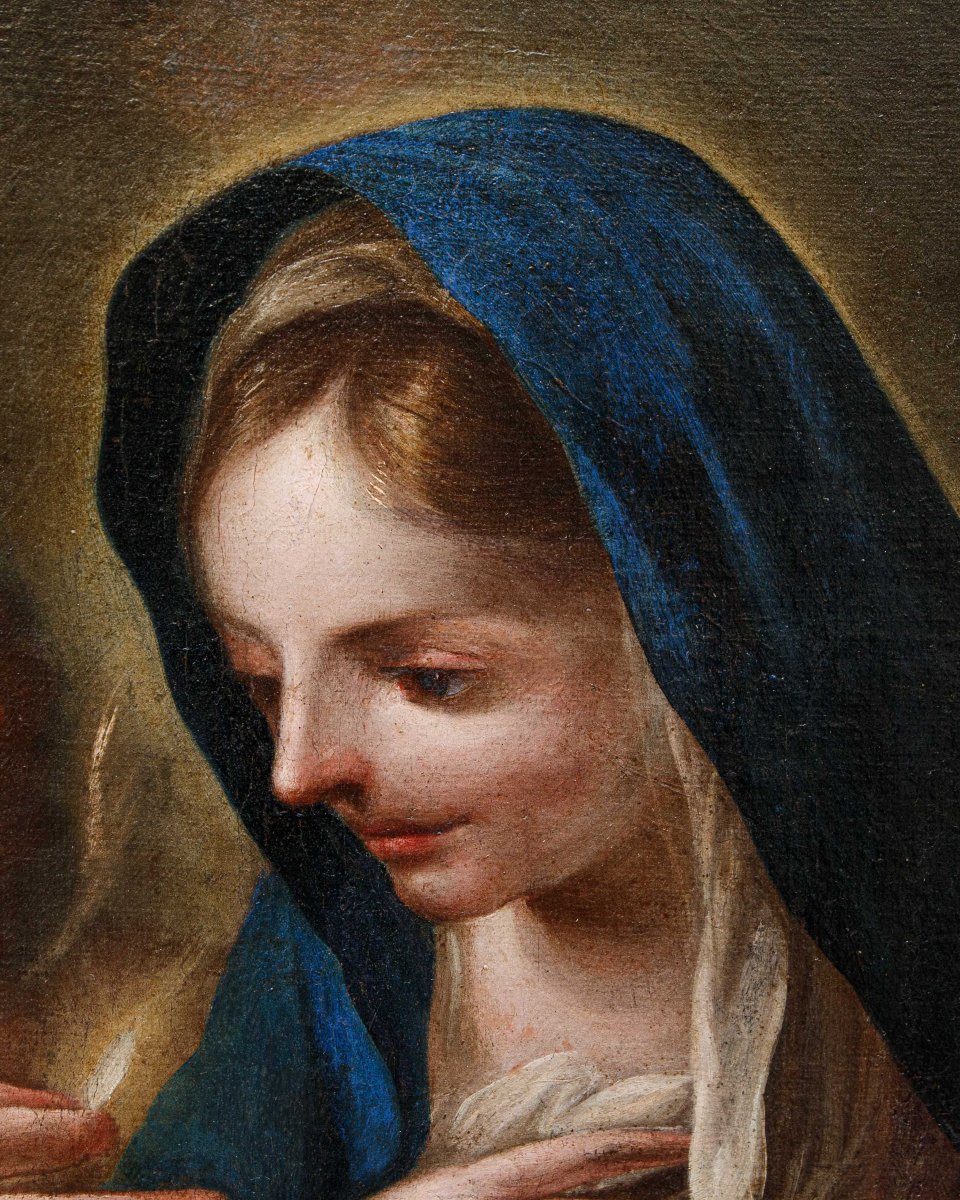
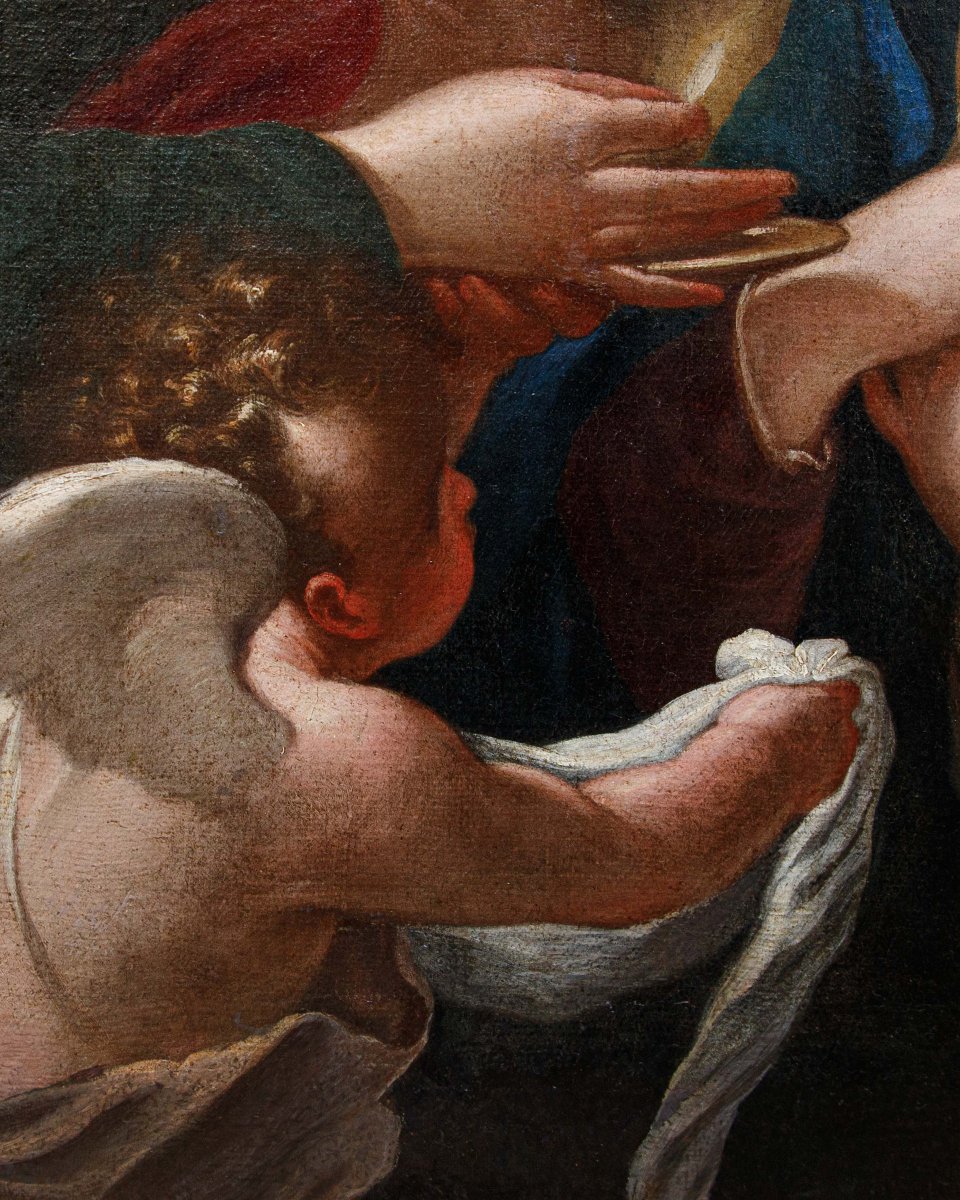
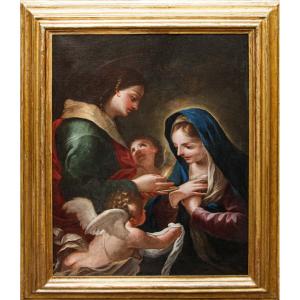
Set against the dim light of a dark background, the painting depicts a moment of quiet intimacy: the Virgin, wrapped in a blue mantle and with her gaze lowered, receives the host from St. John the Evangelist, who leans toward her. The saint, clad in a green robe with silky sheen and a red cloak, holds a paten on which a small flame glows, while two angels complete the scene: one, seen from behind with golden curls, holds a white linen cloth; the other emerges from behind the saint, turning his face upward. The silence and stillness of the scene are conveyed entirely through gestures and glances.
On a pictorial level, the skillful use of light is striking, softly shaping the skin tones and highlighting the hands—the true emotional focal point of the composition—while shadows glide delicately across the faces. The contrast between the deep blue of the Marian veil, the brilliant green, and the red of John’s robe gives the color palette a warm and controlled vibrancy, and the drapery—ample and luminous—naturally accompanies the figures’ movement.
The work is part of the oeuvre of Francesco Bruno, a painter from Porto Maurizio who was instrumental to the art of western Liguria between the late 17th and early 18th centuries. Trained in Rome, where, according to Carlo Giuseppe Ratti, he was a pupil of Pietro da Cortona, Bruno inherited the latter’s Baroque style, though he more frequently drew inspiration from the work of Carlo Maratta; back in his homeland, where he achieved considerable success, he also engaged with the artistic legacy of Gaudenzio Ferrari during his mature years. He always preferred the oil-on-canvas technique, and many of his surviving works are preserved in his hometown and in the churches of the Diocese of Imperia.
The most direct comparison is with *The Virgin Receiving the Eucharist*, now in a church within the diocese, which depicts the same subject with slight variations in the color of the garments and the angel’s position, but with the same play of light and shadow on the hands and faces that is characteristic of the painter. The same rendering of the drapery and the faces in profile reappears in the Annunciation, also owned by the diocese, while the angels, with their gentle features and curly hair, are found in the Coronation of the Virgin and in Saint Anthony of Padua and the Infant Jesus, both housed in the Diocese of Imperia. These parallels confirm the attribution and reveal a coherent artistic language capable of uniting Baroque monumentality with devotional contemplation.
Period: 17th century
Style: Other Style
Condition: Good condition
Material: Oil painting
Width: 72
Height: 95
Reference (ID): 1835858
Availability: In stock