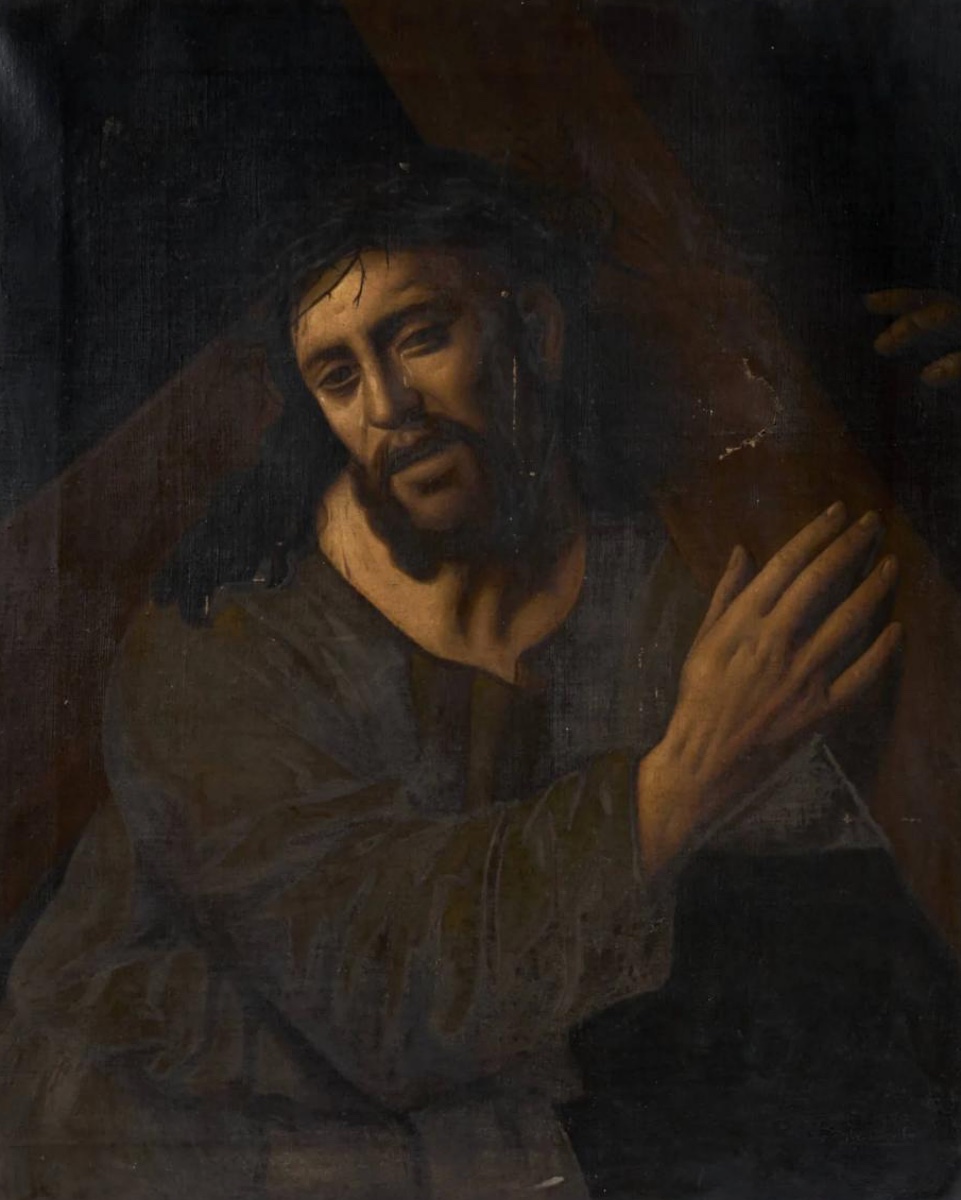
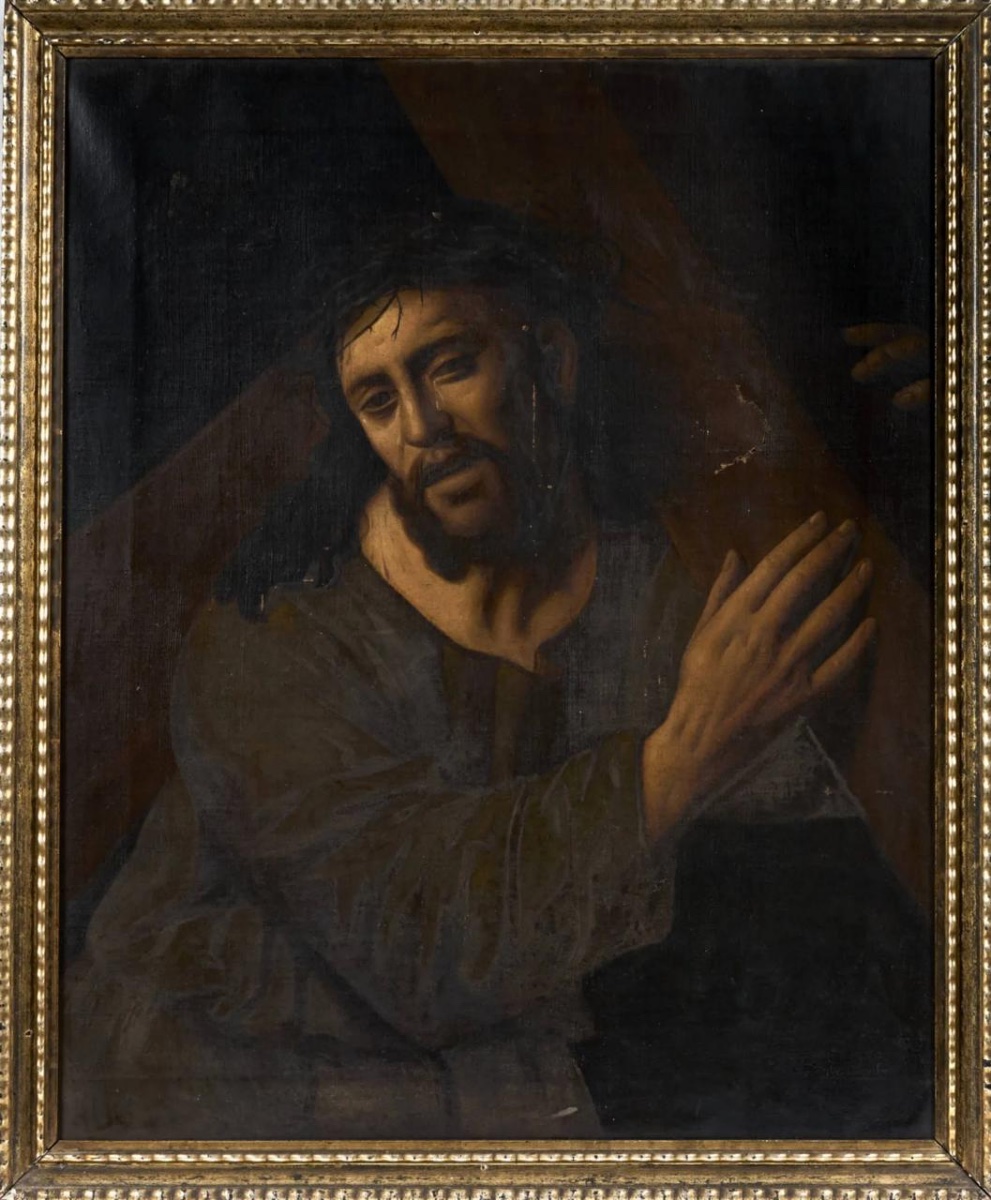
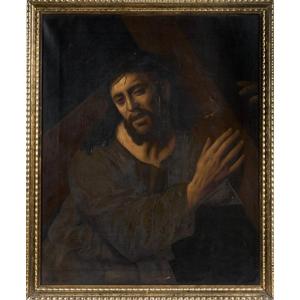


Spanish School, 17th Century; Circle Of Juan Ribalta (1596–1628)
Artist: Entourage Juan Ribalta
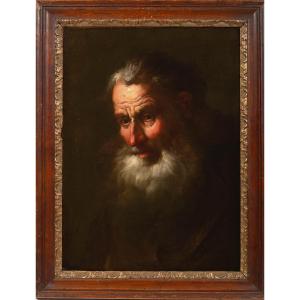
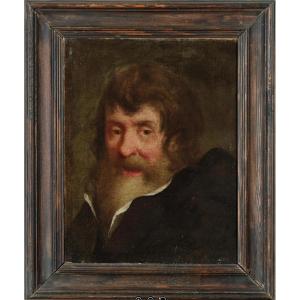
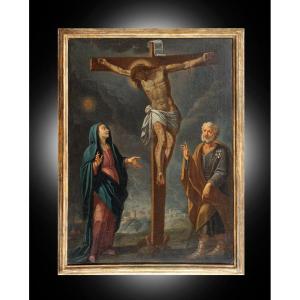
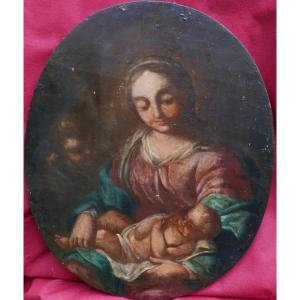
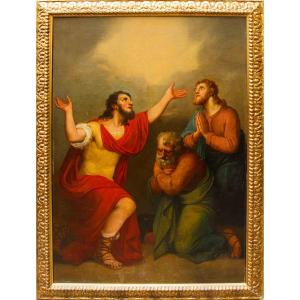
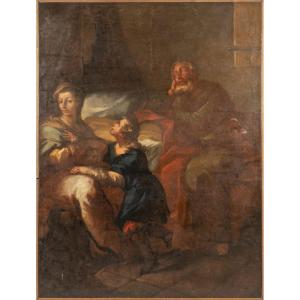
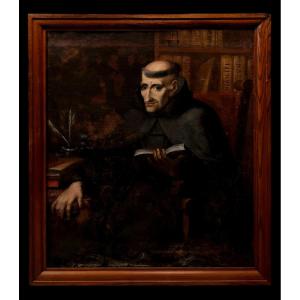
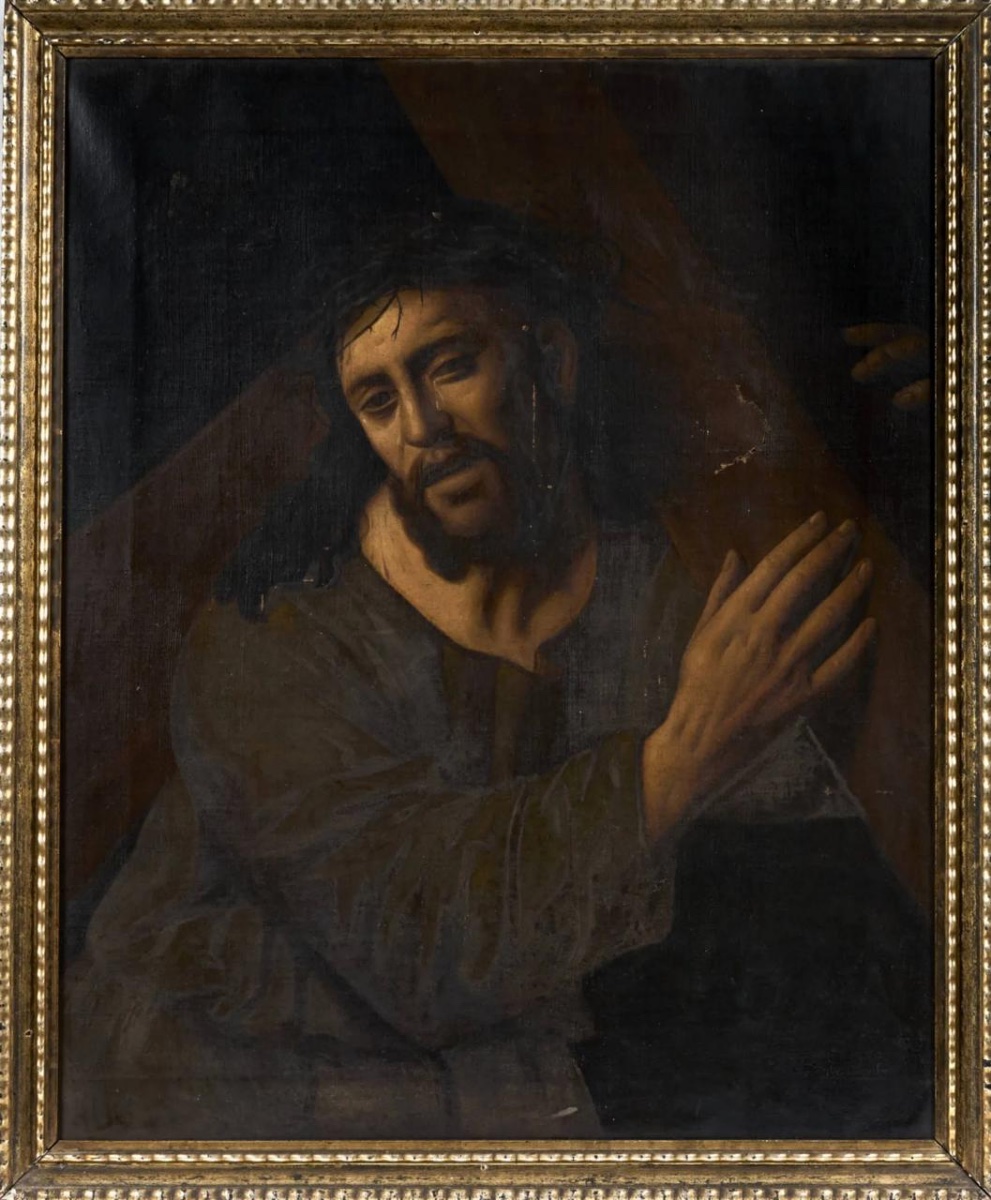
Spanish School, 17th century; circle of Juan Ribalta (1596–1628): *Christ Carrying the Cross*
Oil on canvas
76 x 62 cm
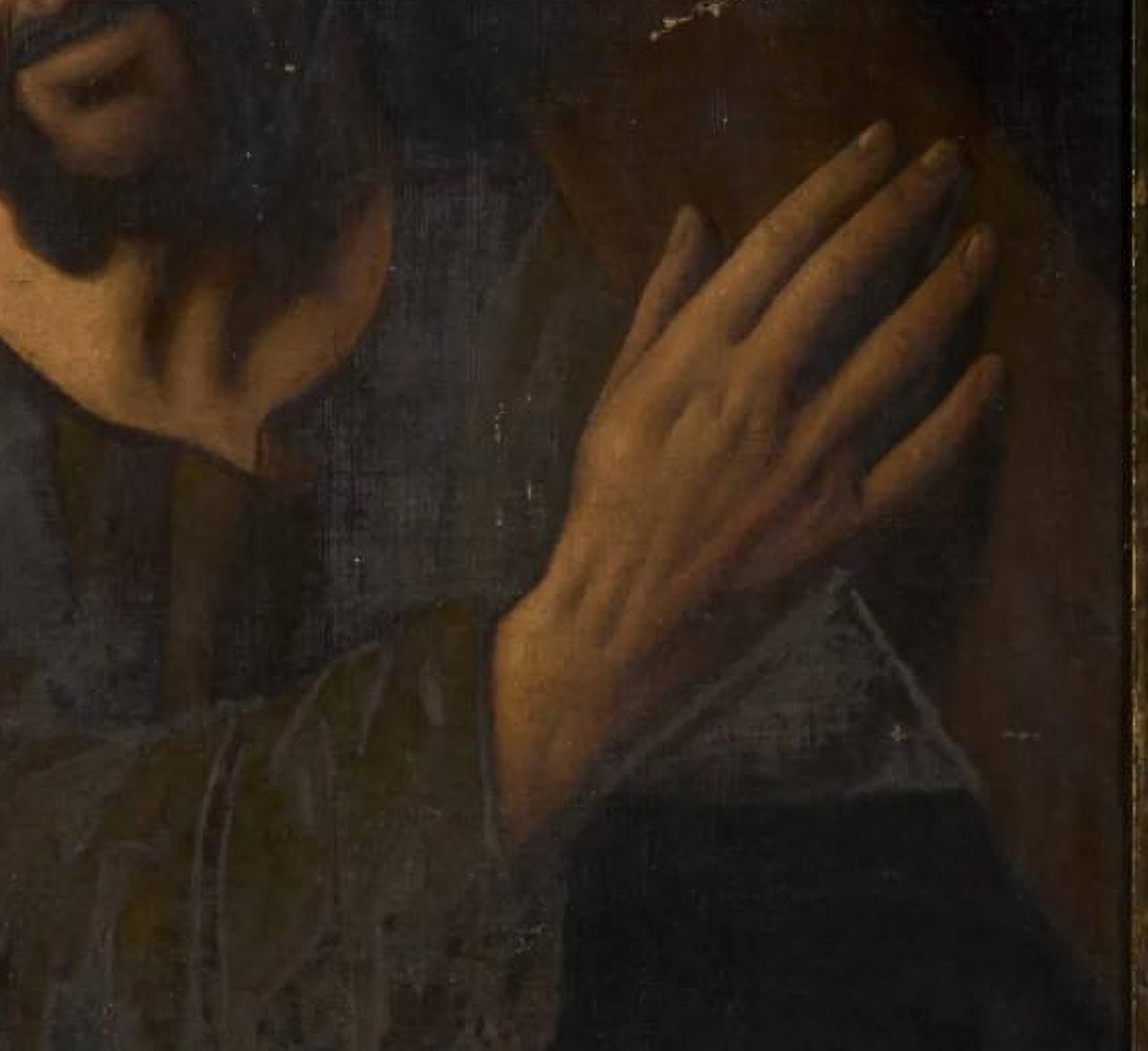
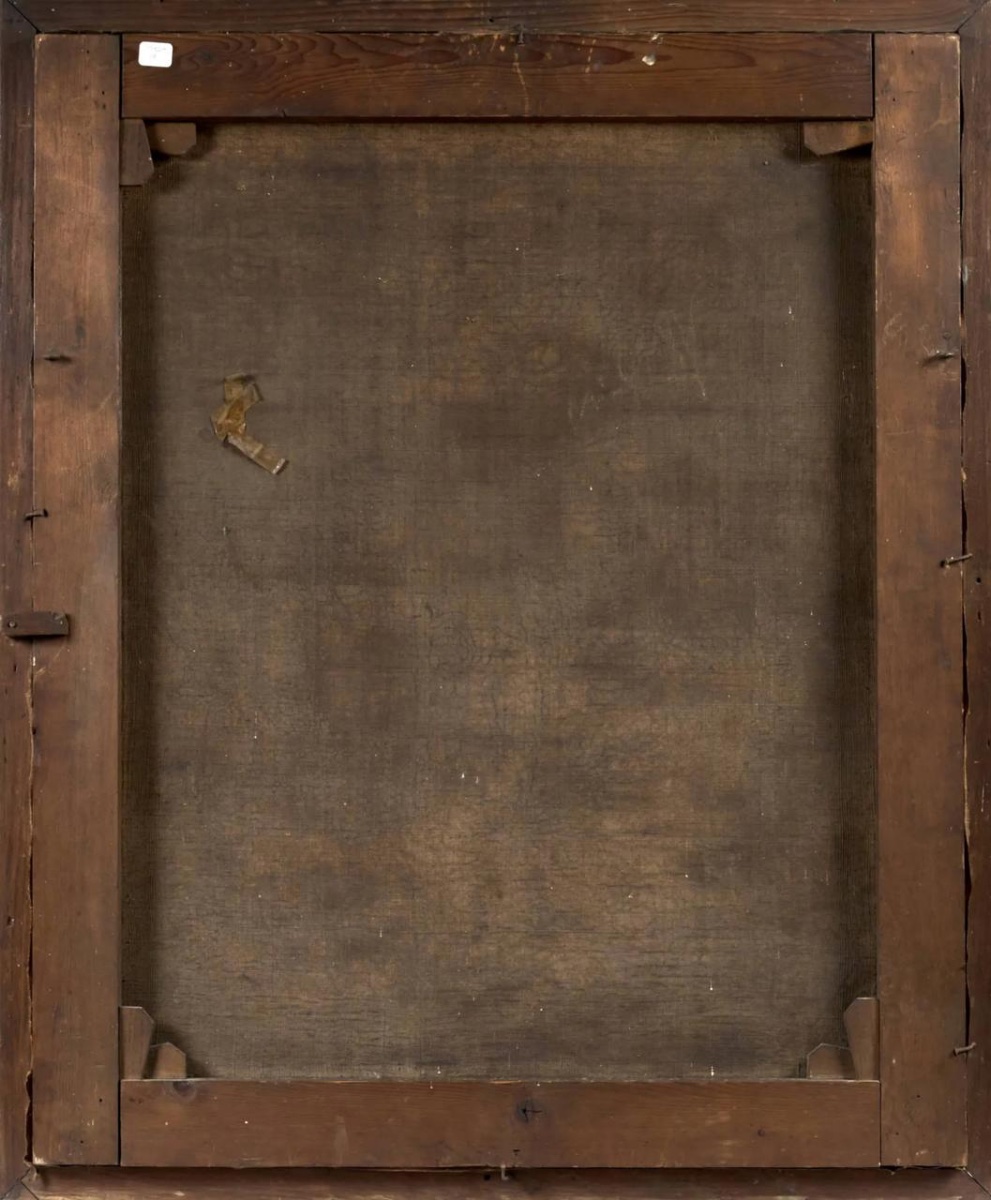
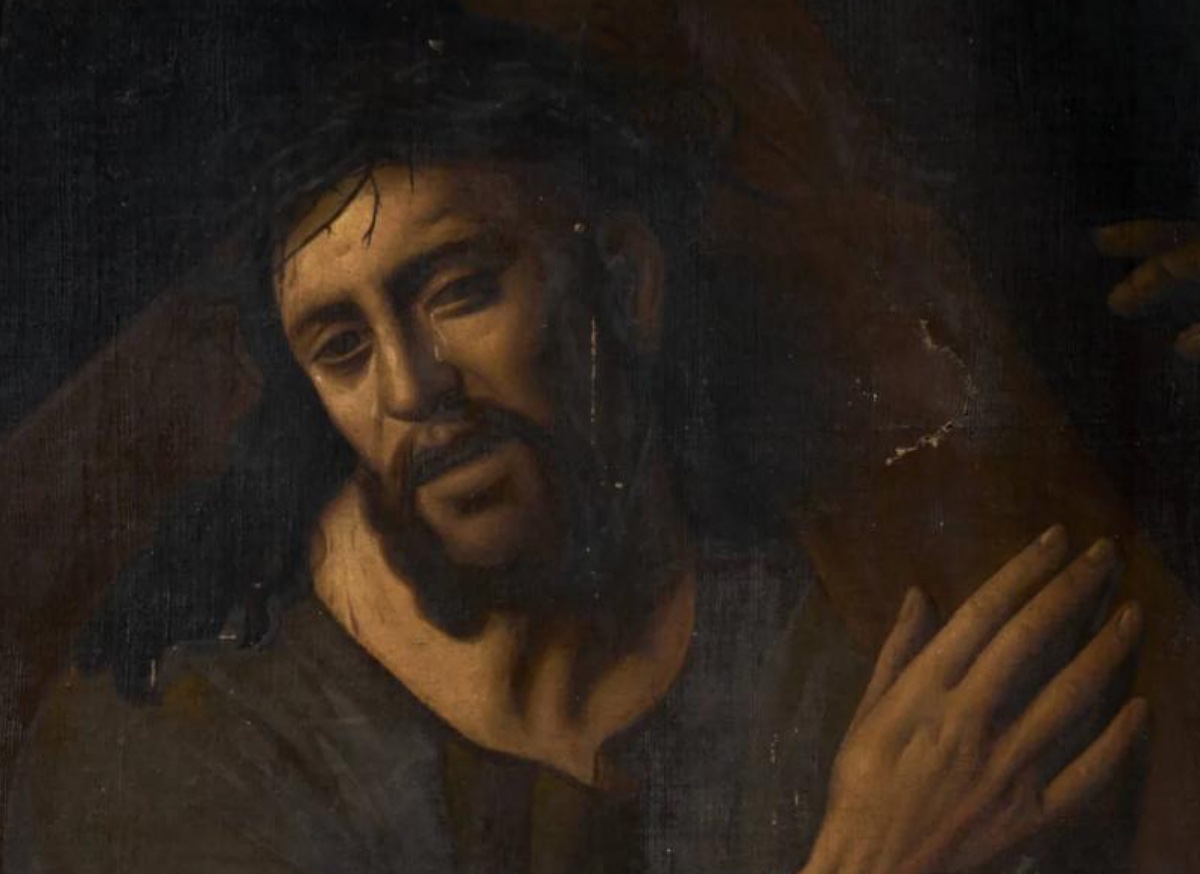
Slight damage to the canvas
(Madrid, 1596/1597 – Valencia, 1628). Spanish painter. The son of Francisco Ribalta—an artist more famous than he was—Juan displayed a very distinctive artistic personality; trained in his father’s studio, he seemed destined to become one of the most remarkable Spanish artists of the 17th century. However, his early death cut short a promising career. Working diligently in his father’s studio, he signed his first work in 1615, proudly noting his age—eighteen—at the time. This work, *The Preparations for the Crucifixion*, attests to his remarkable precocity in mastering such a complex composition, as well as his ease in handling the Mannerist models assimilated by his father, while incorporating certain naturalistic touches. Palomino emphasized how thoroughly the young Juan had absorbed his father’s artistic style, noting that it was difficult to distinguish their works except by their brushwork: “The father’s style was more defined, while the son’s was somewhat freer and more vigorous.” ” The arrival of Pedro de Orrente in Valencia in 1616 proved to be a decisive influence, leading Juan to adopt various elements characteristic of the Murcian painter—notably a taste for anecdotal and everyday details directly inherited from the Bassano workshop. These influences lent a softer tone to his works in the years that followed. The year 1618 appears to have been a turning point for Juan Ribalta: his marriage secured him a more comfortable financial situation, while he seems to have become more involved in the management of his father’s studio. That same year also saw his literary inclinations emerge more clearly when he participated in the poetry contest held in Valencia during the festivities celebrating the canonization of Thomas de Villeneuve. From 1624 onward, a shift toward a more restrained style can be observed, likely influenced by the growing naturalism that Francisco was then adopting in his own painting. The monumental *Saint John the Evangelist* in the Prado is a remarkable example of this more rigorous approach characteristic of his later period; the naturalistic treatment reinforces the figure’s imposing presence. Juan Ribalta died in Valencia in October 1628—presumably of typhus—barely nine months after his father. The Prado holds three works by the artist: two canvases depicting the evangelists come from the royal collections (perhaps acquired by Charles IV during a stay in Valencia in late 1802), while the *Saint John the Evangelist* was acquired in 1961, with no known prior provenance.
Oil on canvas
76 x 62 cm
Slight damage to the canvas
(Madrid, 1596/1597 – Valencia, 1628). Spanish painter. The son of Francisco Ribalta—an artist more famous than he was—Juan displayed a very distinctive artistic personality; trained in his father’s studio, he seemed destined to become one of the most remarkable Spanish artists of the 17th century. However, his early death cut short a promising career. Working diligently in his father’s studio, he signed his first work in 1615, proudly noting his age—eighteen—at the time. This work, *The Preparations for the Crucifixion*, attests to his remarkable precocity in mastering such a complex composition, as well as his ease in handling the Mannerist models assimilated by his father, while incorporating certain naturalistic touches. Palomino emphasized how thoroughly the young Juan had absorbed his father’s artistic style, noting that it was difficult to distinguish their works except by their brushwork: “The father’s style was more defined, while the son’s was somewhat freer and more vigorous.” ” The arrival of Pedro de Orrente in Valencia in 1616 proved to be a decisive influence, leading Juan to adopt various elements characteristic of the Murcian painter—notably a taste for anecdotal and everyday details directly inherited from the Bassano workshop. These influences lent a softer tone to his works in the years that followed. The year 1618 appears to have been a turning point for Juan Ribalta: his marriage secured him a more comfortable financial situation, while he seems to have become more involved in the management of his father’s studio. That same year also saw his literary inclinations emerge more clearly when he participated in the poetry contest held in Valencia during the festivities celebrating the canonization of Thomas de Villeneuve. From 1624 onward, a shift toward a more restrained style can be observed, likely influenced by the growing naturalism that Francisco was then adopting in his own painting. The monumental *Saint John the Evangelist* in the Prado is a remarkable example of this more rigorous approach characteristic of his later period; the naturalistic treatment reinforces the figure’s imposing presence. Juan Ribalta died in Valencia in October 1628—presumably of typhus—barely nine months after his father. The Prado holds three works by the artist: two canvases depicting the evangelists come from the royal collections (perhaps acquired by Charles IV during a stay in Valencia in late 1802), while the *Saint John the Evangelist* was acquired in 1961, with no known prior provenance.
2 000 €
Period: 17th century
Style: Other Style
Condition: Good condition
Material: Oil painting on paper
Width: 62cm
Height: 76cm
Depth: 8
Reference (ID): 1834299
Availability: In stock
Print