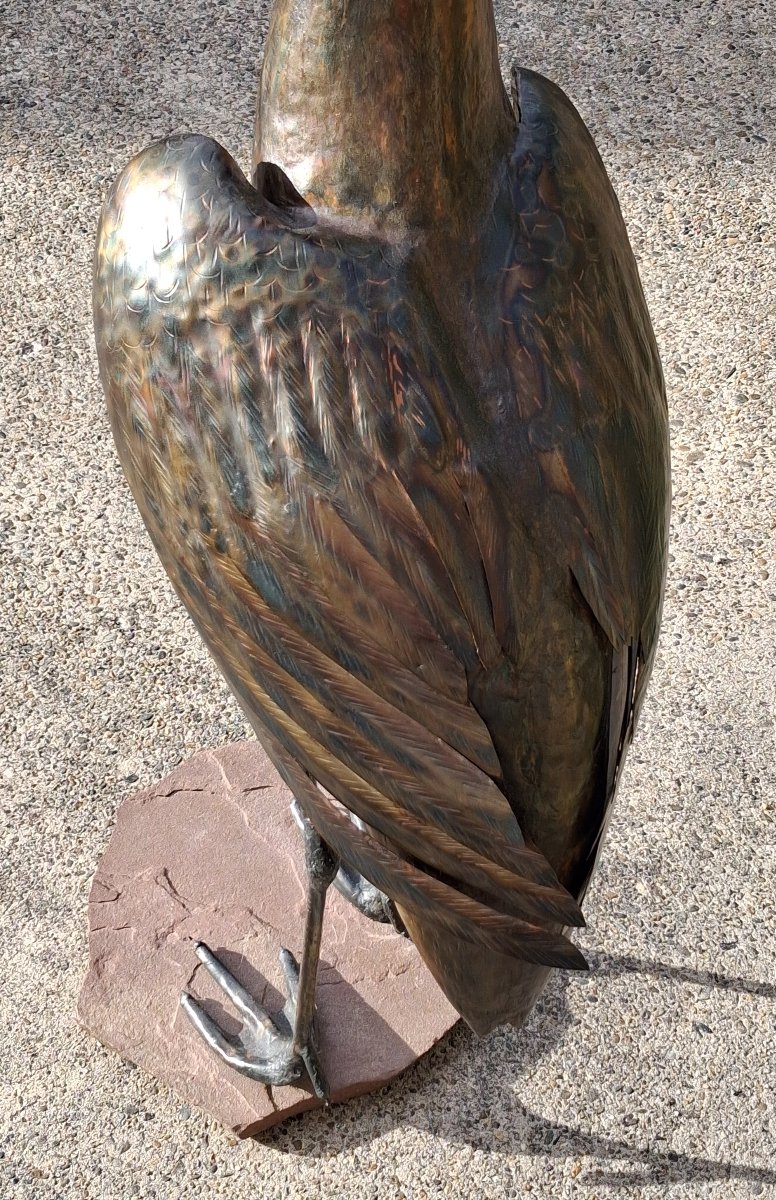
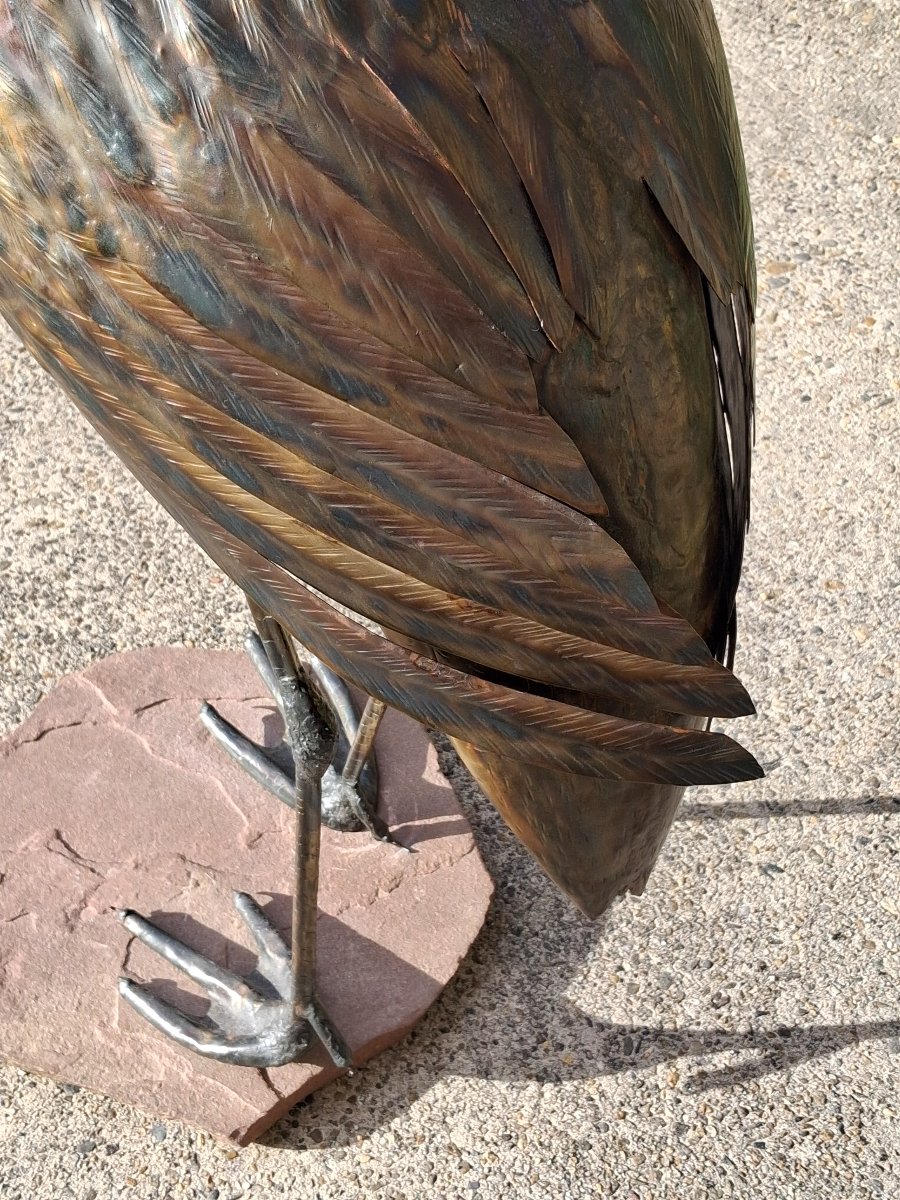
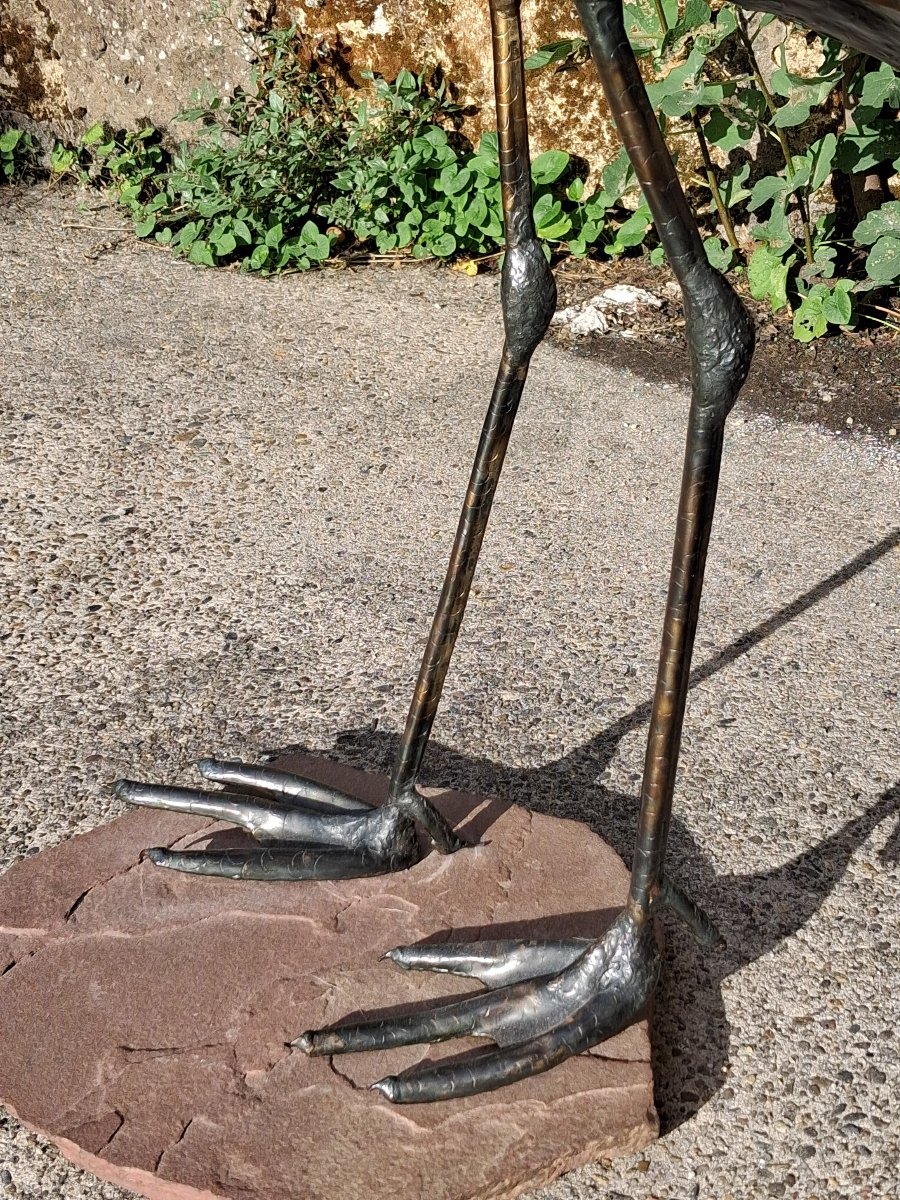



By Pierre Ajacques, 1977
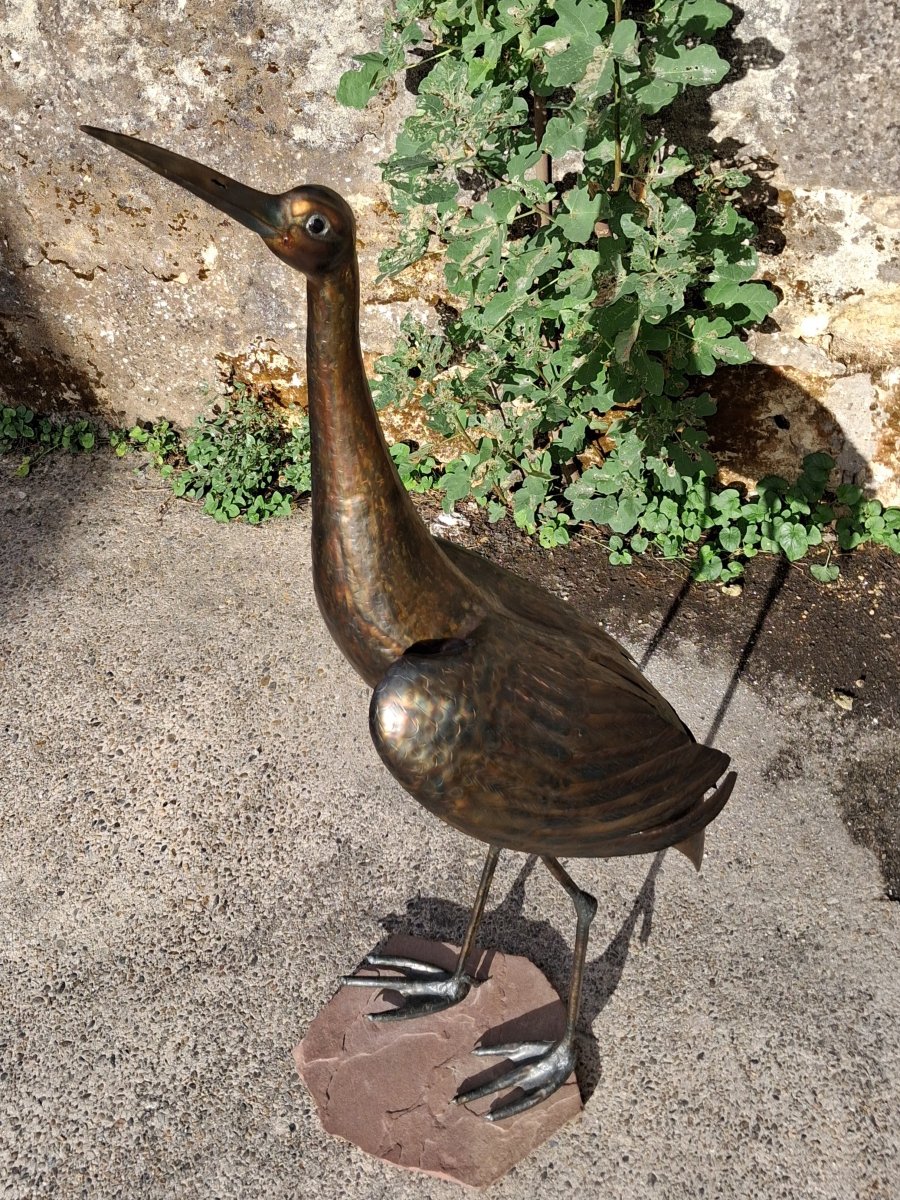
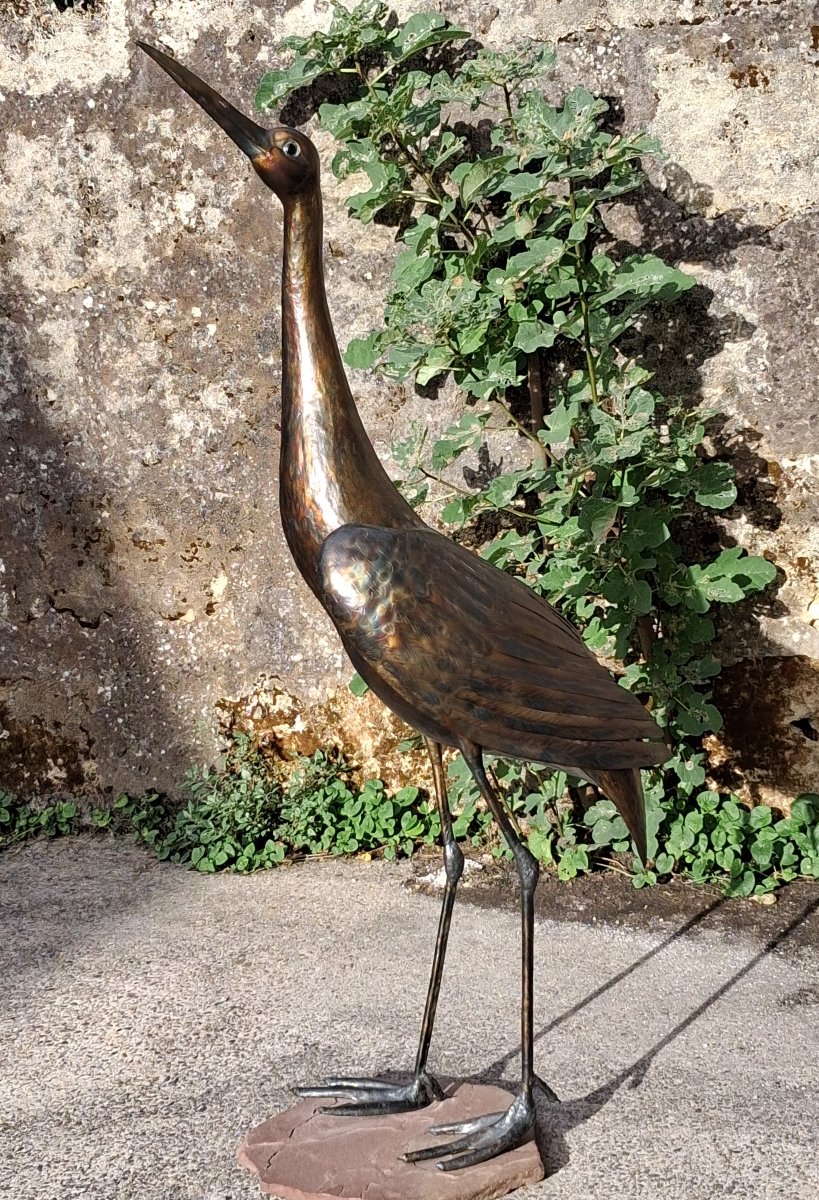
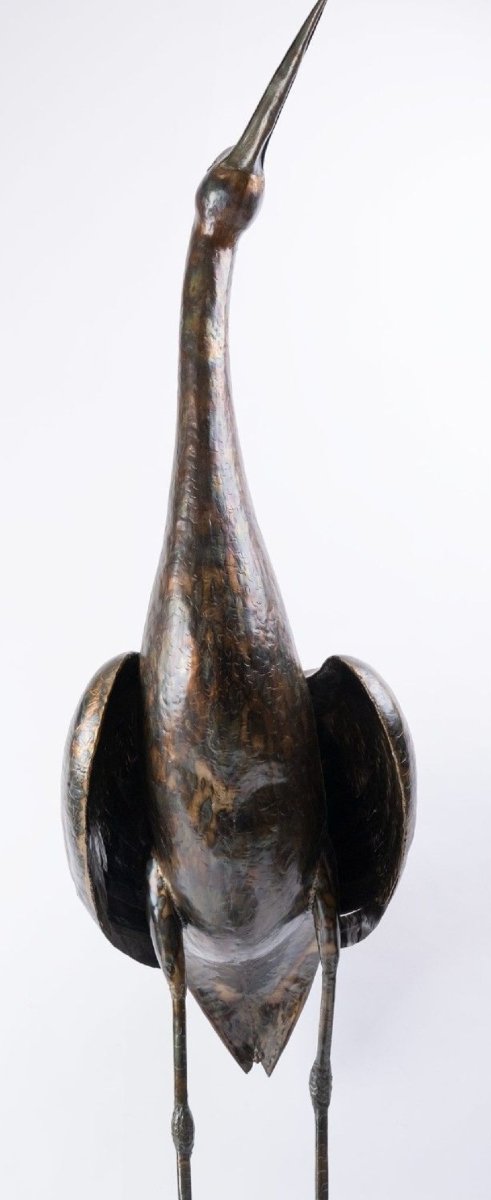
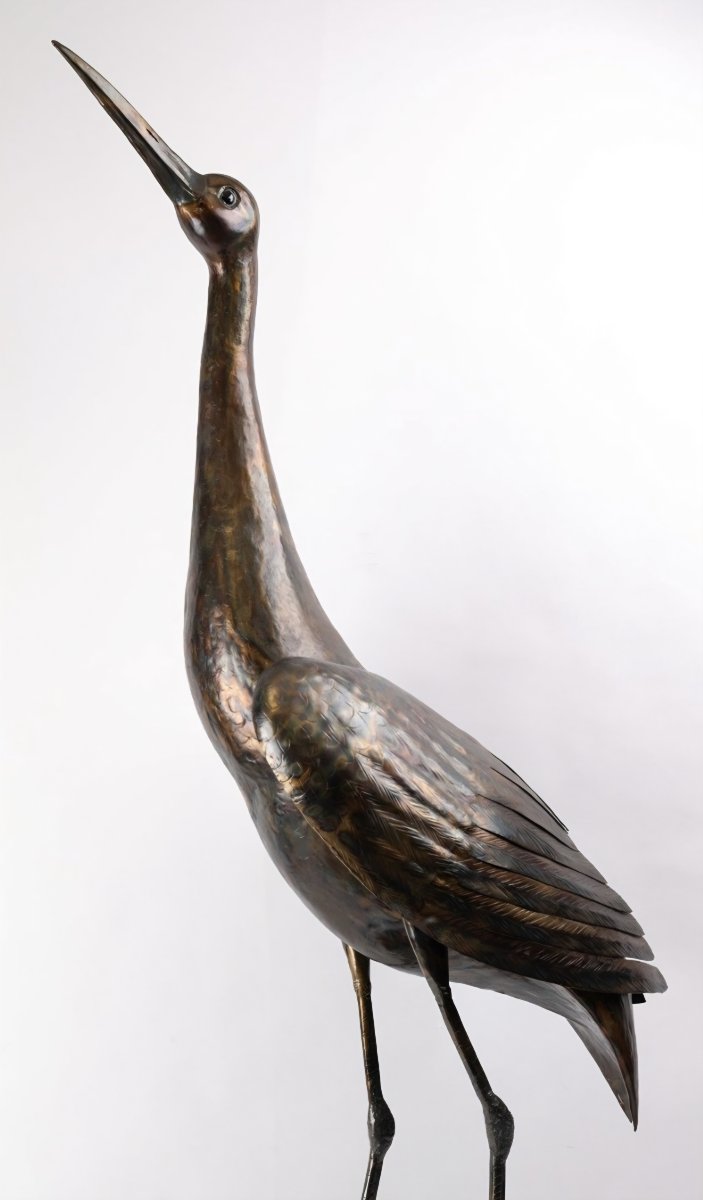
"Crane" made of copper, consisting of assembled and flamed sheets with patina effects and nuanced colors.
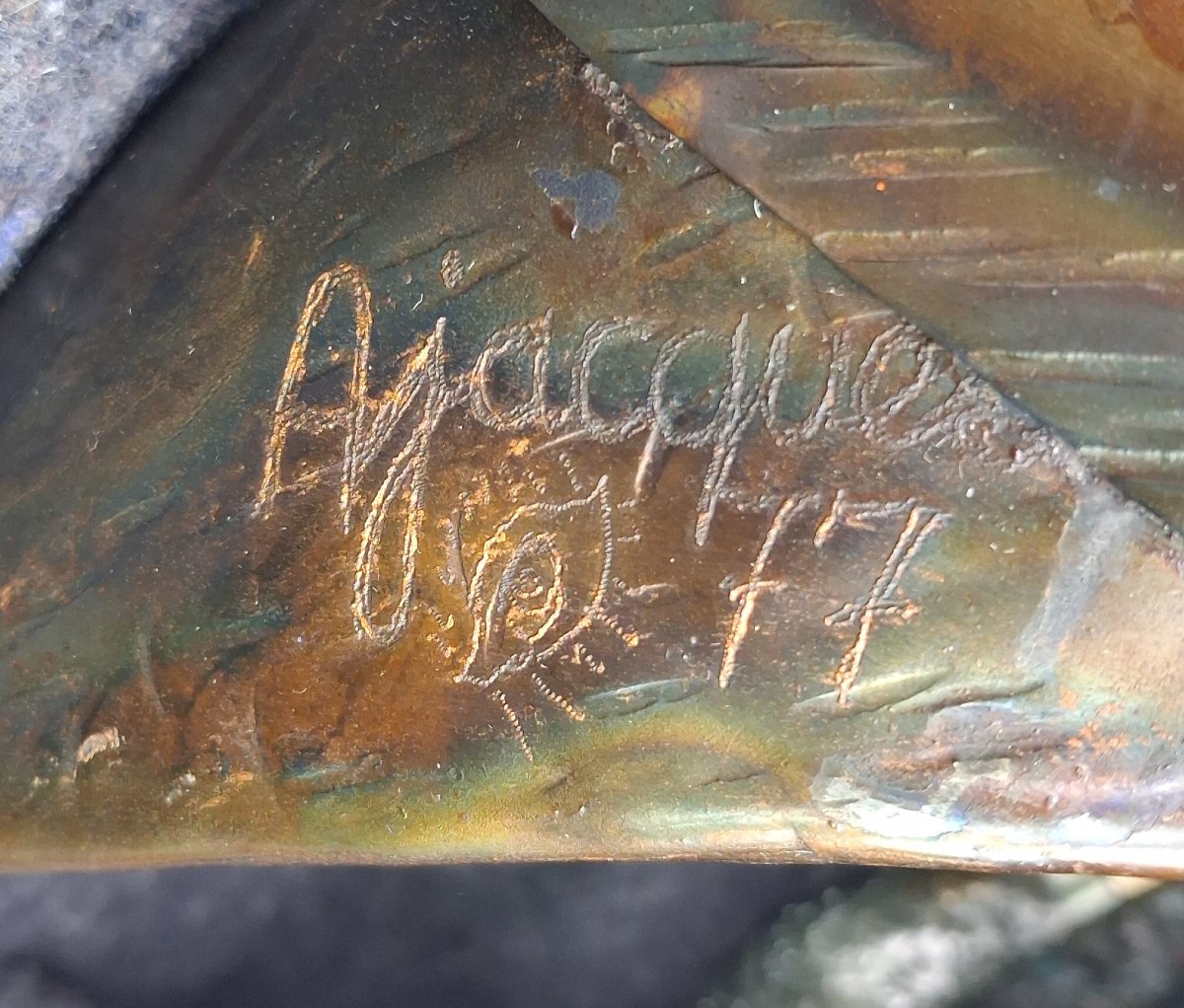
Signed on the right on one of the tail feathers Ajacques, dated 77, with the signature and date complemented by an eye.
Base made of dark reddish-ochre stone.
Height: 134 cm. (without the base) / wingspan: 34.5 cm.
In very good condition.
Pierre Ajacques was born in 1939.
He is a French sculptor originally from and now based in Sologne.
After working with industrial materials and sheet metal from wrecked cars, he turned to animal sculpture.
He works with steel—particularly cut and welded iron—as well as bronze, tin, copper, wood, and terracotta, and specializes in depicting game animals: wild boars, hares, woodcocks, quails… birds in flight and other migratory birds.
In the 1980s, he practiced the lost-wax casting technique while continuing to weld.
He also created ceramic designs, notably terrines, for the famous Gien pottery factory.
Throughout his career, he has exhibited at shows dedicated to nature and wildlife art, such as at the Château de Chambord (1998, etc.).
For over 50 years, his work in flame-treated metal has been recognized and considered unmatched in Europe.
This recognition has earned him various awards on several occasions.
In Greek and Roman antiquity, the crane symbolized sagacity, vigilance, prudence, and intelligence.
Among the Romans, it also symbolized order due to its organized flight patterns during migration, a phenomenon known as “migration in flocks.”
Its migrations have made it a symbol of progress, collective organization, and the changing of the seasons.
In medieval times, it was associated with gossip, frivolity, and foolishness.
In Asia, the crane is a symbol of longevity, peace, and fidelity, as pairs mate for life.
It is the emblem of a happy marriage.
Often depicted alongside sages and gods, it embodies wisdom and happiness.
In Japan, it is a sacred, iconic animal considered a good-luck charm.
In China, the crane is also a symbol of spiritual elevation.
Its haughty bearing evokes innocence, freedom of the soul, and the journey to the heavens.
Rich in symbolism, this remarkable and beautiful sculpture will add an elegant touch of naturalism to your decor.
(Large-scale works by P. Ajacques are quite rare on the art market...)
Period: 20th century
Style: Other Style
Condition: Excellent condition
Material: Copper
Reference (ID): 1832903
Availability: In stock