



Frederick Grosjean's Pedal Harp London, Circa 1820
Frederick Grosjean, London, 11 Soho Square, circa 1820
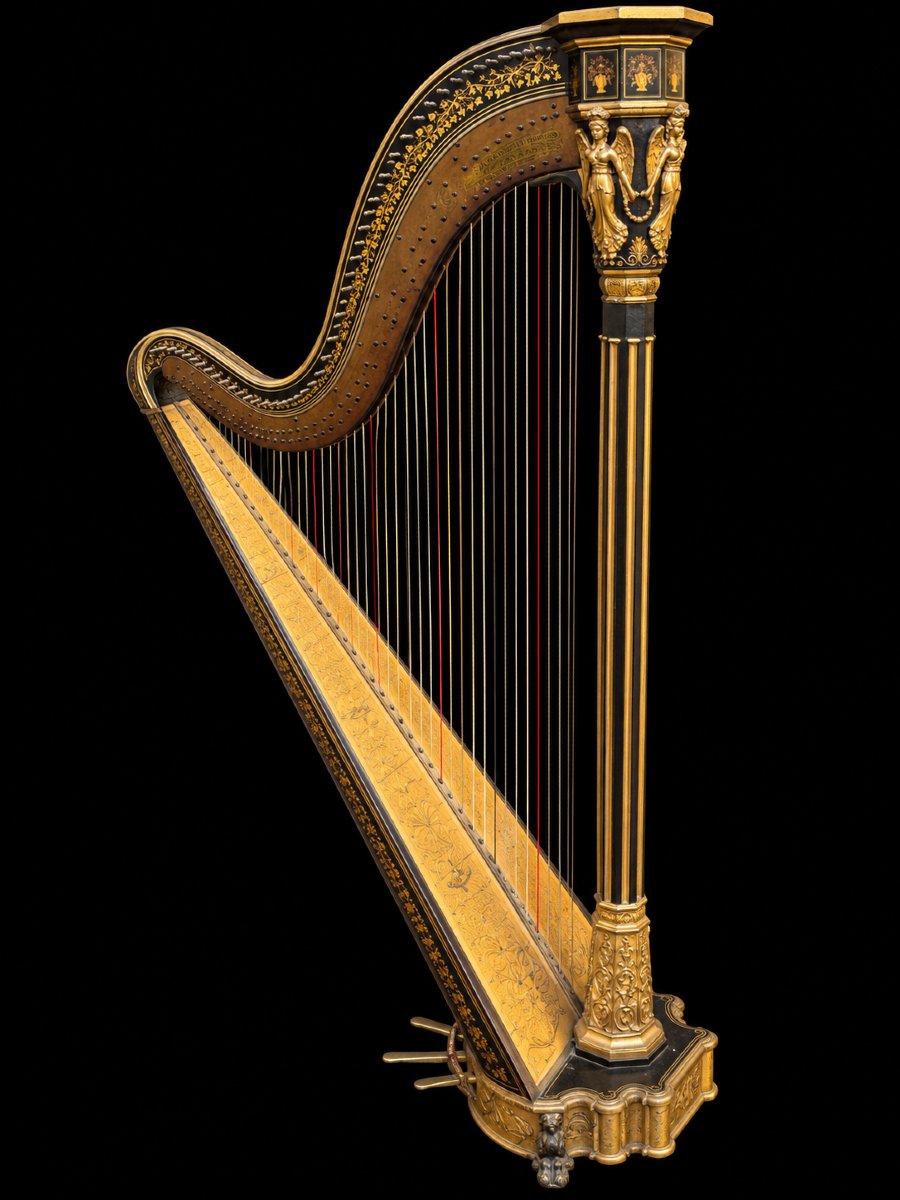
A remarkable English pedal harp attributed to John Frederick Grosjean, one of the important London harp makers of the Georgian and Regency periods.
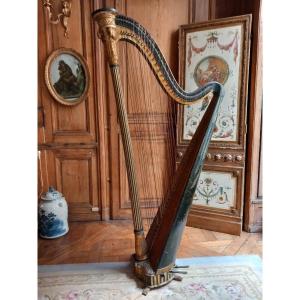
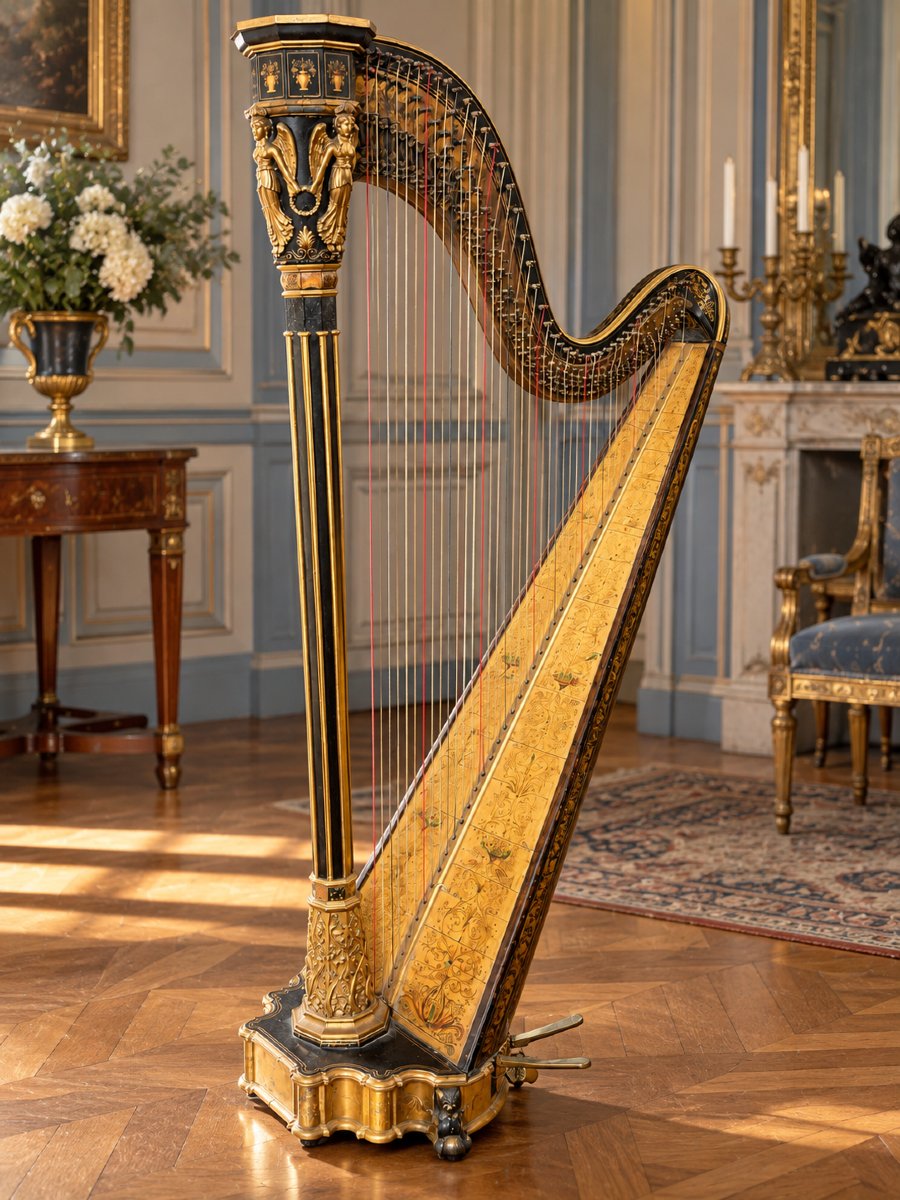
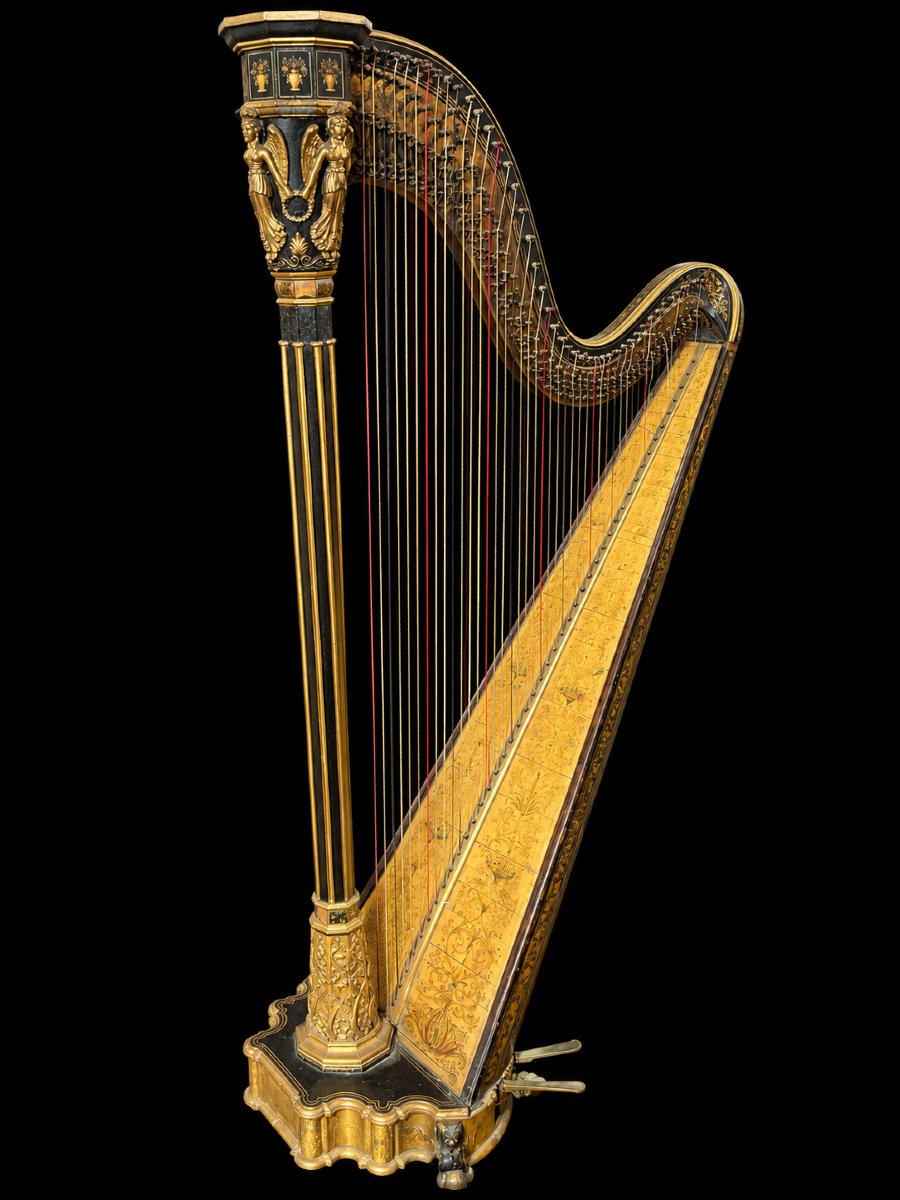
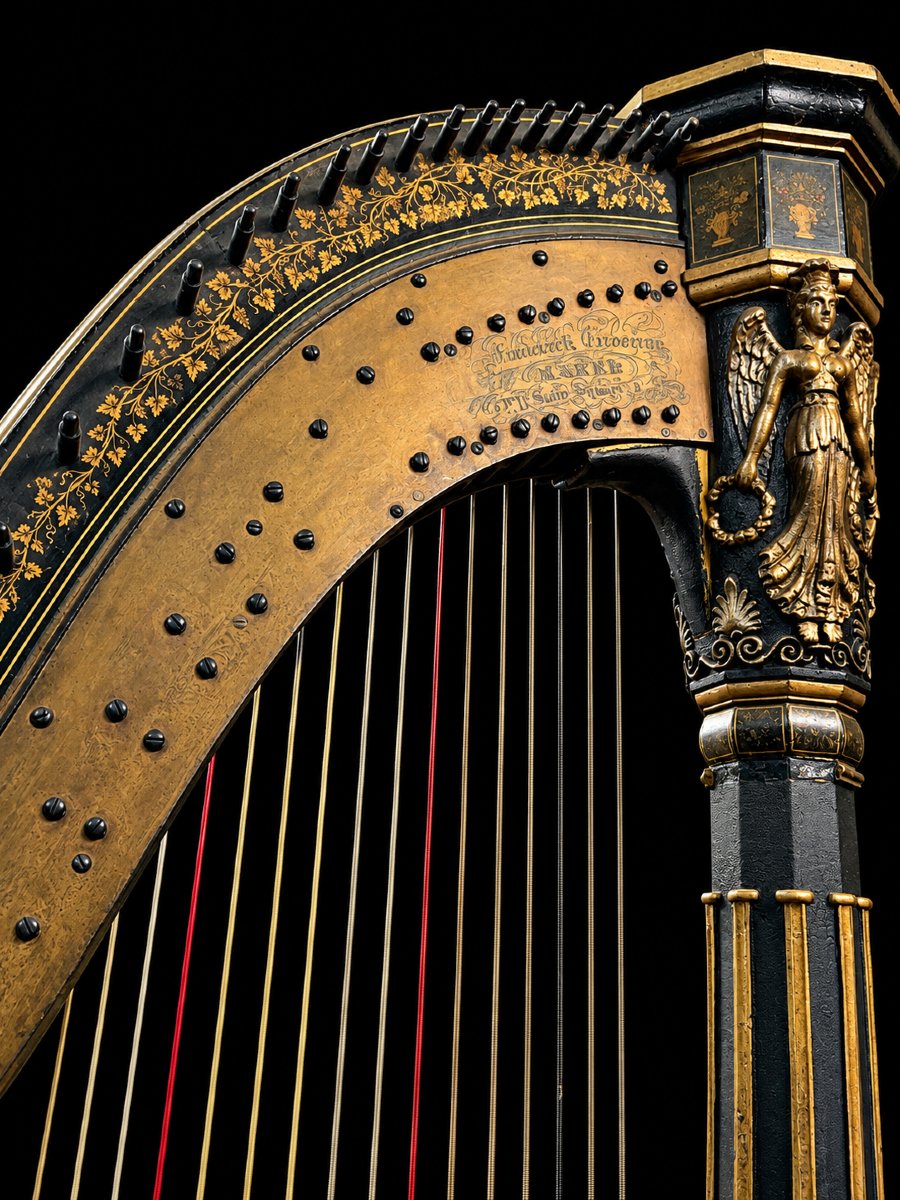
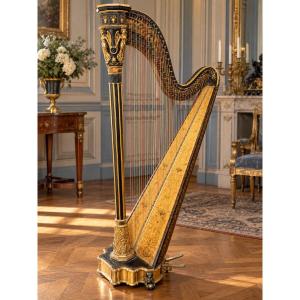
This exceptional instrument is distinguished not only by its historical importance, but also by the extraordinary richness of its polychrome decoration. The combination of painted surfaces, gilding and sculpted ornament gives the harp the character of a true work of decorative art, rather than that of a purely functional musical instrument.
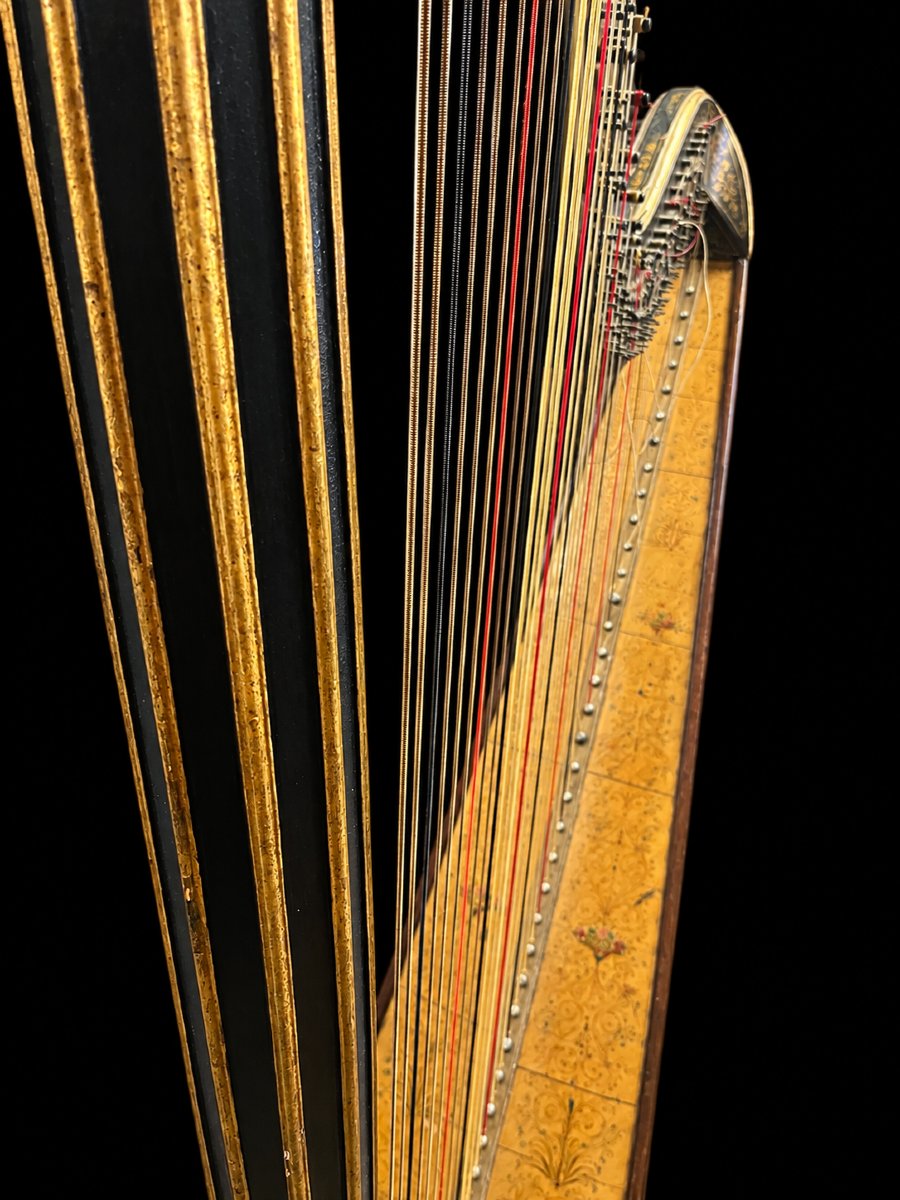
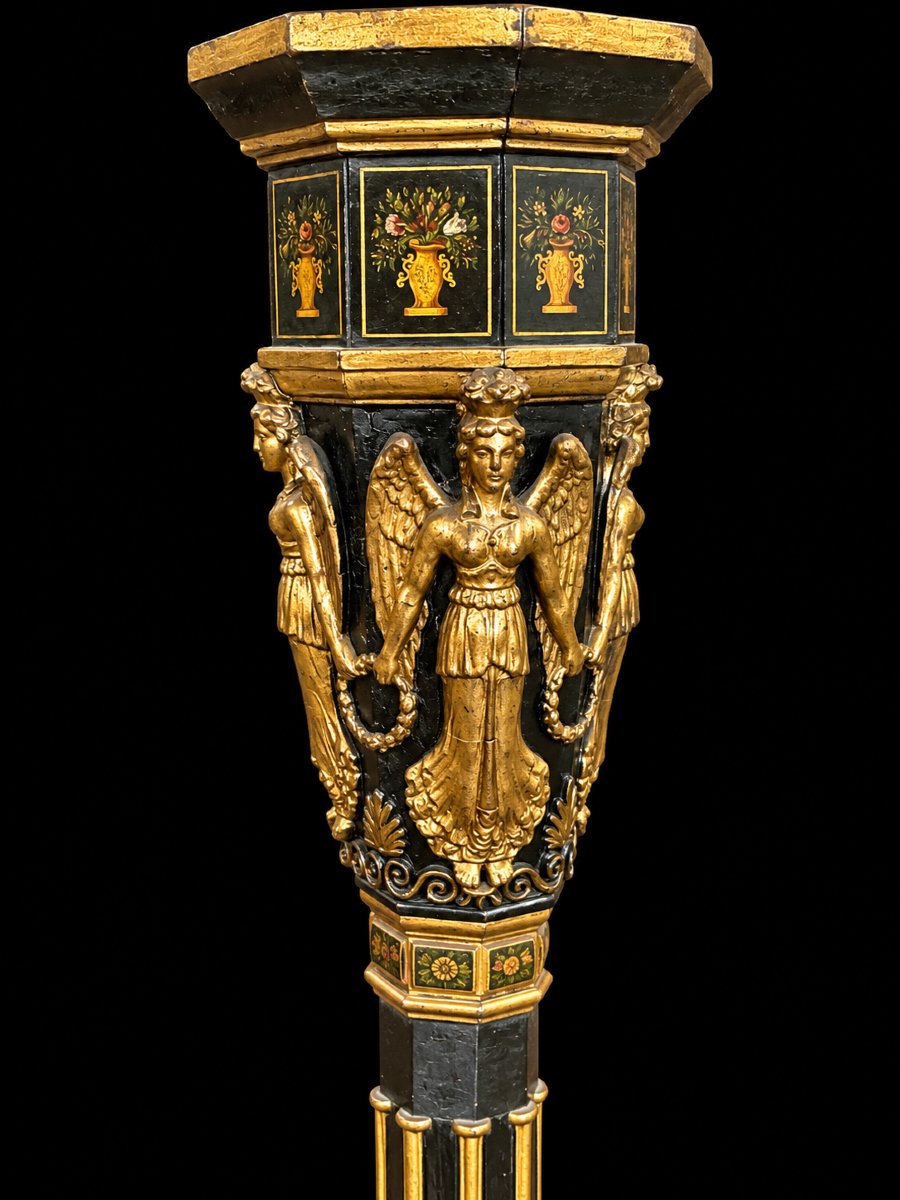
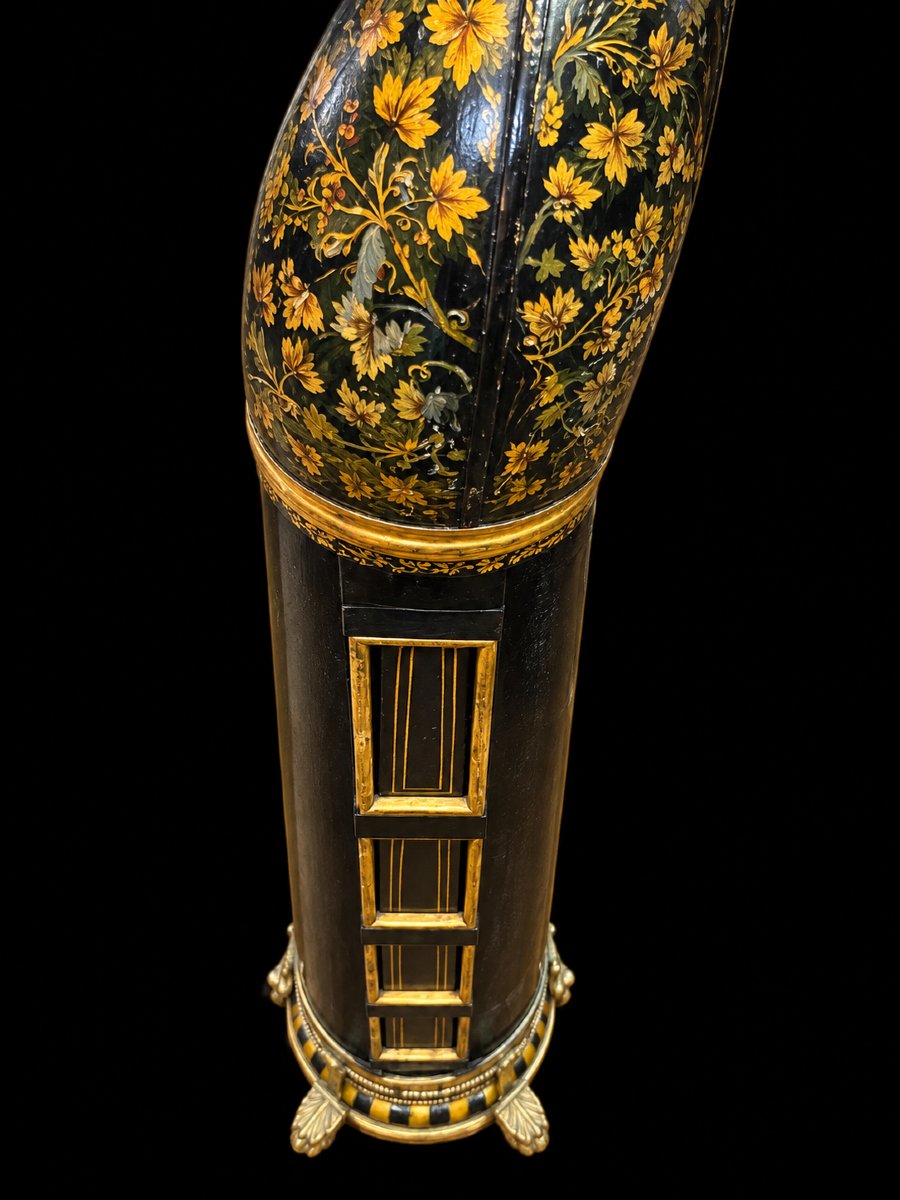
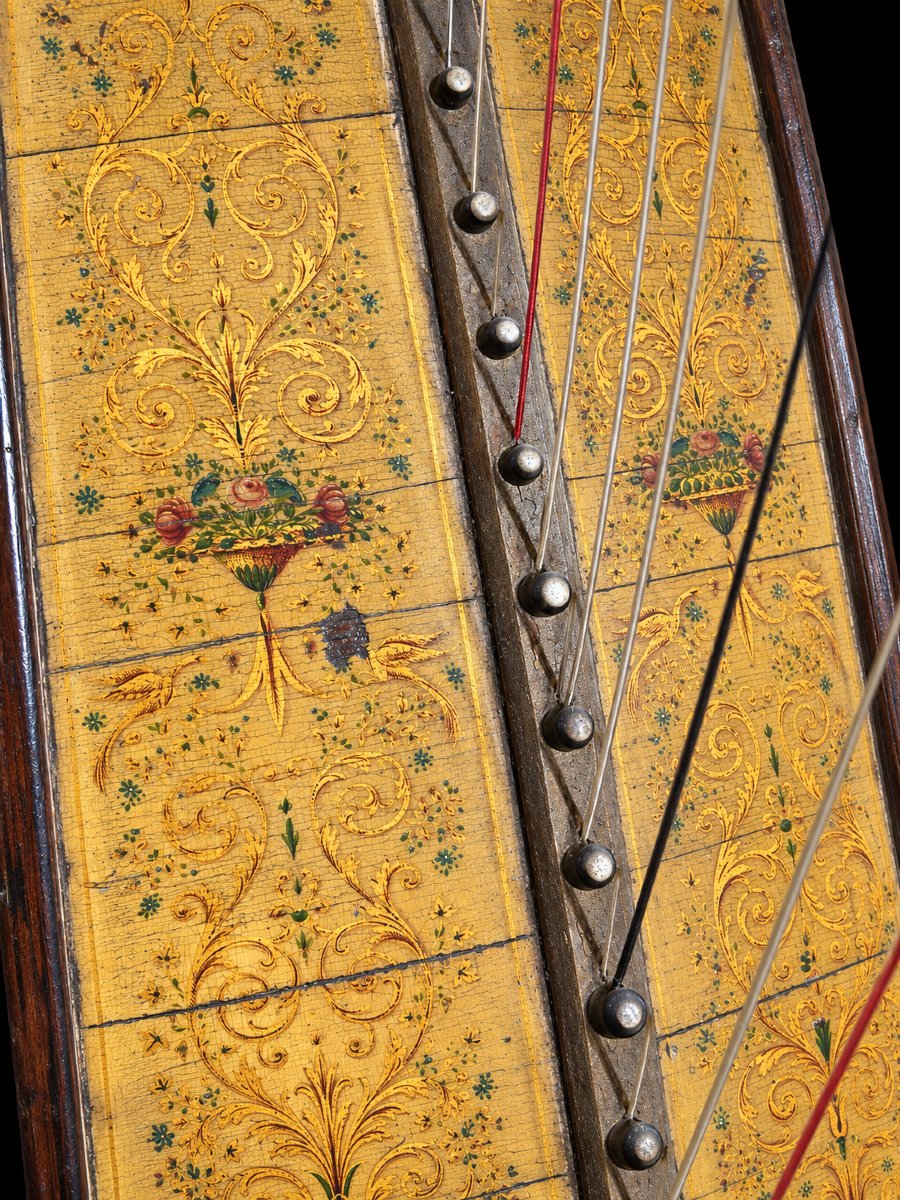
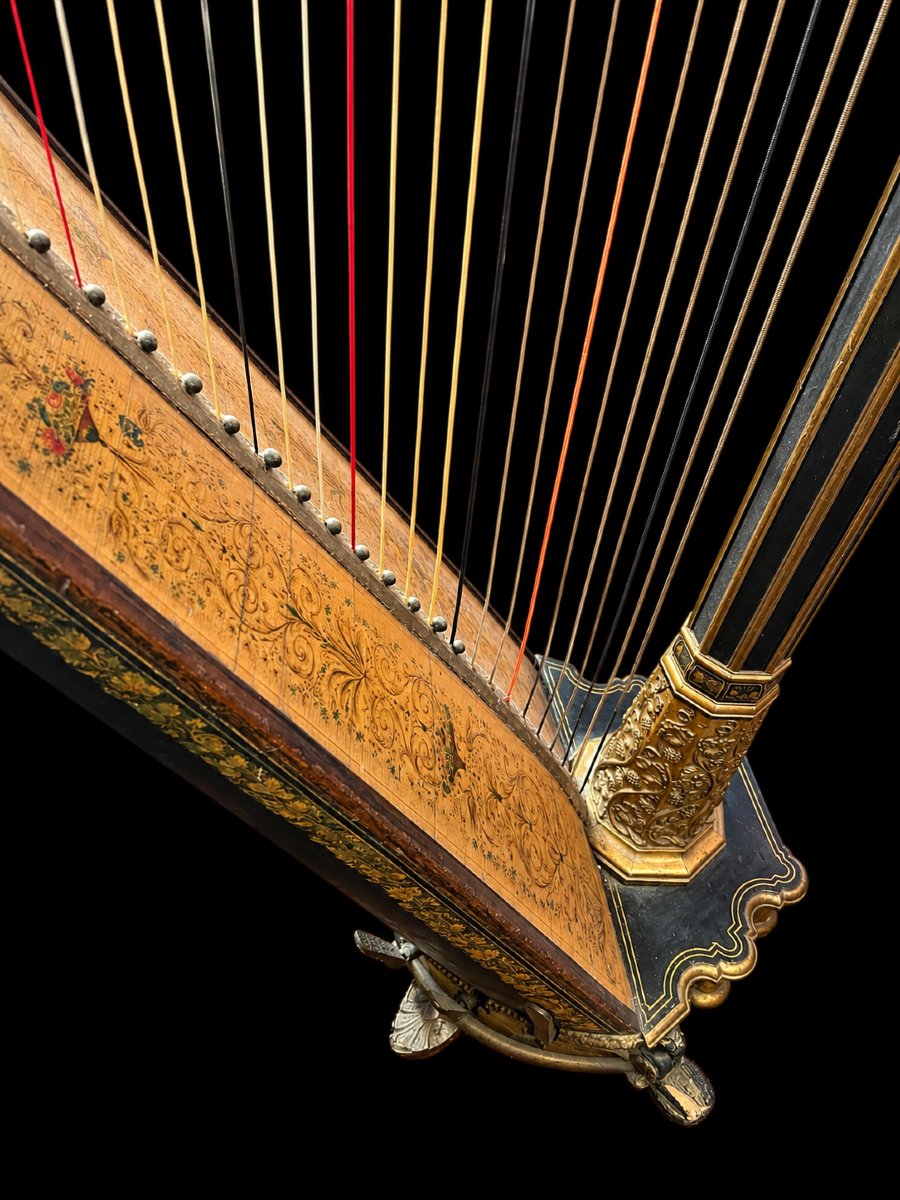
The instrument is particularly remarkable for the quality of preservation of its original decorative elements: the richly ornamented soundboard, the sculpted and painted column, the elaborate upper scroll or neck, and the striking winged lions decorating the lower section.
John Frederick Grosjean — a London harp makerFrederick Grosjean belongs to the generation of makers who contributed to making London one of the principal European centres of harp manufacture during the early nineteenth century.
He is documented at 11 Soho Square, London, one of the important addresses associated with the city's musical-instrument trade. Grosjean was active approximately between 1810 and 1835.
The surviving documentation does not, at present, allow his exact dates of birth and death to be established with sufficient certainty. It is therefore preferable, from a scholarly standpoint, not to assign dates that cannot be securely documented.
An especially valuable contemporary source is a catalogue issued by “Grosjean & Co., Harp Makers, No. 11 Soho Square”, dating from around 1820. The catalogue advertises full-size harps with double-action mechanisms, providing particularly im
portant evidence for the activity of the workshop at precisely the period to which the present instrument belongs.
Grosjean was also associated with other important London makers, notably John Charles Schwieso, during a period of considerable experimentation and technical development in pedal-harp construction.
An important London productionThe importance of Grosjean's workshop is further demonstrated by the number of surviving instruments and serial numbers.
Research into the London harp-making industry indicates that at least approximately 1,140 Grosjean harps can be accounted for through surviving instruments and documentary evidence. This figure should be regarded as a minimum rather than an exact total, since the complete workshop production records have not survived.
This places Grosjean among the genuinely significant professional harp makers of early nineteenth-century London.
His instruments are today considerably less frequently encountered than those of some of the better-known French makers, which contributes to their particular interest among collectors of historical harps.
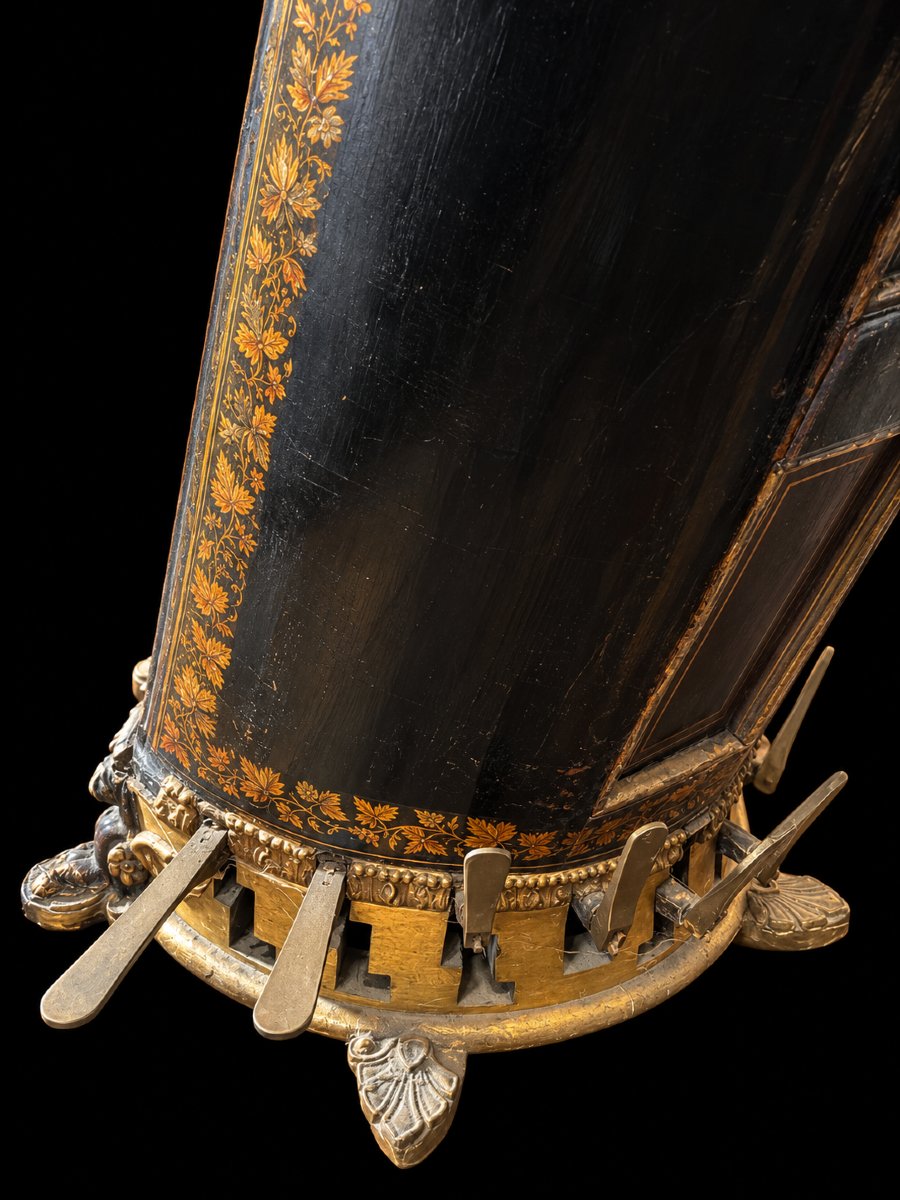
The seven-pedal systemThe present harp retains the traditional arrangement of seven pedals, corresponding to the seven notes of the diatonic scale: C, D, E, F, G, A and B.
On a double-action pedal harp, each pedal can occupy three positions, allowing the corresponding notes to be altered between flat, natural and sharp.
This mechanism represented a major development in the history of the harp. It enabled the performer to change key without manually retuning individual strings and therefore made the instrument considerably more versatile for nineteenth-century musical repertoire.
The use of seven pedals is consequently not simply a technical detail: it is fundamental to understanding the development of the modern orchestral harp.
Contemporary Grosjean documentation from around 1820 specifically refers to full-size double-action harps, making the technical characteristics of the present instrument entirely consistent with the production of his London workshop at this period.
An exceptional example of Regency polychromyThe most immediately striking feature of this harp is undoubtedly its rich and remarkably preserved polychrome decoration.
The instrument combines painted decoration, gilding and sculptural ornament in a manner entirely characteristic of the refined decorative taste of the Regency period.
The soundboard is particularly important. Far from being treated as a merely functional acoustic surface, it forms an integral part of the visual conception of the instrument. Its painted decoration contributes to the overall harmony of the harp while retaining its essential acoustic function.
The upper section is especially impressive, with its sculpted figures and ornamental details rising from the neck and crown of the instrument.
At the lower section, the presence of the winged lions is particularly remarkable. These creatures, derived from the vocabulary of classical and neo-classical decorative art, lend the instrument a distinctly monumental character.
The combination of winged figures, lions, architectural elements, gilding and polychrome surfaces reflects the fascination of the Regency period with antiquity and the decorative language of the classical world.
The harp was therefore conceived as much as a piece of sophisticated interior decoration as a musical instrument.
A remarkable state of preservationThe present harp is distinguished by its excellent state of preservation.
Its sculpted elements, polychrome surfaces, gilding and decorative details remain remarkably legible, allowing the original decorative conception of the instrument to be appreciated today.
The harp is not currently playable. The strings require replacement, and restoration of the playing mechanism would be necessary before the instrument could be returned to musical use.
This should nevertheless be clearly distinguished from its condition as a historical and decorative object. From a conservation standpoint, the instrument presents itself as a particularly attractive and well-preserved example of early nineteenth-century English harp making.
A musical instrument and a work of artWhat makes this harp particularly appealing is the extraordinary balance between its technical, historical and aesthetic qualities.
It represents the development of the English pedal harp at a decisive moment in its history, while simultaneously illustrating the highly sophisticated decorative taste of the Regency period.
Its monumental silhouette, richly decorated soundboard, sculpted upper section, painted surfaces and winged lions at the base make it a particularly striking decorative object.
Few surviving musical instruments combine such a strong architectural presence with such a refined polychrome treatment.
Technical and historical detailsMaker: John Frederick Grosjean
Address: 11 Soho Square, London
Date: circa 1820
Country: England
Period: Georgian / Regency
Type: Seven-pedal pedal harp
Model: Grecian-type harp
Mechanism: Double-action pedal system
Materials: Wood, painted and gilded decoration
Decoration: Polychrome, gilded and sculpted ornament
Notable features: Decorated soundboard, sculpted figures to the upper section, winged lions to the lower section
Condition: Excellent state of conservation
Musical condition: Not currently playable; strings require replacement and the mechanism would require restoration
Period: 19th century
Style: Consulat, Empire
Condition: Excellent condition
Reference (ID): 1828805
Availability: In stock