

Japanese Lacquered Suzuribako Decorated With Cranes After Kōrin, Heian Zōhiko, Taishō–shōwa
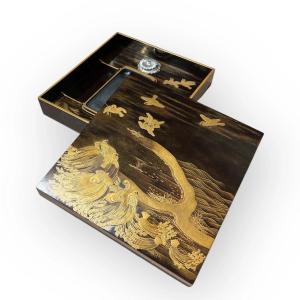
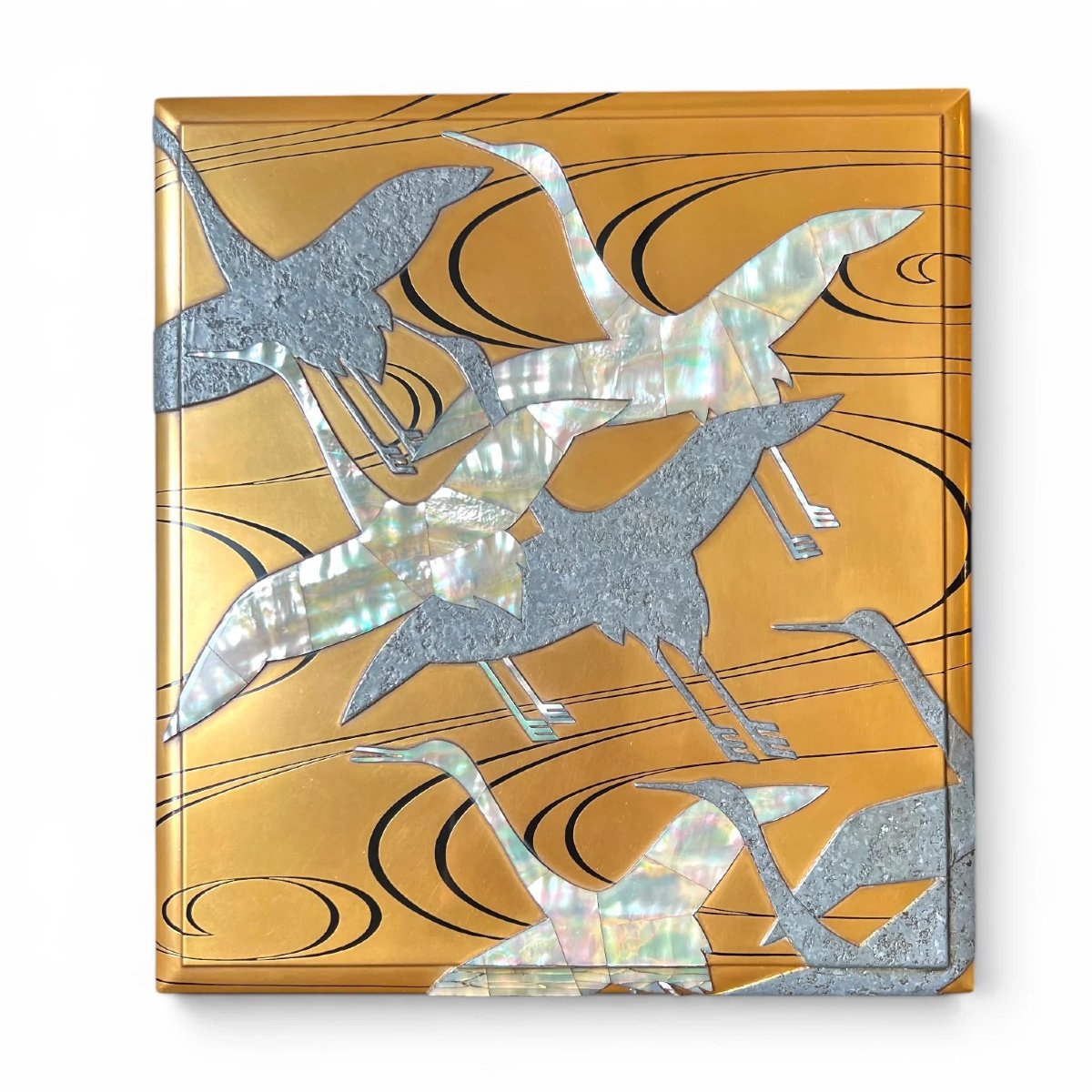
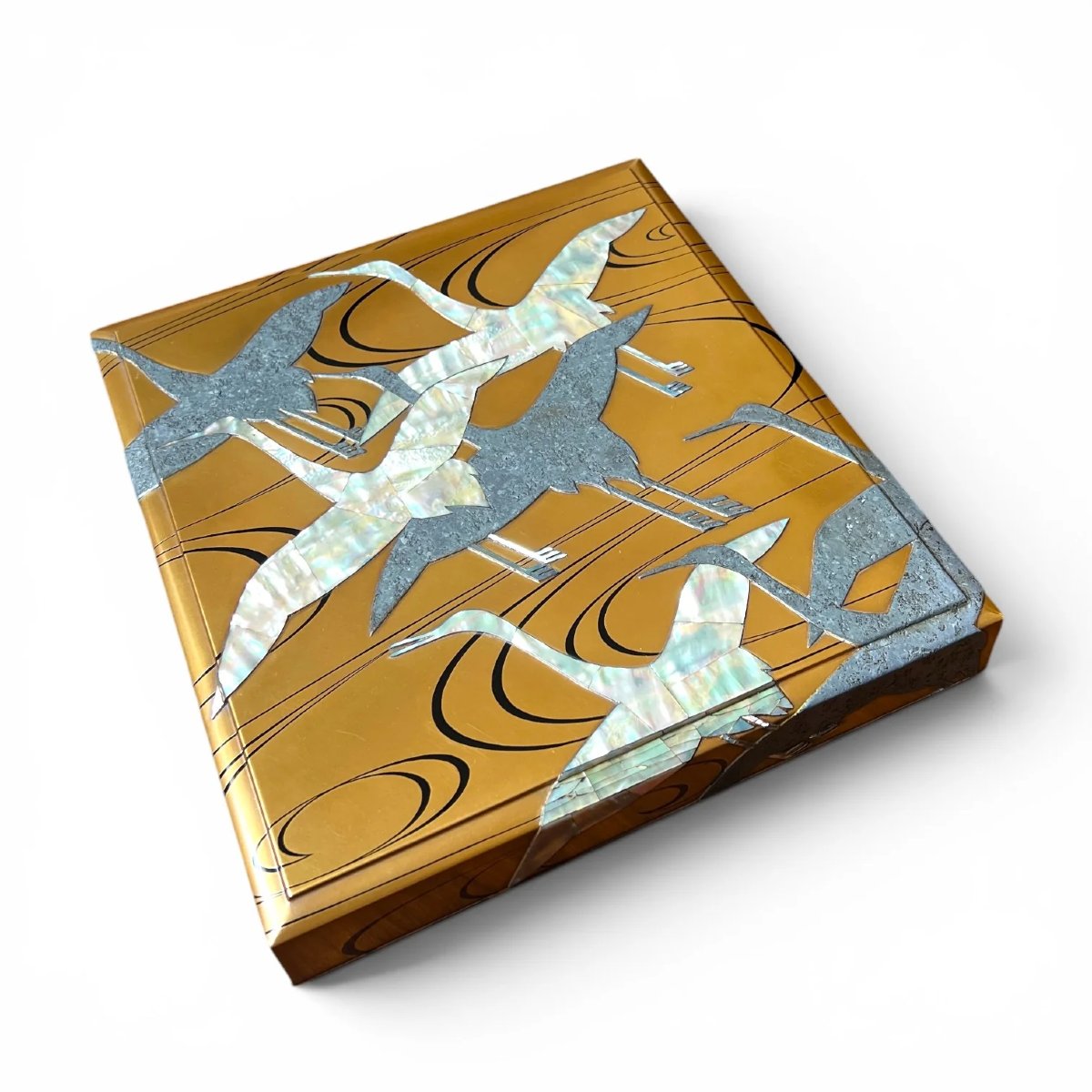
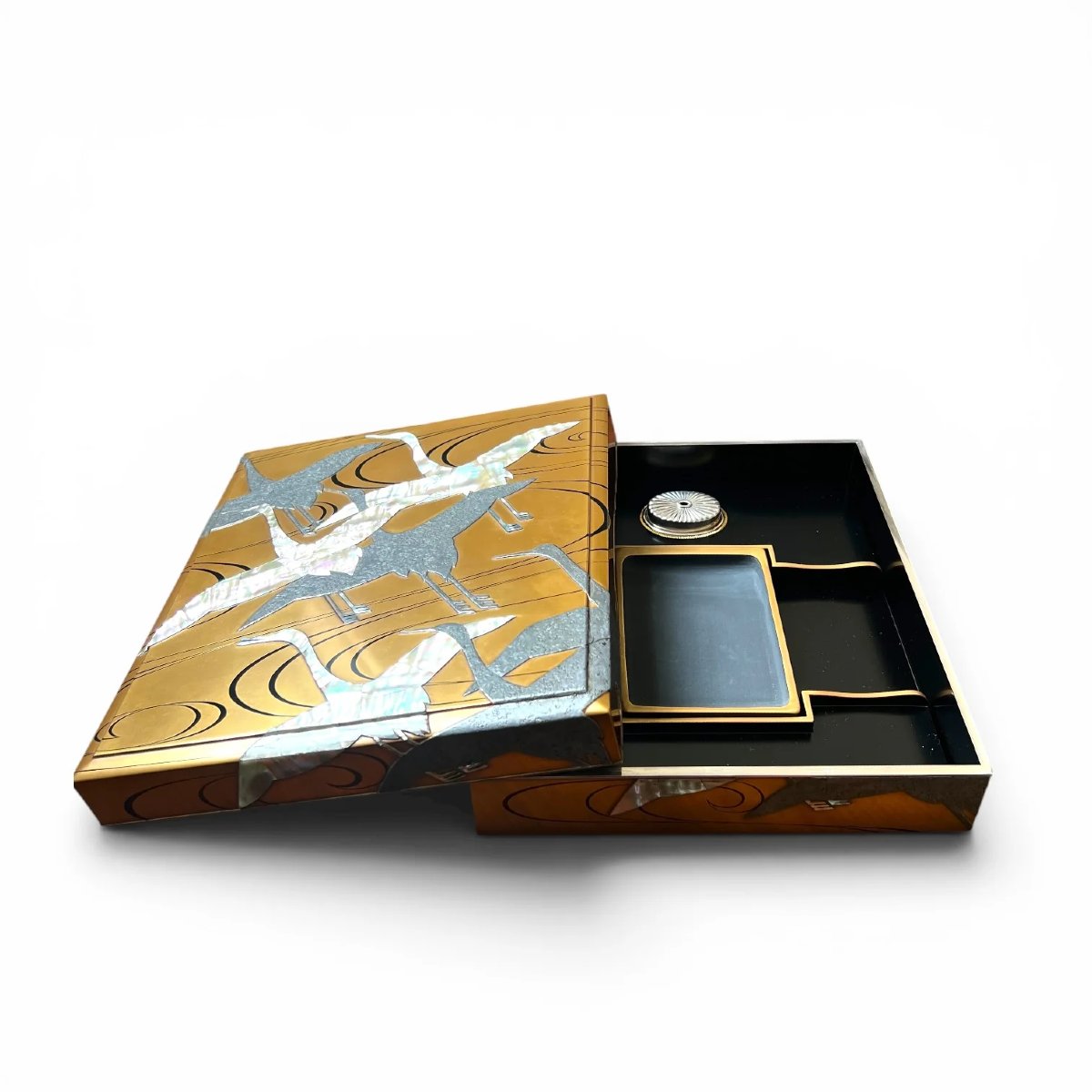
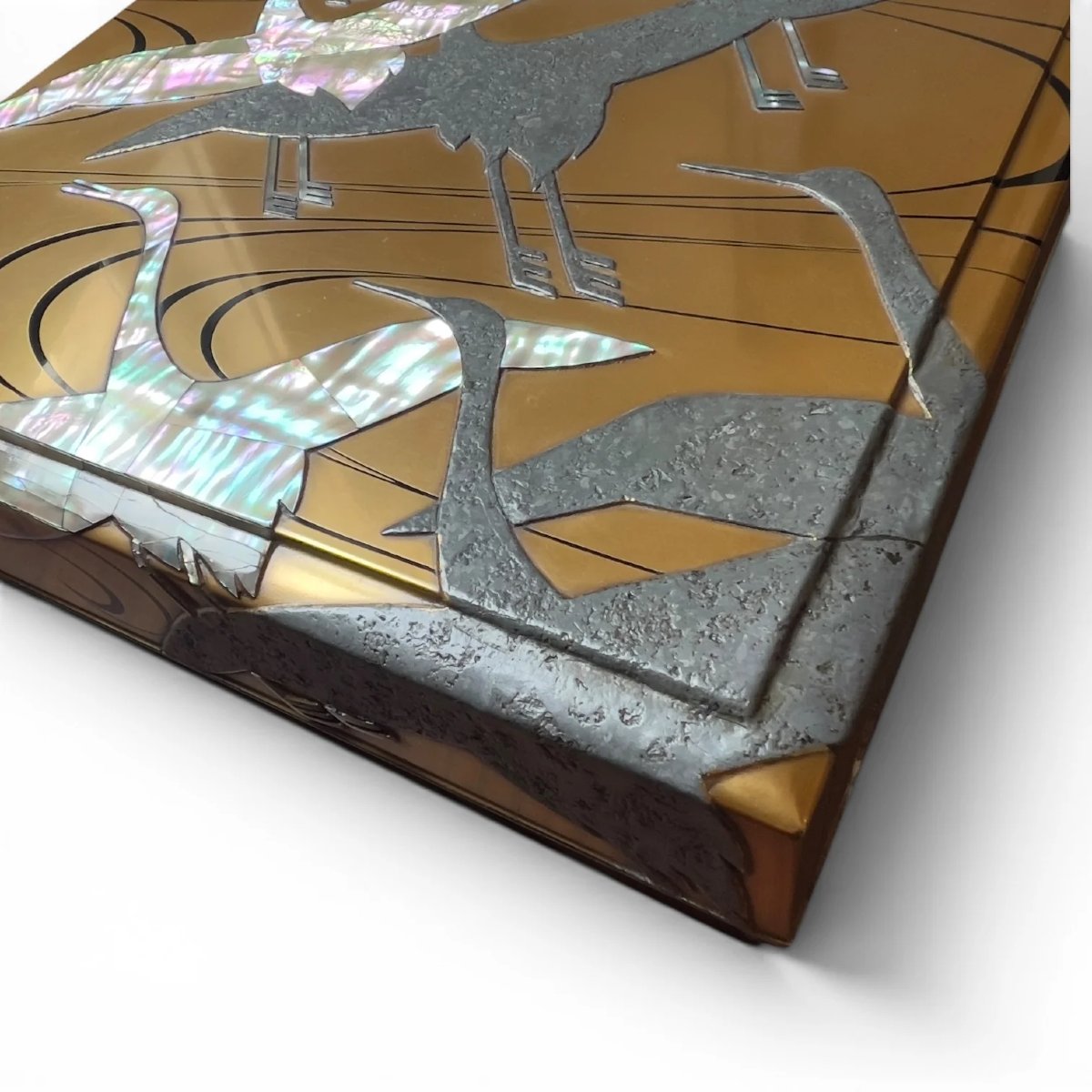
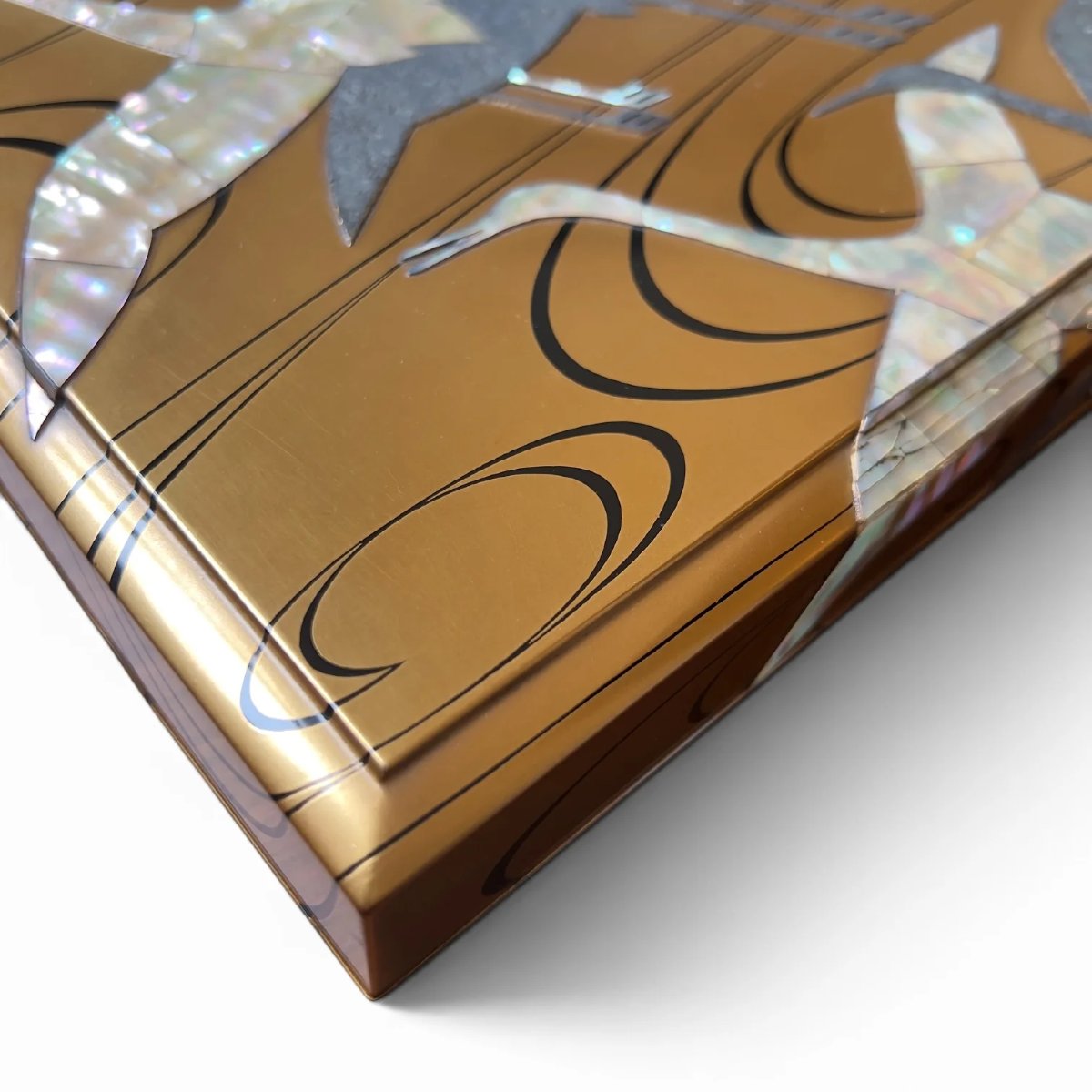
Japanese urushi-lacquered suzuribako signed Heian Zōhiko, Kyoto, Taishō–early Shōwa period, circa 1920–1940. The lid features a design of flying cranes inspired by the aesthetic of Ogata Kōrin, set against a gold background crisscrossed by stylized water lines.
The composition is based on a diagonal movement. The cranes are rendered in mother-of-pearl raden and pewter in the spirit of Rimpa lacquerware. The mother-of-pearl catches the light with green, pink, and silvery reflections. The dark areas lend weight to the design. The overall design remains very clear, almost graphic, with few elements and a real interplay between the materials.
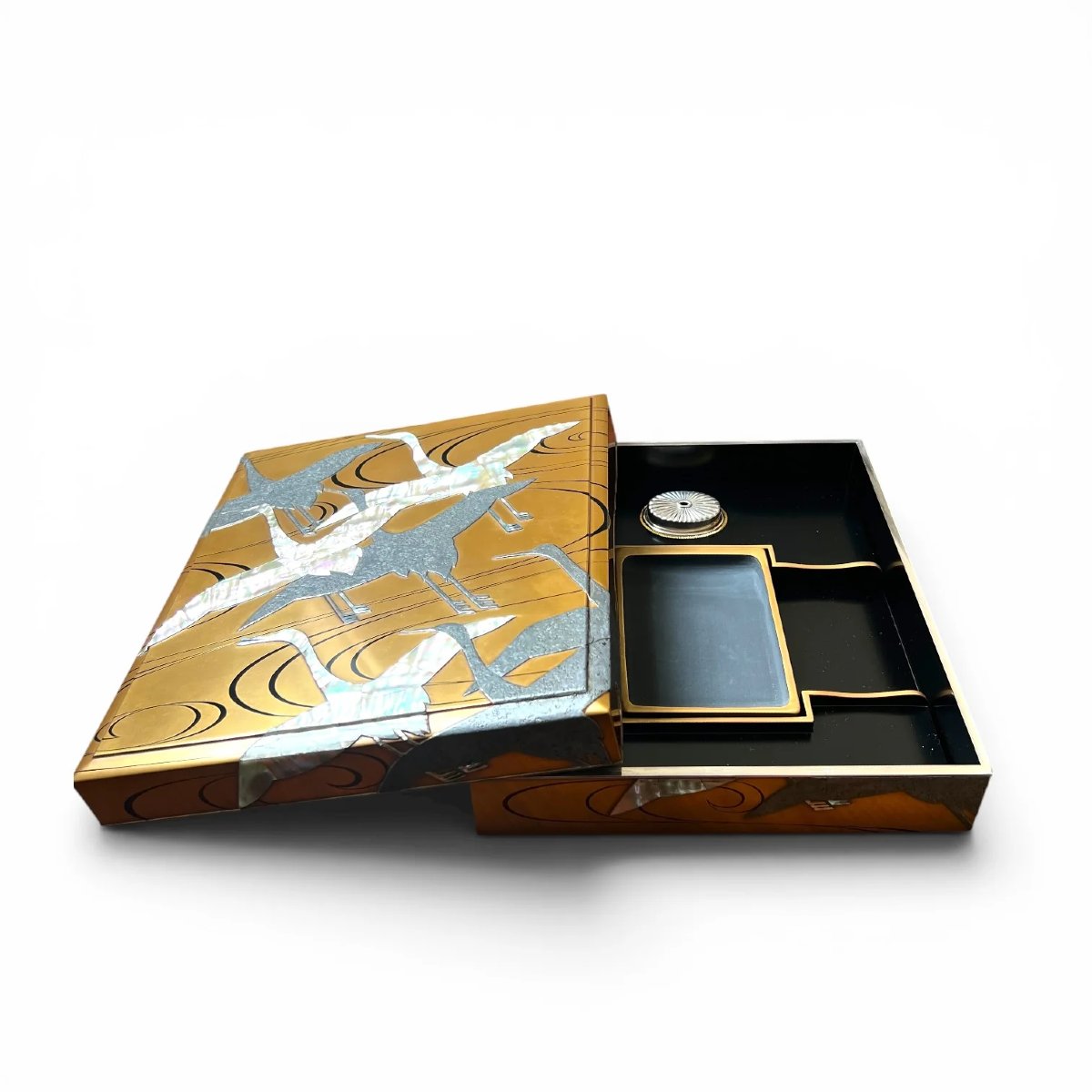
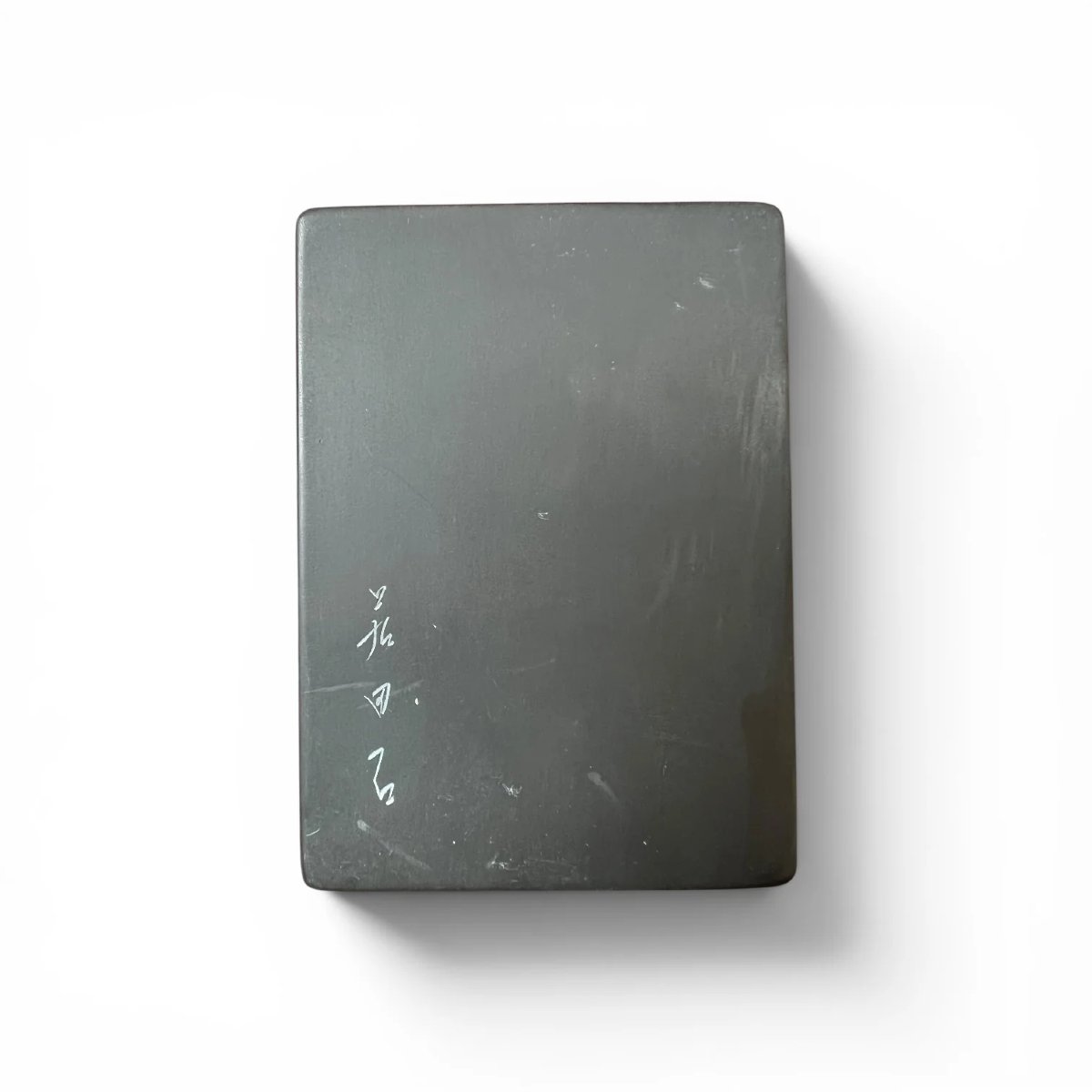
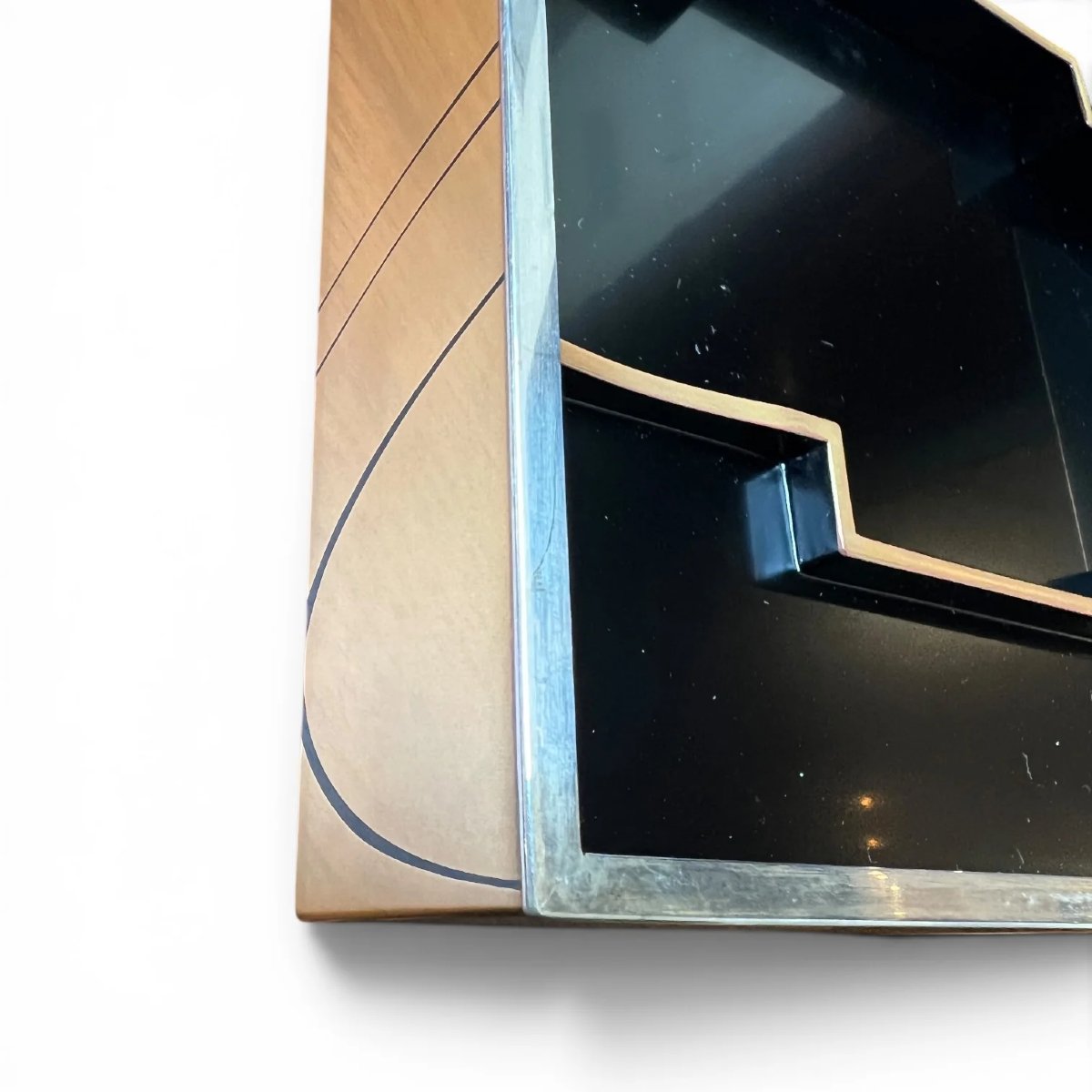
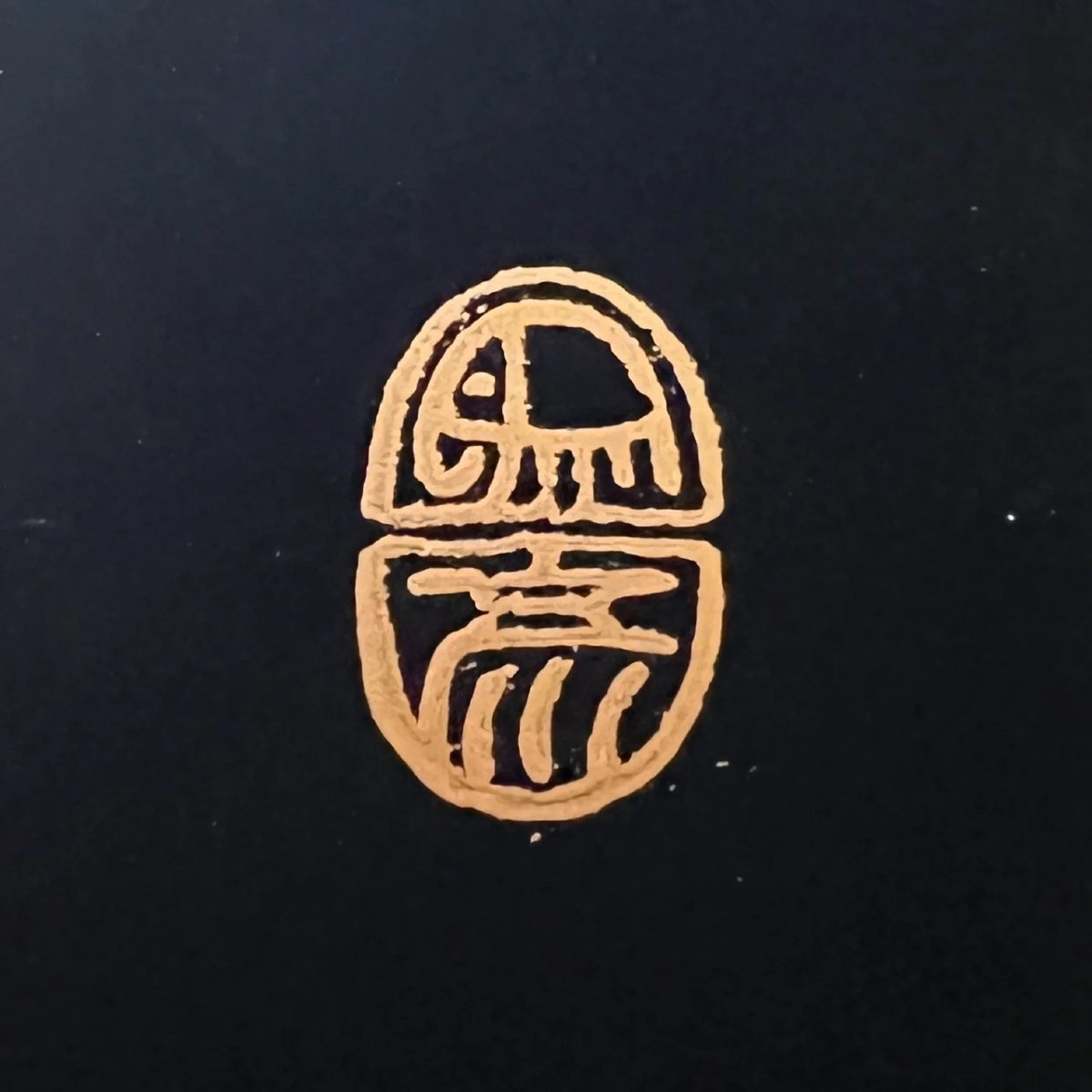
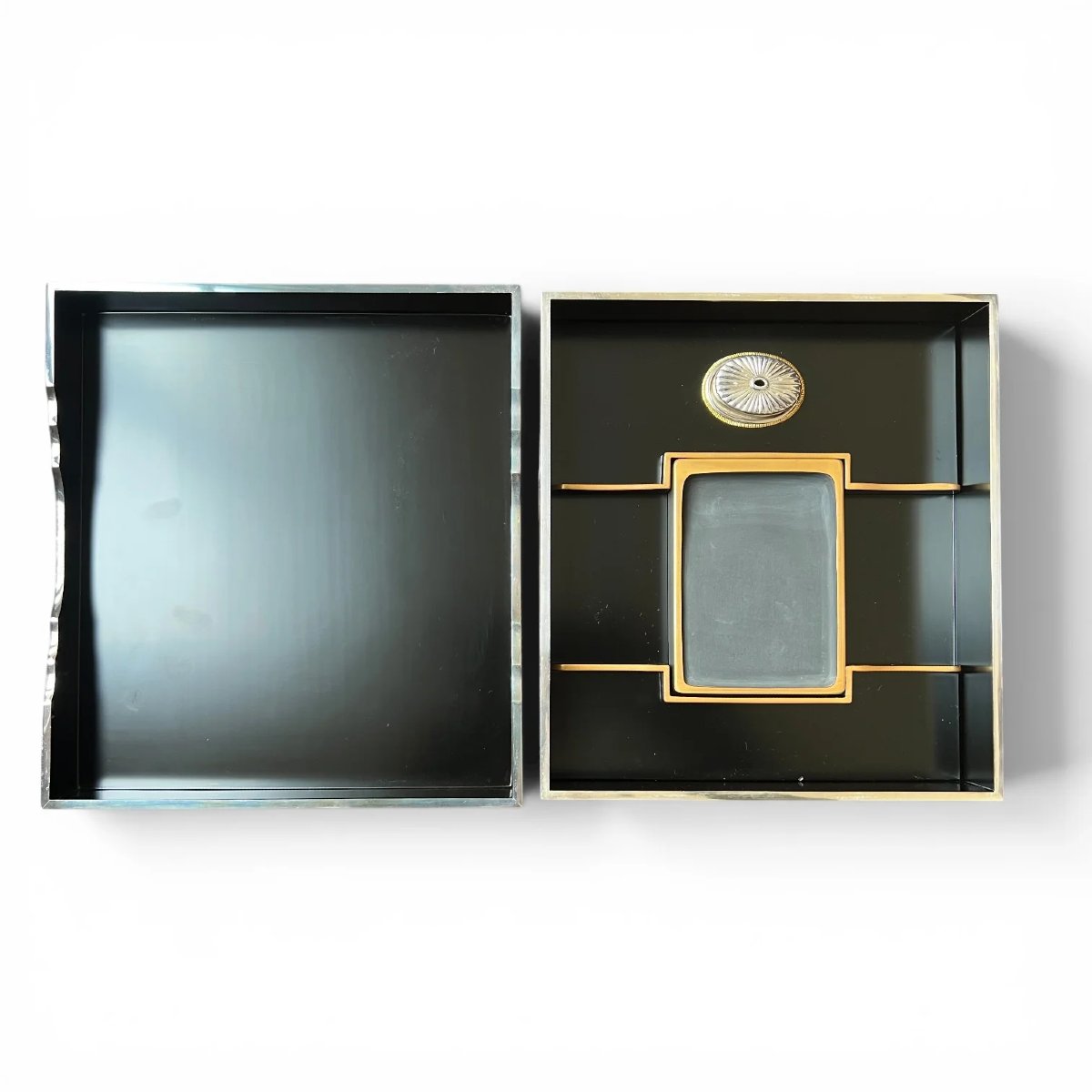
The interior is finished in black roiro-nuri lacquer, deeply polished. The tray is designed for writing, with an inkstone, suiteki, and accessories. The inkstone is signed on the underside. The circular silver suiteki, with a radiating design, bears a Japanese hallmark. The edges of the box and lid are silver. The bottom of the box bears Zōhiko’s seal mark in gold lacquer.
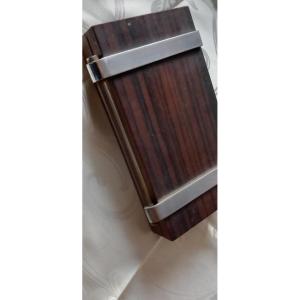
Inscription and tomobakoThe tomobako bears the inscription 光琳鶴蒔絵 硯箱, which can be translated as: “suzuribako with a maki-e crane design in the style of Kōrin.” The signature indicates Zōhiko.
Heian Zōhiko and the Legacy of Kōrin
Zōhiko is one of Kyoto’s leading lacquerware houses. Its history dates back to the 17th century, and the workshop has played an important role in preserving high-quality maki-e. Its modern works often draw on major classical Japanese motifs, particularly those associated with the Rimpa school.
Ogata Kōrin (1658–1716) is one of the major artists of this aesthetic. His influence extends beyond painting and has profoundly shaped Japanese lacquer, textiles, and decorative arts. In Kōrin’s work, natural motifs become symbols: water is reduced to a rhythm, a bird to a silhouette, and a landscape to a composed surface. This suzuribako embodies this understanding of space. The cranes, symbols of longevity and good fortune, traverse the lid with a simple, instantly recognizable power.
Very good condition. Complete set including tomobako, an inkstone signed on the underside, a stamped silver suiteki, and a Zōhiko seal in gold lacquer.
Dimensions: approximately 22 × 18 cm.
Period: 20th century
Style: Art Deco
Condition: Excellent condition
Material: Lacquer
Length: 22
Width: 18
Reference (ID): 1826482
Availability: In stock