

Japan, Bunko And Suzuribako, Two Japanese Lacquer Boxes, 19th Century
Japan, late Edo period – early Meiji period, 19th century
Gold maki-e lacquer on a brown nashiji background, hiramaki-e, takamaki-e, aogai mother-of-pearl inlays, inkstone, and bronze suiteki
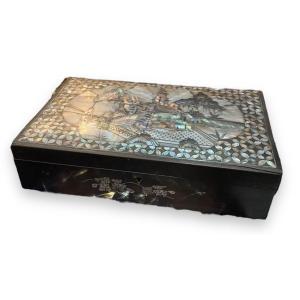
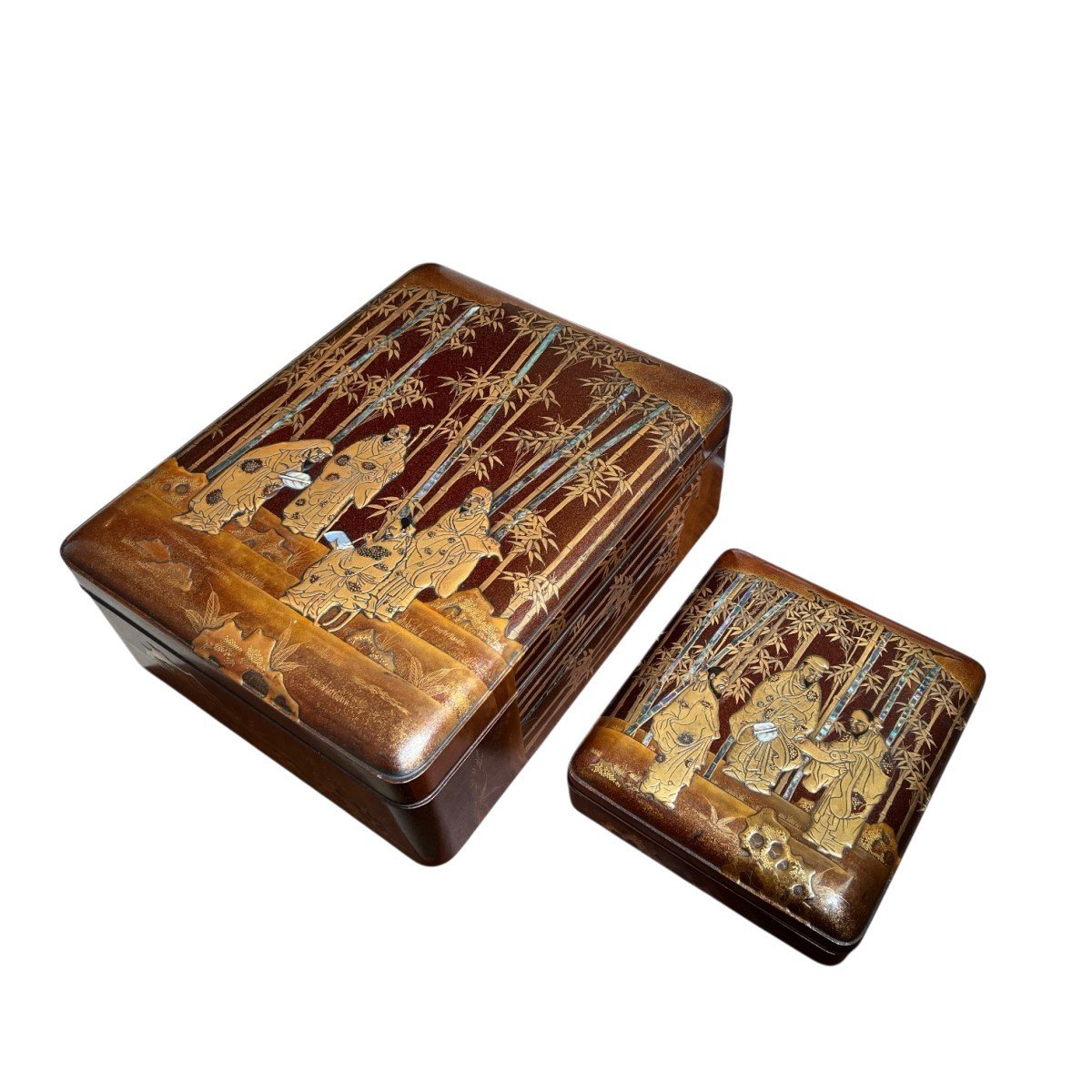
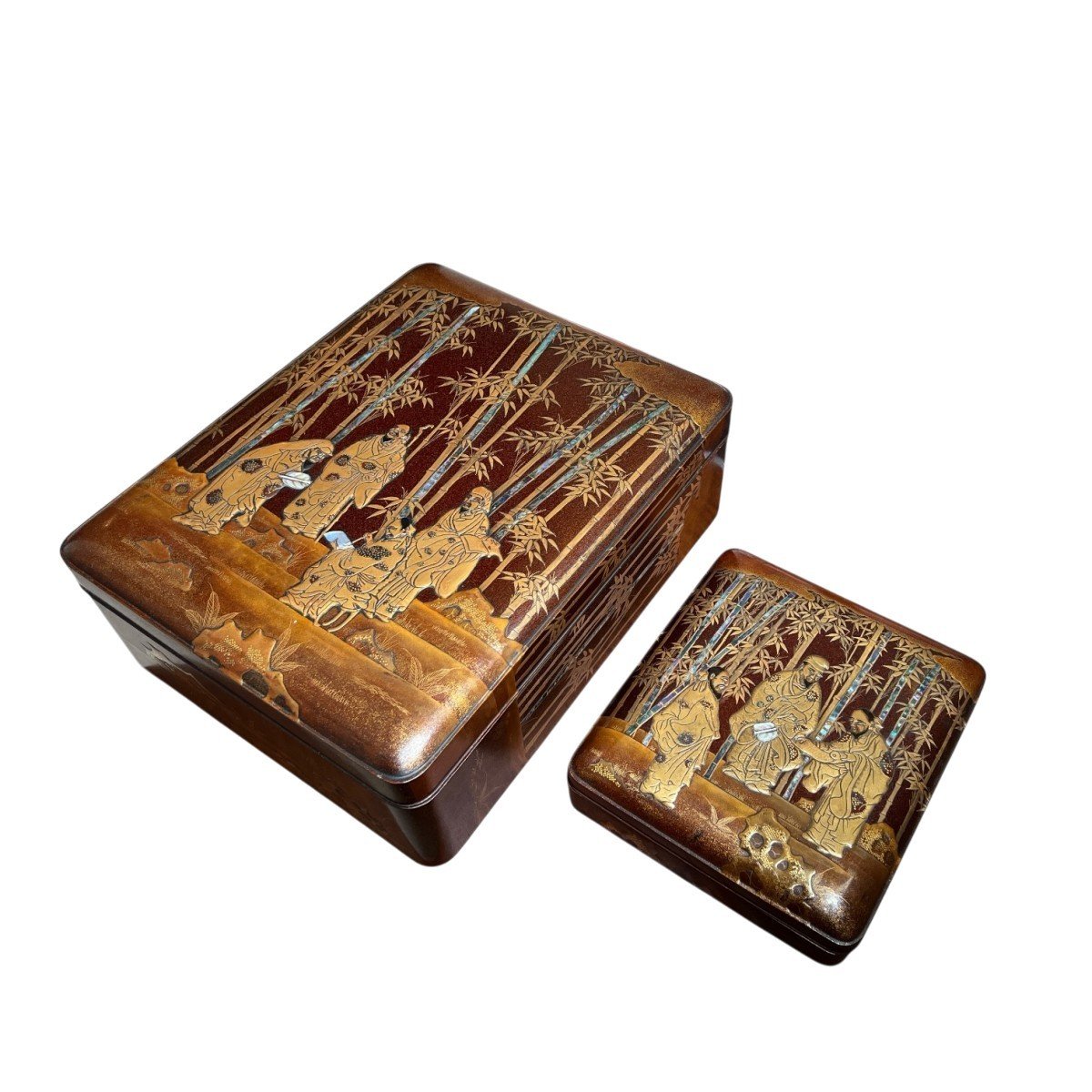
This set consists of a bunko, a document box, and a suzuribako, a box for writing implements. The two pieces form a cohesive set in terms of their decoration, technique, and subject matter: the Seven Sages of the Bamboo Grove, or Chikurin shichiken in Japanese.
This theme, of Chinese origin, evokes a group of 3rd-century scholars—poets, musicians, and thinkers—gathered in a bamboo grove away from the imperial court. In Japanese art, it belongs to the repertoire of Chinese-inspired literati subjects. It is particularly suited to a set associated with writing, the preservation of papers, and the preparation of ink.
The exterior decoration depicts the seven sages in a bamboo grove. The figures, rocks, and landscape details are rendered in gold maki-e on a brown nashiji background. The design combines hiramaki-e for the flat-painted sections and takamaki-e for the raised reliefs. Iridescent aogai mother-of-pearl is used in the decorative details, particularly in the bamboo. One of the sages holds a sheet of light-colored mother-of-pearl paper bearing an inscription, which may be a signature.
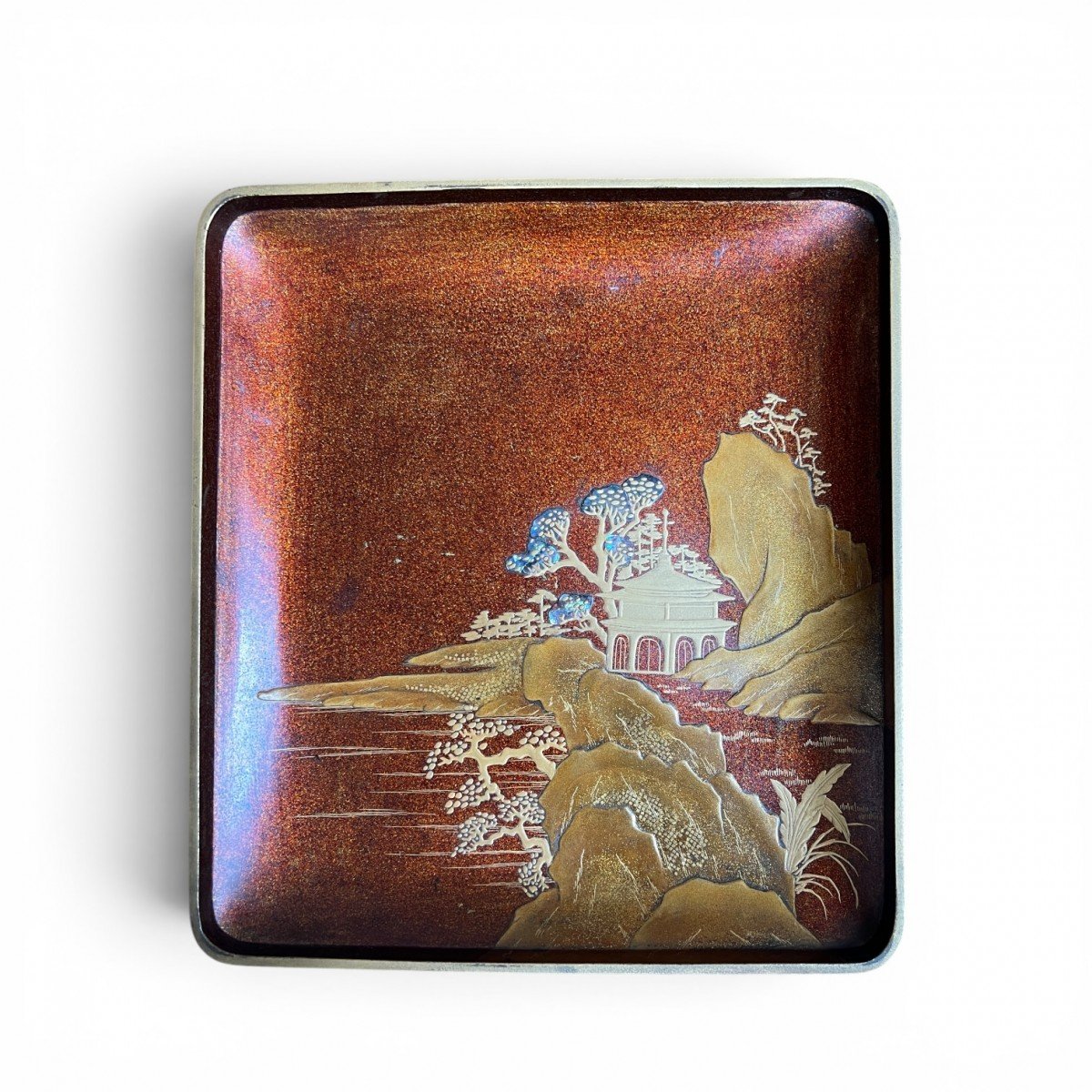
The interiors are also decorated. The undersides of the lids feature landscapes in gold lacquer, with pavilions, rocks, trees, and architectural elements. The bottom of the large box is adorned with bamboo; the bottom of the suzuribako also features a bamboo design, echoing the main theme.
The suzuribako still contains its inkstone and a suiteki made of high-quality bronze. This water dropper, which is sculptural in style and quite unusual in a writing set, reinforces the scholarly and precious character of the ensemble.
The craftsmanship is of a high standard. The nashiji is dense, the reliefs are well-executed, and the use of mother-of-pearl is masterful. The set combines the scholarly function of the boxes with refined decoration, drawing on classical Chinese culture and interpreted in the Japanese style of grand decorative lacquer.
In very good condition. Each box retains its original tomobako with an old inscription.
Dimensions of the bunko: 45 × 39 × 21 cm.
Dimensions of the suzuribako: 29 × 25.5 × 10 cm.
Period: 19th century
Style: Asian art
Condition: Good condition
Material: Lacquer
Length: 45
Width: 39
Height: 21
Reference (ID): 1796108
Availability: In stock