

Japan, Chest Of Drawers, Two-section Kannon-biraki Kasane Tansu, Edo-meiji Period
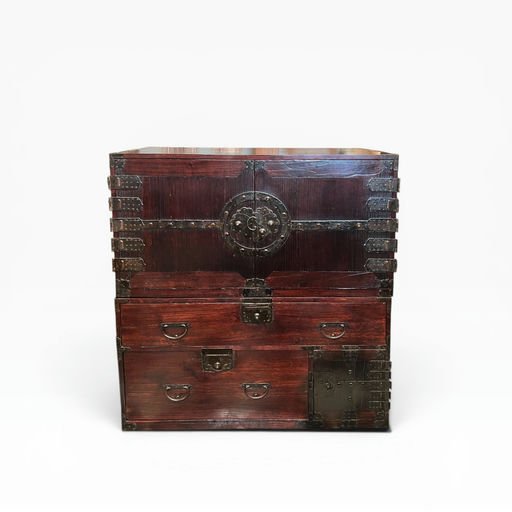
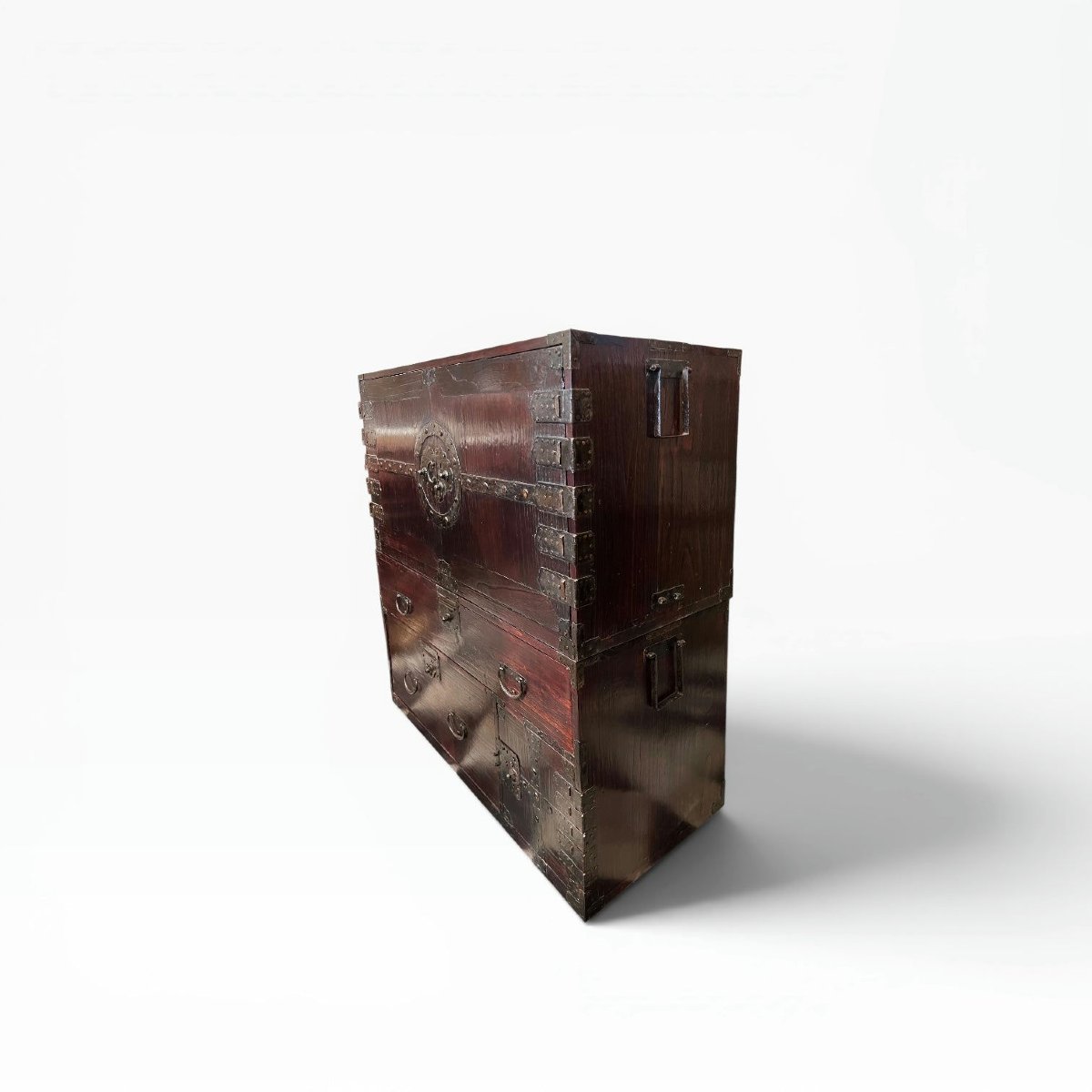
Kannon-biraki kasane tansu consisting of two stacked units, which can also be arranged side by side. Japan, 19th century, Edo-Meiji period.
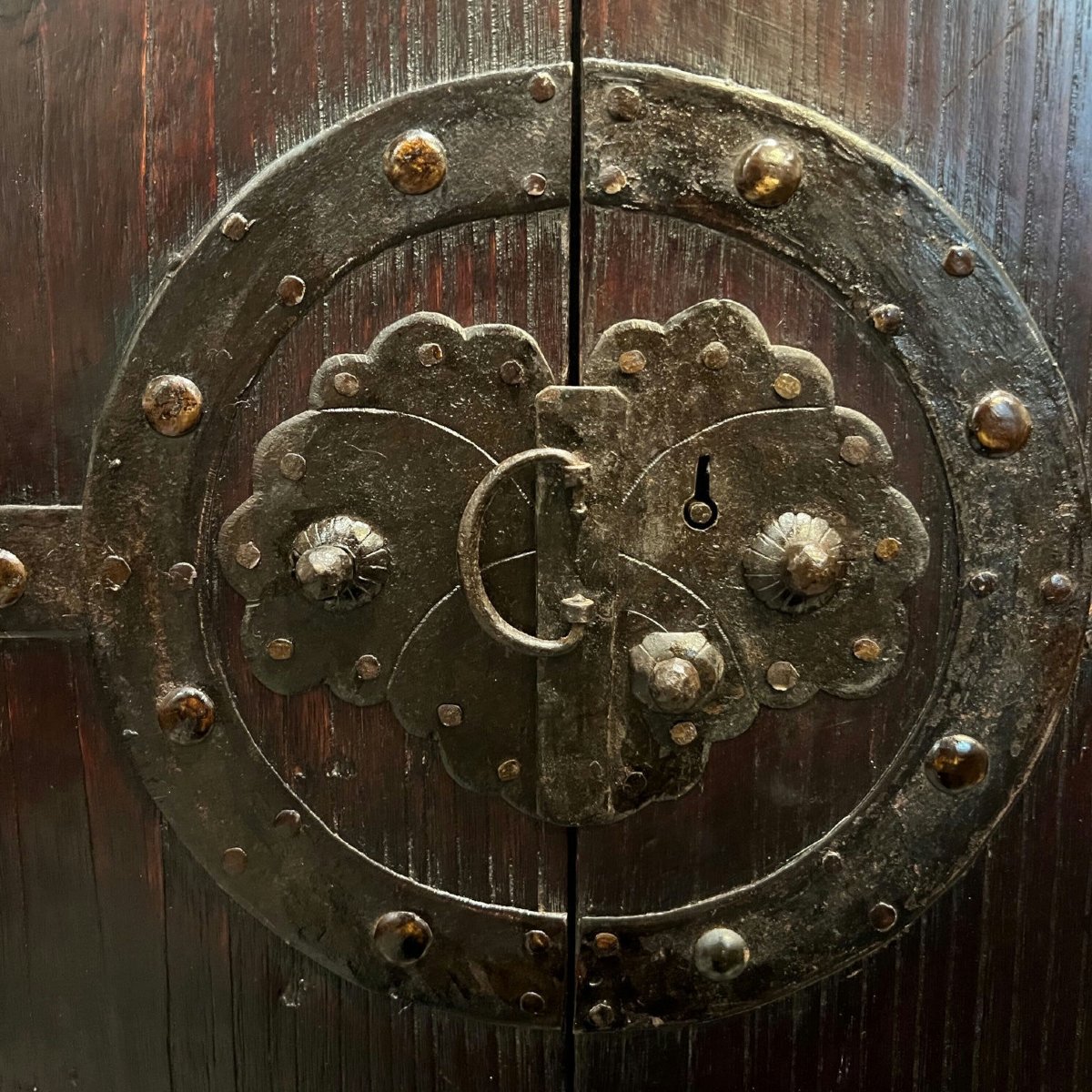
The upper section opens with two Kannon-biraki doors, meaning a double-door opening that extends outward from the center. The two doors are centered by a large circular lock made of patinated iron, adorned with cut-out plates featuring a floral motif. The interior contains two large drawers. The lower section features a large drawer, a narrower drawer, and a side door opening onto a set of small drawers. This arrangement creates a complex façade that is both practical and highly architectural.
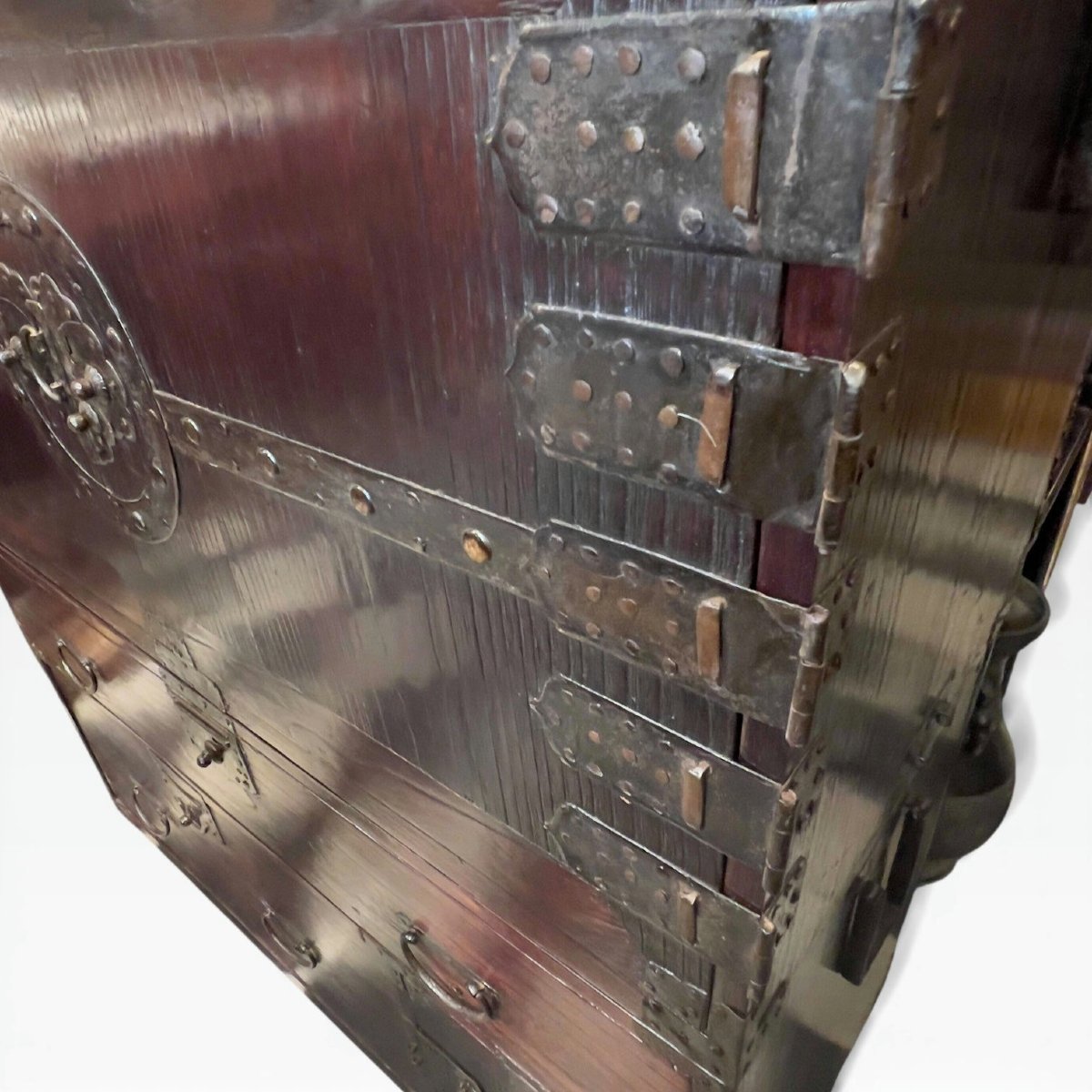
The piece features a robust structure, reinforced by a dense network of iron hardware. The corners, hinges, horizontal bands, lock plates, and pull rings form a functional design. The metal protects the cabinet, follows the lines of the construction, and gives the front a highly graphic presence. The large round lock at the top immediately catches the eye and anchors the composition.
The deep, weathered reddish-brown surface reveals the wood’s grain. The blackened metal fittings, exposed nails, signs of wear, and age-old oxidation enhance the piece’s character. The overall design remains clearly defined: two large sections, a front panel punctuated by drawers, a monumental central opening, and a lower section with more compartments.
This type of tansu is part of the evolution of large Japanese storage pieces designed for clothing, textiles, and personal belongings. The two-section models served a practical purpose: they could be moved more easily, transported separately, and then joined together for domestic use. The ability to place the two chests side by side also gives the piece a rare flexibility of use.
The term “Kannon-biraki” does not refer to the entire piece of furniture, but rather to the type of double-door opening. For this piece, the most accurate name is “Kannon-biraki kasane tansu,” or “Kannon-biraki kasane isho-dansu” if one wishes to emphasize its function as a garment storage unit. The date range is intentionally broad: Japan, 19th century, Edo-Meiji period.
Dimensions: H. 104 cm (two sections of 52 cm each); W. 97 cm; D. 43.5 cm.
The upper section opens with two Kannon-biraki doors, meaning a double-door opening that extends outward from the center. The two doors are centered by a large circular lock made of patinated iron, adorned with cut-out plates featuring a floral motif. The interior contains two large drawers. The lower section features a large drawer, a narrower drawer, and a side door opening onto a set of small drawers. This arrangement creates a complex façade that is both practical and highly architectural.
The piece features a robust structure, reinforced by a dense network of iron hardware. The corners, hinges, horizontal bands, lock plates, and pull rings form a functional design. The metal protects the cabinet, follows the lines of the construction, and gives the front a highly graphic presence. The large round lock at the top immediately catches the eye and anchors the composition.
The deep, weathered reddish-brown surface reveals the wood’s grain. The blackened metal fittings, exposed nails, signs of wear, and age-old oxidation enhance the piece’s character. The overall design remains clearly defined: two large sections, a front panel punctuated by drawers, a monumental central opening, and a lower section with more compartments.
This type of tansu is part of the evolution of large Japanese storage pieces designed for clothing, textiles, and personal belongings. The two-section models served a practical purpose: they could be moved more easily, transported separately, and then joined together for domestic use. The ability to place the two chests side by side also gives the piece a rare flexibility of use.
The term “Kannon-biraki” does not refer to the entire piece of furniture, but rather to the type of double-door opening. For this piece, the most accurate name is “Kannon-biraki kasane tansu,” or “Kannon-biraki kasane isho-dansu” if one wishes to emphasize its function as a garment storage unit. The date range is intentionally broad: Japan, 19th century, Edo-Meiji period.
Dimensions: H. 104 cm (two sections of 52 cm each); W. 97 cm; D. 43.5 cm.
3 600 €
Period: 19th century
Style: Asian art
Condition: Fully restored in our whorkshop
Length: 97
Height: 104
Depth: 43,5
Reference (ID): 1826344
Availability: In stock
Print