

Cuzco School, Wden Panel Colonial Icon With St Jacques Le Majeur Battle Of Clavijo
Artist: Ecole De Cuzco
CUZCO SCHOOL, Spanish colonial painting (South America)
19th century
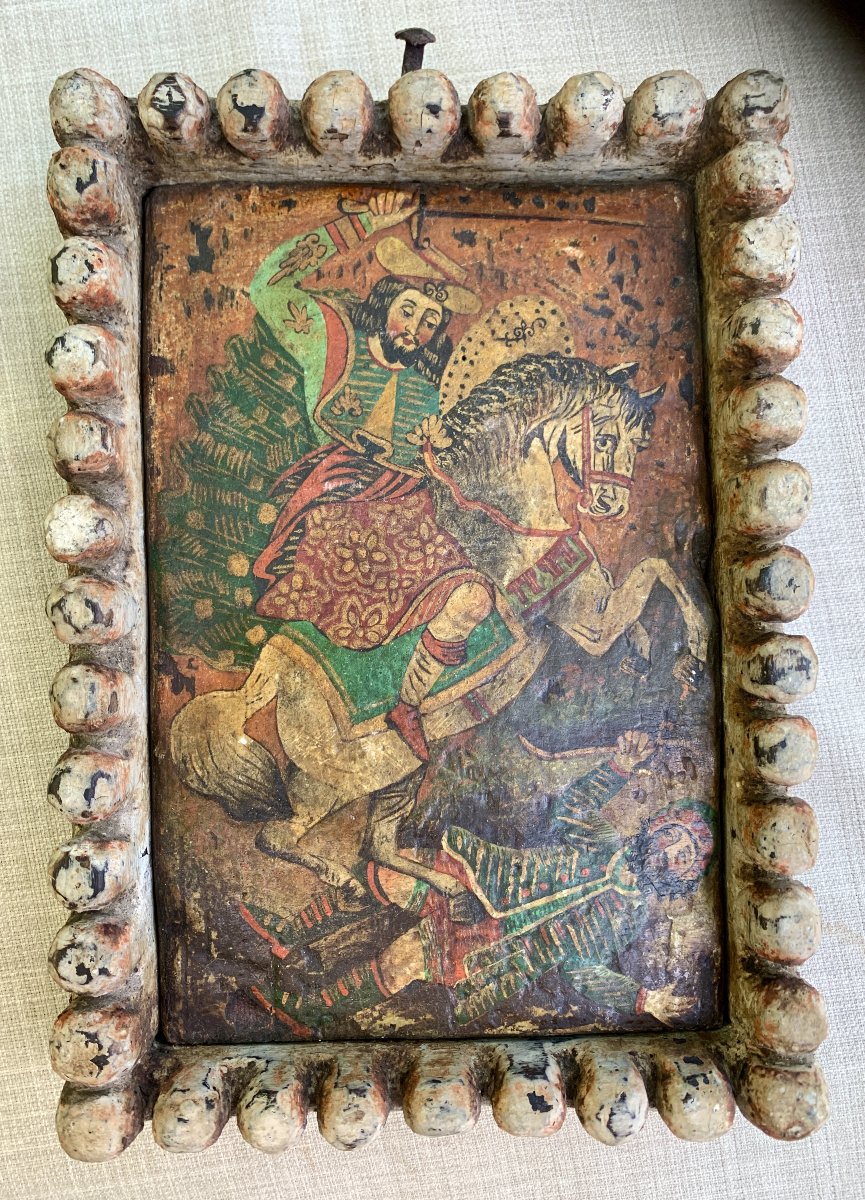
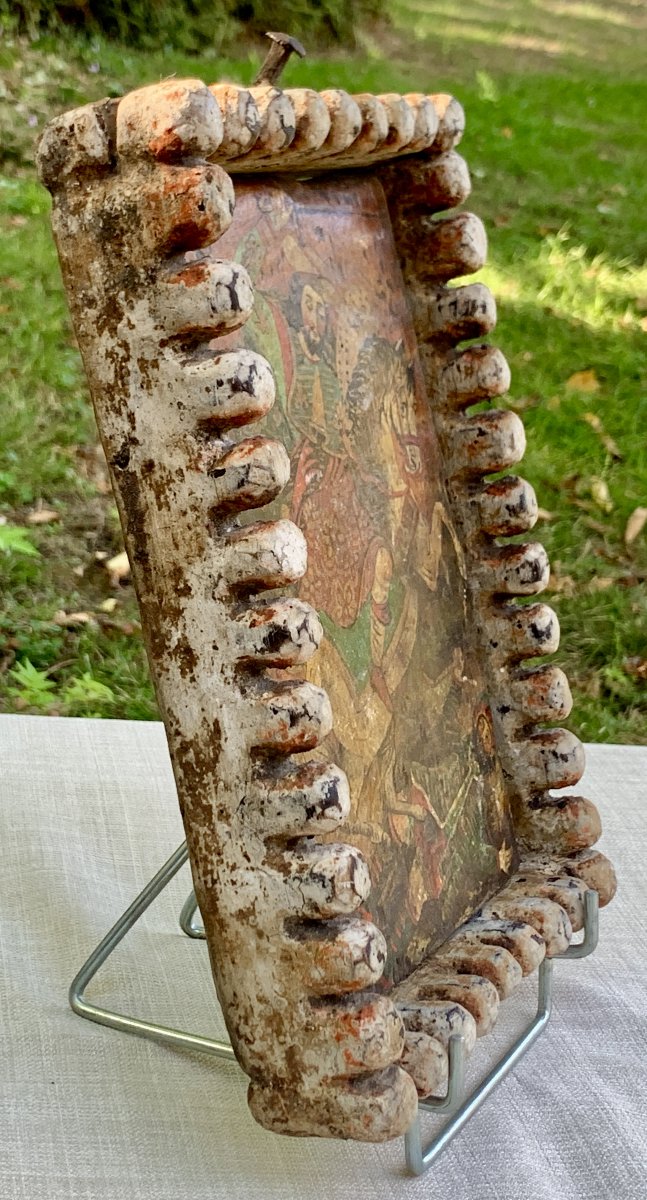
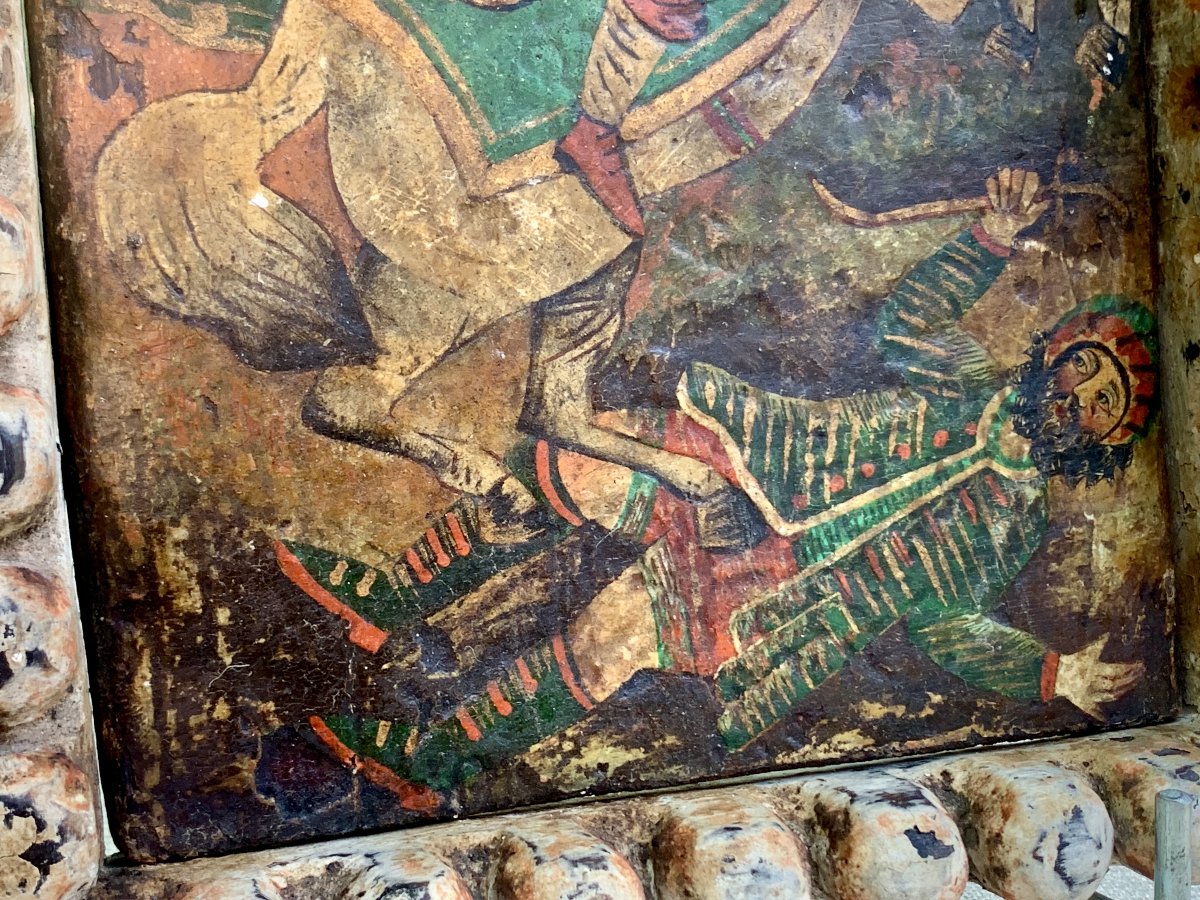
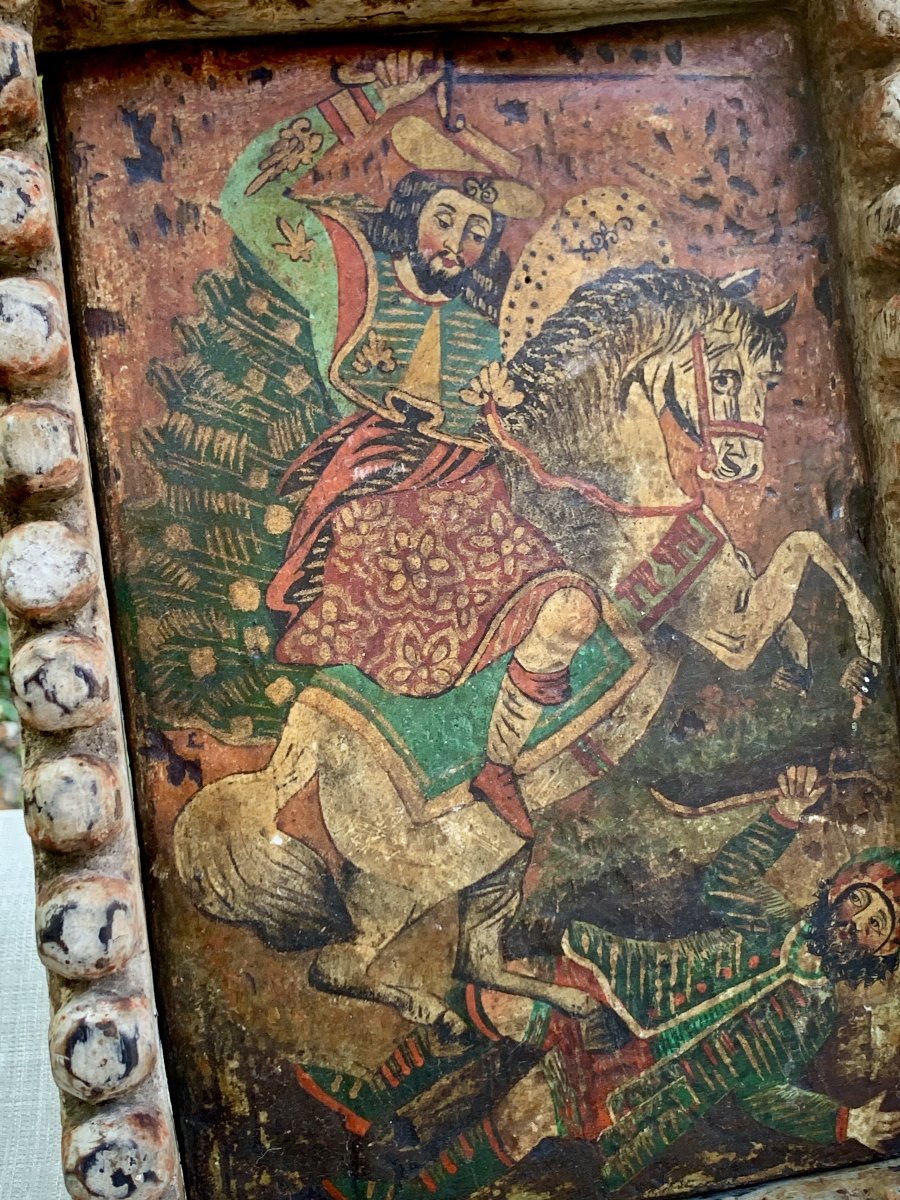
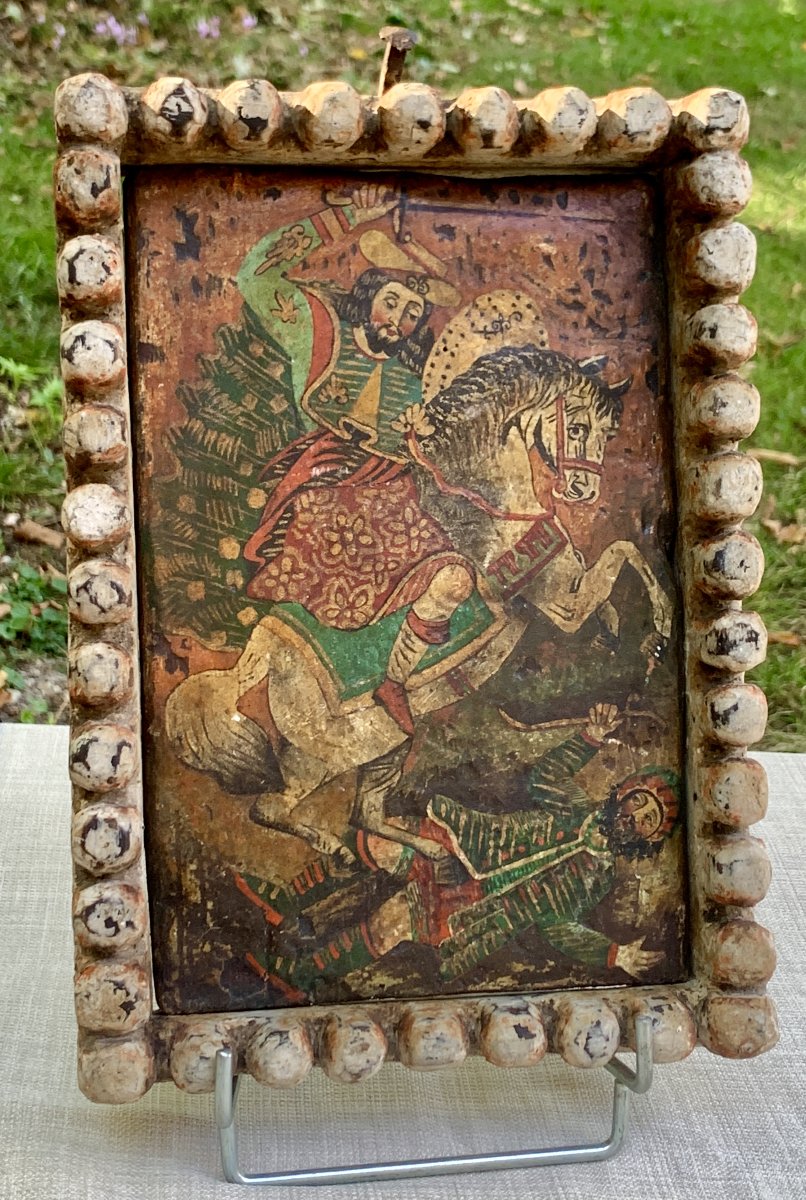
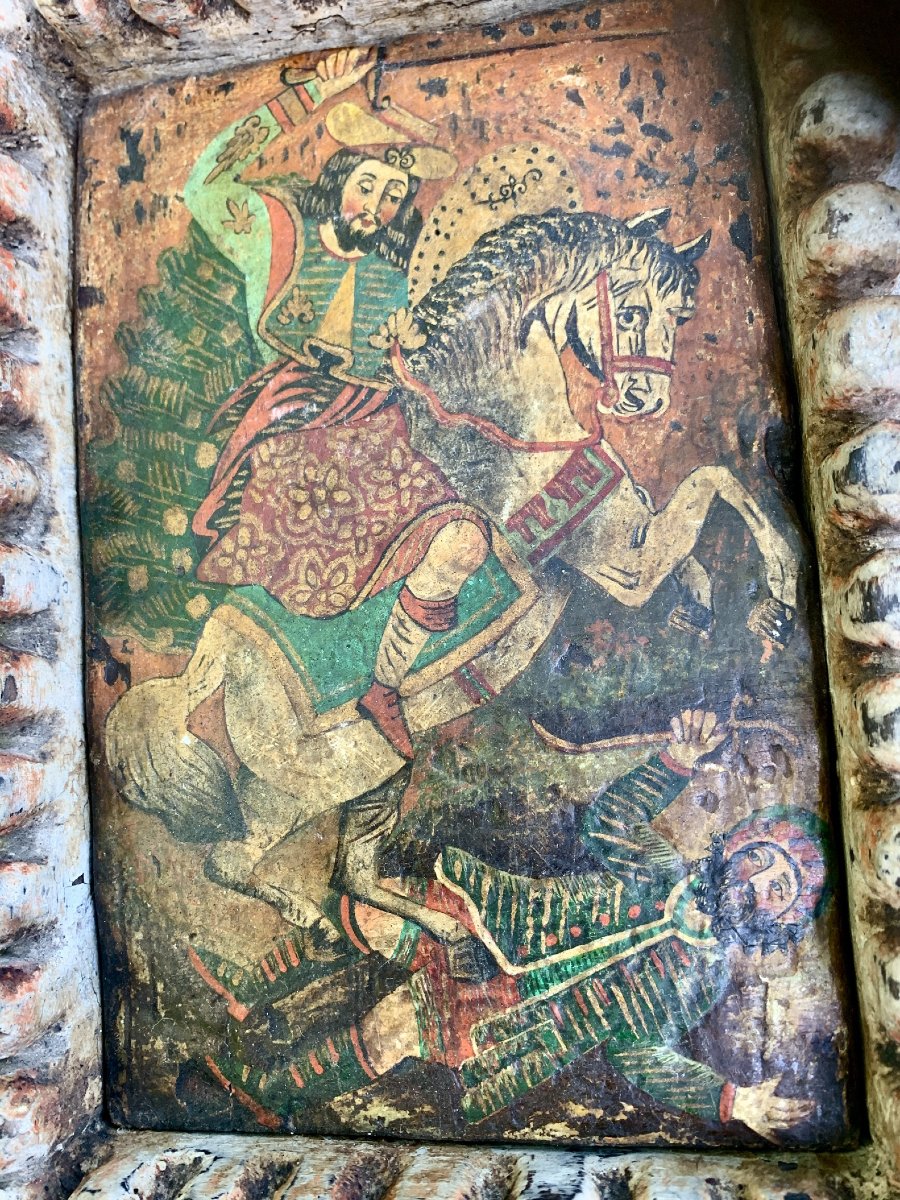
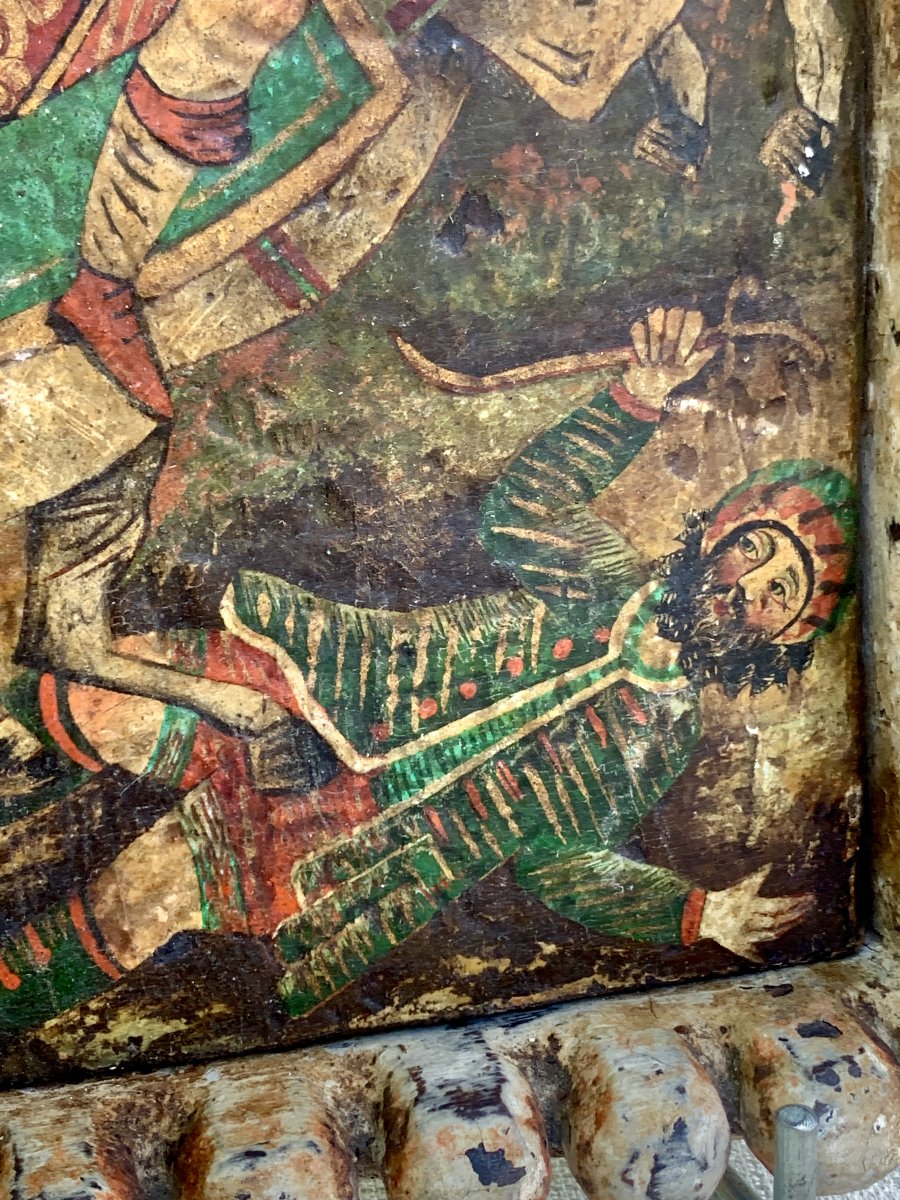
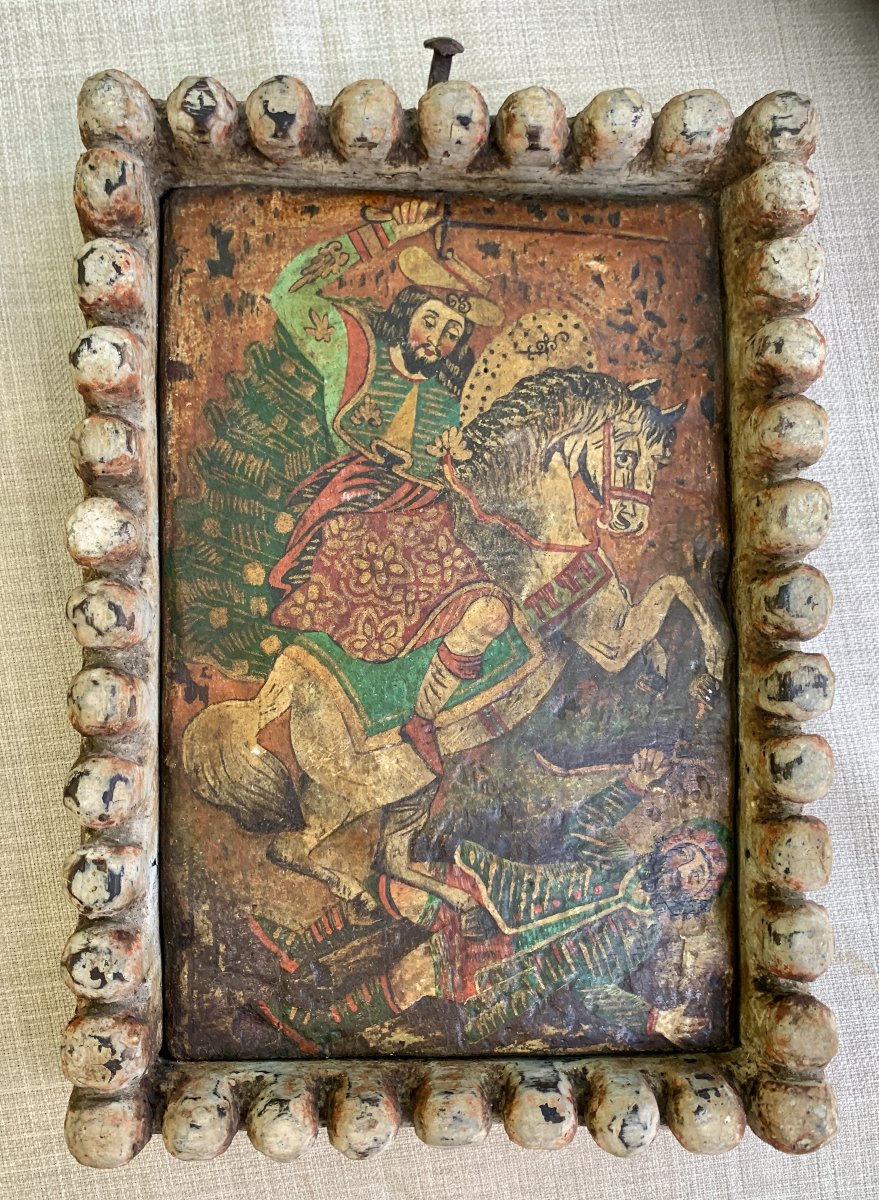
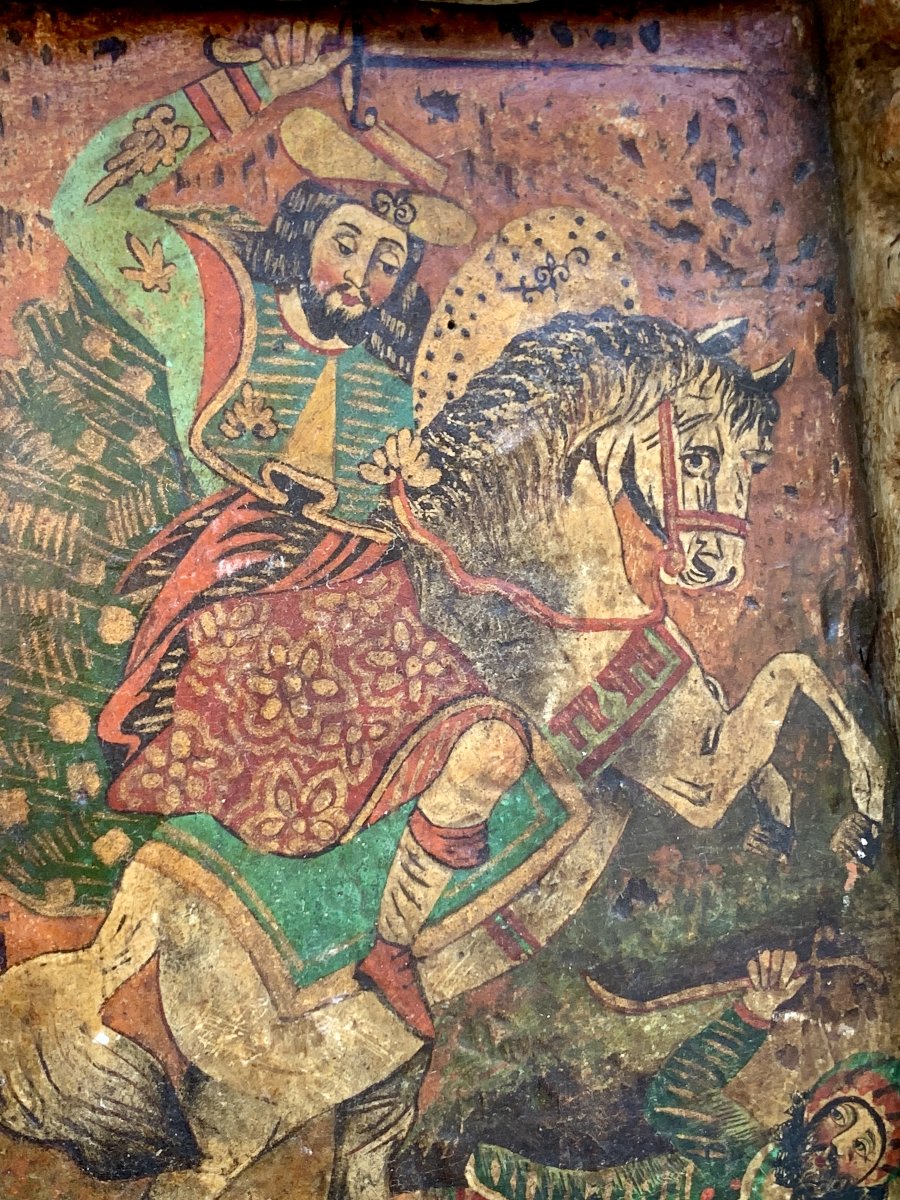
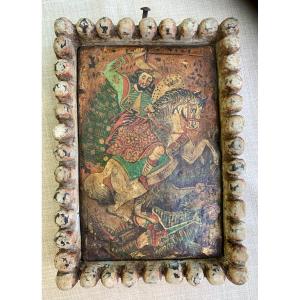
The icon painted on a carved wooden panel depicts St Jacques le Majeur at the Battle of CLAVIJO. The rider is shown defeating a Moor here, who is wearing a kind of turban and carrying an Ottoman-style curved sword, the Yatagan – this short curved-blade sword was actually invented during the Seljuk period, around the 12th century, and was used by the Ottomans from the mid-16th century to the 19th century
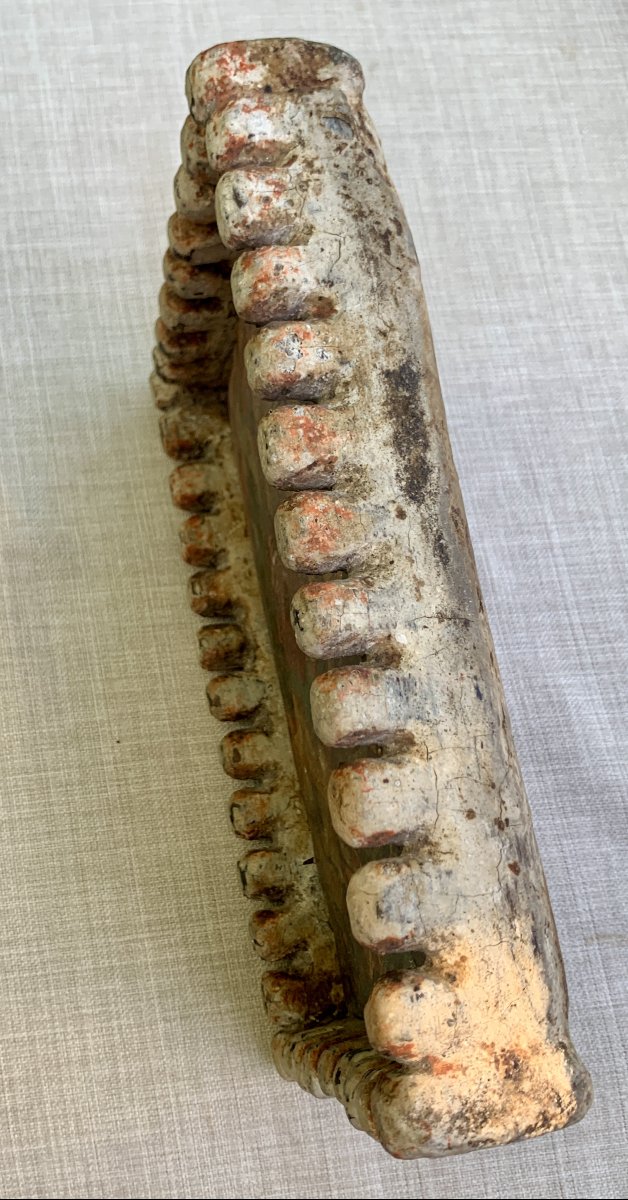
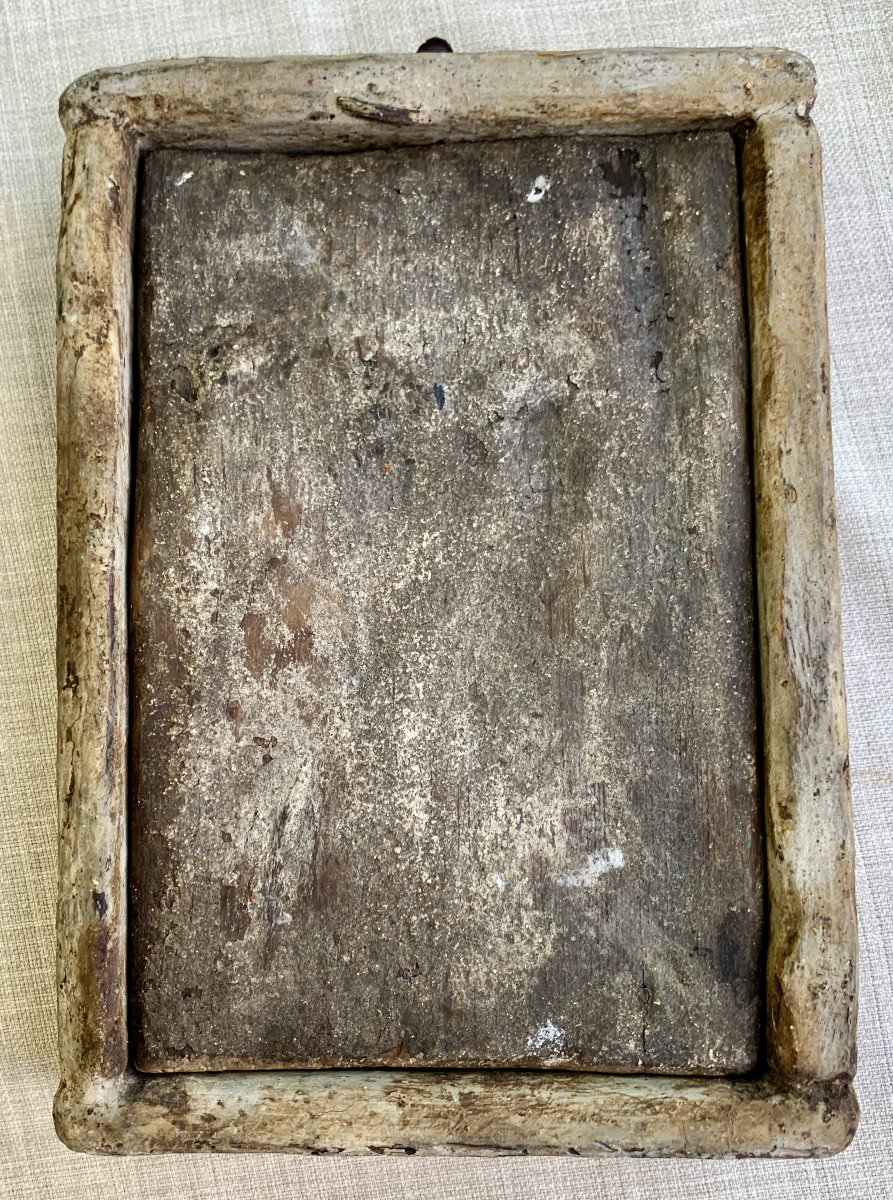
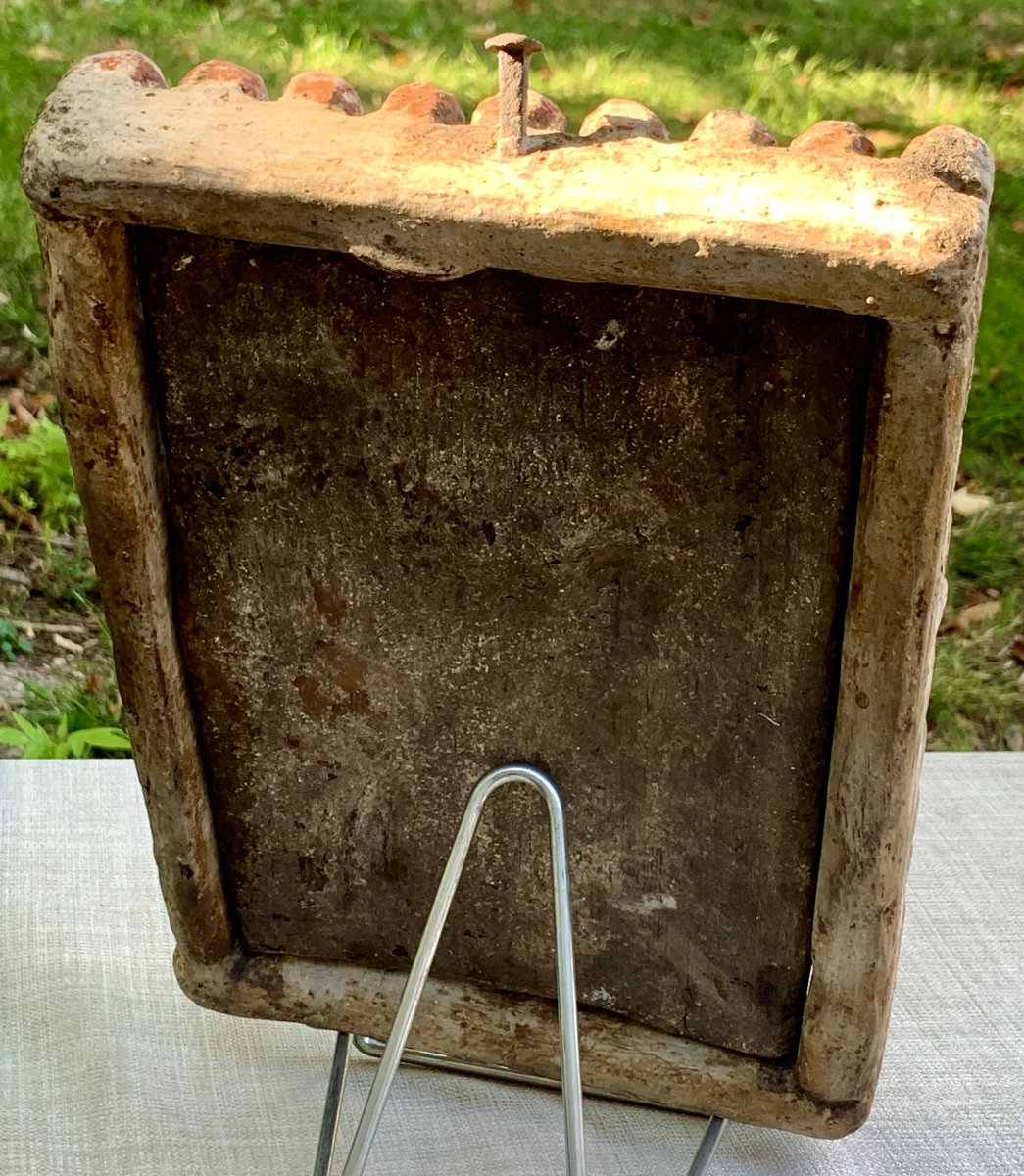
The painting is set within its curious, thick, and deep carved wooden frame (like a coffered frame)!
Here we see the style—above all very primitive and naïve—that characterizes this major artistic movement associated with the Spanish colonies
The Spanish Colonial School of Cuzco, or Escuela Cuzqueña, is a colonial artistic movement that emerged in Peru in 17th cty. This artistic movement, born in the eponymous city—the former capital of the Inca Empire—was the result of a syncretism between European religious art imported by Spanish missionaries and Andean pictorial traditions. The works of this school are distinguished by their unique style, blending Christian iconography with indigenous cultural elements. Local artists, often anonymous, incorporated Andean motifs, vivid colors, pronounced ornamentation, and the frequent use of gold leaf. The most commonly depicted subjects include biblical scenes, the Virgin Mary, saints, angelic musicians, and the Virgin of the Mountain (Virgen del Cerro).
The Cuzco School served as a tool for religious conversion, with missionaries teaching drawing and oil painting to the Quechua and mestizos. Artists were trained in workshops to spread the Christian faith through images accessible to the local population.
The Cuzco School had a significant influence on Peruvian art and served as a catalyst for artistic creation in the Andes. Works from this school continue to attract the attention of collectors and auction houses, generating growing interest in the art market.
Dimensions:
29 cm high
x 21 cm wide
x 5 cm deep
The colors are vivid and heavily accented with gilding.
The Battle of Clavijo is a legend that celebrates the victory of Saint Jacques le Grand over the Moorish army of Abd al-Rahman II on May 23, 844. This battle is often linked to the appearance of Saint James to King Ramiro I, giving him the strength needed to win the victory. The Battle of Clavijo is also where the term 'matamoros' comes from to refer to the Moors, and it had a significant impact on the Christian population of the Iberian Peninsula.
19th century
The icon painted on a carved wooden panel depicts St Jacques le Majeur at the Battle of CLAVIJO. The rider is shown defeating a Moor here, who is wearing a kind of turban and carrying an Ottoman-style curved sword, the Yatagan – this short curved-blade sword was actually invented during the Seljuk period, around the 12th century, and was used by the Ottomans from the mid-16th century to the 19th century
The painting is set within its curious, thick, and deep carved wooden frame (like a coffered frame)!
Here we see the style—above all very primitive and naïve—that characterizes this major artistic movement associated with the Spanish colonies
The Spanish Colonial School of Cuzco, or Escuela Cuzqueña, is a colonial artistic movement that emerged in Peru in 17th cty. This artistic movement, born in the eponymous city—the former capital of the Inca Empire—was the result of a syncretism between European religious art imported by Spanish missionaries and Andean pictorial traditions. The works of this school are distinguished by their unique style, blending Christian iconography with indigenous cultural elements. Local artists, often anonymous, incorporated Andean motifs, vivid colors, pronounced ornamentation, and the frequent use of gold leaf. The most commonly depicted subjects include biblical scenes, the Virgin Mary, saints, angelic musicians, and the Virgin of the Mountain (Virgen del Cerro).
The Cuzco School served as a tool for religious conversion, with missionaries teaching drawing and oil painting to the Quechua and mestizos. Artists were trained in workshops to spread the Christian faith through images accessible to the local population.
The Cuzco School had a significant influence on Peruvian art and served as a catalyst for artistic creation in the Andes. Works from this school continue to attract the attention of collectors and auction houses, generating growing interest in the art market.
Dimensions:
29 cm high
x 21 cm wide
x 5 cm deep
The colors are vivid and heavily accented with gilding.
The Battle of Clavijo is a legend that celebrates the victory of Saint Jacques le Grand over the Moorish army of Abd al-Rahman II on May 23, 844. This battle is often linked to the appearance of Saint James to King Ramiro I, giving him the strength needed to win the victory. The Battle of Clavijo is also where the term 'matamoros' comes from to refer to the Moors, and it had a significant impact on the Christian population of the Iberian Peninsula.
700 €
Period: 19th century
Style: Tribal Art
Condition: Excellent condition
Material: Painted wood
Width: 21 cm
Height: 29 cm
Depth: 5 cm
Reference (ID): 1822972
Availability: In stock
Print