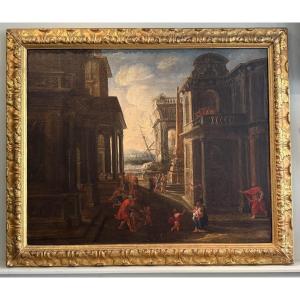


Alessandro Salucci And Michelangelo Cerquozzi - Book Of Numbers, 21:4–9, The Story Of The Serpents
Artist: Alessandro Salucci Et Michelangelo Cerquozzi
Alessandro Salucci and Michelangelo Cerquozzi - Book of Numbers, 21:4–9, the story of the serpents, circa 1650 1660.
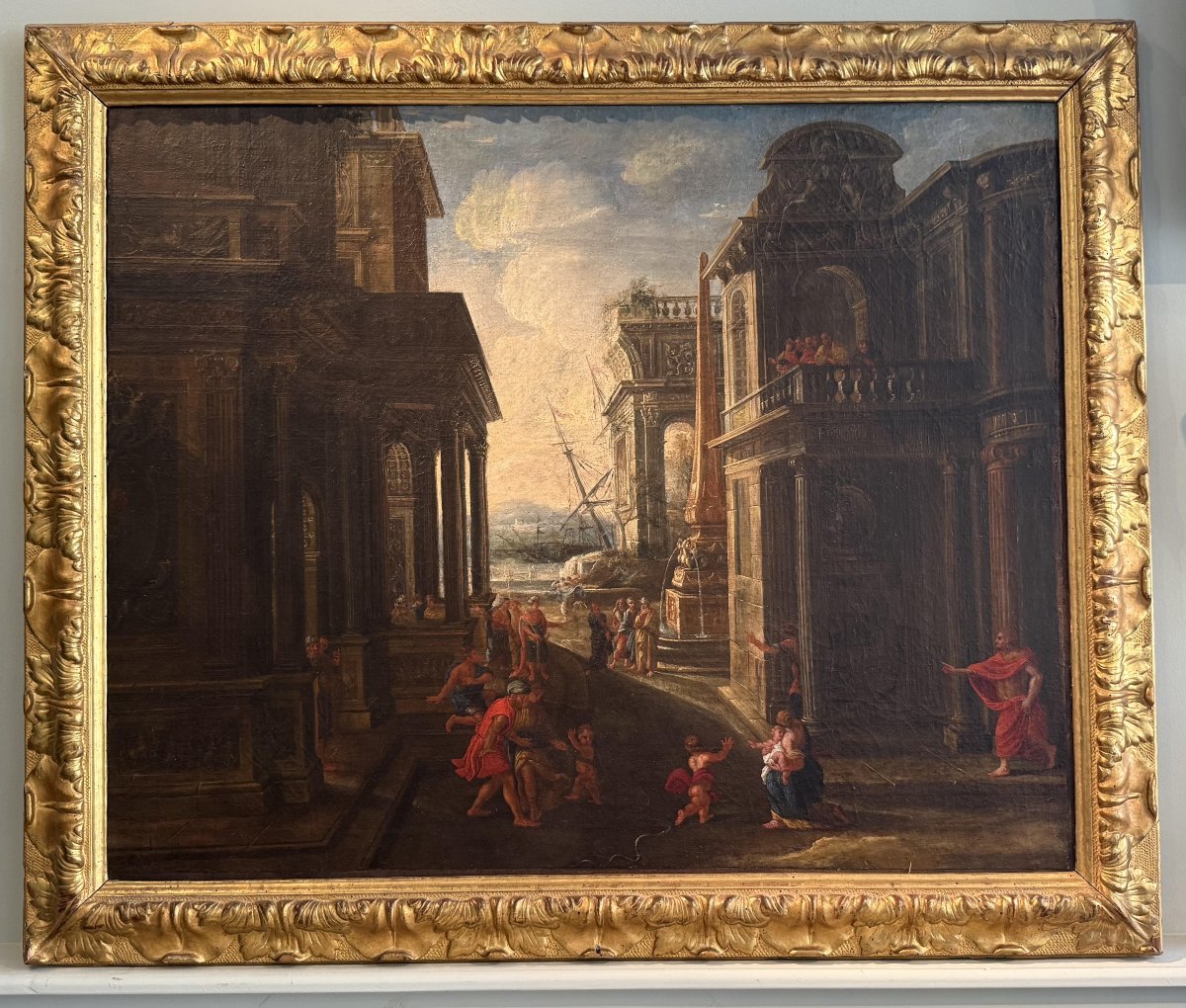
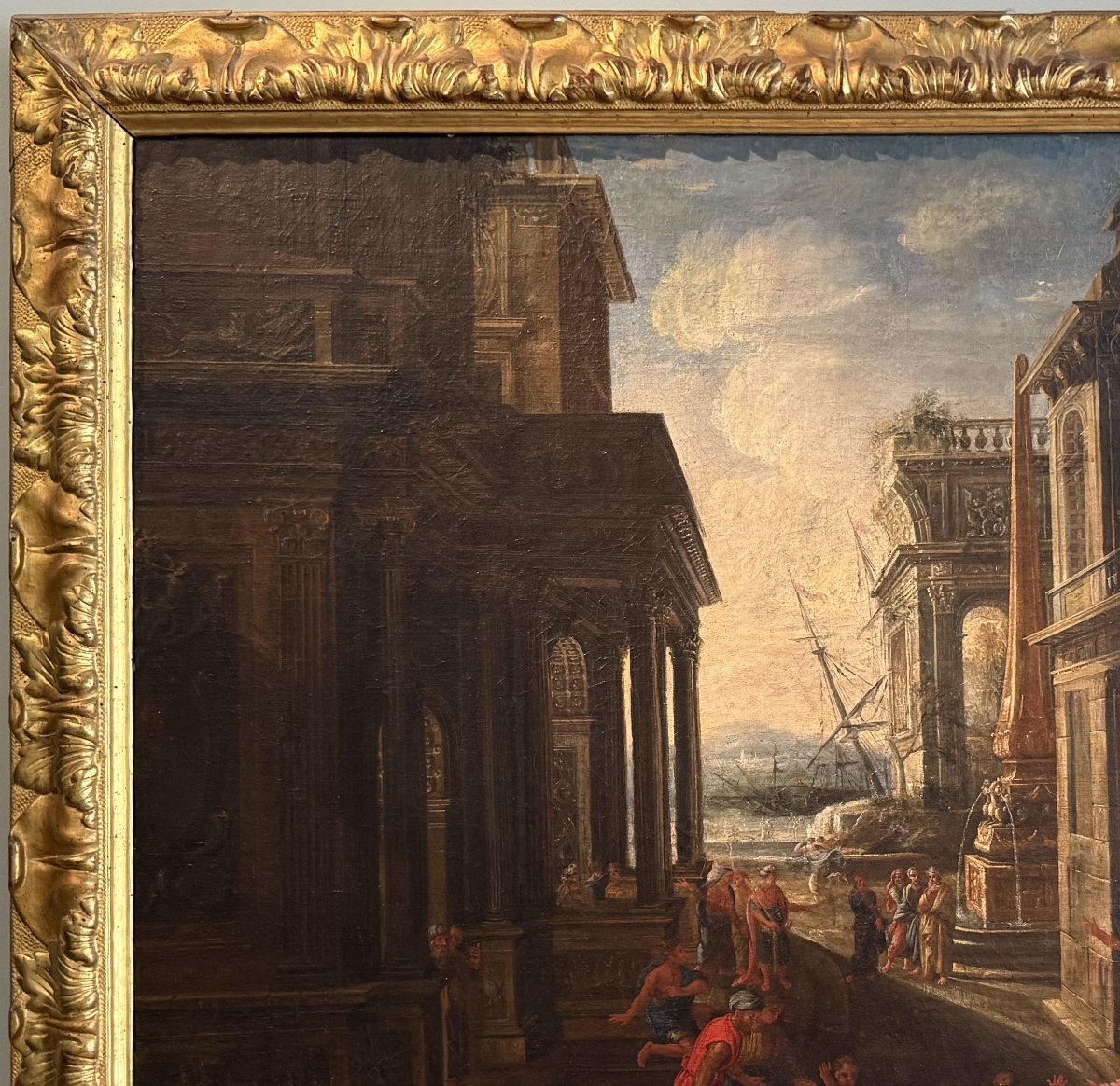
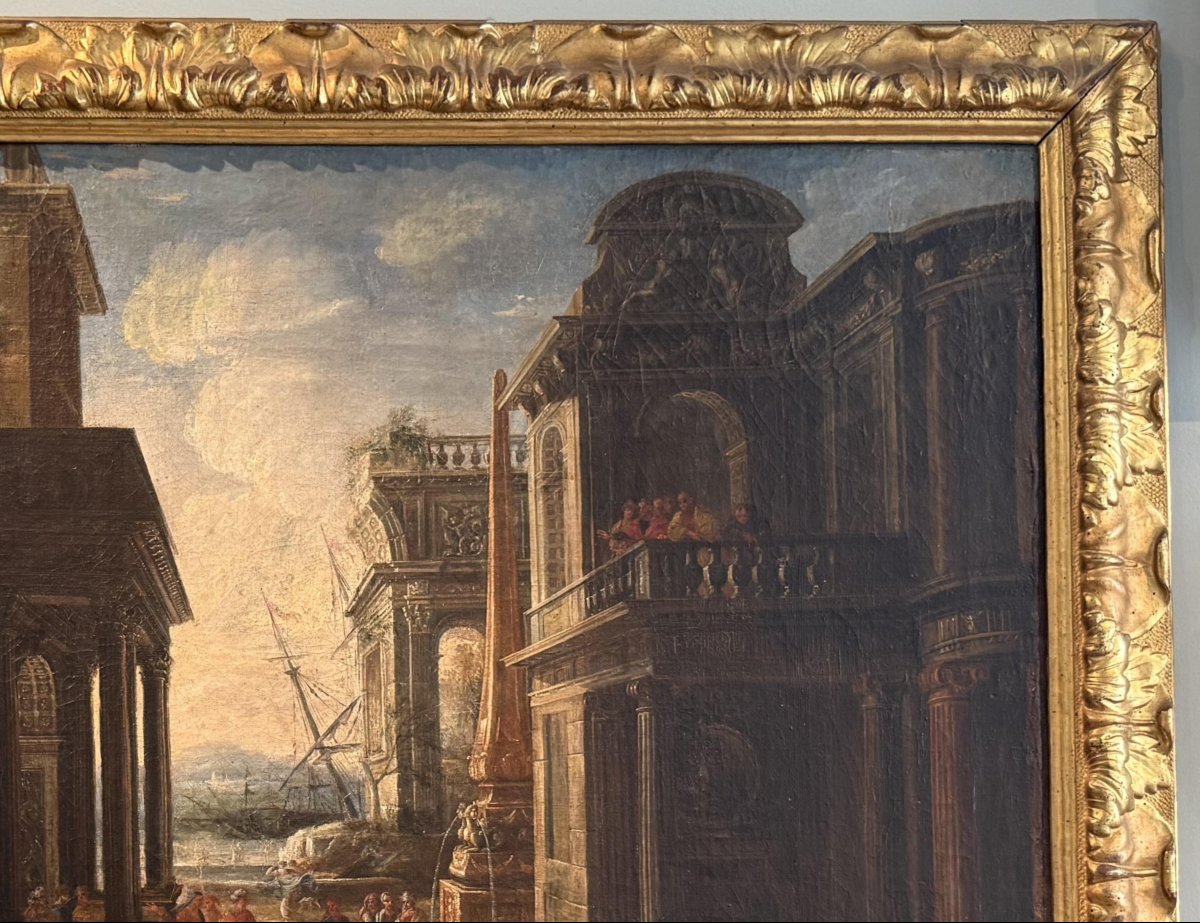
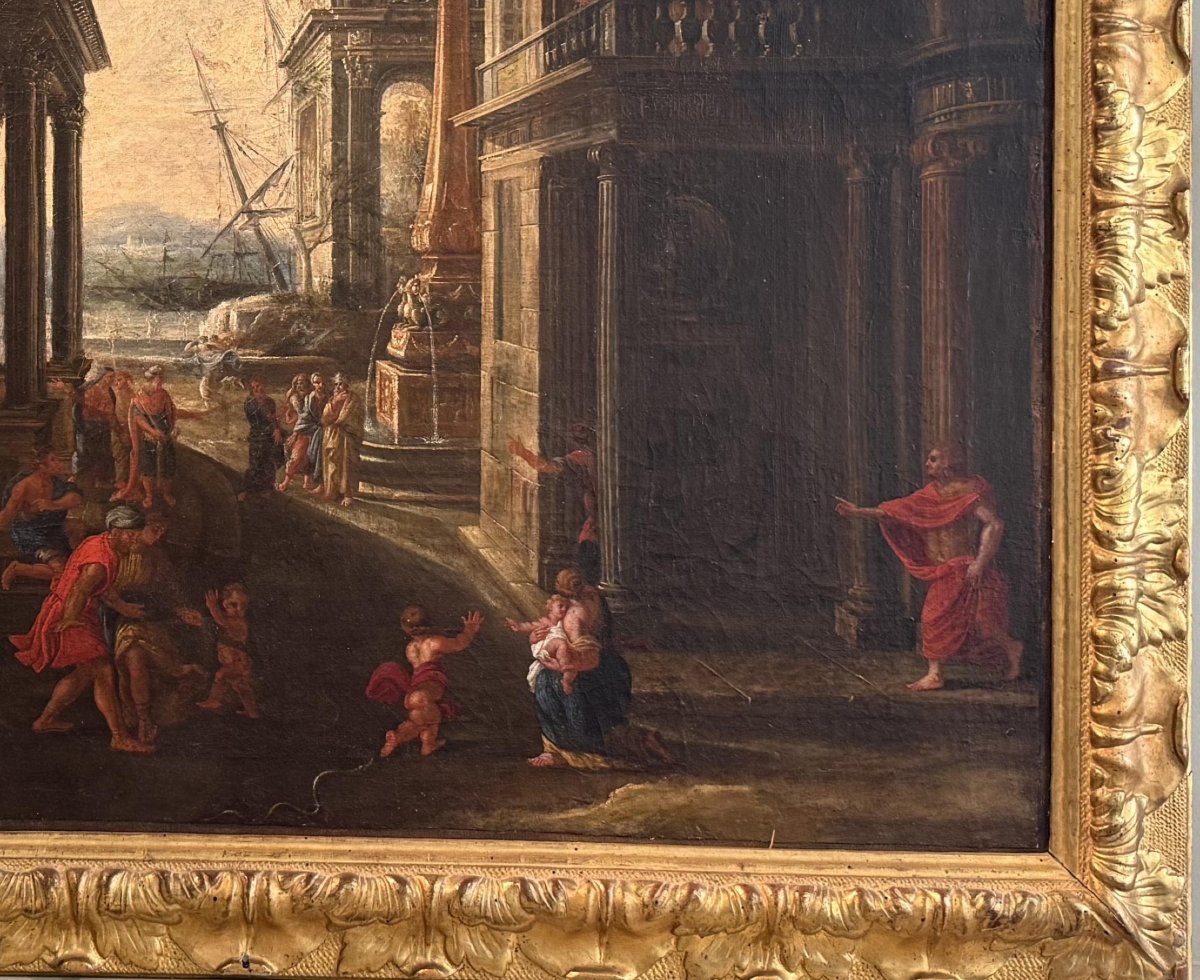
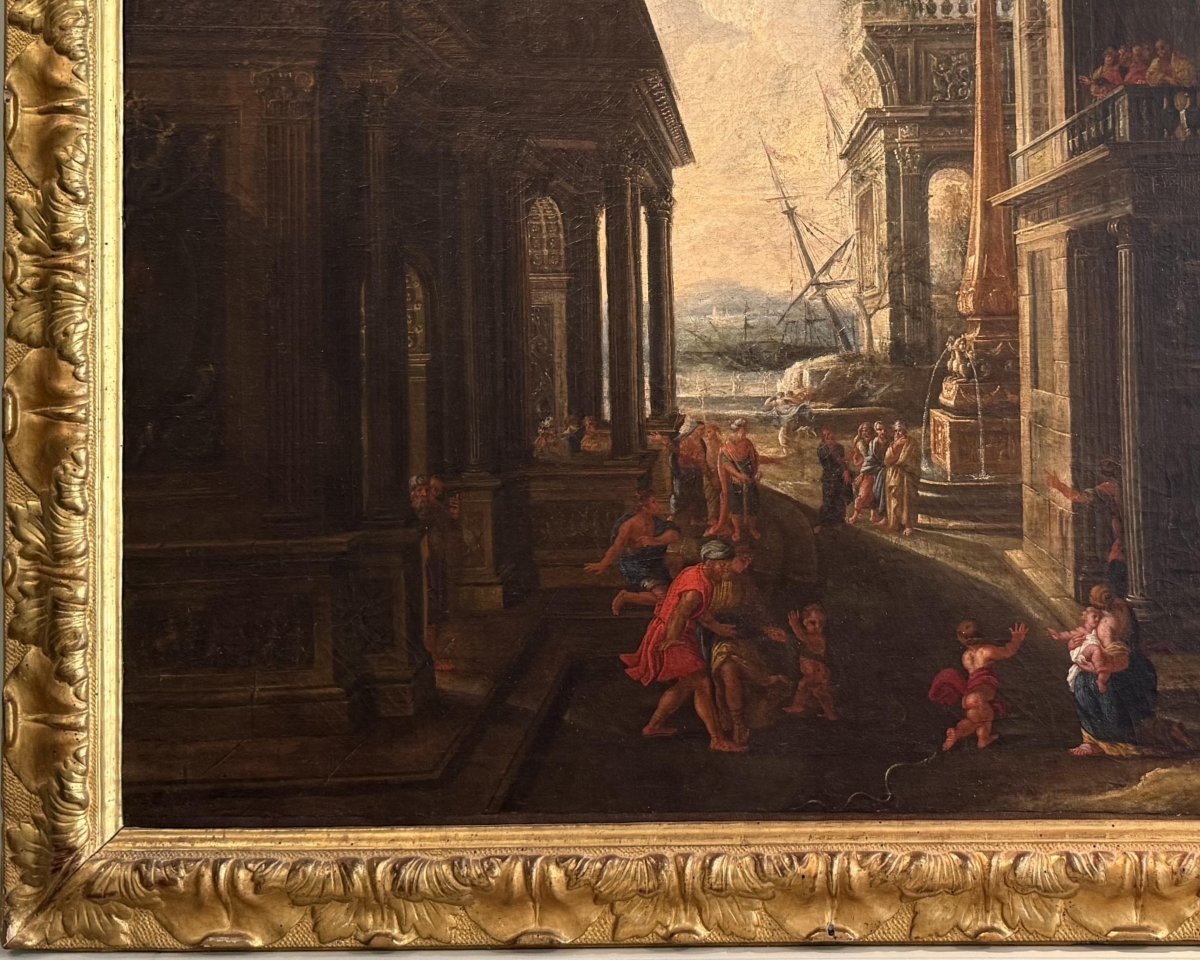
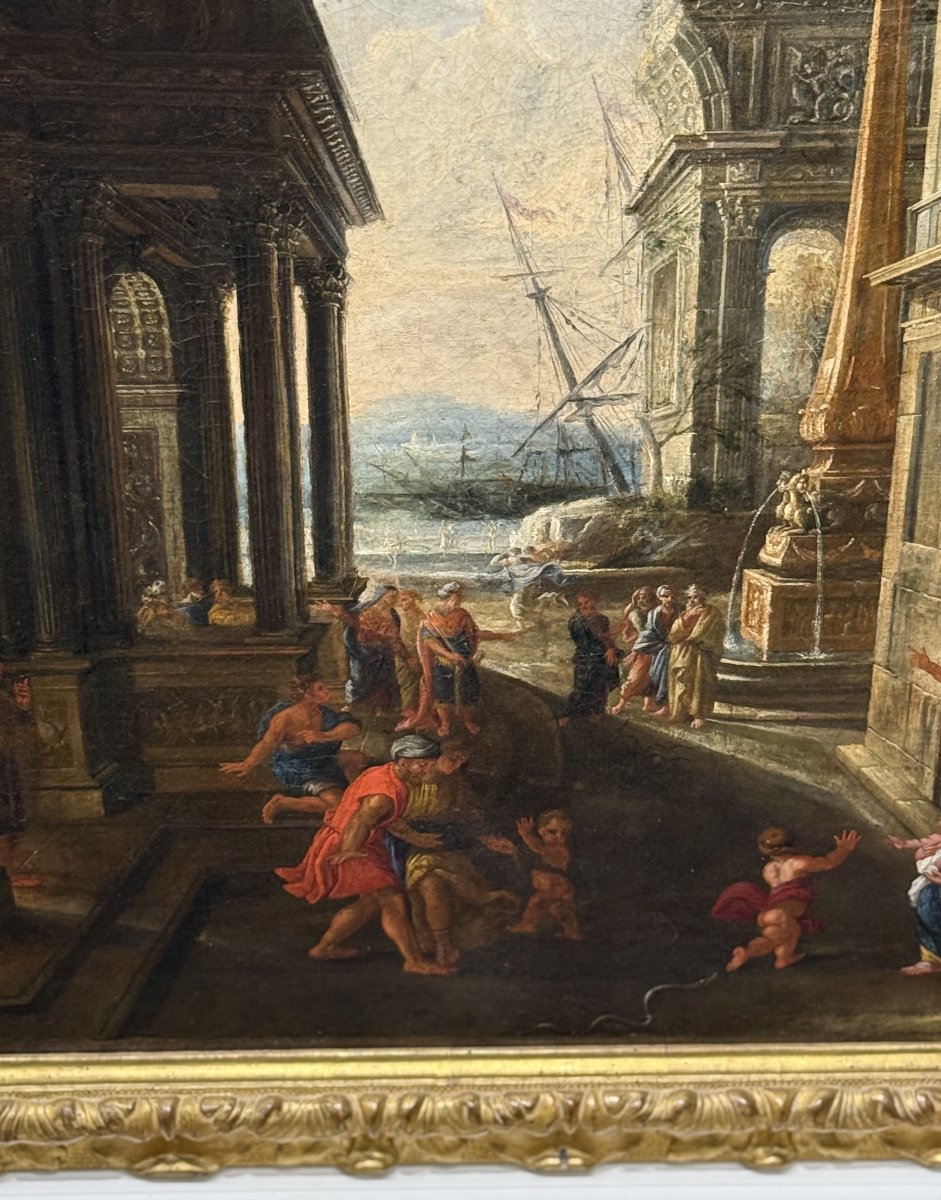
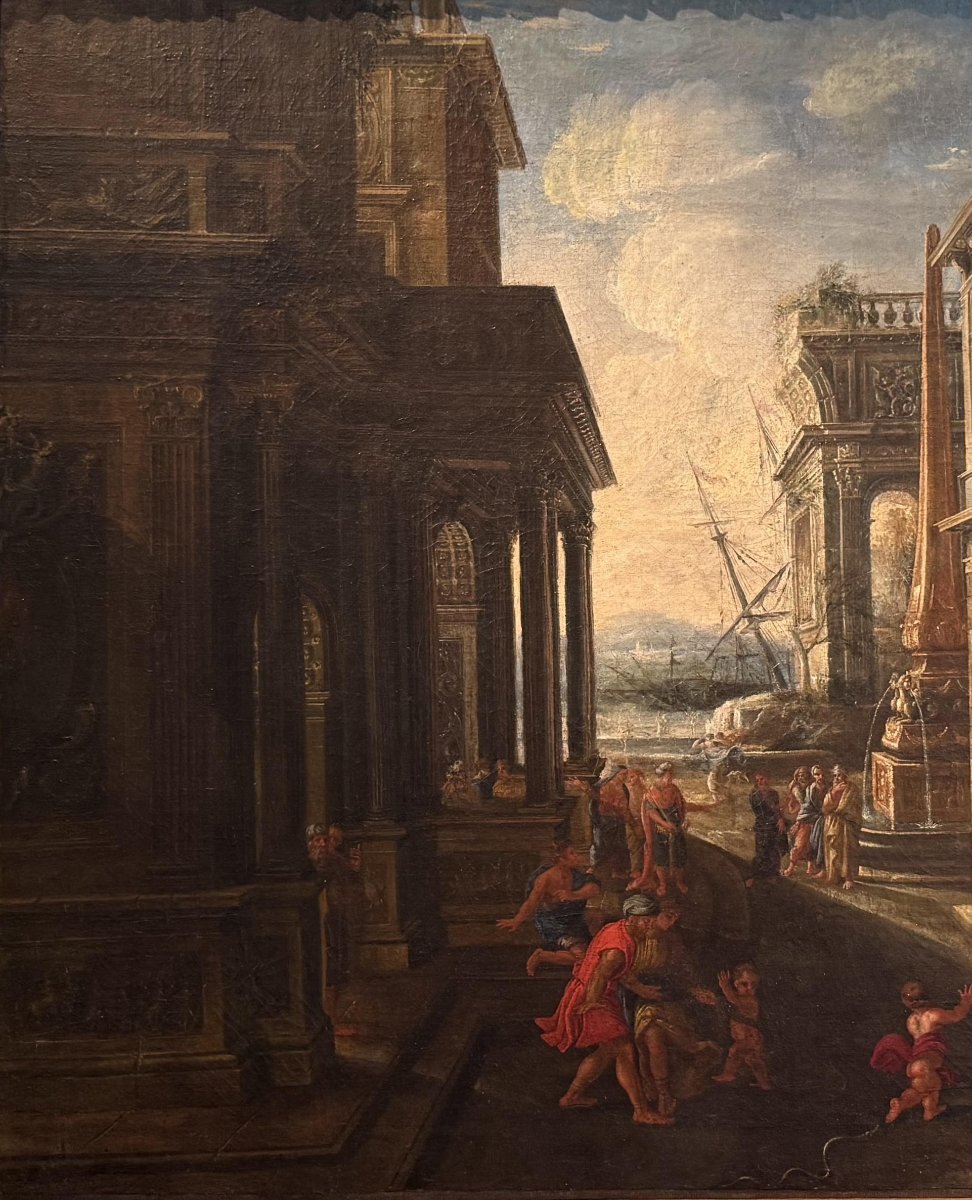
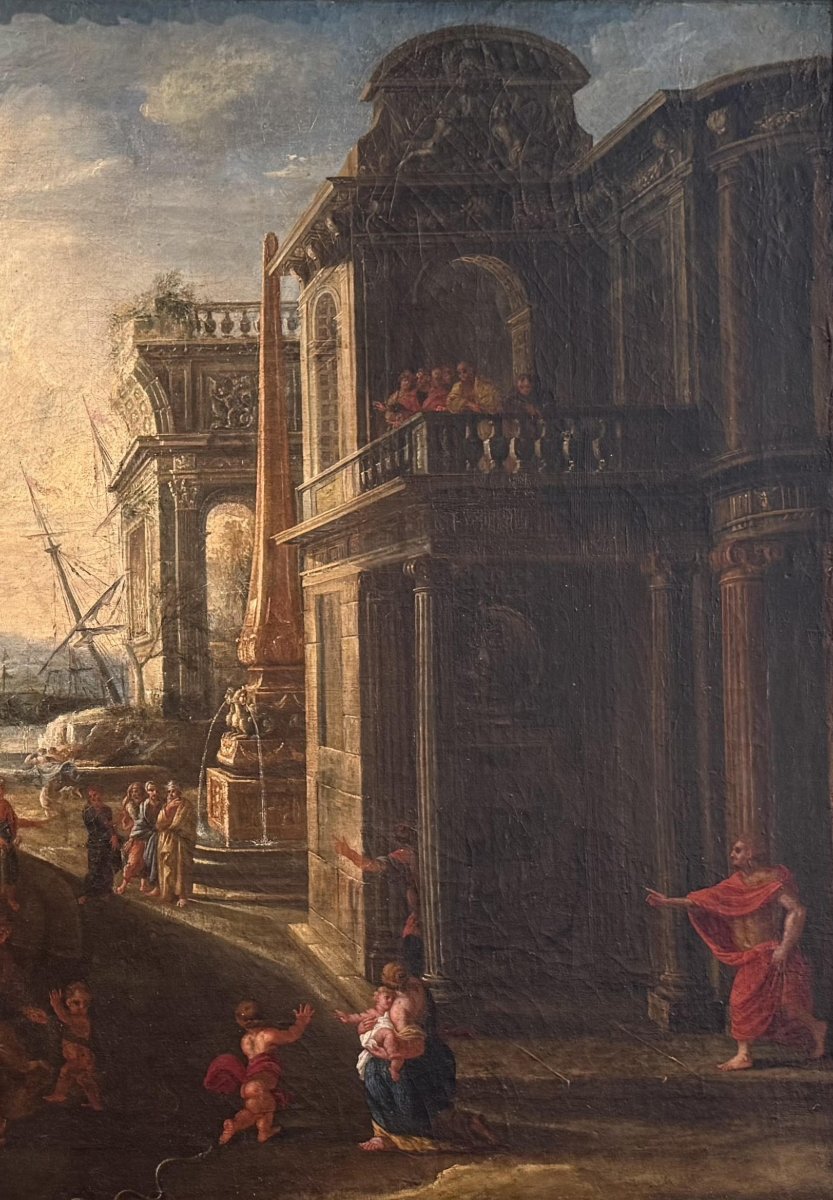
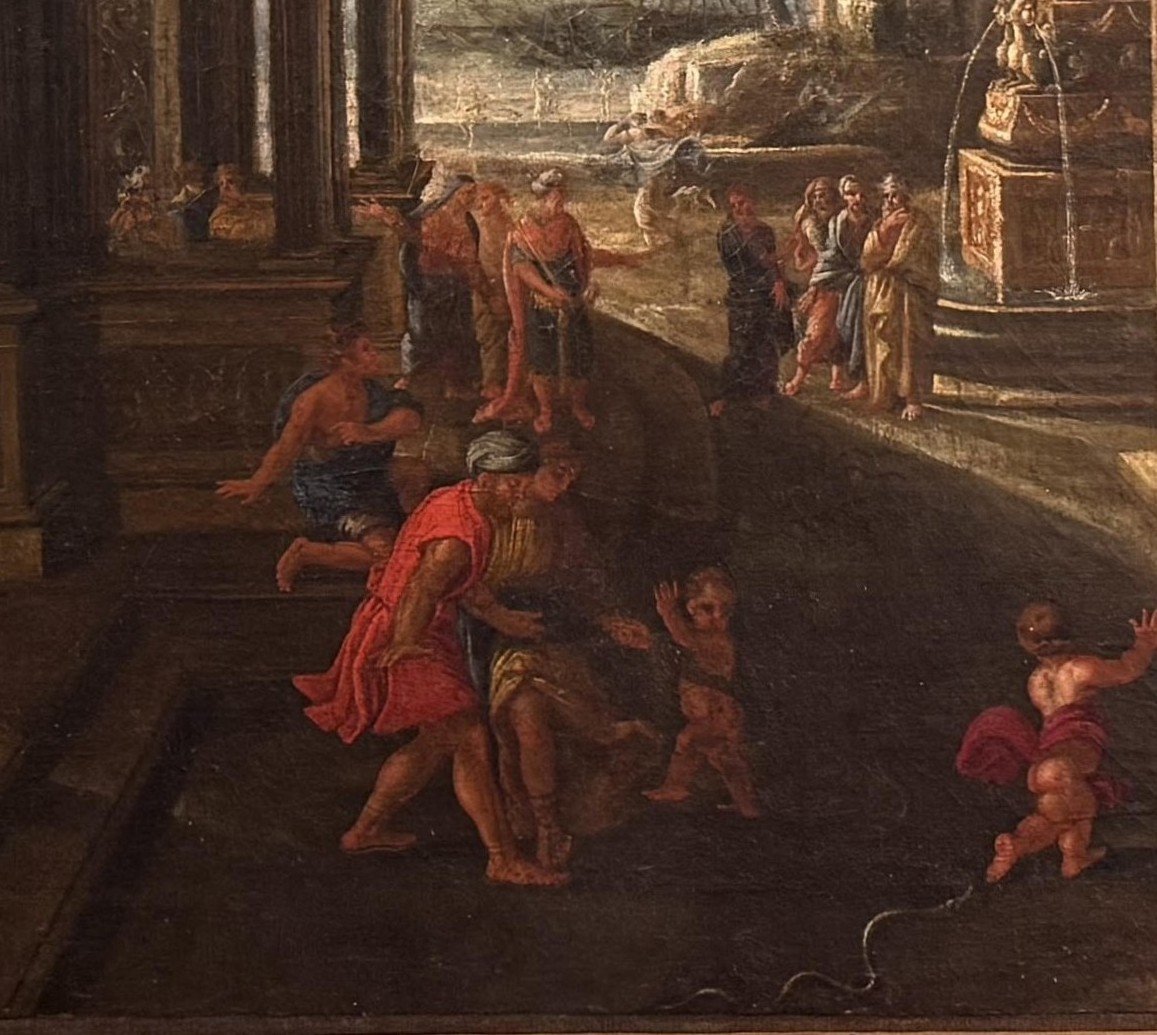
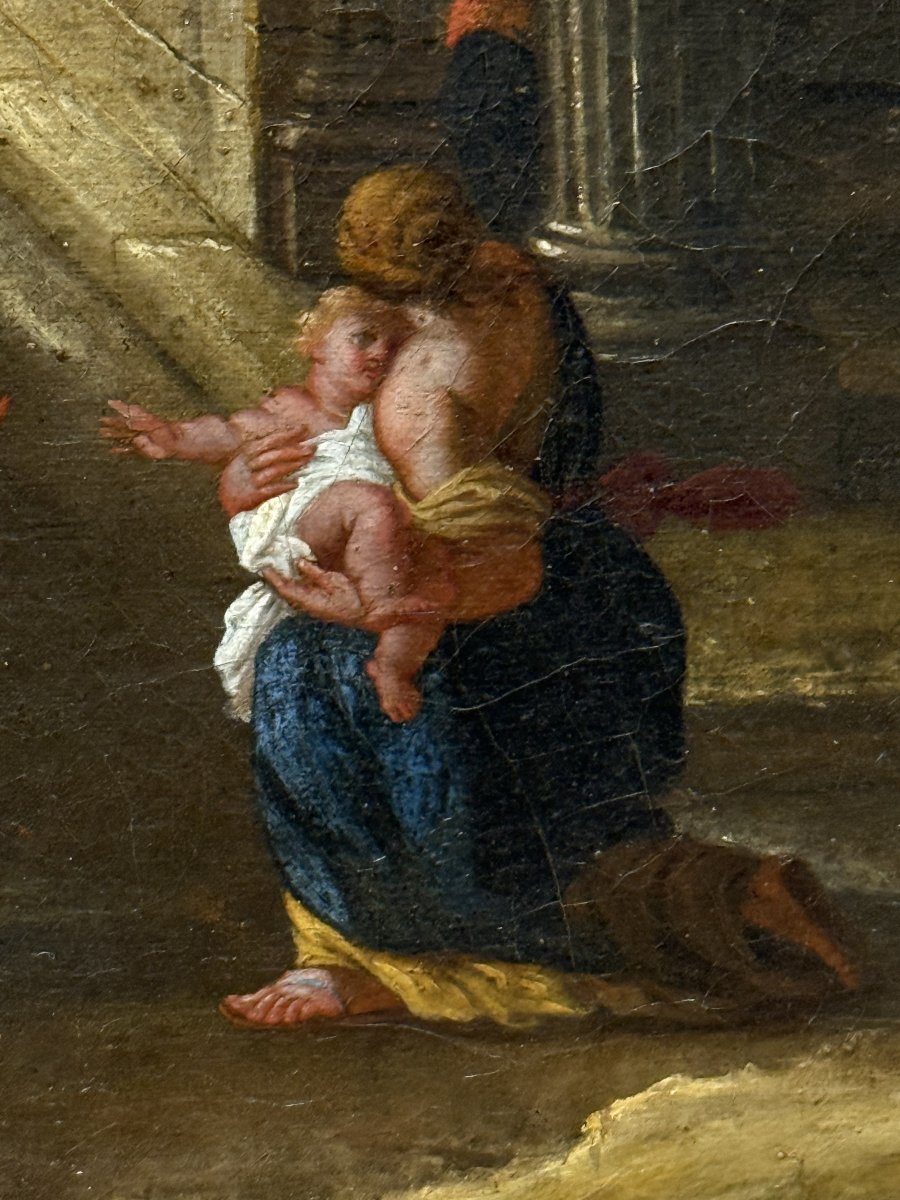
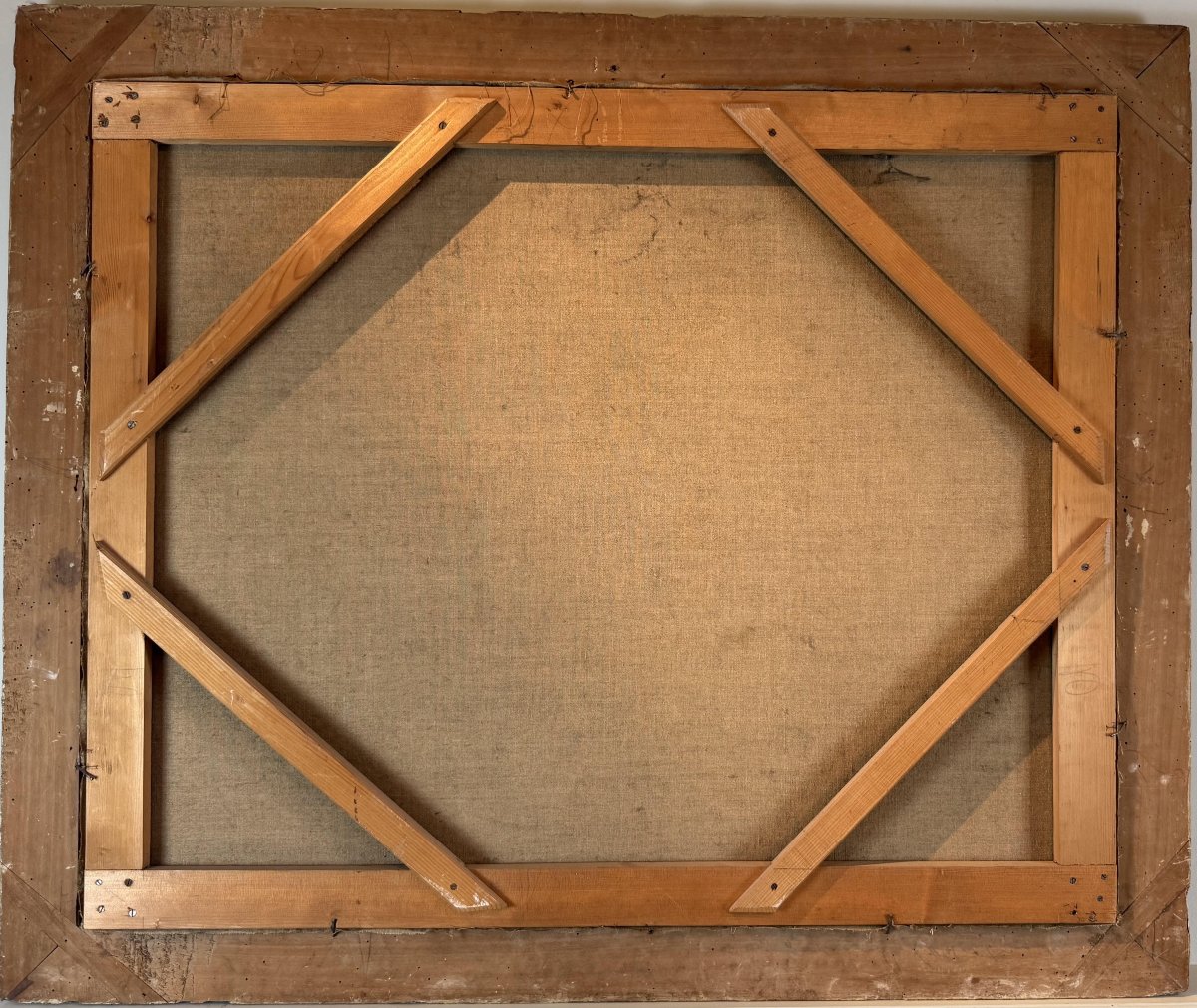
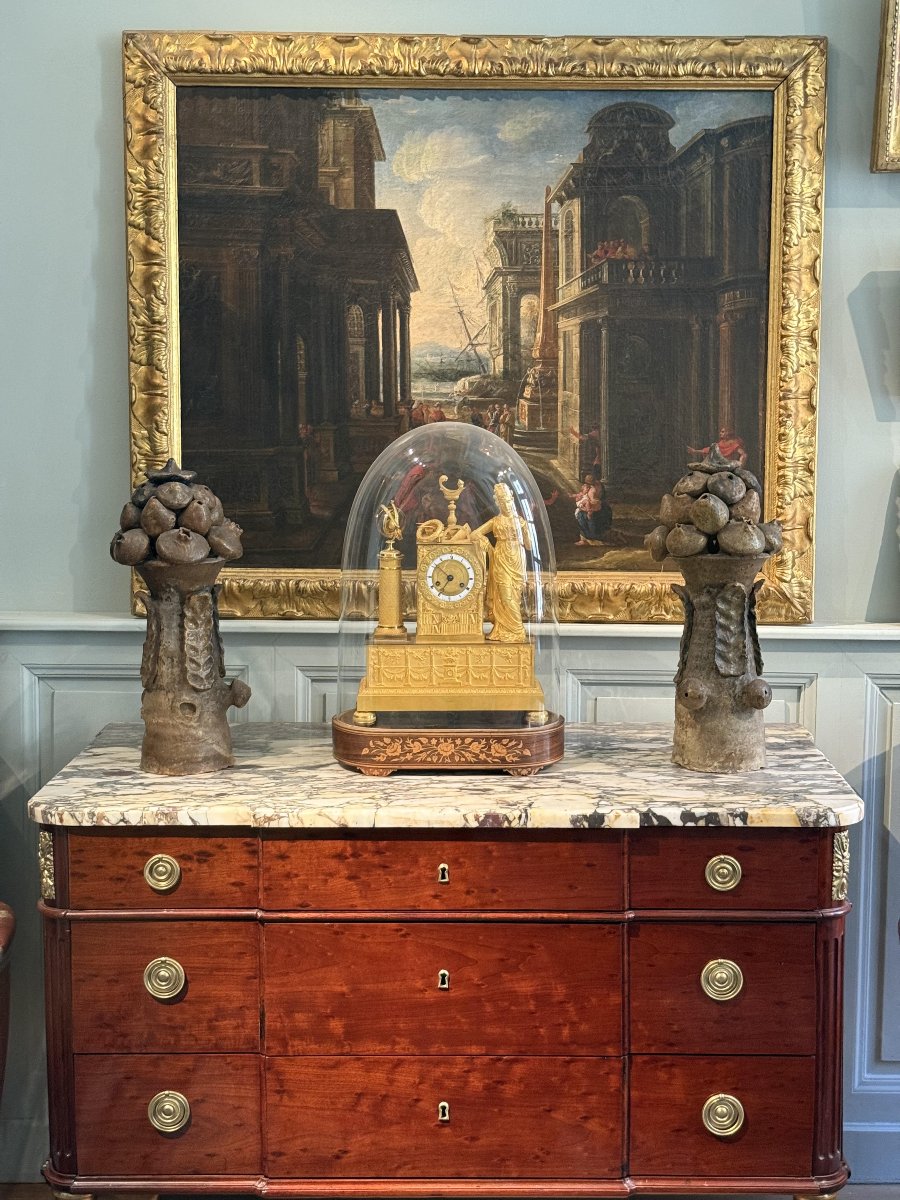
The painting depicts one of the most dramatic episodes ofthe Israelites’ exodus through the desert—the story of the fiery serpents,described in the Book of Numbers (21:4–9)—when God sent venomous serpents amongthe Israelites to punish them for their complaints. Here, Alessandro Salucciconstructs the vast architectural setting, organized according to the principleof the architectural “capriccio,” while Michelangelo Cerquozzi brings thisspace to life with a multitude of figures caught up in fear, flight, andsuffering.In the foreground, panic centers on the Israelites: a motherclutches her child to her chest, while another child tries to flee, pursued bythe snakes. Beside them, a couple seeks to escape the danger, while a woundedman leans against the surrounding wall. These groups, characterized by livelygestures and highly expressive interactions, give the scene its narrativeintensity. In the center of the composition, Moses, standing near the fountain,contemplates the snakes in a pose of reflection and intercession. He serves asthe focal point of the biblical episode. Finally, at the top of thecomposition, the viewer’s gaze is drawn toward the harbor, toward which a womanis fleeing to escape the danger.Thus, Salucci provides the biblical episode with amonumental and theatrical setting, while Cerquozzi imbues it with a human anddramatic dimension. The architecture and figures work together to draw theviewer’s gaze from the terror in the foreground toward Moses, and then towardthe opening of the port, transforming the biblical narrative into a truetheatrical scene.The attribution to Alessandro Salucci is based primarily onthe architectural construction of the composition. The painter creates averitable theatrical setting composed of porticoes, temples, arches, afountain, an obelisk, and monumental buildings, arranged in a deep perspectivethat draws the eye toward the harbor. This conception of an imaginary ancientcity—both monumental and fanciful—is consistent with the language of Salucci’sarchitectural capricci.The figures, which are very lively and expressive, wereadded to this space by Michelangelo Cerquozzi, a move that is particularlyfitting in the context of a work traditionally created by two artists.The attribution of these figures to Michelangelo Cerquozziis based on their lively, folksy, and highly narrative character. Far frombeing mere props intended to provide a sense of scale for the architecture, thefigures respond to the action through their gestures, postures, and movements.The style of the figures—characterized by lively gestures, compact silhouettes,children with exaggerated proportions, hands and feet rendered in a sketchy yetexpressive manner, and a narrative arrangement of small groups—is fullyconsistent with Michelangelo Cerquozzi’s “bambocciante” style. Thesecharacteristics are particularly consistent with the Salucci–Cerquozzicollaboration documented in several architectural capricci from the mid-17thcentury. Furthermore, the fact that the figures in this painting are not merelydecorative but constitute a genuine collective reaction to the biblical episodecould explain why Salucci chose a painter like Cerquozzi specifically toexecute them.Here are some of the most telling examples, which areactually documented as joint works or as direct evidence of theircollaboration:• “Marina conporto, rotonda, edifici e figure,” c. 1650–1660, former Galleria Pallavicini,Rome: this is probably the closest parallel to this painting. It features animaginary seascape, a rotunda, monumental architecture, and small figures; thework is cataloged jointly as Michelangelo Cerquozzi / Alessandro Salucci by theZeri Foundation.• “Imaginary Viewwith the Colosseum and the Arch of Constantine,” circa the mid-17th century:another directly documented collaboration between the two artists, combiningreconstructed Roman architecture and figures. The work is held in a privatecollection and listed by Zeri based on Busiri Vici’s bibliography.• “Landscape with aTriumphal Arch and the Colosseum” and “Landscape with the Rotonda,” circa 1650:these two works from the Galleria Pallavicini are cited by the Banca d’Italiaas evidence of Salucci’s collaboration with Michelangelo Cerquozzi.• And finally;“Architectural Capriccio with Classical Buildings Near a Harbor and theJudgment of Solomon,” c. 1650, which is particularly interesting because, like*The Burning Snakes*, this painting combines imaginary classical architecture,a harbor, and a scene from the Old Testament. In summary: the most convincingcomparison with our painting is that of the “Marina con porto, rotonda, edificie figure,” as it brings together precisely the same elements: Salucci’simaginary architecture combined with Cerquozzi’s harbor scene and figurativeactivity.Here are some of the most telling examples, which areactually documented as joint works or as direct evidence of theircollaboration: • “Marinacon porto, rotonda, edifici e figure,” c. 1650–1660, former GalleriaPallavicini, Rome: this is likely the closest parallel to this painting. Itfeatures the imaginary seascape, the rotunda, monumental architecture, andsmall figures; the work is cataloged jointly as Michelangelo Cerquozzi /Alessandro Salucci by the Zeri Foundation. • “Imaginary Viewwith the Colosseum and the Arch of Constantine,” circa the mid-17th century:another directly documented collaboration between the two artists, combiningreconstructed Roman architecture and figures. The work is held in a privatecollection and listed by Zeri based on Busiri Vici’s bibliography. • “Landscape with aTriumphal Arch and the Colosseum” and “Landscape with the Rotonda,” circa 1650:these two works from the Galleria Pallavicini are cited by the Banca d’Italiaas evidence of Salucci’s collaboration with Michelangelo Cerquozzi.• And finally,“Capriccio architettonico con edifici classici presso un porto e col Giudiziodi Salomone” (Architectural Capriccio with Classical Buildings Near a Harborand the Judgment of Solomon), circa 1650, which is particularly interestingbecause, like *The Burning Snakes*, this painting combines imaginary classicalarchitecture, a harbor, and a scene from the Old Testament.In summary: the most compelling parallel with our paintingis that of the “Marina con porto, rotonda, edifici e figure,” as it bringstogether precisely the same elements: Salucci’s imaginary architecture combinedwith Cerquozzi’s harbor setting and figurative activity.The architectural capriccio, highly prized in 17th-centuryRome, involves freely recomposing real or imaginary architectural elements tocreate an ideal, theatrical space. In the work of Alessandro Salucci, thistechnique becomes the preferred setting for narrative scenes: here, ancientarchitecture and imaginary monuments transform the biblical episode of theIsraelites’ punishment into a monumental scene, set in an idealized Rome ratherthan in a real location.Dimensions: Frame 127.5 cm by 106.5 cm. Stretcher 110 cm by90 cm.
The painting depicts one of the most dramatic episodes ofthe Israelites’ exodus through the desert—the story of the fiery serpents,described in the Book of Numbers (21:4–9)—when God sent venomous serpents amongthe Israelites to punish them for their complaints. Here, Alessandro Salucciconstructs the vast architectural setting, organized according to the principleof the architectural “capriccio,” while Michelangelo Cerquozzi brings thisspace to life with a multitude of figures caught up in fear, flight, andsuffering.In the foreground, panic centers on the Israelites: a motherclutches her child to her chest, while another child tries to flee, pursued bythe snakes. Beside them, a couple seeks to escape the danger, while a woundedman leans against the surrounding wall. These groups, characterized by livelygestures and highly expressive interactions, give the scene its narrativeintensity. In the center of the composition, Moses, standing near the fountain,contemplates the snakes in a pose of reflection and intercession. He serves asthe focal point of the biblical episode. Finally, at the top of thecomposition, the viewer’s gaze is drawn toward the harbor, toward which a womanis fleeing to escape the danger.Thus, Salucci provides the biblical episode with amonumental and theatrical setting, while Cerquozzi imbues it with a human anddramatic dimension. The architecture and figures work together to draw theviewer’s gaze from the terror in the foreground toward Moses, and then towardthe opening of the port, transforming the biblical narrative into a truetheatrical scene.The attribution to Alessandro Salucci is based primarily onthe architectural construction of the composition. The painter creates averitable theatrical setting composed of porticoes, temples, arches, afountain, an obelisk, and monumental buildings, arranged in a deep perspectivethat draws the eye toward the harbor. This conception of an imaginary ancientcity—both monumental and fanciful—is consistent with the language of Salucci’sarchitectural capricci.The figures, which are very lively and expressive, wereadded to this space by Michelangelo Cerquozzi, a move that is particularlyfitting in the context of a work traditionally created by two artists.The attribution of these figures to Michelangelo Cerquozziis based on their lively, folksy, and highly narrative character. Far frombeing mere props intended to provide a sense of scale for the architecture, thefigures respond to the action through their gestures, postures, and movements.The style of the figures—characterized by lively gestures, compact silhouettes,children with exaggerated proportions, hands and feet rendered in a sketchy yetexpressive manner, and a narrative arrangement of small groups—is fullyconsistent with Michelangelo Cerquozzi’s “bambocciante” style. Thesecharacteristics are particularly consistent with the Salucci–Cerquozzicollaboration documented in several architectural capricci from the mid-17thcentury. Furthermore, the fact that the figures in this painting are not merelydecorative but constitute a genuine collective reaction to the biblical episodecould explain why Salucci chose a painter like Cerquozzi specifically toexecute them.Here are some of the most telling examples, which areactually documented as joint works or as direct evidence of theircollaboration:• “Marina conporto, rotonda, edifici e figure,” c. 1650–1660, former Galleria Pallavicini,Rome: this is probably the closest parallel to this painting. It features animaginary seascape, a rotunda, monumental architecture, and small figures; thework is cataloged jointly as Michelangelo Cerquozzi / Alessandro Salucci by theZeri Foundation.• “Imaginary Viewwith the Colosseum and the Arch of Constantine,” circa the mid-17th century:another directly documented collaboration between the two artists, combiningreconstructed Roman architecture and figures. The work is held in a privatecollection and listed by Zeri based on Busiri Vici’s bibliography.• “Landscape with aTriumphal Arch and the Colosseum” and “Landscape with the Rotonda,” circa 1650:these two works from the Galleria Pallavicini are cited by the Banca d’Italiaas evidence of Salucci’s collaboration with Michelangelo Cerquozzi.• And finally;“Architectural Capriccio with Classical Buildings Near a Harbor and theJudgment of Solomon,” c. 1650, which is particularly interesting because, like*The Burning Snakes*, this painting combines imaginary classical architecture,a harbor, and a scene from the Old Testament. In summary: the most convincingcomparison with our painting is that of the “Marina con porto, rotonda, edificie figure,” as it brings together precisely the same elements: Salucci’simaginary architecture combined with Cerquozzi’s harbor scene and figurativeactivity.Here are some of the most telling examples, which areactually documented as joint works or as direct evidence of theircollaboration: • “Marinacon porto, rotonda, edifici e figure,” c. 1650–1660, former GalleriaPallavicini, Rome: this is likely the closest parallel to this painting. Itfeatures the imaginary seascape, the rotunda, monumental architecture, andsmall figures; the work is cataloged jointly as Michelangelo Cerquozzi /Alessandro Salucci by the Zeri Foundation. • “Imaginary Viewwith the Colosseum and the Arch of Constantine,” circa the mid-17th century:another directly documented collaboration between the two artists, combiningreconstructed Roman architecture and figures. The work is held in a privatecollection and listed by Zeri based on Busiri Vici’s bibliography. • “Landscape with aTriumphal Arch and the Colosseum” and “Landscape with the Rotonda,” circa 1650:these two works from the Galleria Pallavicini are cited by the Banca d’Italiaas evidence of Salucci’s collaboration with Michelangelo Cerquozzi.• And finally,“Capriccio architettonico con edifici classici presso un porto e col Giudiziodi Salomone” (Architectural Capriccio with Classical Buildings Near a Harborand the Judgment of Solomon), circa 1650, which is particularly interestingbecause, like *The Burning Snakes*, this painting combines imaginary classicalarchitecture, a harbor, and a scene from the Old Testament.In summary: the most compelling parallel with our paintingis that of the “Marina con porto, rotonda, edifici e figure,” as it bringstogether precisely the same elements: Salucci’s imaginary architecture combinedwith Cerquozzi’s harbor setting and figurative activity.The architectural capriccio, highly prized in 17th-centuryRome, involves freely recomposing real or imaginary architectural elements tocreate an ideal, theatrical space. In the work of Alessandro Salucci, thistechnique becomes the preferred setting for narrative scenes: here, ancientarchitecture and imaginary monuments transform the biblical episode of theIsraelites’ punishment into a monumental scene, set in an idealized Rome ratherthan in a real location.Dimensions: Frame 127.5 cm by 106.5 cm. Stretcher 110 cm by90 cm.
23 000 €
Period: 17th century
Style: Louis 14th, Regency
Condition: Excellent condition
Material: Oil painting
Length: 127.5
Height: 106.5
Reference (ID): 1822618
Availability: In stock
Print