

Pair Of Japanese Satsuma Vases, Featuring Wisteria And A Landscape, In Their Original Box, Circa 1910–1920
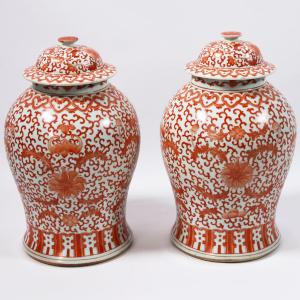
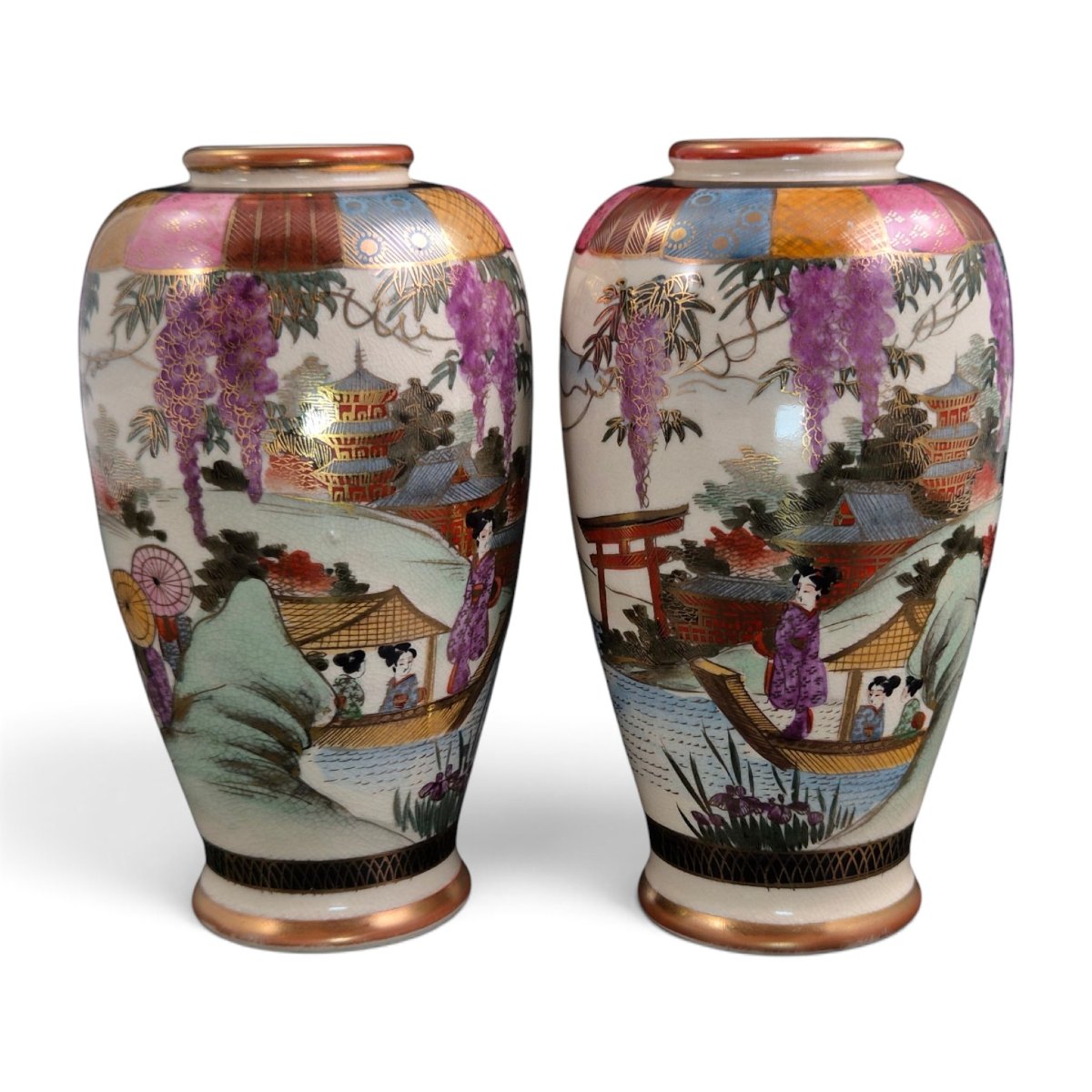
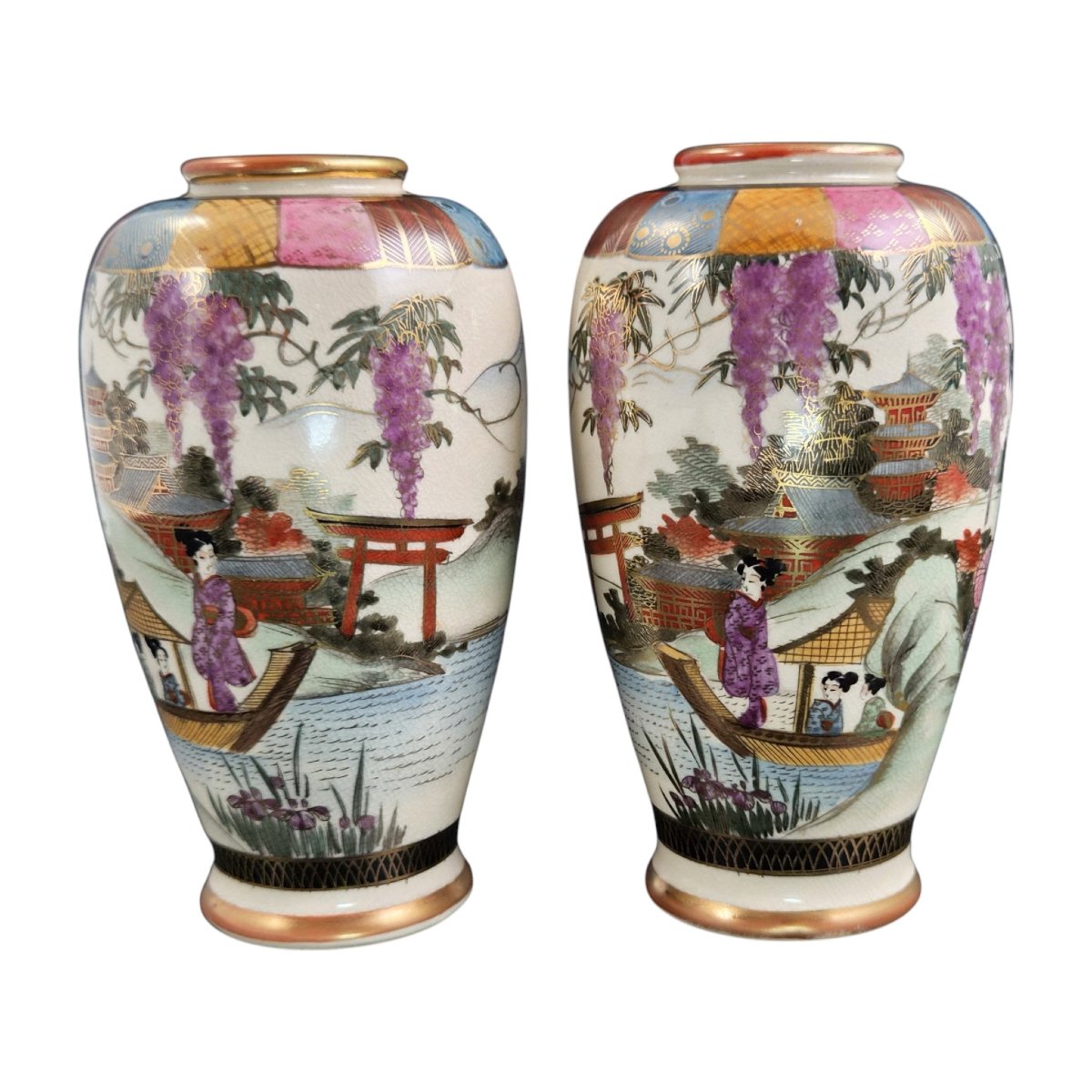
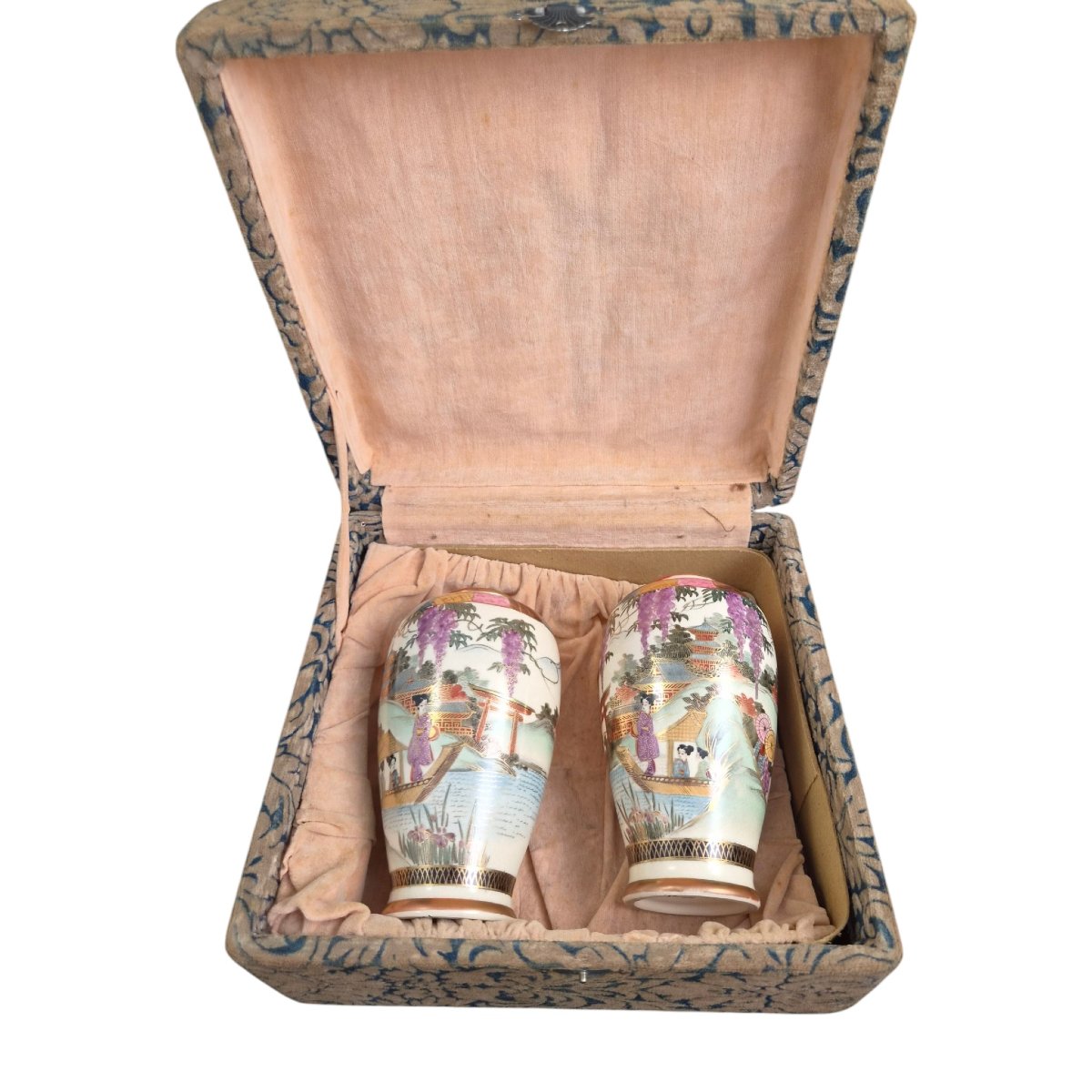
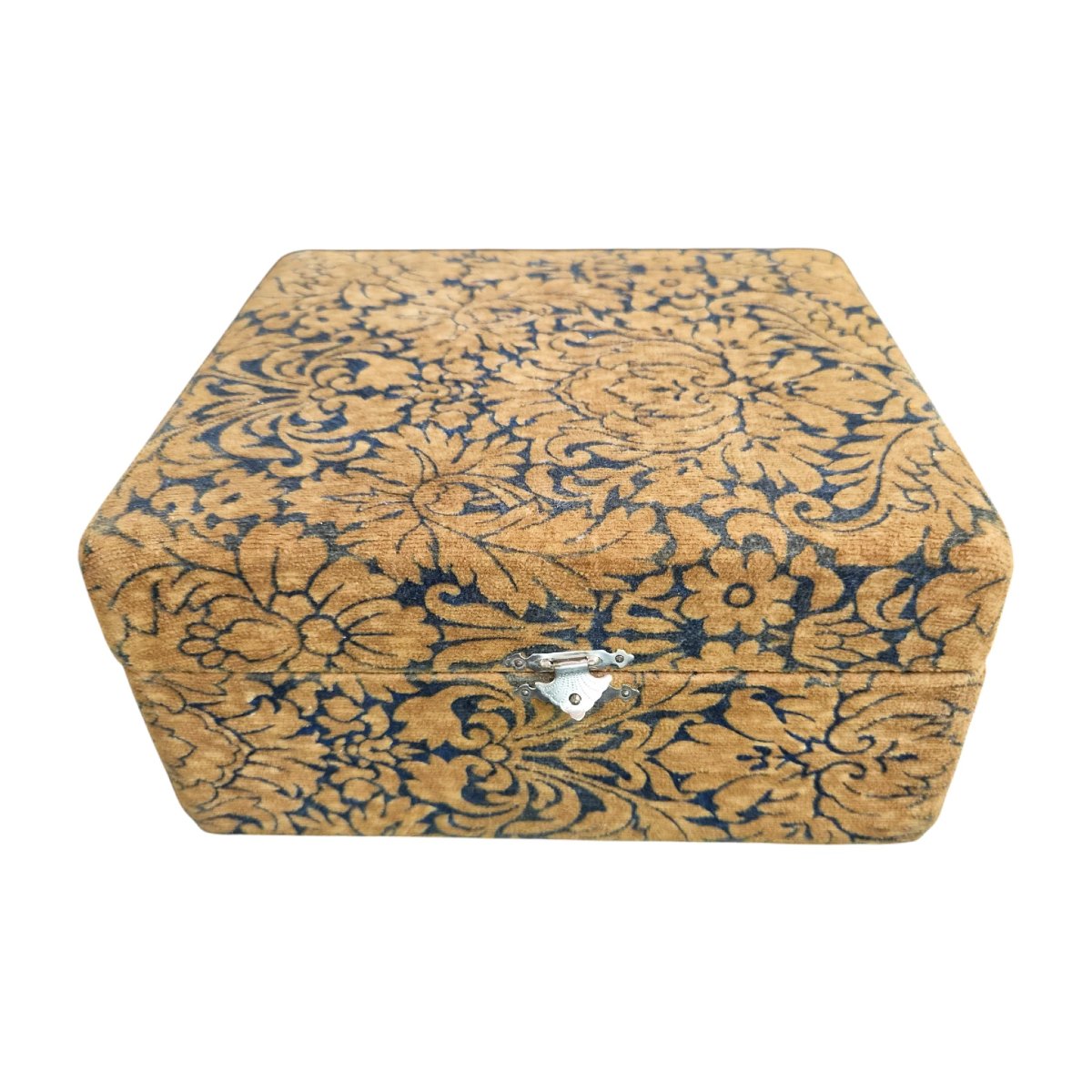
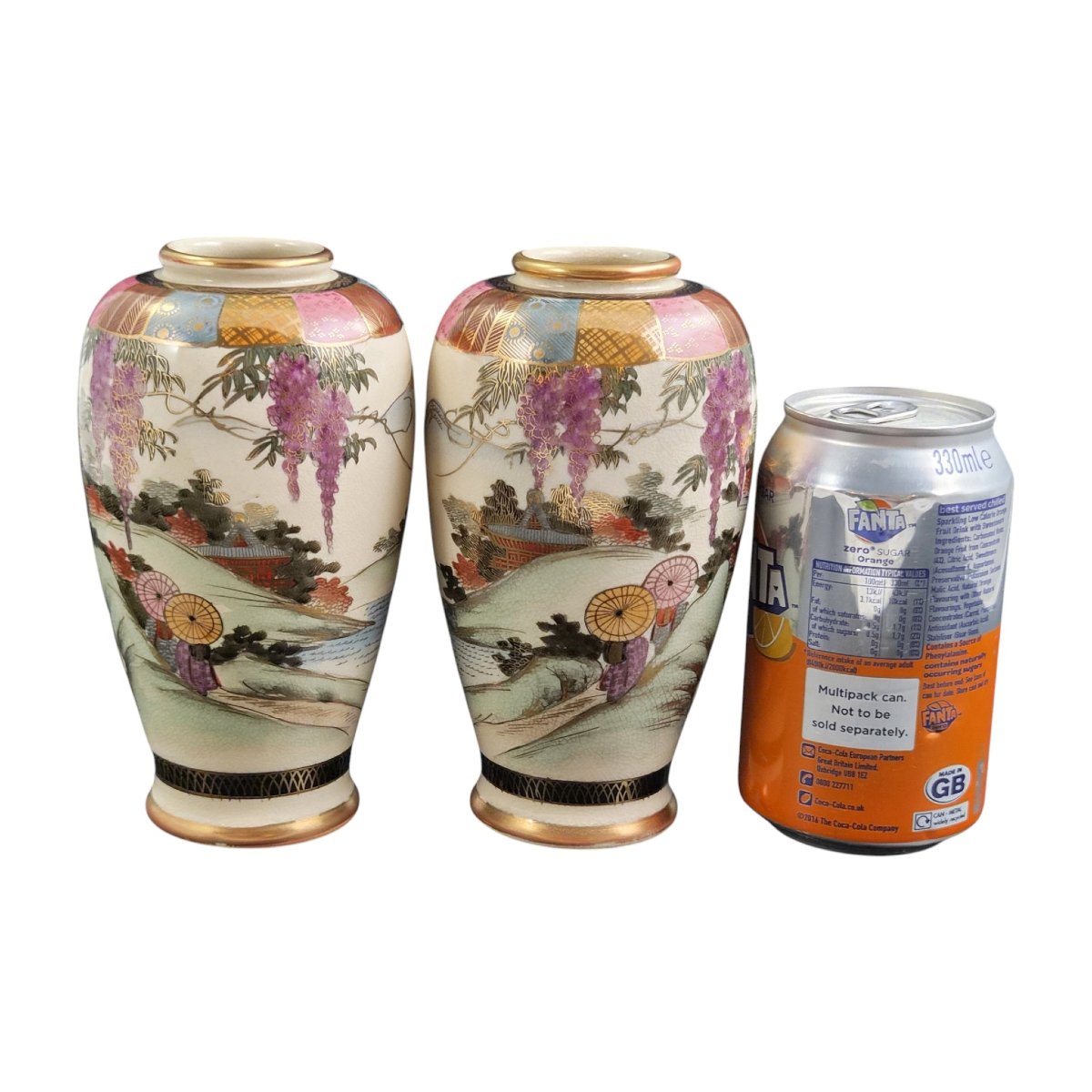
A pair of small Japanese Satsuma vases, preserved in the original box with padded compartments in which they were sold. Each vase is ovoid in shape, with a contoured neck and flared base; the cream-colored body is covered with a fine, even crackle glaze.
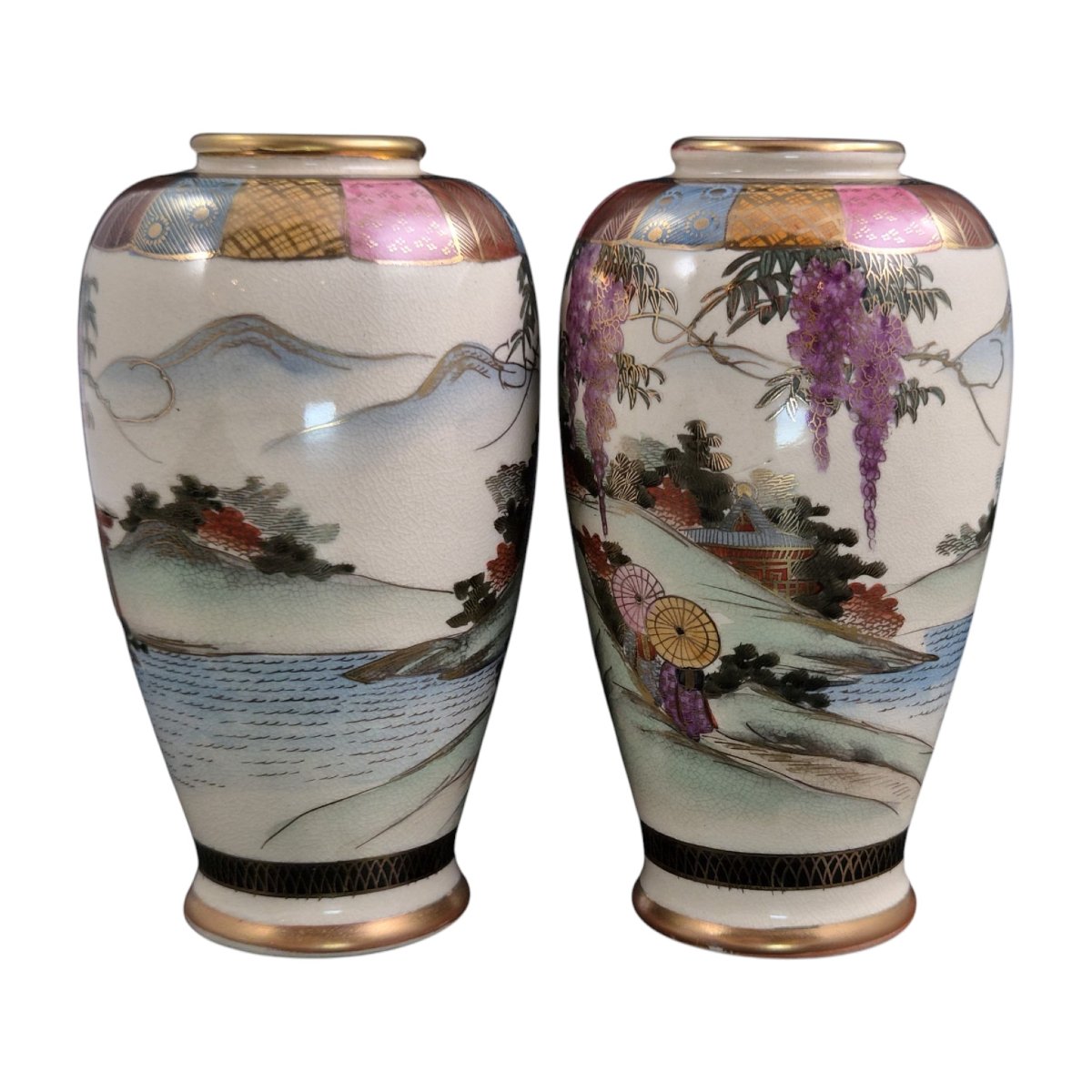
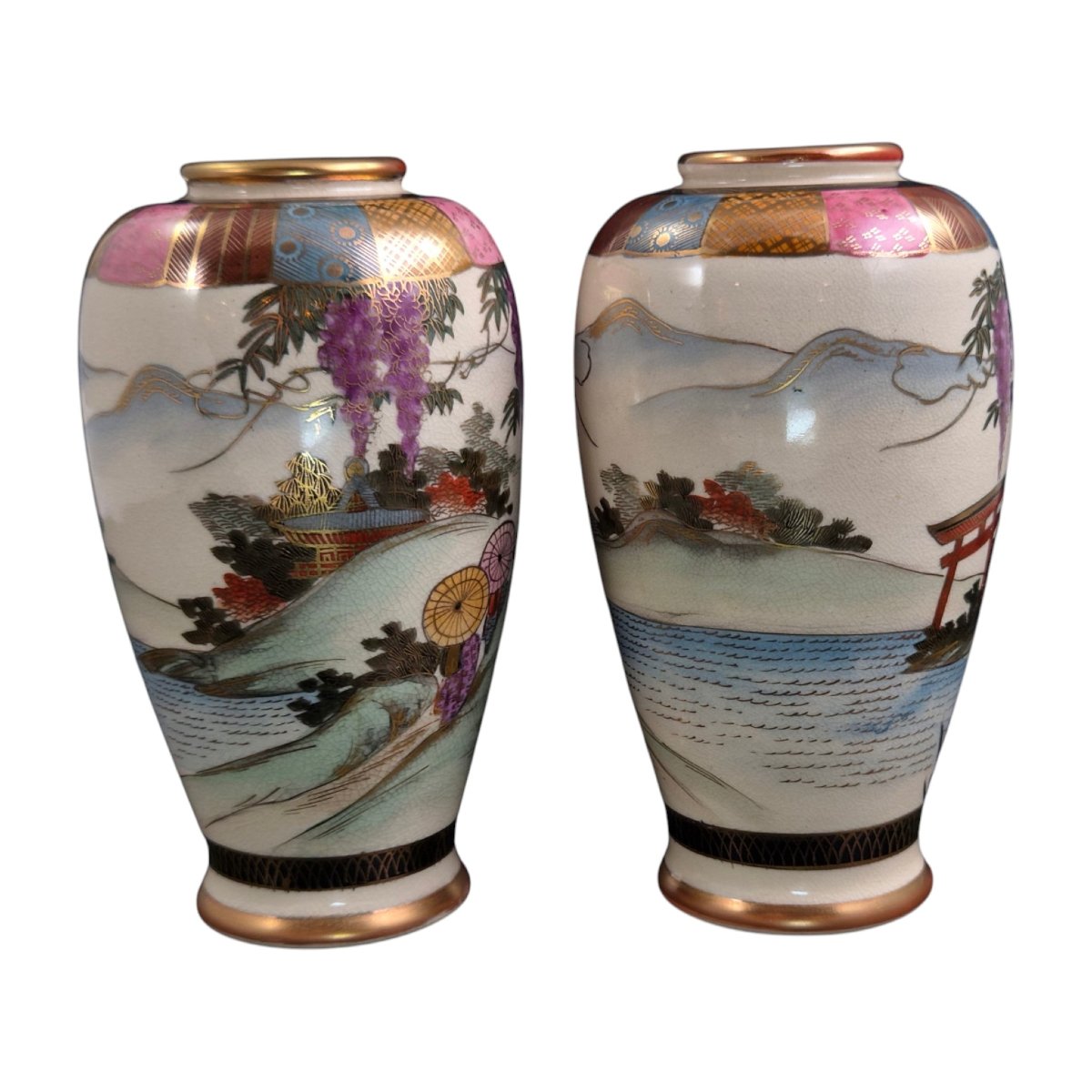
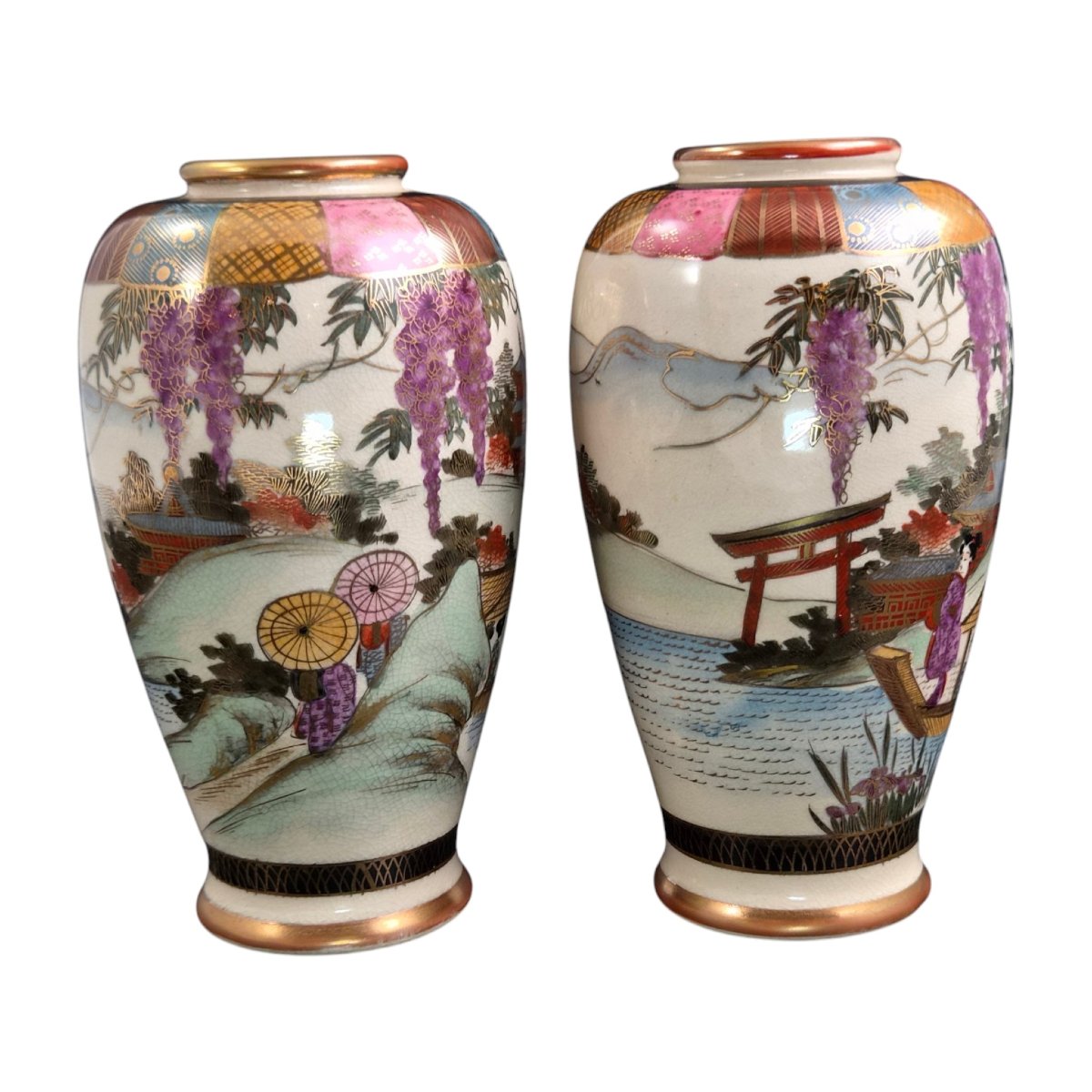
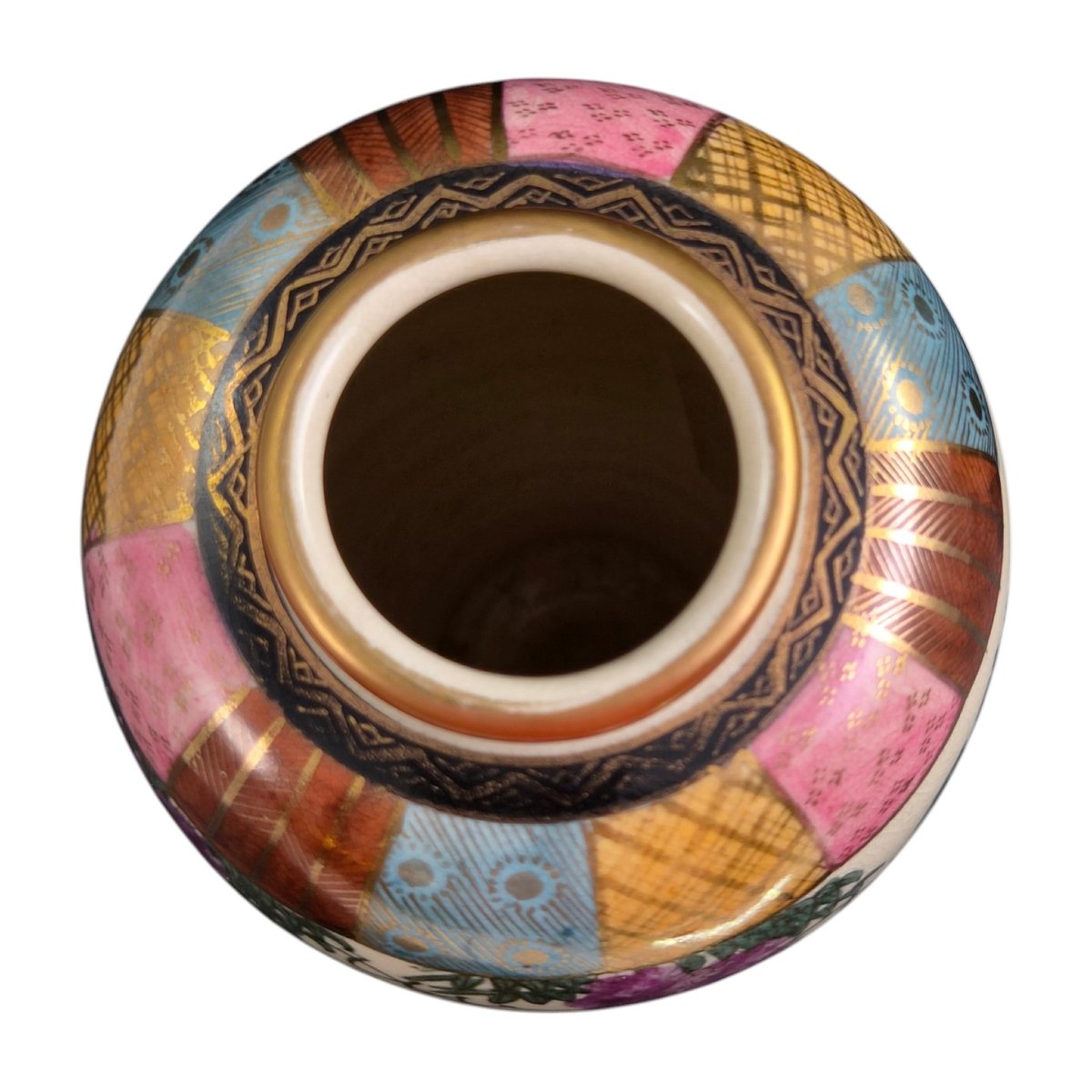
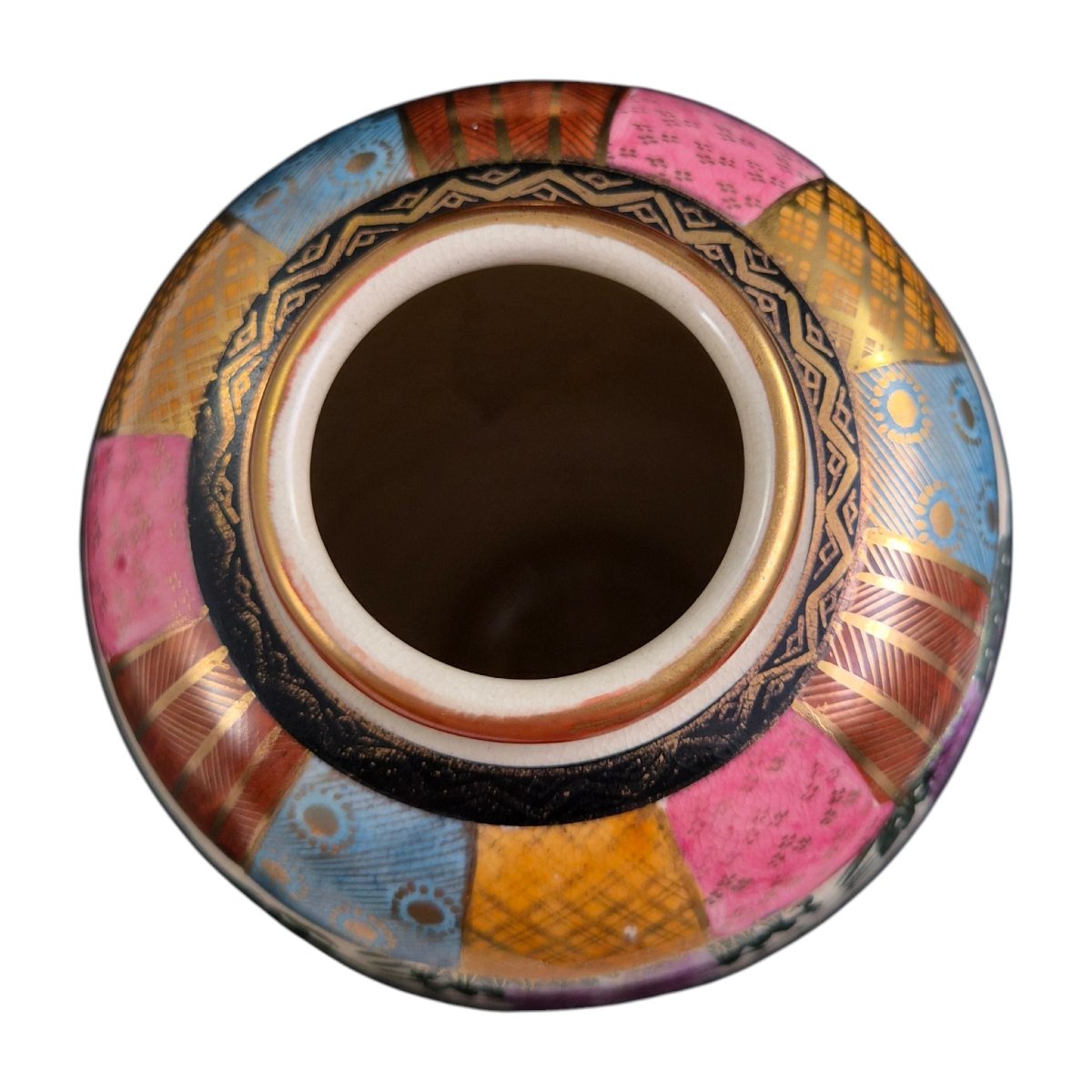
The design is hand-painted in overglaze enamels, lavishly accented with gold, and forms a continuous landscape. Clusters of blooming wisteria cascade down from above, a vermilion torii stands at the water’s edge, and beyond the lake, the roofs of a temple and a pagoda appear among the pine and maple trees. A pleasure boat carrying figures in kimonos is moored at the dock; travelers carrying parasols are climbing a hillside path; and irises grow at the water’s edge. The shoulder is encircled by a nishikide brocade frieze composed of overlapping fan-shaped segments in pink, sky blue, ochre, and iron red, each adorned with a design engraved in gold. The inside of the collar features a black-and-gold Greek fret frieze. The two vases form a mirror-image pair rather than a repetition of the same design.
The quality of the workmanship is very high. The landscape is painted by the hand of an experienced master: fine, confident lines; carefully rendered faces and figures; precise placement of the gilded outlines; and engraving in gold on the brocade frieze executed with impeccable skill. The two vases were conceived as a single composition, which required the painter to have a holistic vision and great precision in execution.
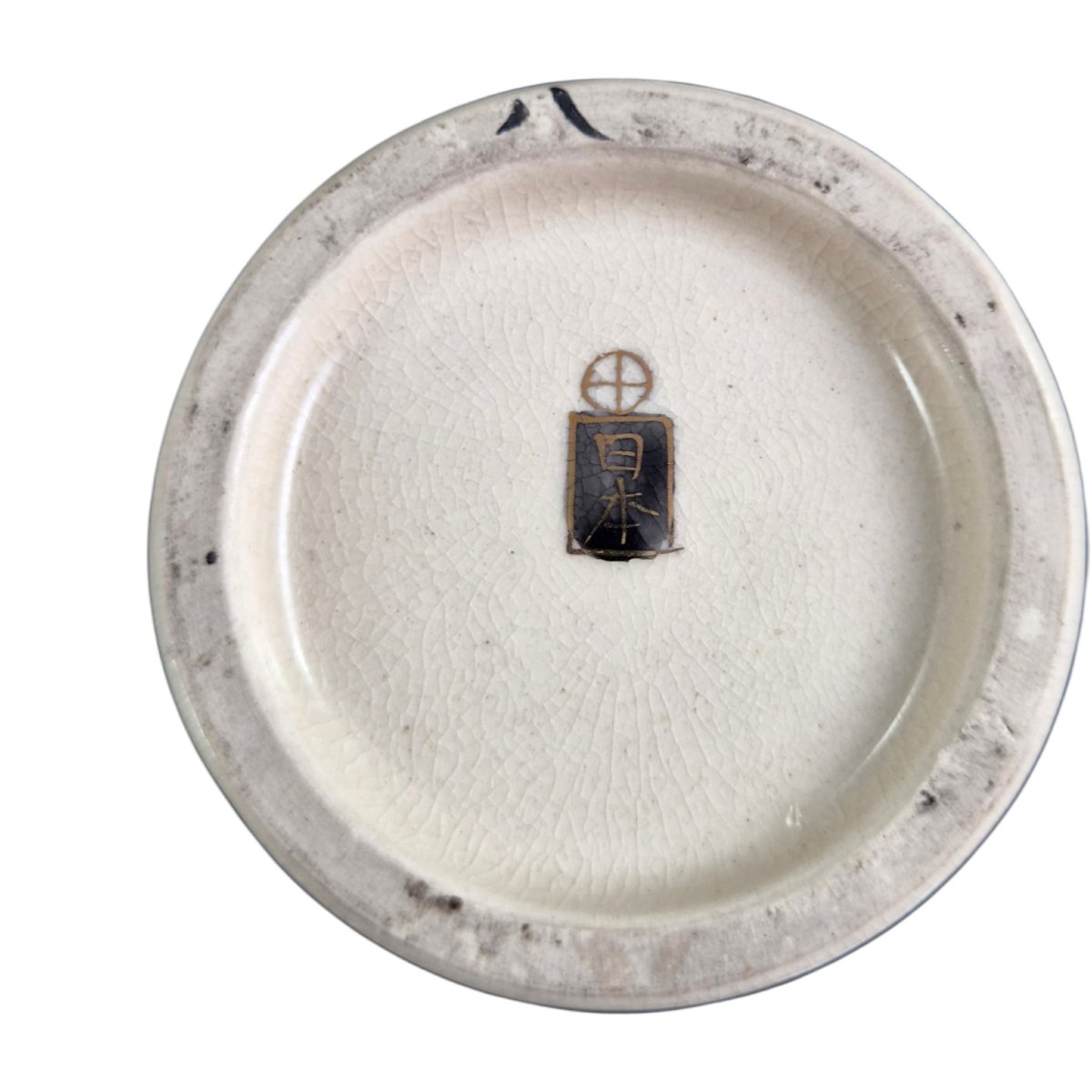
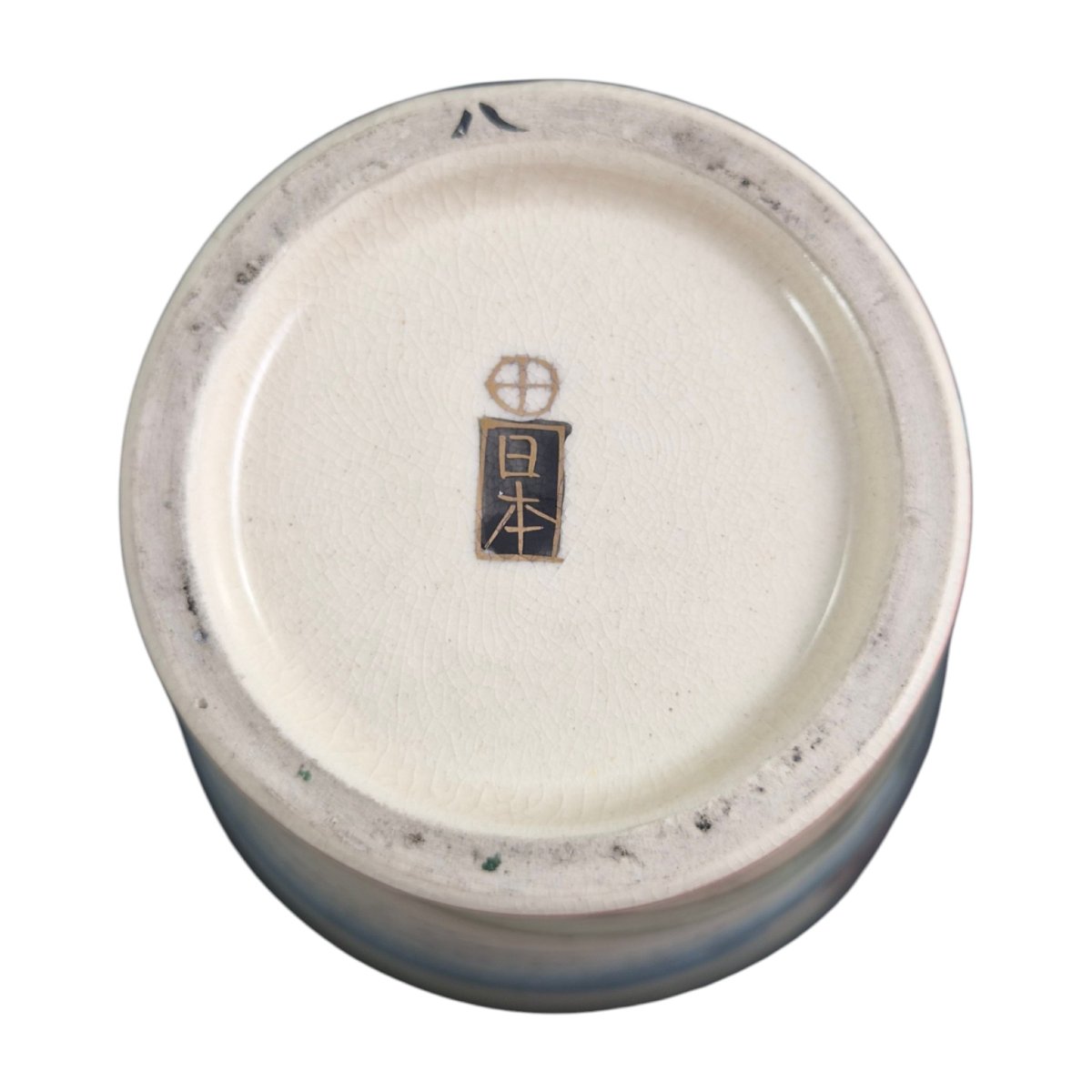
The underside of each vase bears, in gold, the Shimazu clan’s coat of arms—a cross inscribed within a circle—above a black rectangular cartouche framed in gold containing two gold characters, 日本, Nihon, meaning Japan. On the outer side of each foot is the character 八, “eight,” painted in black, likely a workshop model number. The cream-colored body with fine crackle glaze, the delicate brushwork, the gold engraving, and the nishikide brocade friezes are characteristic of the Kyō-Satsuma tradition, circa 1910–1920.
Collectors’ interest in genuine Satsuma continues to grow. These vases are not only a decorative addition to any home but also a sound investment: prices for authentic, hand-painted, and gilded pieces rise year after year, and pairs in good condition—especially those in their original cases—are becoming increasingly rare.
Dimensions
Vase 1: height 15.3 cm; diameter 8.7 cm; weight 300 g.
Vase 2: height 15.3 cm; diameter 8.7 cm; weight 274 g.
Condition
Excellent. UV examination confirms the absence of restoration, repainting, chips, or cracks. Slight wear on the gilding at the neck and base. The fine craquelure in the glaze is characteristic of this type of ceramic and does not constitute a defect. The original case is complete and closes properly; the cover fabric and lining show signs of wear.
Please examine the attached photographs carefully, as they are an integral part of this description. If you have any questions, we will be happy to answer them. The item will be shipped with full tracking and insurance.
Period: 20th century
Style: Asian art
Condition: Perfect condition
Material: Ceramic
Diameter: 8.7 cm
Height: 15.3 cm
Reference (ID): 1822401
Availability: In stock