

Portrait Of Cardinal Mazarin—french School, Circa 1645
Artist: Ecole Française Vers 1645
French School, ca. 1645
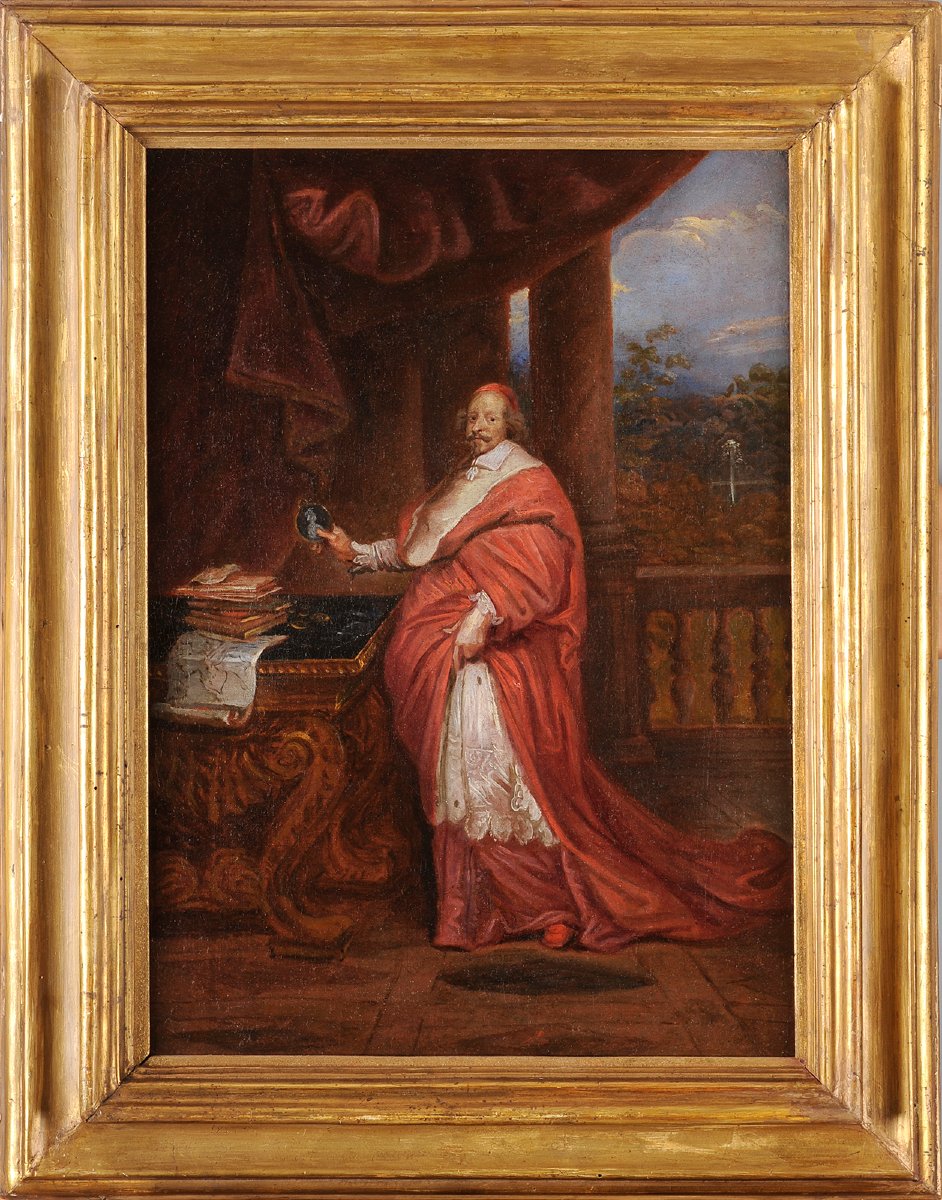
Portrait of Cardinal Mazarin - Sketch
Oil on canvas
H. 41.5 cm; W. 27 cm
Provenance: Collection of the Reverend Georges Downing Bowles (1789–1863)
Would the Grand Siècle have been so great without the influence of this Italian, renowned for his political acumen, his extravagant wealth, and his fabulous collection, but whose tenacity, talents as a military leader, and unwavering devotion to a state that was not his own are often overlooked? During one of the most turbulent periods in our history, Giulio Raimondo Mazzarini (Pescina, Abruzzo, 1602– Vincennes, 1661), who became Cardinal Mazarin, succeeded in restoring France’s power in the face of the Habsburgs of Spain and Austria, and in defending the throne of the young king—whose godfather he was—against the machinations of the high aristocracy and the parliaments.
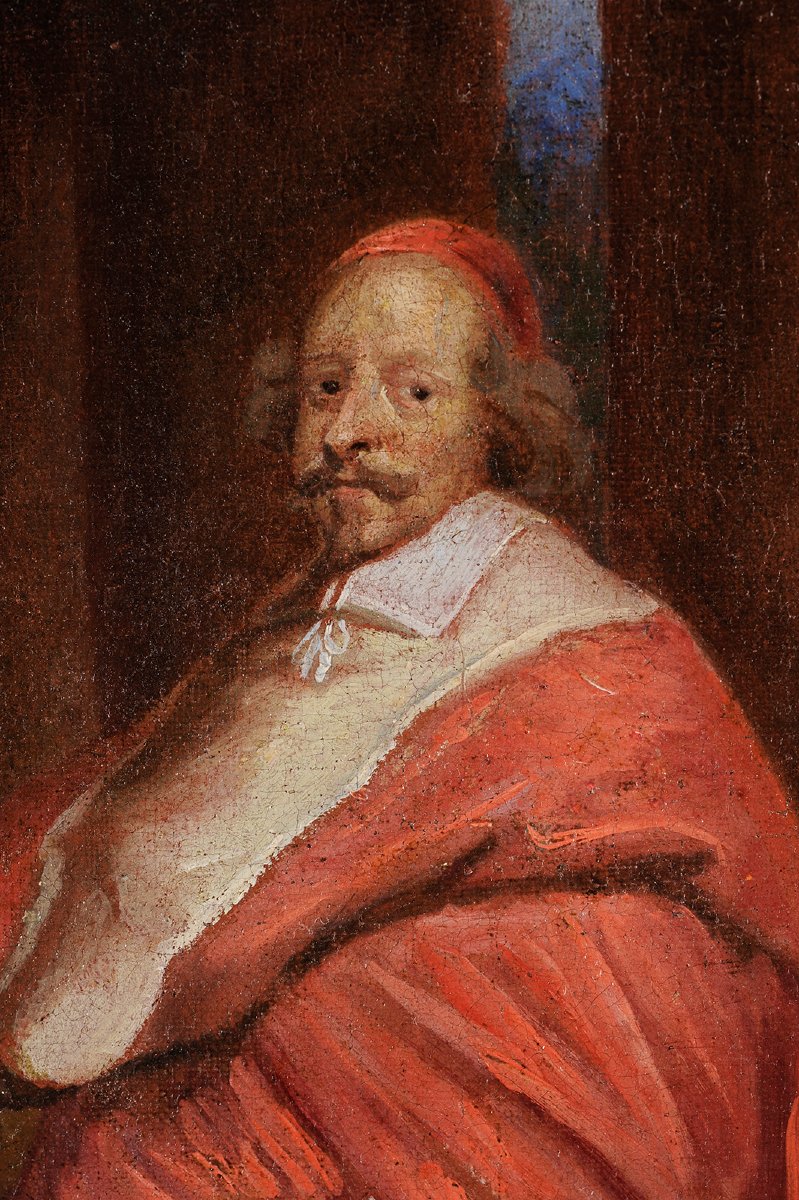
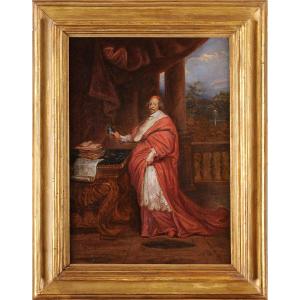
Our sketch does not correspond to any of the works known to date depicting Mazarin. It does, however, foreshadow an ambitious and, to say the least, solemn portrait. Mazarin—whose features, though
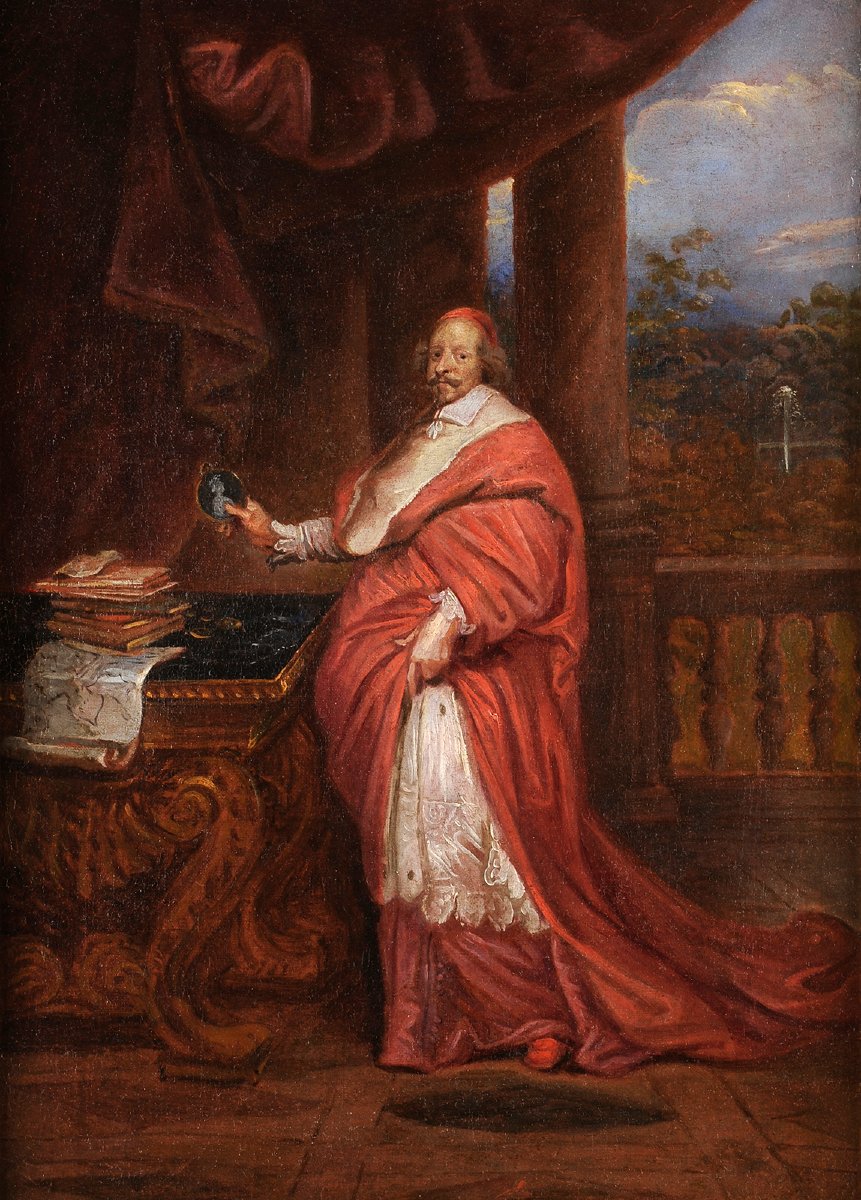
only hinted at, are easily identifiable—is depicted here more as a statesman than as a man of the Church. His voluminous scarlet silk cloak (the cappa magna)—a cascade of fabric billowing with complex folds, embellished with an ermine hood—doubles his importance and elevates him to a monument of power. Regarding Champaigne’s portraits of Richelieu, Bernard Dorival noted that it was extremely rare for a prelate to be depicted standing: the seated position was the prevailing convention in the early 17th century. Our bozzetto echoes the majestic style employed by Champaigne in his full-length portrait of Richelieu. It even reproduces the detail of the cardinal’s left hand lifting the hem of his cope to reveal the white of his robe (a detail visible in a preparatory red chalk drawing held by the BNF and in the version belonging to the National Gallery). The setting is of the same type: heavy drapery, columns, and a balustrade opening onto a garden. However, Champaigne’s Richelieu occupies almost the entire space of his portraits, whereas our Mazarin is somewhat lost amid the height of his palace.
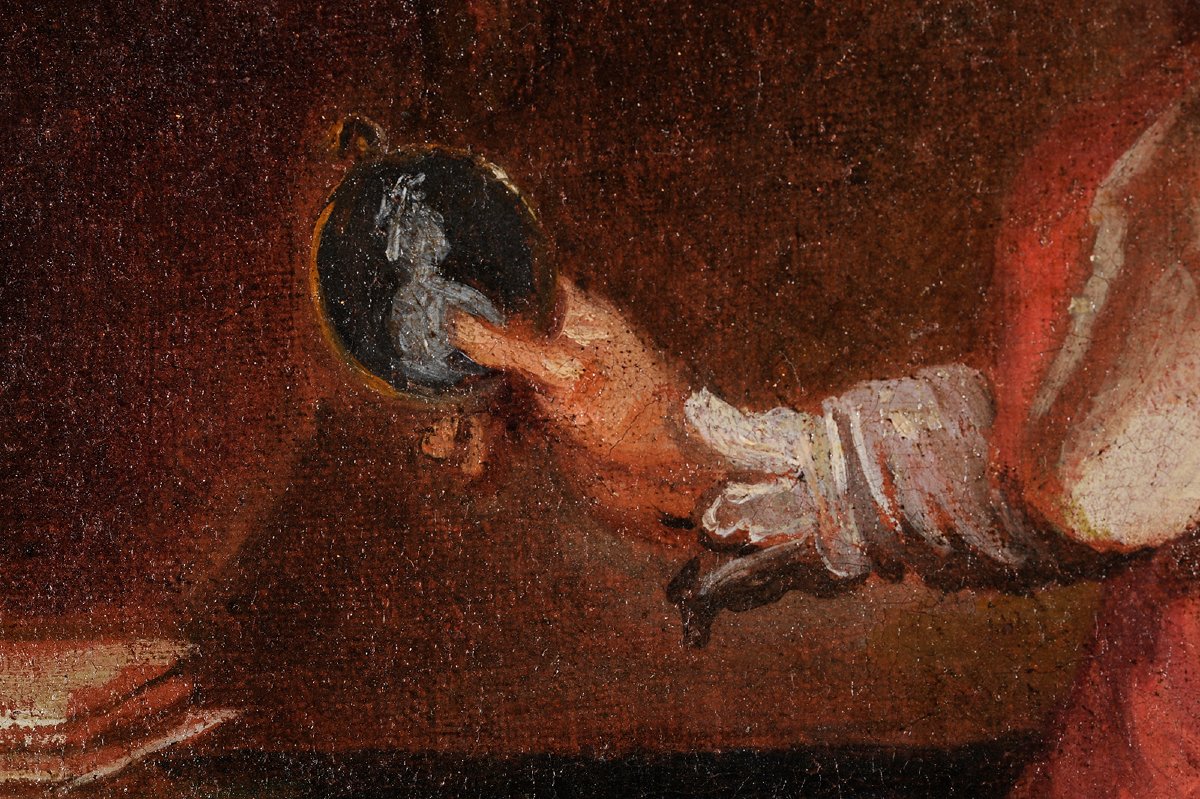
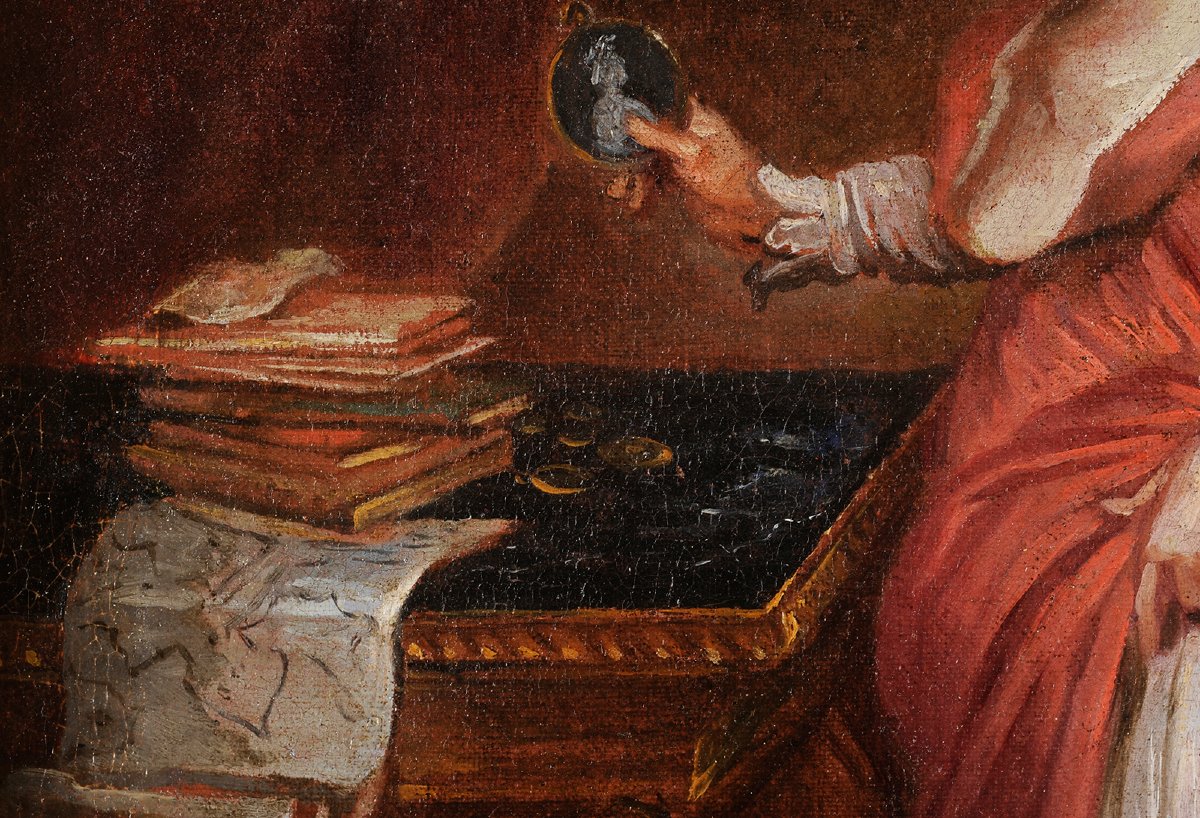
Furthermore, while Richelieu held a barrette, Mazarin, in his right hand, ostentatiously presents a medallion depicting the frail silhouette of a crowned king—that of Louis XIV, who would go on to reign from the age of fourteen. On a console table lie a map, a miscellaneous collection of notebooks—perhaps the famous small notebooks the cardinal used daily, though they do not resemble those preserved by the BNF—as well as other miniatures. These are all distinctive signs of a strategic statesman proclaiming his loyalty to the king, rather than a minister of the faith.
Note the presence of an imposing gilded console table with a heavy, scroll-adorned base. This opulent console table, combined with the majesty of the pose and the cardinal’s purple robes, serves to stage a power that has reached its zenith. Had our bozzetto been developed into a painting, it would have displayed a grandeur far surpassing that of the portraits currently known. Mazarin could have had this sumptuous Baroque piece of furniture—which occupies a prominent place in the composition—brought over from Italy. But based on an insight by Jean-Claude Boyer, another hypothesis emerges that would explain the console: might our portrait sketch not be the work of an Italian artist, perhaps painted at the request of a member of Mazarin’s family, eager to honor the uncle who had made the dynasty’s fortune? As such, it might be slightly retrospective. Unless it was a commission interrupted by the cardinal’s death. Or perhaps the aborted attempt of a court painter eager to make a name for himself? These are all questions—along with that of its attribution—that we will leave open pending new evidence. For now, we present a rare portrait of the statesman who paved the way for the reign of Louis XIV.
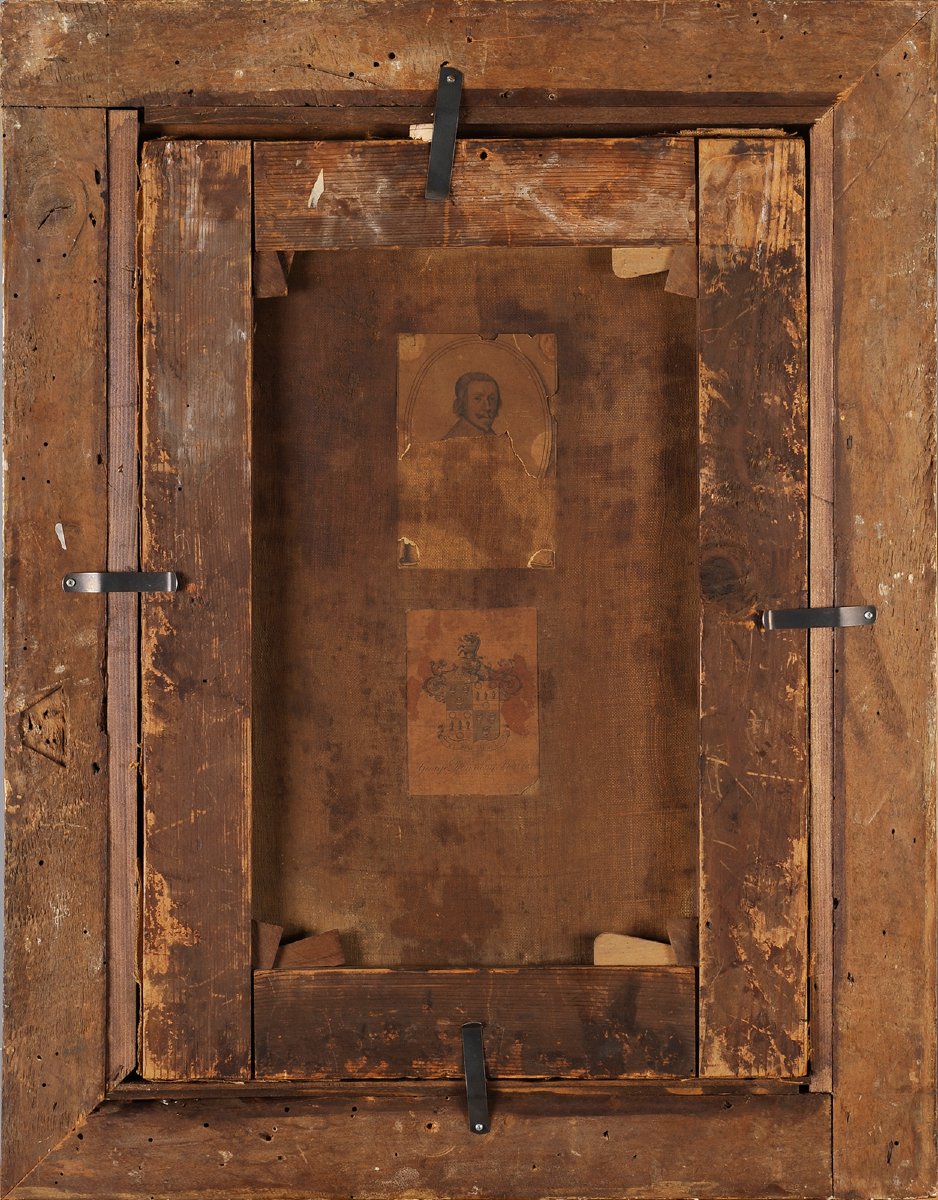
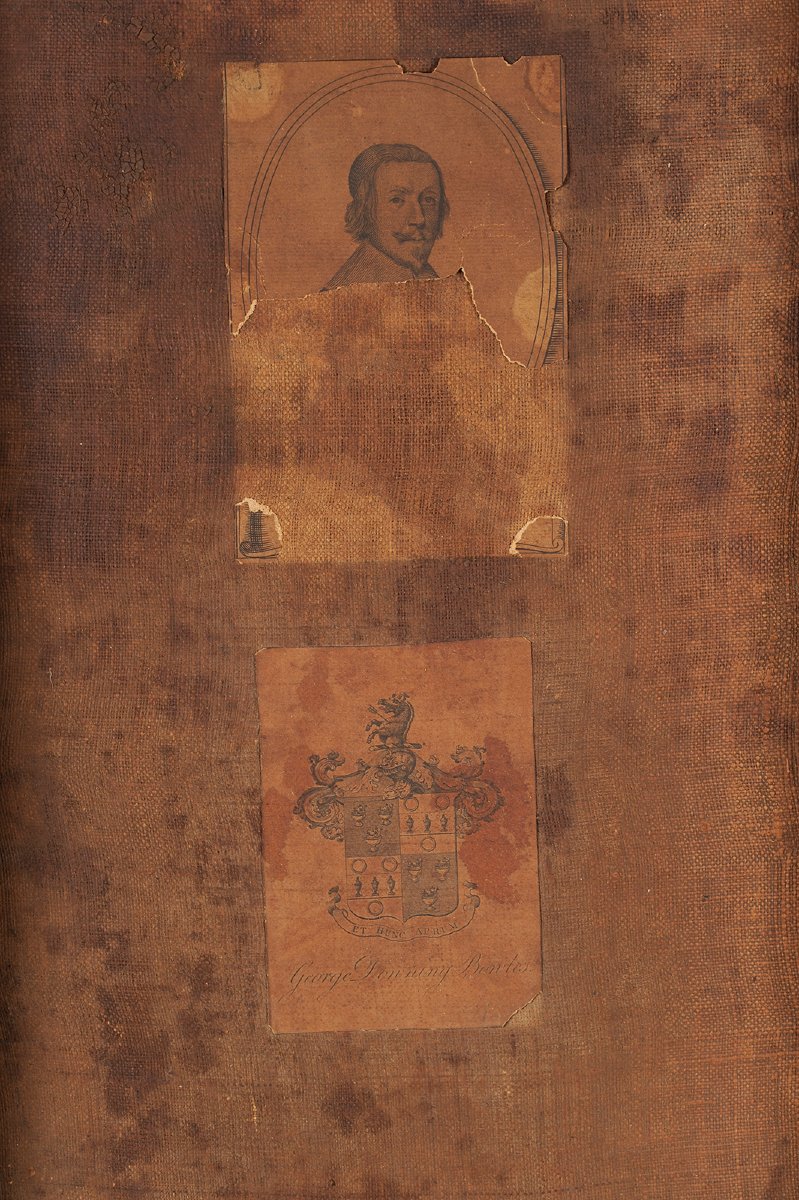
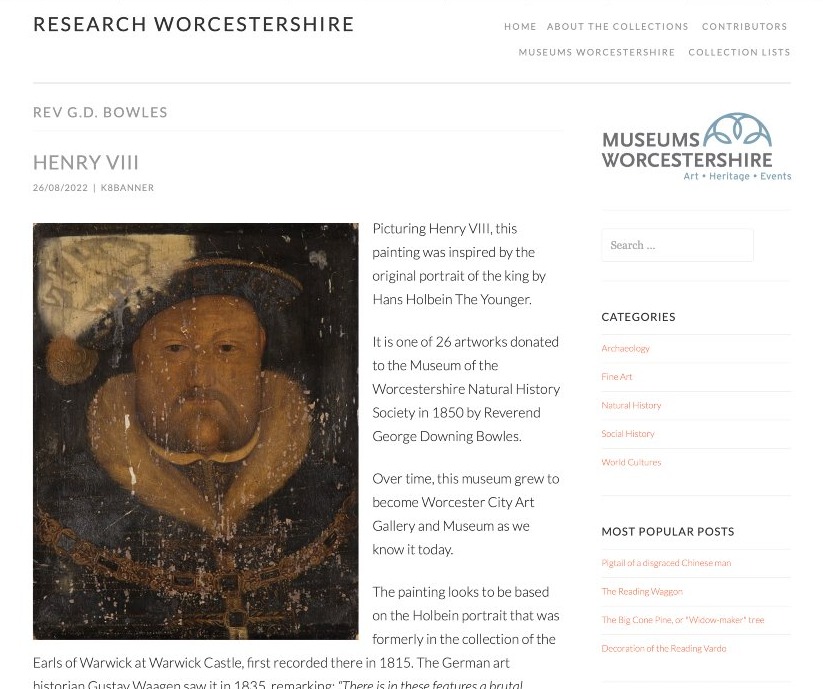
A clue to the painting’s provenance is provided by a collector’s label affixed to the reverse. It bears the coat of arms of the Reverend Georges Downing Bowles, who died in London in 1863 and owned a fairly extensive collection of portraits of illustrious men. Nearly thirty works from this collection were bequeathed by the Reverend to the Worcestershire Museum in 1850. Among them are portraits of English and French kings, as well as portraits of philosophers such as Erasmus, and others. Our painting, which was considered at the time to be a portrait of Richelieu (as evidenced by the remnants of an engraving on the reverse side of the work), has left no trace of the journey it took to reach us today.
Portrait of Cardinal Mazarin - Sketch
Oil on canvas
H. 41.5 cm; W. 27 cm
Provenance: Collection of the Reverend Georges Downing Bowles (1789–1863)
Would the Grand Siècle have been so great without the influence of this Italian, renowned for his political acumen, his extravagant wealth, and his fabulous collection, but whose tenacity, talents as a military leader, and unwavering devotion to a state that was not his own are often overlooked? During one of the most turbulent periods in our history, Giulio Raimondo Mazzarini (Pescina, Abruzzo, 1602– Vincennes, 1661), who became Cardinal Mazarin, succeeded in restoring France’s power in the face of the Habsburgs of Spain and Austria, and in defending the throne of the young king—whose godfather he was—against the machinations of the high aristocracy and the parliaments.
Our sketch does not correspond to any of the works known to date depicting Mazarin. It does, however, foreshadow an ambitious and, to say the least, solemn portrait. Mazarin—whose features, though
only hinted at, are easily identifiable—is depicted here more as a statesman than as a man of the Church. His voluminous scarlet silk cloak (the cappa magna)—a cascade of fabric billowing with complex folds, embellished with an ermine hood—doubles his importance and elevates him to a monument of power. Regarding Champaigne’s portraits of Richelieu, Bernard Dorival noted that it was extremely rare for a prelate to be depicted standing: the seated position was the prevailing convention in the early 17th century. Our bozzetto echoes the majestic style employed by Champaigne in his full-length portrait of Richelieu. It even reproduces the detail of the cardinal’s left hand lifting the hem of his cope to reveal the white of his robe (a detail visible in a preparatory red chalk drawing held by the BNF and in the version belonging to the National Gallery). The setting is of the same type: heavy drapery, columns, and a balustrade opening onto a garden. However, Champaigne’s Richelieu occupies almost the entire space of his portraits, whereas our Mazarin is somewhat lost amid the height of his palace.
Furthermore, while Richelieu held a barrette, Mazarin, in his right hand, ostentatiously presents a medallion depicting the frail silhouette of a crowned king—that of Louis XIV, who would go on to reign from the age of fourteen. On a console table lie a map, a miscellaneous collection of notebooks—perhaps the famous small notebooks the cardinal used daily, though they do not resemble those preserved by the BNF—as well as other miniatures. These are all distinctive signs of a strategic statesman proclaiming his loyalty to the king, rather than a minister of the faith.
Note the presence of an imposing gilded console table with a heavy, scroll-adorned base. This opulent console table, combined with the majesty of the pose and the cardinal’s purple robes, serves to stage a power that has reached its zenith. Had our bozzetto been developed into a painting, it would have displayed a grandeur far surpassing that of the portraits currently known. Mazarin could have had this sumptuous Baroque piece of furniture—which occupies a prominent place in the composition—brought over from Italy. But based on an insight by Jean-Claude Boyer, another hypothesis emerges that would explain the console: might our portrait sketch not be the work of an Italian artist, perhaps painted at the request of a member of Mazarin’s family, eager to honor the uncle who had made the dynasty’s fortune? As such, it might be slightly retrospective. Unless it was a commission interrupted by the cardinal’s death. Or perhaps the aborted attempt of a court painter eager to make a name for himself? These are all questions—along with that of its attribution—that we will leave open pending new evidence. For now, we present a rare portrait of the statesman who paved the way for the reign of Louis XIV.
A clue to the painting’s provenance is provided by a collector’s label affixed to the reverse. It bears the coat of arms of the Reverend Georges Downing Bowles, who died in London in 1863 and owned a fairly extensive collection of portraits of illustrious men. Nearly thirty works from this collection were bequeathed by the Reverend to the Worcestershire Museum in 1850. Among them are portraits of English and French kings, as well as portraits of philosophers such as Erasmus, and others. Our painting, which was considered at the time to be a portrait of Richelieu (as evidenced by the remnants of an engraving on the reverse side of the work), has left no trace of the journey it took to reach us today.
13 500 €
Period: 17th century
Style: Louis 14th, Regency
Condition: Perfect condition
Material: Oil painting
Length: 41,5 cm hors cadre
Width: 27 cm hors cadre
Reference (ID): 1821059
Availability: In stock
Print