
Louis-eugène Coëdes (1810-1905) Portrait Of A Woman With A Book - La Caze Louvre
Artist: Louis-eugène Coëdes
Louis-Eugène COËDES
(Paris, 1810 – Paris, 1905)
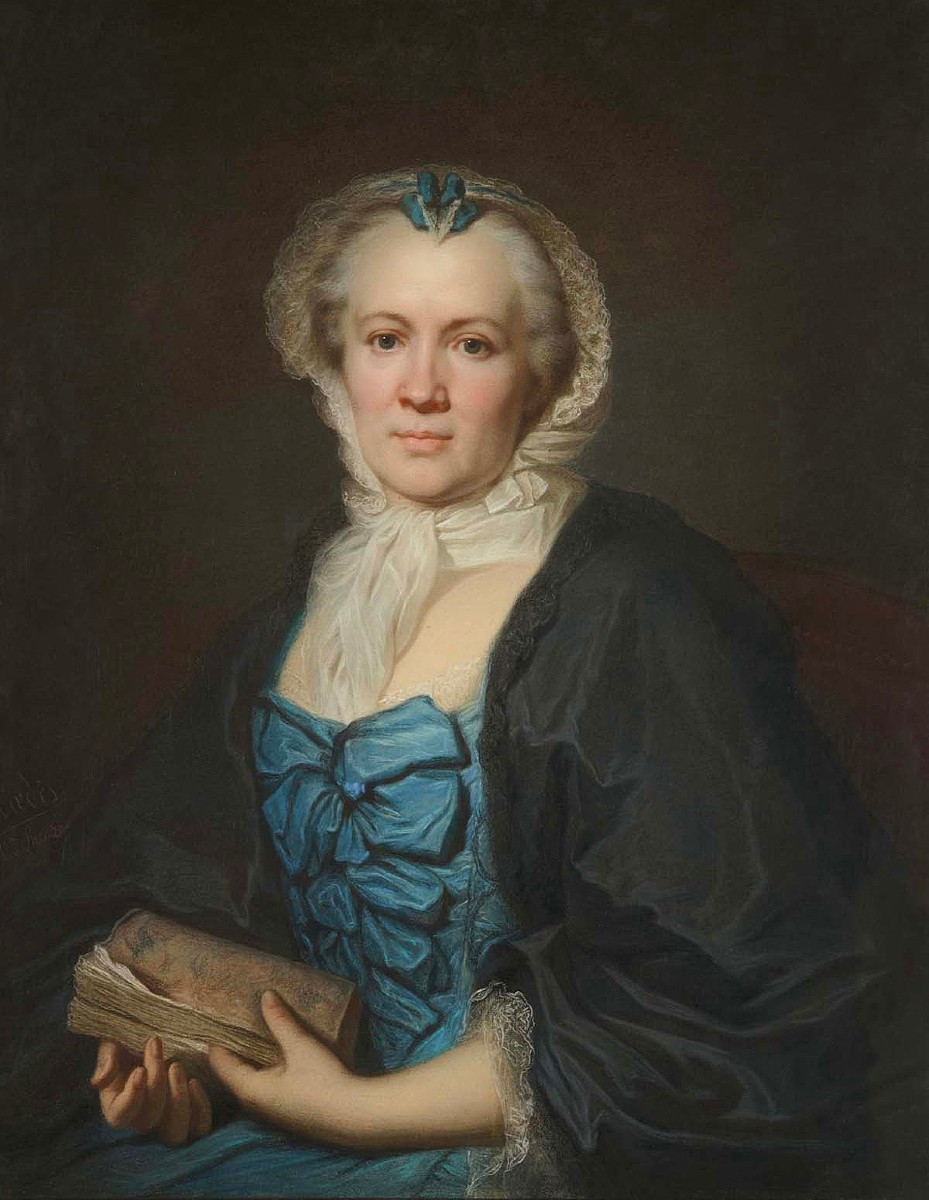
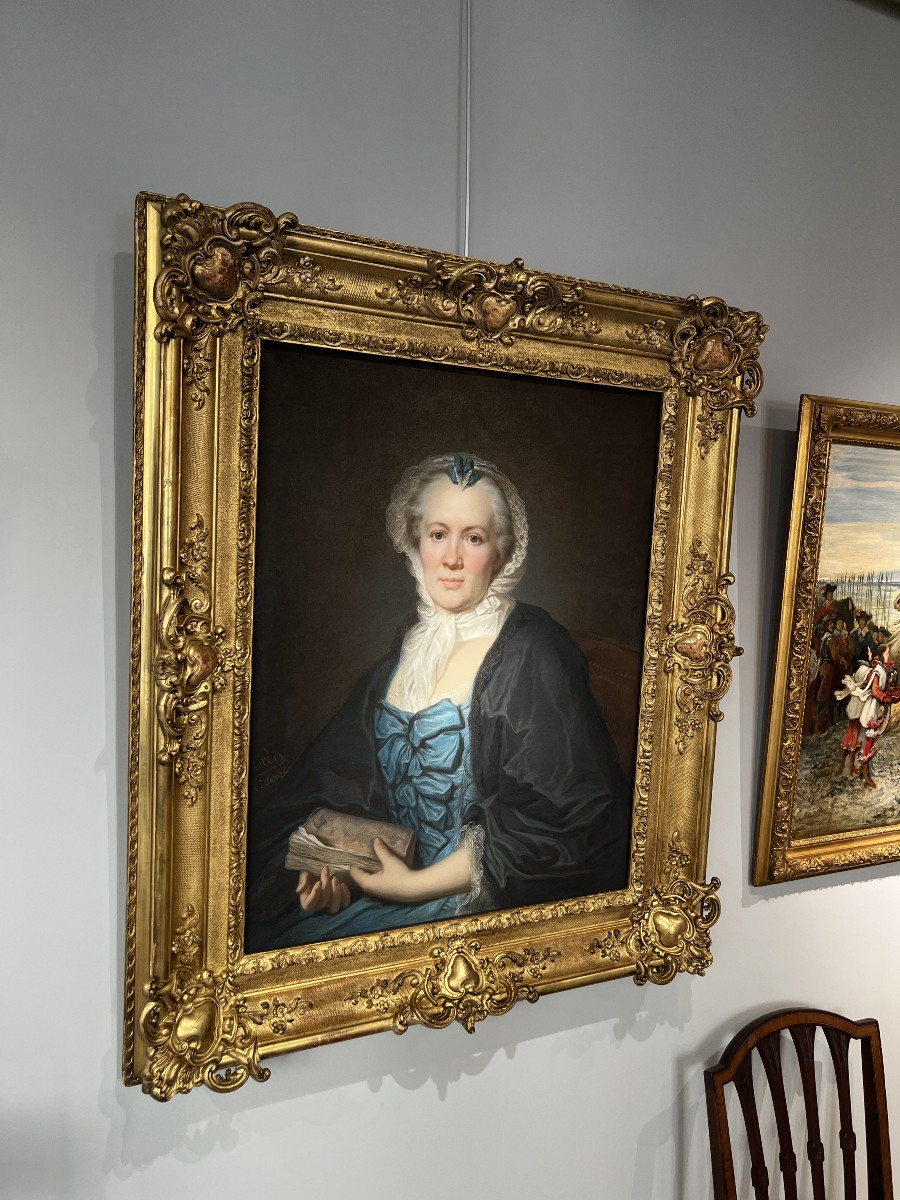
Portrait of a woman with a book
Pastel
H. 81 cm ; W. 65 cm
Signed lower left
Inscription below C.n Lacaze for Collection La Caze
Probably around 1870-1875
Related work : painting from the La Caze collection, entered the Louvre by donation in 1870 as anonymous but with an earlier attribution to Chardin, subsequently given to Duplessis, and now considered to be a work by Voiriot, of which our pastel is a copy
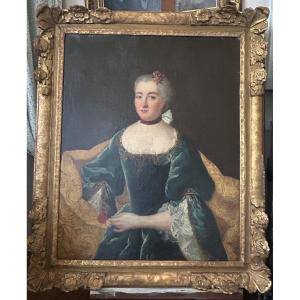
We acquired this pastel not only because of its high quality of execution, but also for its historical significance. It was indeed painted shortly after the Louvre acquired one of the most famous paintings from the Louis La Caze donation (1798-1869), a collection of 272 works (more than 300 other paintings from the collection were distributed among provincial museums). Traditionally titled *The Lady with a Book*, this painting has since posed a mystery regarding the identity of the artist and the sitter. Discovered by La Caze, the portrait was initially attributed to Chardin as that of Madame Lenoir (wife of a lieutenant-general of police), a painting exhibited under that title at the Salon of 1742. Comparison with Chardin's engraving of the painting, which is quite different, definitively refuted this attribution. The names of Aved and Tocqué (the portrait of Madame Tocqué holding a pamphlet, exhibited at the Salon of 1751) were subsequently suggested, but could not be accepted, both for stylistic reasons and due to dating issues. In 1909, the new, more serious candidate was the portraitist Joseph-Siffred Duplessis (Carpentras, 1725 – Paris, 1802), whose work was very similar: the portrait of Madame Lenoir (mother of Alexandre Lenoir, the future founder of the Musée des Monuments Français) holding a pamphlet, now in the Bibliothèque-Musée Inguimbertine in Carpentras. The painting had been exhibited in 1764 at the Académie de Saint-Luc and in 1769 at the Salon. For some years now, the Louvre has attributed the work to Guillaume Voiriot (Paris, 1713 – Paris, 1799). We nevertheless believe that La Caze's painting is indeed the work of Duplessis. As for the identity of the sitter, our reader remains unknown and is not Madame Lenoir, even if there is a resemblance. Jules Belleudy, in his monograph on Duplessis, beautifully describes the painting: “…It is a delicate, refined, and captivating portrait of a woman. Her face, all its features unadorned, exudes only kindness and gentleness: she has a maternal countenance… Her light gray hair, adorned with a lace bonnet with straps and a butterfly of small diamonds set in a ribbon bow, is styled naturally; she wears a pale blue satin dress covered by a black satin cape… The bodice is decorated with ribbon bows arranged in a tiered, ladder-like fashion.” These various details of her clothing allow us to date the work to between 1760 and 1765. The artist who created our pastel version, Louis-Eugène Coedès, was a student of Léon Cogniet, a portrait specialist, a very talented pastelist, and an occasional copyist. His very long career began at the Paris Salon of 1831; as early as 1834, he exhibited at the Salon of Lille a copy of a painting by Gabriel Metsu, kept in the Louvre, and for his last participations at the Salon in 1877 and 1879, he presented watercolors after paintings in the Louvre by Rubens and Rembrandt.
(Paris, 1810 – Paris, 1905)
Portrait of a woman with a book
Pastel
H. 81 cm ; W. 65 cm
Signed lower left
Inscription below C.n Lacaze for Collection La Caze
Probably around 1870-1875
Related work : painting from the La Caze collection, entered the Louvre by donation in 1870 as anonymous but with an earlier attribution to Chardin, subsequently given to Duplessis, and now considered to be a work by Voiriot, of which our pastel is a copy
We acquired this pastel not only because of its high quality of execution, but also for its historical significance. It was indeed painted shortly after the Louvre acquired one of the most famous paintings from the Louis La Caze donation (1798-1869), a collection of 272 works (more than 300 other paintings from the collection were distributed among provincial museums). Traditionally titled *The Lady with a Book*, this painting has since posed a mystery regarding the identity of the artist and the sitter. Discovered by La Caze, the portrait was initially attributed to Chardin as that of Madame Lenoir (wife of a lieutenant-general of police), a painting exhibited under that title at the Salon of 1742. Comparison with Chardin's engraving of the painting, which is quite different, definitively refuted this attribution. The names of Aved and Tocqué (the portrait of Madame Tocqué holding a pamphlet, exhibited at the Salon of 1751) were subsequently suggested, but could not be accepted, both for stylistic reasons and due to dating issues. In 1909, the new, more serious candidate was the portraitist Joseph-Siffred Duplessis (Carpentras, 1725 – Paris, 1802), whose work was very similar: the portrait of Madame Lenoir (mother of Alexandre Lenoir, the future founder of the Musée des Monuments Français) holding a pamphlet, now in the Bibliothèque-Musée Inguimbertine in Carpentras. The painting had been exhibited in 1764 at the Académie de Saint-Luc and in 1769 at the Salon. For some years now, the Louvre has attributed the work to Guillaume Voiriot (Paris, 1713 – Paris, 1799). We nevertheless believe that La Caze's painting is indeed the work of Duplessis. As for the identity of the sitter, our reader remains unknown and is not Madame Lenoir, even if there is a resemblance. Jules Belleudy, in his monograph on Duplessis, beautifully describes the painting: “…It is a delicate, refined, and captivating portrait of a woman. Her face, all its features unadorned, exudes only kindness and gentleness: she has a maternal countenance… Her light gray hair, adorned with a lace bonnet with straps and a butterfly of small diamonds set in a ribbon bow, is styled naturally; she wears a pale blue satin dress covered by a black satin cape… The bodice is decorated with ribbon bows arranged in a tiered, ladder-like fashion.” These various details of her clothing allow us to date the work to between 1760 and 1765. The artist who created our pastel version, Louis-Eugène Coedès, was a student of Léon Cogniet, a portrait specialist, a very talented pastelist, and an occasional copyist. His very long career began at the Paris Salon of 1831; as early as 1834, he exhibited at the Salon of Lille a copy of a painting by Gabriel Metsu, kept in the Louvre, and for his last participations at the Salon in 1877 and 1879, he presented watercolors after paintings in the Louvre by Rubens and Rembrandt.
8 500 €
Period: 19th century
Style: Louis 15th - Transition
Condition: Perfect condition
Material: Pastel
Length: 81 cm hors cadre
Width: 65 cm hors cadre
Reference (ID): 1709962
Availability: In stock
Print