

Painting On Copper, 17th-century Work From The Studio Of Carlo Maratta (1625–1713)
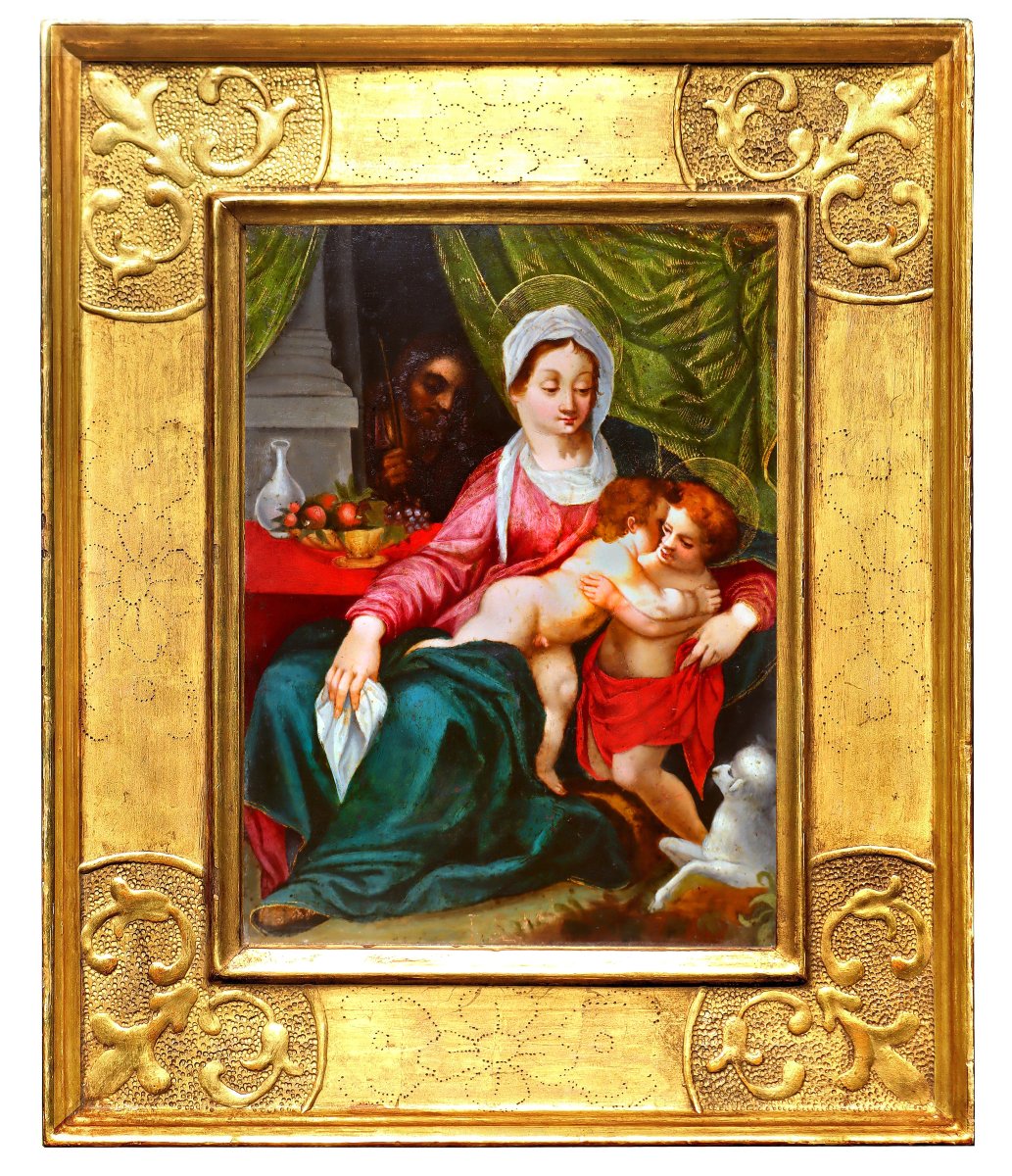
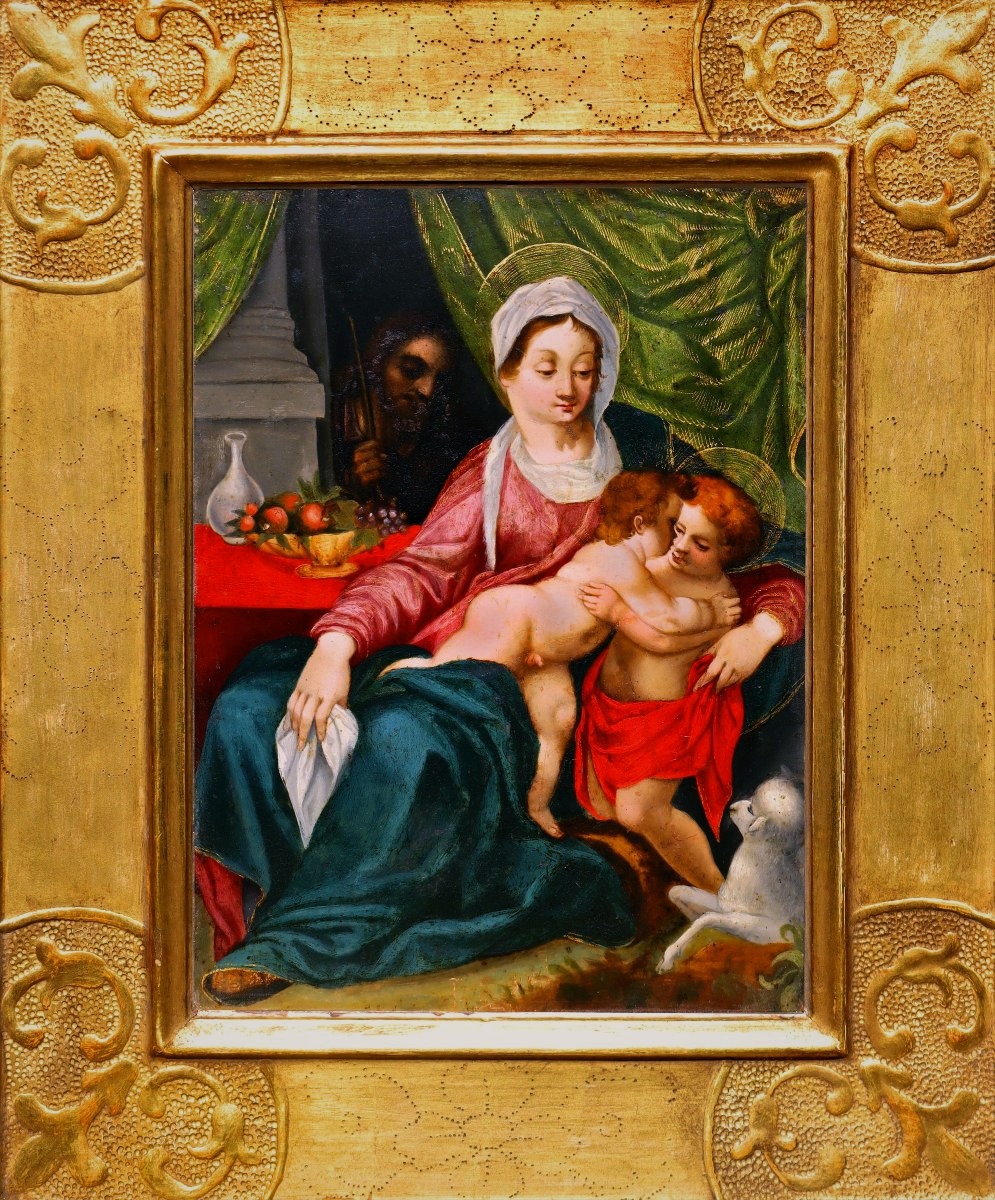
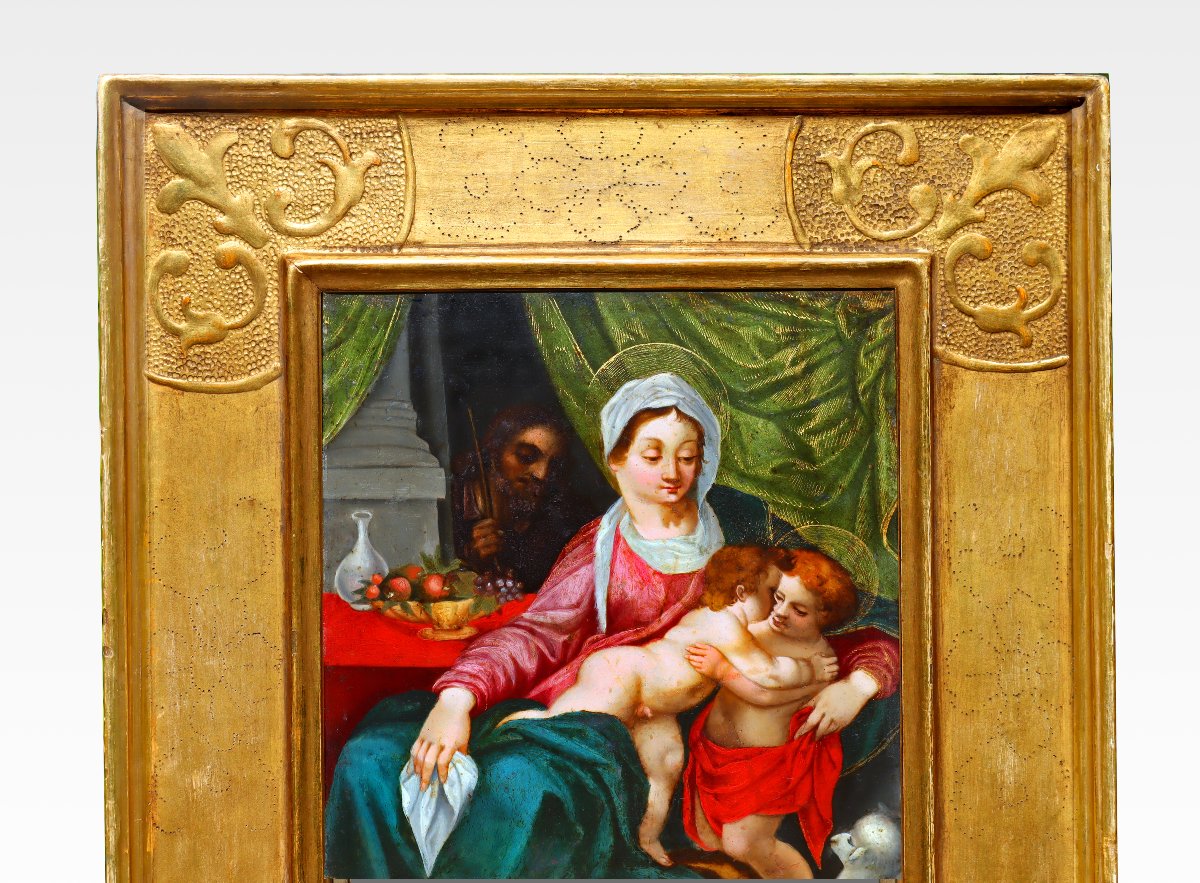
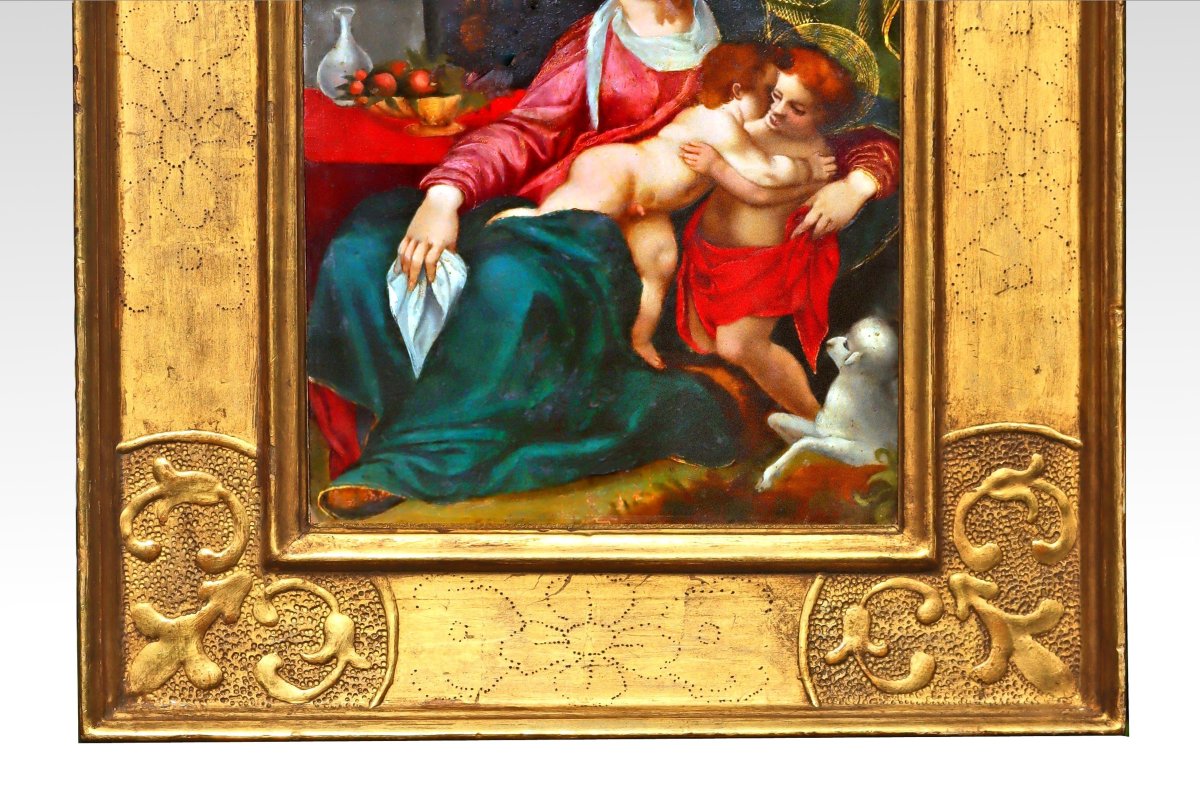
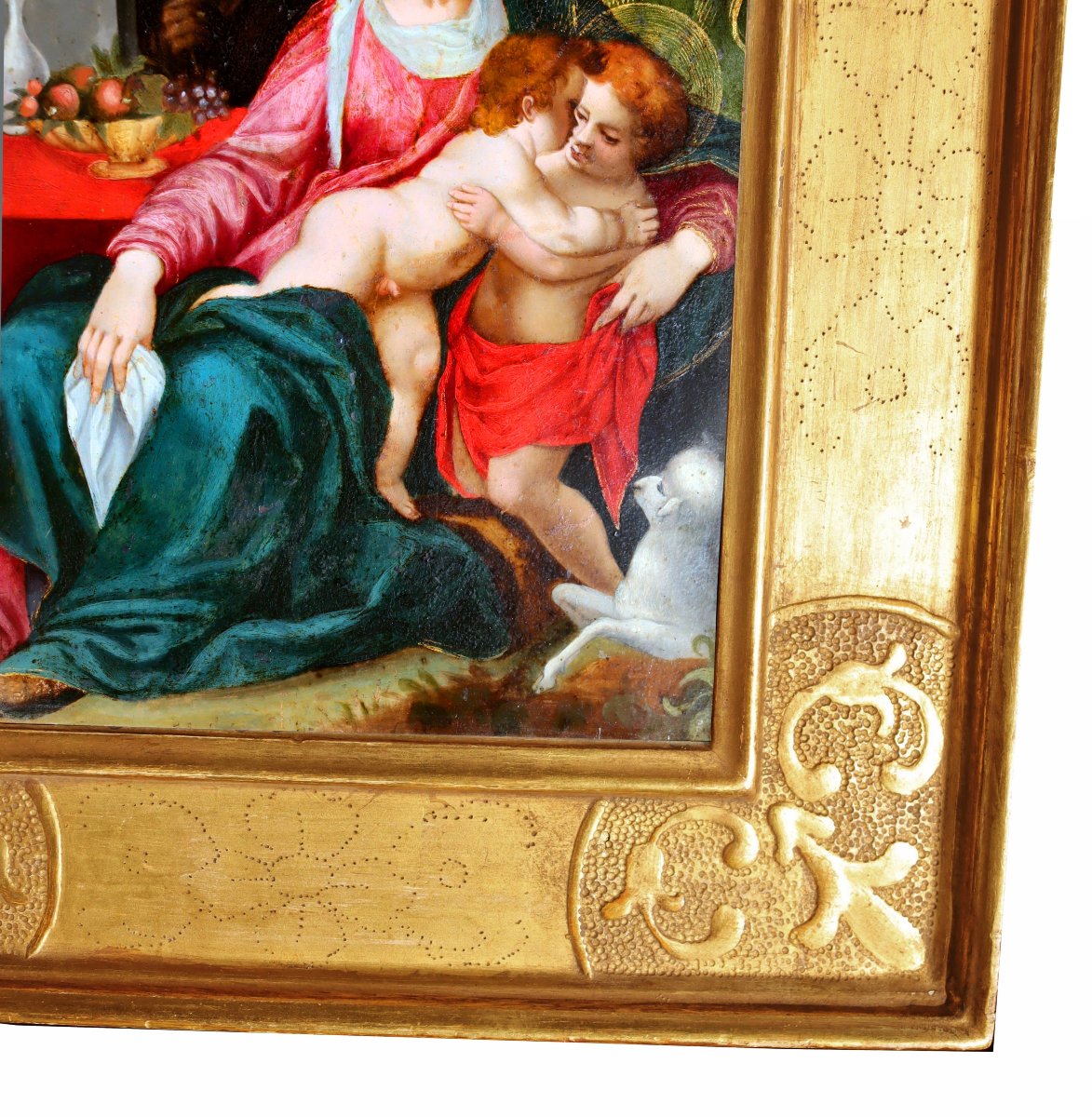
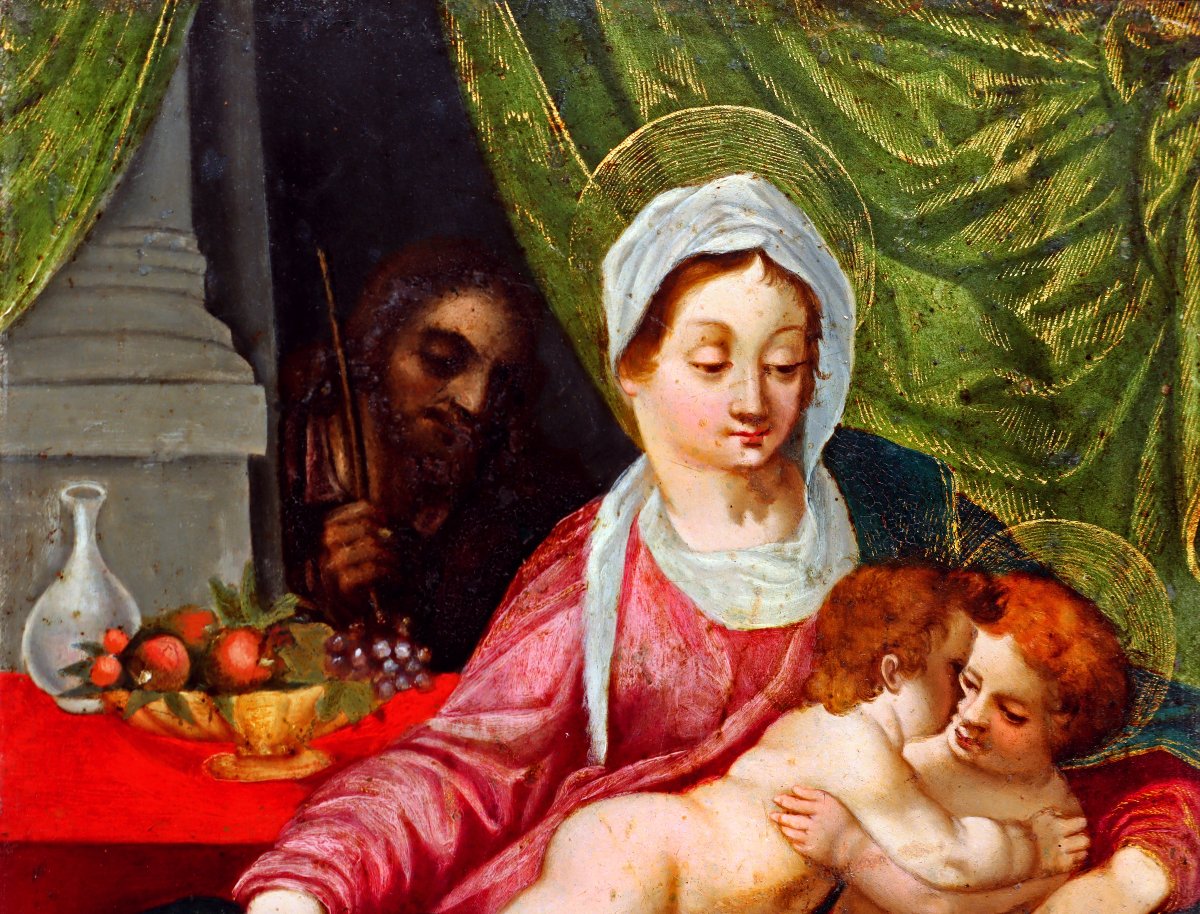
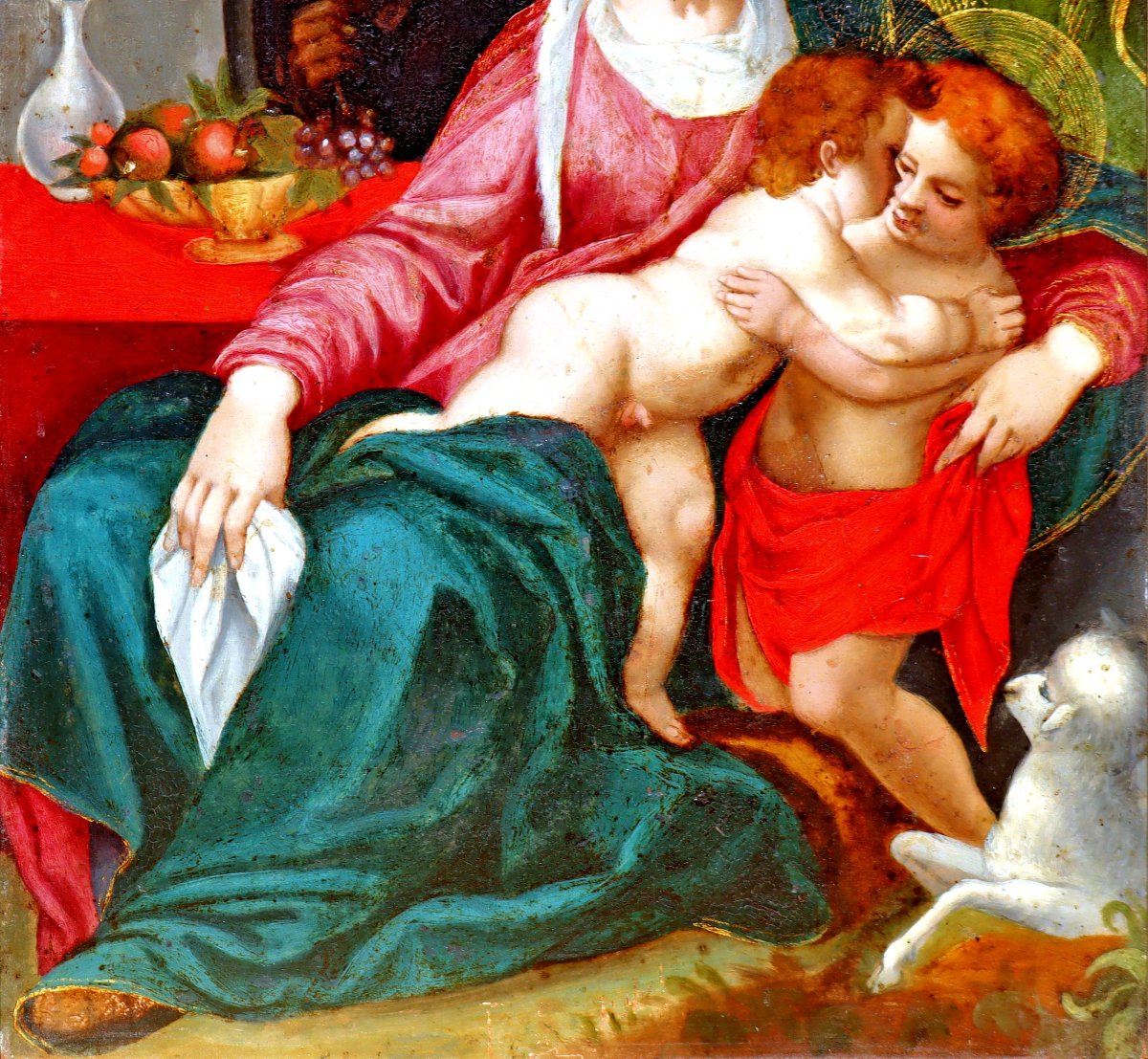
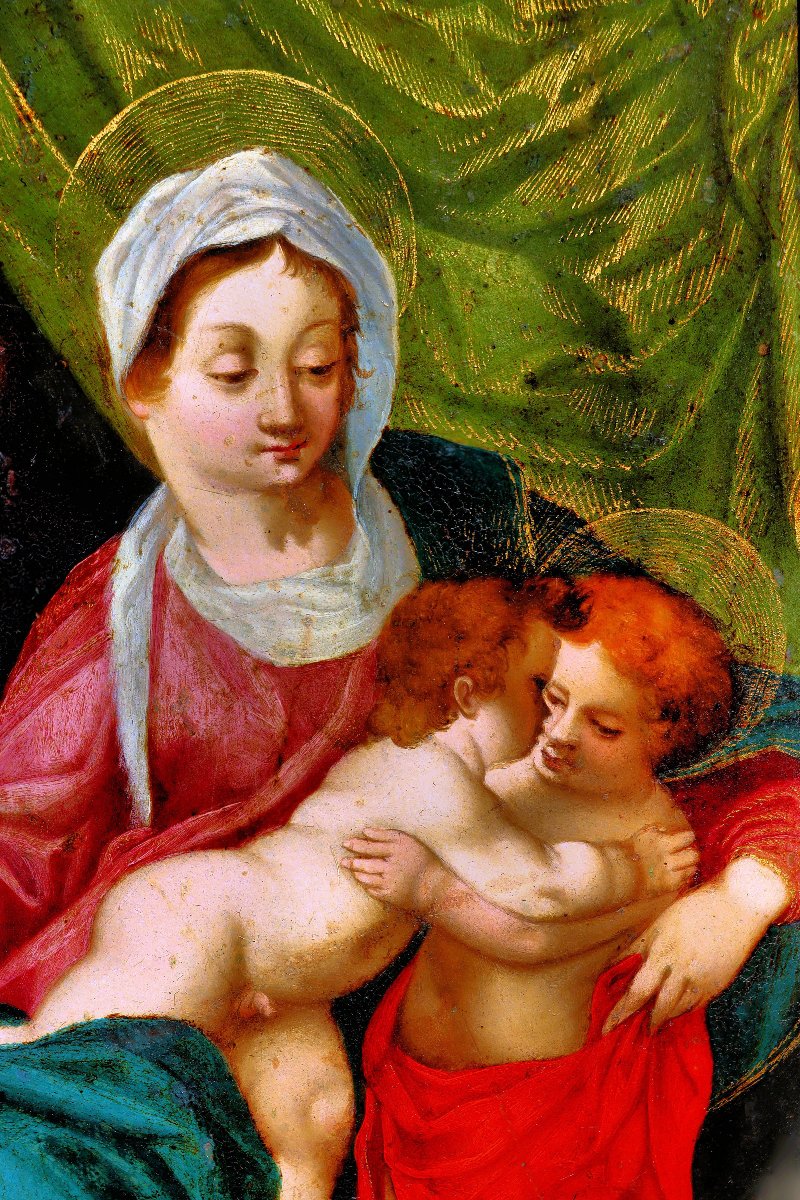
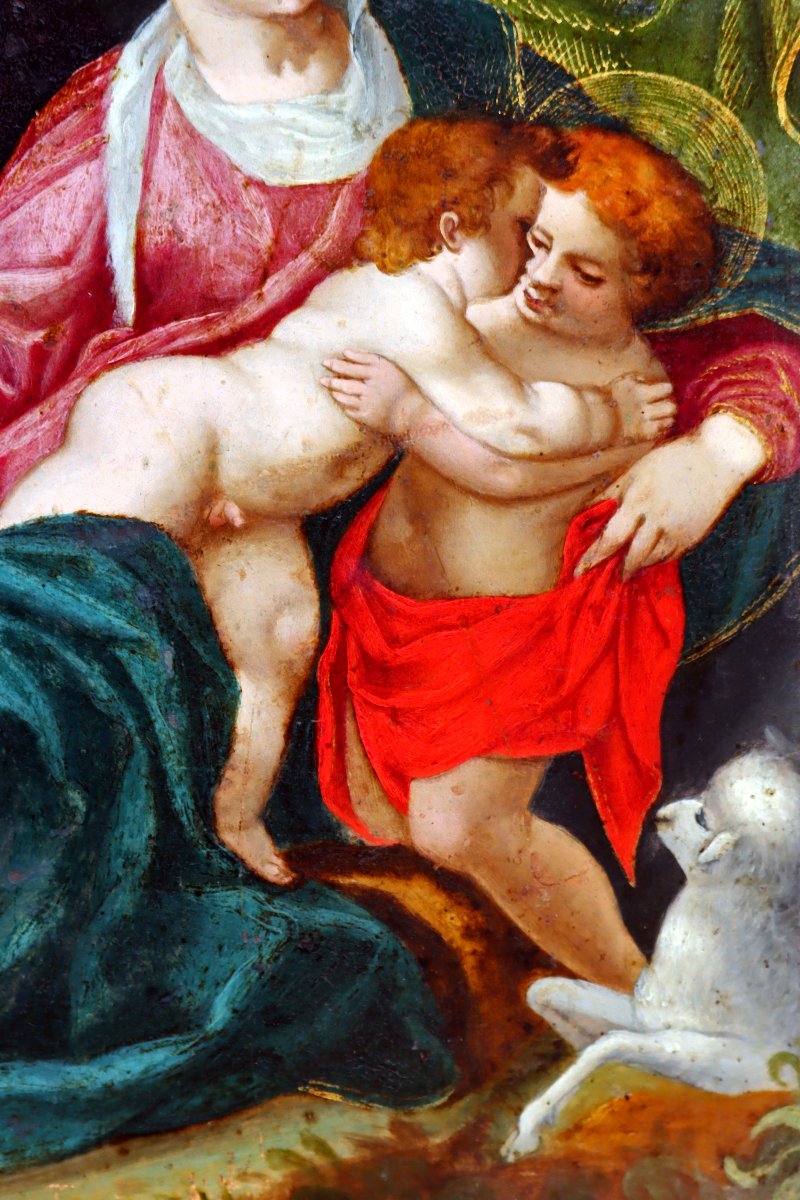
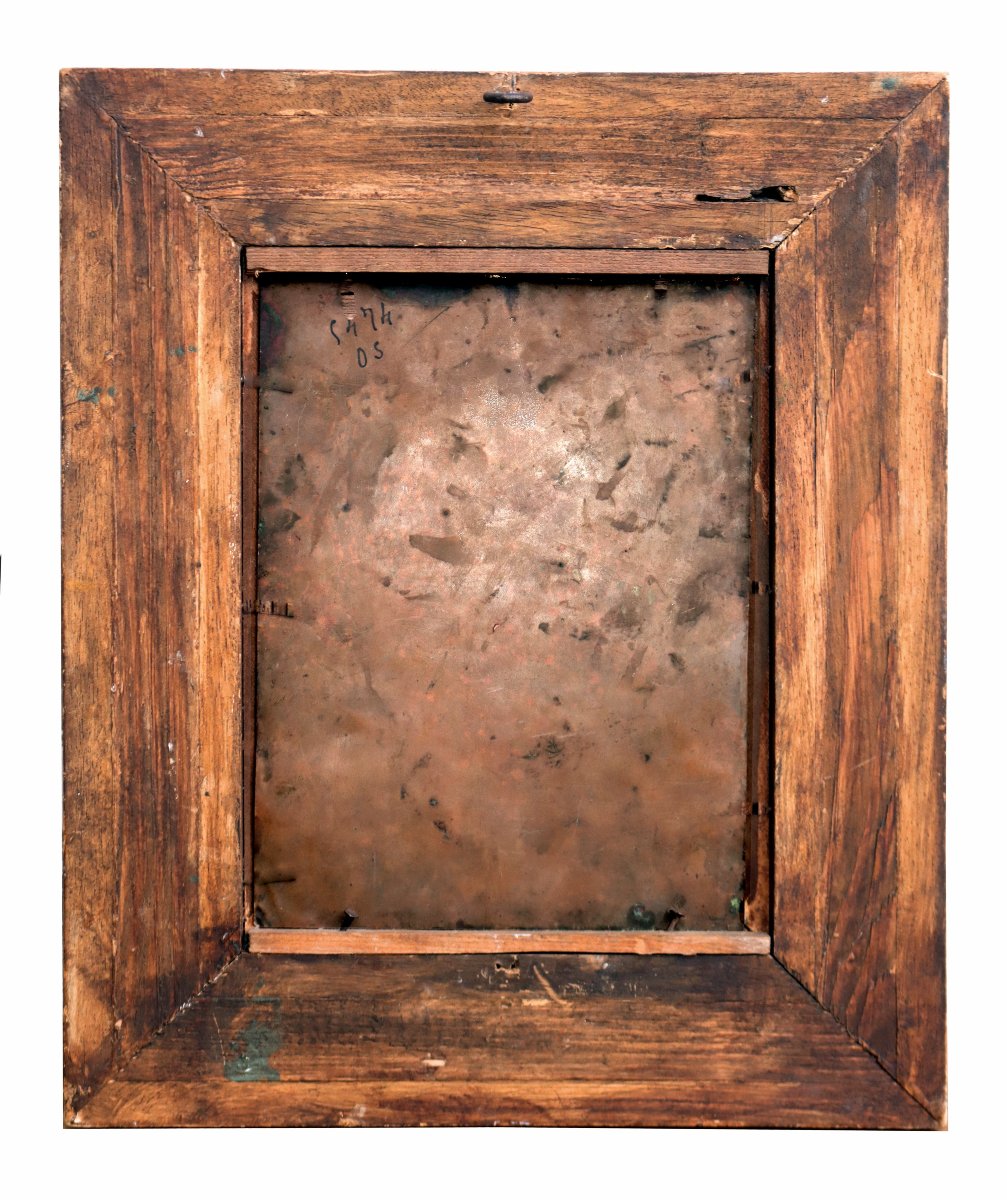
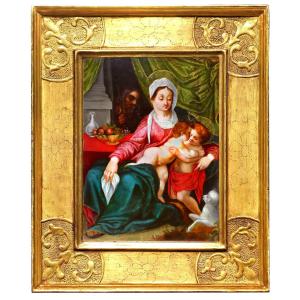
17th-century Roman School painting, oil on copper, attributed to Carlo Maratta (1625–1713) The Italian painter’s delicate artistry employs his characteristic techniques, such as the arrangement of different planes to structure an idealized panorama, animated at its center by the Virgin Mary, haloed in gold; clad in a pink-and-green drape and holding the infant Jesus, who interacts with the child Saint John the Baptist, standing near a lamb, while the figure of Saint Joseph is subtly outlined in a lightset against the background of the neoclassical, antique-style setting, which consists of a large green drape embroidered in gold, a column, and a bowl of fruit placed on a red-tablecloth-covered entablature. Beautiful gilded wooden frame, decorated with a carved motif of fleur-de-lis scrollwork set in spandrels at the corners. The work is in excellent condition; dimensions: 36.5 cm × 30.5 cm / copper: 22 cm × 17 cm.
Carlo Maratta is an iconic figure of 17th-century art in Rome; he created sacred and secular images that shaped the evolution of painting all the way to the height of Neoclassicism. Indeed, from the late 17th century through the end of the following century, painting in Rome and elsewhere in Europe drew inspiration from this master from Central Italy. It is worth noting that the artist painted two versions of this theme; one is now housed at the National Library of Florence, and the other is in the collection of the Dukes of Alba at the Palacio Liria in Madrid. Carlo Maratta was by far the most influential painter in Rome during the 17th century. Many important painters belonged to his circle or were his students; his studio was frequented by numerous artists who adapted their style to the master’s instructions. It is therefore difficult to distinguish between their bodies of work and to attribute paintings; the one presented here could be attributed to one of Maratta’s greatest disciples, such as Ludovico Trasi (1634–1695), Giuseppe Bartolomeo Chiari (1654–1727), Luigi Garzi (1638–1721), Francesco Mancini (1672–1737), Giacinto Calandrucci (1646–1707), Giuseppe Passeri (1654–1714), Andrea Procaccini (1671–1734), and Tommaso Redi (1665–1726).
Carlo Maratta is an iconic figure of 17th-century art in Rome; he created sacred and secular images that shaped the evolution of painting all the way to the height of Neoclassicism. Indeed, from the late 17th century through the end of the following century, painting in Rome and elsewhere in Europe drew inspiration from this master from Central Italy. It is worth noting that the artist painted two versions of this theme; one is now housed at the National Library of Florence, and the other is in the collection of the Dukes of Alba at the Palacio Liria in Madrid. Carlo Maratta was by far the most influential painter in Rome during the 17th century. Many important painters belonged to his circle or were his students; his studio was frequented by numerous artists who adapted their style to the master’s instructions. It is therefore difficult to distinguish between their bodies of work and to attribute paintings; the one presented here could be attributed to one of Maratta’s greatest disciples, such as Ludovico Trasi (1634–1695), Giuseppe Bartolomeo Chiari (1654–1727), Luigi Garzi (1638–1721), Francesco Mancini (1672–1737), Giacinto Calandrucci (1646–1707), Giuseppe Passeri (1654–1714), Andrea Procaccini (1671–1734), and Tommaso Redi (1665–1726).
2 200 €
Period: 17th century
Style: Renaissance, Louis 13th
Condition: Good condition
Material: Oil painting on copper
Reference (ID): 1820794
Availability: In stock
Print