

Triumph Of The Church Over Fury, Discord, And Hatred – After Rubens, 17th Century
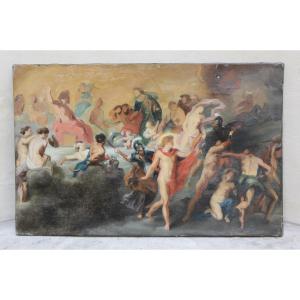
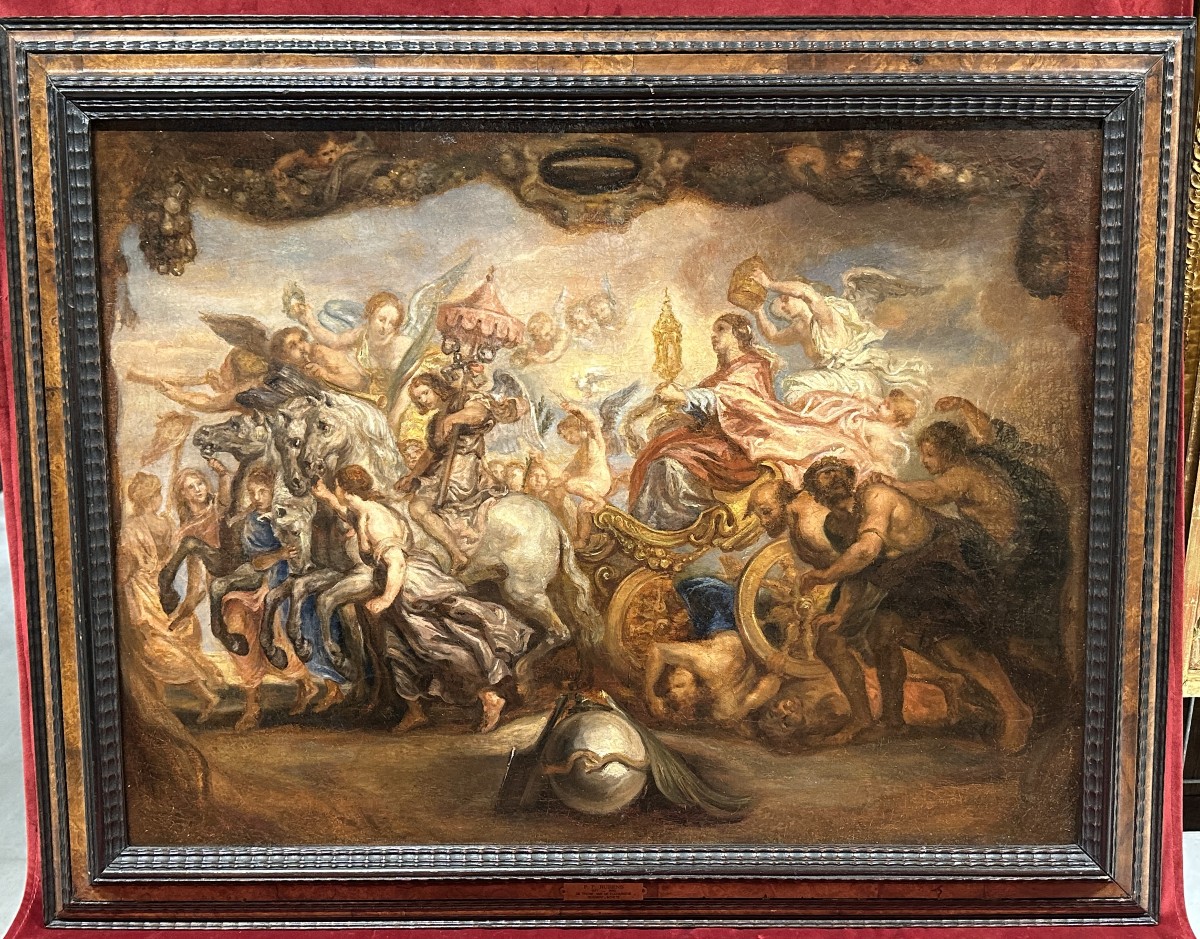
This painting depicts an allegorical composition inspired by the celebrated work by Peter Paul Rubens (1577–1640) titled The Triumph of the Church over Fury, Discord and Hate. The composition belongs to the cycle created by Rubens for the series of Eucharistic tapestries, produced in the 1620s for the convent of Las Descalzas Reales in Madrid, commissioned under the patronage of the Infanta Isabella Clara Eugenia.
These monumental allegorical scenes were conceived to celebrate the doctrine of the Eucharist and the victory of the Catholic Church, reflecting the theological and political context of the Counter-Reformation. Rubens’ painted compositions served as models or preparatory studies for tapestry cartoons executed in the Brussels workshops.
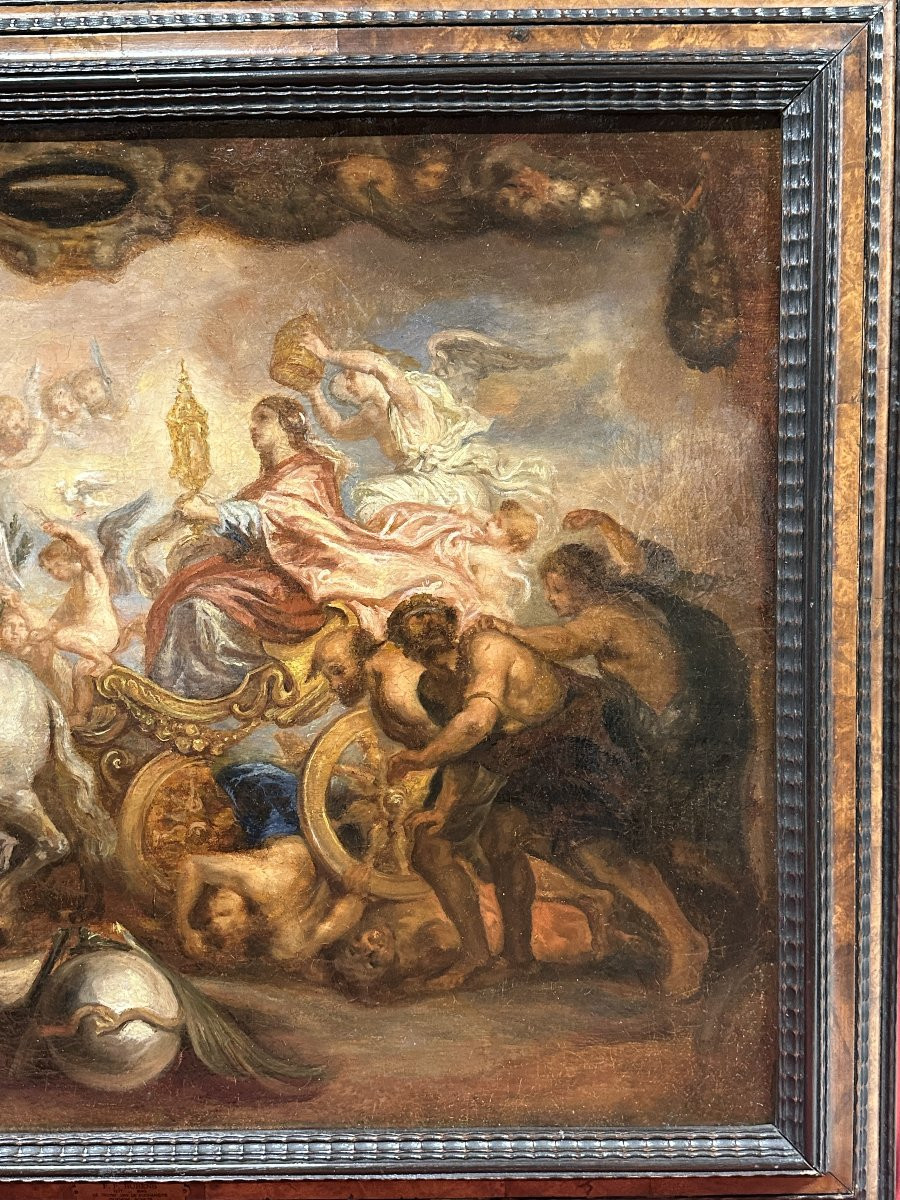
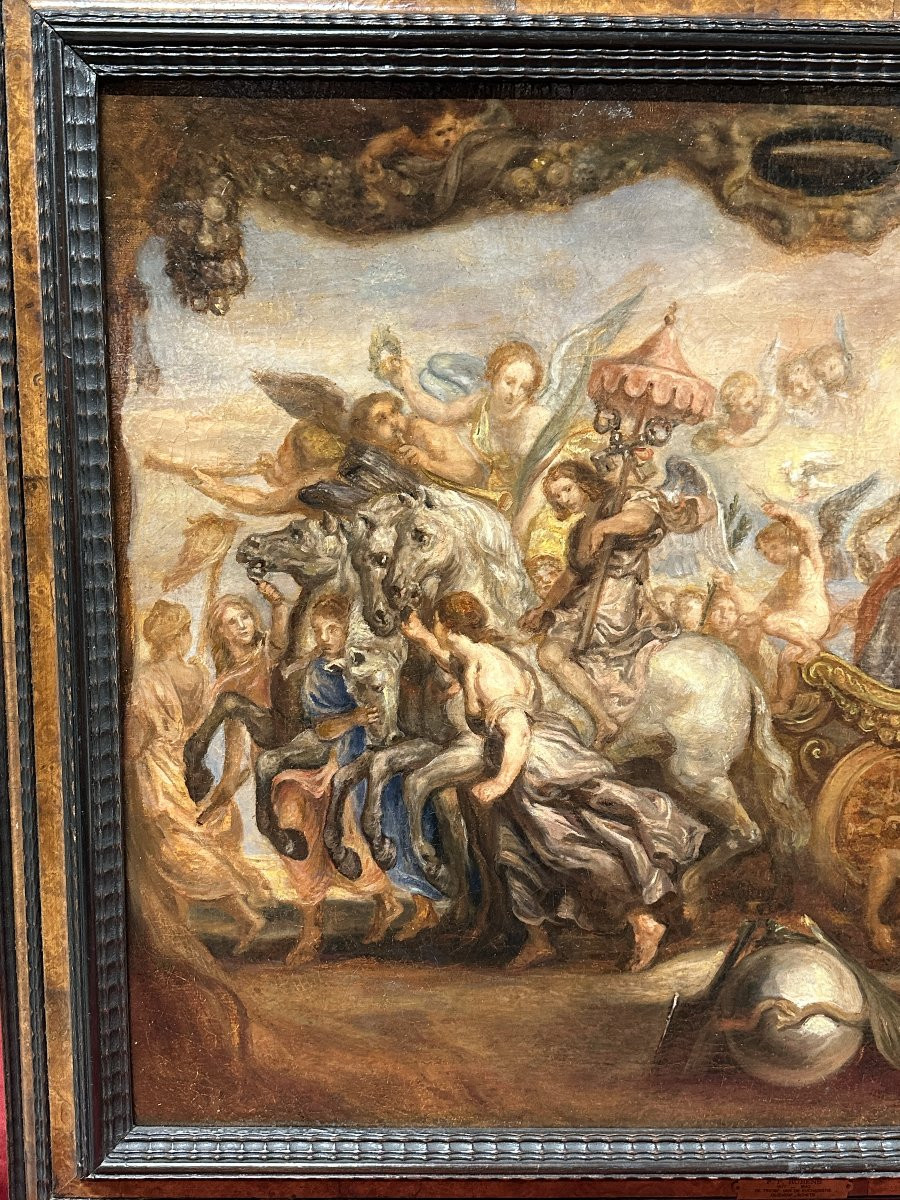
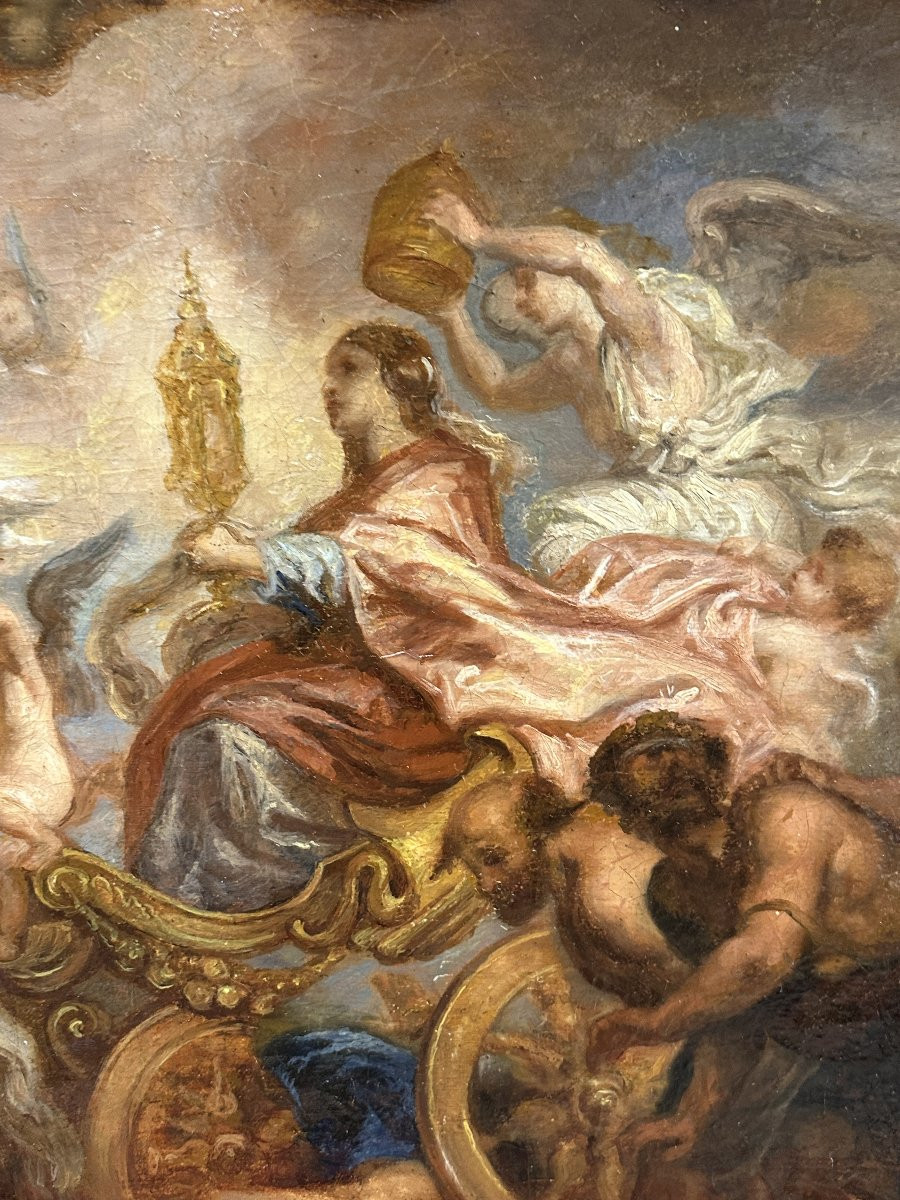
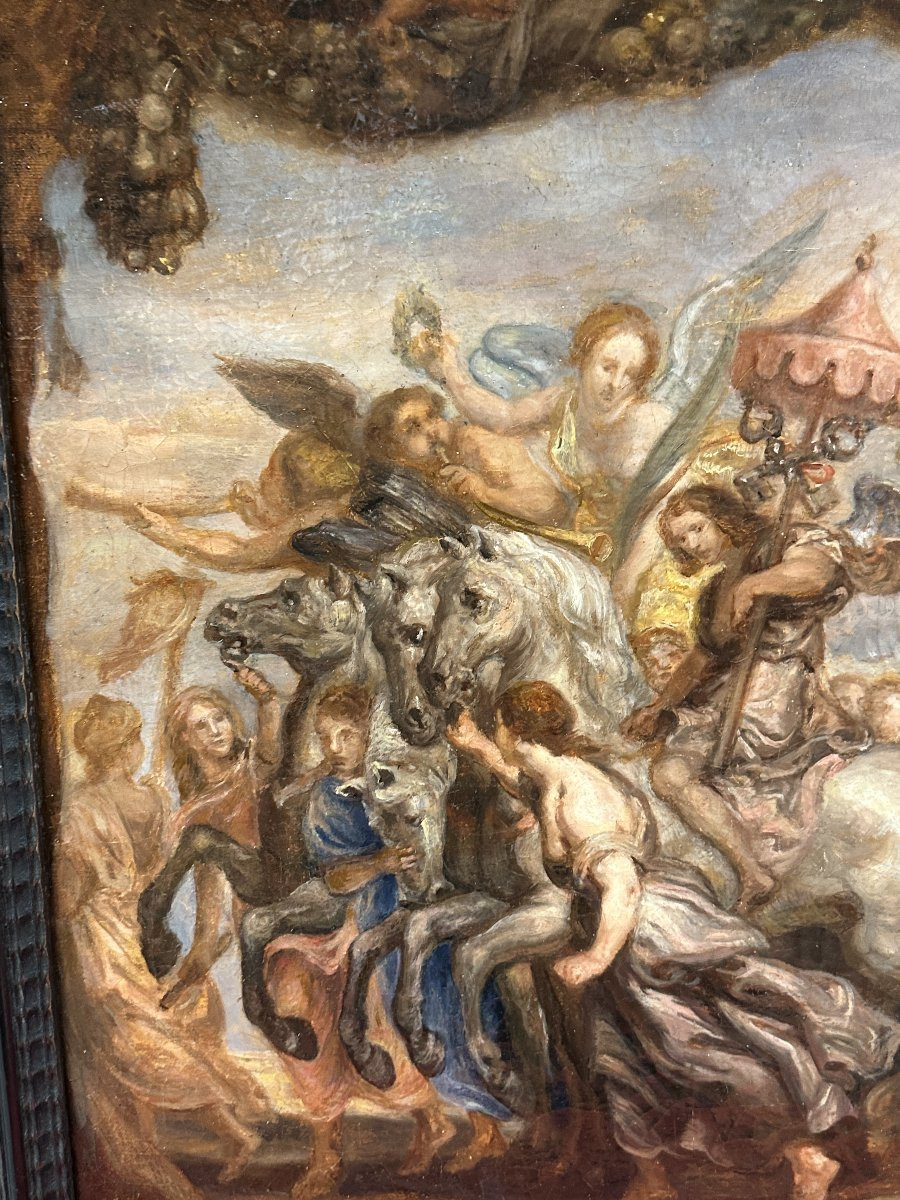
Description of the compositionThe scene presents a triumphal procession dominated by a female allegorical figure representing the Church, seated on an ornate chariot. She holds a radiant monstrance, the central symbol of the Eucharistic sacrament.
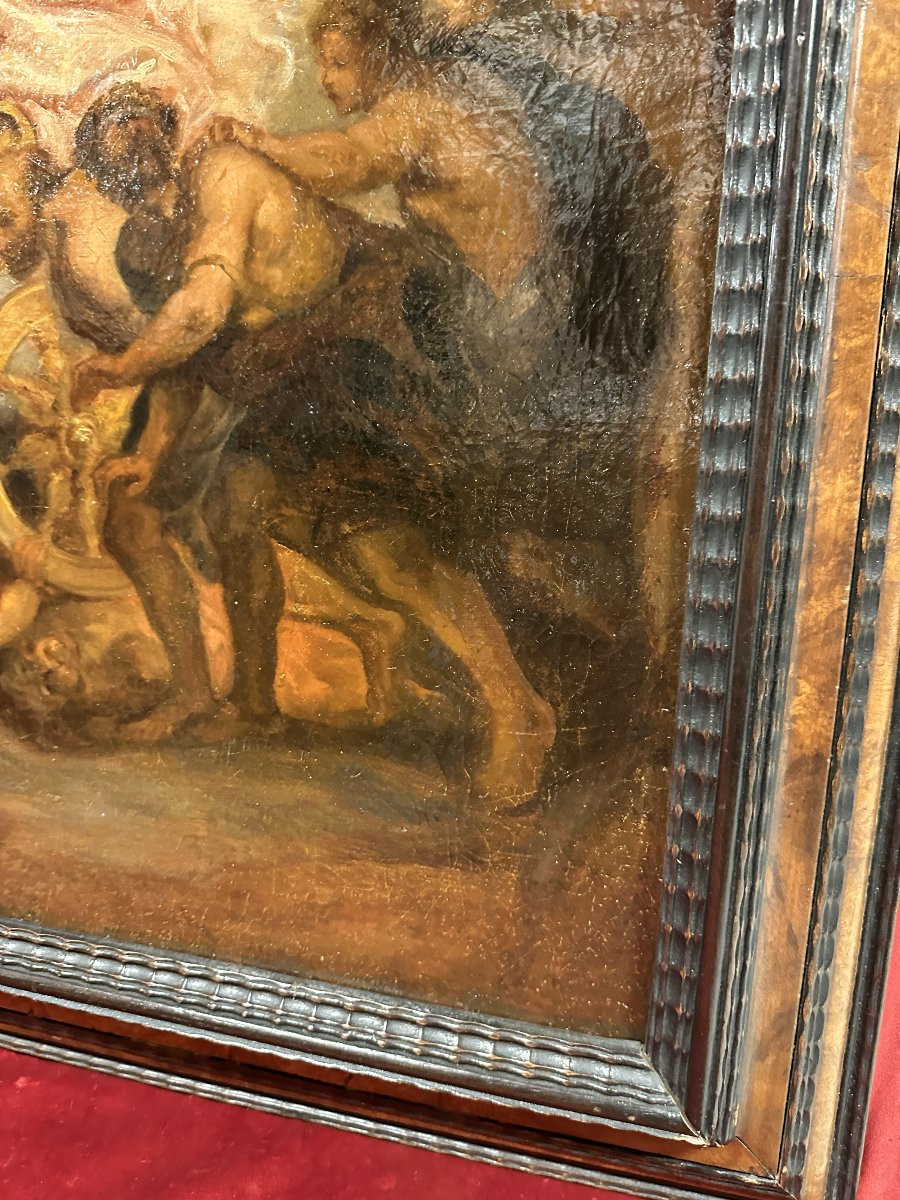
Surrounding the central figure are numerous putti and angels, emphasizing the celebratory and celestial dimension of the triumph. At the lower part of the composition, several muscular male figures are shown defeated and crushed beneath the chariot: these figures personify Fury, Discord and Hate, symbolic forces subdued by the power of faith and the authority of the Church.
The entire composition is structured along a dramatic diagonal movement typical of Baroque painting, with swirling draperies, animated gestures and theatrical lighting enhancing the narrative intensity.
Attribution and artistic contextThe painting is executed after Rubens’ composition by a painter associated with the Flemish artistic tradition of the 17th or early 18th century. In the decades following Rubens’ death, numerous artists and workshops in Flanders produced painted versions of his compositions, reflecting the enduring influence of his studio and the continued demand for these powerful allegorical subjects.
The painter demonstrates a solid understanding of Rubens’ dynamic compositions and figurative language, visible in the vigorous modeling of the figures and the energetic brushwork.
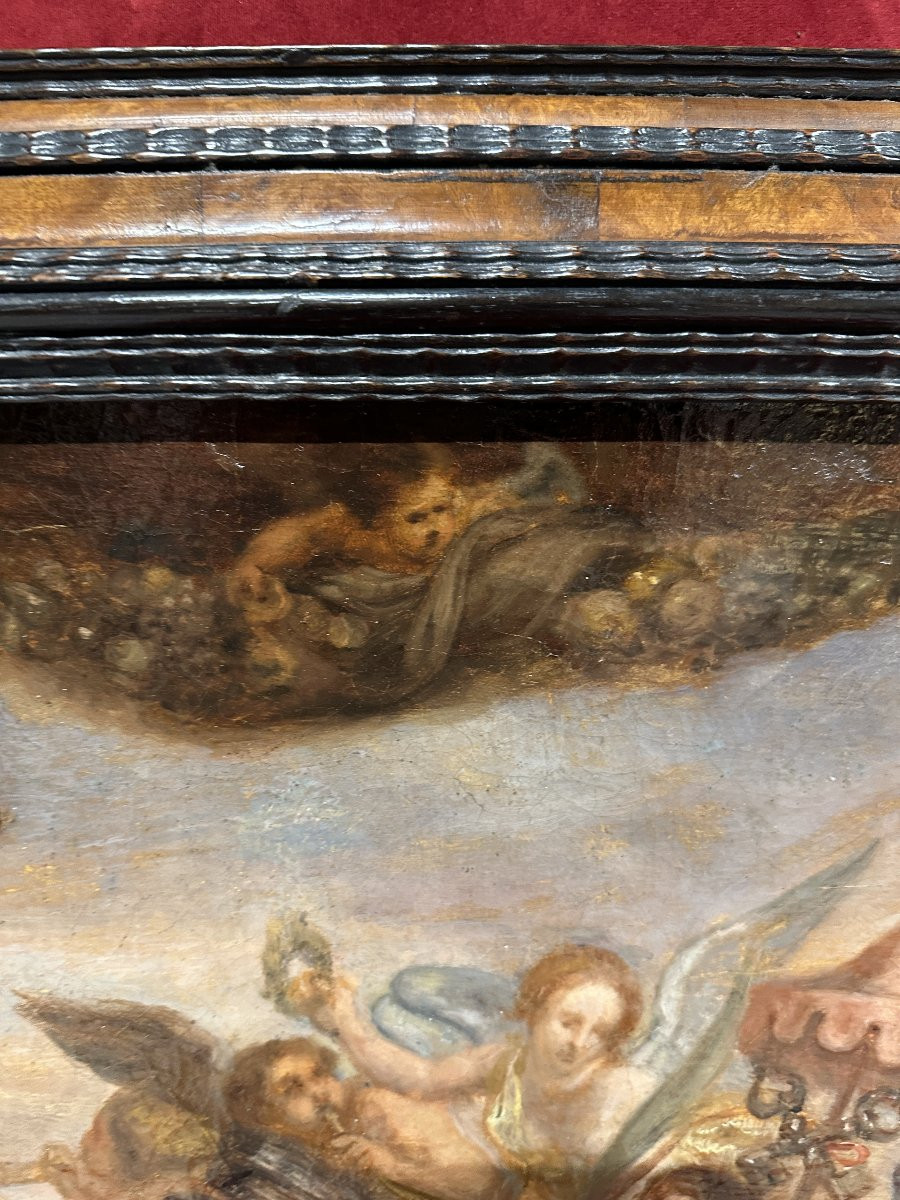
Technique and materialsThe work is executed in oil on canvas, employing a layered painting technique characteristic of the Flemish Baroque tradition. The pictorial surface reveals a combination of transparent glazes and more textured highlights, particularly in the draperies and flesh tones.
The color palette is composed of warm ochres, deep reds and earthy browns, creating a luminous yet dramatic atmosphere typical of the Rubensian tradition.
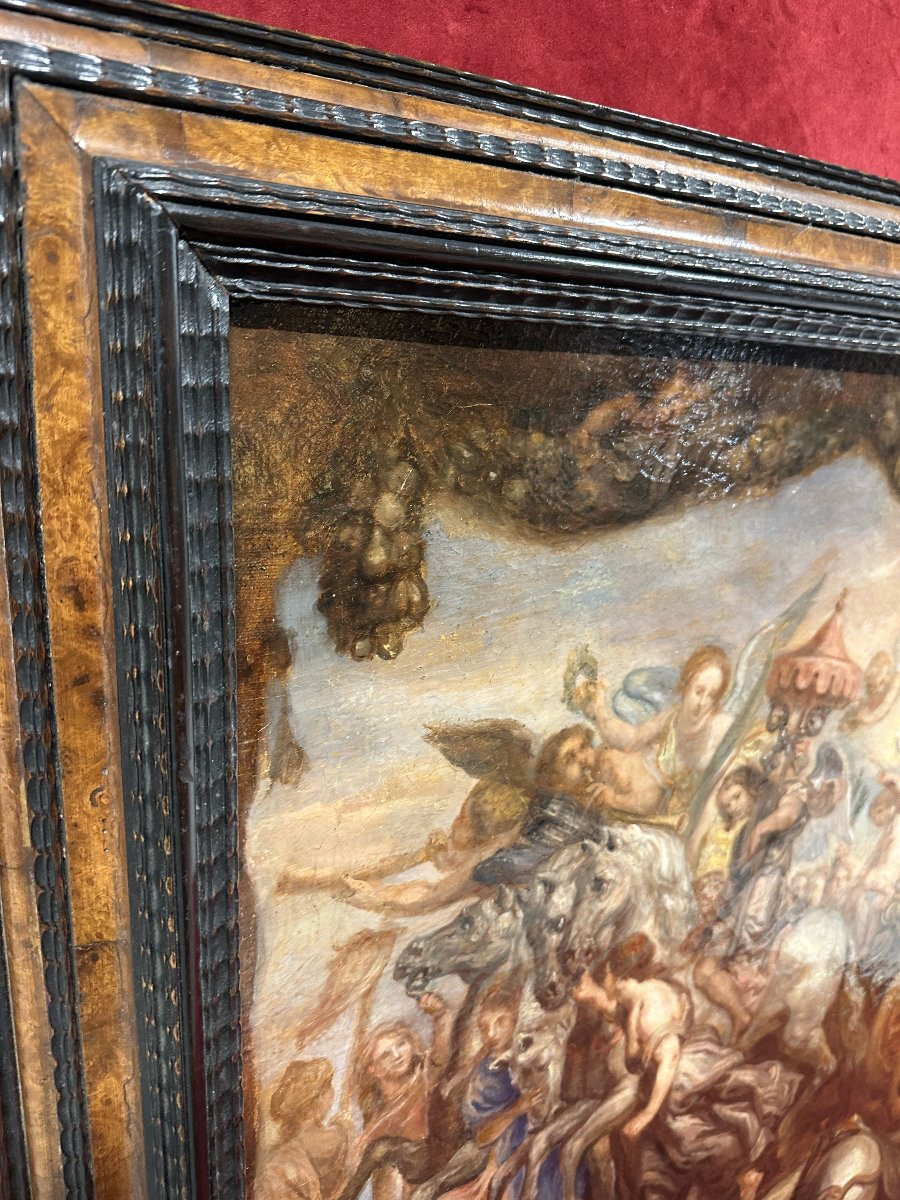
FrameThe painting is presented in an old molded wooden frame, featuring a multi-profile structure with carved decorative elements. The dark patinated finish harmonizes well with the tonality of the painting and reinforces its baroque character.
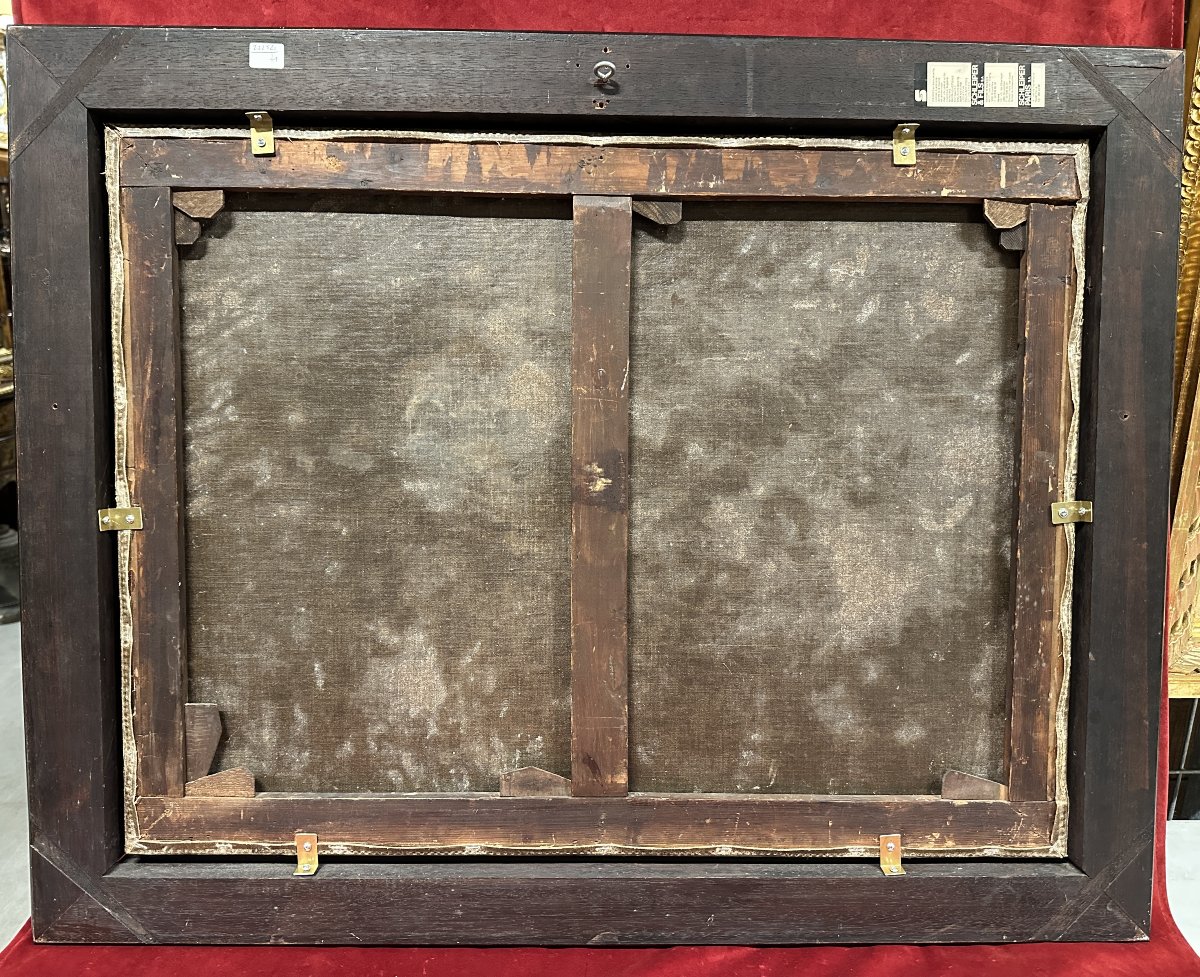
ConditionThe painting has undergone professional conservation and cleaning, restoring the clarity of the composition and the balance of its colors. The canvas is mounted on an old stretcher and remains structurally stable.
DimensionsCanvas: 60 × 79 cm
With frame: 77 × 96 cm
Period: 17th century
Style: Renaissance, Louis 13th
Condition: Excellent condition
Material: Oil painting
Width: 79 cm
Height: 60 cm
Reference (ID): 1718188
Availability: In stock