

Camilo Blas (1903–1985) Andean Landscape Near Cuzco, Peru
Artist: Camilo Blas
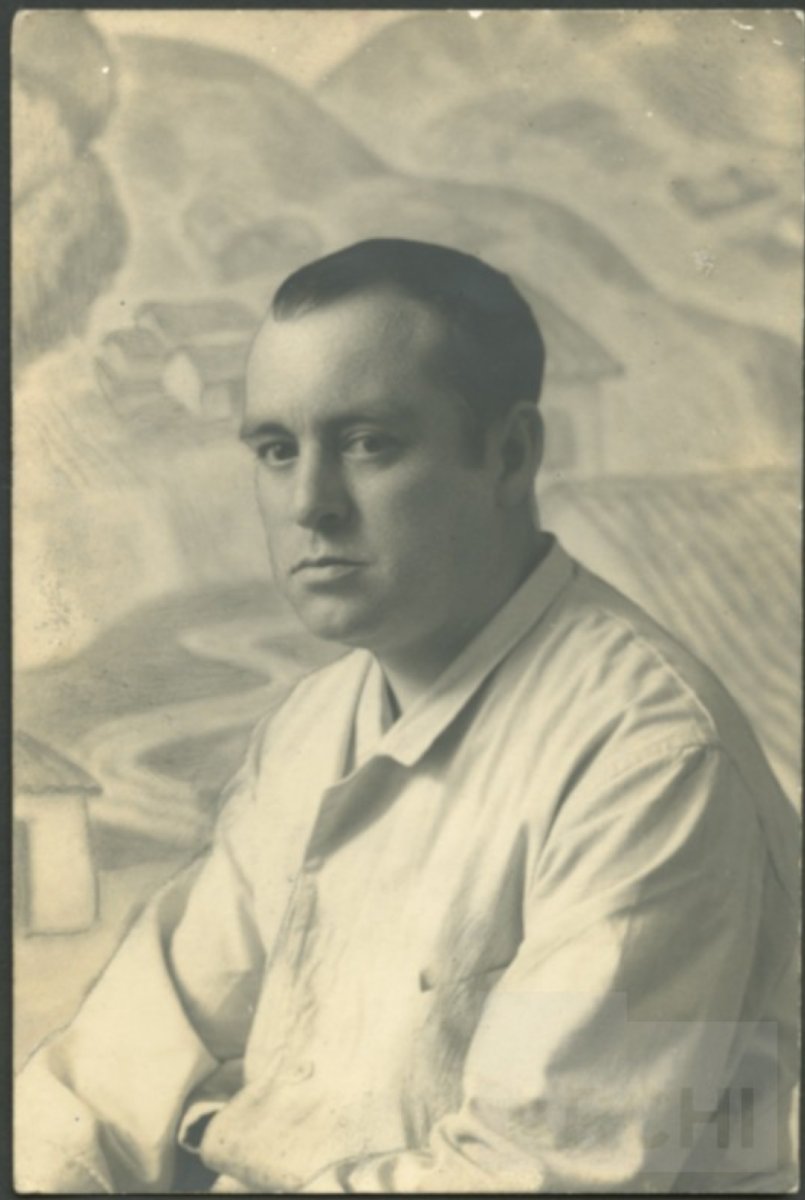
Camilo BLAS (born José Alfonso Sánchez Urteaga)
(Cajamarca 1903 – Lima 1985)
Andean Landscape – "Paisaje Andino"
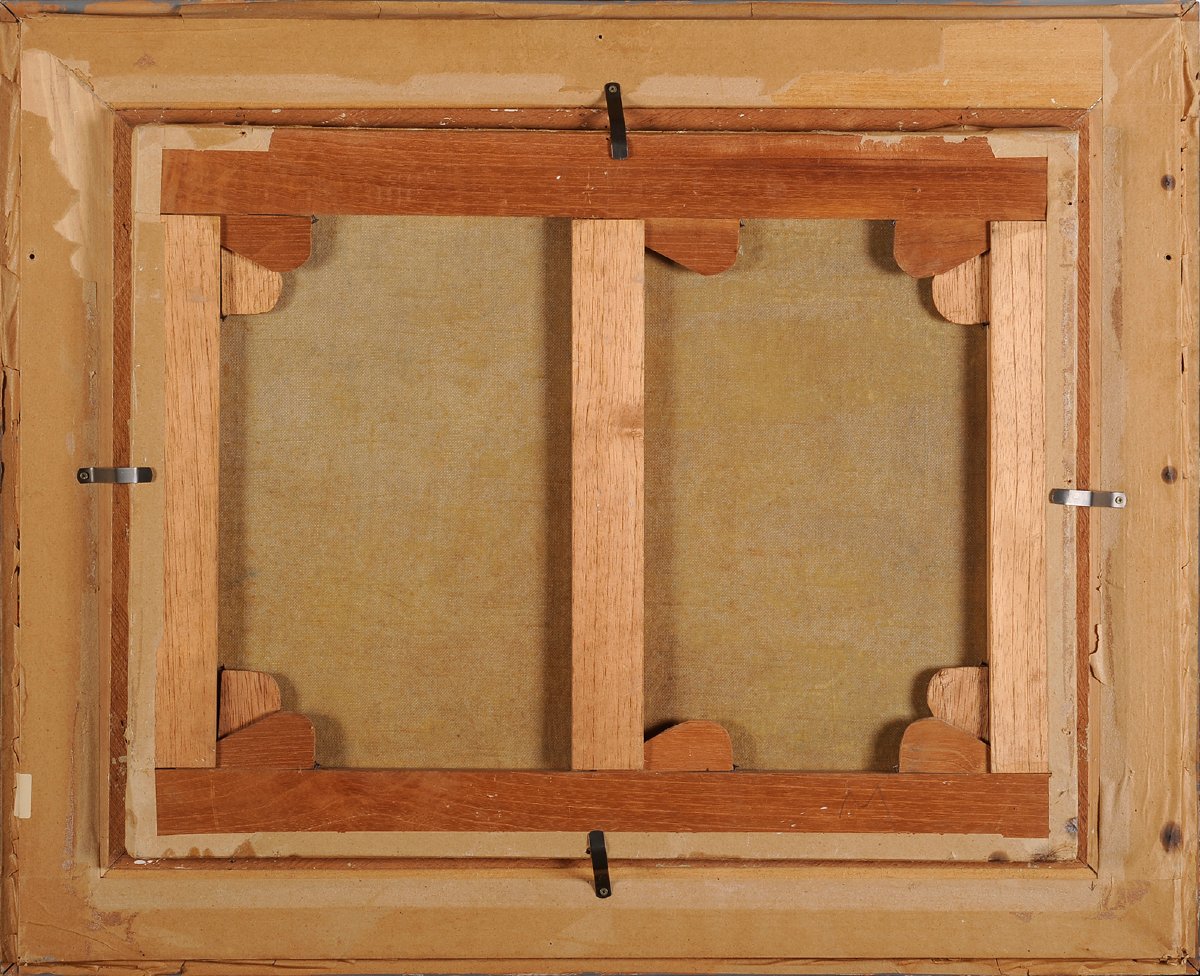
Oil on canvas
H. 47.5 cm; W. 62 cm
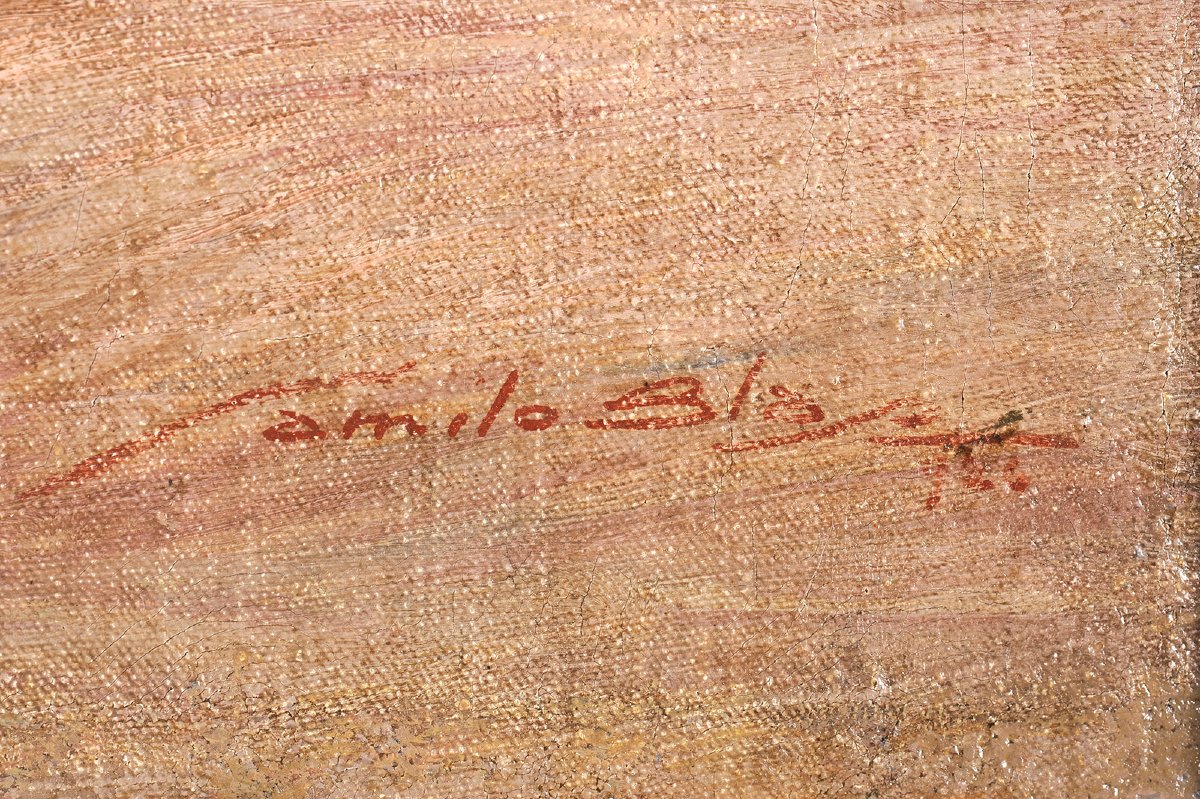
Signed lower right and dated 1926
Exhibition: Lima, Casino Español, *Exposición de Camilo Blas*, July 1927.
Bibliography:
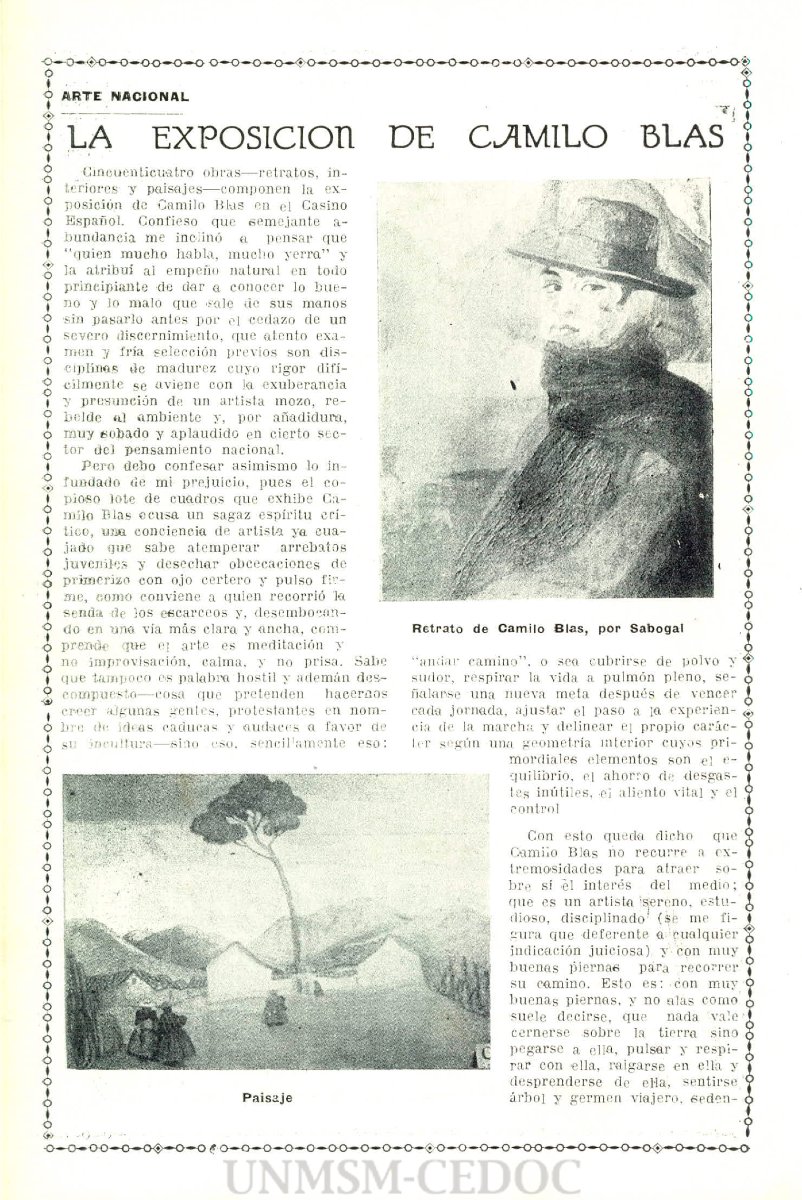
- *Variedades*, Lima, July 9, 1927, in the article "La exposición de Camilo Blas," under the heading "Arte Nacional"; reproduced under the title *Paisaje*.
- *El Comercio*, Lima, July 24, 2020, in the article "Camilo Blas, 35 years after his death: an assessment of his contribution to Peruvian arts"; reproduced under the title *Paisaje Andino*.
A major figure in 20th-century Peruvian *Indigenist* painting, Camilo Blas created a body of work deeply committed to depicting the daily life, landscapes, and people of Peru. The pseudonym Camilo Blas conceals the identity of José Alfonso Sánchez Urteaga, a native of Cajamarca in the northern Peruvian Andes. A painter, draftsman, printmaker, and educator, he belonged to the generation that, during the early decades of the century, helped give rise to a modern Peruvian style of painting rooted in the observation of the country as it truly was.
Hailing from a region particularly rich in artistic traditions, Camilo Blas showed an early aptitude for drawing. His maternal uncle, the painter Mario Urteaga, played a pivotal role in his early development, introducing him to the observation of landscapes and rural life. This close connection to peasant life and the traditions of Cajamarca formed one of the foundations of his artistic vision. Before dedicating himself fully to art, Blas began studying law at the University of Trujillo, but his calling as a painter soon asserted itself.
In 1922, he moved to Lima and enrolled in the Escuela Nacional de Bellas Artes (National School of Fine Arts), which had been founded a few years earlier. He initially studied under Daniel Hernández before meeting José Sabogal, a central figure in the Peruvian *indigenismo* art movement. This meeting proved decisive. Sabogal recognized a unique sensitivity to Peruvian reality in the young Blas and became his mentor, fellow traveler, and one of his key supporters. Blas thus became part of the *indigenista* movement, which sought to forge a national artistic expression by highlighting the cultures, landscapes, and indigenous and *mestizo* populations of Peru.
However, Camilo Blas’s *indigenismo* was not merely an ideological agenda. His originality lay in how he transformed observations of reality into paintings that were vibrant, sensitive, and often humorous. Markets, festivals, processions, street scenes, agricultural work, musicians, artisans, peasants, and city dwellers all became protagonists in a vast visual chronicle of Peru. His gaze encompassed the Andes, the coast, and tropical regions alike, reflecting a desire to traverse and depict the country in all its diversity.
His work is distinguished by precise, expressive draftsmanship combined with a luminous, refined palette. Moving beyond strictly documentary representation, Blas infused his compositions with a poetic—and sometimes satirical—dimension. His figures are captured within their environments, amidst the gestures, customs, and communal scenes that lend his paintings a narrative quality. This focus on the daily lives of the people earned him a nickname bestowed by José Sabogal: "the Pancho Fierro of the Sierra"—a reference to the famous 19th-century graphic chronicler of Lima society.
Blas’s time in Cusco (1924–1926) marked another significant stage in his career. He traveled with Sabogal and worked in Bolivia before returning to Cusco, where he lived for several years. There, he created paintings, drawings, and prints depicting local life. These experiences informed a body of work that combined easel painting, drawing, watercolor, and printmaking, with a diversity of techniques mirroring the variety of his subjects. His work *La Trilla* (1928) exemplifies this period and is now part of the collection at the Museum of Modern Art in New York.
In 1933, he became a professor at the Escuela Nacional de Bellas Artes in Lima. He taught drawing and painting there for many years before eventually becoming the school's director. Through his teaching, he helped pass on an artistic philosophy rooted in the direct observation of the local landscape and the quest for a Peruvian artistic identity. His influence was thus exerted as much through his own creative output as through his role in training several generations of artists.
In 1946, he received the Ignacio Merino National Painting Prize, one of Peru’s most prestigious artistic honors. His work continued to evolve around the same fundamental themes: Andean landscapes, scenes of everyday life, religious festivals, trades, portraits, and glimpses of daily existence. This steadfastness regarding his subject matter never implied stagnation; over the decades, Blas refined his pictorial language and evolved his approach to light, color, and composition.
Camilo Blas thus holds a unique place in the history of modern Peruvian art. While his name remains closely linked to the *Indigenismo* movement of José Sabogal, his work transcends the confines of any single school or manifesto. Above all, it serves as a vast, evocative record of 20th-century Peru. In his paintings and drawings, the Indigenous and *mestizo* populations are not merely motifs; they become the heart of a pictorial world where landscape, labor, celebration, and community life all converge to form a shared identity.
Through the delicacy of his draftsmanship, the richness of his palette, and the deeply human quality of his subjects, Camilo Blas helped elevate everyday Peruvian life into a worthy subject for painting. He died in Lima in 1985, leaving behind a prolific and multidisciplinary body of work that holds a pivotal place in the history of modern Peruvian painting and the shaping of a national artistic identity.
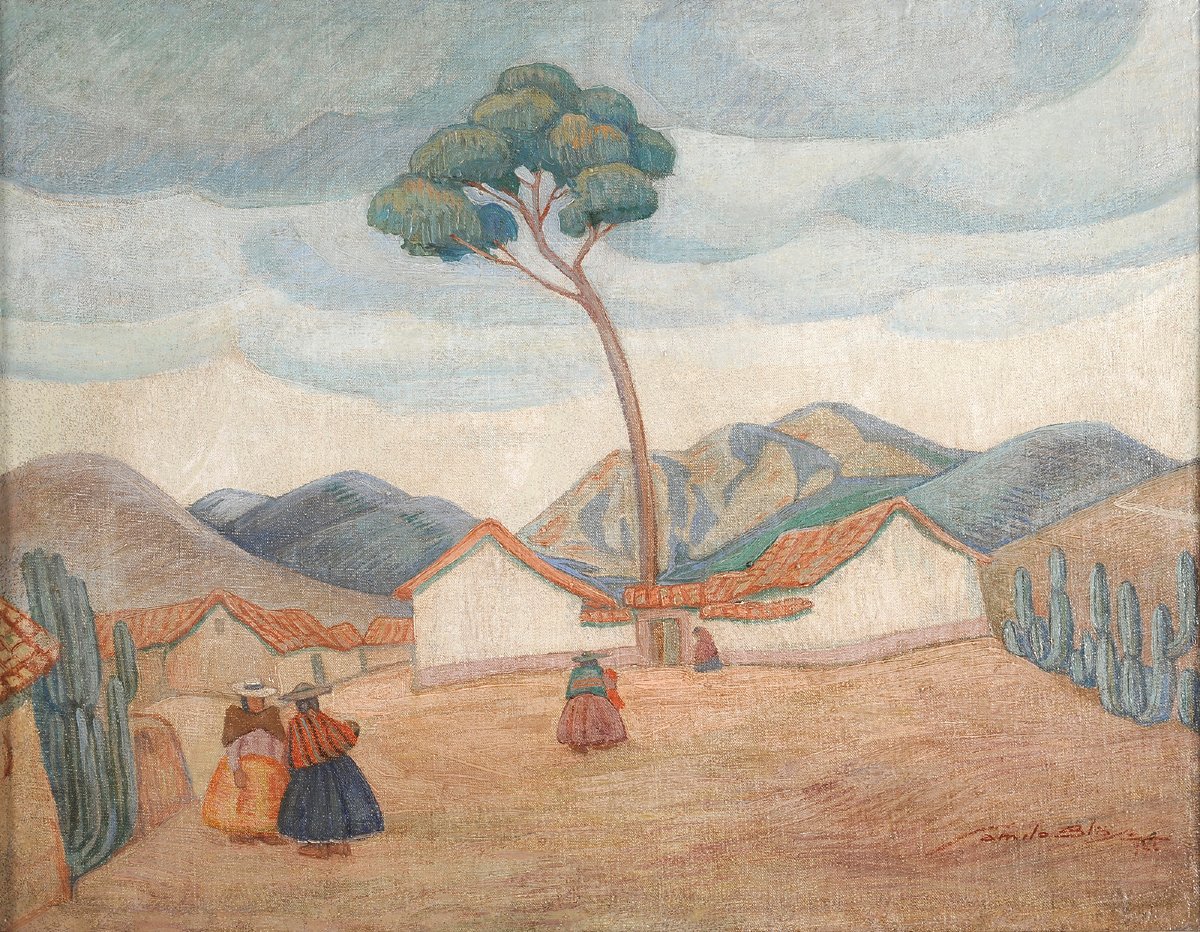
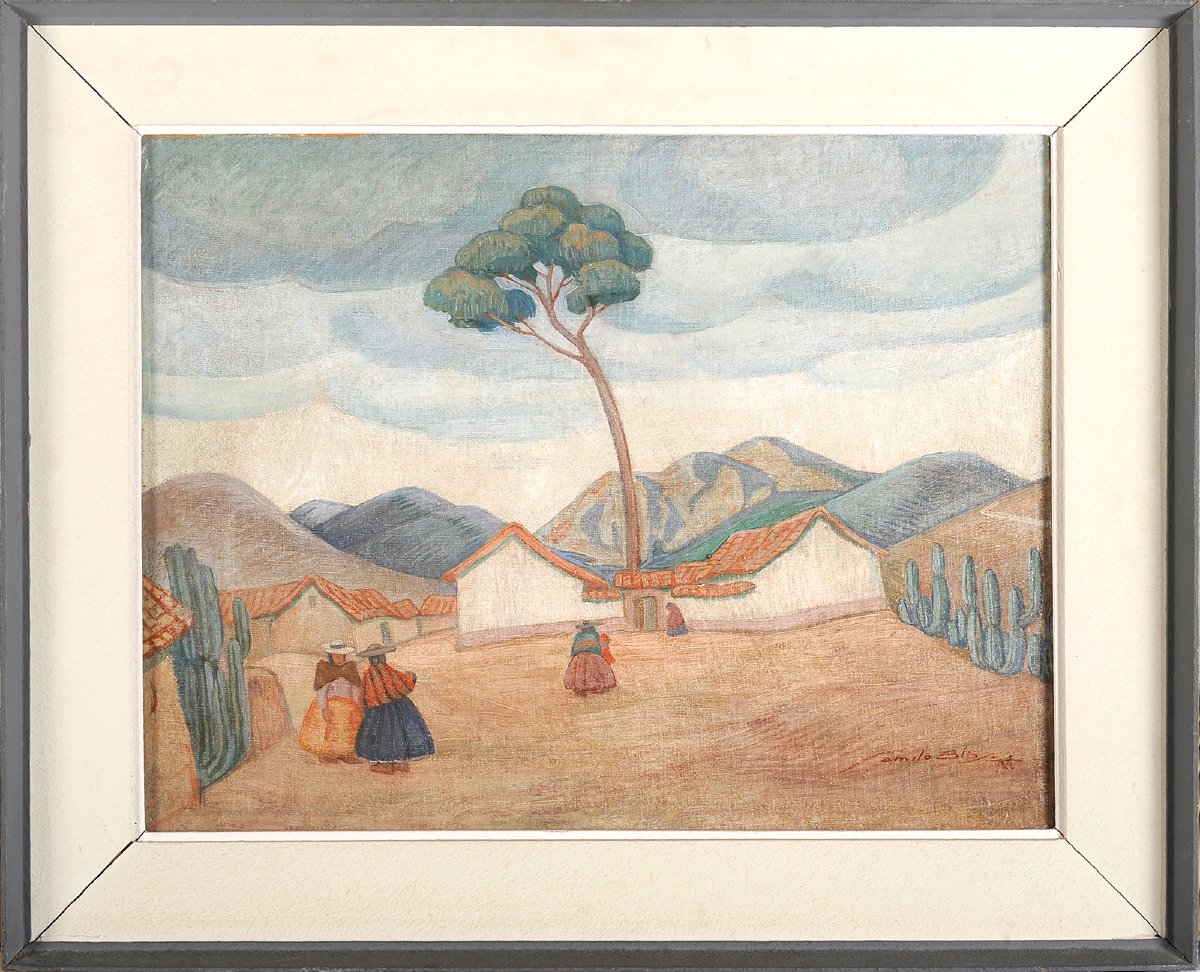
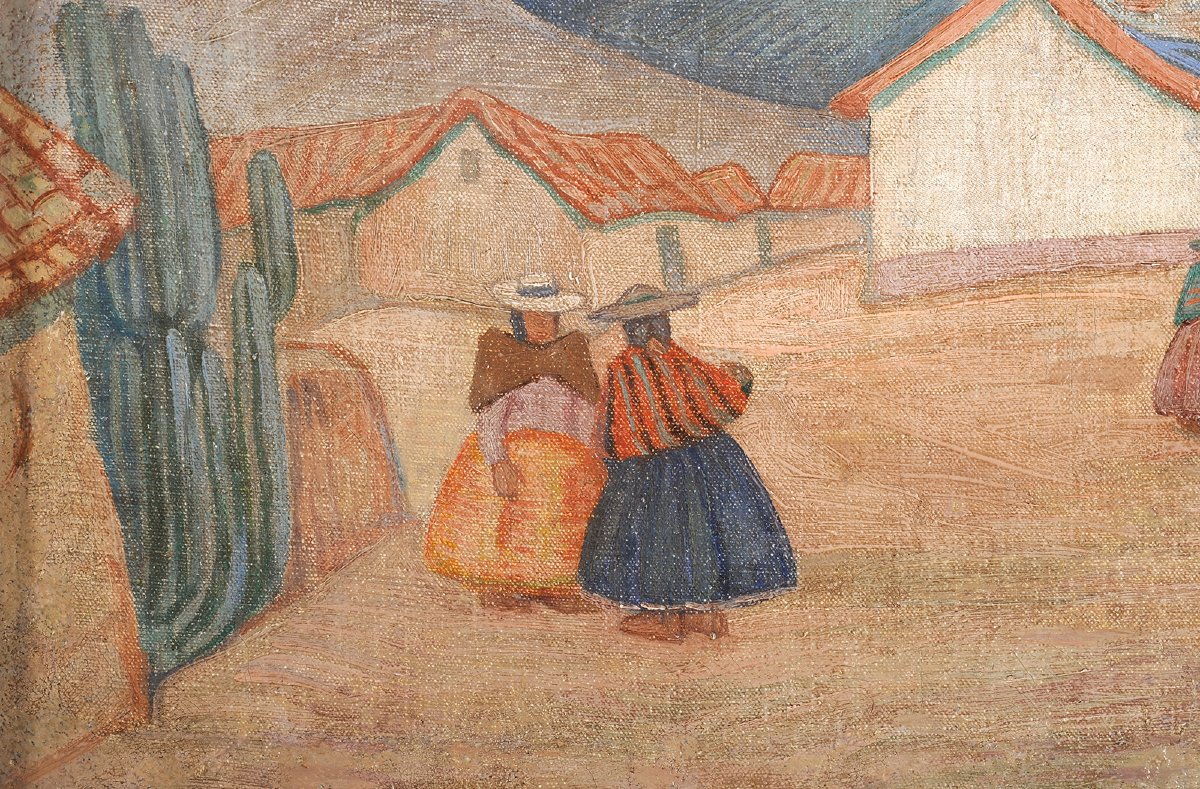
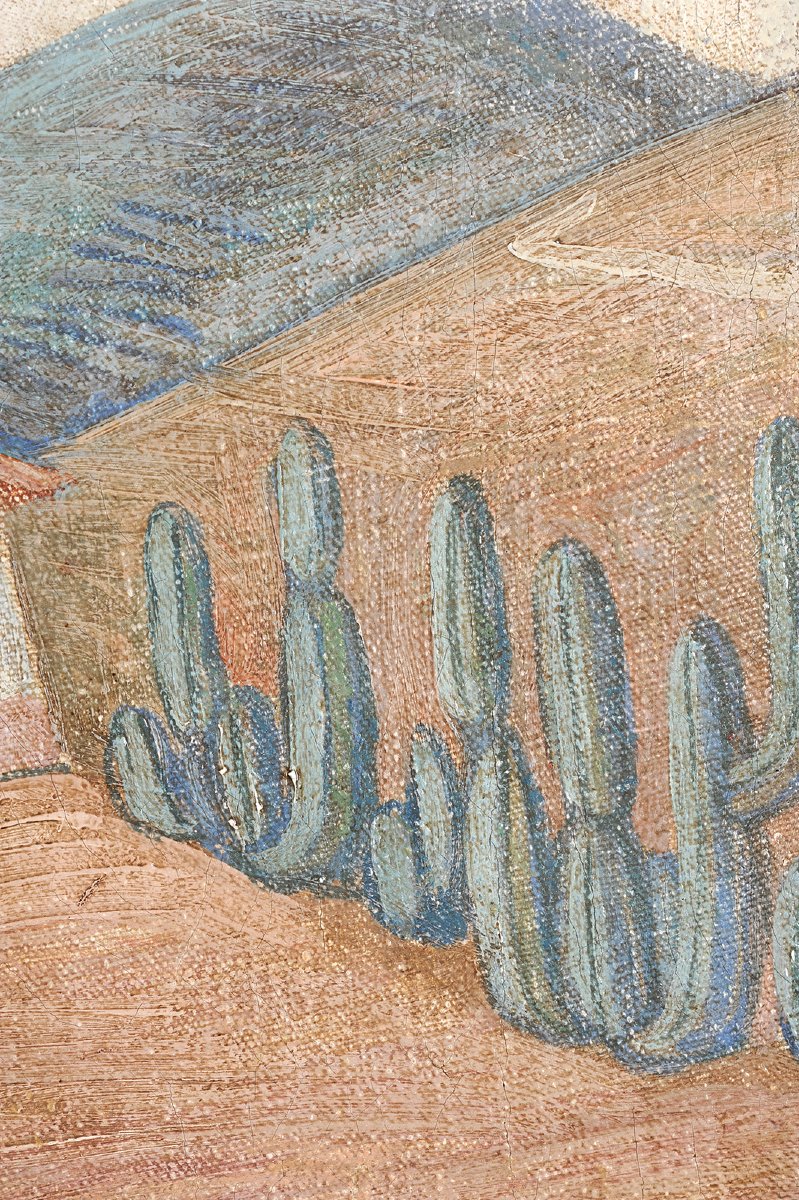
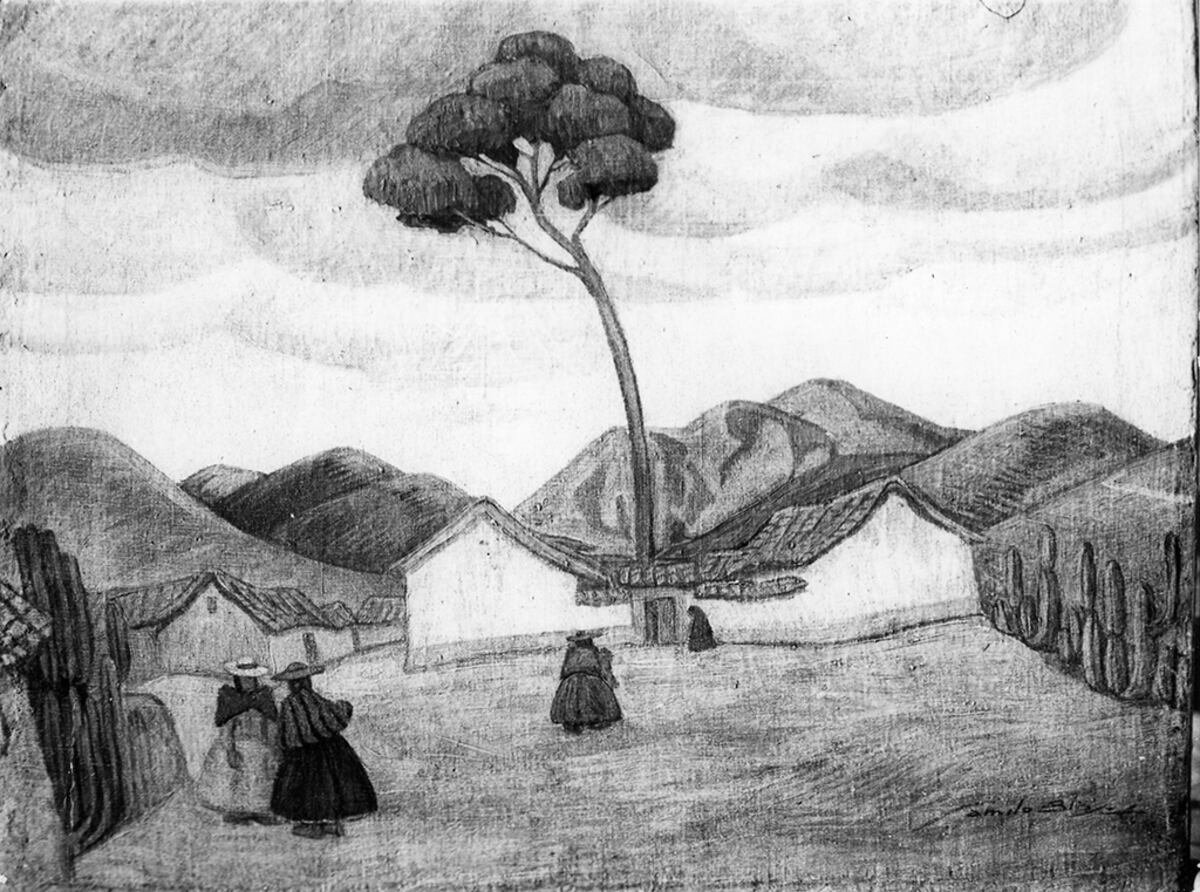
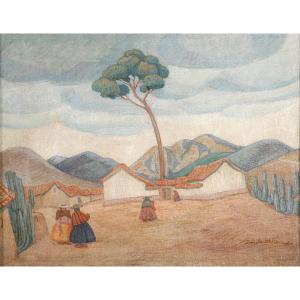
Dating from 1926, this composition belongs to Camilo Blas’s most prolific period—his extended stay in Cusco between 1924 and 1926. Here, the artist depicts a tranquil scene of Andean life: women in traditional dress cross a vast square lined with rural dwellings, while mountains unfold in the background. Tall cacti frame both sides of the composition, and a solitary tree, positioned in the center, serves as the vertical axis around which the landscape is organized. The work reflects Blas’s interest in a direct, sensitive portrayal of the contemporary Andean world. Far from a monumental or archaeological view of indigenous populations, the painter focuses here on everyday life, vernacular architecture, and the way human figures are situated within their environment. The women—seen from behind or in profile—are not treated as isolated figures but as natural elements of the social landscape they inhabit. Their clothing, featuring muted yet contrasting colors—reds, greens, blues, and ochres—introduces a subtle liveliness to the otherwise restrained setting.
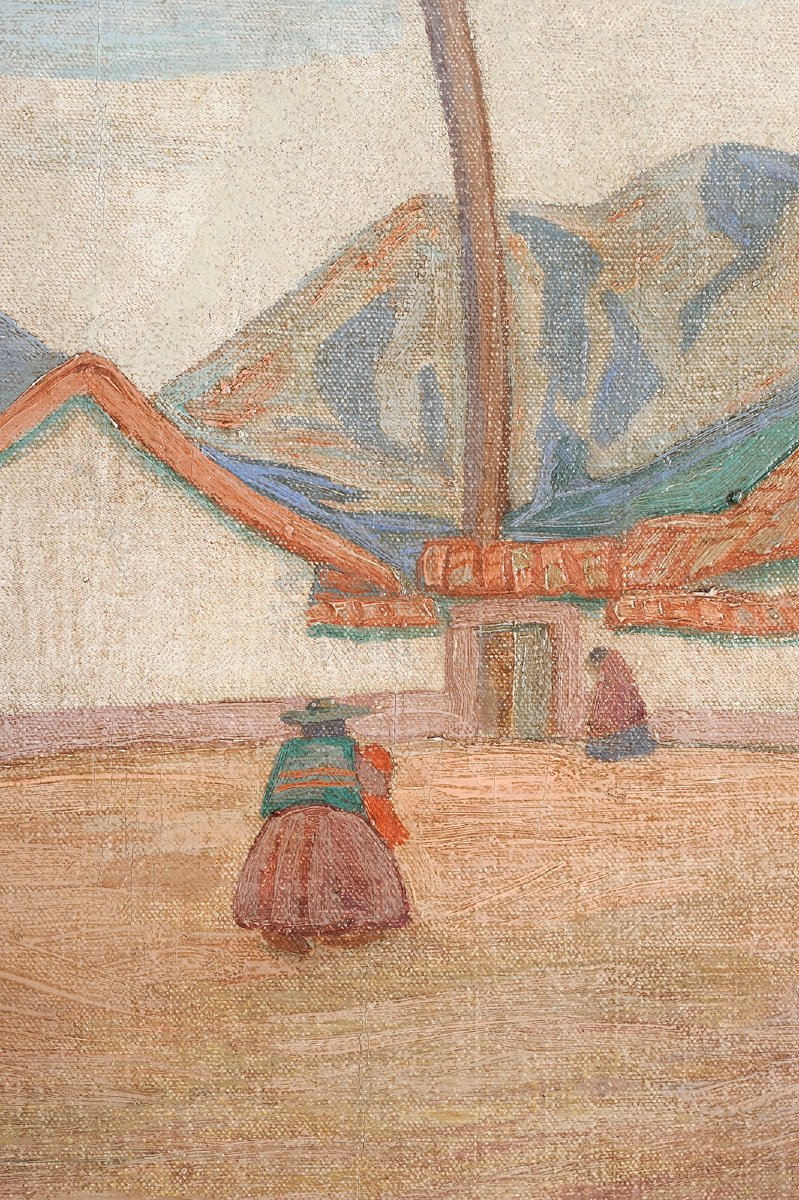
The treatment of the landscape is characteristic of this period: the mountains are reduced to large, almost abstract masses of color, while successive planes recede into a slightly hazy atmosphere. The composition thus prioritizes a sense of space and tonal harmony over topographical precision. The central tree, with its slender trunk and rounded crown, lends the scene an almost symbolic dimension, acting as a link between the village and the mountains.
This work must be viewed within the context of the art Blas was creating in Cusco at the time. These two years of travel marked a period of exploration regarding the representation of contemporary Andean populations and *mestizaje* (cultural mixing). A recent study of his 1920s paintings highlights that Blas did not seek to reconstruct an idealized indigenous world frozen in the "Inca" past, but rather to depict a living, popular, and *mestizo* Peru. This approach has led some art historians to prefer the term "Peruanist project" over "Indigenism" when characterizing his work.
In 1926, José Sabogal published an article on Blas in the third issue of *Amauta*. The four-page spread featured reproductions of several of the artist's recent works. The text notes that, following his trip with Sabogal, Blas returned to Cusco to work on scenes of local life. Upon his return in 1927, Blas exhibited 54 paintings from his travels in Lima. Our painting was among them and was reproduced in the magazine *Variedades* on July 9, 1927. The image was also recently reused—in 2020—in an *El Comercio* article discussing the painter's contribution to Peruvian art ; the piece is cited there as one of the standout works in his body of work.
(Cajamarca 1903 – Lima 1985)
Andean Landscape – "Paisaje Andino"
Oil on canvas
H. 47.5 cm; W. 62 cm
Signed lower right and dated 1926
Exhibition: Lima, Casino Español, *Exposición de Camilo Blas*, July 1927.
Bibliography:
- *Variedades*, Lima, July 9, 1927, in the article "La exposición de Camilo Blas," under the heading "Arte Nacional"; reproduced under the title *Paisaje*.
- *El Comercio*, Lima, July 24, 2020, in the article "Camilo Blas, 35 years after his death: an assessment of his contribution to Peruvian arts"; reproduced under the title *Paisaje Andino*.
A major figure in 20th-century Peruvian *Indigenist* painting, Camilo Blas created a body of work deeply committed to depicting the daily life, landscapes, and people of Peru. The pseudonym Camilo Blas conceals the identity of José Alfonso Sánchez Urteaga, a native of Cajamarca in the northern Peruvian Andes. A painter, draftsman, printmaker, and educator, he belonged to the generation that, during the early decades of the century, helped give rise to a modern Peruvian style of painting rooted in the observation of the country as it truly was.
Hailing from a region particularly rich in artistic traditions, Camilo Blas showed an early aptitude for drawing. His maternal uncle, the painter Mario Urteaga, played a pivotal role in his early development, introducing him to the observation of landscapes and rural life. This close connection to peasant life and the traditions of Cajamarca formed one of the foundations of his artistic vision. Before dedicating himself fully to art, Blas began studying law at the University of Trujillo, but his calling as a painter soon asserted itself.
In 1922, he moved to Lima and enrolled in the Escuela Nacional de Bellas Artes (National School of Fine Arts), which had been founded a few years earlier. He initially studied under Daniel Hernández before meeting José Sabogal, a central figure in the Peruvian *indigenismo* art movement. This meeting proved decisive. Sabogal recognized a unique sensitivity to Peruvian reality in the young Blas and became his mentor, fellow traveler, and one of his key supporters. Blas thus became part of the *indigenista* movement, which sought to forge a national artistic expression by highlighting the cultures, landscapes, and indigenous and *mestizo* populations of Peru.
However, Camilo Blas’s *indigenismo* was not merely an ideological agenda. His originality lay in how he transformed observations of reality into paintings that were vibrant, sensitive, and often humorous. Markets, festivals, processions, street scenes, agricultural work, musicians, artisans, peasants, and city dwellers all became protagonists in a vast visual chronicle of Peru. His gaze encompassed the Andes, the coast, and tropical regions alike, reflecting a desire to traverse and depict the country in all its diversity.
His work is distinguished by precise, expressive draftsmanship combined with a luminous, refined palette. Moving beyond strictly documentary representation, Blas infused his compositions with a poetic—and sometimes satirical—dimension. His figures are captured within their environments, amidst the gestures, customs, and communal scenes that lend his paintings a narrative quality. This focus on the daily lives of the people earned him a nickname bestowed by José Sabogal: "the Pancho Fierro of the Sierra"—a reference to the famous 19th-century graphic chronicler of Lima society.
Blas’s time in Cusco (1924–1926) marked another significant stage in his career. He traveled with Sabogal and worked in Bolivia before returning to Cusco, where he lived for several years. There, he created paintings, drawings, and prints depicting local life. These experiences informed a body of work that combined easel painting, drawing, watercolor, and printmaking, with a diversity of techniques mirroring the variety of his subjects. His work *La Trilla* (1928) exemplifies this period and is now part of the collection at the Museum of Modern Art in New York.
In 1933, he became a professor at the Escuela Nacional de Bellas Artes in Lima. He taught drawing and painting there for many years before eventually becoming the school's director. Through his teaching, he helped pass on an artistic philosophy rooted in the direct observation of the local landscape and the quest for a Peruvian artistic identity. His influence was thus exerted as much through his own creative output as through his role in training several generations of artists.
In 1946, he received the Ignacio Merino National Painting Prize, one of Peru’s most prestigious artistic honors. His work continued to evolve around the same fundamental themes: Andean landscapes, scenes of everyday life, religious festivals, trades, portraits, and glimpses of daily existence. This steadfastness regarding his subject matter never implied stagnation; over the decades, Blas refined his pictorial language and evolved his approach to light, color, and composition.
Camilo Blas thus holds a unique place in the history of modern Peruvian art. While his name remains closely linked to the *Indigenismo* movement of José Sabogal, his work transcends the confines of any single school or manifesto. Above all, it serves as a vast, evocative record of 20th-century Peru. In his paintings and drawings, the Indigenous and *mestizo* populations are not merely motifs; they become the heart of a pictorial world where landscape, labor, celebration, and community life all converge to form a shared identity.
Through the delicacy of his draftsmanship, the richness of his palette, and the deeply human quality of his subjects, Camilo Blas helped elevate everyday Peruvian life into a worthy subject for painting. He died in Lima in 1985, leaving behind a prolific and multidisciplinary body of work that holds a pivotal place in the history of modern Peruvian painting and the shaping of a national artistic identity.
Dating from 1926, this composition belongs to Camilo Blas’s most prolific period—his extended stay in Cusco between 1924 and 1926. Here, the artist depicts a tranquil scene of Andean life: women in traditional dress cross a vast square lined with rural dwellings, while mountains unfold in the background. Tall cacti frame both sides of the composition, and a solitary tree, positioned in the center, serves as the vertical axis around which the landscape is organized. The work reflects Blas’s interest in a direct, sensitive portrayal of the contemporary Andean world. Far from a monumental or archaeological view of indigenous populations, the painter focuses here on everyday life, vernacular architecture, and the way human figures are situated within their environment. The women—seen from behind or in profile—are not treated as isolated figures but as natural elements of the social landscape they inhabit. Their clothing, featuring muted yet contrasting colors—reds, greens, blues, and ochres—introduces a subtle liveliness to the otherwise restrained setting.
The treatment of the landscape is characteristic of this period: the mountains are reduced to large, almost abstract masses of color, while successive planes recede into a slightly hazy atmosphere. The composition thus prioritizes a sense of space and tonal harmony over topographical precision. The central tree, with its slender trunk and rounded crown, lends the scene an almost symbolic dimension, acting as a link between the village and the mountains.
This work must be viewed within the context of the art Blas was creating in Cusco at the time. These two years of travel marked a period of exploration regarding the representation of contemporary Andean populations and *mestizaje* (cultural mixing). A recent study of his 1920s paintings highlights that Blas did not seek to reconstruct an idealized indigenous world frozen in the "Inca" past, but rather to depict a living, popular, and *mestizo* Peru. This approach has led some art historians to prefer the term "Peruanist project" over "Indigenism" when characterizing his work.
In 1926, José Sabogal published an article on Blas in the third issue of *Amauta*. The four-page spread featured reproductions of several of the artist's recent works. The text notes that, following his trip with Sabogal, Blas returned to Cusco to work on scenes of local life. Upon his return in 1927, Blas exhibited 54 paintings from his travels in Lima. Our painting was among them and was reproduced in the magazine *Variedades* on July 9, 1927. The image was also recently reused—in 2020—in an *El Comercio* article discussing the painter's contribution to Peruvian art ; the piece is cited there as one of the standout works in his body of work.
28 000 €
Period: 20th century
Style: Orientalism
Condition: Perfect condition
Material: Oil painting
Length: 47,5 cm hors cadre
Width: 62 cm hors cadre
Reference (ID): 1820749
Availability: In stock
Print