

Inlaid Bronze Ewer, Aftabé, Central Asia, Second Half Of The 19th Century
Artist: Art De L'asie Centrale
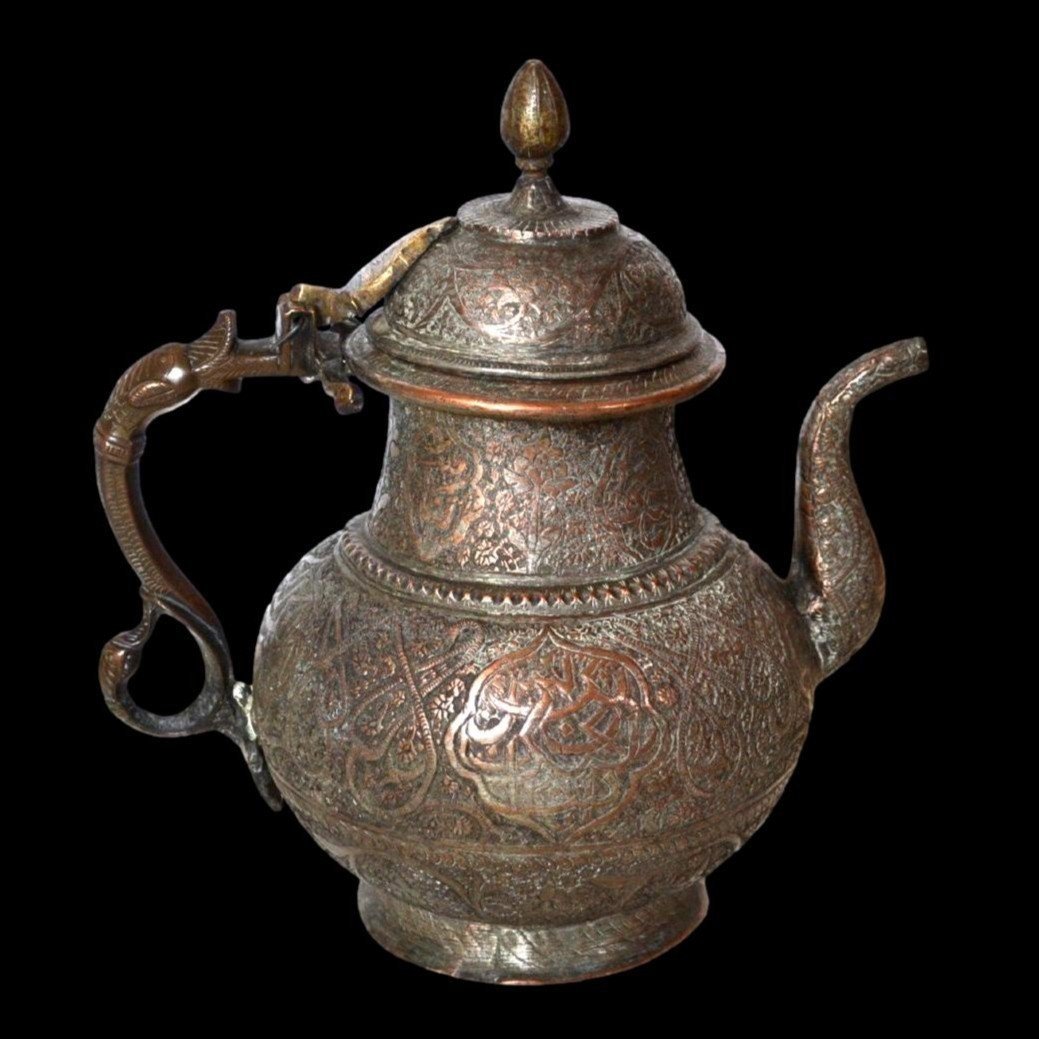
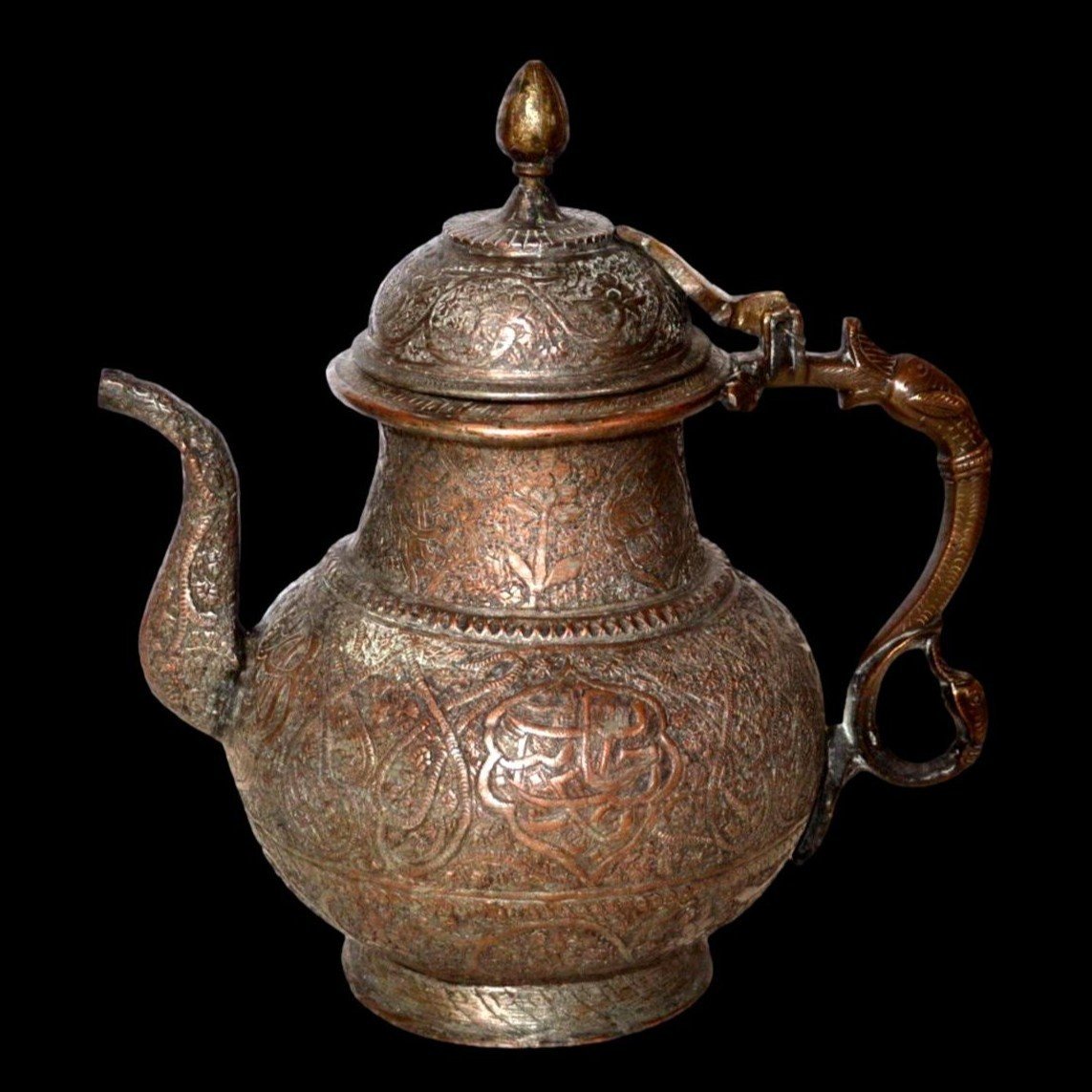
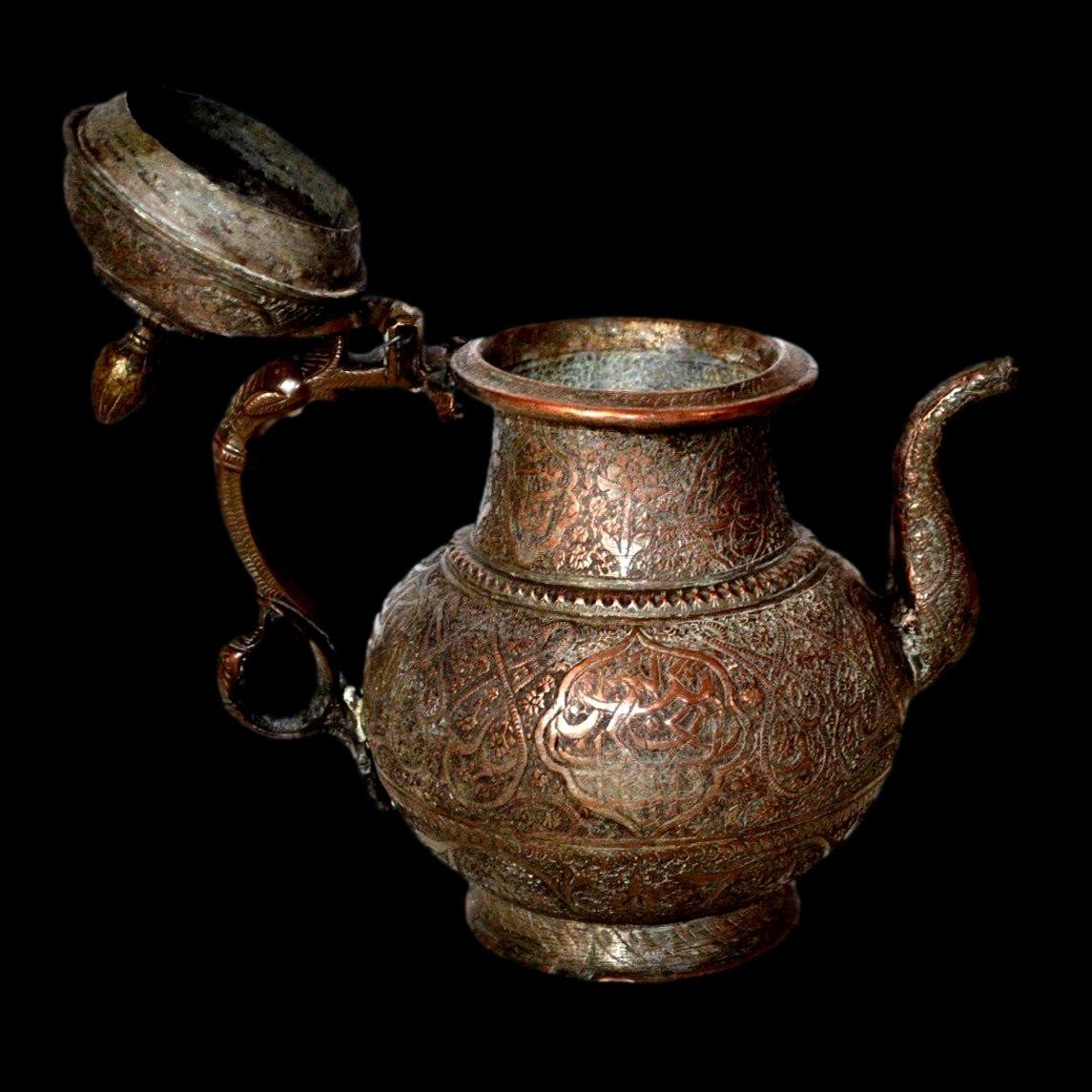
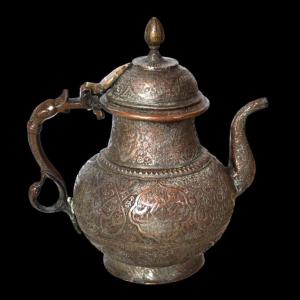
Large ewer or pitcher, known as an “Aftabé” in Central Asia.
Made of tin-plated bronze,
with an ovoid body,
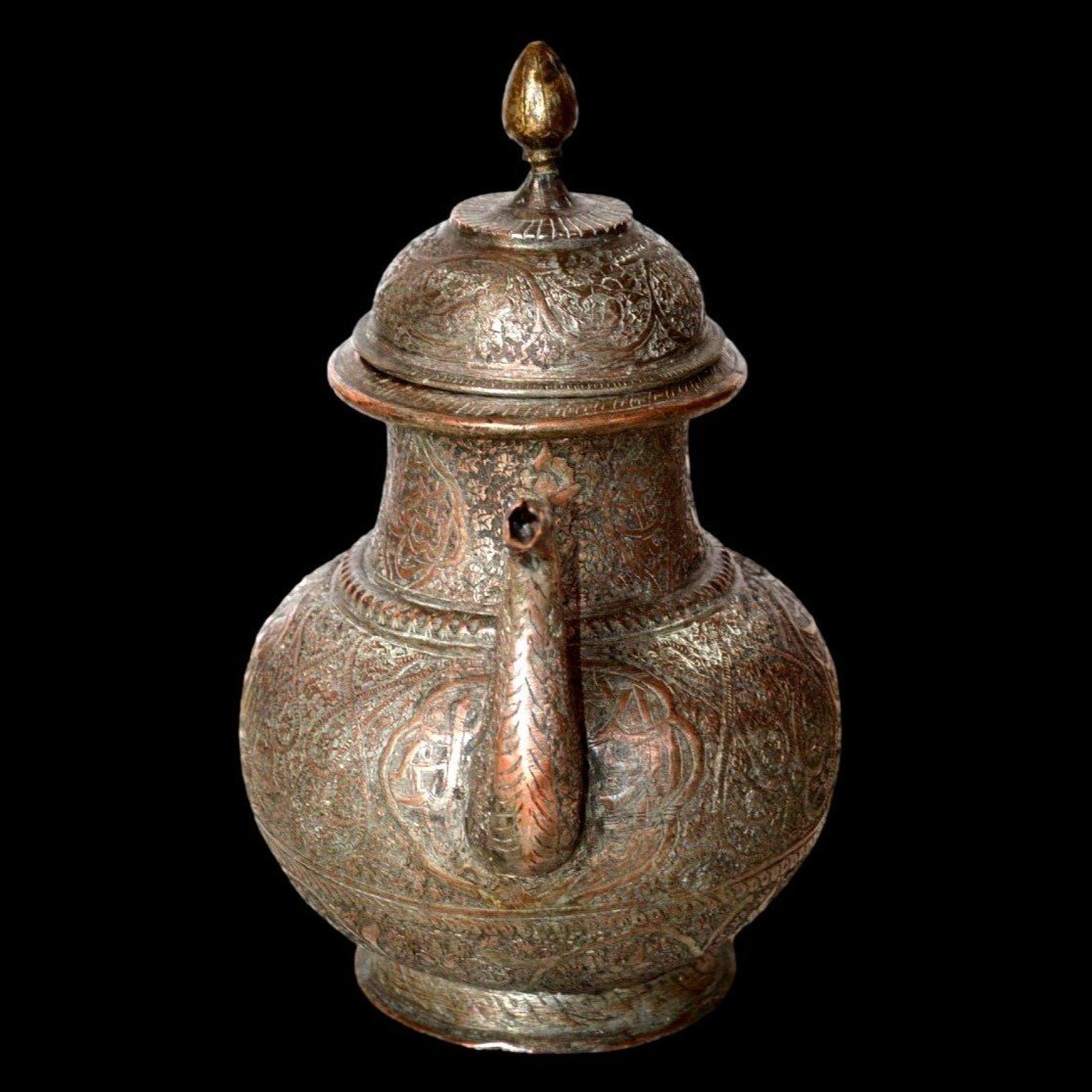
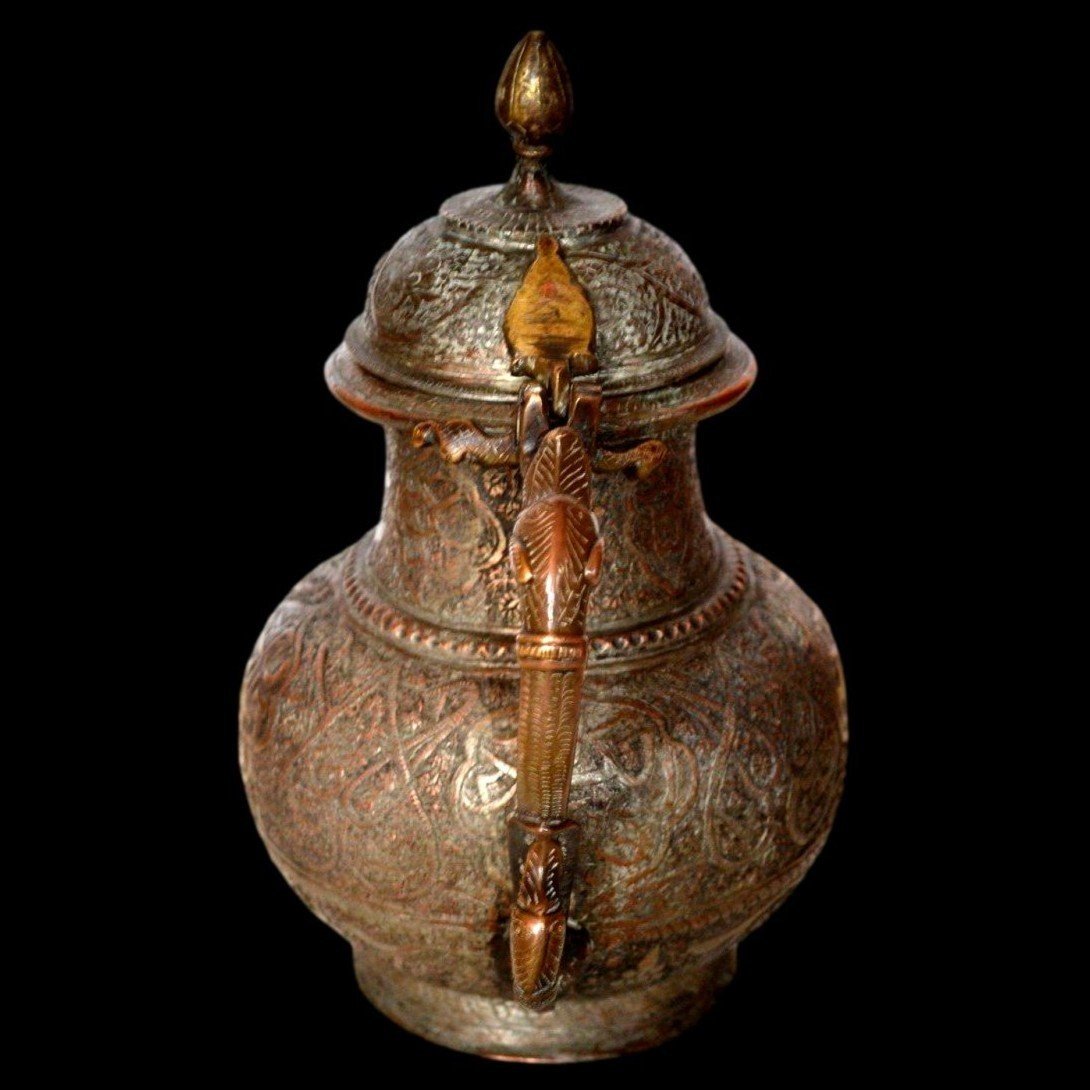
a curved spout, and a bronze handle,
in excellent condition.
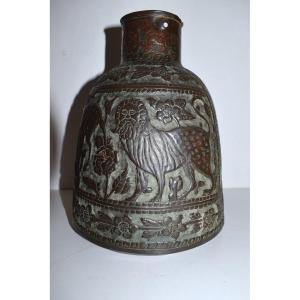
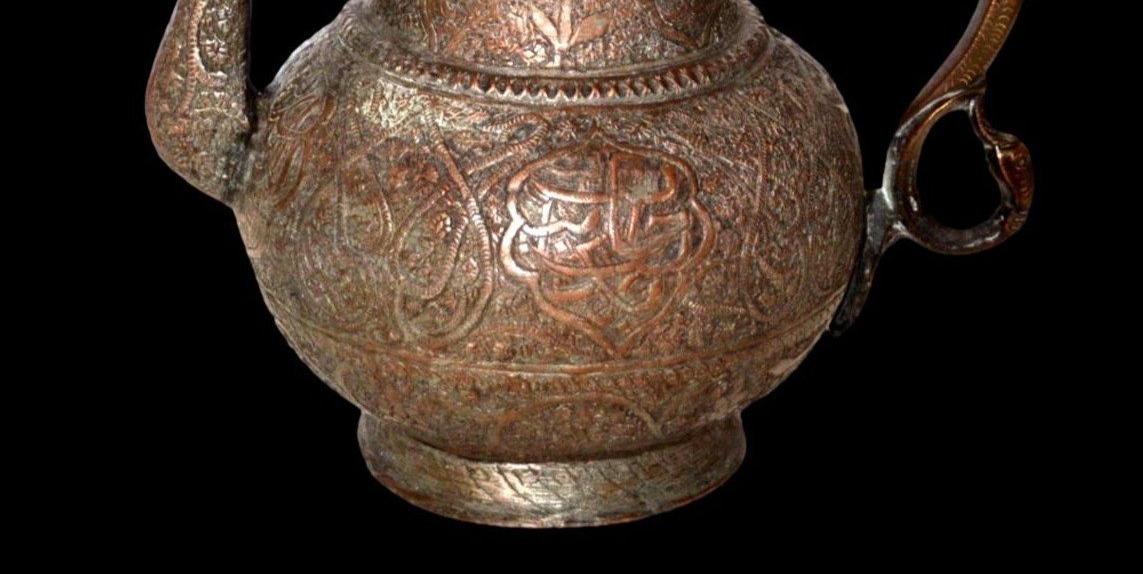
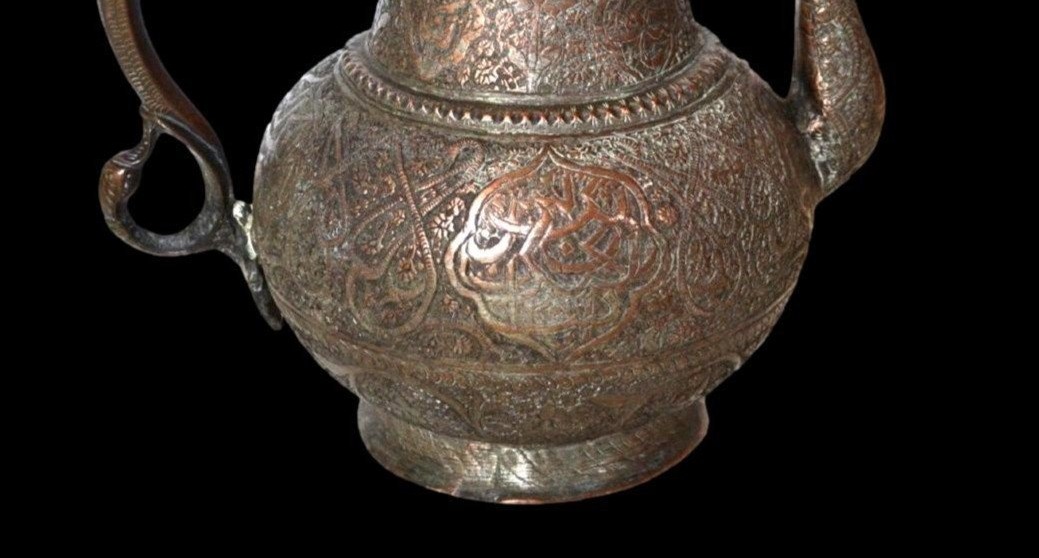
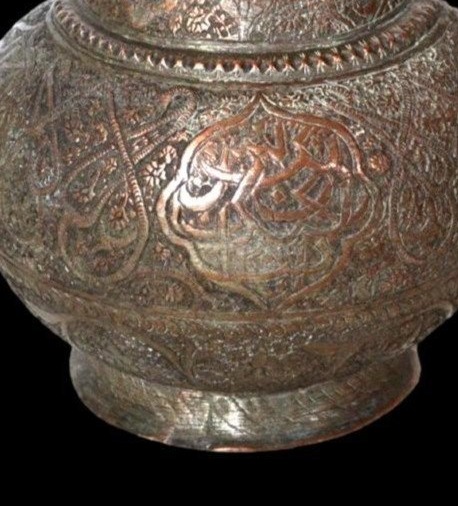
The body is decorated with calligraphic cartouches and mandorlas, flowers, and foliage; the spout features long boteh interlacing patterns forming domes or inverted hearts.
These decorations symbolize the faith “al-iiman” and love.
The neck is fluted and adorned with floral motifs,
and a wide, floral Greek fret at the base completes the design of this piece.
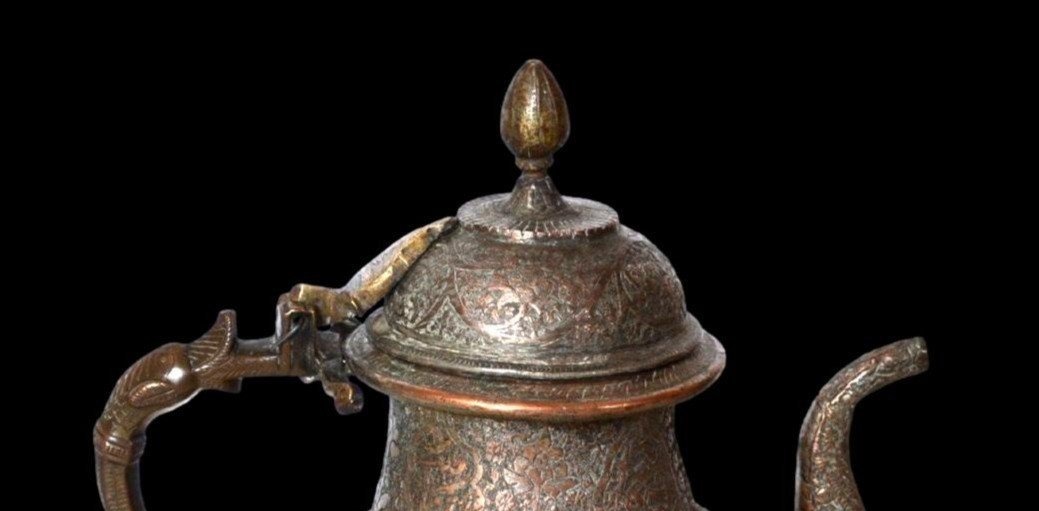
A long, serpentine handle curved in an “S” shape and fluted, ending at both ends with the heads of mythical animals and large, decorated clasps.
The entire piece is made of bronze,
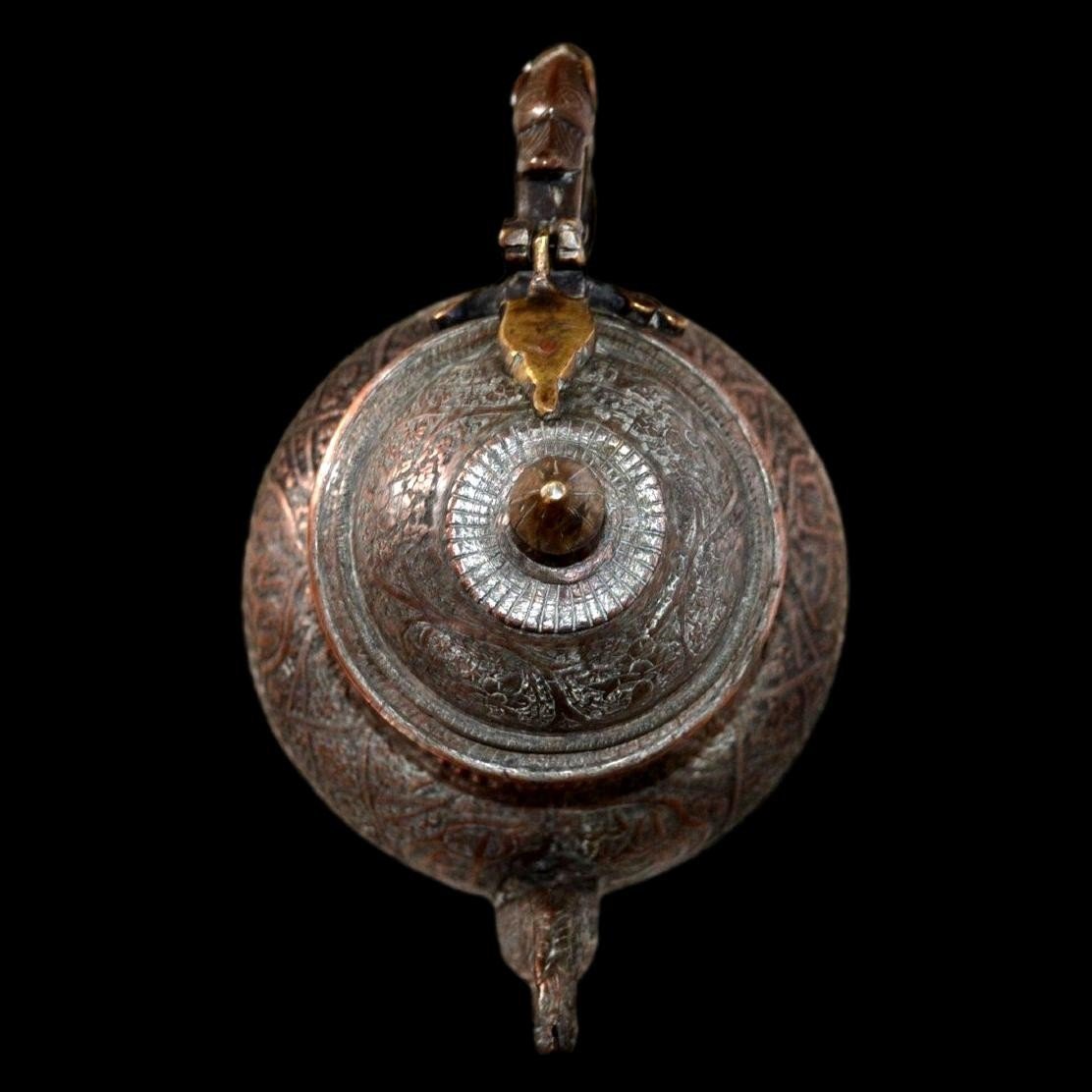
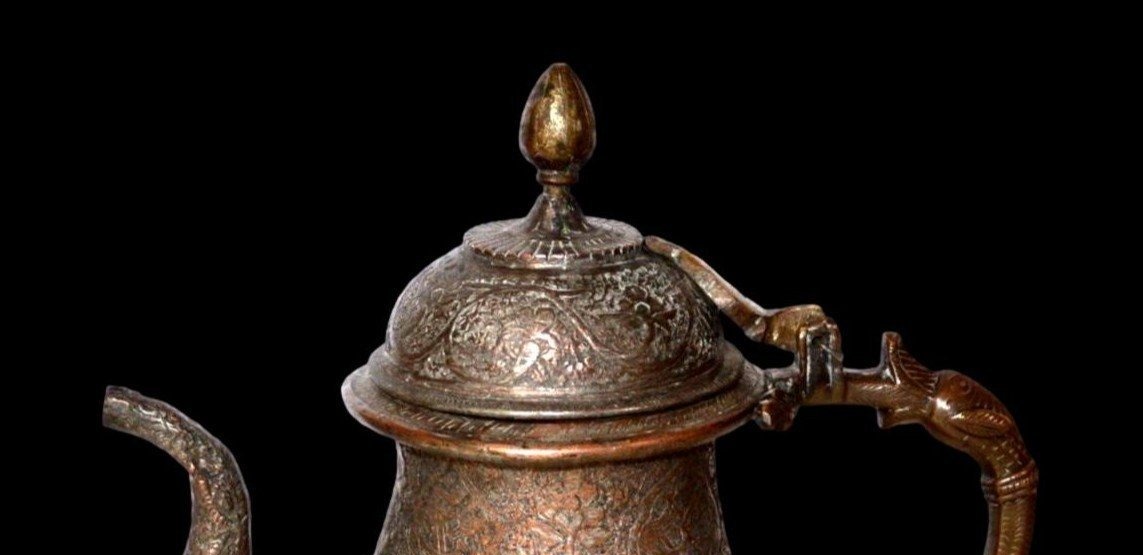
with a dome-shaped lid decorated with a floral Greek fret,
topped by a fluted fretel.
This type of ewer was, and still is, primarily used for ablutions—washing the face and hands—during prayers and religious ceremonies.
## “The feast of the initiates, standing ready to serve,
beauties from all sides hold the ewer in their hands,
the lovers wash their hands with all their soul,
while the beauties pour the water, ewer in hand."
Reading and translation by A.S. Melikian-Chirvani, 1973, p. 119.
19th century, in very good condition, from a collection.
Origin:
Central Asia, Persia, during the Qajar Dynasty.
Ewers are among the most beautiful objects of Islamic art.
Dimensions:
Height: 29 cm - Diameter: 19 cm - Width: 28 cm - Weight: 1,954 grs
We feature other ewer models from various origins on Proantic.
(Persia, Azerbaijan, the Ottoman Empire, Central Asia, India)
For your information:
# The Qajar dynasty (Qājār, Qadjar, Qajar; Persian: قاجار)
was a Turkmen dynasty that ruled Iran from 1786 to 1925.
The finesse of the engravings demonstrates the engravers’ skill.
# These objects are found in major collections of Islamic art museums around the world.
- Museo Nazionale del Bargello, Florence, Italy.
- Museum für Islamische Kunst, Staatliche Museen zu Berlin, Berlin, Germany.
FREE SHIPPING TO FRANCE via Colissimo: 0€ / EUR 25€ / WORLD 50€
For more information, you can reach me at 06 13 36 09 30 or at winsteinprovence@gmail.com
www.winsteinprovence.com
Texts and photos by WINSTEIN, all rights reserved
Made of tin-plated bronze,
with an ovoid body,
a curved spout, and a bronze handle,
in excellent condition.
The body is decorated with calligraphic cartouches and mandorlas, flowers, and foliage; the spout features long boteh interlacing patterns forming domes or inverted hearts.
These decorations symbolize the faith “al-iiman” and love.
The neck is fluted and adorned with floral motifs,
and a wide, floral Greek fret at the base completes the design of this piece.
A long, serpentine handle curved in an “S” shape and fluted, ending at both ends with the heads of mythical animals and large, decorated clasps.
The entire piece is made of bronze,
with a dome-shaped lid decorated with a floral Greek fret,
topped by a fluted fretel.
This type of ewer was, and still is, primarily used for ablutions—washing the face and hands—during prayers and religious ceremonies.
## “The feast of the initiates, standing ready to serve,
beauties from all sides hold the ewer in their hands,
the lovers wash their hands with all their soul,
while the beauties pour the water, ewer in hand."
Reading and translation by A.S. Melikian-Chirvani, 1973, p. 119.
19th century, in very good condition, from a collection.
Origin:
Central Asia, Persia, during the Qajar Dynasty.
Ewers are among the most beautiful objects of Islamic art.
Dimensions:
Height: 29 cm - Diameter: 19 cm - Width: 28 cm - Weight: 1,954 grs
We feature other ewer models from various origins on Proantic.
(Persia, Azerbaijan, the Ottoman Empire, Central Asia, India)
For your information:
# The Qajar dynasty (Qājār, Qadjar, Qajar; Persian: قاجار)
was a Turkmen dynasty that ruled Iran from 1786 to 1925.
The finesse of the engravings demonstrates the engravers’ skill.
# These objects are found in major collections of Islamic art museums around the world.
- Museo Nazionale del Bargello, Florence, Italy.
- Museum für Islamische Kunst, Staatliche Museen zu Berlin, Berlin, Germany.
FREE SHIPPING TO FRANCE via Colissimo: 0€ / EUR 25€ / WORLD 50€
For more information, you can reach me at 06 13 36 09 30 or at winsteinprovence@gmail.com
www.winsteinprovence.com
Texts and photos by WINSTEIN, all rights reserved
1 140 €
Period: 19th century
Style: Orientalism
Condition: Excellent condition
Material: Bronze
Width: 28 cm - 11"
Diameter: 19 cm - 7,5"
Height: 29 cm - 11"
Reference (ID): 1815433
Availability: In stock
Print