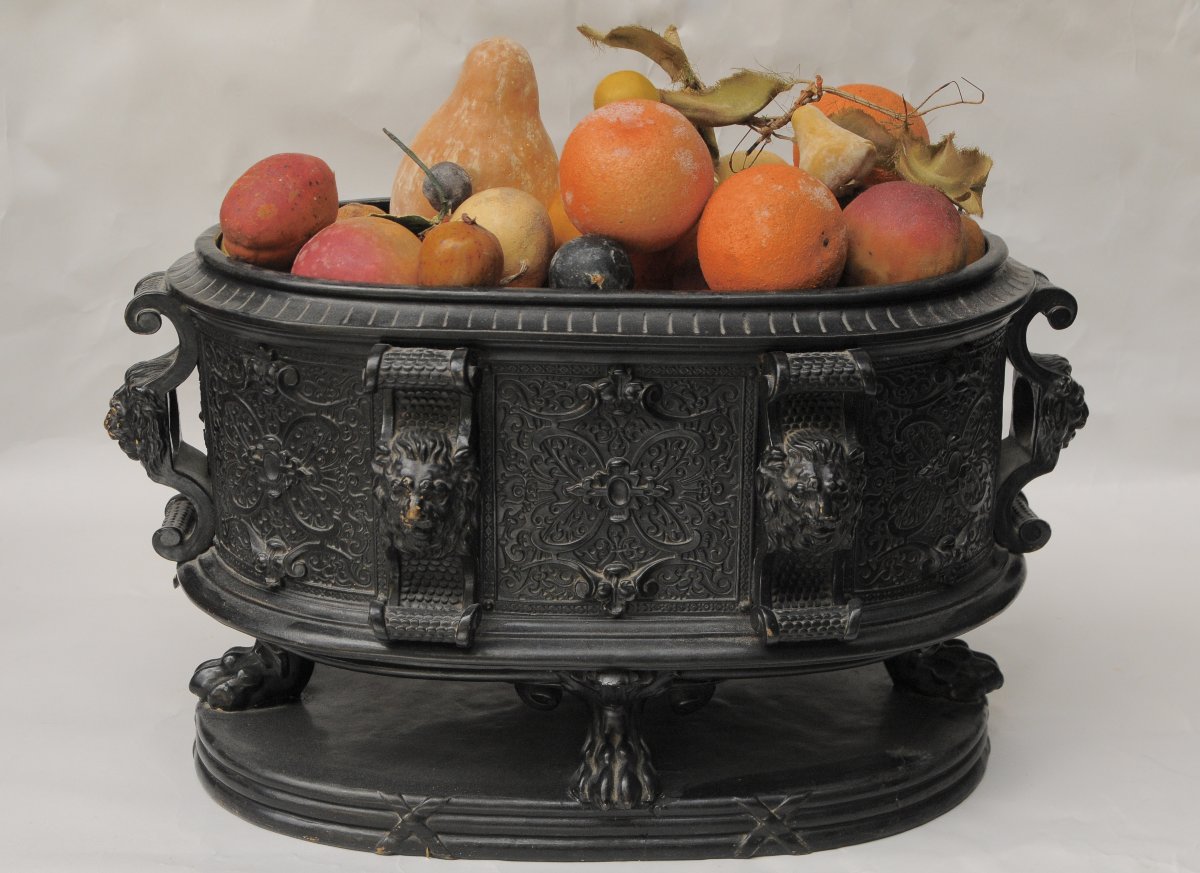



Large Neo-renaissance Ceramic Planter With Black Glaze, Late 19th Century
During the second half of the 19th century, several major European manufacturers excelled at masterfully imitating the patina of bronze or art cast iron using ceramics (often called "basalt ceramics" or "black slip").
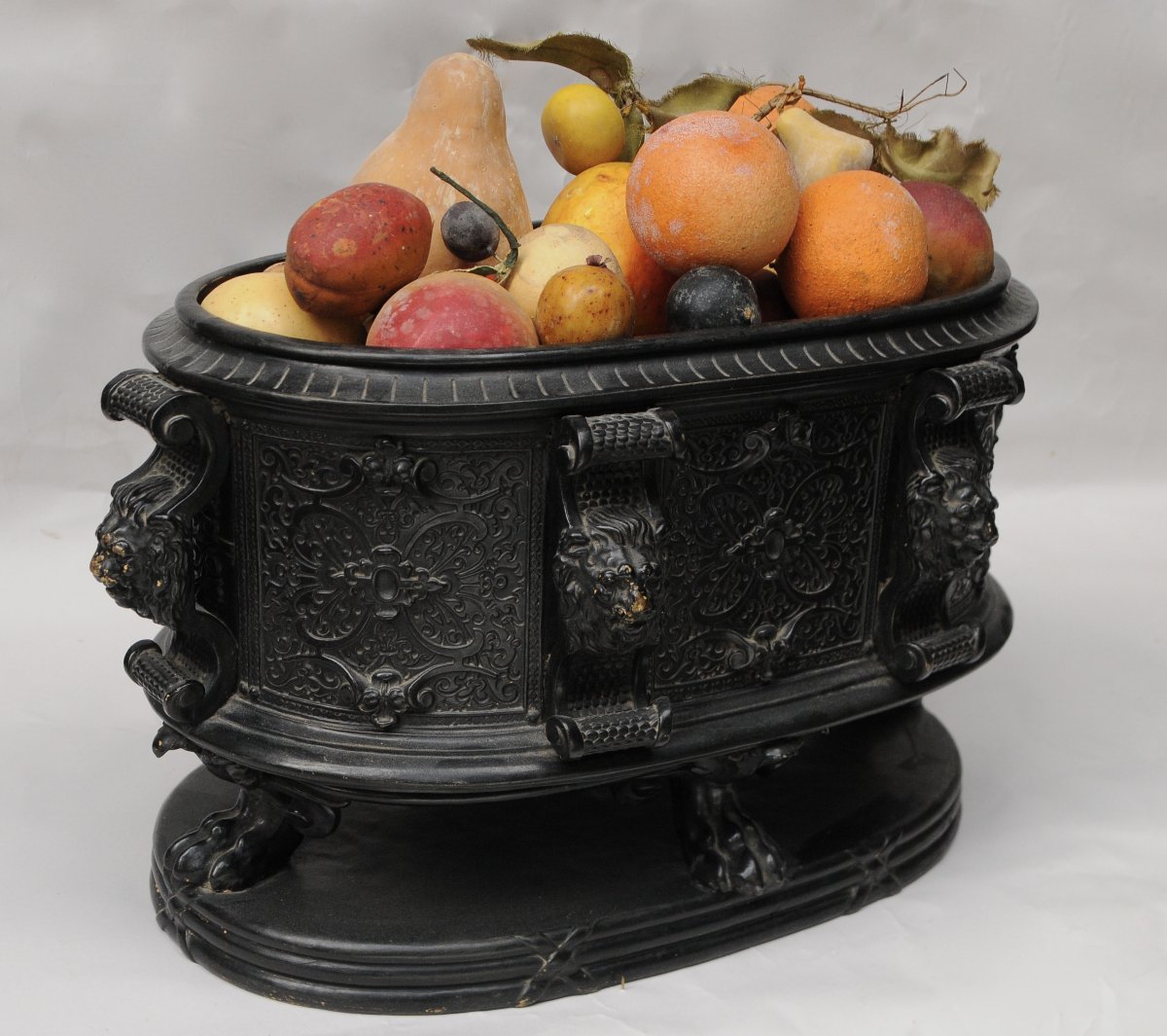
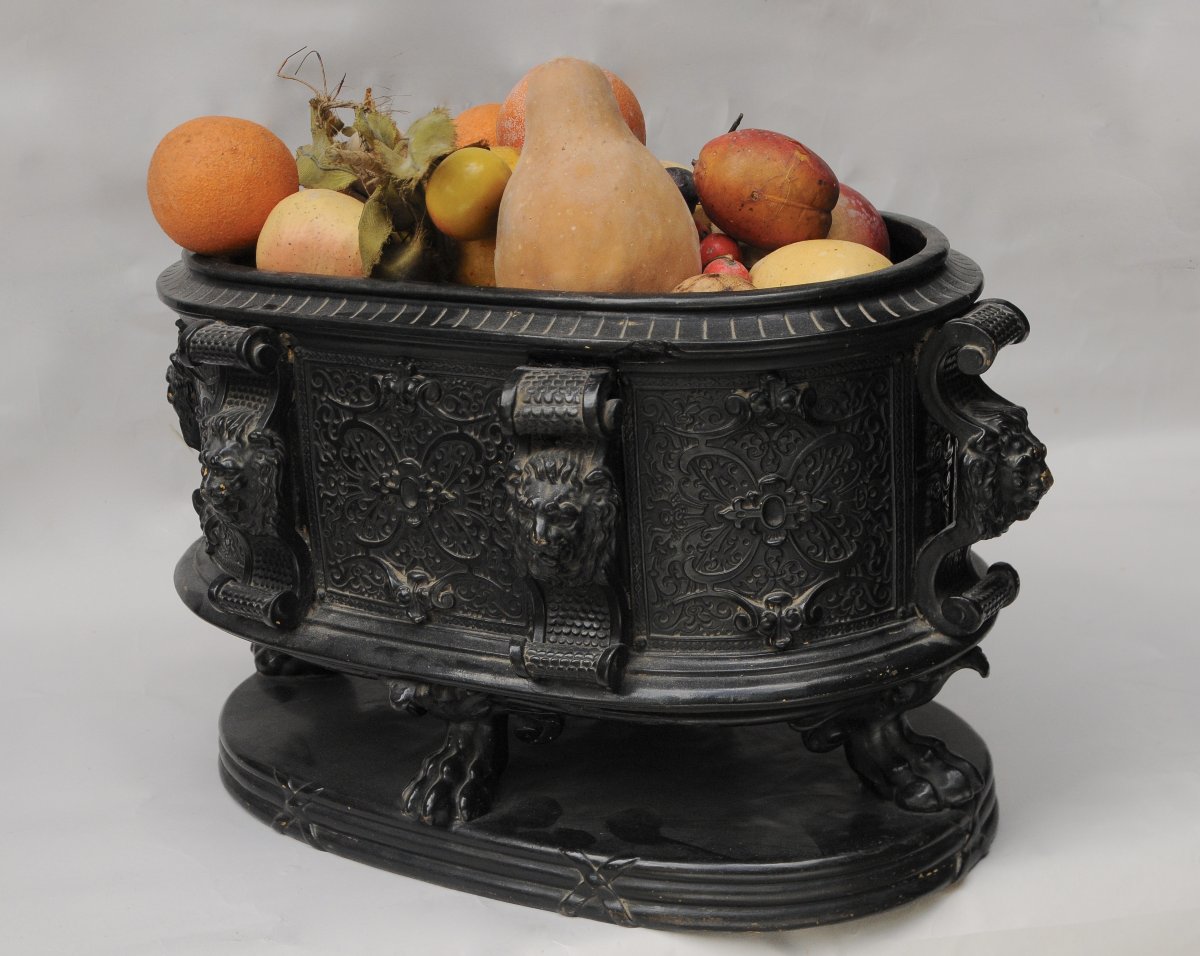
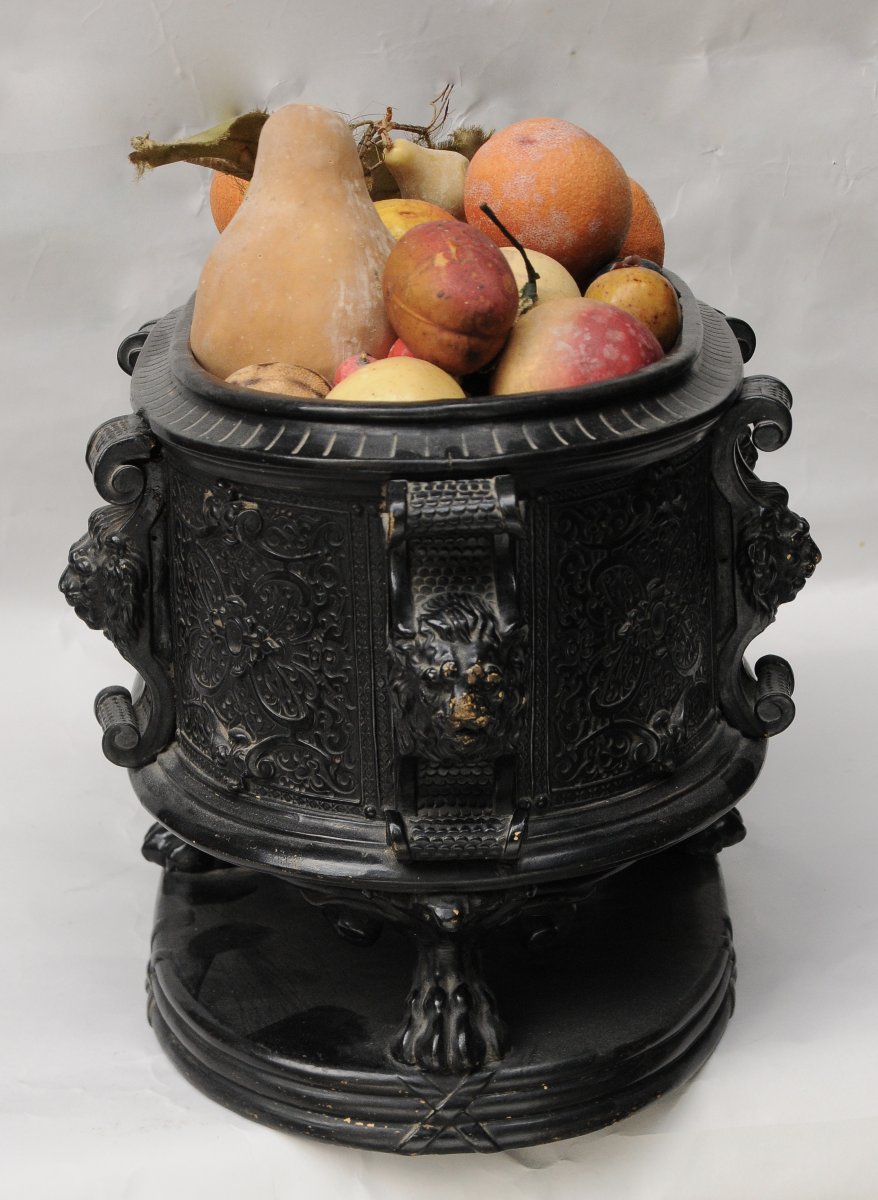
This piece was used as an indoor planter, a centerpiece, or a fruit bowl; its oval shape on a flat base is also characteristic of mantelpiece decorations.
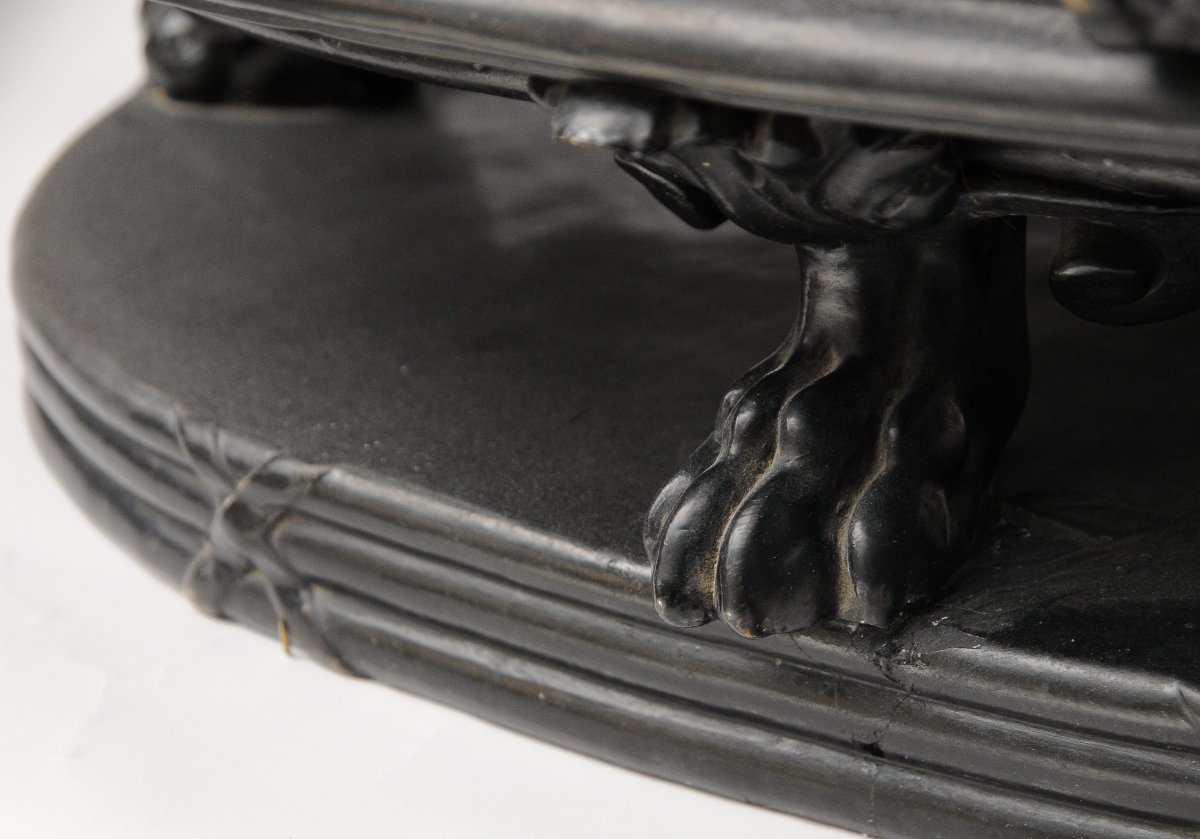
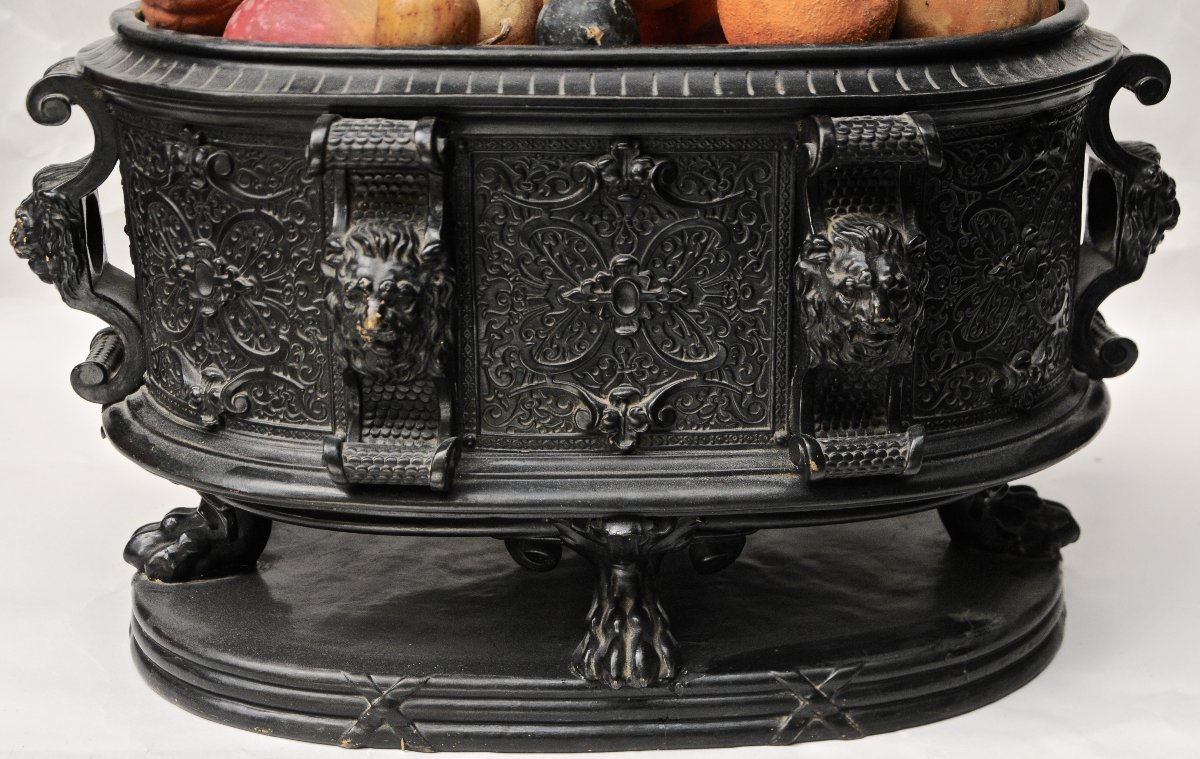
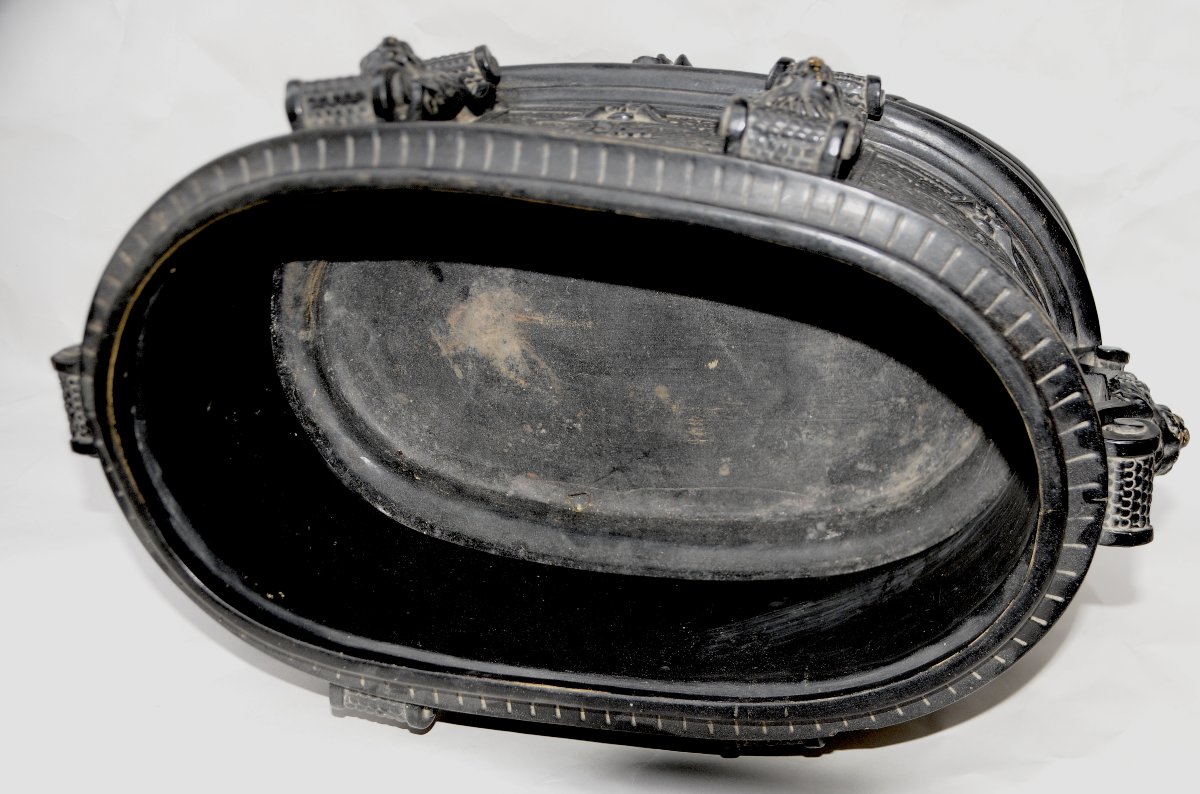
Neoclassical & Neo-Renaissance Decoration: The oval body is richly adorned with foliage, volutes, and floral motifs in relief. Lion mascarons: The sides are punctuated by deeply projecting lion busts (mascarons). Claw feet: The piece rests on a sturdy base ending in feet shaped like lion’s paws clasping a ball, set on a molded oval plinth. Manufacture: This type of high-quality decorative art ceramics comes from the leading Central European and French ceramic manufacturers of the period; the presence of a number engraved in relief beneath the base (usually accompanied by a monogram or letters) is characteristic of renowned manufacturers (such as Fives-Lille, Onnaing, or Vallauris) also produced luxurious ceremonial planters with a matte or satin black finish, drawing on the decorative repertoire of the Renaissance (lion mascarons, foliage scrolls, claw feet). The model number: The number 3636 (or a similar number, such as 3036) is visible. It corresponds to the mold number listed in the manufacturer’s catalogs for this specific shape of ceremonial planter. The serial letter: Just below that, the letter D (or a workshop symbol). The trademark symbol: A little further down, a trademark is faintly visible (a round or coat-of-arms-style mark containing initials, often heavily obscured by the thickness of the black glaze). This confirms with 100% certainty that the piece was produced by a major majolica or barbotine manufacturer of the late 19th century (1880–1900), such as the prestigious Austro-Hungarian firm Wilhelm Schiller & Son (WS&S), or a major French art pottery workshop Previously restored with metal clips under the base; slight signs of wear on the patina Dimensions: length 48 cm, height 27 cm, width 27 cm
This piece was used as an indoor planter, a centerpiece, or a fruit bowl; its oval shape on a flat base is also characteristic of mantelpiece decorations.
280 €
Period: 19th century
Style: Renaissance, Louis 13th
Condition: Condition of use
Material: Ceramic
Reference (ID): 1814796
Availability: In stock
Print