THIS OBJECT WAS SOLD
Pair Of Candlesticks Bouquet Of Flowers


ORDERING AND ADDITIONAL INFORMATION FROM OUR WEBSITE
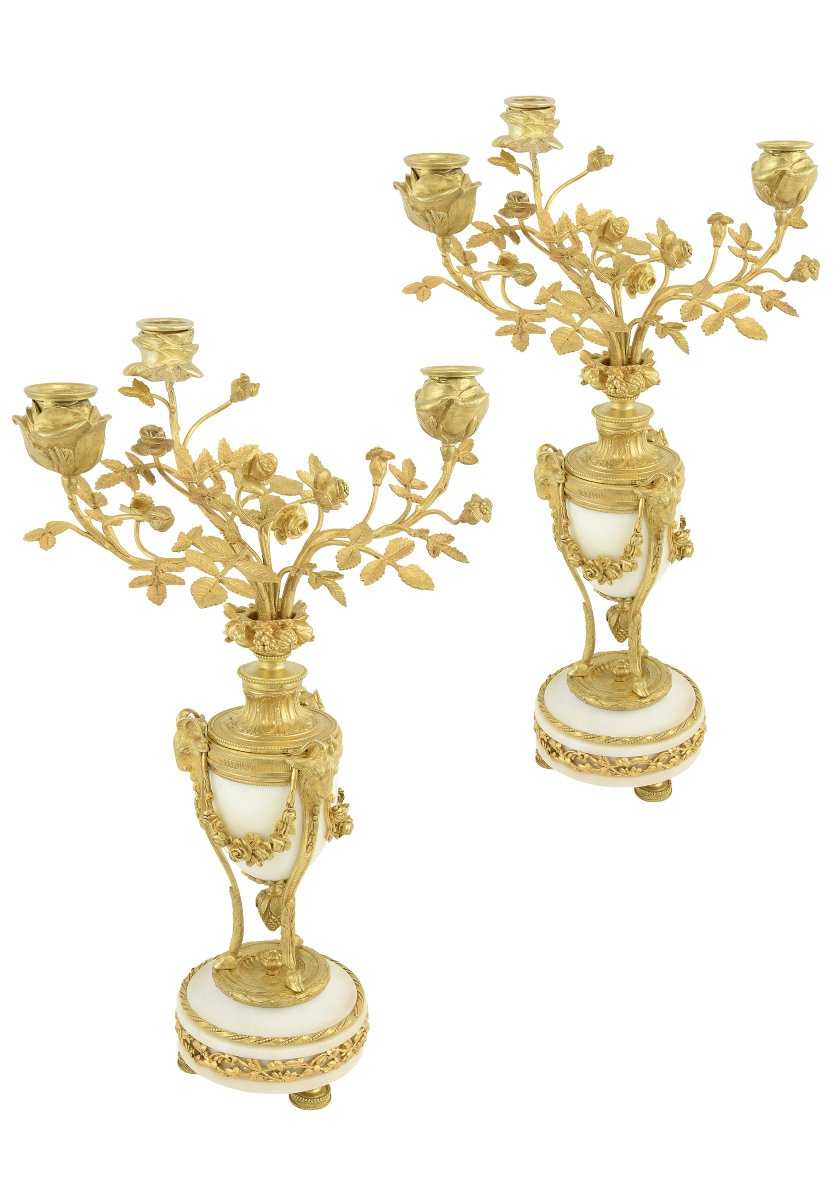
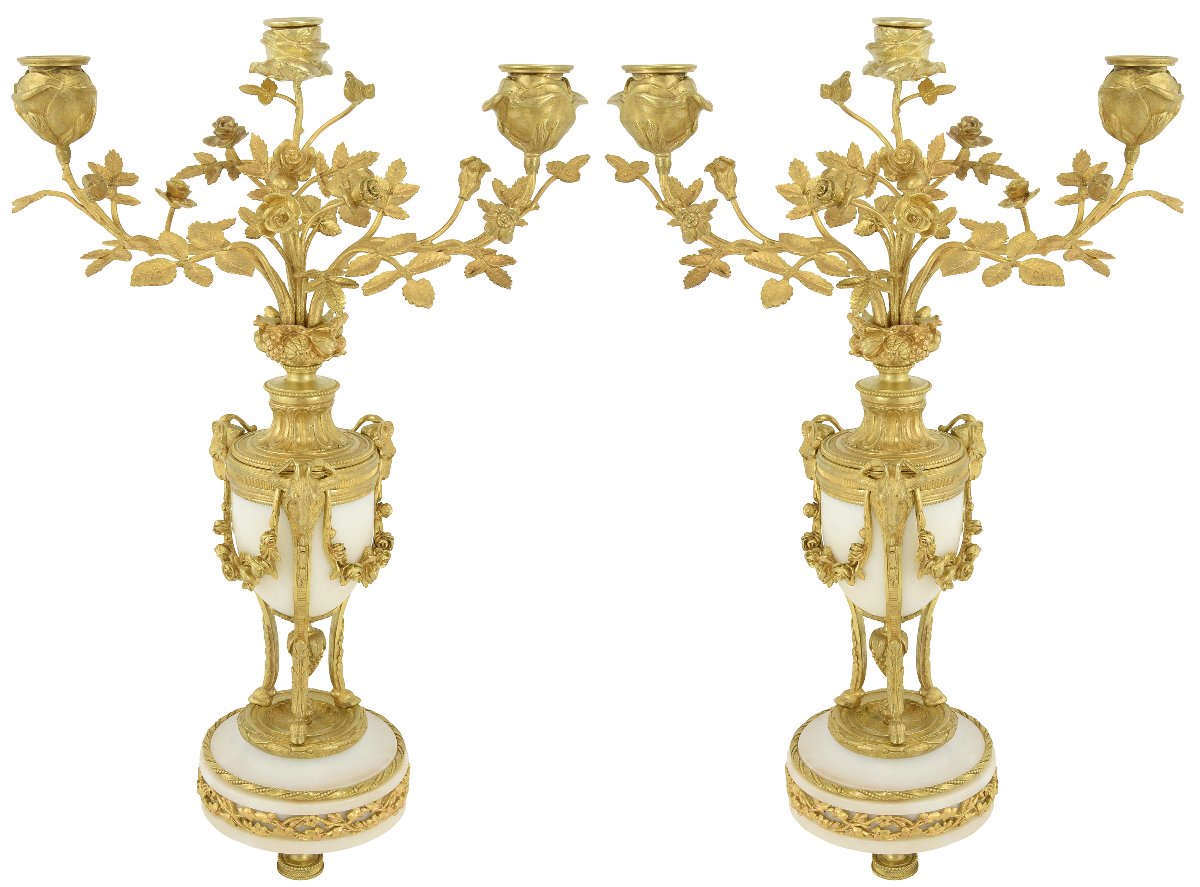
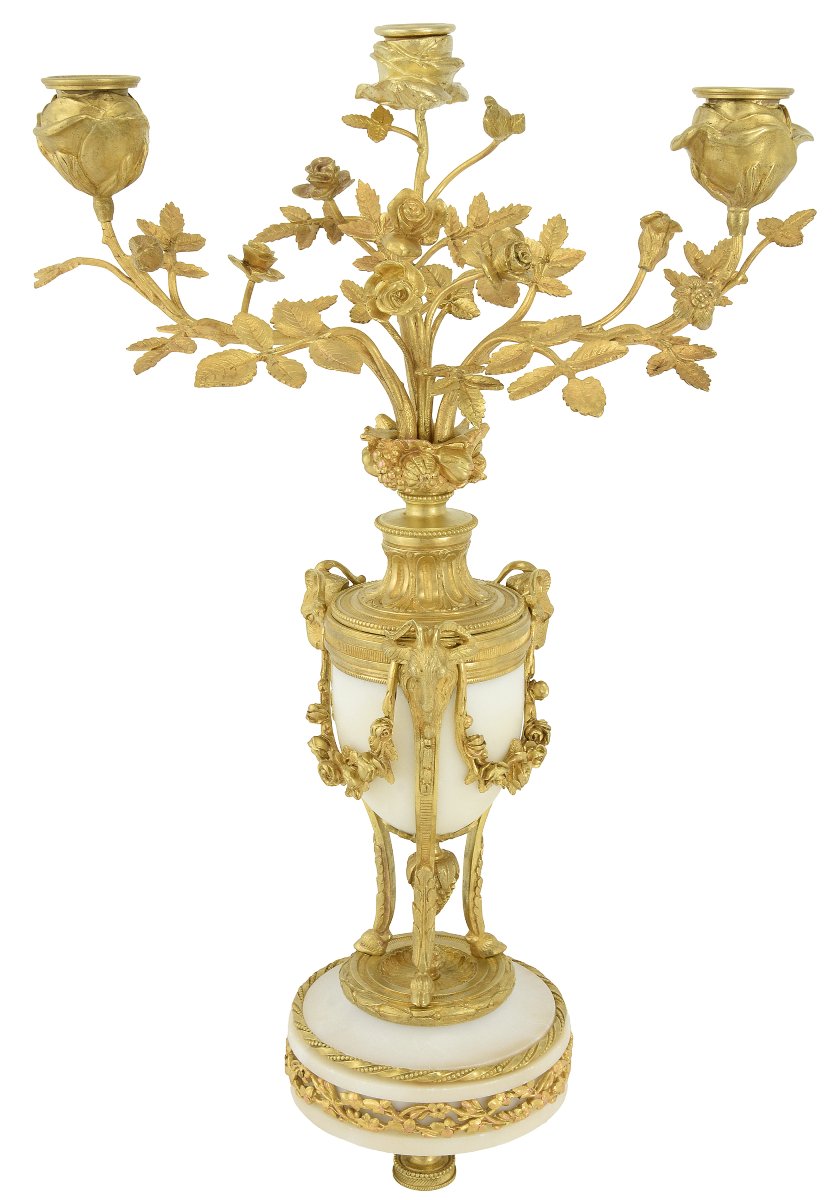
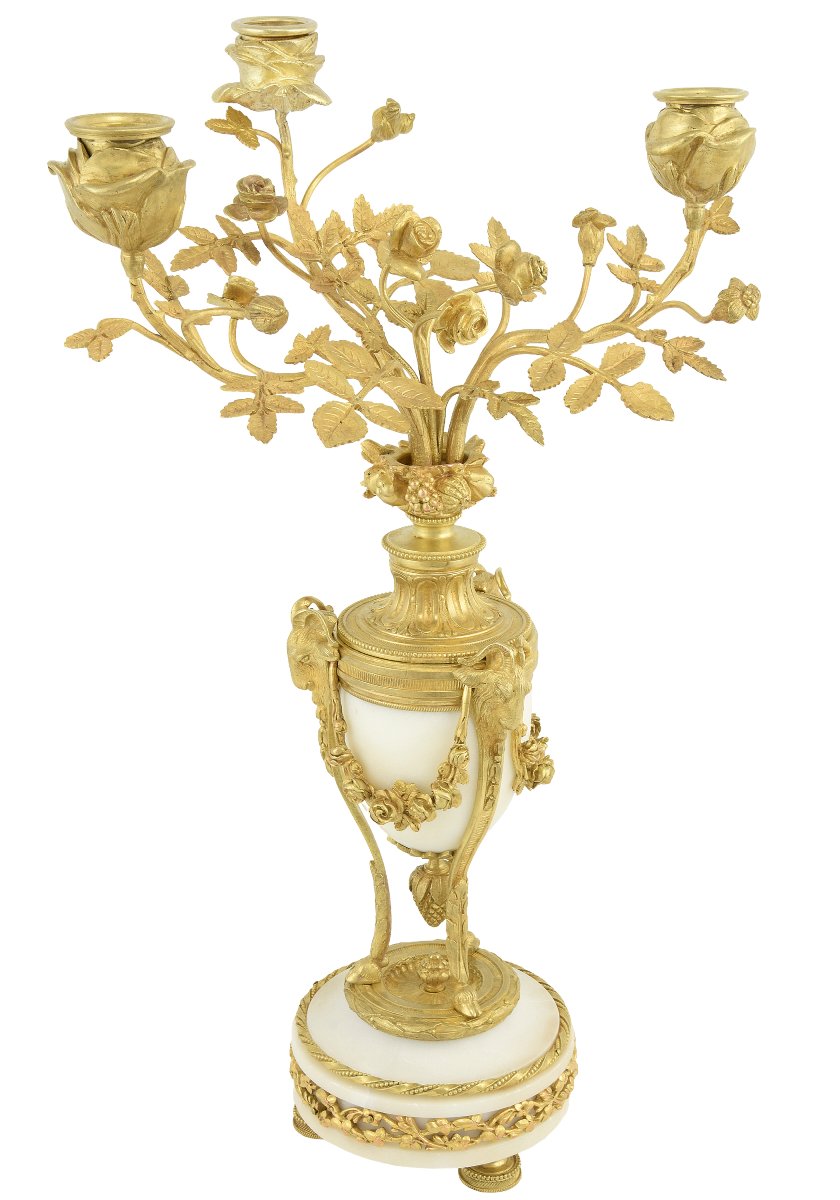
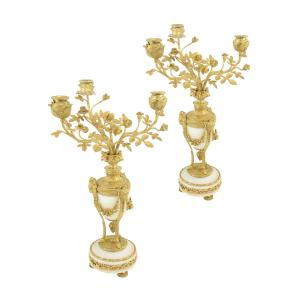
Pair of flower bouquet candelabra, in gilt bronze and Carrara marble, dating from the Napoleon III period, circa 1860. Remarkable for its elegant floral composition and the richness of its materials, this ensemble combines finely chased gilt bronze with white Carrara marble with great refinement. Designed in the form of a luxuriant bouquet, particularly characteristic of the decorative taste of the Second Empire, these candelabra display a spectacular silhouette that is both precious, refined and remarkably light in appearance.
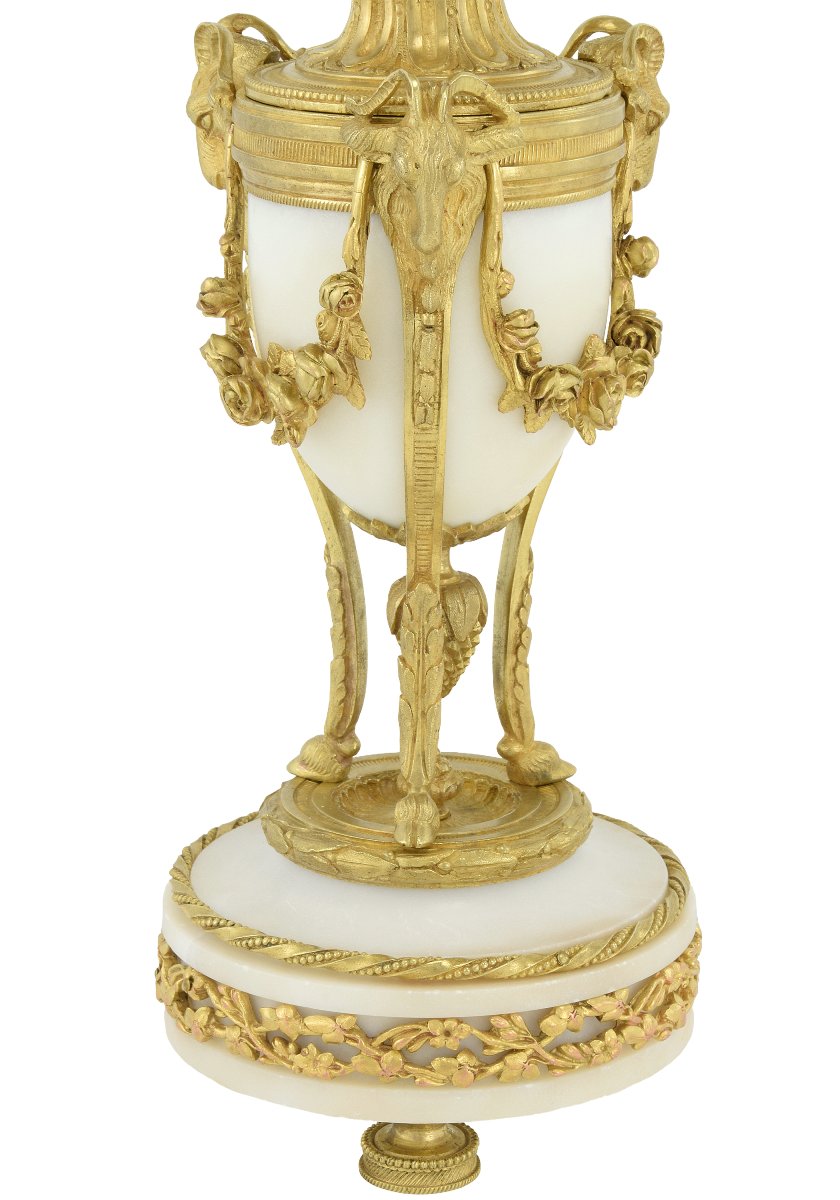
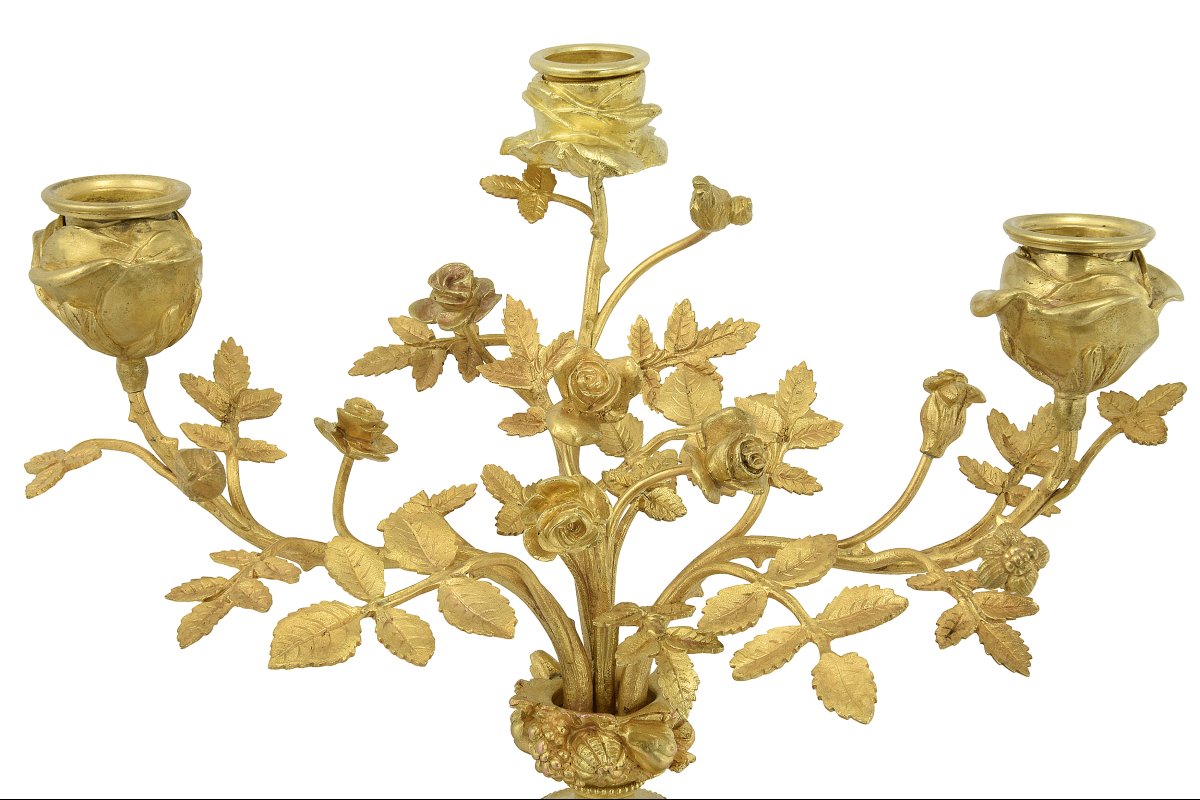
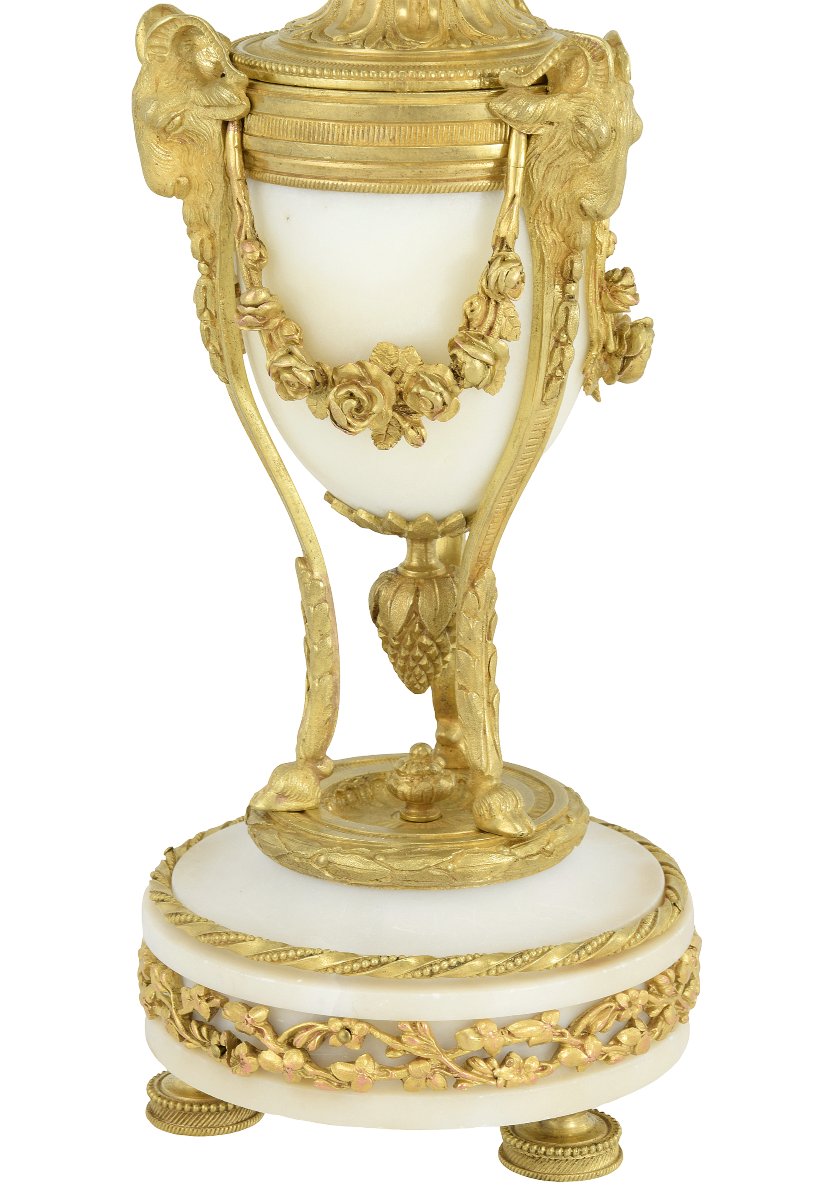
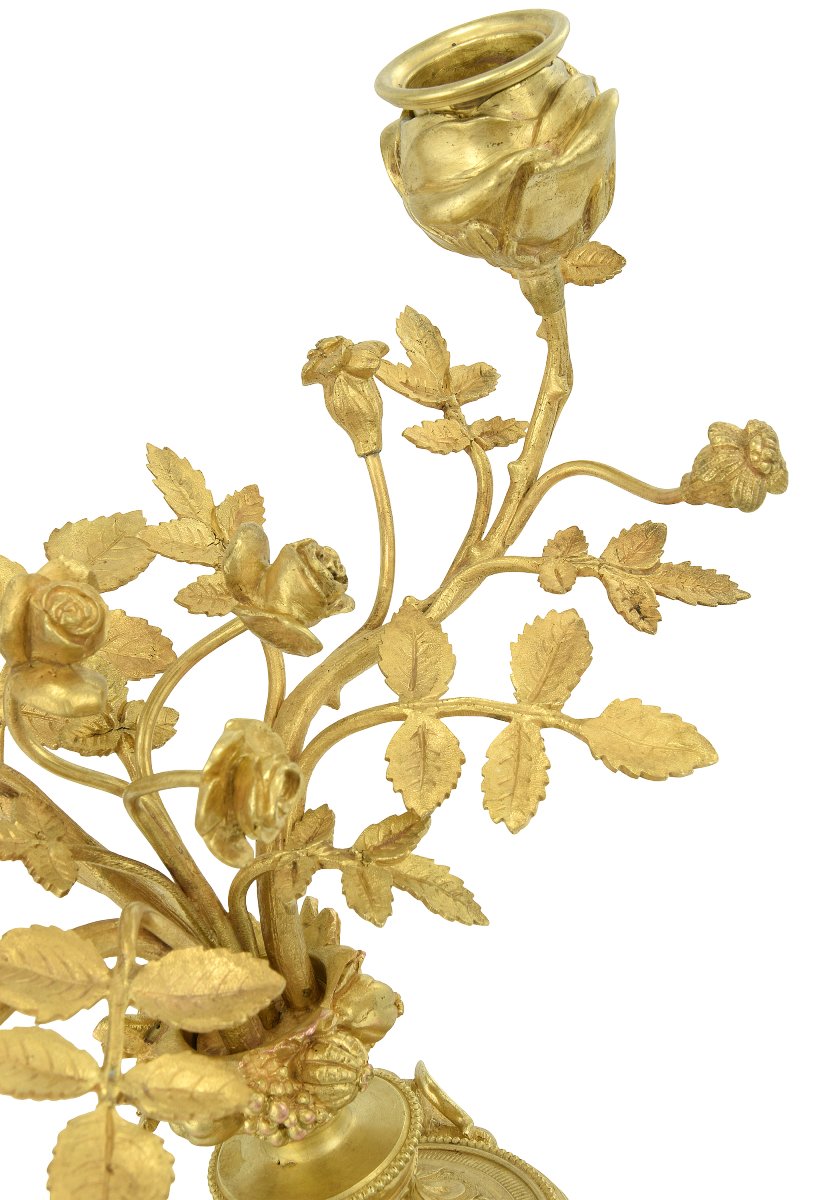
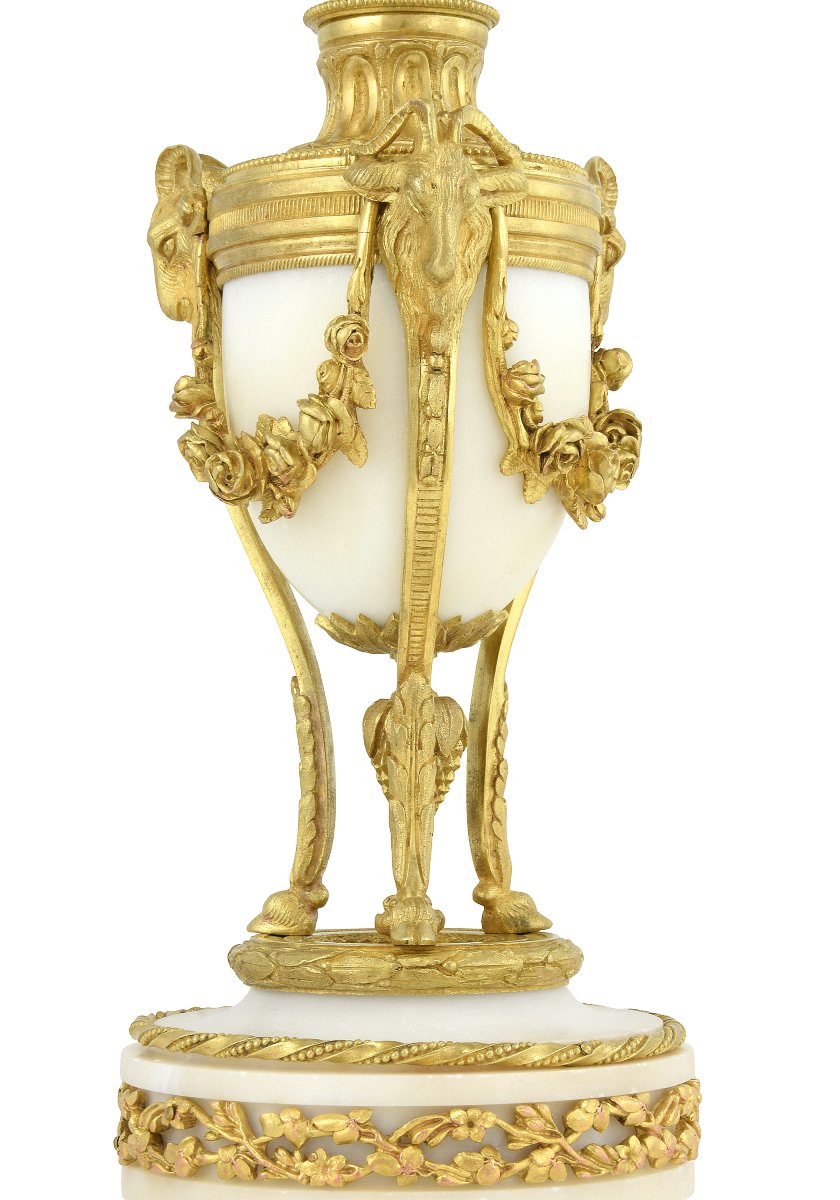
The composition develops from top to bottom around a spectacular floral bouquet in gilt bronze, composed of numerous branches, leaves, fully opened roses and flower buds, rendered with remarkable attention to detail. The branches unfold into an elegant radiating composition and terminate in several bobeches shaped as corollas and flower vases, designed to hold candles. The bouquet emerges from a richly decorated basket adorned with flowers, foliage and fruit, itself set upon an architectural gilt-bronze collar. This supports a substantial ovoid vase in white Carrara marble, entirely mounted with gilt bronze. The upper section is enhanced with beaded mouldings, guilloché friezes and moulded bands. Four finely chased ram heads in gilt bronze rhythmically decorate the body of the vase and serve as supports for sumptuous garlands of roses, foliage and trailing flowers. The vase rests upon an elegant tripod structure, formed by three curved legs richly decorated with vegetal motifs, acanthus leaves and stylised foliage. At the centre of the support is a prominent foliage and pine-cone motif. The whole composition stands upon a circular finely chased gilt-bronze terrace, itself set on a remarkable circular Carrara marble base. Its perimeter is adorned with a delicate continuous frieze of flowers and leafy branches in gilt bronze, complemented by an elegant twisted beaded border. Three small gilt-bronze feet decorated with gadroons and beads complete this highly sophisticated composition.
Through its authenticity, remarkable quality of execution and harmonious composition, this pair of candelabra represents a particularly desirable piece for its decorative character and artistic interest. The delicacy of the chasing, the naturalistic modelling of the flowers and foliage, the sculptural presence of the ram heads and the quality of the Carrara marble all testify to the care devoted to its creation. The flower bouquet design, combined with such an elaborate tripod structure, gives the ensemble an exceptional personality and remarkable decorative presence. A highly charming ensemble, perfectly representative of the sumptuous taste of the Second Empire, destined to become a centrepiece in an elegant interior or an outstanding addition to a collection of nineteenth-century decorative arts.
Pair of flower bouquet candelabra, in gilt bronze and Carrara marble, dating from the Napoleon III period, circa 1860. Remarkable for its elegant floral composition and the richness of its materials, this ensemble combines finely chased gilt bronze with white Carrara marble with great refinement. Designed in the form of a luxuriant bouquet, particularly characteristic of the decorative taste of the Second Empire, these candelabra display a spectacular silhouette that is both precious, refined and remarkably light in appearance.
The composition develops from top to bottom around a spectacular floral bouquet in gilt bronze, composed of numerous branches, leaves, fully opened roses and flower buds, rendered with remarkable attention to detail. The branches unfold into an elegant radiating composition and terminate in several bobeches shaped as corollas and flower vases, designed to hold candles. The bouquet emerges from a richly decorated basket adorned with flowers, foliage and fruit, itself set upon an architectural gilt-bronze collar. This supports a substantial ovoid vase in white Carrara marble, entirely mounted with gilt bronze. The upper section is enhanced with beaded mouldings, guilloché friezes and moulded bands. Four finely chased ram heads in gilt bronze rhythmically decorate the body of the vase and serve as supports for sumptuous garlands of roses, foliage and trailing flowers. The vase rests upon an elegant tripod structure, formed by three curved legs richly decorated with vegetal motifs, acanthus leaves and stylised foliage. At the centre of the support is a prominent foliage and pine-cone motif. The whole composition stands upon a circular finely chased gilt-bronze terrace, itself set on a remarkable circular Carrara marble base. Its perimeter is adorned with a delicate continuous frieze of flowers and leafy branches in gilt bronze, complemented by an elegant twisted beaded border. Three small gilt-bronze feet decorated with gadroons and beads complete this highly sophisticated composition.
Through its authenticity, remarkable quality of execution and harmonious composition, this pair of candelabra represents a particularly desirable piece for its decorative character and artistic interest. The delicacy of the chasing, the naturalistic modelling of the flowers and foliage, the sculptural presence of the ram heads and the quality of the Carrara marble all testify to the care devoted to its creation. The flower bouquet design, combined with such an elaborate tripod structure, gives the ensemble an exceptional personality and remarkable decorative presence. A highly charming ensemble, perfectly representative of the sumptuous taste of the Second Empire, destined to become a centrepiece in an elegant interior or an outstanding addition to a collection of nineteenth-century decorative arts.
Explore similar pieces and discover your ideal find:
Candelabra