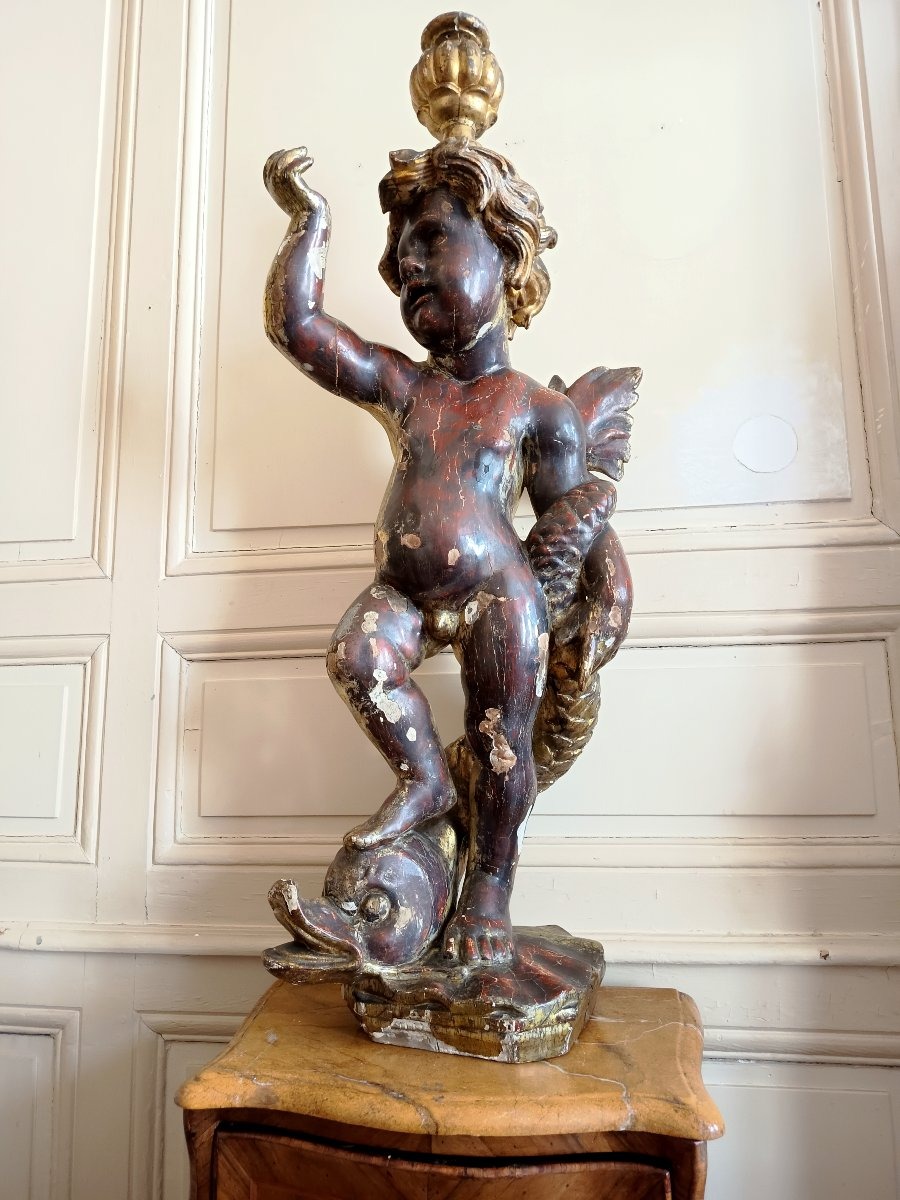
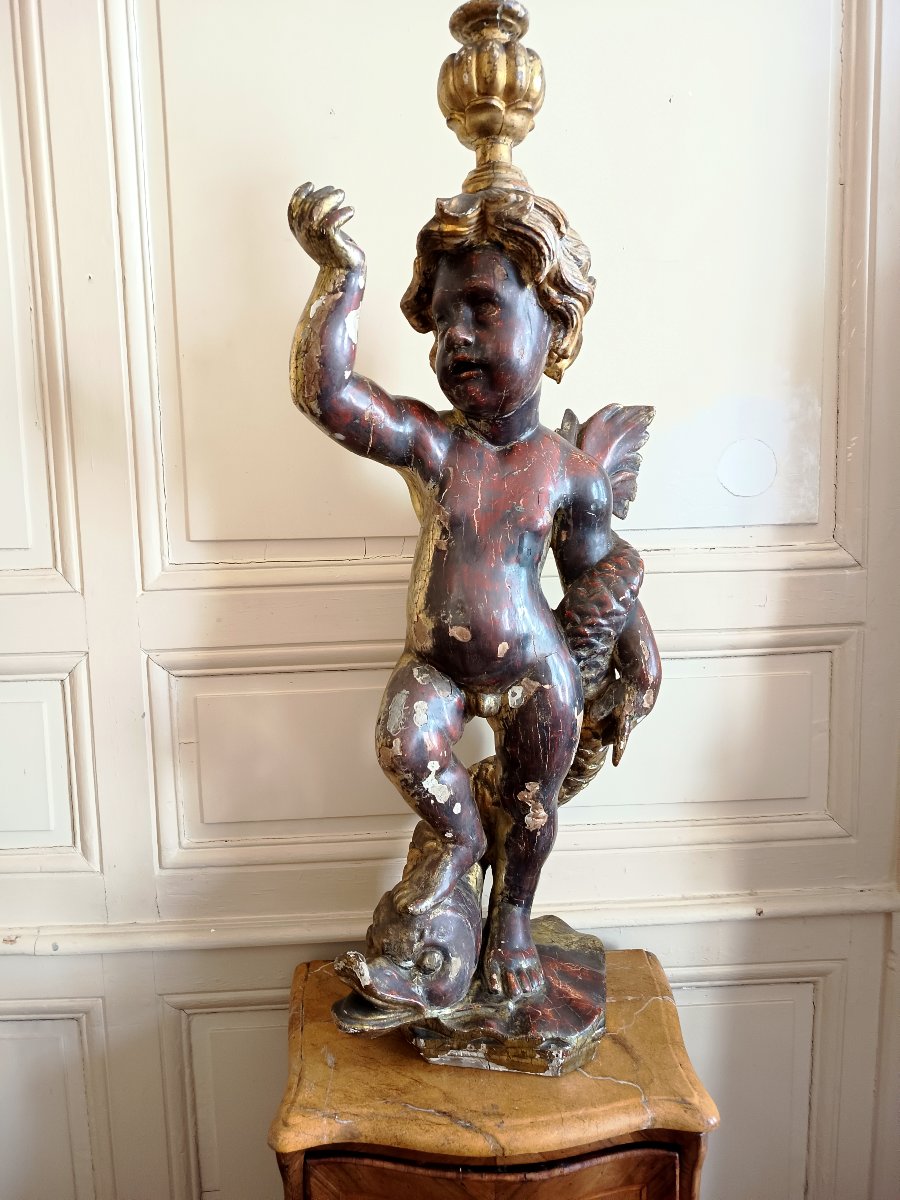


Putto On A Polychrome And Gilded Wooden Dolphin – Italy, Probably Liguria, 17th–18th Centuries
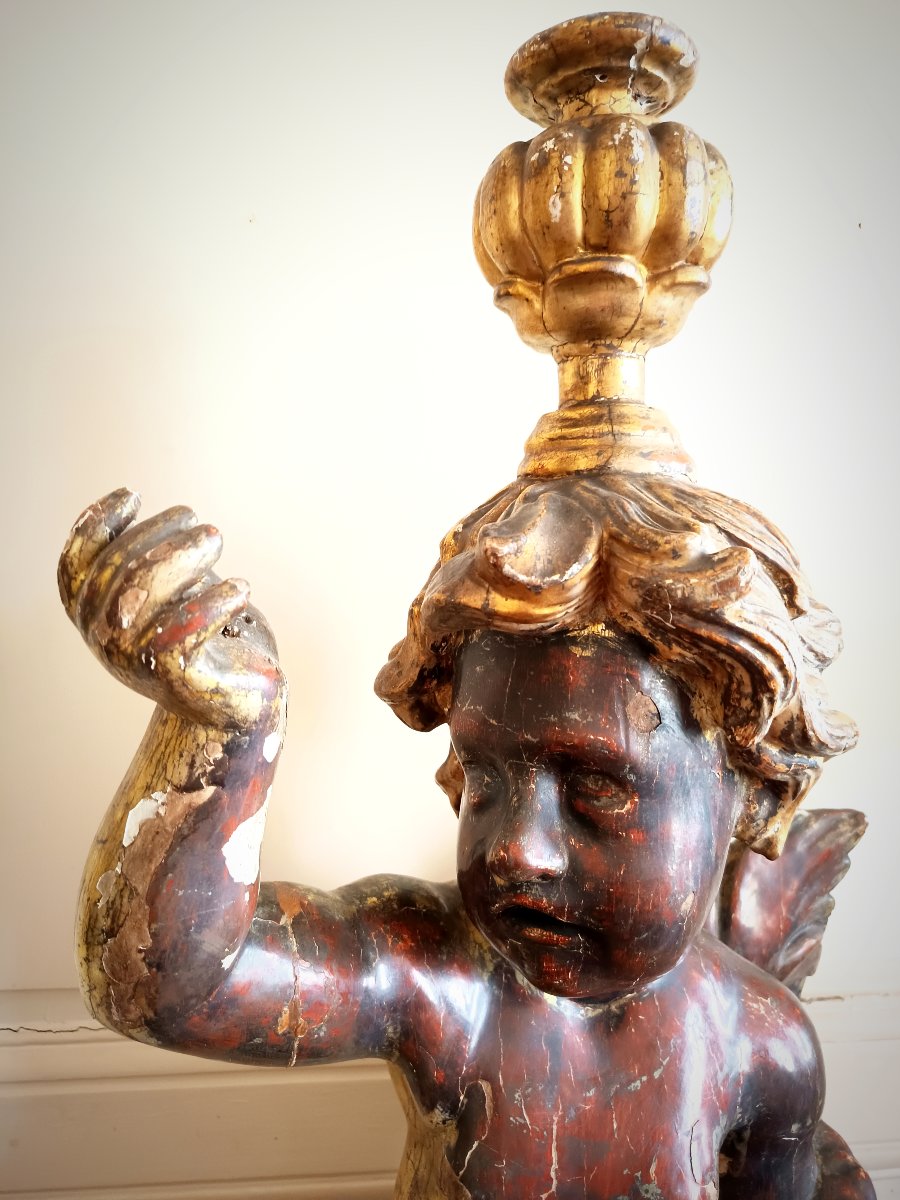
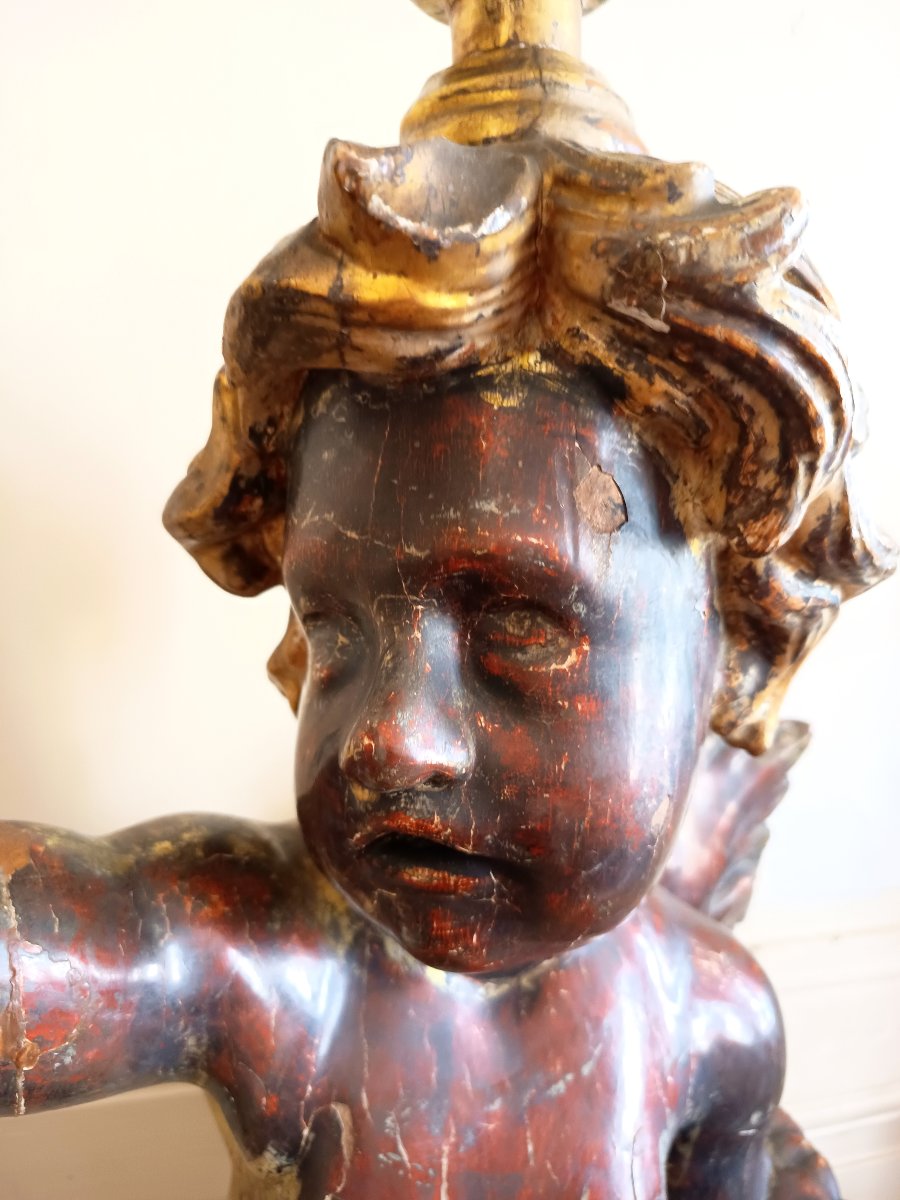
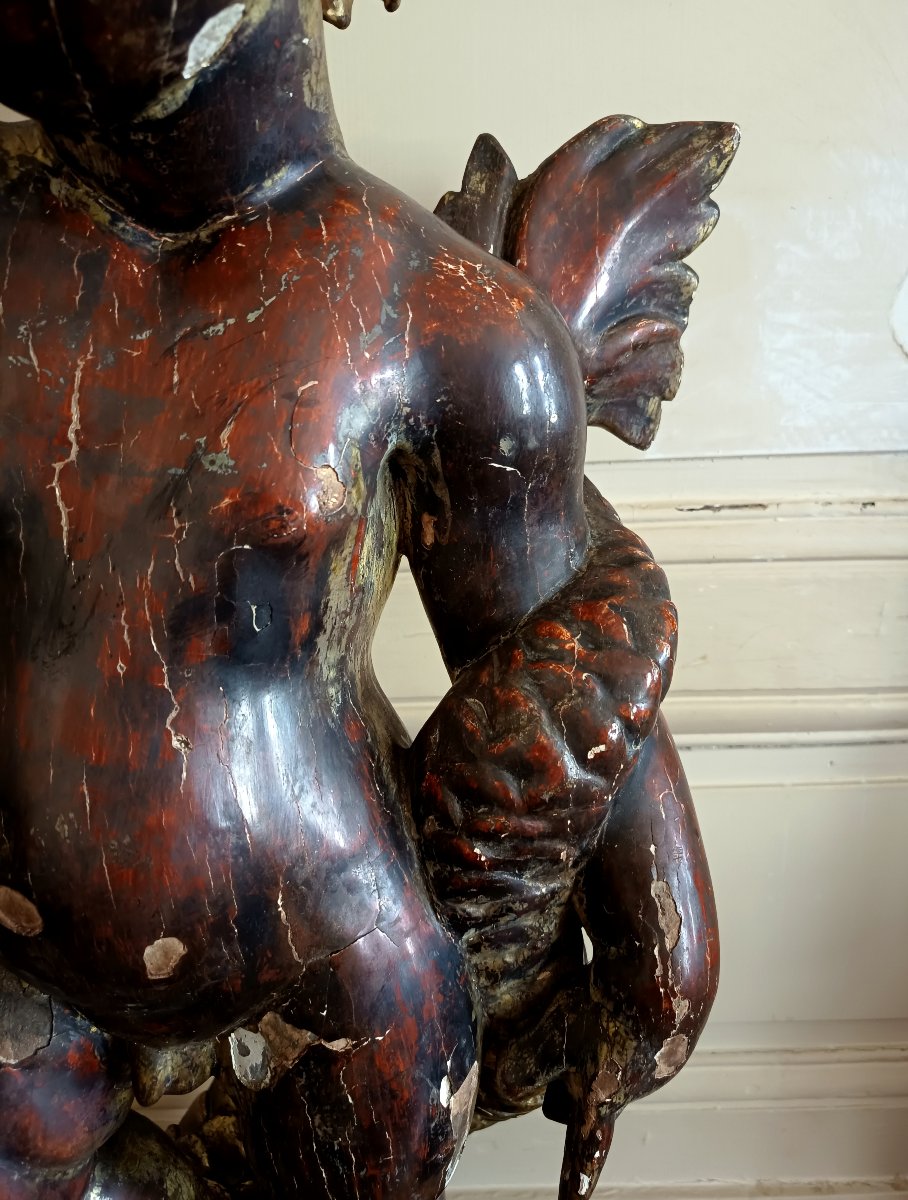
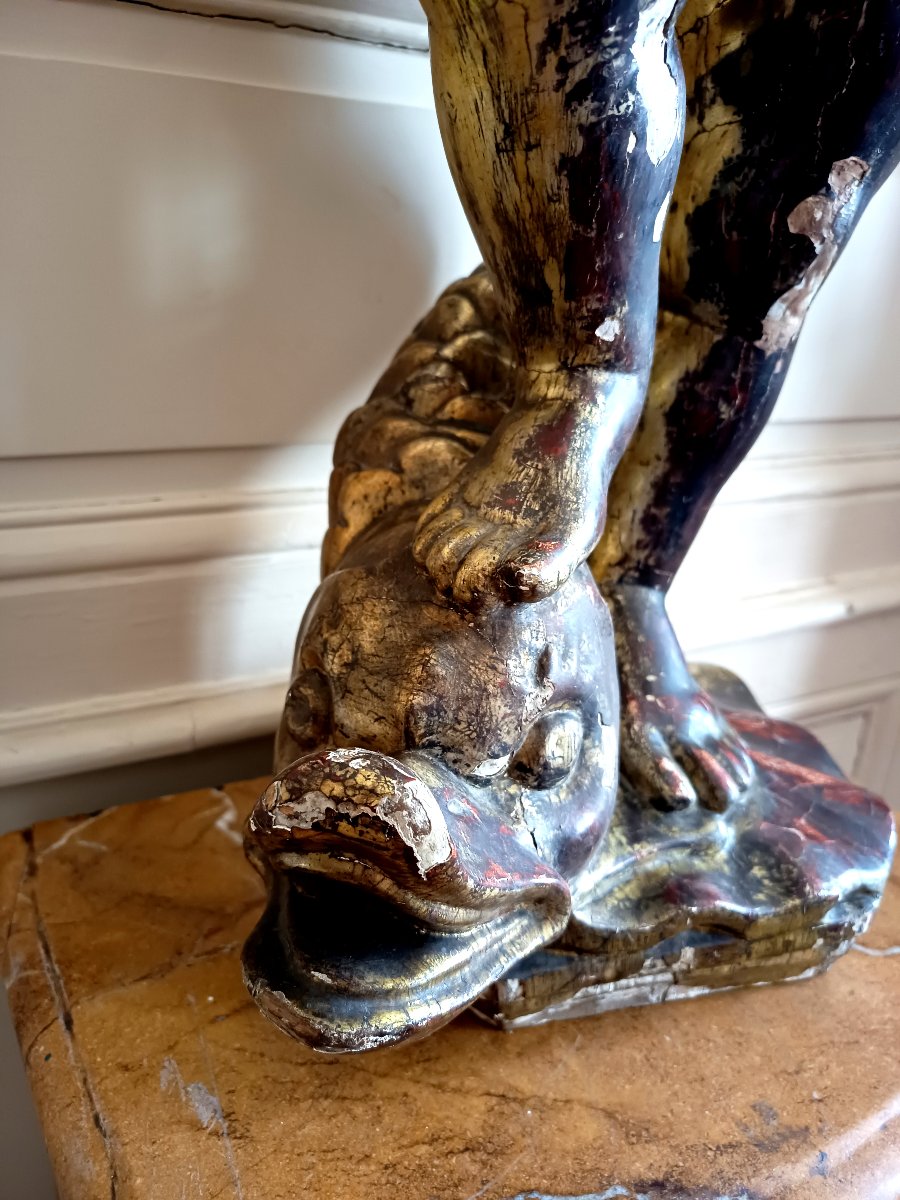
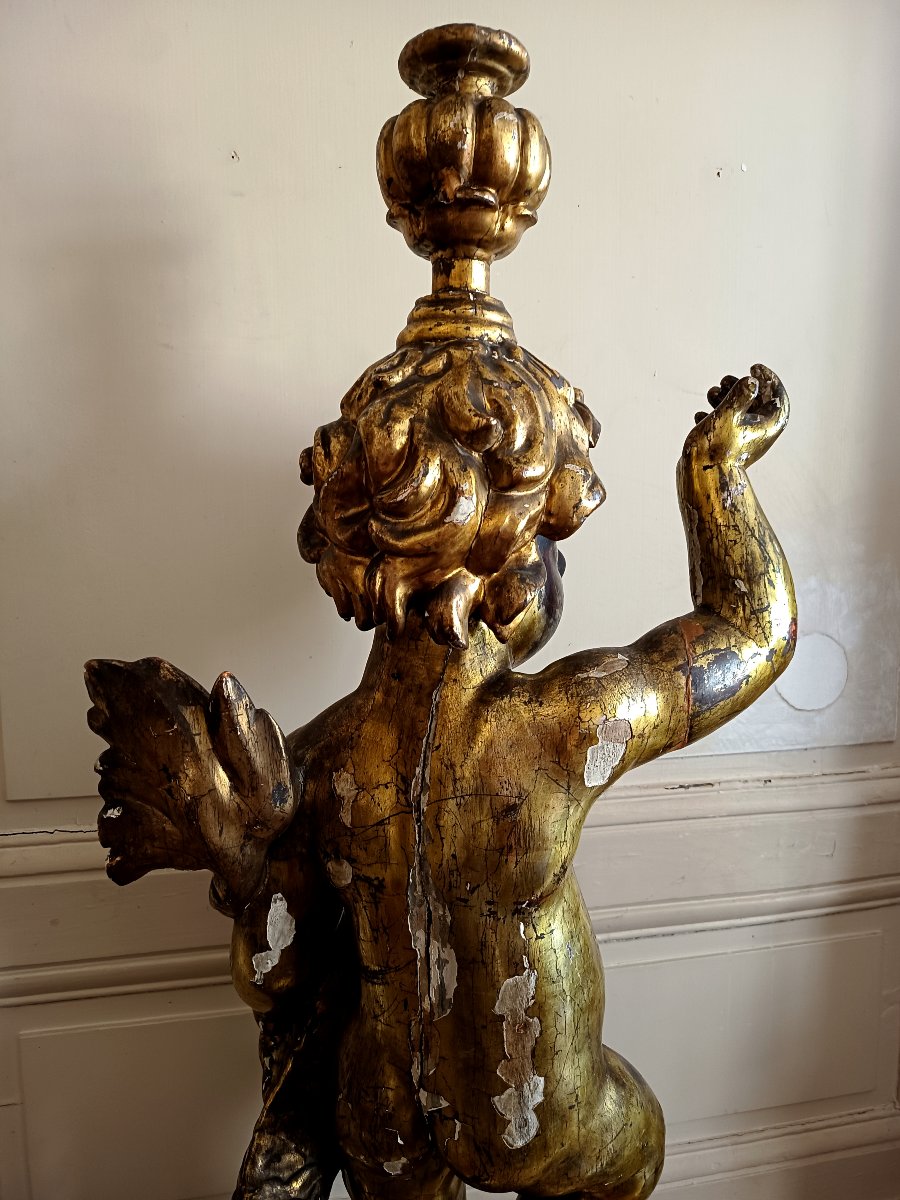
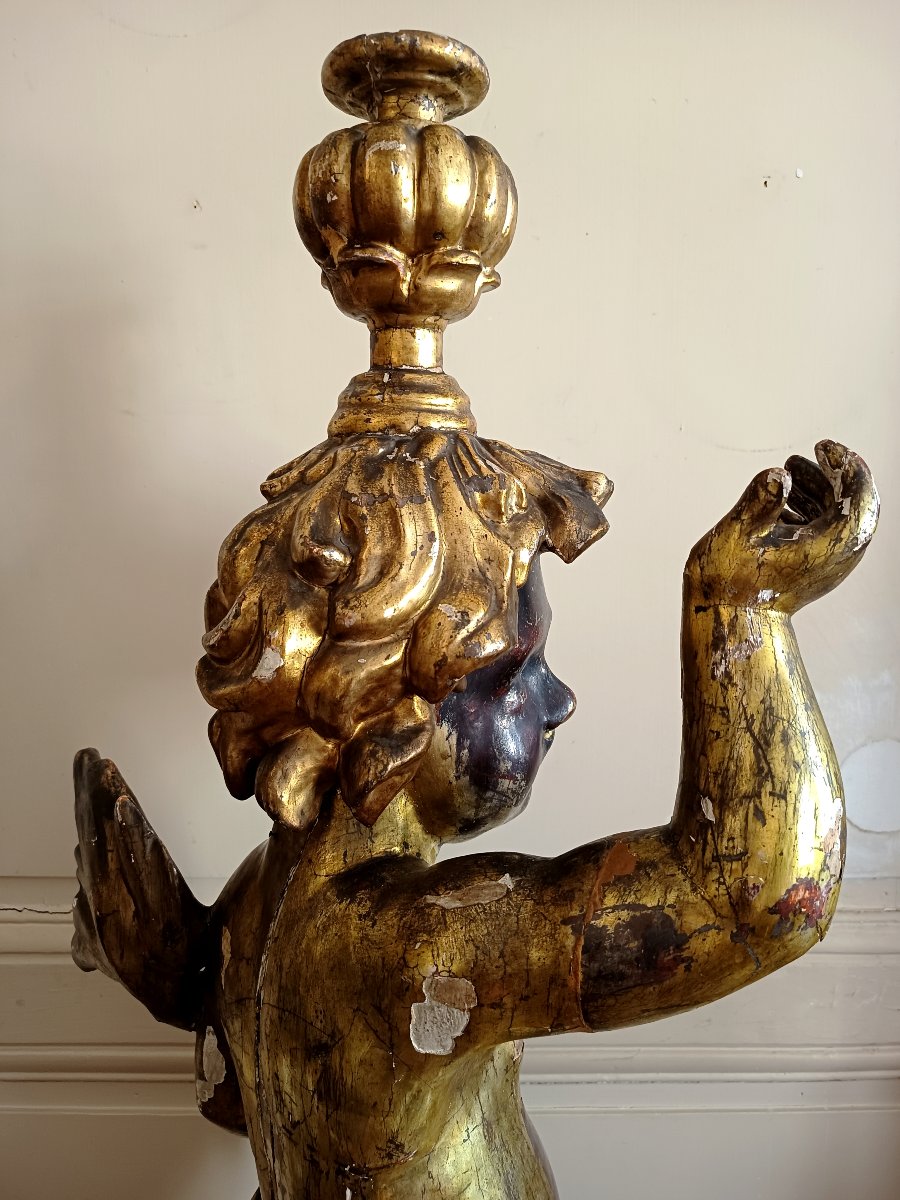
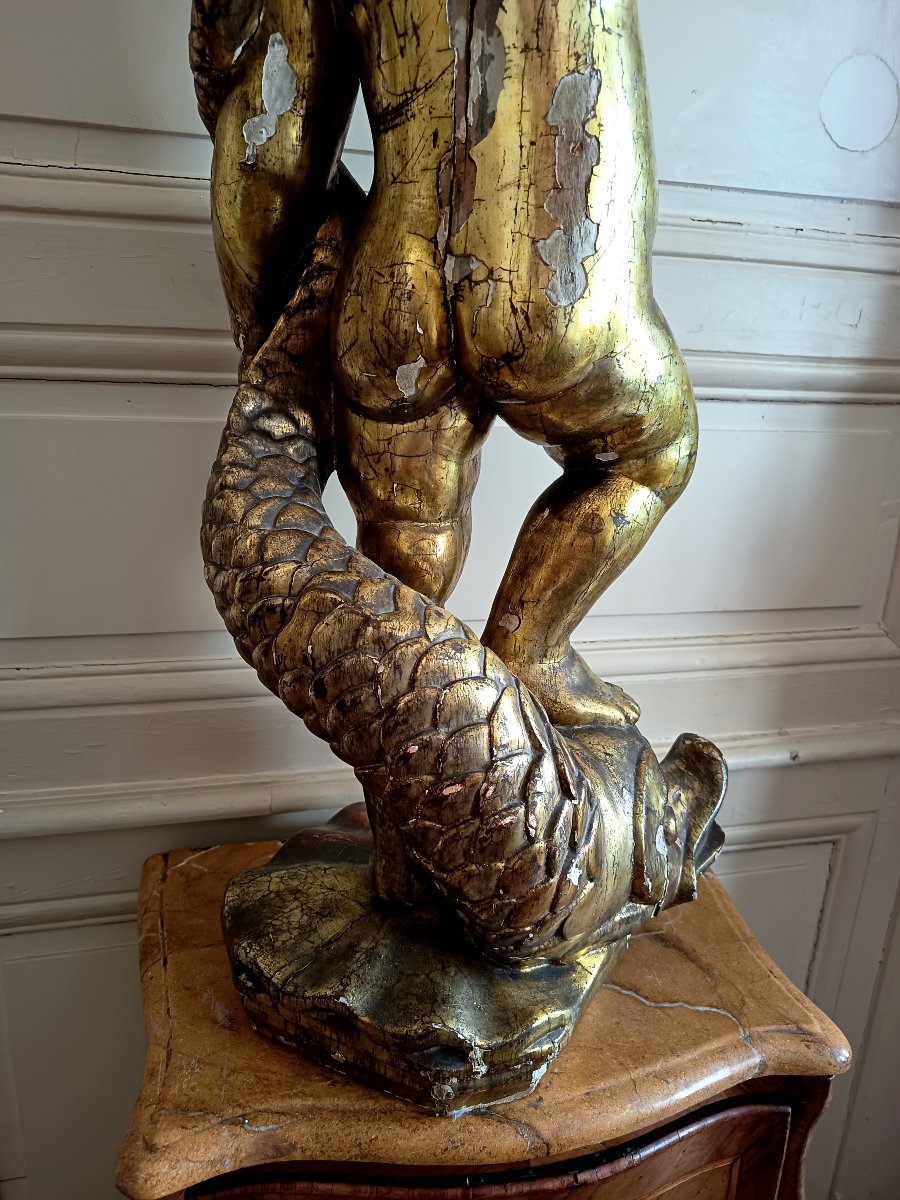
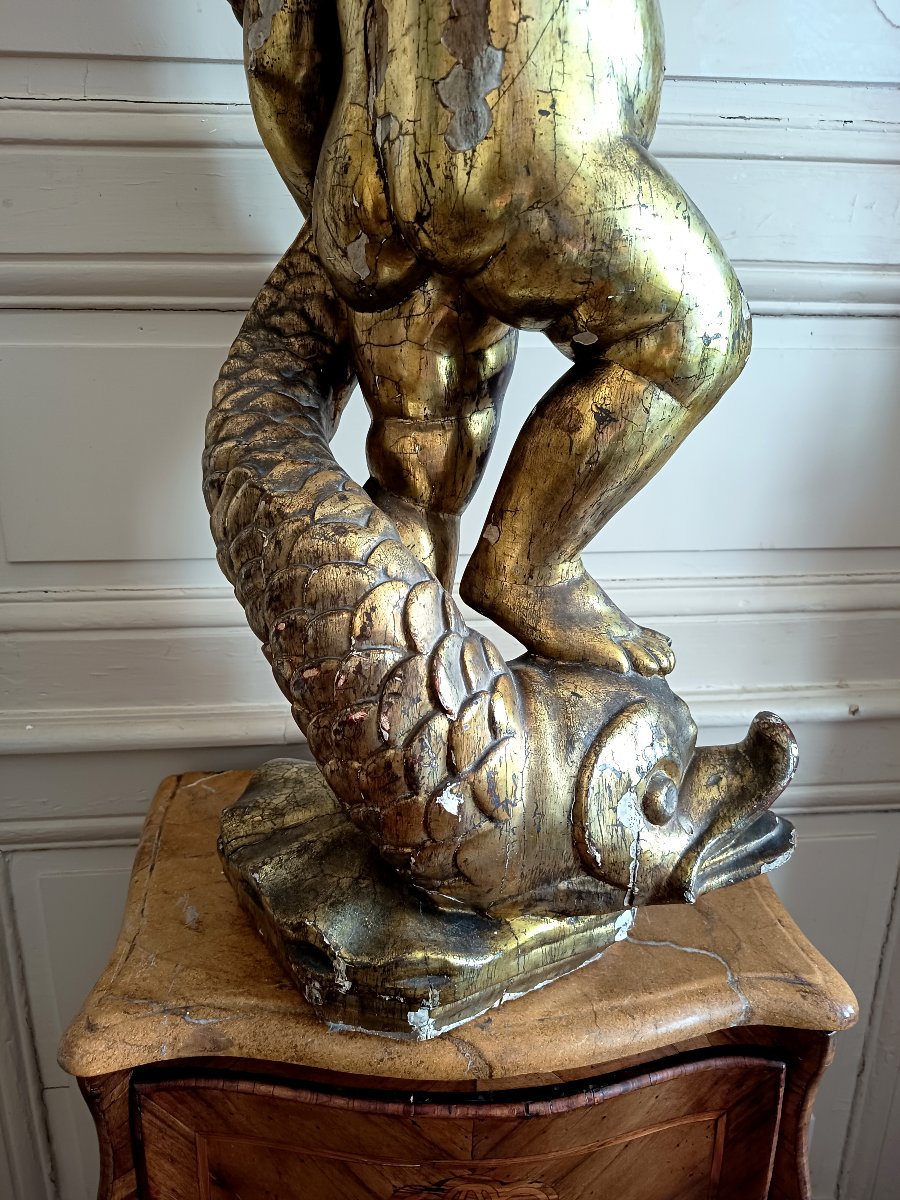
A remarkable sculpture in the round depicting a nude putto standing on a dolphin, in a highly dynamic composition characteristic of the Italian Baroque decorative style.The young figure, depicted in a twisting motion, leans against the dolphin’s body, while the animal—with its fantastical and powerfully modeled forms—complements the putto’s silhouette with its upward movement. The whole is enlivened by a particularly elegant interplay of curves and counter-curves.The sculpture retains significant traces of its original polychromy, notably a dark flesh tone with reddish-brown hues, as well as large areas of original Mecca gilding, particularly visible on the dolphin, the decorative elements, and the crown worn by the putto. The numerous losses and surface wear reveal the stratigraphy of the various ground preparations and paint layers, attesting to the piece’s age and its conservation history.The motif of the putto associated with the dolphin belongs to a long tradition in Italian sculpture, inherited from antiquity and revived during the Renaissance and then the Baroque period. The motif was particularly widespread in Italy through Roman antique collections and collections of engravings, including the Galleria Giustiniana. In Genoa, this stylistic vocabulary is particularly prevalent in the decorative elements of palaces and fountains from the late 17th century. In this regard, the composition shows interesting parallels with Genoese depictions of the putto on a dolphin created around the last decade of the 17th century, notably the decoration of the Giustiniani Fountain, executed after 1694, which itself is derived from an ancient model disseminated through an engraving by Claude Mellan. The quality of the modeling, the construction of the figure, the highly expressive rendering of the face, and above all the preserved polychromy point to an Italian production from the late 17th or the first third of the 18th century, with a particularly interesting Ligurian/Genoese hypothesis, although a specific workshop attribution cannot be confirmed at this stage.Height: 101 cm. The work is presented in its original state of preservation, with wear, losses, and flaking of the polychromy and gilding, which contribute to its character and allow one to appreciate the various stages of its coloring process.A rare and particularly decorative sculpture, at the crossroads of ancient tradition, Baroque taste, and the great Italian tradition of polychrome sculpture.
2 300 €
Period: 17th century
Style: Renaissance, Louis 13th
Condition: Condition of use
Material: Gilted wood
Height: 101 cm
Reference (ID): 1812145
Availability: In stock
Print