

A Diptych Sundial Made Of Ivory And Silver, 17th Century
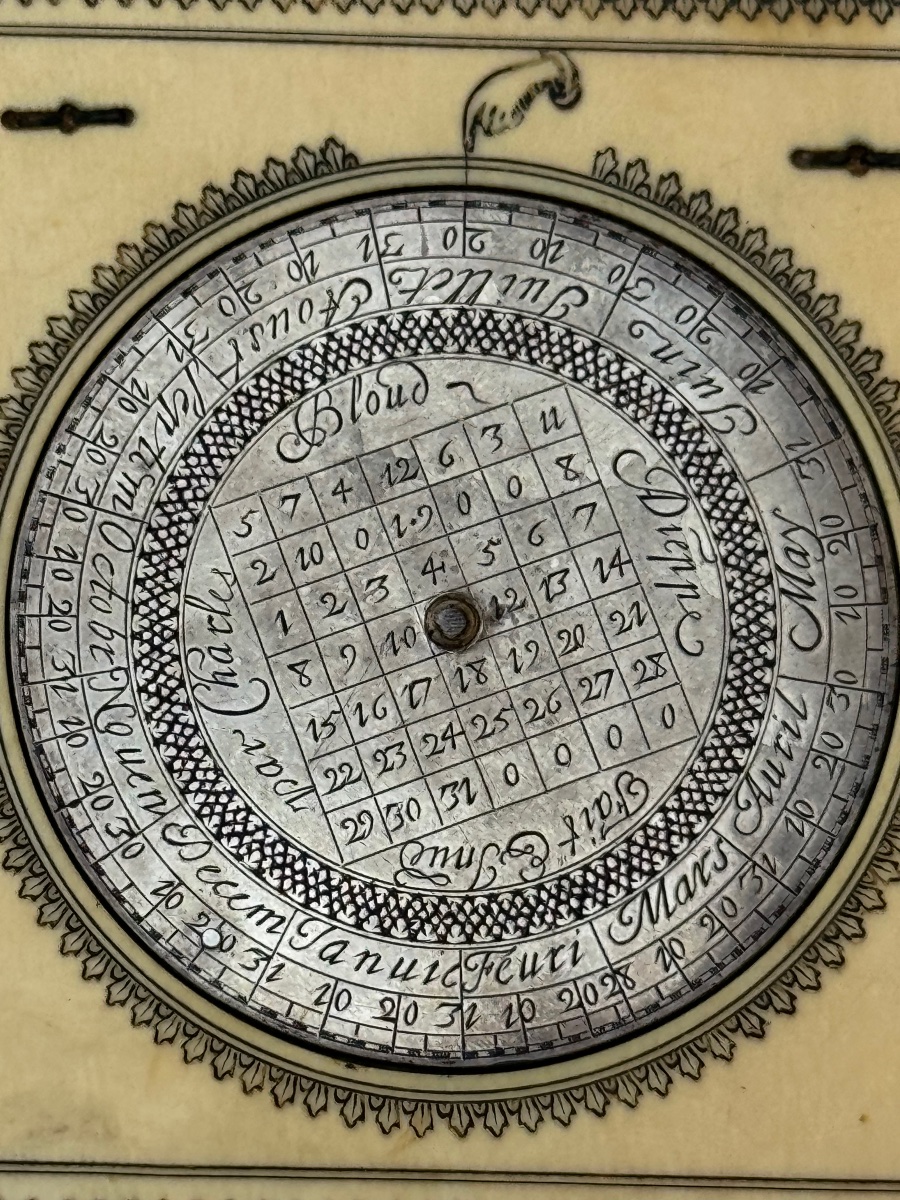
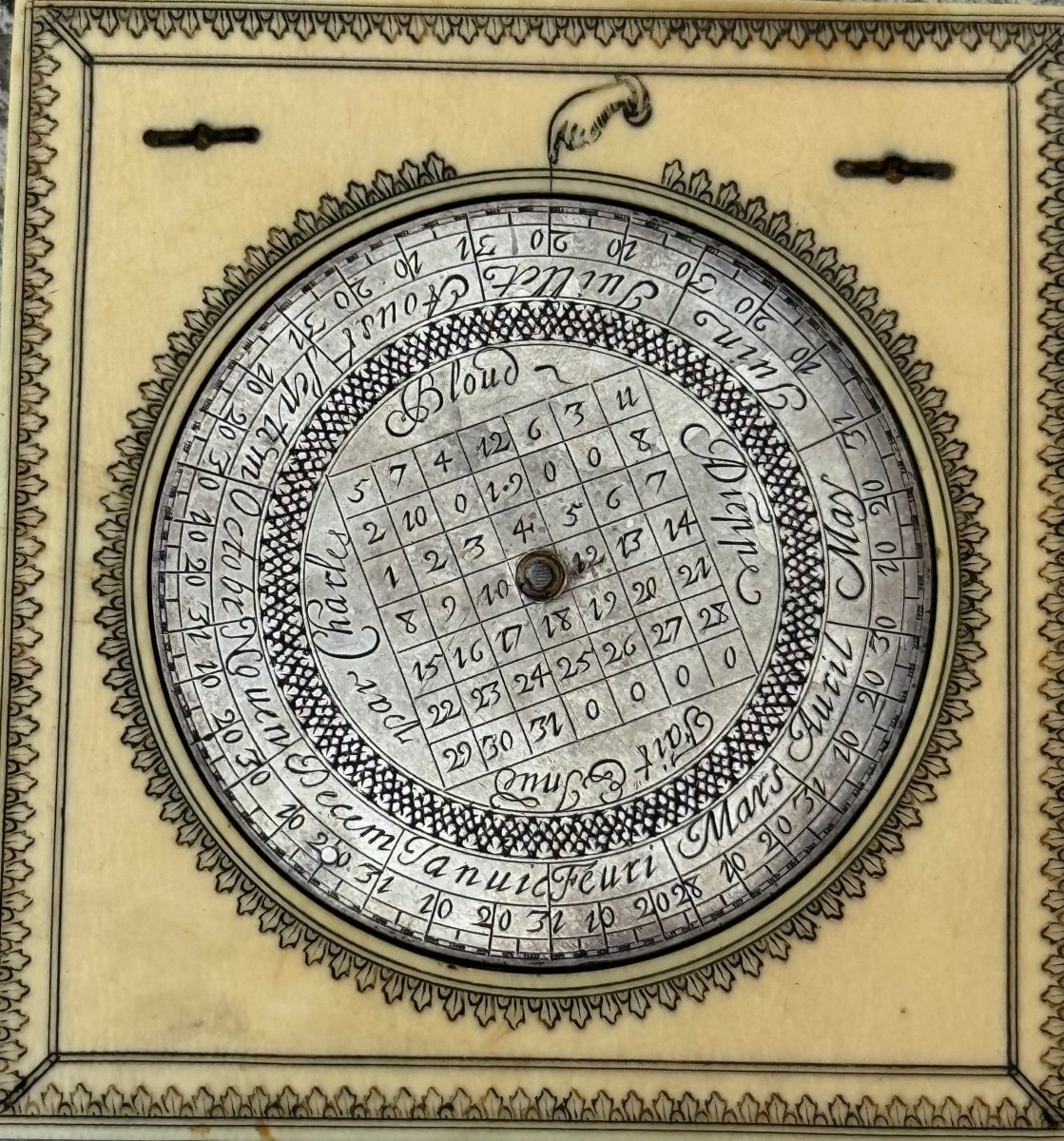
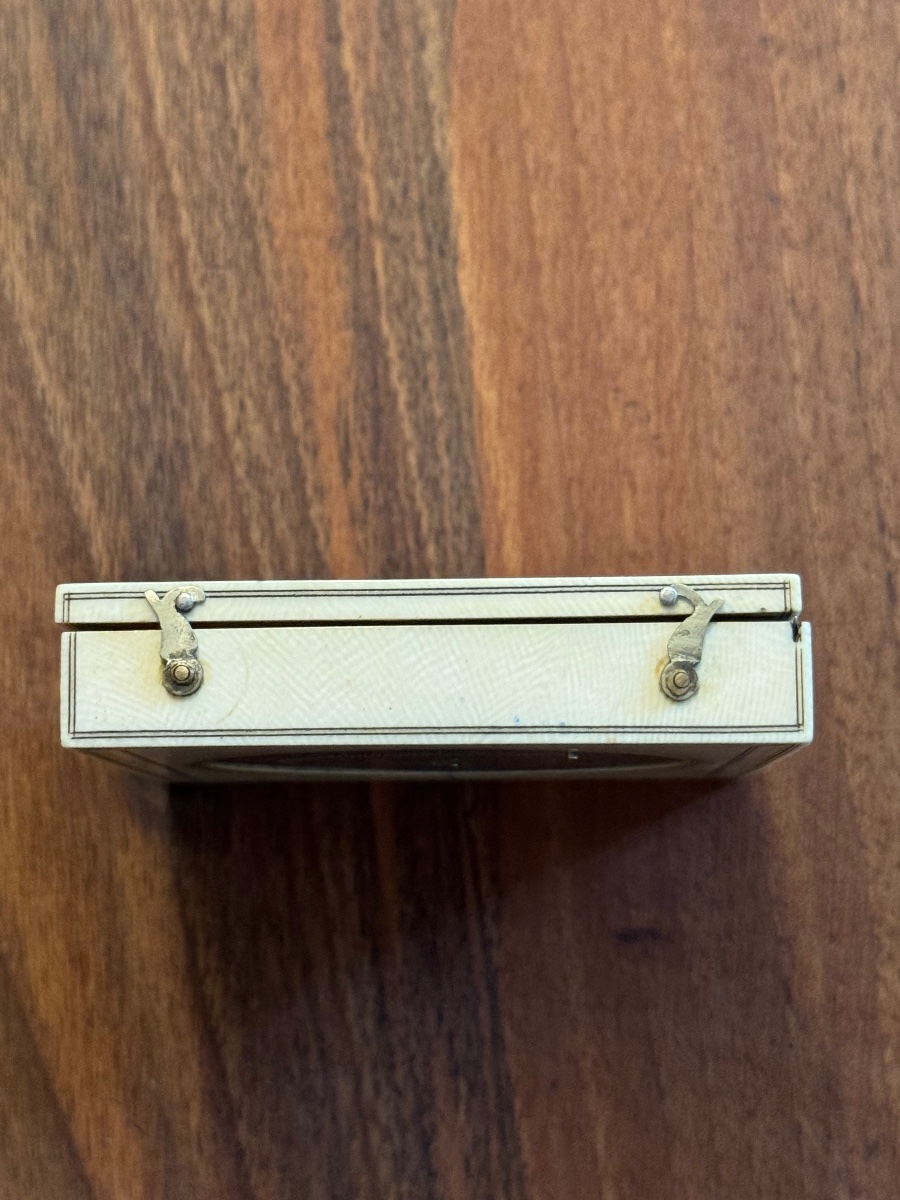
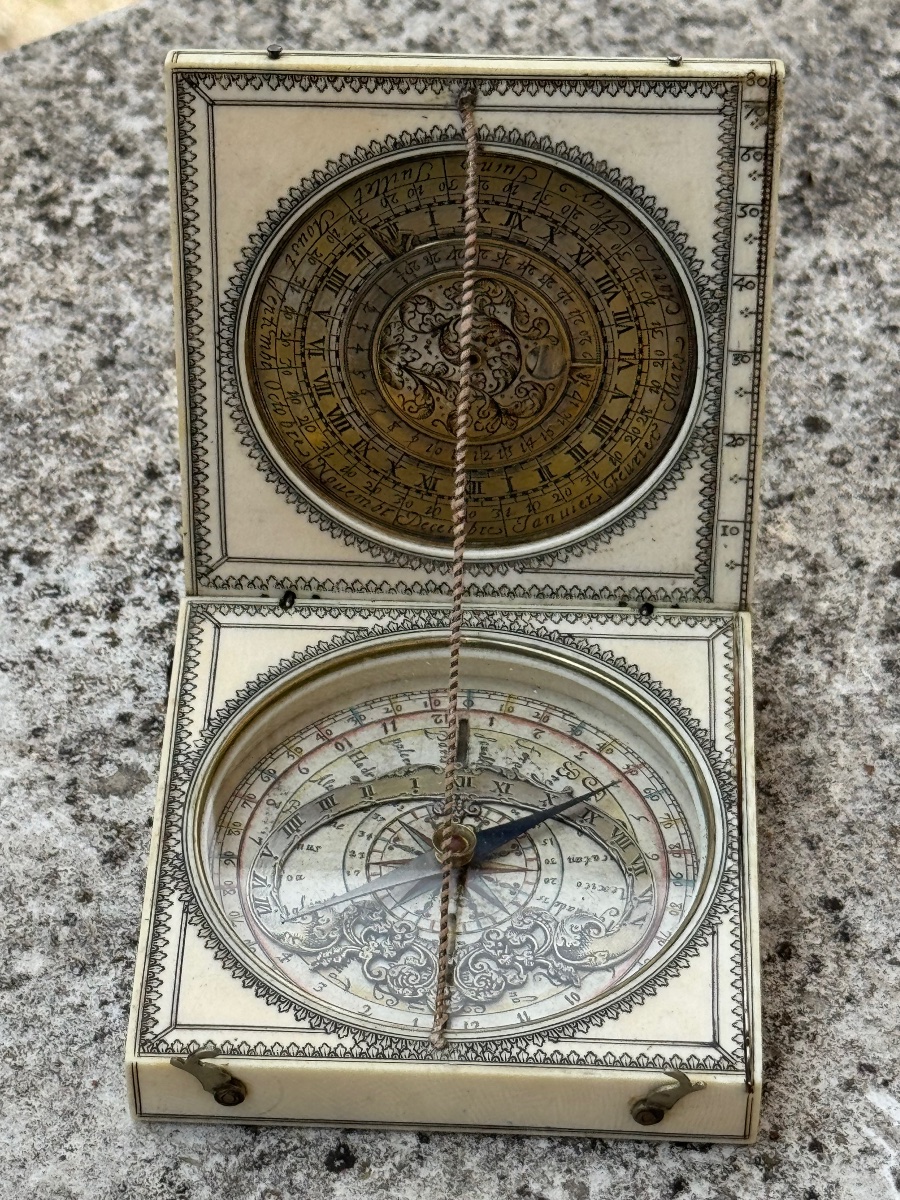
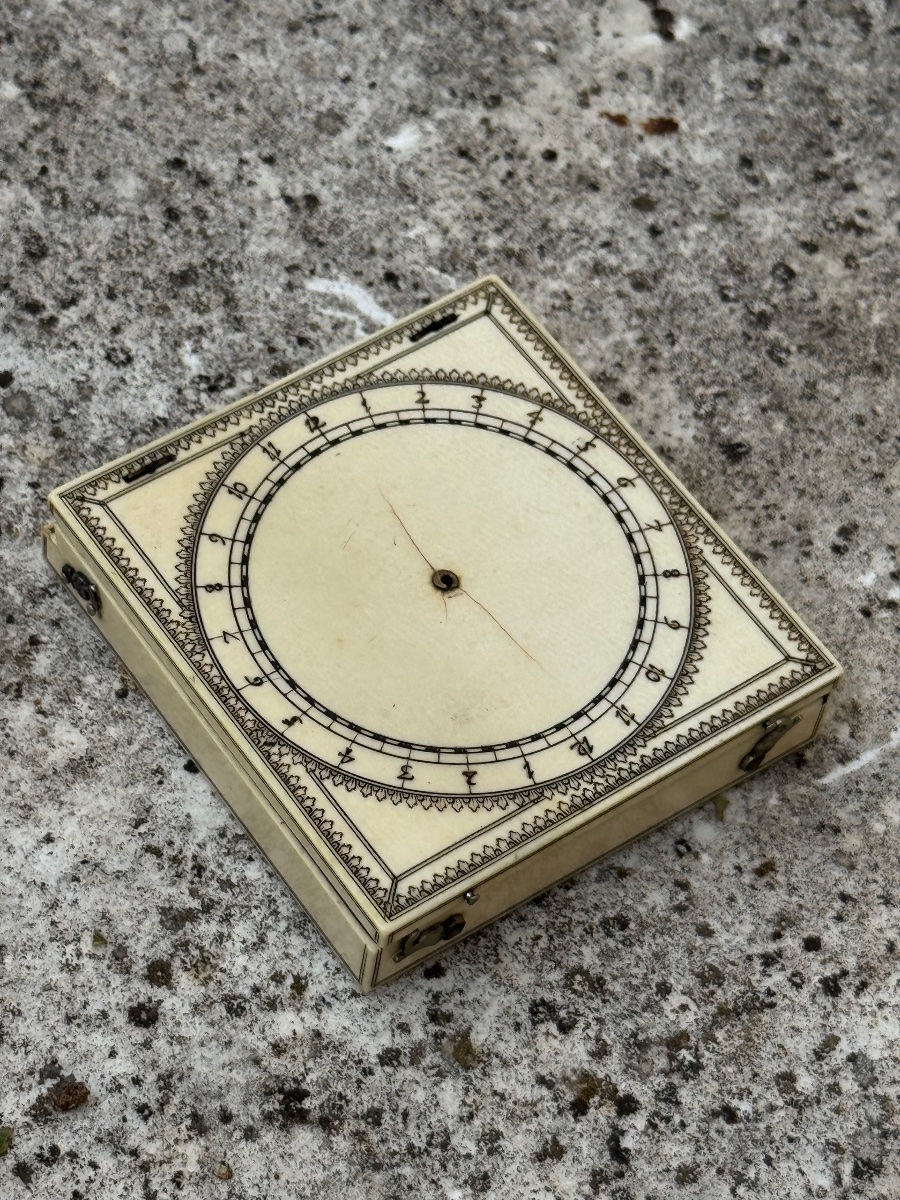
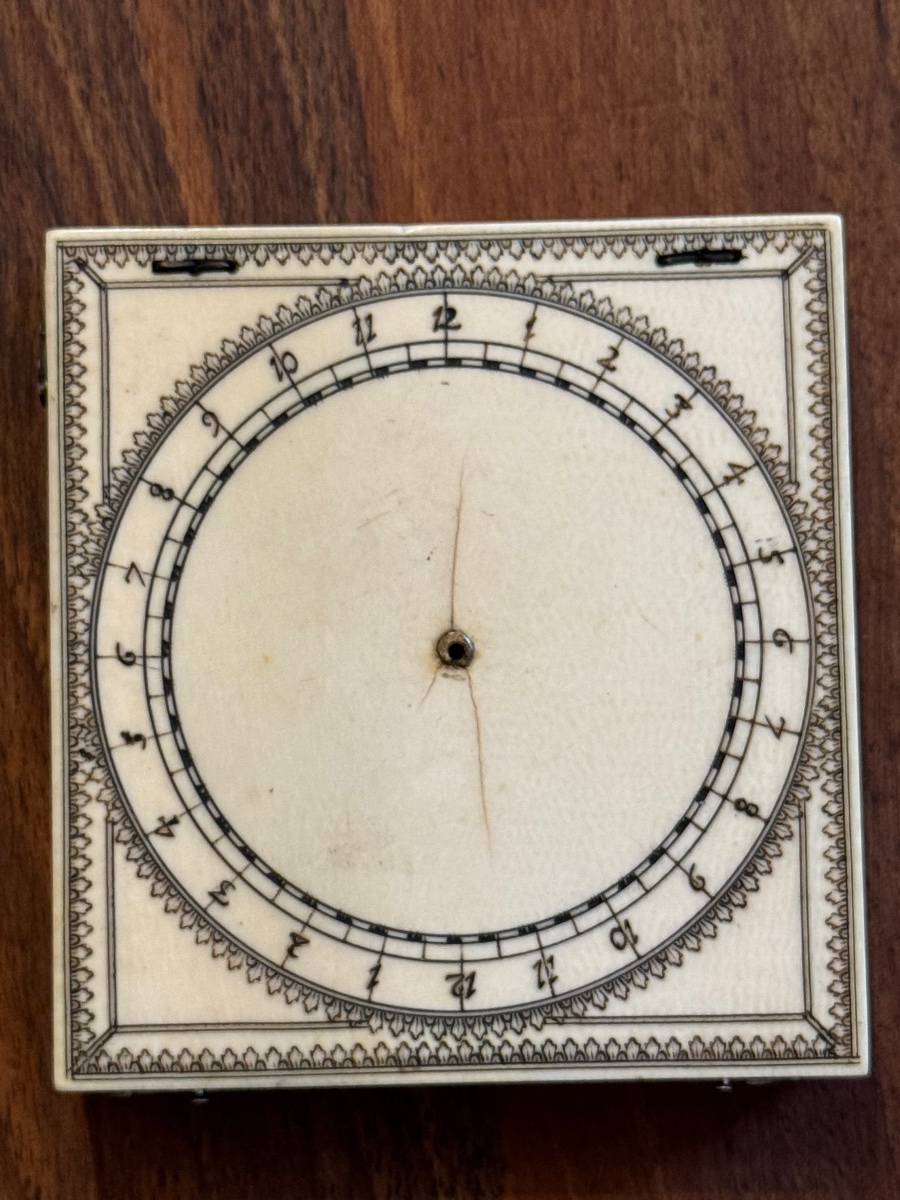
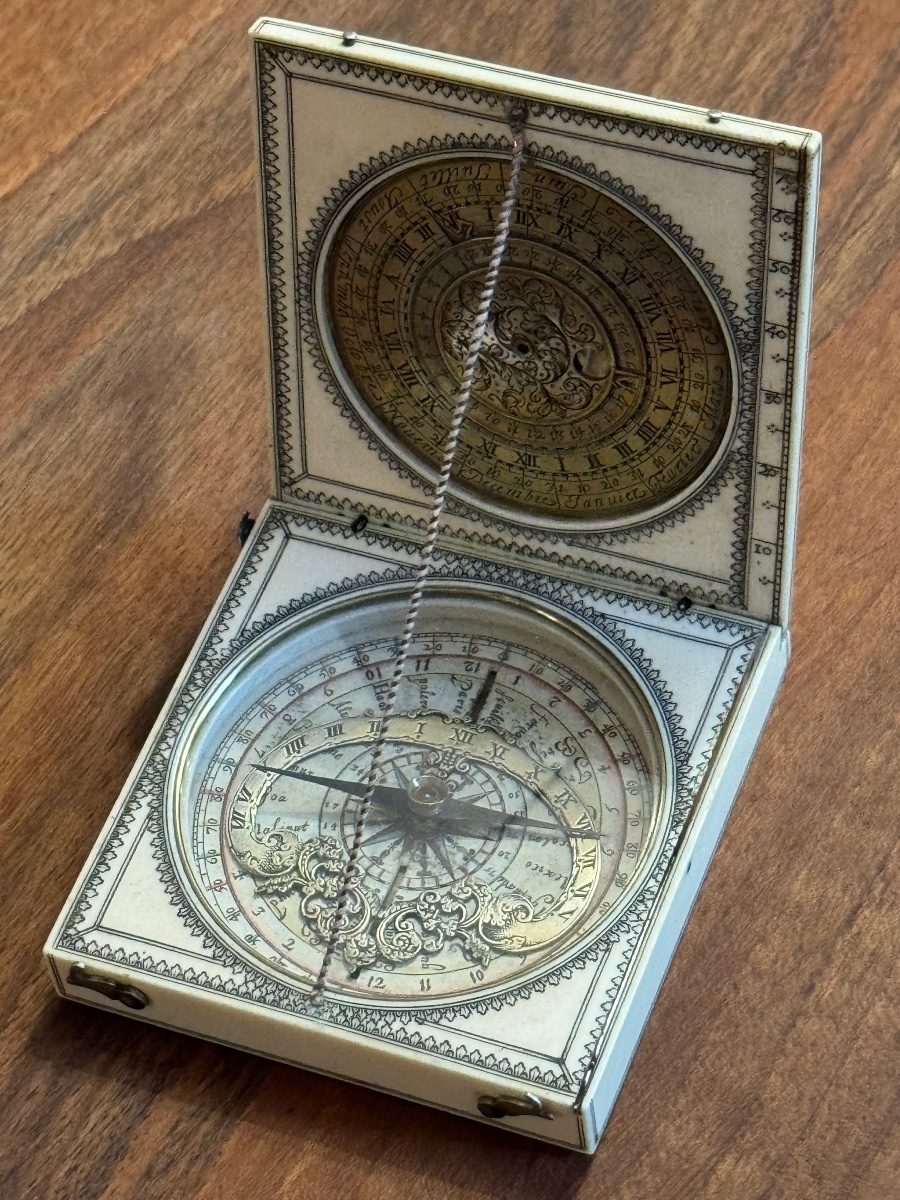
A diptych sundial made of ivory and silver, designed by Charles Bloud in Dieppe during the second half of the 17th century.
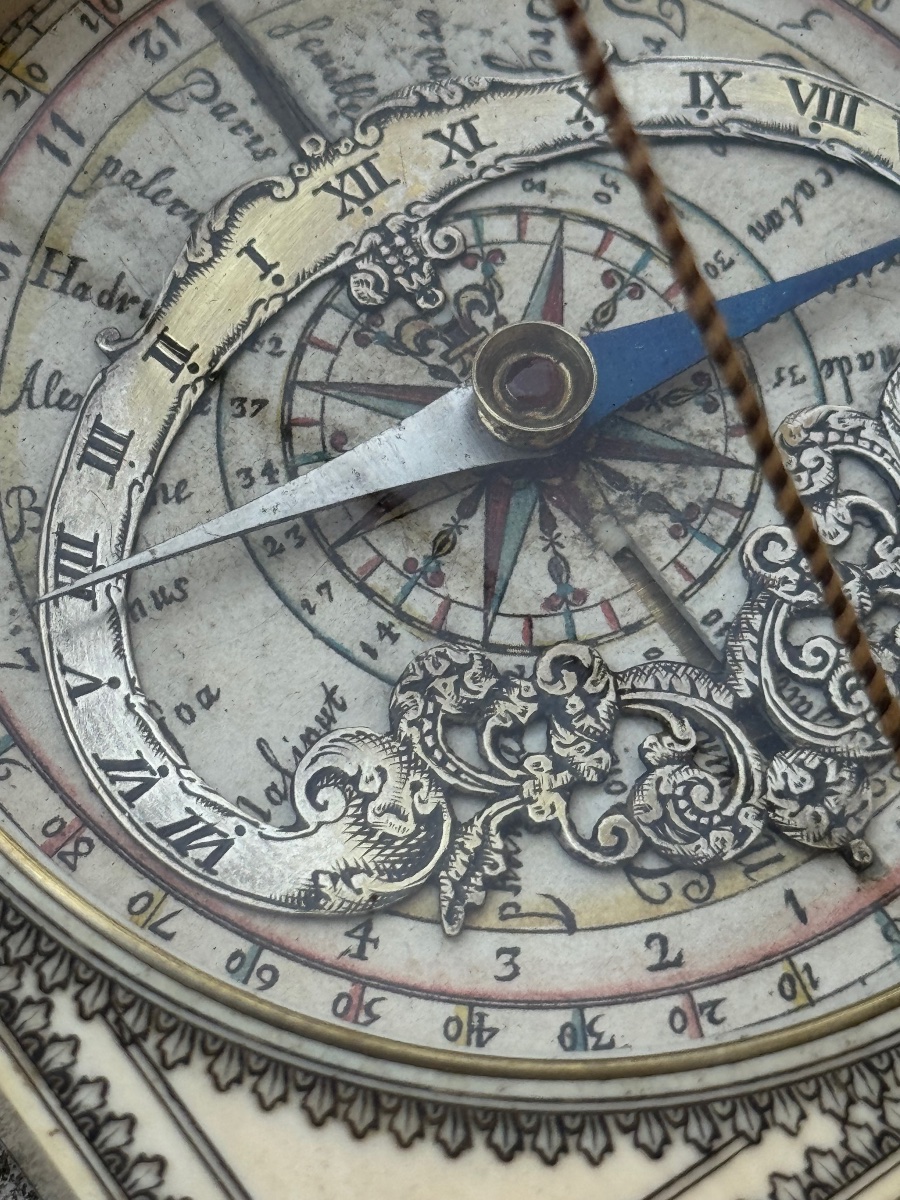
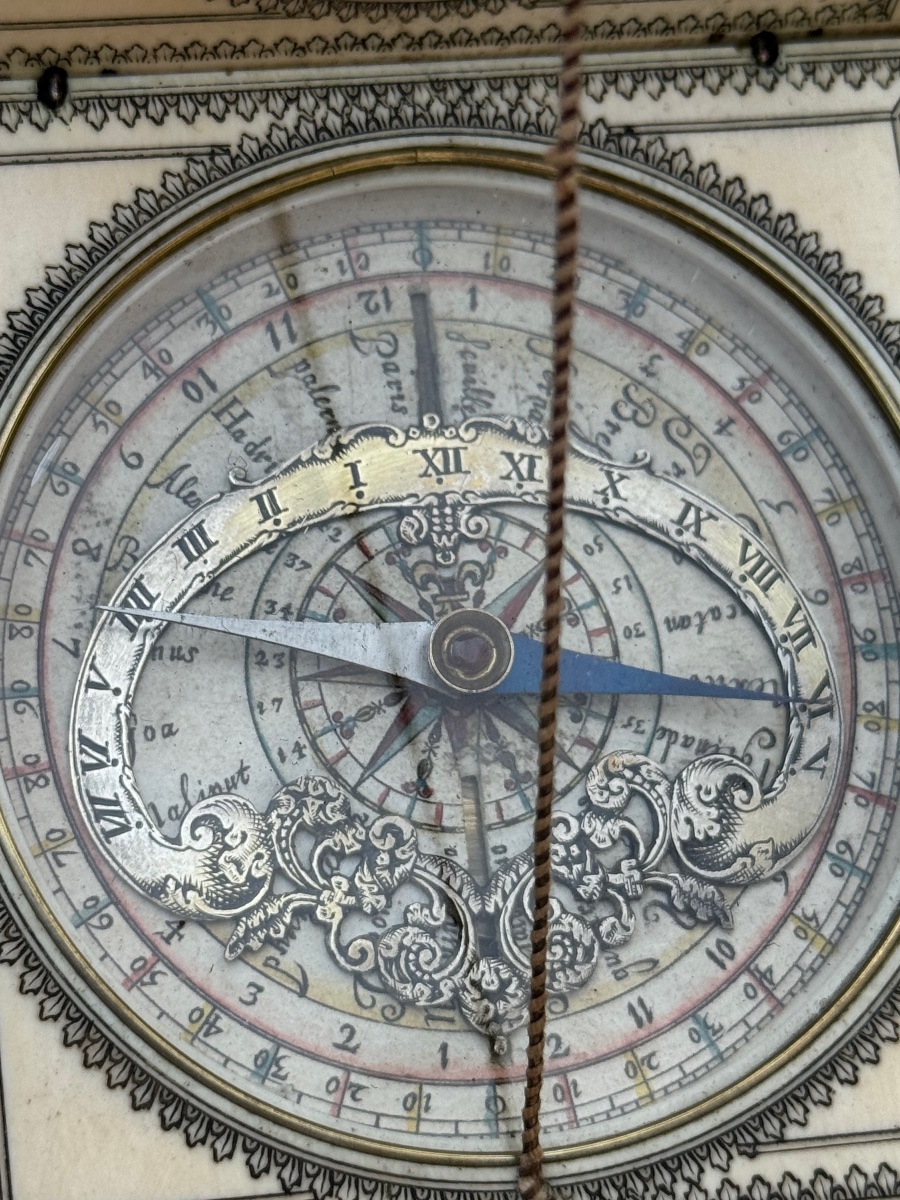
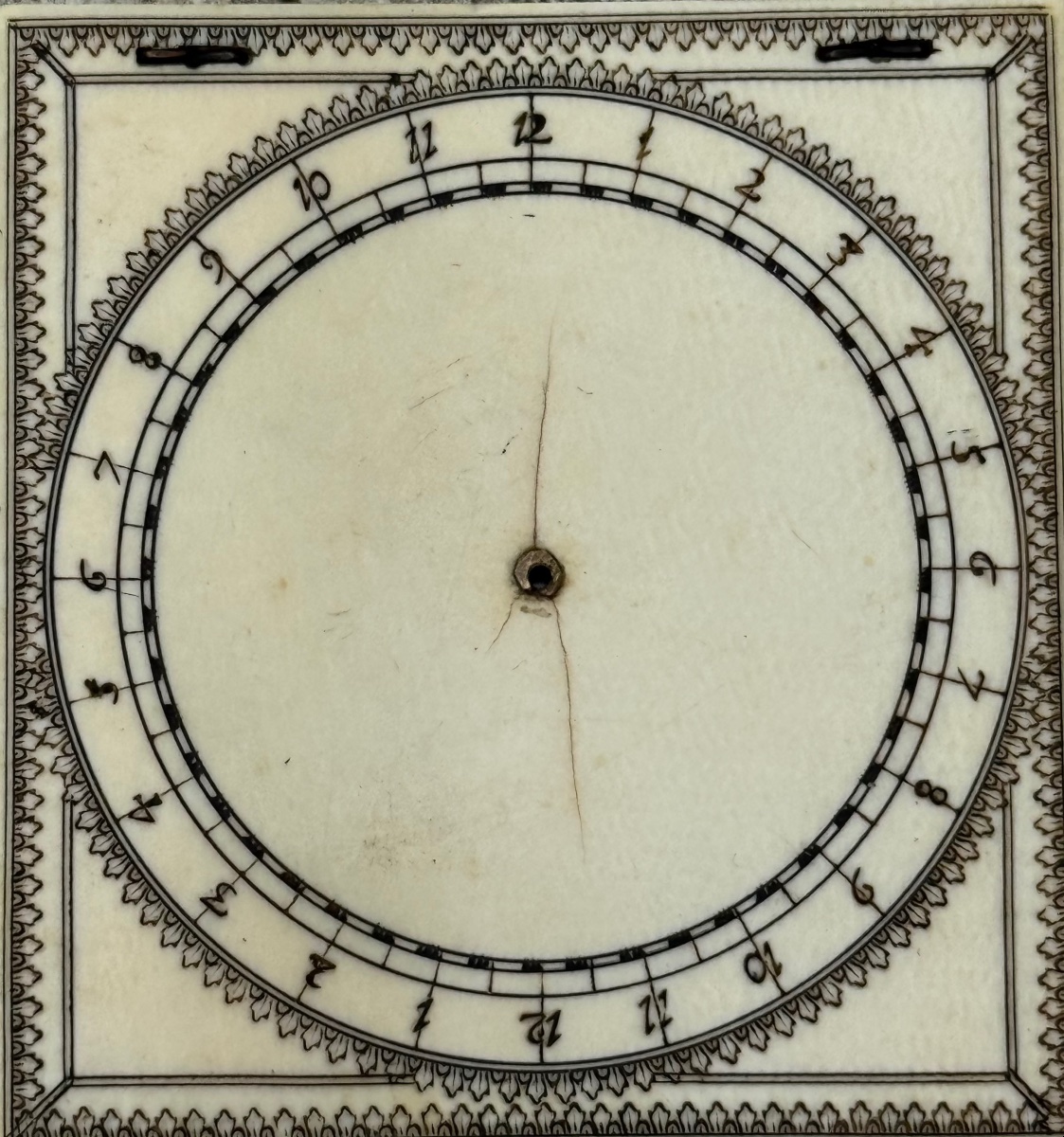
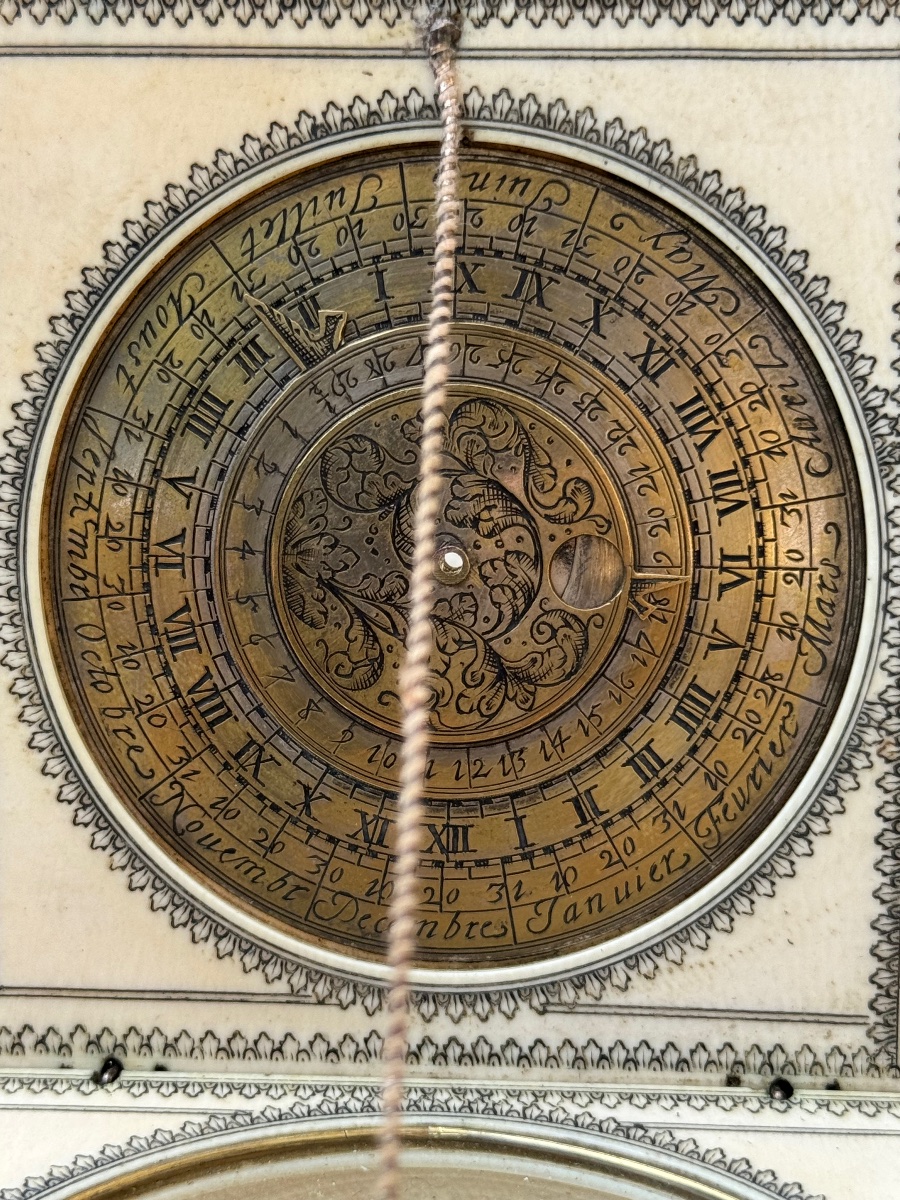
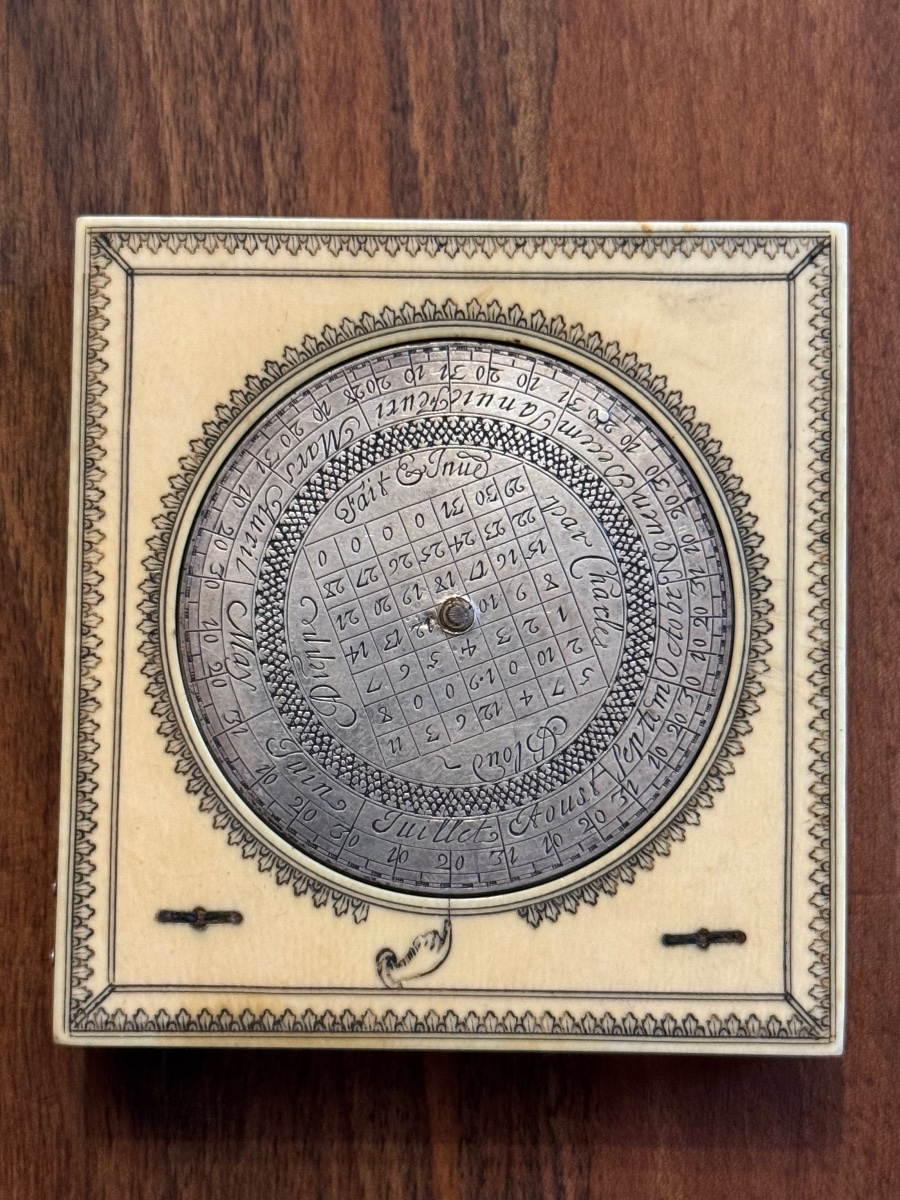
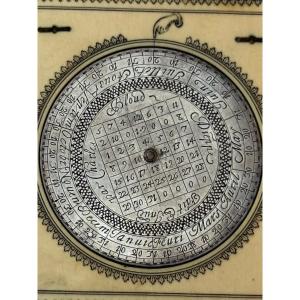
This remarkable portable scientific instrument combines two dials—one equatorial and the other polar—a compass, a solar time converter, a lunar calendar, and a manual perpetual calendar indicating months and dates. Movable discs allow for the adjustment of solar and lunar indications, while the names of several cities—Paris, Mexico City, Palermo…—correspond to the different latitudes of use.
The dials, marked with Roman and Arabic numerals, are surrounded by delicate motifs engraved in ivory. The string stretched between the two panels serves as a gnomon: its shadow was used to determine solar time.
Charles Bloud, an ivory carver from Dieppe and an inventor and builder of scientific instruments, developed a unique model of a diptych sundial that took advantage of the very low magnetic declination observed in France at that time.
Dimensions: 8.2 × 7.7 cm
CITES Certificate No. FR2601300048-K, issued on May 28, 2026.
Period: 17th century
Style: Louis 14th, Regency
Condition: En l'etat
Material: Ivory
Length: 8,2
Width: 7,7
Reference (ID): 1811597
Availability: In stock