

Oultremont Family, 1814–1831, Solid Silver Soup Tureen, Jan Baptiste II Verberckt
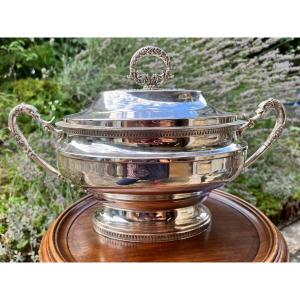
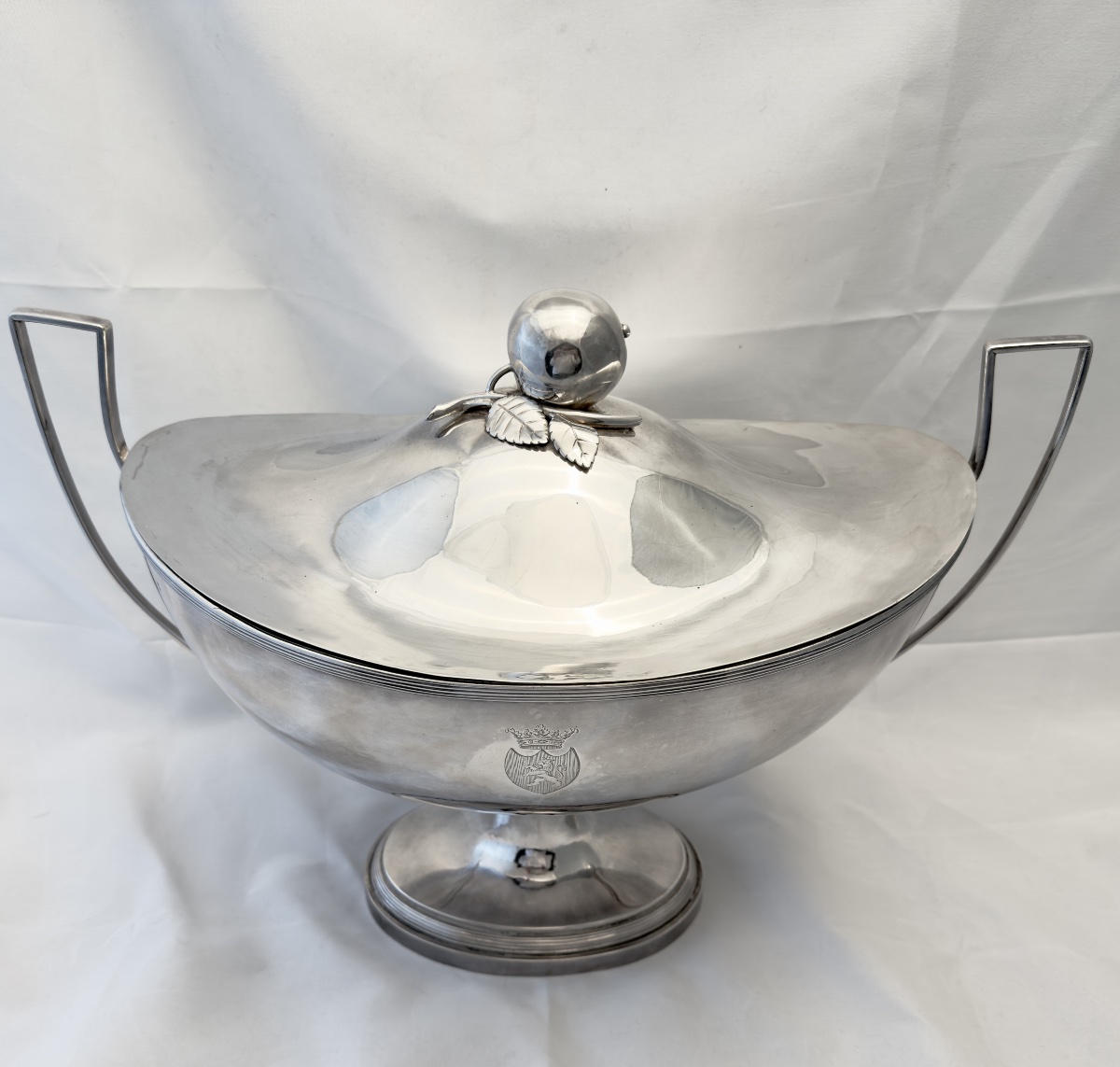
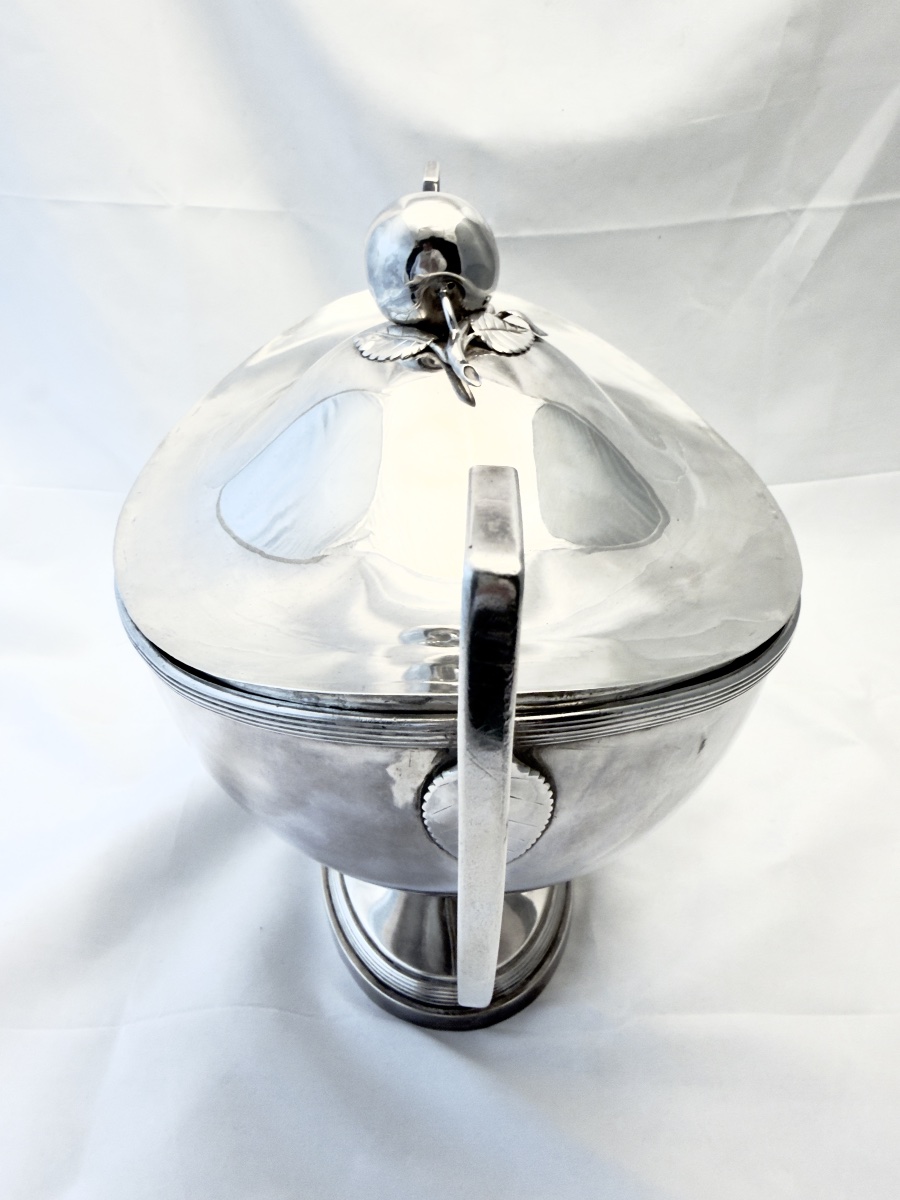
This imposing solid silver soup tureen, made by the Antwerp silversmith Jean-Baptiste II Verberckt, is a remarkable example of Belgian silver from the first decades of the nineteenth century.
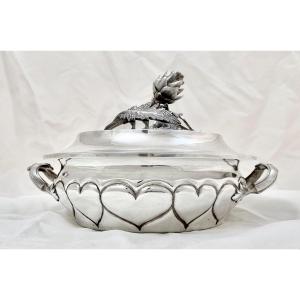
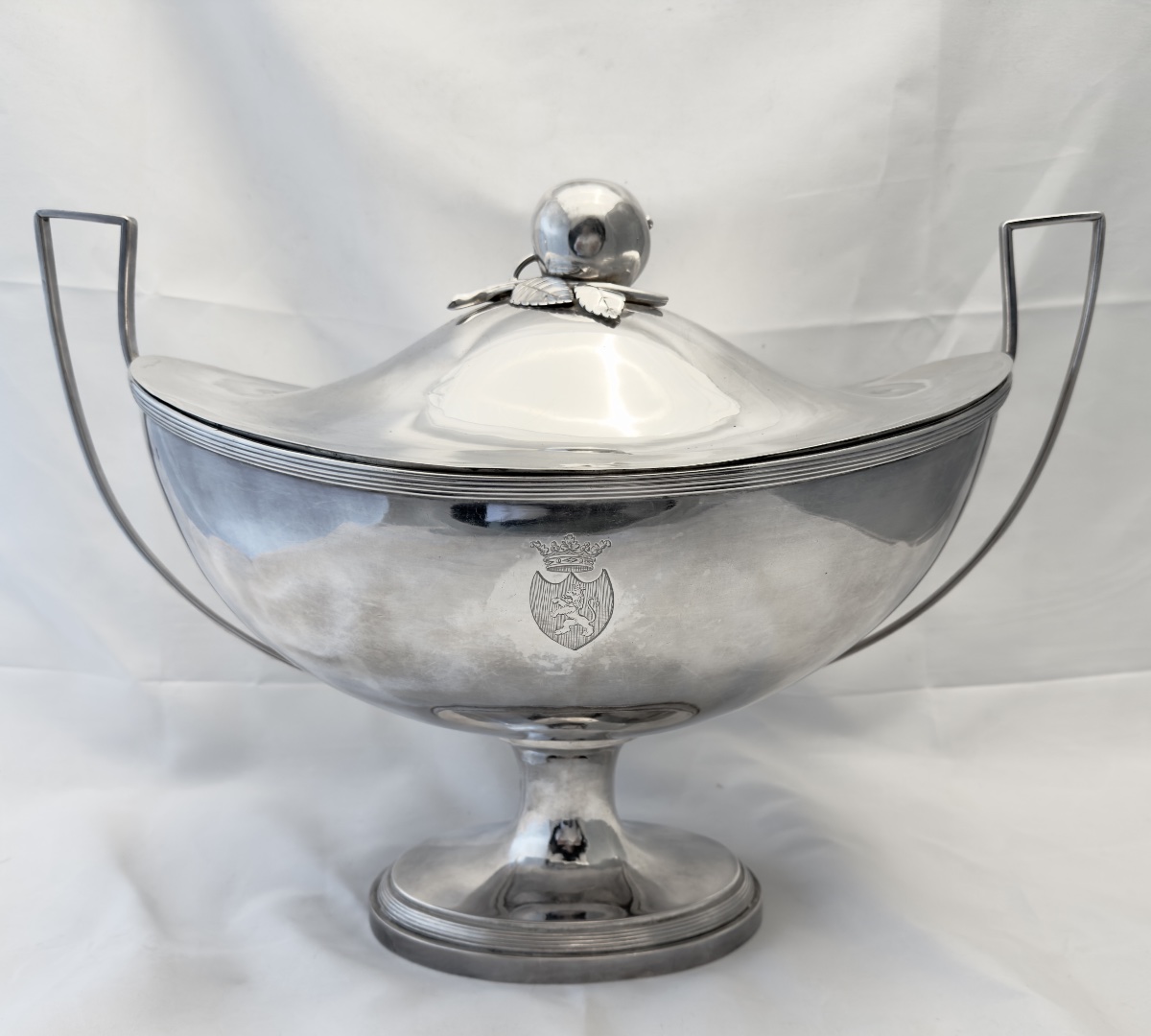
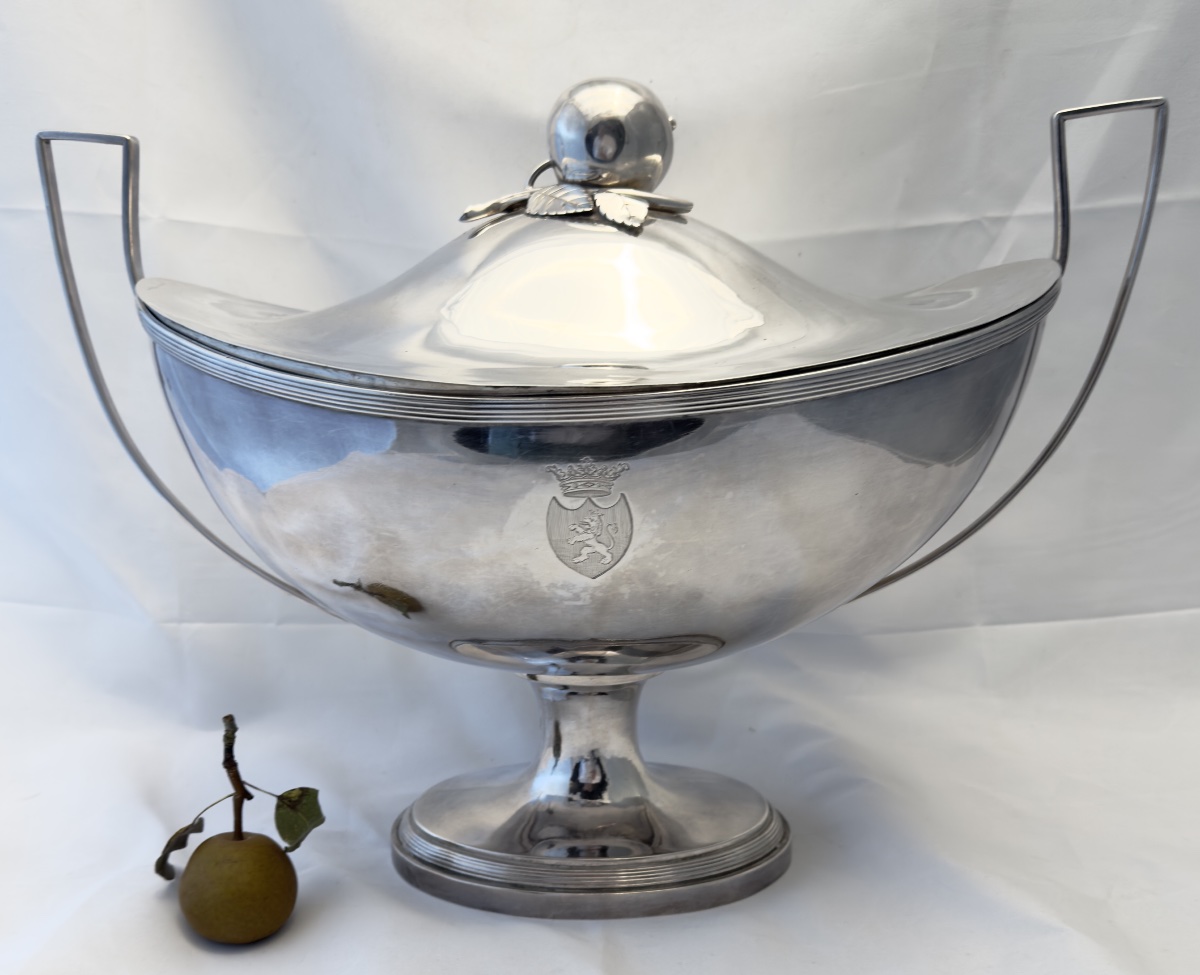
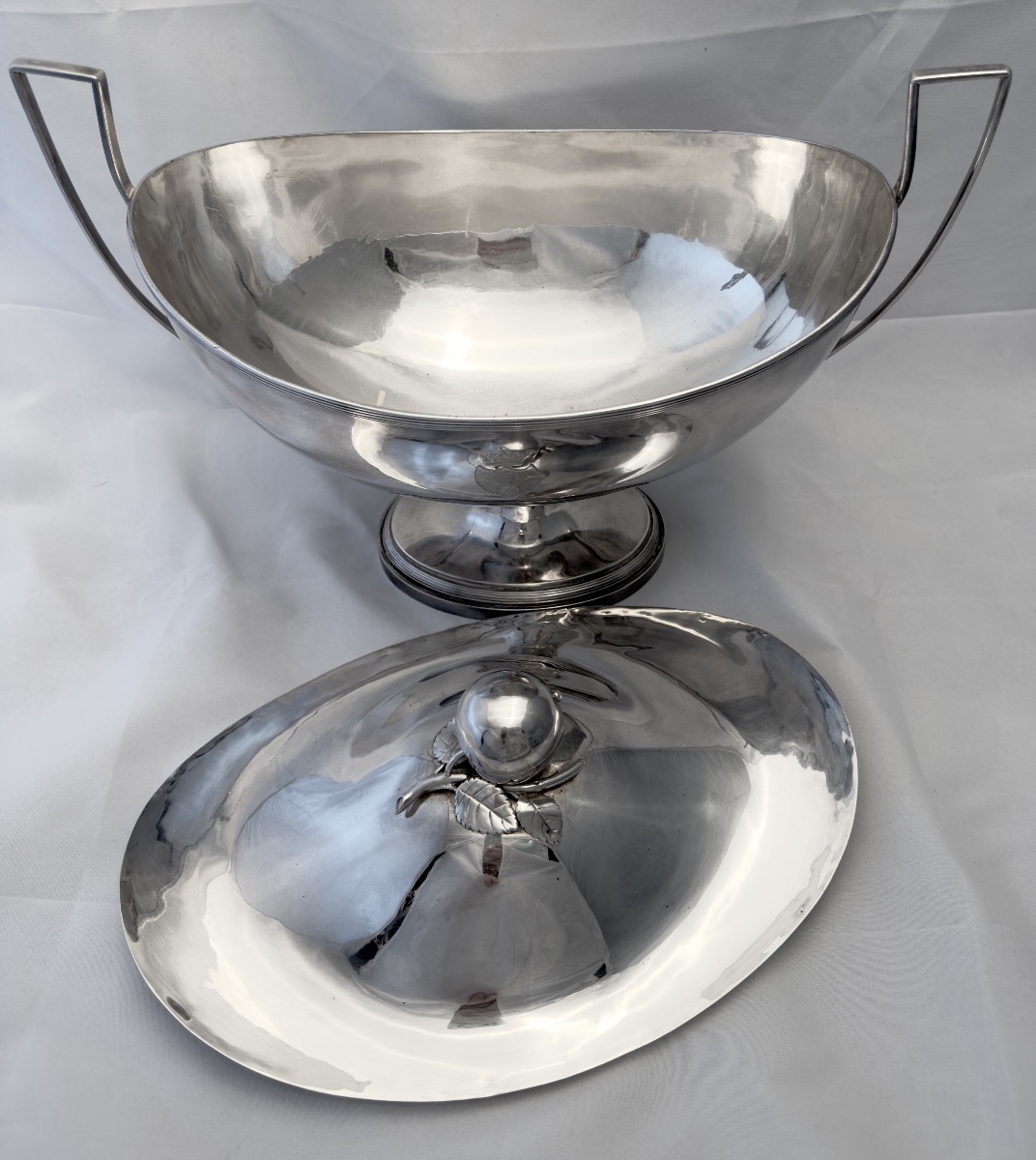
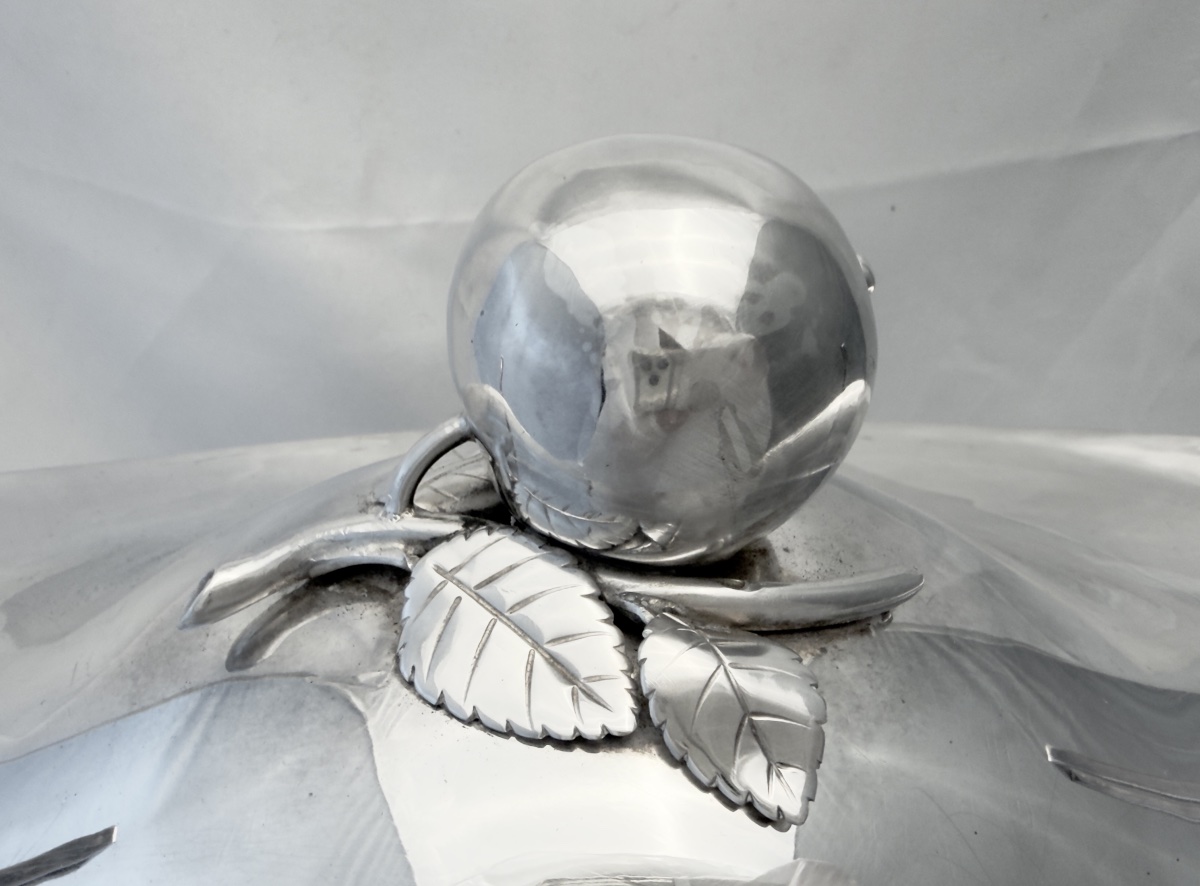
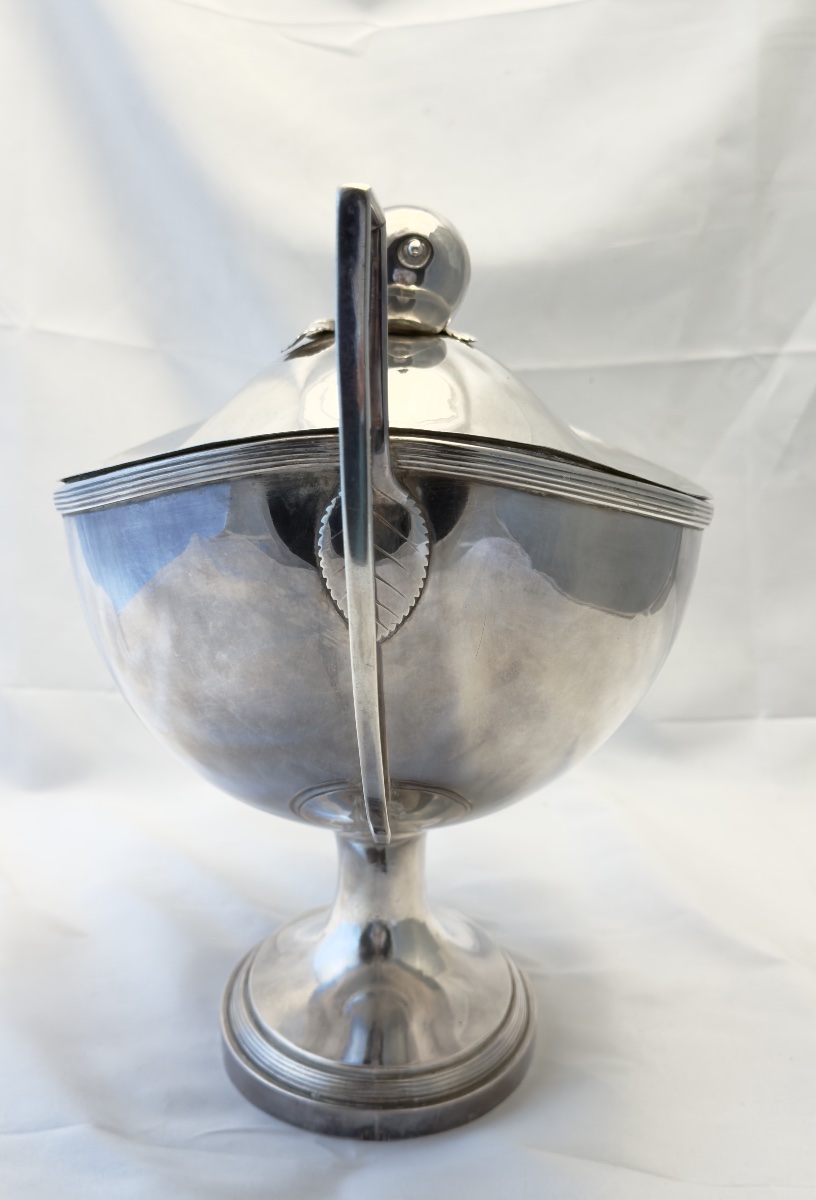
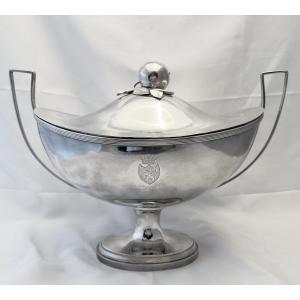
Of navette form, it is striking above all for its monumental proportions and the extreme sobriety of its design. The broad, deeply shaped body rests upon a high moulded oval pedestal foot. Two large, slender geometric handles rise prominently above the rim, further emphasizing the imposing character of the piece. The domed cover follows the contours of the body precisely. All superfluous ornament has been deliberately avoided: only a few moulded bands accentuate the rim and foot. The sole truly decorative element is the spectacular finial, formed as a pomegranate resting upon a leafy branch, treated with a naturalism that provides an elegant contrast to the architectural severity of the overall design.
In both form and restraint, the tureen continues the tradition of the great Neoclassical models that appeared in English and Dutch silver during the late eighteenth century. It belongs fully to the late Neoclassical and Empire taste that remained fashionable in the Netherlands during the first decades of the nineteenth century. Large silver soup tureens from this period are relatively rare today, and examples of such monumental proportions are rarer still.
The Arms of the Counts d’Oultremont: from Liège to Antwerp
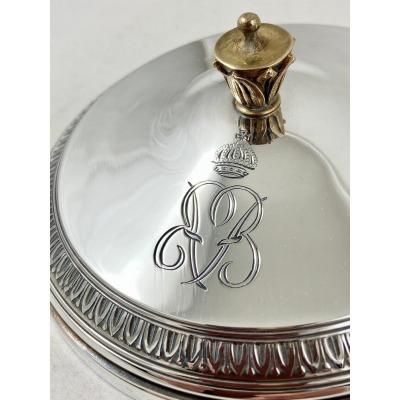
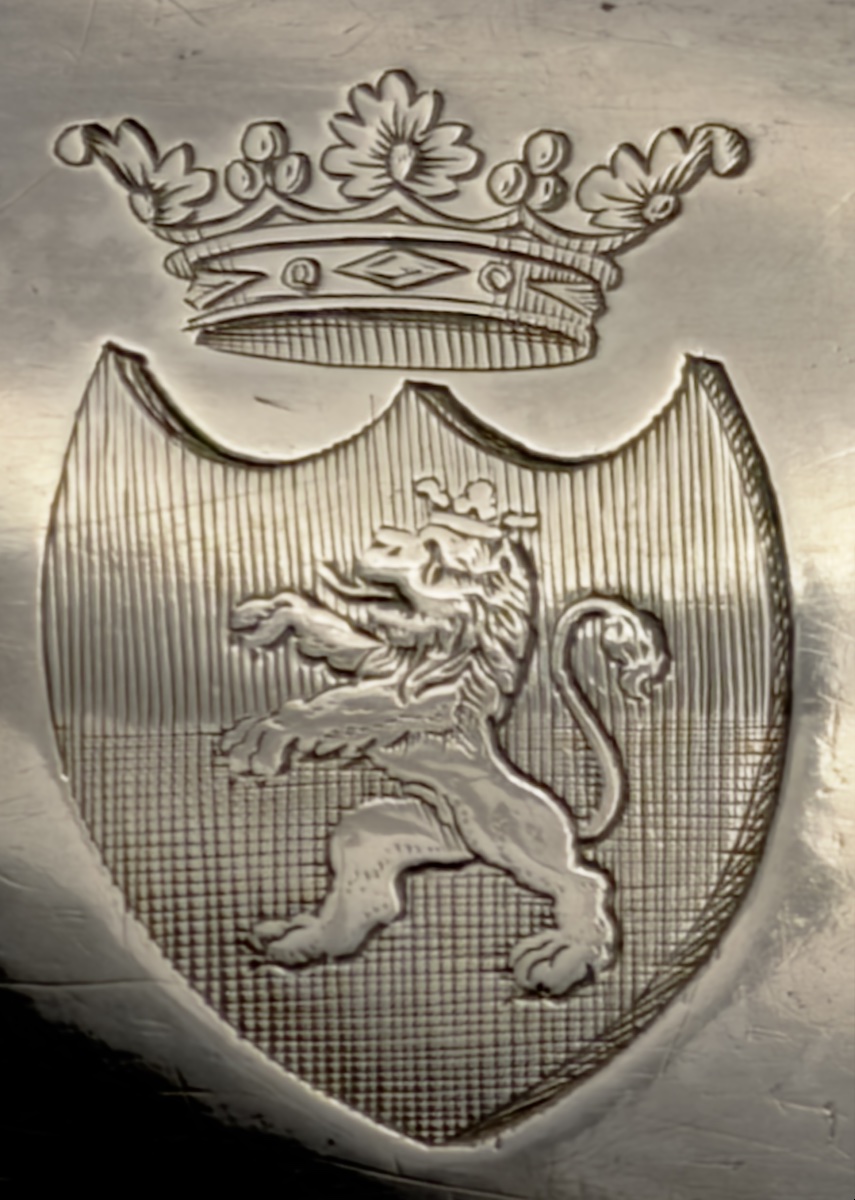
The front of the tureen is engraved, beneath a count’s coronet, with the arms of the d’Oultremont family, an ancient and important family of the Liège nobility. At first sight, the presence of these arms on a piece bearing the marks of the Antwerp assay office might seem surprising. It can, however, be explained by a marriage alliance that profoundly transformed the wealth and history of this branch of the family.
On 25 April 1782, Charles-Ignace, Count d’Oultremont de Wégimont (1753–1803), married Anne-Henriette de Neuf (1757–1830) in the Church of Saint James in Antwerp. She belonged to one of the great families of Antwerp high finance and was already the widow of Théodore-Joseph-Laurent van de Werve. The Royal Academy of Belgium aptly summarized the social consequences of this marriage: through his union, the Liège nobleman became, in effect, an Antwerp aristocrat.
Anne-Henriette was the daughter of the immensely wealthy financier Simon-Joseph-Charles de Neuf and Philippine-Joseph du Bois d’Aische. Her fortune was exceptional even by the standards of the aristocracy and Antwerp’s wealthy financial elite. Her dowry amounted to 394,009 florins, representing nine times the assets brought to the marriage by her husband and approximately three times the average found among even the wealthiest families. Much of this fortune consisted of securities and international investments, including Austrian holdings.
The family fortune increased still further through a succession of inheritances. Between 1782 and 1795, four inheritances substantially enlarged the couple’s wealth, notably that of Simon de Neuf in 1793. His movable fortune alone was then valued at 1,793,427 florins.
The d’Oultremont-de Neuf family thus came into possession of an extraordinary portfolio of properties in Antwerp and its surroundings. These included:
- their large townhouse in Antwerp;
- numerous other houses within the city;
- the Ter Linden estate at Edegem;
- the estate of Viersel;
- Broydenborg at Hoboken;
- properties at Wommelgem and Immerseel;
- as well as extensive estates, farms, fields and meadows throughout the Antwerp region and the Polders.
Their landed wealth was further increased by inheritances from the de Neuf family. The connection between the d’Oultremonts and Antwerp was therefore far more substantial than that of a family merely maintaining an occasional residence in the city.
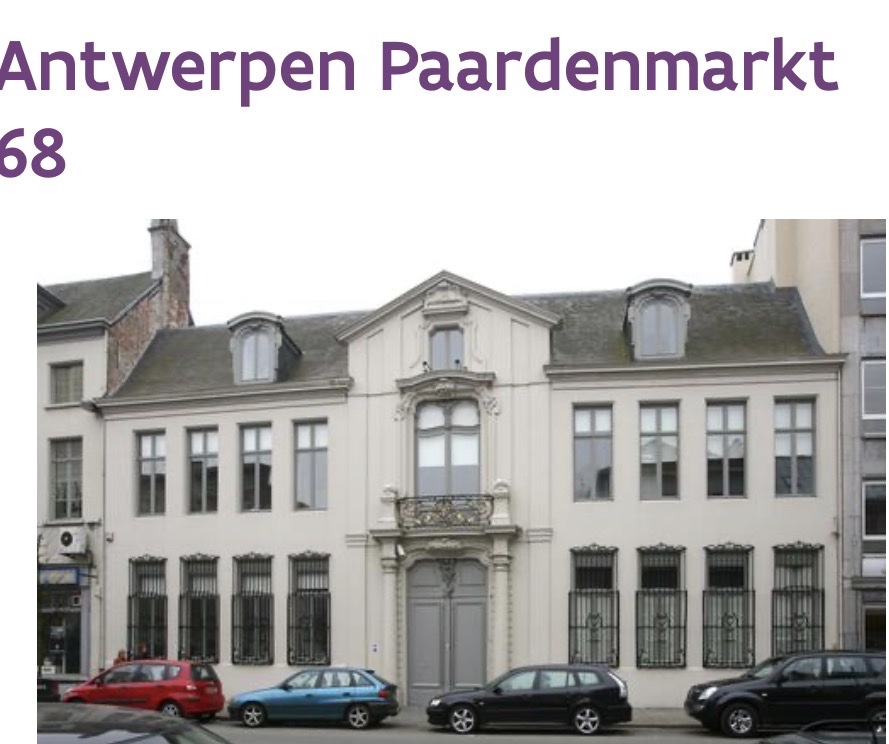
Their Antwerp townhouse remains a tangible reminder of this connection. The present-day Hôtel Kums, a remarkable Rococo mansion constructed in 1753–1754, was acquired in 1755 by Simon-Charles de Neuf-du Bois. It subsequently passed to his eldest daughter Anne-Henriette and thus into the d’Oultremont family. The d’Oultremont-de Neuf family retained the property until 1835.
Émile d’Oultremont, a Probable Patron
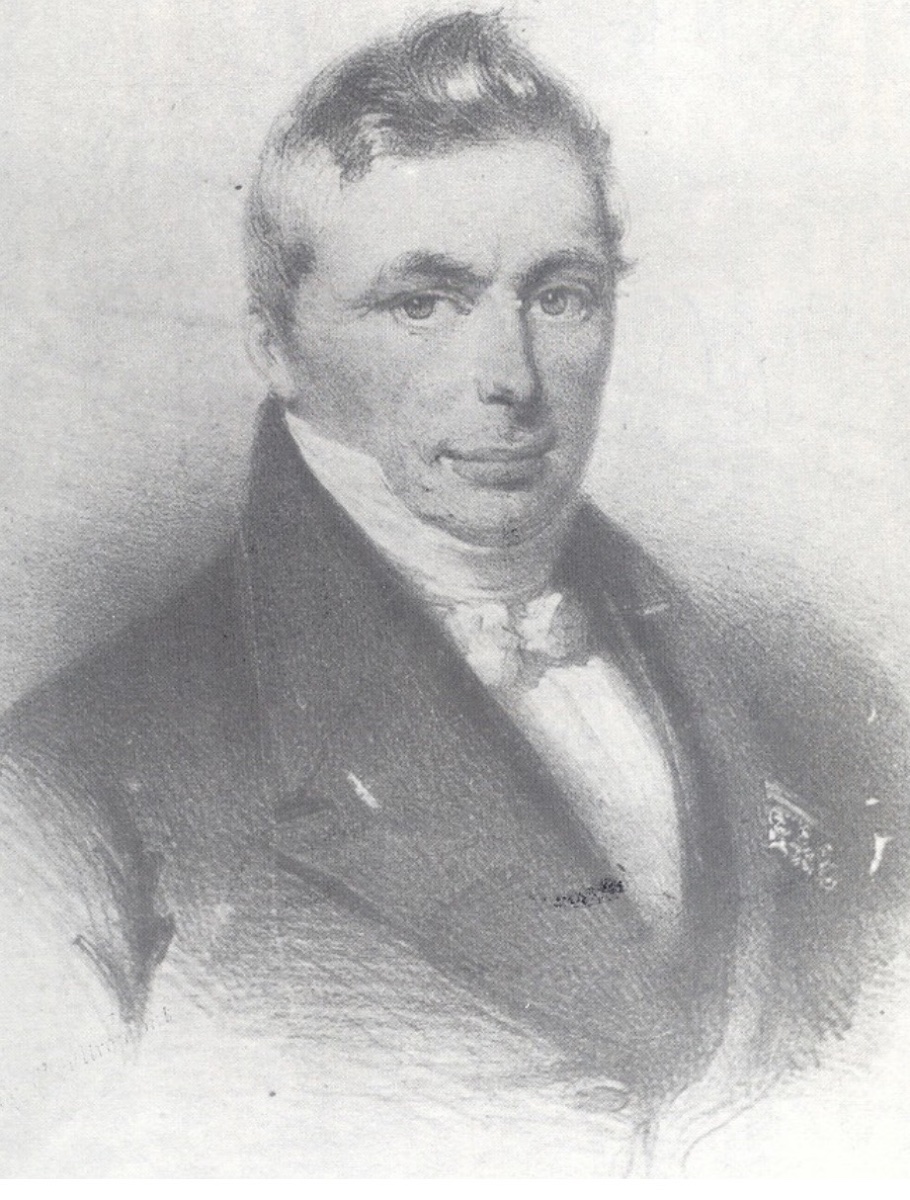
The chronology allows us cautiously to suggest a particularly plausible original owner: Émile-Charles-Désiré-Antoine-Joseph, Count d’Oultremont de Wégimont and de Warfusée (1787–1851), son of Charles-Ignace d’Oultremont and Anne-Henriette de Neuf.
Émile was born in Antwerp on 21 July 1787. In 1814, he married his cousin, Baroness Marie-Françoise-Charlotte de Lierneux de Presles. In 1816, his comital title was recognised in the newly established United Kingdom of the Netherlands, and through inheritance he also became Count de Warfusée.
As the tureen bears only the arms of the d’Oultremont family rather than impaled marital arms, its personal attribution to Émile cannot be regarded as conclusively established. Nevertheless, the date of his marriage in 1814, his close Antwerp connections, the immense fortune inherited through his mother, and the period indicated by the hallmarks make this provenance particularly plausible.
Émile d’Oultremont subsequently played a significant role in the creation of the Kingdom of Belgium. From 1829 he presided over the Constitutional Association, which brought together part of the Liège opposition to the government of King William I. During the events of 1830, he became president of the Liège Commission of Public Safety. His influence was such that Charles Rogier considered appointing him to the Provisional Government.
Elected to the National Congress, he participated in the crucial decisions that established the new Belgian state. He notably voted in favour of Leopold of Saxe-Coburg as the first King of the Belgians and supported the Eighteen Articles. In 1831, he was elected Senator for the district of Turnhout, a position he retained until 1837.
His career subsequently extended into diplomacy: from 1838 to 1844, he served as envoy extraordinary and minister plenipotentiary of the King of the Belgians to the Holy See and to the Italian courts.
Thus, behind the discreetly engraved arms on this tureen lies the history of a family connecting the former Prince-Bishopric of Liège, Antwerp high finance, the United Kingdom of the Netherlands and the birth of independent Belgium.
Jean-Baptiste II Verberckt, Antwerp Silversmith
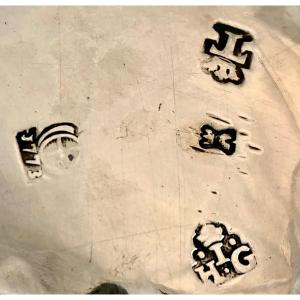
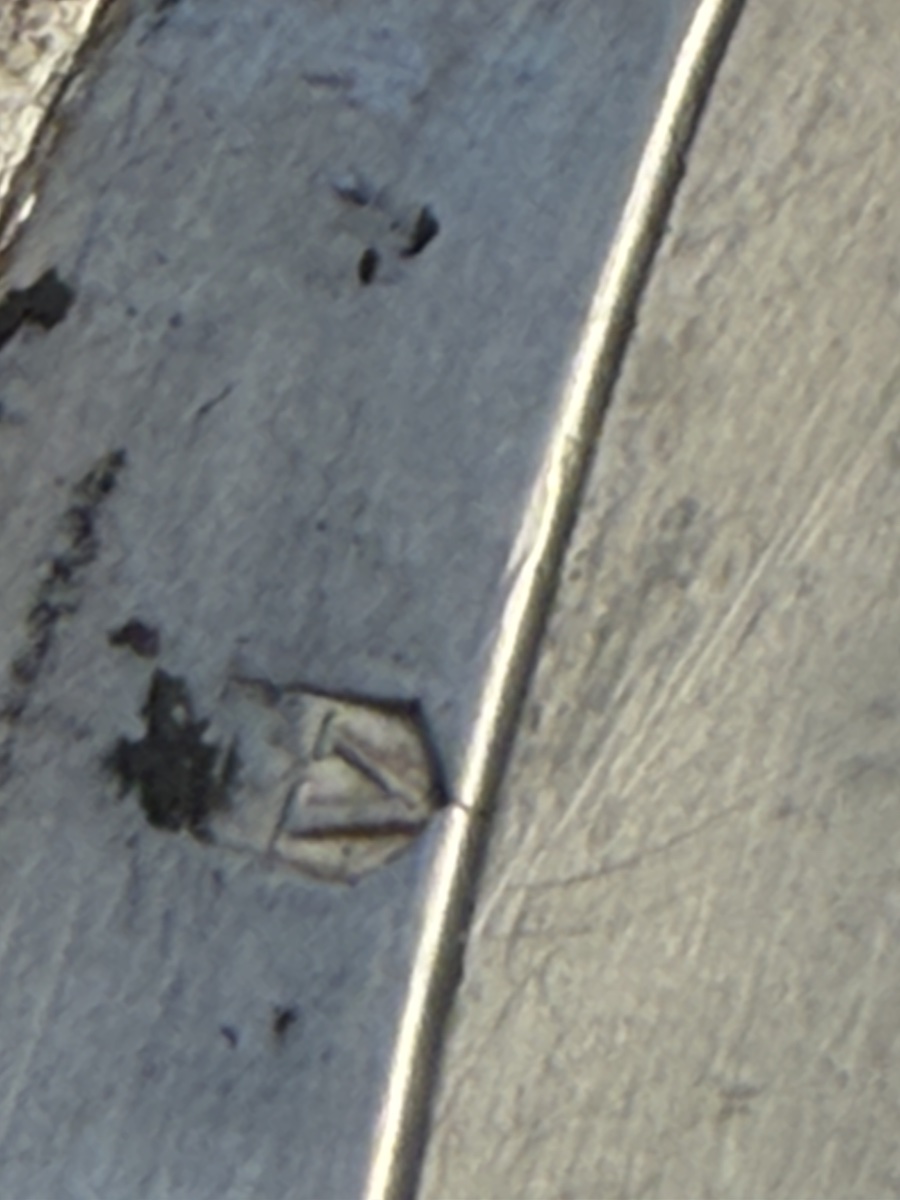
The tureen bears the maker’s mark of Jean-Baptiste II Verberckt (1774–1838), a member of an important dynasty of Antwerp silversmiths.
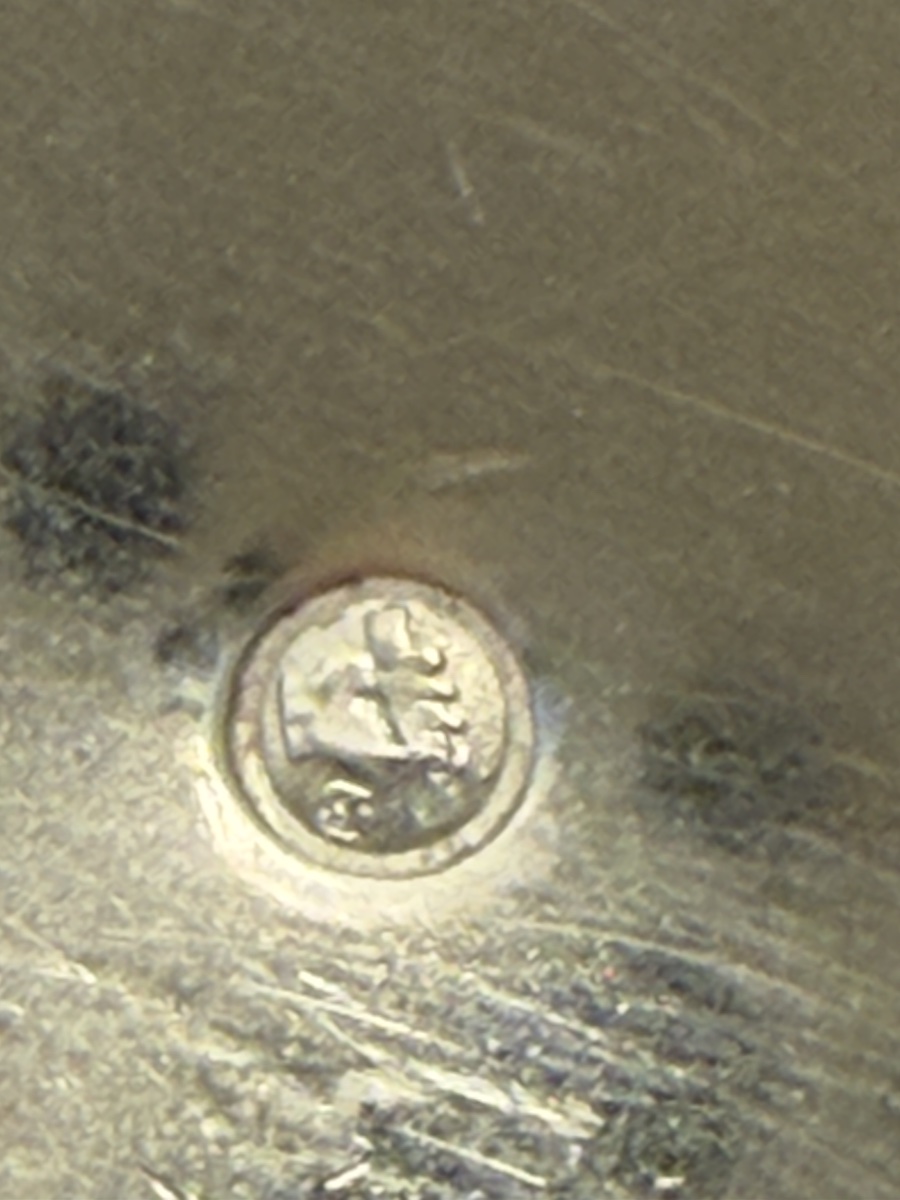
Jean-Baptiste II took over his father Jean-Baptiste I Verberckt’s workshop in 1811 and remained active in Antwerp until his death in 1838. His maker’s mark consists of a V surmounted by six dots arranged in the form of a flower, within a rectangular punch.
The Verberckt workshop was firmly rooted in Antwerp’s distinguished silversmithing tradition. Jean-Baptiste II produced both secular and table silver as well as ecclesiastical silver. Following his death, the workshop was continued by his widow, Anna Cornelia van Roy.
This important soup tureen thus combines several qualities rarely encountered in a single object: exceptional dimensions, a Neoclassical design of remarkable purity, the work of an important Antwerp silversmith, and a particularly evocative aristocratic provenance. The history of the Counts d’Oultremont provides a fascinating explanation for the presence of their arms on a major piece of silver made and assayed in Antwerp during the first decades of the nineteenth century.
Period: 19th century
Style: Consulat, Empire
Condition: Perfect condition
Material: Sterling silver
Length: 44 cm
Width: 24,5 camp
Height: 33,5 cm
Reference (ID): 1811134
Availability: In stock