

Favier, Pair Of Solid Silver And Vermeil Cruets, Circa 1850
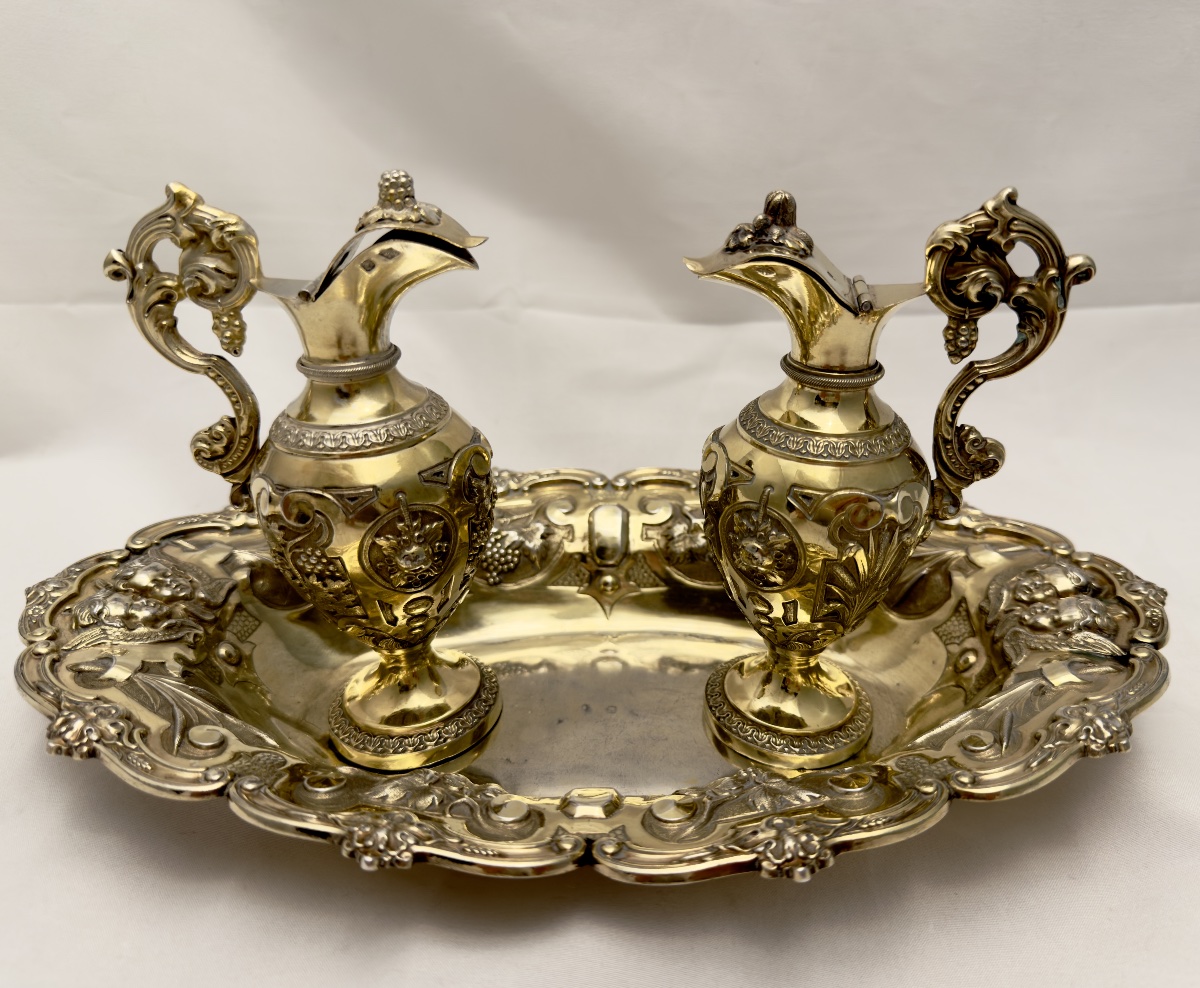
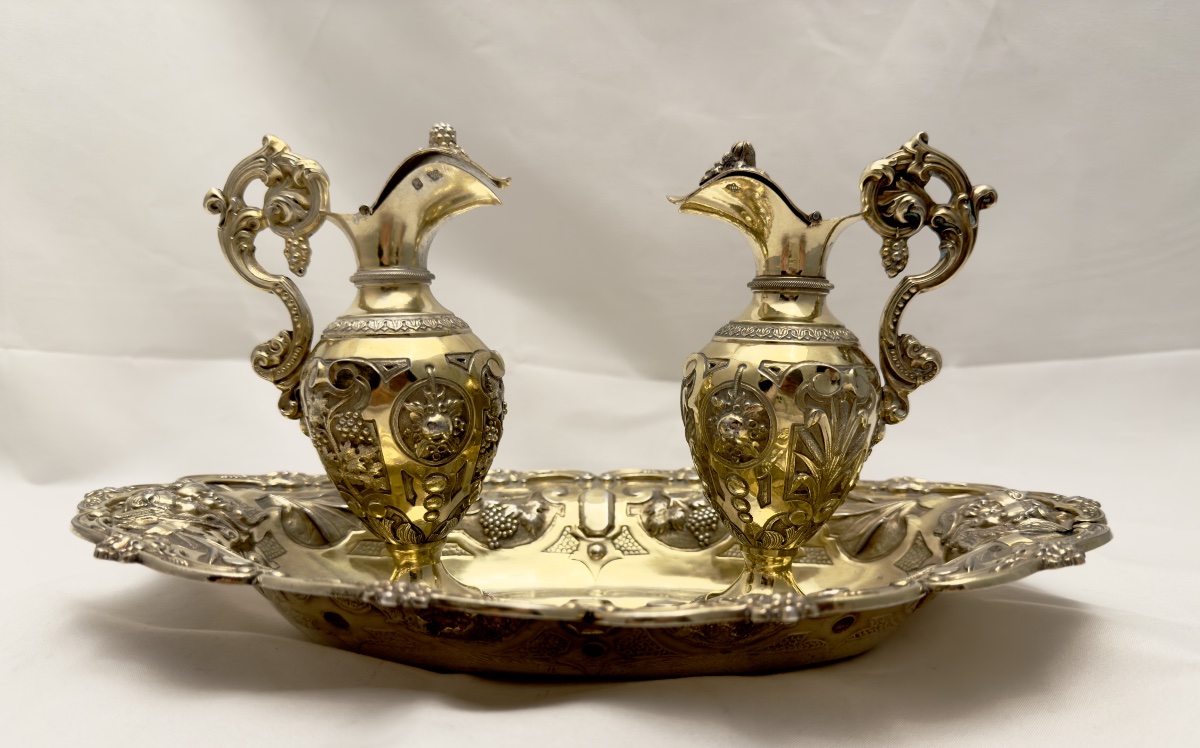
This important pair of Mass cruets with their tray was made in solid silver-gilt (vermeil) in Paris in the mid-19th century by Pierre-Henry Favier. The ensemble is distinguished by the exceptional richness of its decoration, characteristic of the revival of ecclesiastical silver during the Second Empire.
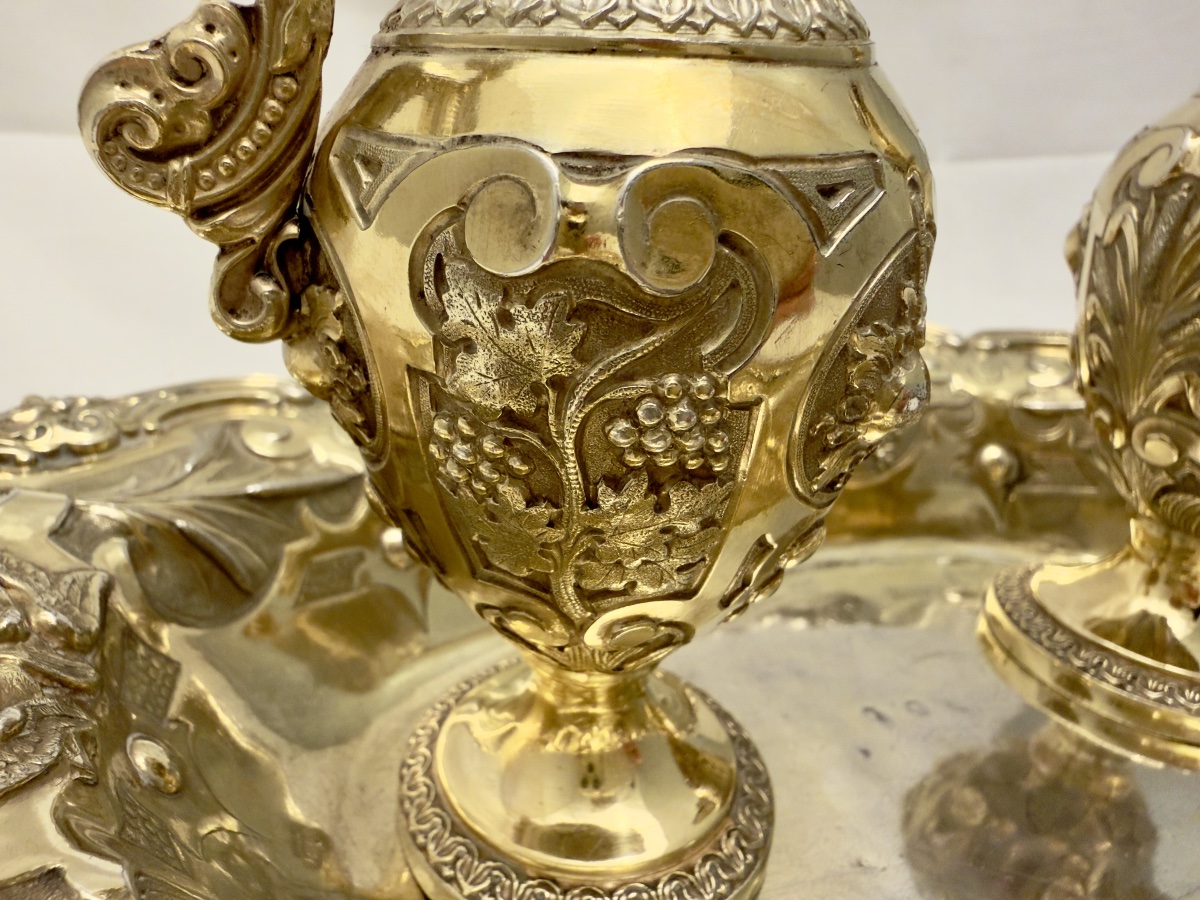
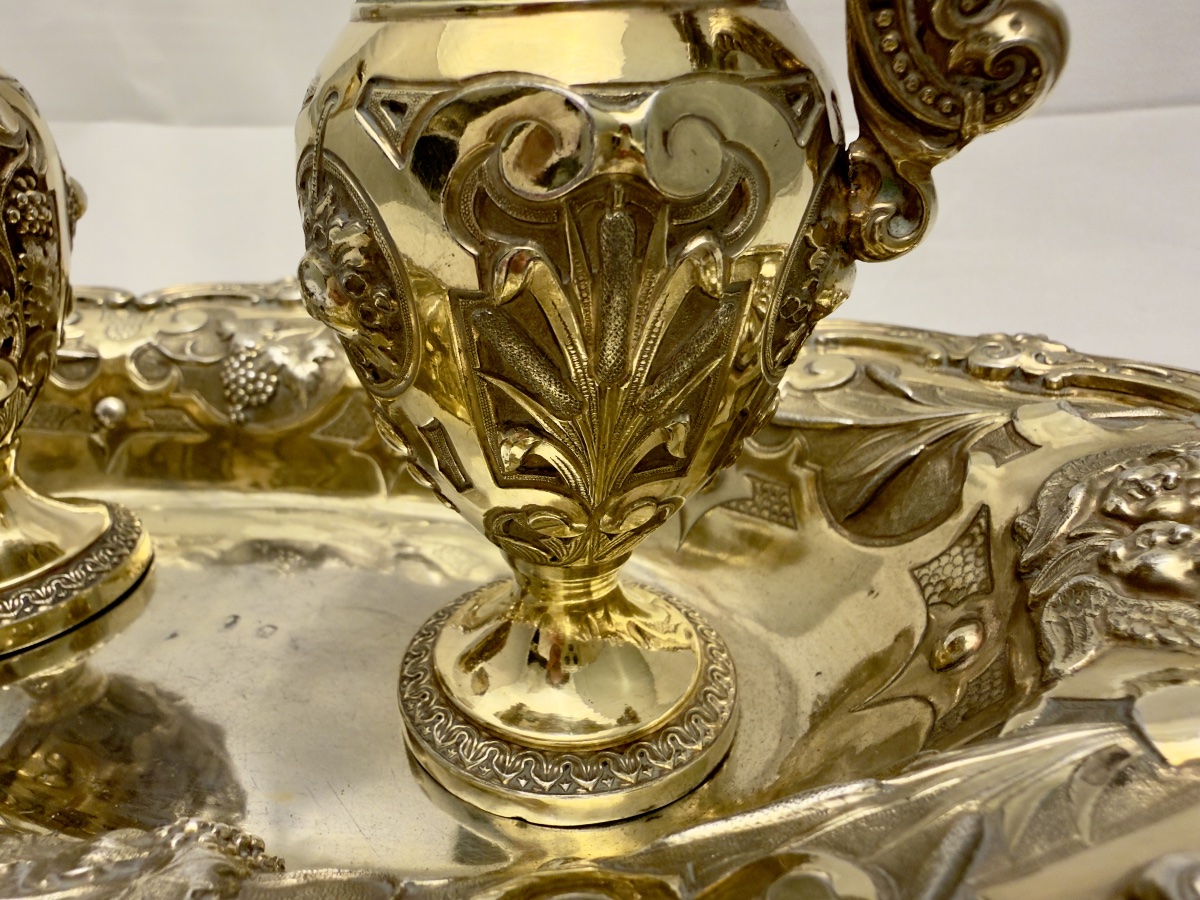
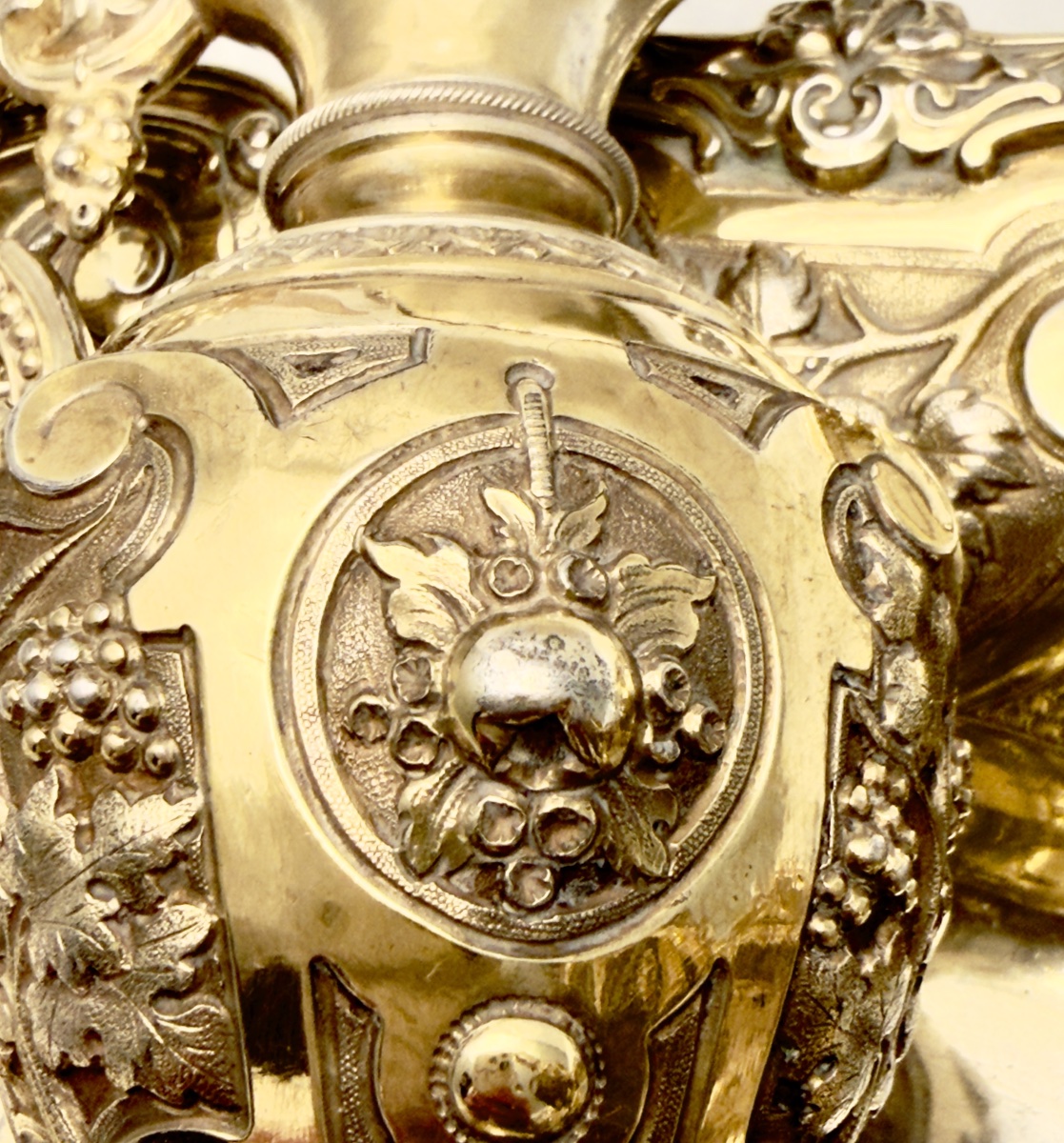
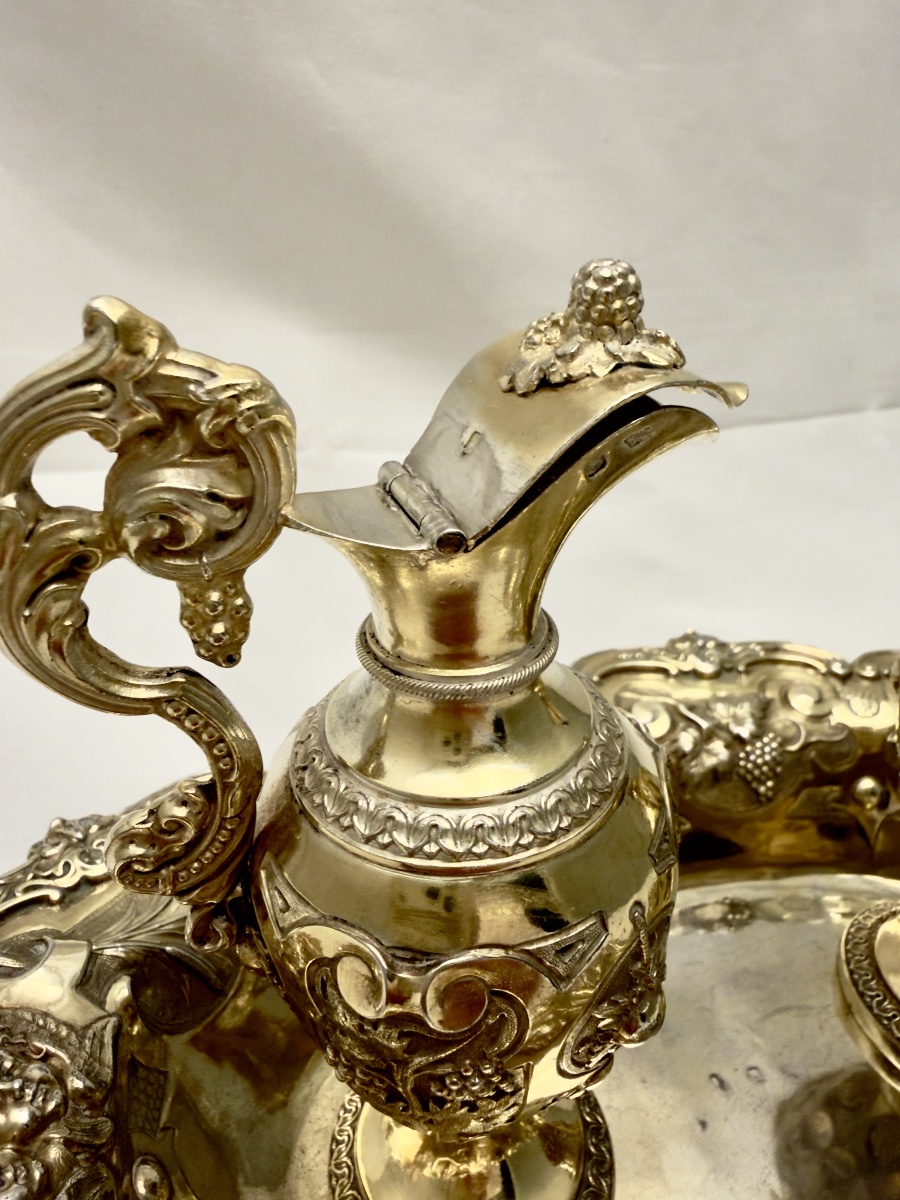
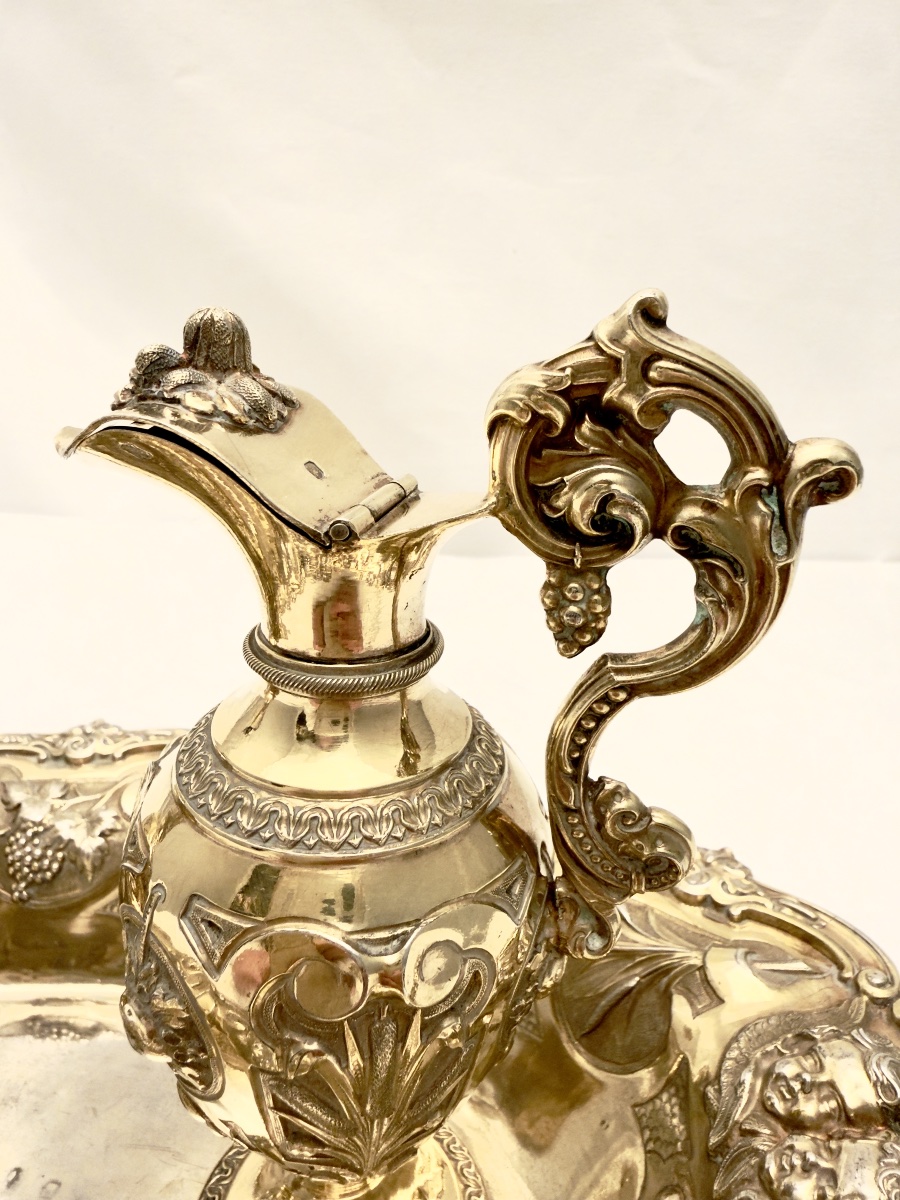
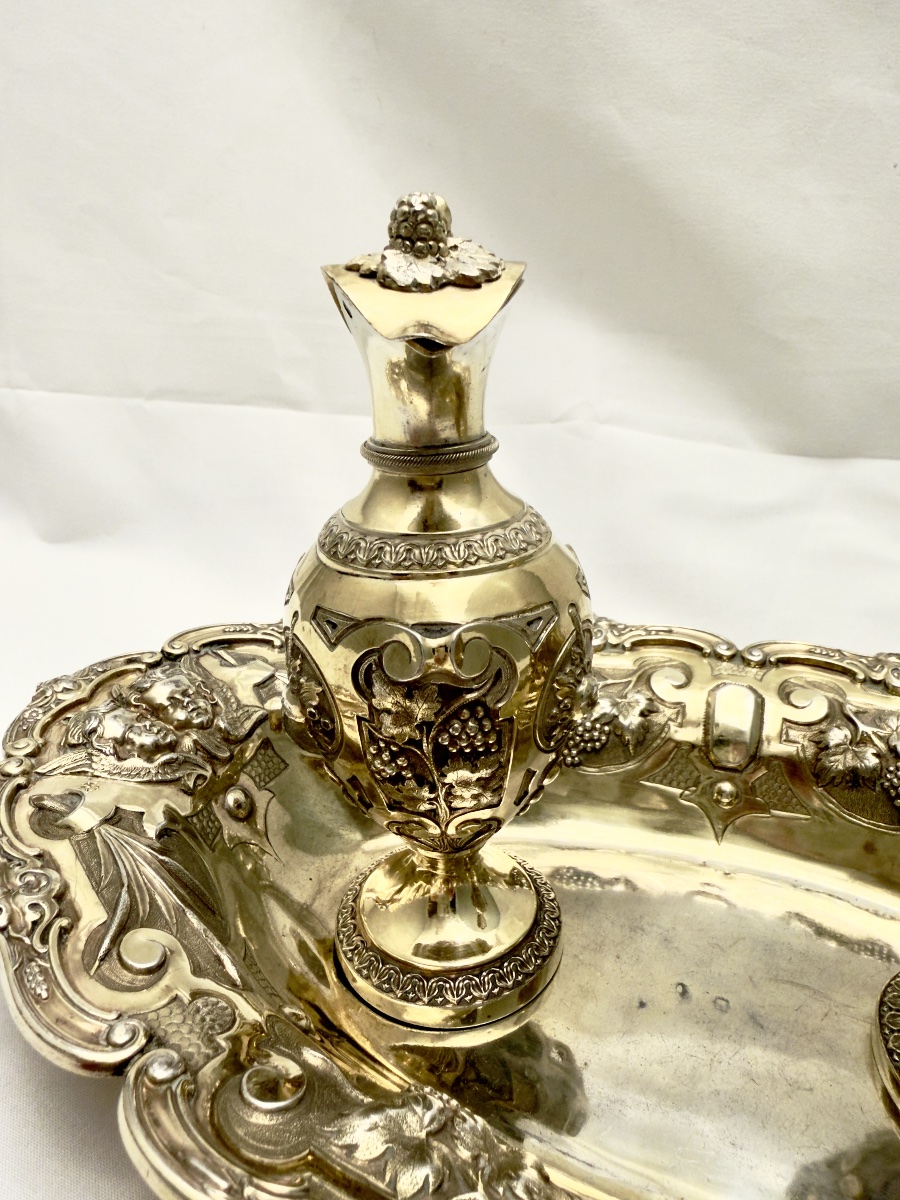
The two cruets, of baluster form, stand on moulded circular feet. Their bodies are abundantly decorated with scrolling foliage and vegetal motifs in high relief, including vine leaves, bunches of grapes and other plants symbolically associated with the celebration of the Eucharist. The large openwork handles are composed of vigorous foliate scrolls in the Neo-Rococo taste, while the hinged covers are themselves surmounted by fruit and vegetal motifs.
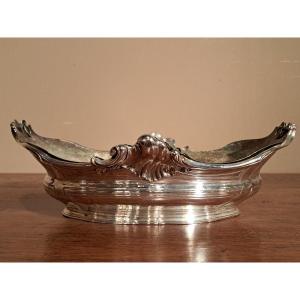
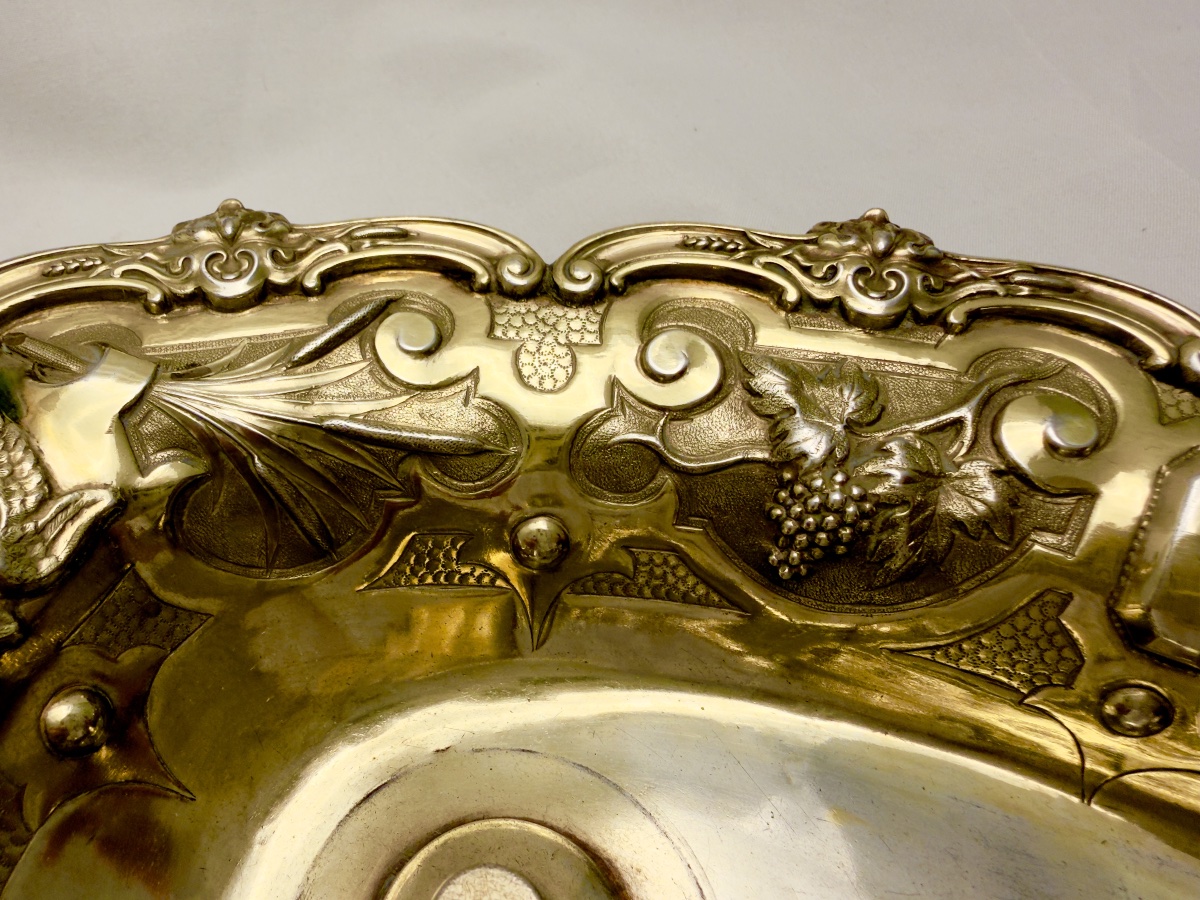
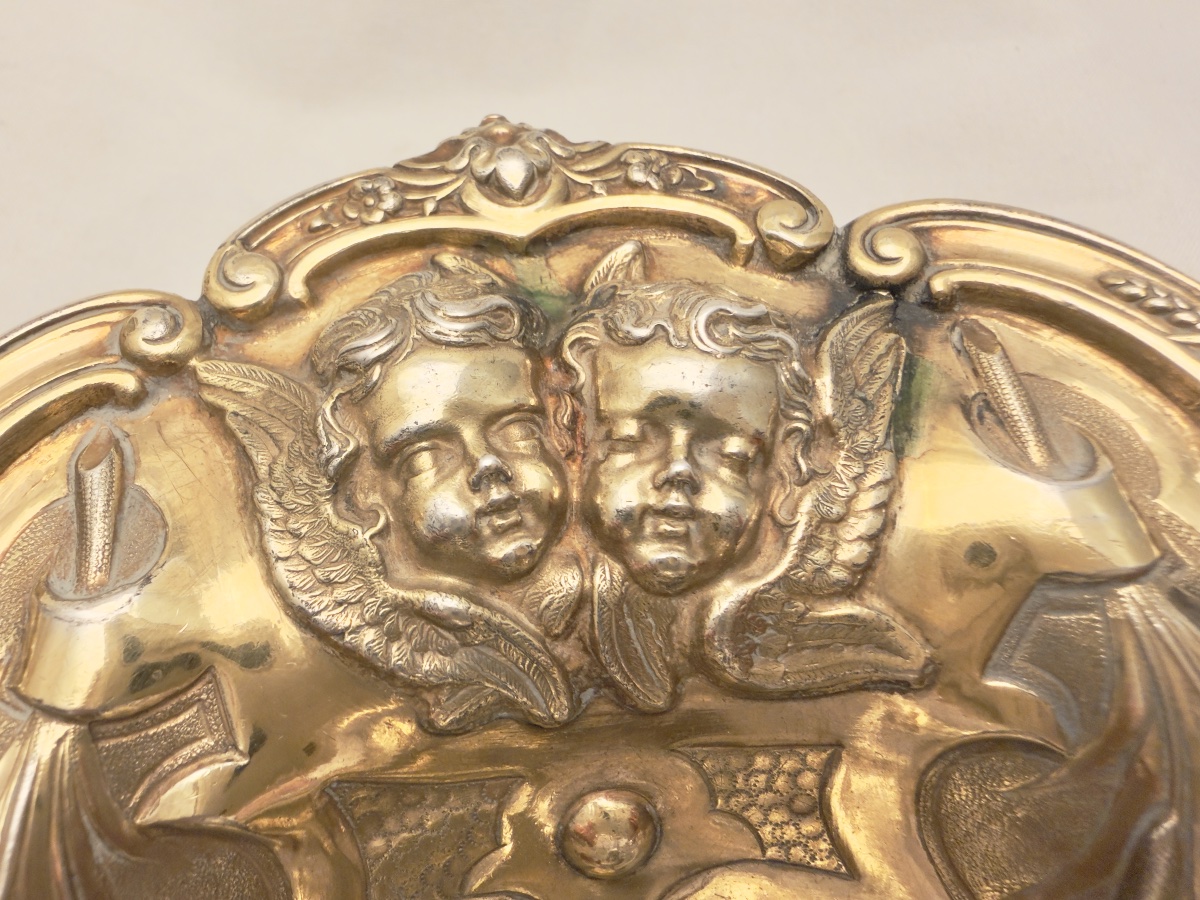
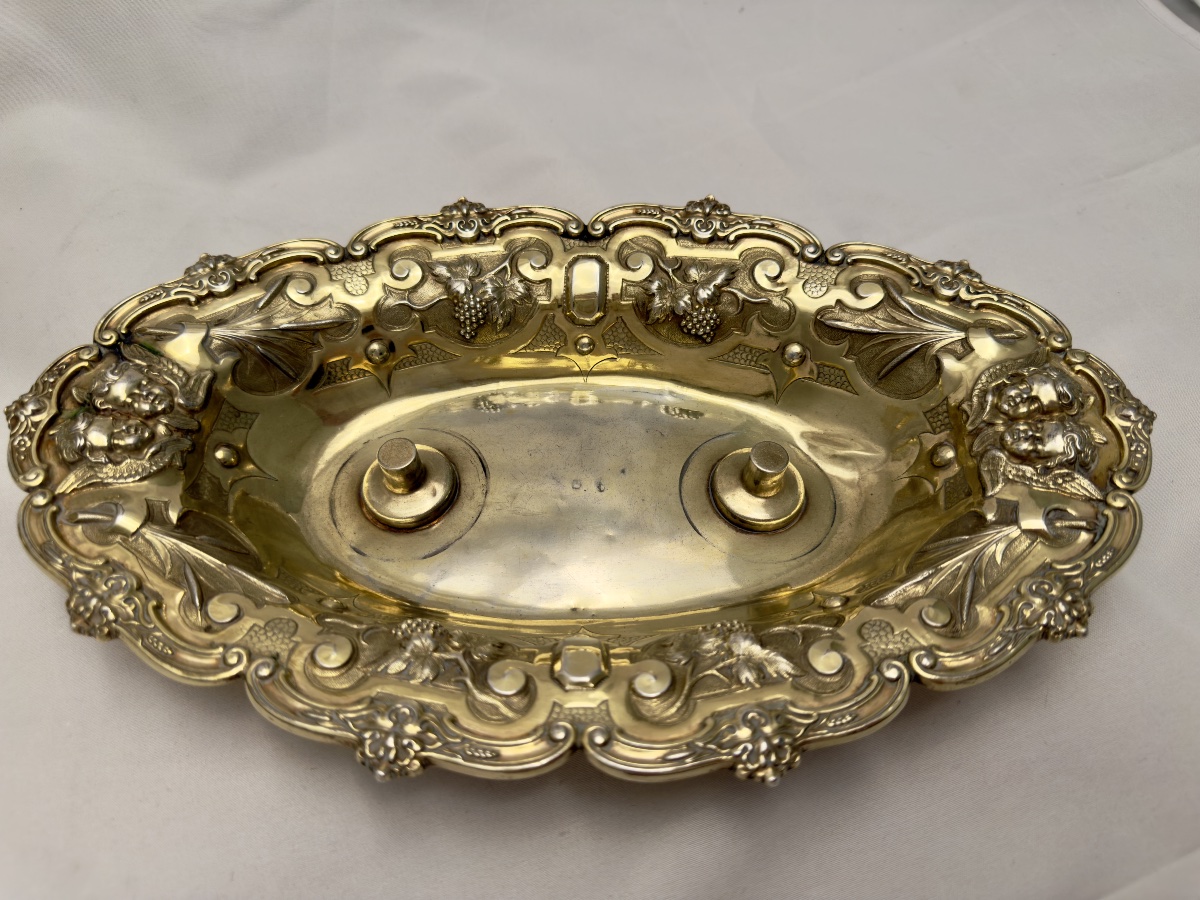
The large oval tray repeats the same luxuriant ornamental vocabulary. Its deeply shaped border is covered with scrollwork, foliage and bunches of grapes executed in repoussé and finely chased. At either end appear prominent cherubs’ heads in high relief, incorporated into the surrounding vegetation. The ensemble is characteristic of the taste of the mid-19th century for sumptuous ecclesiastical silver, moving away from the restrained Neoclassicism of the early decades of the century towards a much richer vocabulary inspired by the Baroque and Rococo styles.
The two cruets perform distinct functions during the celebration of Mass: one contains the wine to be poured into the chalice, while the other contains water, a small quantity of which is mixed with the wine during the preparation of the gifts and which is also used for the lavabo. Their respective purposes were frequently distinguished by their ornamentation: vines and bunches of grapes naturally indicate the wine cruet, while reeds or other aquatic plants may identify the water cruet. This iconographic vocabulary occurs on several liturgical ensembles by Favier preserved in French public collections. (French Ministry of Culture, POP database)
Pierre-Henry Favier
Pierre-Henry Favier was born in 1809 into a family of silversmiths from Lyon. Together with his brothers François, André-Michel and Joseph, he belonged to the first generation of the celebrated Favier dynasty, which specialised to a remarkable degree in ecclesiastical silver. The family workshop was established in Lyon during the 1820s and produced chalices, ciboria, monstrances, patens, reliquaries, cruets and numerous other objects intended for the Catholic liturgy. (Treasury of Amiens Cathedral)
Pierre-Henry initially worked in Lyon alongside his brothers, before leaving his native city for Paris in 1846. In that year he registered his own Parisian maker’s mark. He subsequently took over the workshop of the silversmith Jean-Baptiste Garnier, at 9 Place Dauphine, and later worked notably at 44 Quai des Orfèvres, at the very heart of the traditional Parisian silversmiths’ district.
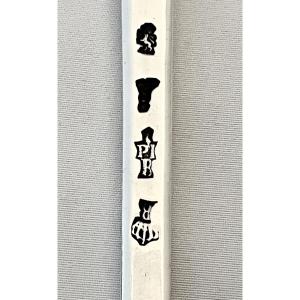
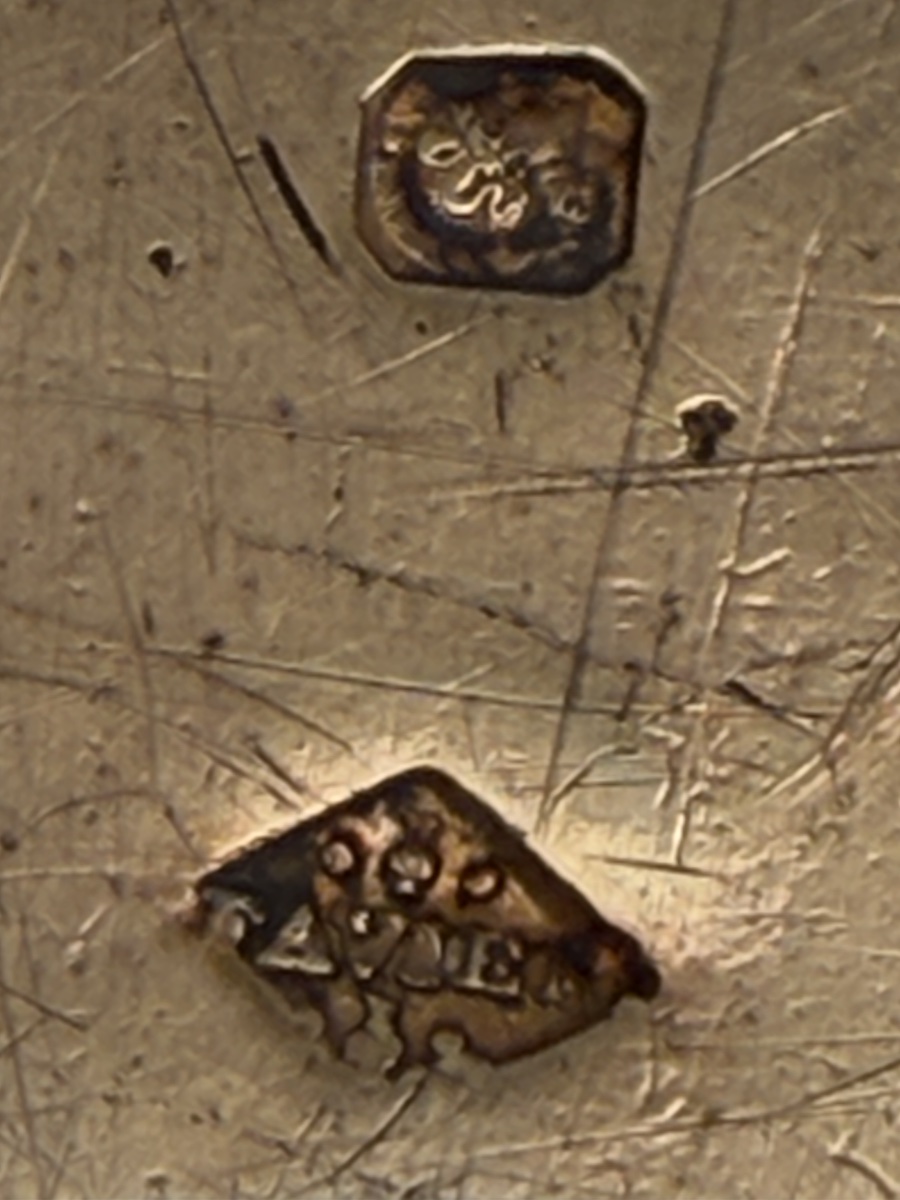
His maker’s mark is particularly distinctive: the name FAVIER written in full, with a small cruet above and another below, accompanied by grains of remedy, within a horizontal lozenge. The mark was registered on 12 August 1846. (French Ministry of Culture, POP database)
This hallmark allows the Paris branch of the Favier family to be distinguished from the Lyon workshop, whose marks generally incorporate the letter F and a sun. Pierre-Henry developed a substantial production of ecclesiastical silver in Paris and became one of the characteristic representatives of the great revival of French religious metalwork in the middle decades of the 19th century.
Several important works by Pierre-Henry Favier are today preserved or recorded in French public collections. The Treasury of Notre-Dame Cathedral in Amiens, for example, houses a remarkable silver-gilt chapel set dated 1846, comprising a chalice, paten, tray, two cruets and a bell. Now the property of the French State, this ensemble provides an especially interesting comparison with the present cruets. (Treasury of Amiens Cathedral – Favier Chapel Set)
The Church of Saint-Nicolas at Maisons-Laffitte also preserves a pair of cruets and tray by Pierre-Henry Favier, decorated with vines and reeds and bearing the same Parisian maker’s mark, FAVIER between two cruets. (French Ministry of Culture, POP database)
Another cruet and tray set, dated 1861 and protected as a French Monument historique in the Pyrénées-Atlantiques, displays a particularly comparable decorative vocabulary combining scrolling foliage, grapes, wheat, reeds and cherubs’ heads. Its maker’s mark is explicitly identified as that of Pierre-Henry Favier, registered in Paris in 1846. (French Ministry of Culture, POP database)
The French Inventaire général and Monuments historiques databases furthermore record numerous chalices, patens, ciboria, monstrances and reliquaries by Pierre-Henry Favier in churches throughout France, demonstrating both the importance of his workshop and the considerable distribution of its ecclesiastical production during the 19th century.
With its exceptionally rich decoration, fine quality of execution and remarkable visual presence, this pair of cruets and its tray constitutes a particularly attractive example of Parisian ecclesiastical silverwork of the mid-19th century and of the production of Pierre-Henry Favier, a member of the great Lyon dynasty of silversmiths who established his own important workshop in Paris.
Period: 19th century
Style: Napoleon 3rd
Condition: Excellent condition
Material: Sterling silver
Length: 30 cm
Width: 18 cm
Height: 14 cm
Reference (ID): 1810978
Availability: In stock