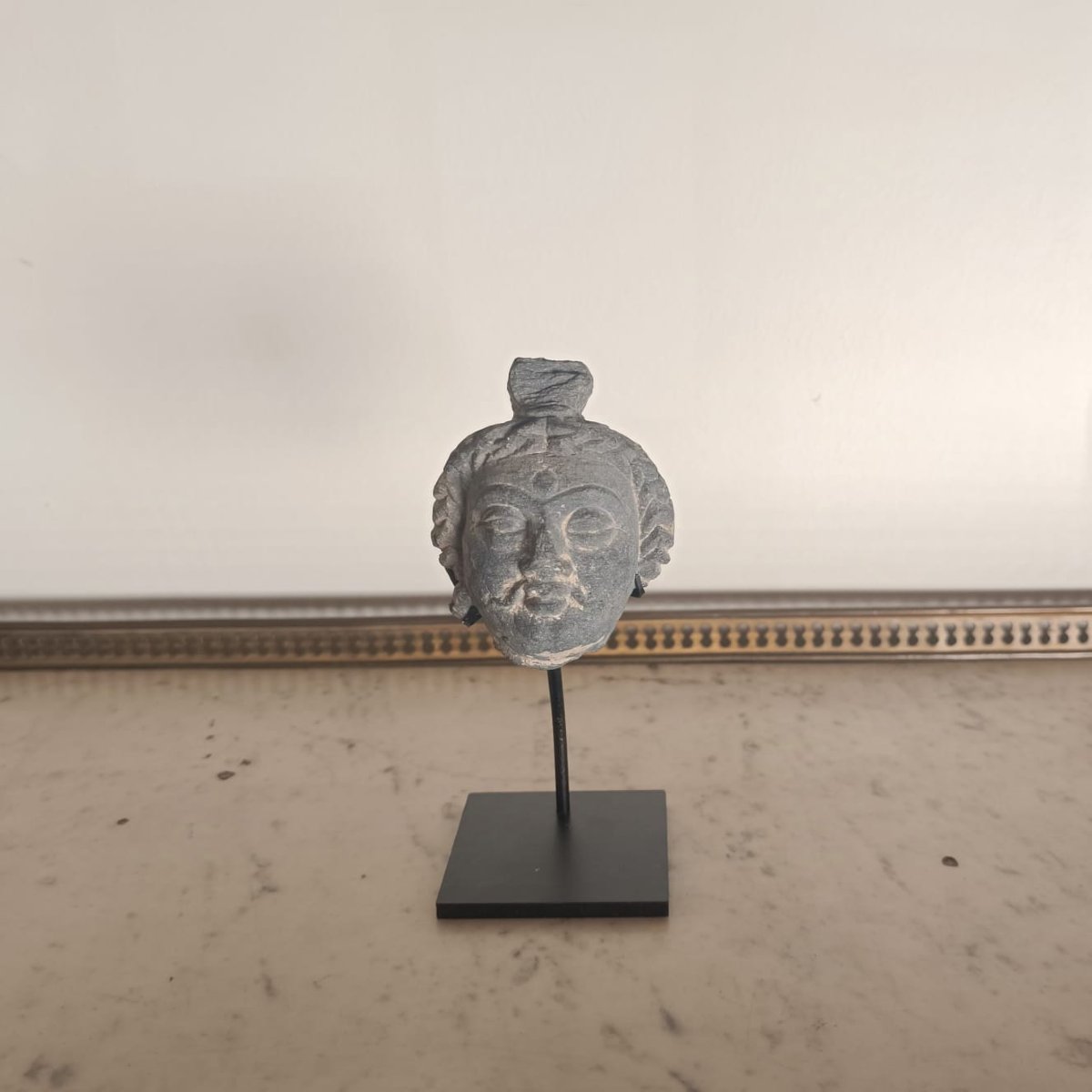
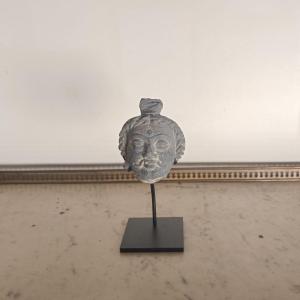


Greco-buddhist Art From Gandhara, Bodhisattva Head, 1st Century Bc–4th Century Ad
Available for viewing in Paris. Freein-person pickup in the capitaland its suburbs. Shipping within France€15. Contact me for Europe and therest of the world.
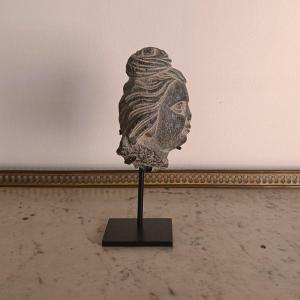
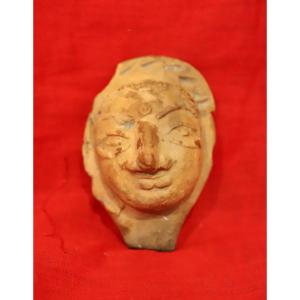
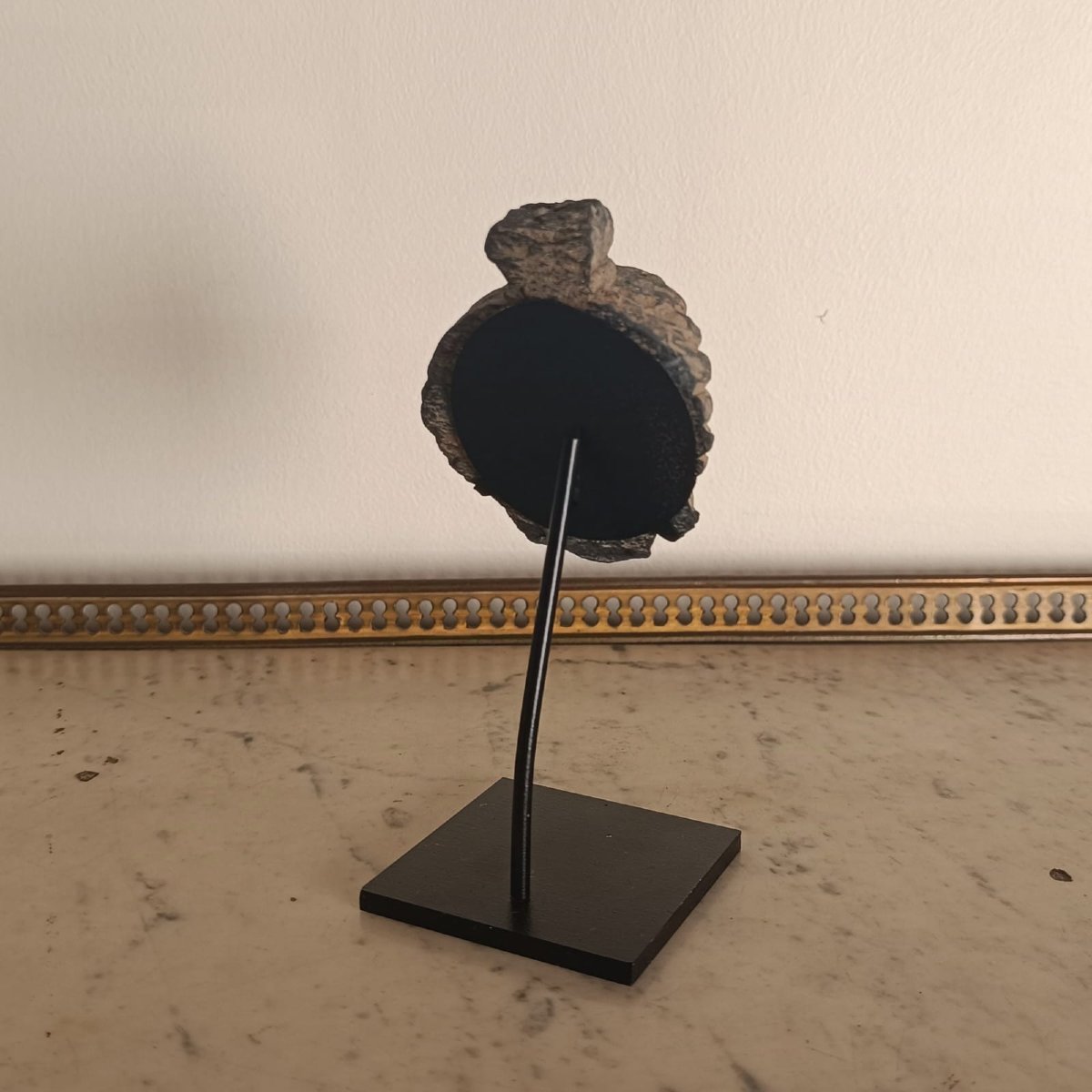
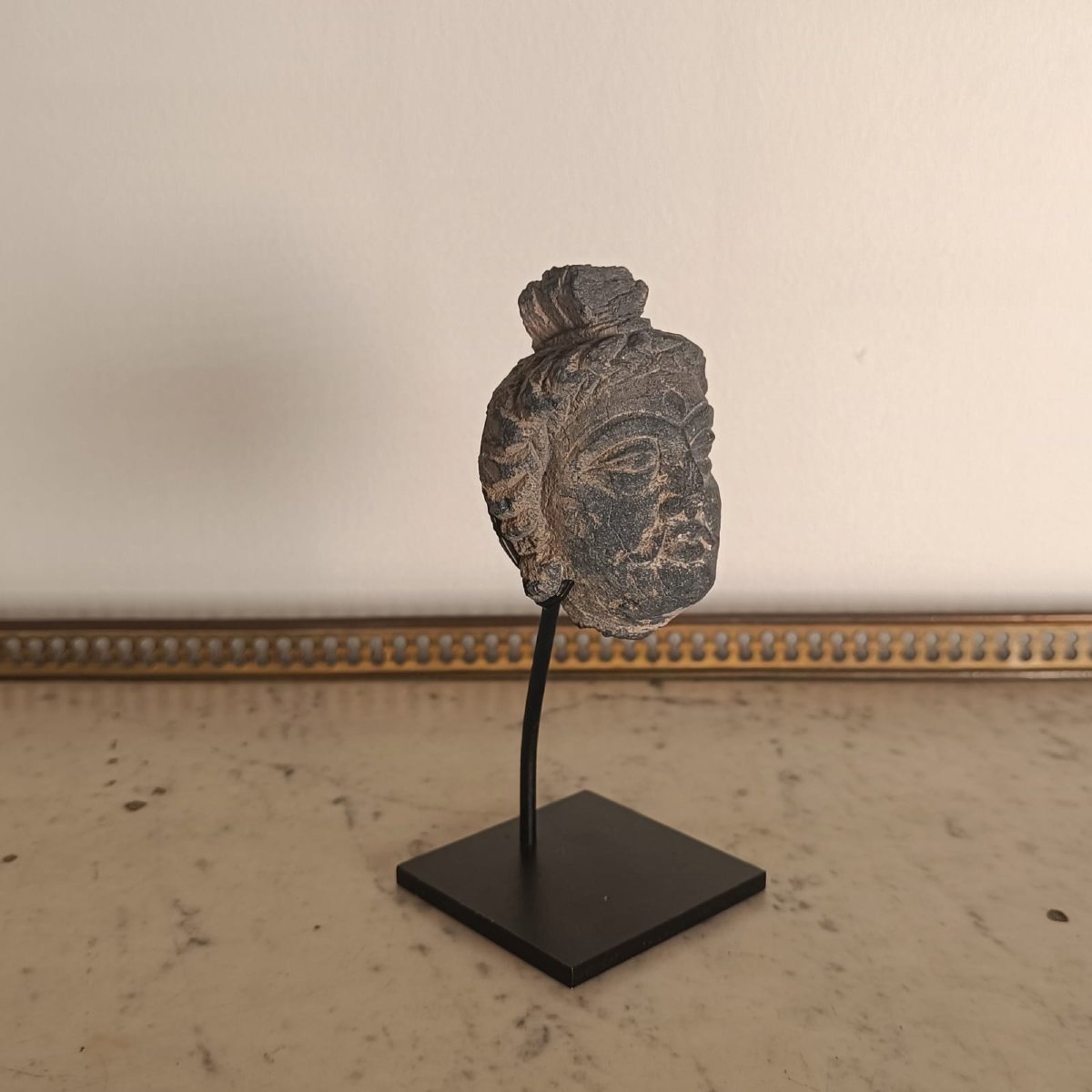
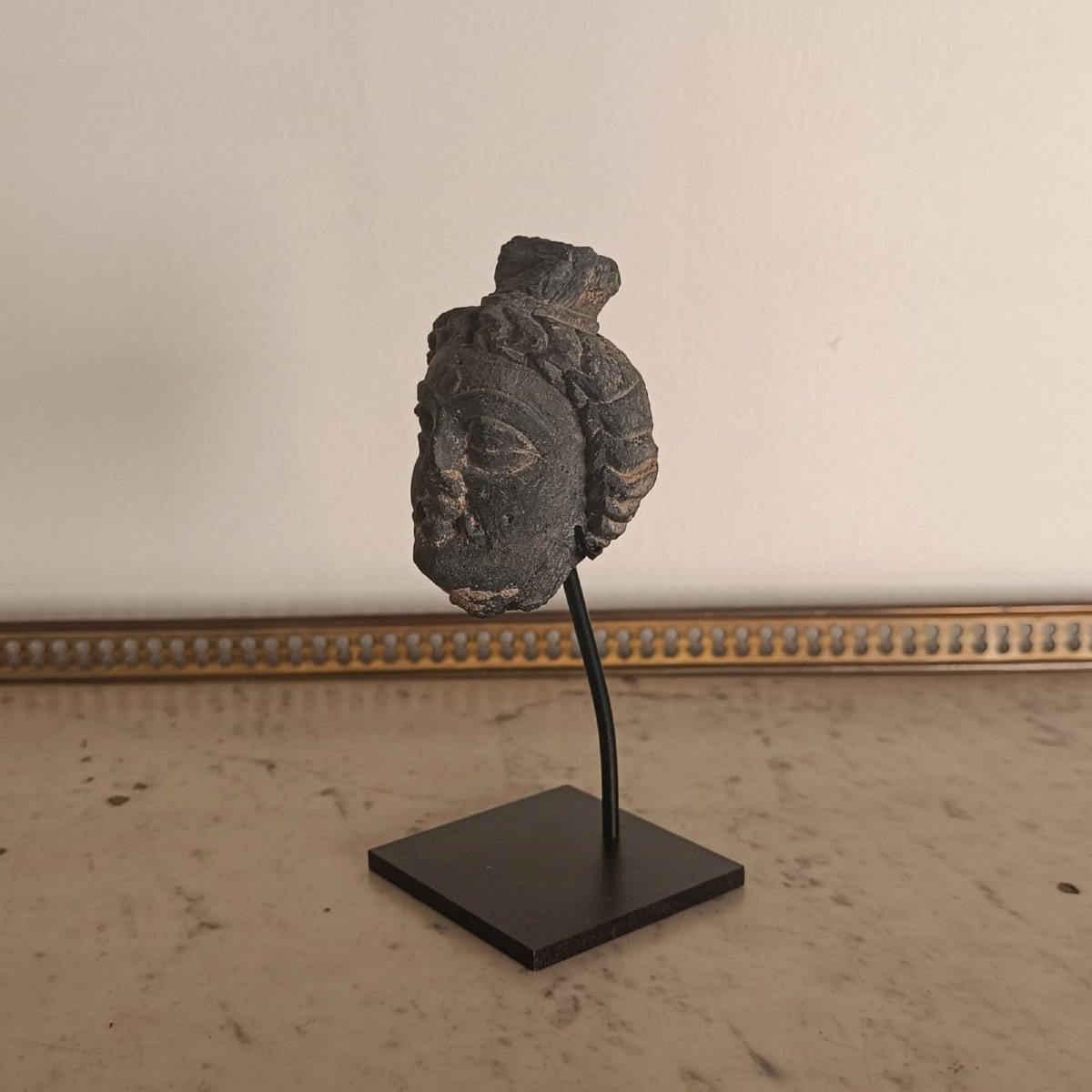
Fragment of a bas-relief in gray-blue schist (a material typical ofGandhara art) depicting a Bhodhisattva’s head in full face view
Custom-made modern base in painted steel and brass
1st century BC – 4th century AD
Dimensions : 7 x 4.5 x 2.5 cm
Dimensions with base : 12 x 5 x 5 cm
Greco-Buddhist art refers to the body of pictorial,sculptural, metalwork, and numismatic works resulting from the synthesis of Greek andIndo-Buddhist styles. This art form first emerged in Gandhara (Pakistan, in thePeshawar region, corresponding to the territory of the easternmost satrapy ofthe Achaemenid Persian Empire) at the beginning of the Common Era, under the Kushan Empire,thanks to the cultural encounter between the nomadic peoples of Central Asia,the Greek world, the Indian world, and the Iranian-Persian world. Greco-Buddhist art ischaracterized in particular by a strong realism derived from Hellenistic art,conveying movement, emotion, and the vitality of the human form—an approach applied not onlyto the traditional figures of Eastern Greek art but also to thedepiction of the Buddha, bodhisattvas, and scenes associated with Buddhism.Most of the works belonging to this art form came to ourattention through looting and 19th-century Orientalism, and later throughmajor archaeological excavations conducted in collaboration with various countries, including theUnited Kingdom, France, and Italy in the 20th century.
Fragment of a bas-relief in gray-blue schist (a material typical ofGandhara art) depicting a Bhodhisattva’s head in full face view
Custom-made modern base in painted steel and brass
1st century BC – 4th century AD
Dimensions : 7 x 4.5 x 2.5 cm
Dimensions with base : 12 x 5 x 5 cm
Greco-Buddhist art refers to the body of pictorial,sculptural, metalwork, and numismatic works resulting from the synthesis of Greek andIndo-Buddhist styles. This art form first emerged in Gandhara (Pakistan, in thePeshawar region, corresponding to the territory of the easternmost satrapy ofthe Achaemenid Persian Empire) at the beginning of the Common Era, under the Kushan Empire,thanks to the cultural encounter between the nomadic peoples of Central Asia,the Greek world, the Indian world, and the Iranian-Persian world. Greco-Buddhist art ischaracterized in particular by a strong realism derived from Hellenistic art,conveying movement, emotion, and the vitality of the human form—an approach applied not onlyto the traditional figures of Eastern Greek art but also to thedepiction of the Buddha, bodhisattvas, and scenes associated with Buddhism.Most of the works belonging to this art form came to ourattention through looting and 19th-century Orientalism, and later throughmajor archaeological excavations conducted in collaboration with various countries, including theUnited Kingdom, France, and Italy in the 20th century.
150 €
Period: Before 16th century
Style: Asian art
Condition: Condition of use
Material: Stone
Reference (ID): 1809102
Availability: In stock
Print