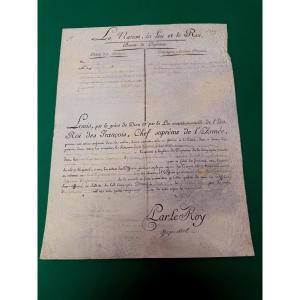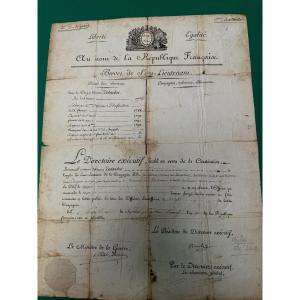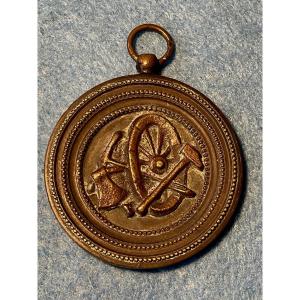
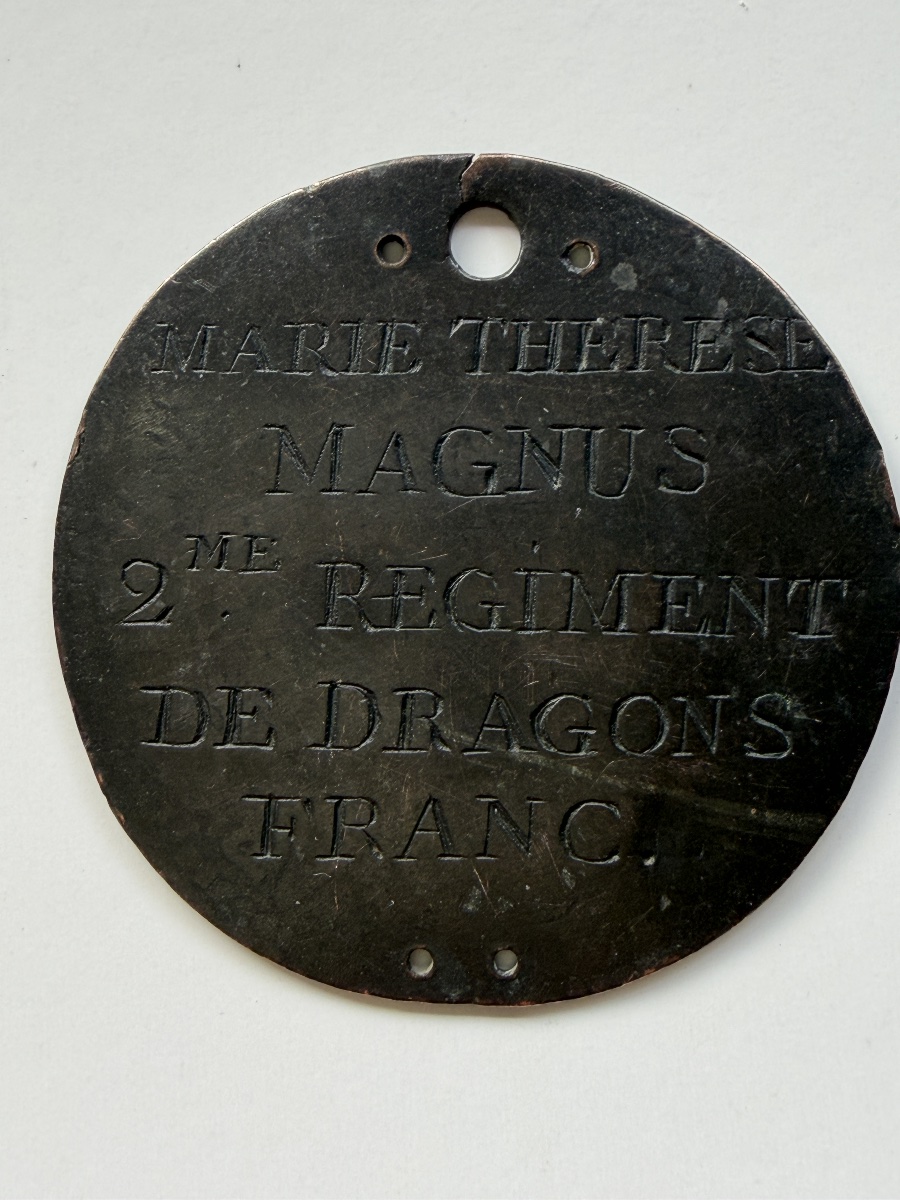


Women's Military Badge, France 1793–1800, Engraved Brass, Marie-therese Magnus
A Small Plaque, a Whole History
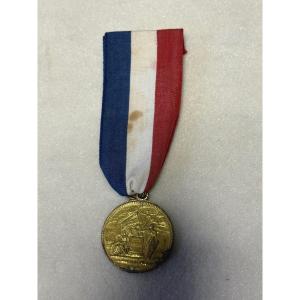
It is sometimes surprising to see how a very small object, made from a metal of little intrinsic value, can trigger research and open up entire chapters of history. This is precisely the case with this modest round plaque in brass, oxidised by time and exposure, measuring approximately 5 cm in diameter.
By itself, it leads us into the history of the French Revolution and the wars that followed, into the role of women alongside armies, but also into the history of an old dragoon regiment, the very origin of the word “dragoon”, and the part played by this cavalry in the Revolutionary and Napoleonic campaigns. I shall therefore try to be as complete as possible, while remaining concise enough to relate what this little plaque has allowed us to discover.
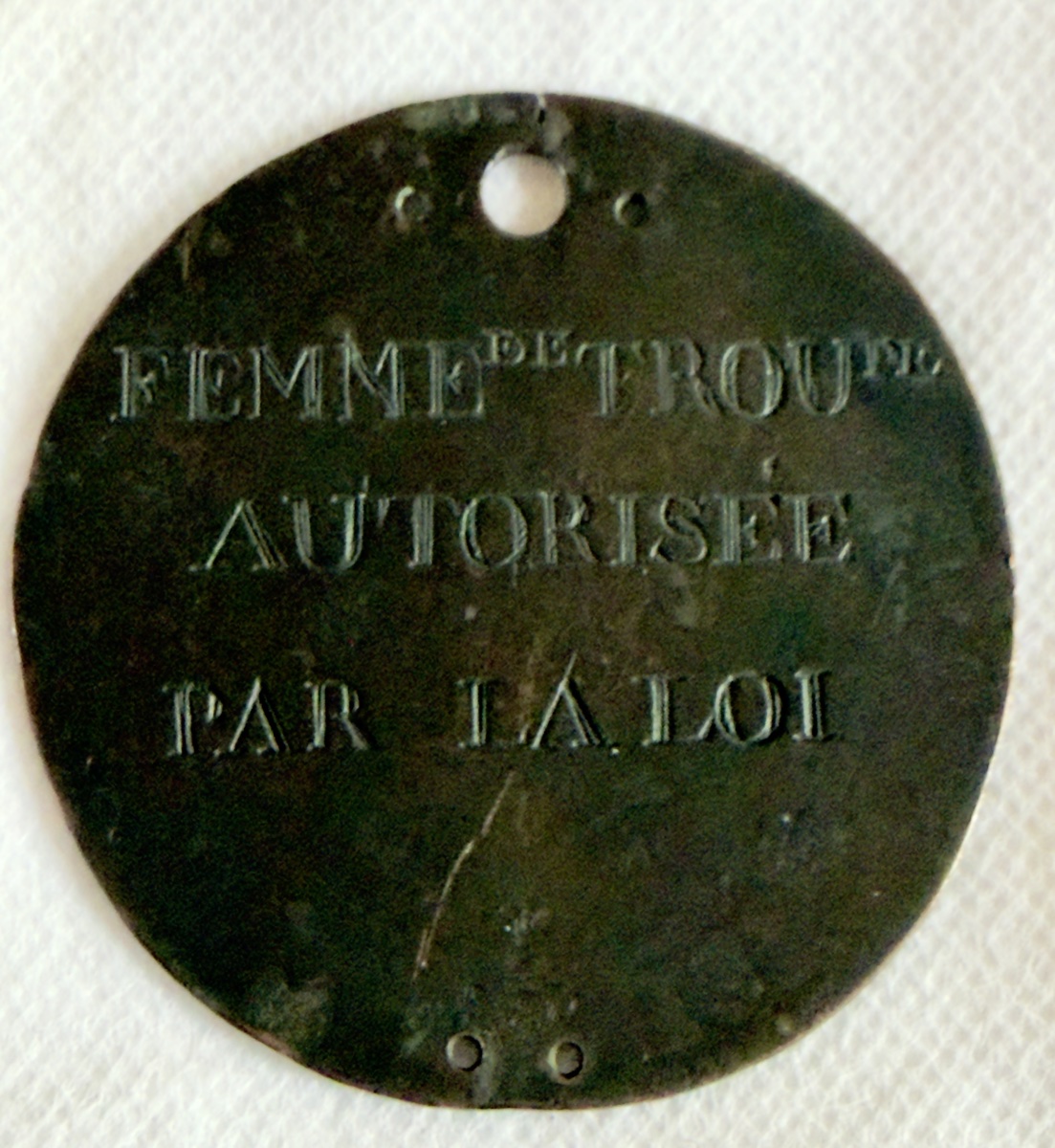
One side is engraved:
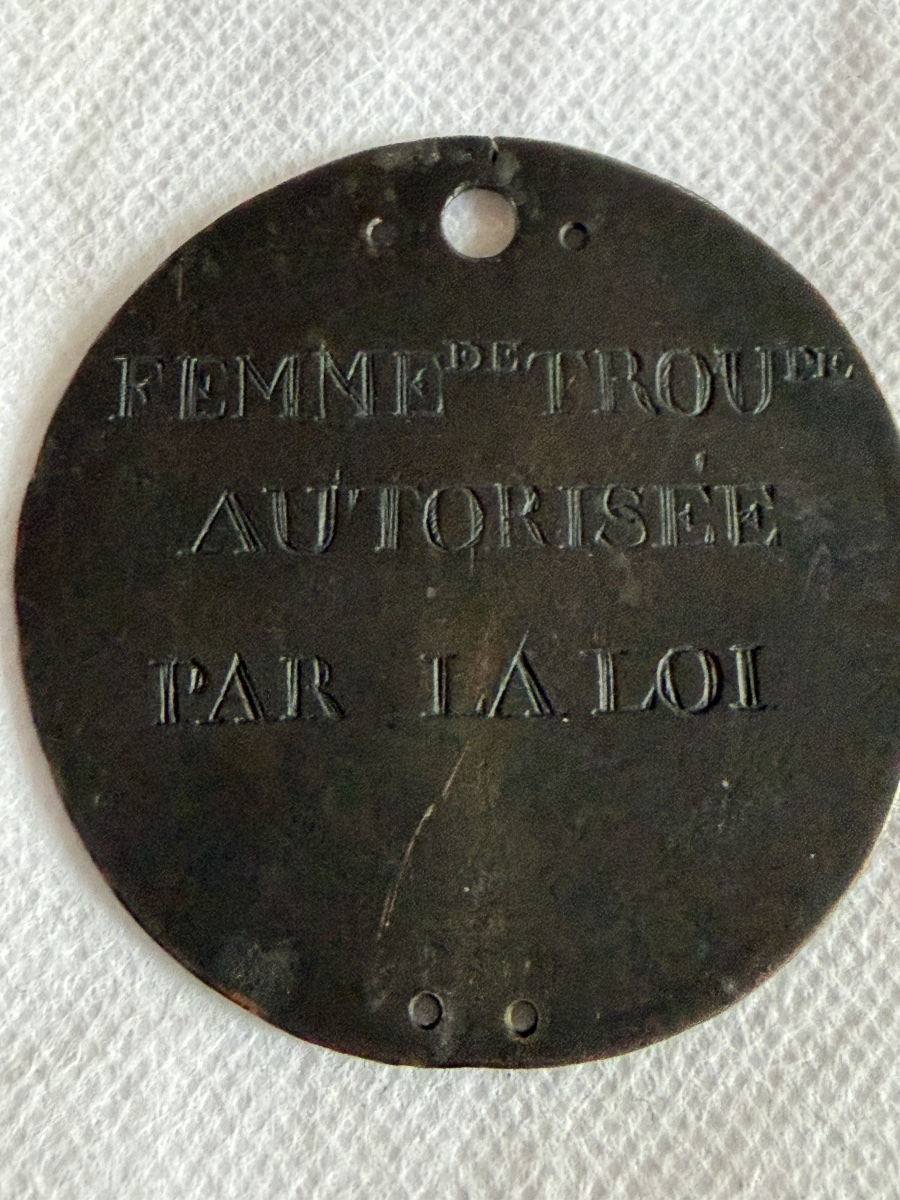
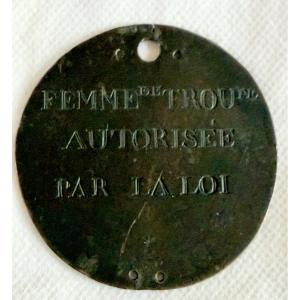
“FEMME DE TROUPE / AUTORISÉE / PAR LA LOI”
(Woman attached to the troops / authorised / by law)
and the other:
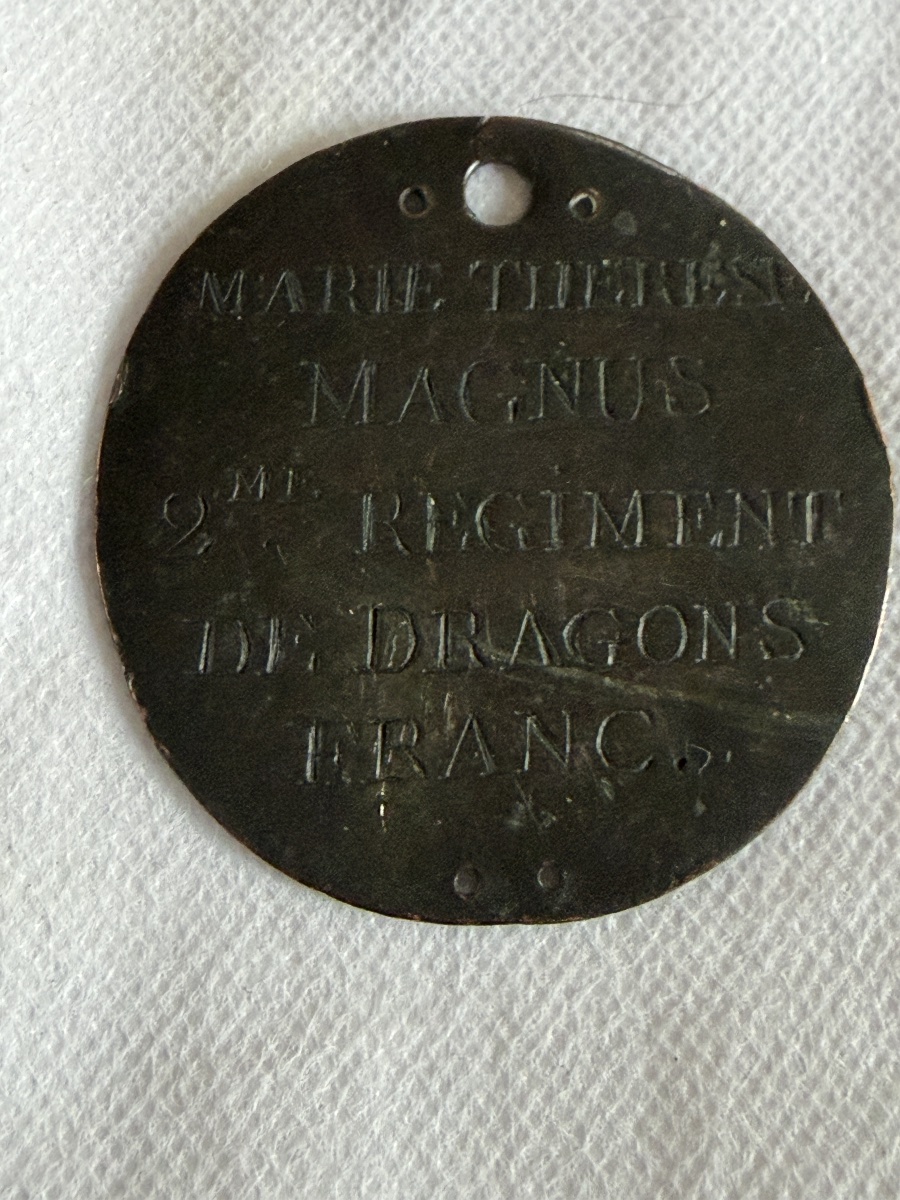
“MARIE THÉRÈSE / MAGNUS / 2me RÉGIMENT / DE DRAGONS / FRANÇOIS”
(Marie-Thérèse Magnus / 2nd Regiment / of French Dragoons).
Women in the Armies
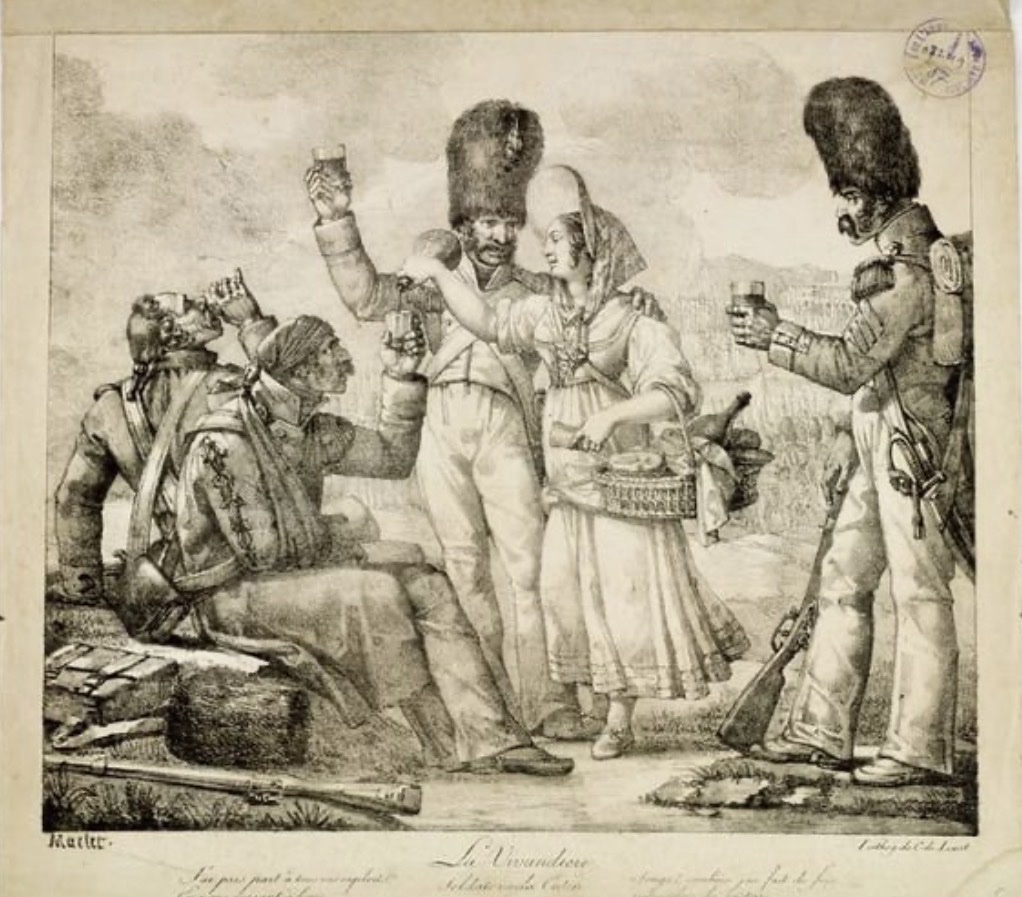
Women accompanied armies long before the French Revolution and the Napoleonic period. Soldiers’ wives, laundresses, merchants and vivandières followed regiments during their campaigns. They washed and repaired clothing, sold food, wine and brandy, and provided many services essential to the daily life of soldiers. Some even found themselves on the battlefield, supplying the men or assisting the wounded.[1][2][3]
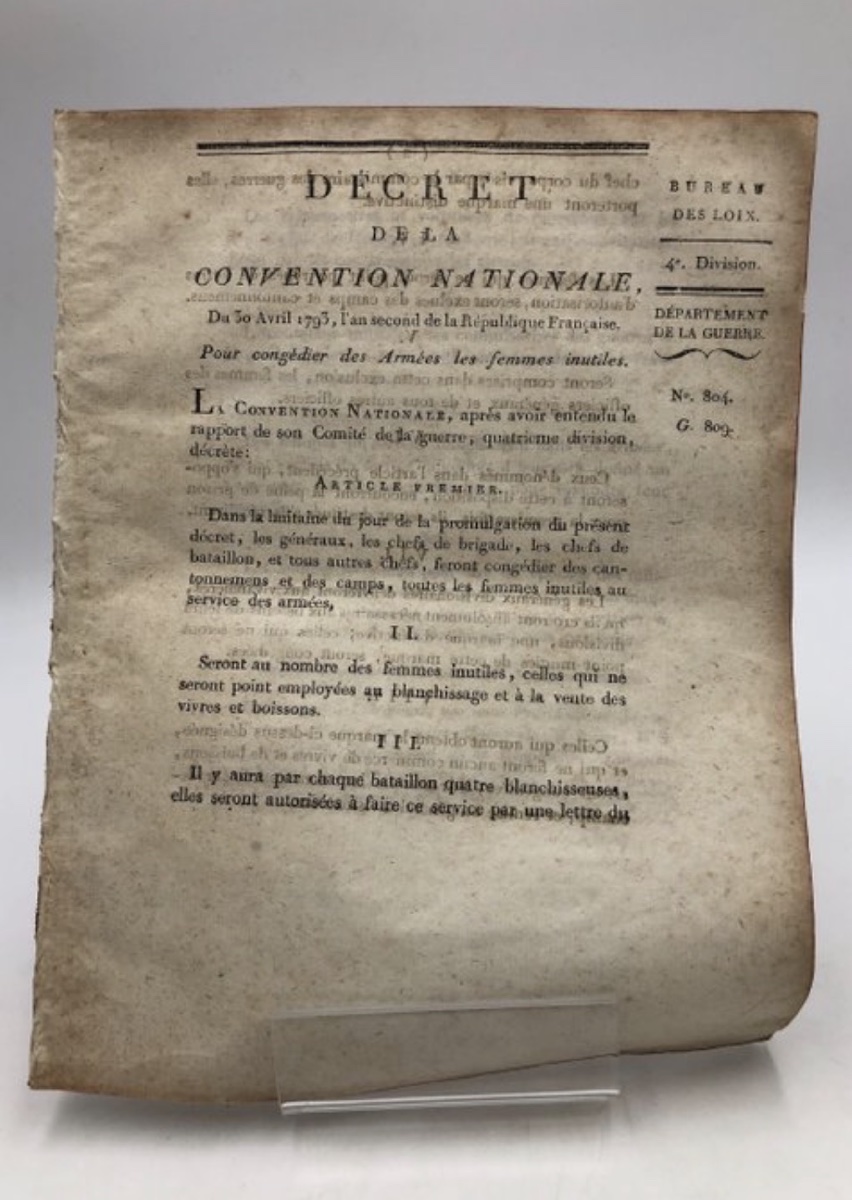
The Revolution nevertheless sought to impose order on the large population that accompanied the troops. The decree of the National Convention of 30 April 1793, entitled Pour congédier des Armées les femmes inutiles (“To discharge useless women from the armies”), ordered the departure of women who performed no officially recognised function. It nevertheless allowed laundresses and vivandières to remain with the units, as their presence was considered necessary.
The decree expressly stipulated that the military authorities were to issue authorised women with “a distinctive mark” by which they could be recognised. It is in this context that our plaque, bearing the words “Femme de troupe autorisée par la loi”, should be understood.
The arrangement of the perforations is itself noteworthy: four small holes presumably allowed the plaque to be securely sewn or attached to a garment or piece of leather, while a larger hole is positioned at the top.
Marie-Thérèse Magnus
What makes this plaque particularly evocative, however, is that it is not anonymous. It preserves the name of a real woman: Marie-Thérèse Magnus.
Research into this name has produced a particularly interesting lead. Civil records mention a Marie-Thérèse Magnus who died at Bornem in 1813 at approximately 52 years of age, which would place her birth around 1760-1761. Her age and her presence in the former Southern Netherlands make such an identification entirely plausible from a chronological point of view.
It would nevertheless be excessive to claim that she was certainly the woman named on this plaque: no military document located so far formally connects the two individuals. The coincidence of name, period and geographical area nevertheless provides a particularly interesting avenue for further research.
The 2nd Regiment of Dragoons
Marie-Thérèse Magnus was attached to the 2nd Regiment of French Dragoons, one of the oldest cavalry regiments in France. Its origins date back to the seventeenth century; known under the Ancien Régime as Condé-Dragons, it received the number 2 during the reorganisation of the French cavalry in 1791.
The regiment took part in the wars of the Revolution and subsequently in the great Napoleonic campaigns, fighting in the Netherlands, Germany, Austria, Prussia, Poland and the Iberian Peninsula.
The term “dragoon” originally referred to a soldier who travelled on horseback but could fight on foot, a form of mounted infantry that gradually evolved into true line cavalry. The precise military etymology of the word remains debated. One traditional explanation connects it with a firearm known as a “dragon”, perhaps so called because the flash produced when firing was reminiscent of the fiery breath of the mythical creature. Other etymologists instead relate the term to the Latin draco, which was also used for a military standard. In any case, the French word dragon was already being used to designate this type of mounted soldier by the end of the sixteenth century.
Sources and Bibliography
[1] Jean Baechler and Marion Trévisi (eds.), La Guerre et les Femmes, Paris, Hermann, “L’Homme et la Guerre” series, 2018.
[2] Gil Mihaely, “L’effacement de la cantinière ou la virilisation de l’armée française au XIXe siècle”, Revue d’histoire du XIXe siècle, no. 30, 2005, DOI: 10.4000/rh19.1008.
[3] Élodie Jauneau, “Thomas Cardoza, Intrepid Women. Cantinières and Vivandières of the French Army, Bloomington, Indiana University Press, 2010, 312 pp.”, Genre & Histoire, no. 9, Autumn 2011, published online 21 May 2012.
Period: 18th century
Style: Louis 16th, Directory
Condition: Excellent condition
Material: Brass
Diameter: 5 cm
Reference (ID): 1808952
Availability: In stock