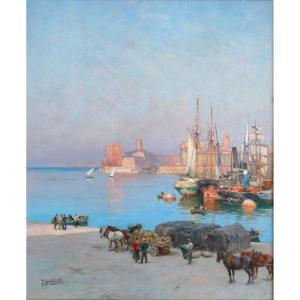


Joseph Garibaldi (1863–1941) One Morning At The Old Port Of Marseille
Artist: Joseph Garibaldi (1863-1941)
TheOld Port of Marseille, a view highly prized by collectors of Provençal art.
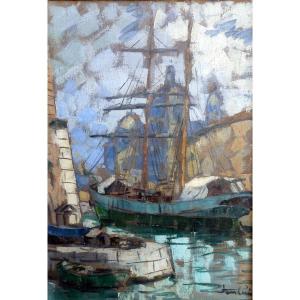
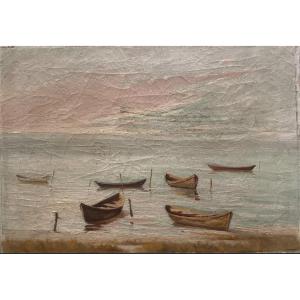
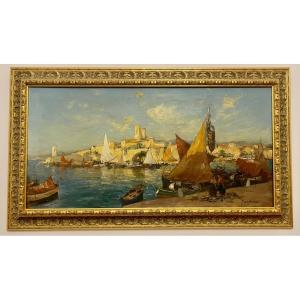
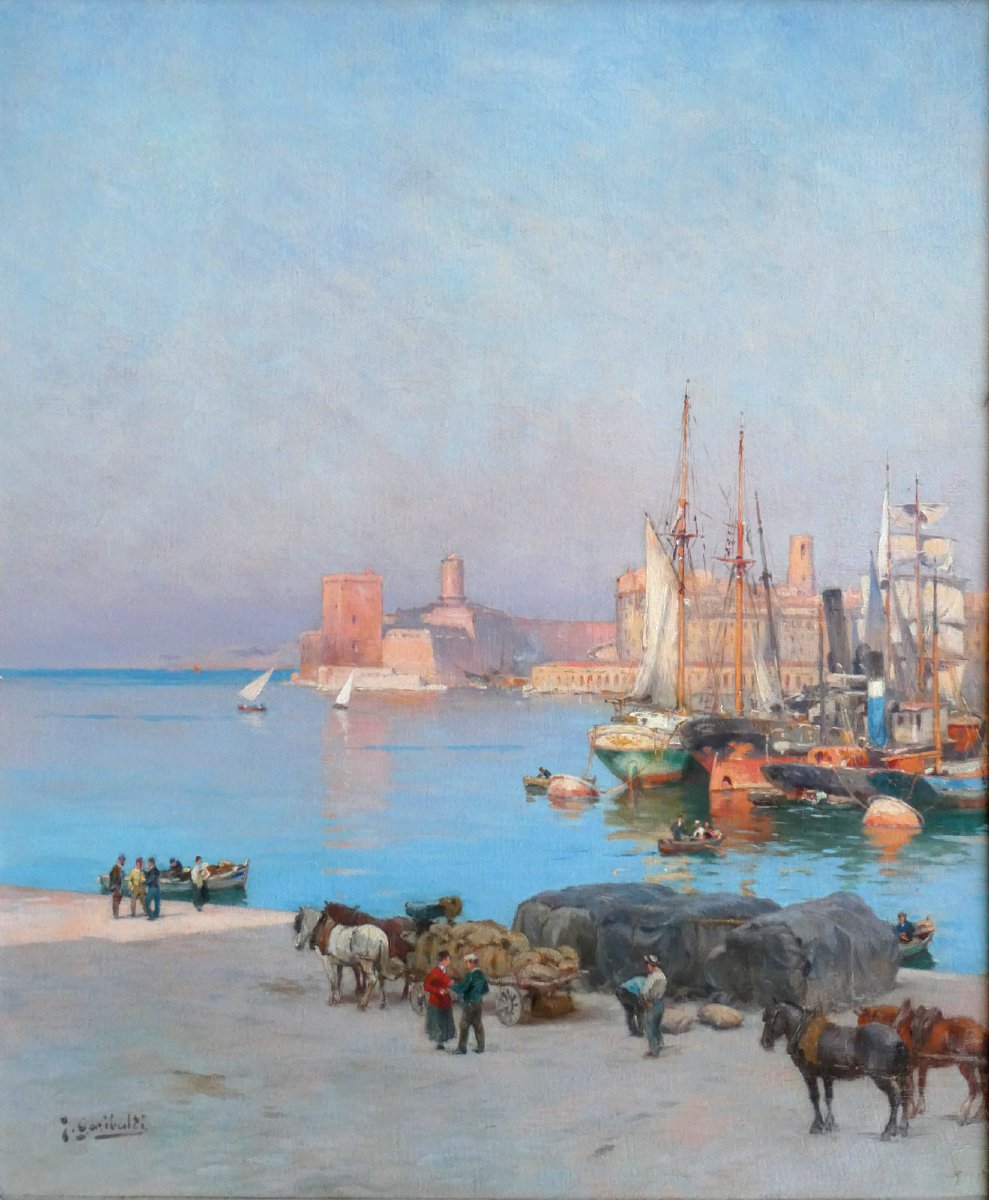
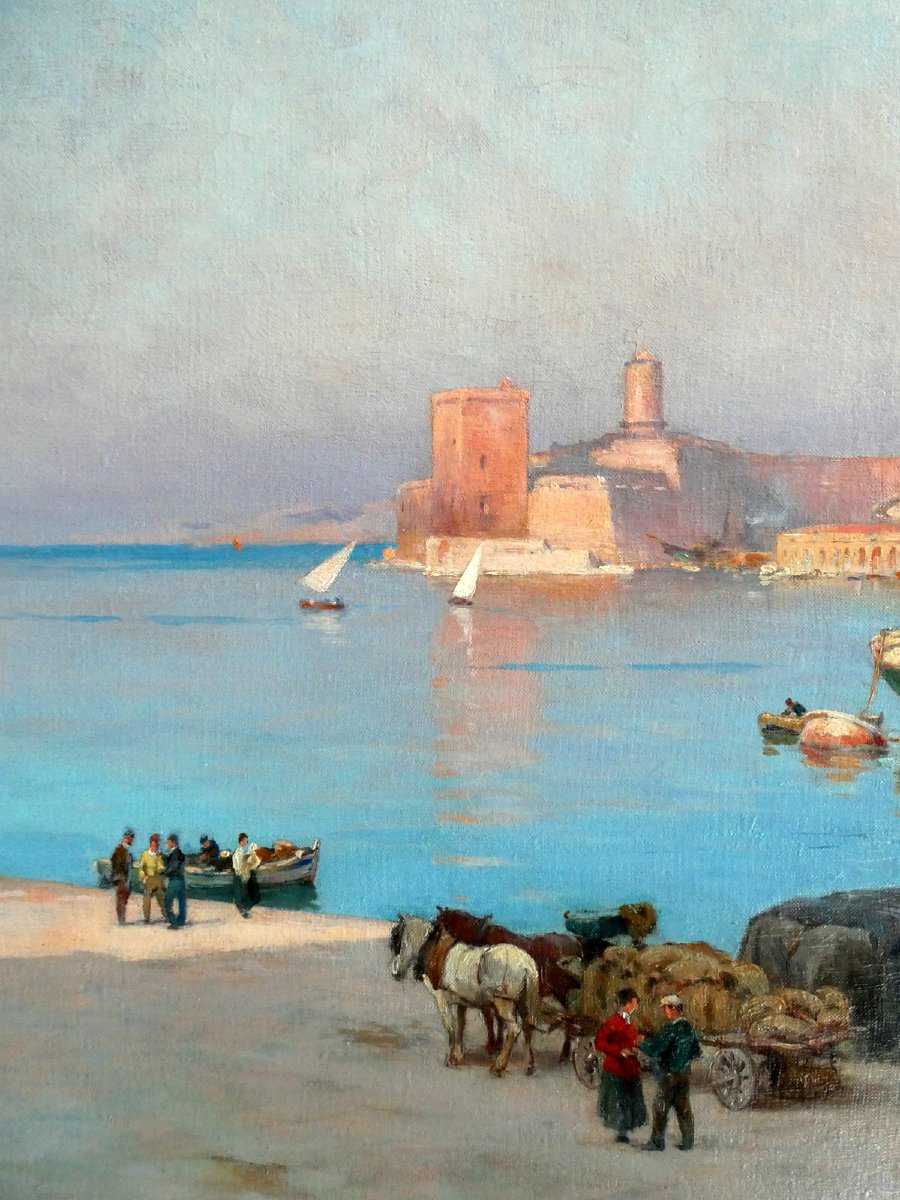
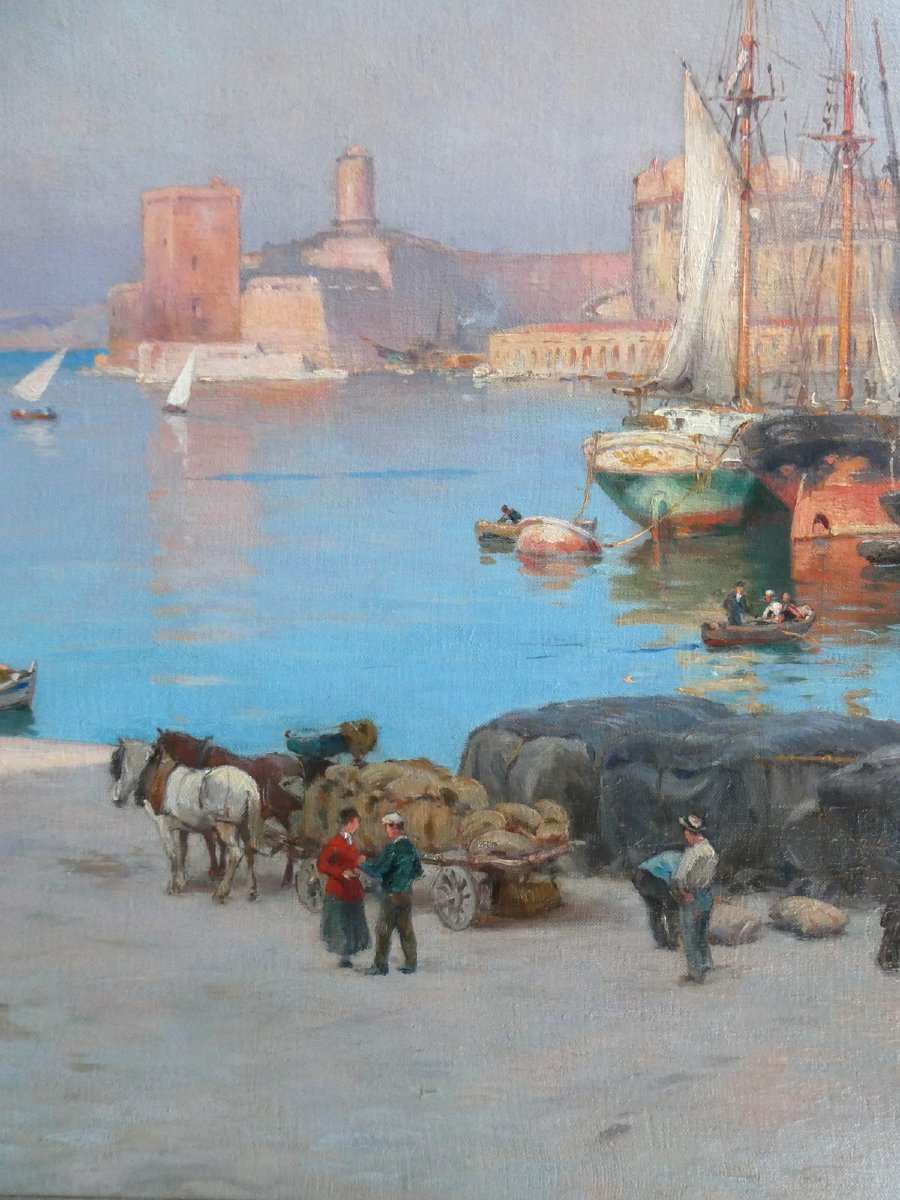
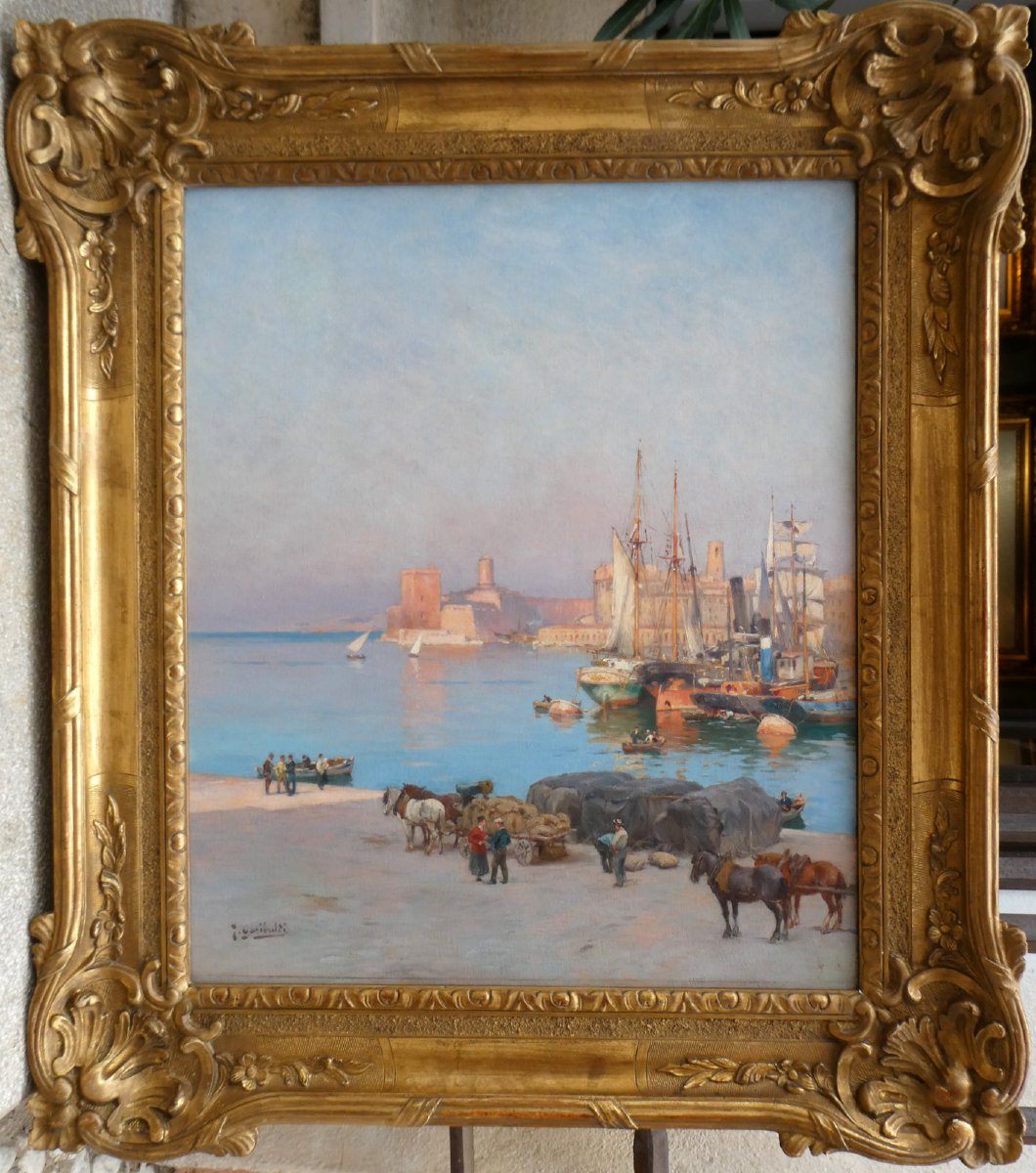
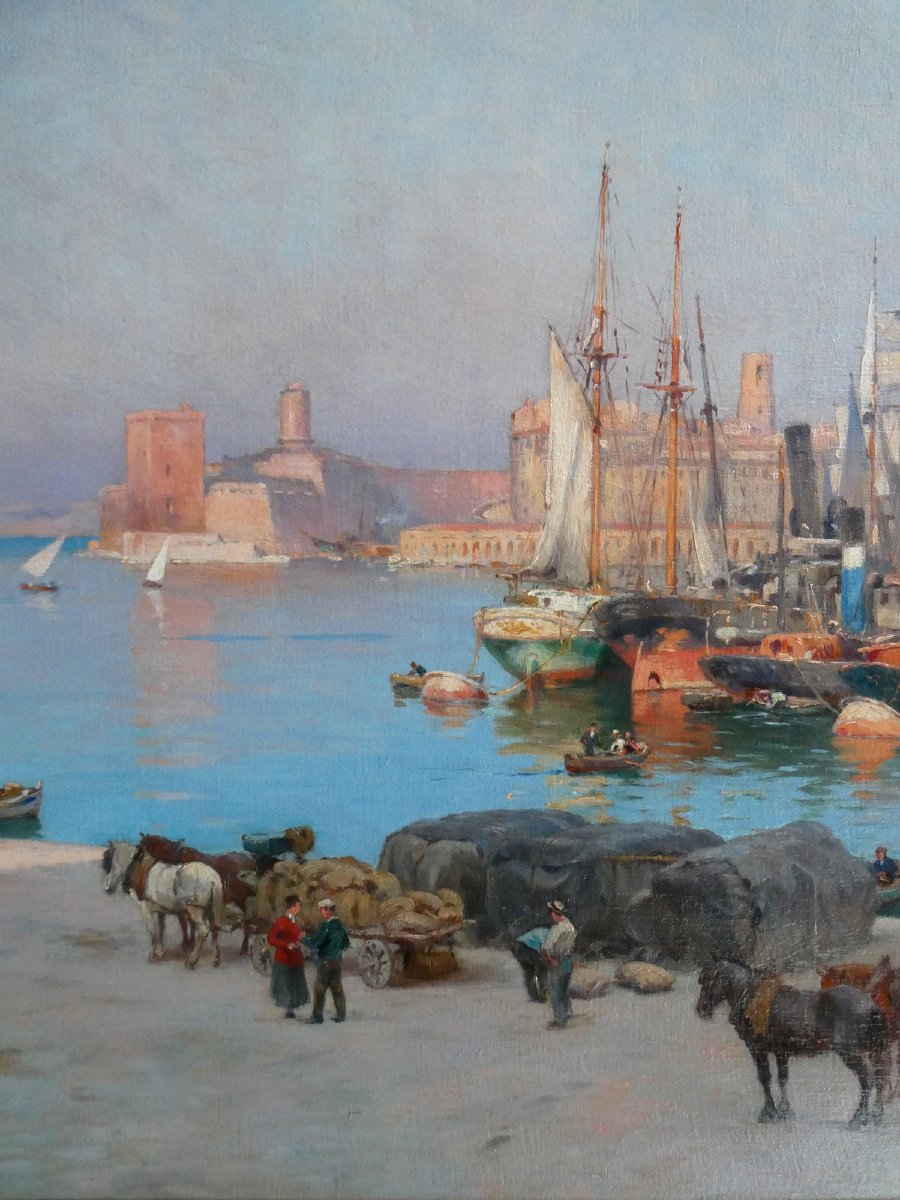
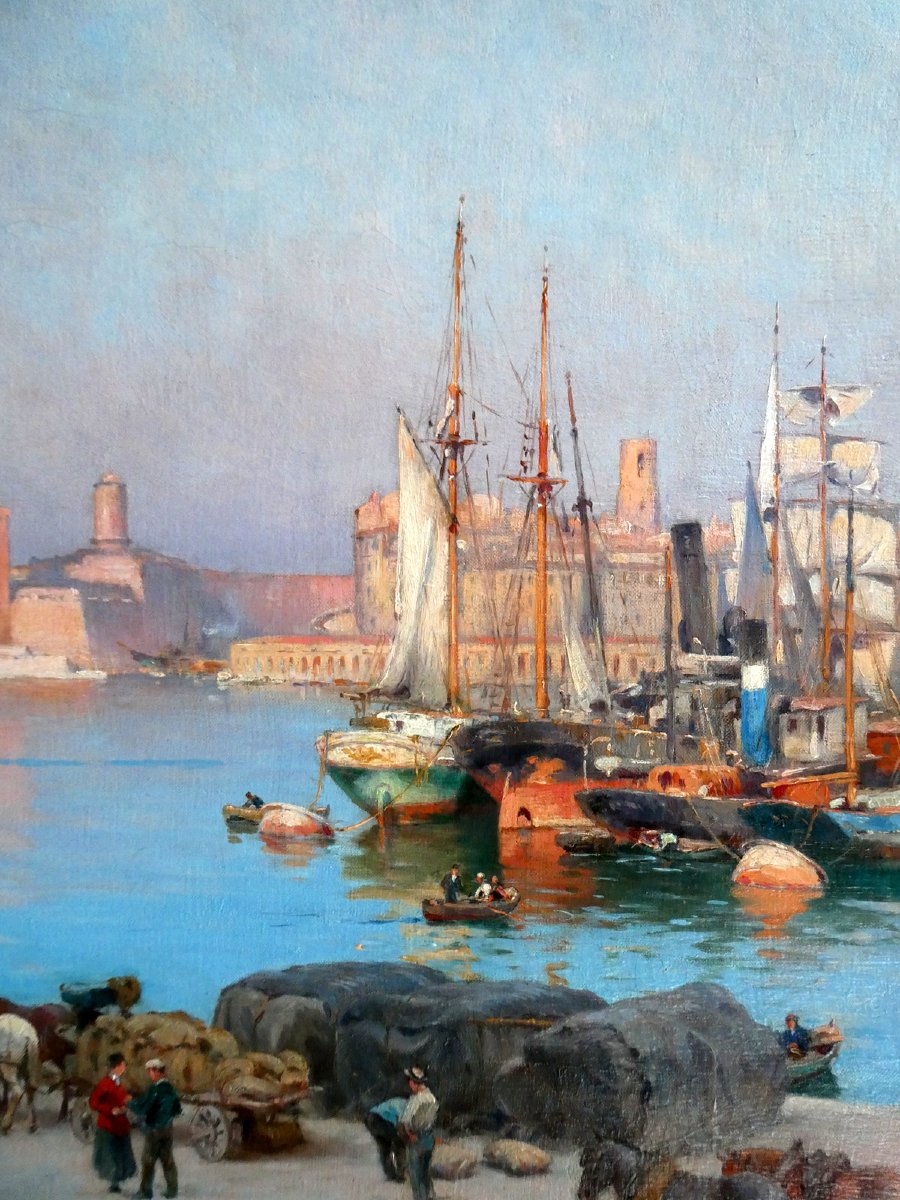
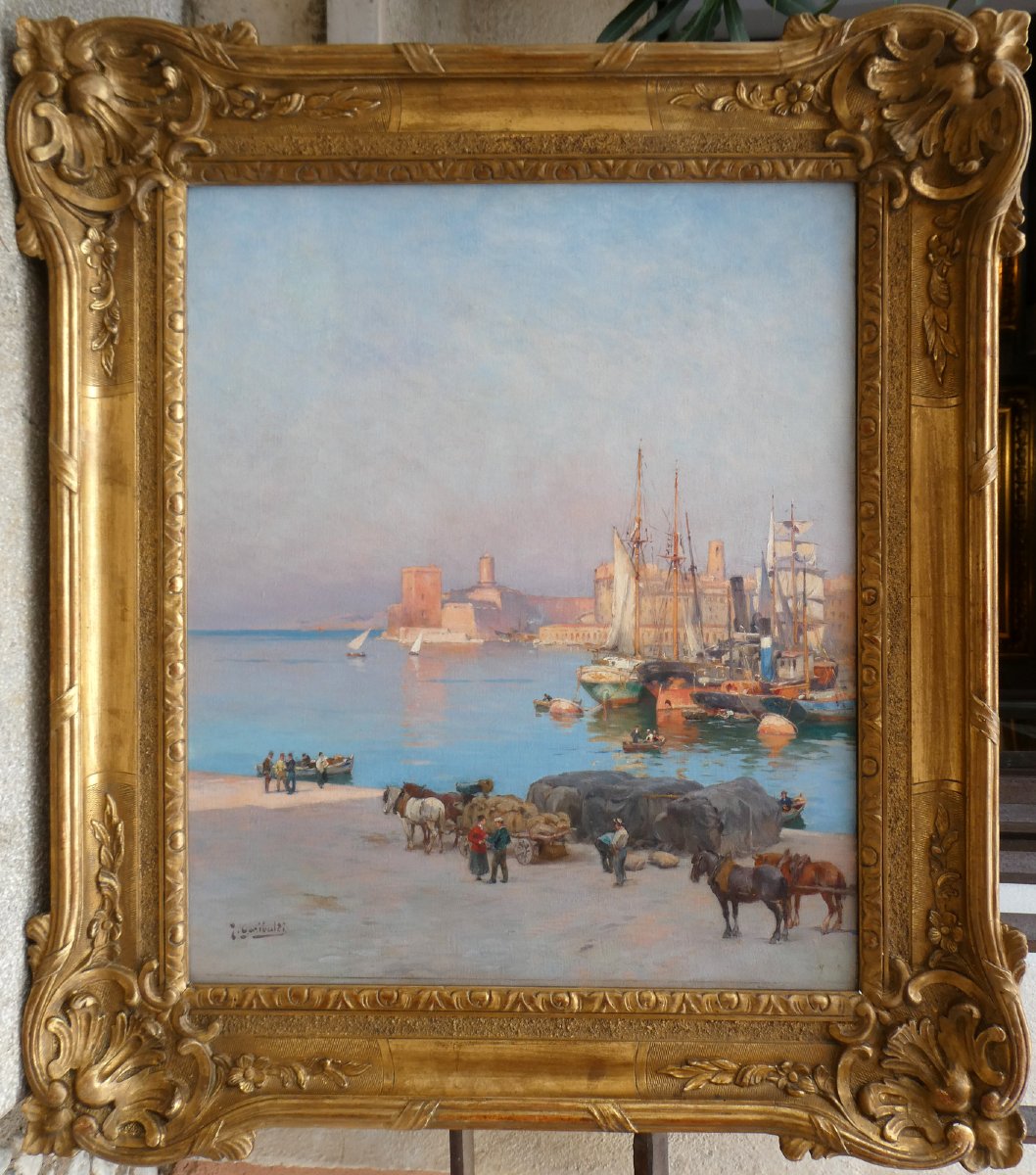
This one, likely taken from the artist’s studio on the Quai de Rive Neuve, looks toward the harbor entrance and Fort Saint-Jean, whose pinkish-ochre silhouette and round tower are visible on the left.
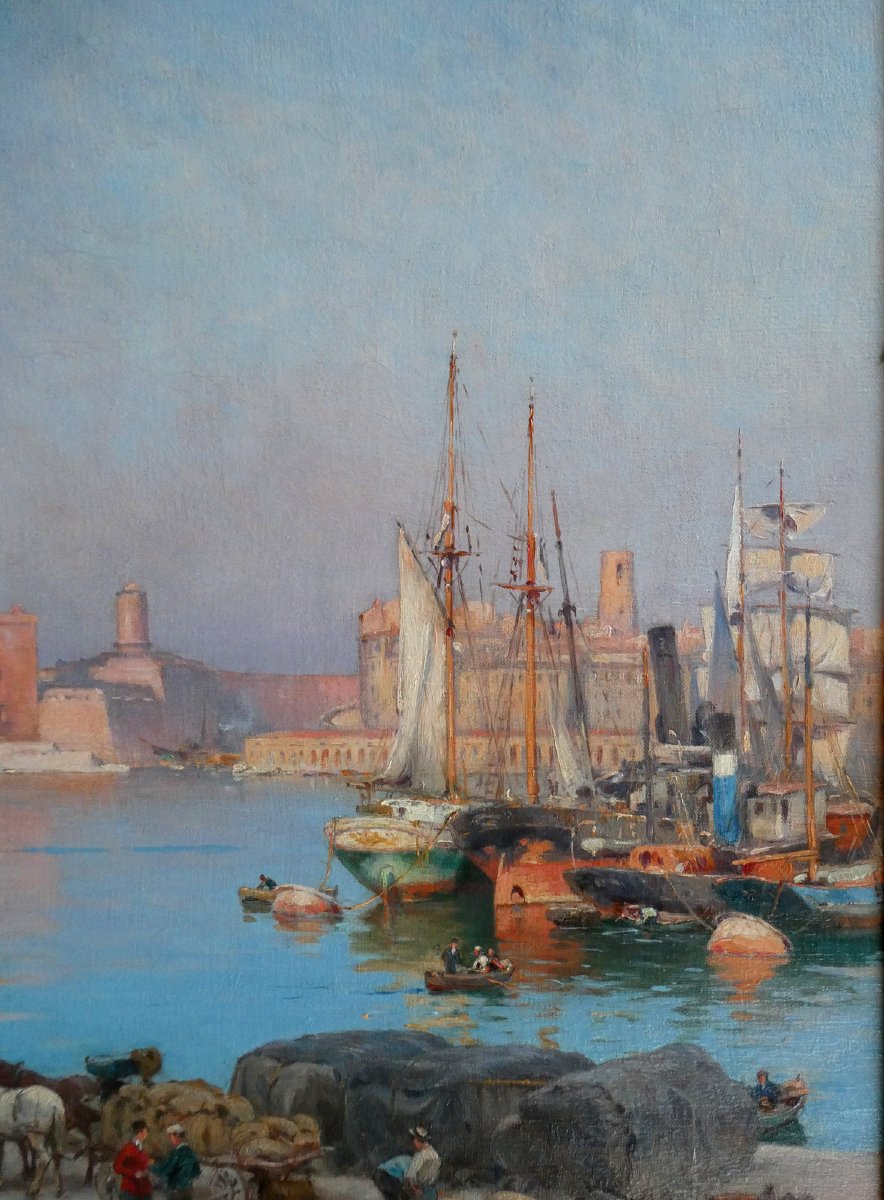
On the right, the masts and sails of the schooners and small coastal vessels high light the bustling activity on the quay, with the facades of the old quarter standing out clearly against the sky.
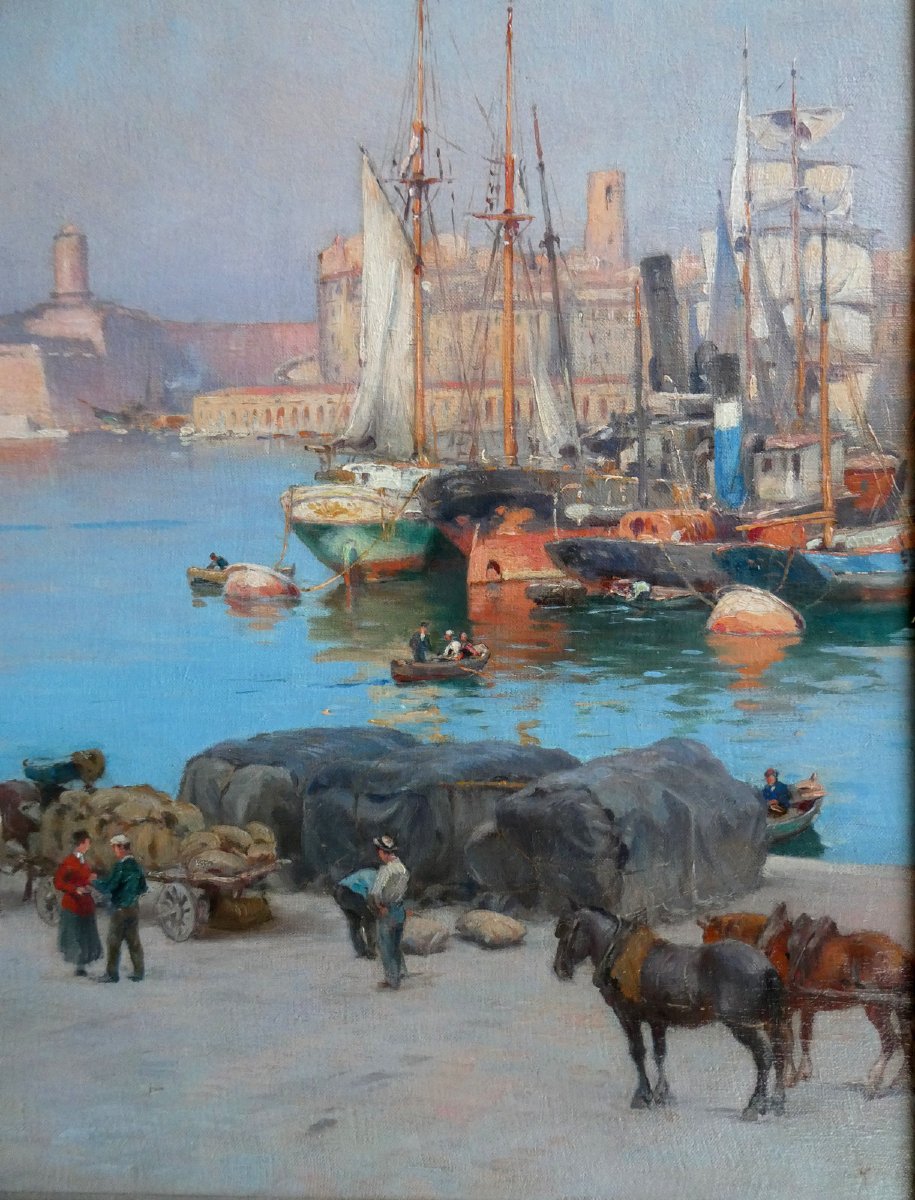
Garibaldi, as he often did, structures his canvas into two very distinct parts: the upper two-thirds occupied by the sky and water, calm and misty, and the lower third lower third, the pier, teeming with the bustling activity of the port—horses, carters, dockworkers, and bales of goods.
Able to capture the light at any hour of the day, the artist depicts his Old Port in the soft, almost pearlescent light of early morning or late afternoon, which blurs the boundaries between sky, sea, and architecture.
Thus, the ramparts of the fort seem to dissolve into a stunning pink-mauve mist, and the orange reflections of the hulls blend seamlessly into the blue-green of this body of water—which the Provençals call the “mer d’huile”—painted with great softness, almost in glazes, using a blended and ethereal brushstroke.
The foregroundis rendered with greater texture and descriptive precision; one senses the painter’s interest in genre scenes as much as in pure landscape; the figures and horses, though small, are depicted with confidence and mastery, in the tradition of a luminous naturalism inherited from his illustrious teacher, Antoine Vollon.
A work thatperfectly illustrates what Pierre Murat and the Regards de Provence Foundation have hailed as Garibaldi’s “peaceful Midi”—
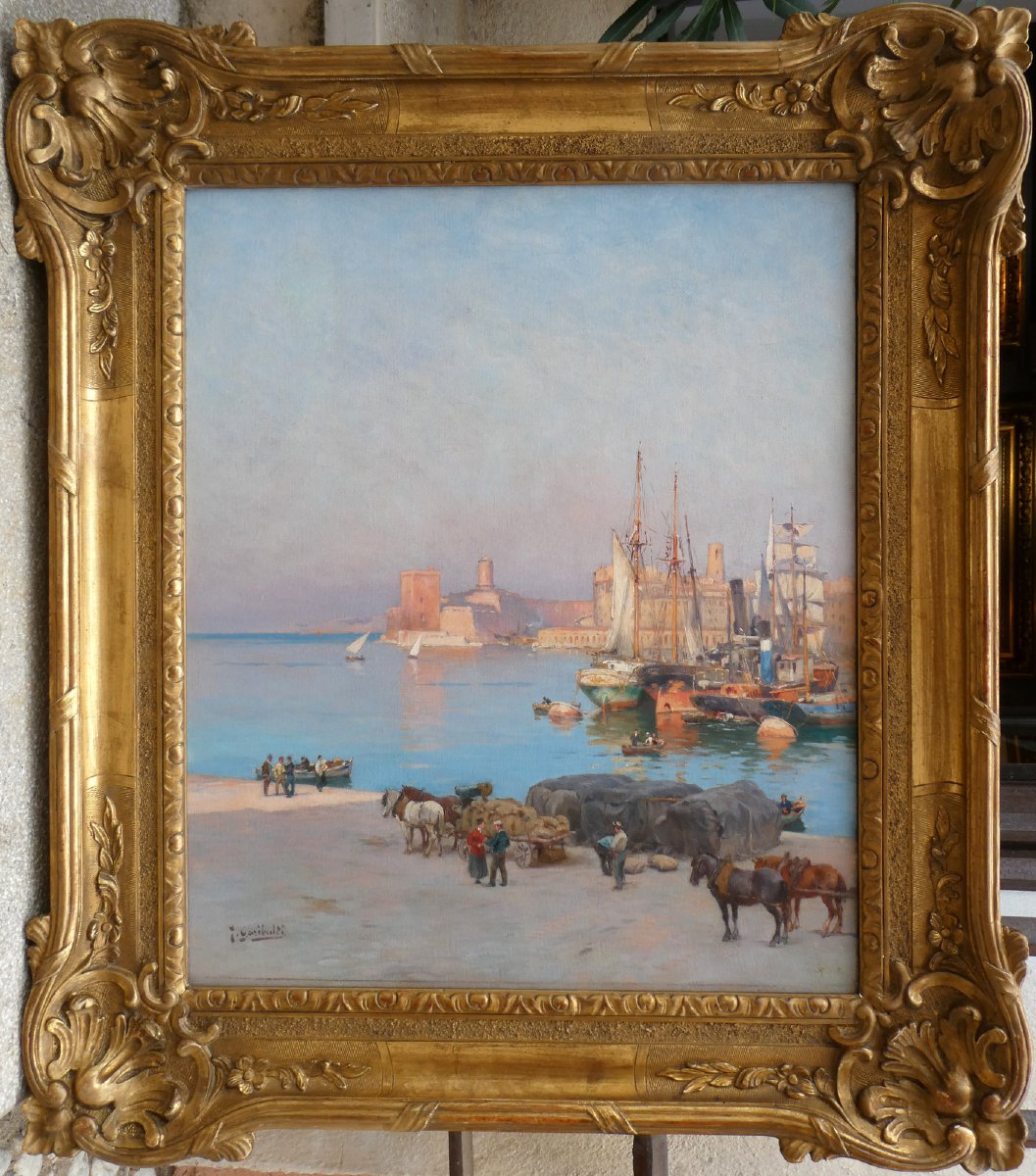
The work is offered in a beautiful carved gilt frame which measures 72 cm by 64 cm and 55 cm by 46 cm for the canvas alone.
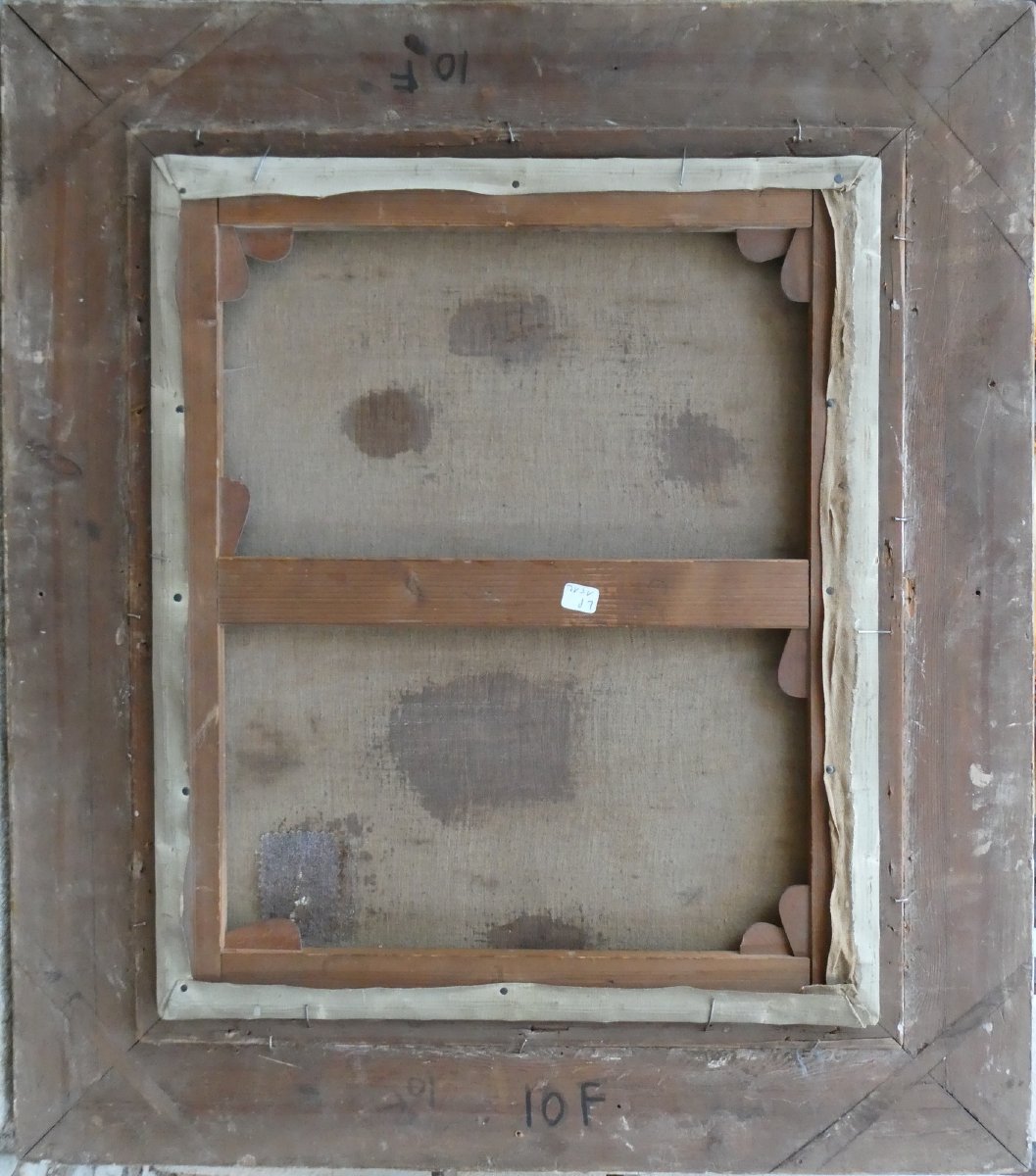
On the back, two previous restorations, completely invisible on the painting’s surface.
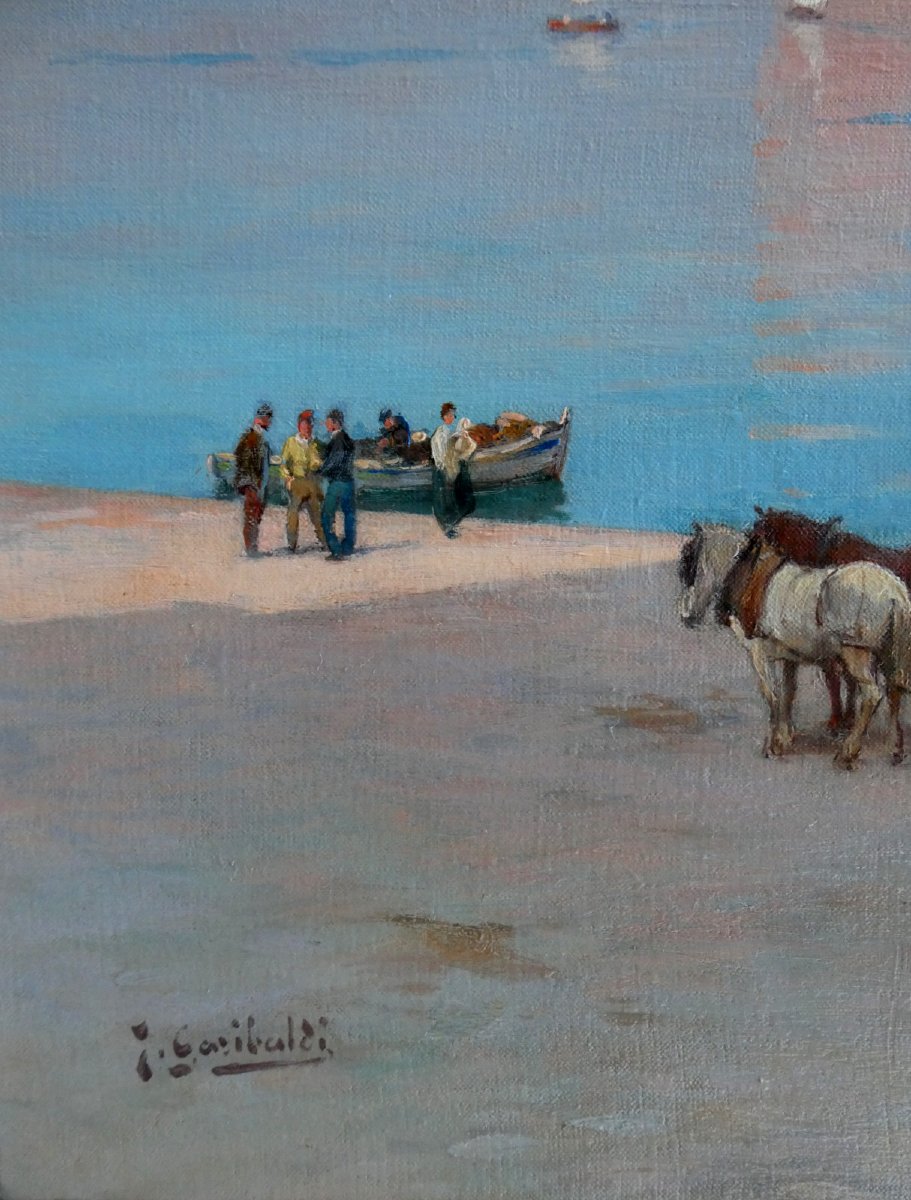
The work is signed in the lower left corner.
A work with a gentle, soothing charm, and above all, a precious record of port life at that time.
Joseph Garibaldi exhibited at the Salon des Artistes from 1884 to 1914, receiving an honorable mention in 1887 and a second-class medal in 1897. His works primarily depicted views of famous sites and monuments, and coastal ports: Cassis, where he painted regularly between 1884 and 1899; La Ciotat, where he was hosted by Antoine Lumière; Bandol; Sanary; and Toulon.
However, his specialty remained the Old Port of Marseille.
Until 1905, he benefited from the patronage of Baron Alphonse de Rothschild (1827–1905), who, guided by the critic Paul Leroy, a strong supporter of Vollon's students, purchased his paintings and donated them to provincial museums. He exhibited his landscapes at the Marseille Colonial Exhibition in 1906 and received a travel grant to Tunisia in 1907.
Throughout his career, he was supported by his friends in the Association of Marseille Artists (Étienne Martin, José Silbert, and Édouard Crémieux), who successively led the association...
Works in public collections
Aix-en-Provence: Porte d'Aude in Carcassonne, 1897.
Arras: Albi Cathedral, 1903.
Avignon: View of the Quai Saint-Jean in Marseille, 1899. Sailing Ships at Rive-Neuve, 1904.
Béziers: Old House in Brest, 1890.
Cahors, Henri-Martin Museum: Marseille, at Rive-Neuve, 1898.
Cholet: View of the Port of Marseille, 1902.
Compiègne: View of Cassis, 1892.
Digne-les-Bains: Musical Instruments, 1890.
Marseille, Museum of Fine Arts: Studio Interior, 1889; The Château des Isnard at Suze-la-Rousse, 1899; The Bay of Cassis from Bestouan, 1897. Herd of bulls at Fos, 1911; Huts at Les Lecques; The Forge
Martigues, Ziem Museum: View of Fos-sur-Mer, oil on canvas, 53×80cm
Senlis: Entrance to the port of Cassis, 1893
Soissons, Soissons Museum: Abbey of Saint-Victor, 1896
Toulon: View of Sanary; View of Saint-Cyr
Tourcoing: View of Bandol, 1885
This one, likely taken from the artist’s studio on the Quai de Rive Neuve, looks toward the harbor entrance and Fort Saint-Jean, whose pinkish-ochre silhouette and round tower are visible on the left.
On the right, the masts and sails of the schooners and small coastal vessels high light the bustling activity on the quay, with the facades of the old quarter standing out clearly against the sky.
Garibaldi, as he often did, structures his canvas into two very distinct parts: the upper two-thirds occupied by the sky and water, calm and misty, and the lower third lower third, the pier, teeming with the bustling activity of the port—horses, carters, dockworkers, and bales of goods.
Able to capture the light at any hour of the day, the artist depicts his Old Port in the soft, almost pearlescent light of early morning or late afternoon, which blurs the boundaries between sky, sea, and architecture.
Thus, the ramparts of the fort seem to dissolve into a stunning pink-mauve mist, and the orange reflections of the hulls blend seamlessly into the blue-green of this body of water—which the Provençals call the “mer d’huile”—painted with great softness, almost in glazes, using a blended and ethereal brushstroke.
The foregroundis rendered with greater texture and descriptive precision; one senses the painter’s interest in genre scenes as much as in pure landscape; the figures and horses, though small, are depicted with confidence and mastery, in the tradition of a luminous naturalism inherited from his illustrious teacher, Antoine Vollon.
A work thatperfectly illustrates what Pierre Murat and the Regards de Provence Foundation have hailed as Garibaldi’s “peaceful Midi”—
The work is offered in a beautiful carved gilt frame which measures 72 cm by 64 cm and 55 cm by 46 cm for the canvas alone.
On the back, two previous restorations, completely invisible on the painting’s surface.
The work is signed in the lower left corner.
A work with a gentle, soothing charm, and above all, a precious record of port life at that time.
Joseph Garibaldi exhibited at the Salon des Artistes from 1884 to 1914, receiving an honorable mention in 1887 and a second-class medal in 1897. His works primarily depicted views of famous sites and monuments, and coastal ports: Cassis, where he painted regularly between 1884 and 1899; La Ciotat, where he was hosted by Antoine Lumière; Bandol; Sanary; and Toulon.
However, his specialty remained the Old Port of Marseille.
Until 1905, he benefited from the patronage of Baron Alphonse de Rothschild (1827–1905), who, guided by the critic Paul Leroy, a strong supporter of Vollon's students, purchased his paintings and donated them to provincial museums. He exhibited his landscapes at the Marseille Colonial Exhibition in 1906 and received a travel grant to Tunisia in 1907.
Throughout his career, he was supported by his friends in the Association of Marseille Artists (Étienne Martin, José Silbert, and Édouard Crémieux), who successively led the association...
Works in public collections
Aix-en-Provence: Porte d'Aude in Carcassonne, 1897.
Arras: Albi Cathedral, 1903.
Avignon: View of the Quai Saint-Jean in Marseille, 1899. Sailing Ships at Rive-Neuve, 1904.
Béziers: Old House in Brest, 1890.
Cahors, Henri-Martin Museum: Marseille, at Rive-Neuve, 1898.
Cholet: View of the Port of Marseille, 1902.
Compiègne: View of Cassis, 1892.
Digne-les-Bains: Musical Instruments, 1890.
Marseille, Museum of Fine Arts: Studio Interior, 1889; The Château des Isnard at Suze-la-Rousse, 1899; The Bay of Cassis from Bestouan, 1897. Herd of bulls at Fos, 1911; Huts at Les Lecques; The Forge
Martigues, Ziem Museum: View of Fos-sur-Mer, oil on canvas, 53×80cm
Senlis: Entrance to the port of Cassis, 1893
Soissons, Soissons Museum: Abbey of Saint-Victor, 1896
Toulon: View of Sanary; View of Saint-Cyr
Tourcoing: View of Bandol, 1885
10 000 €
Period: 19th century
Style: Other Style
Condition: Condition of use
Material: Oil painting
Length: 46 cm
Height: 55 cm
Reference (ID): 1808904
Availability: In stock
Print