
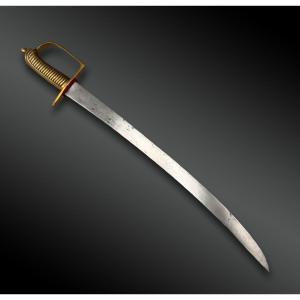


Consular Sabre Of Navy Troops, Model 1782 Modified 1790
RARE CONSULATE-ERA PIECE, 1801–1804
France, Consulate, 1801–1804
Klingenthal National Manufactory – Coulaux Brothers, Contractors
Steel and brass
Total length: 72 cm
Blade length: approximately 60 cm
Without scabbard
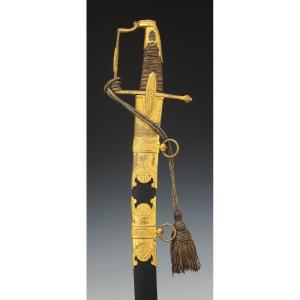
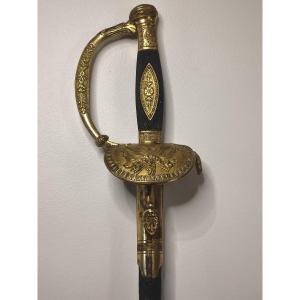
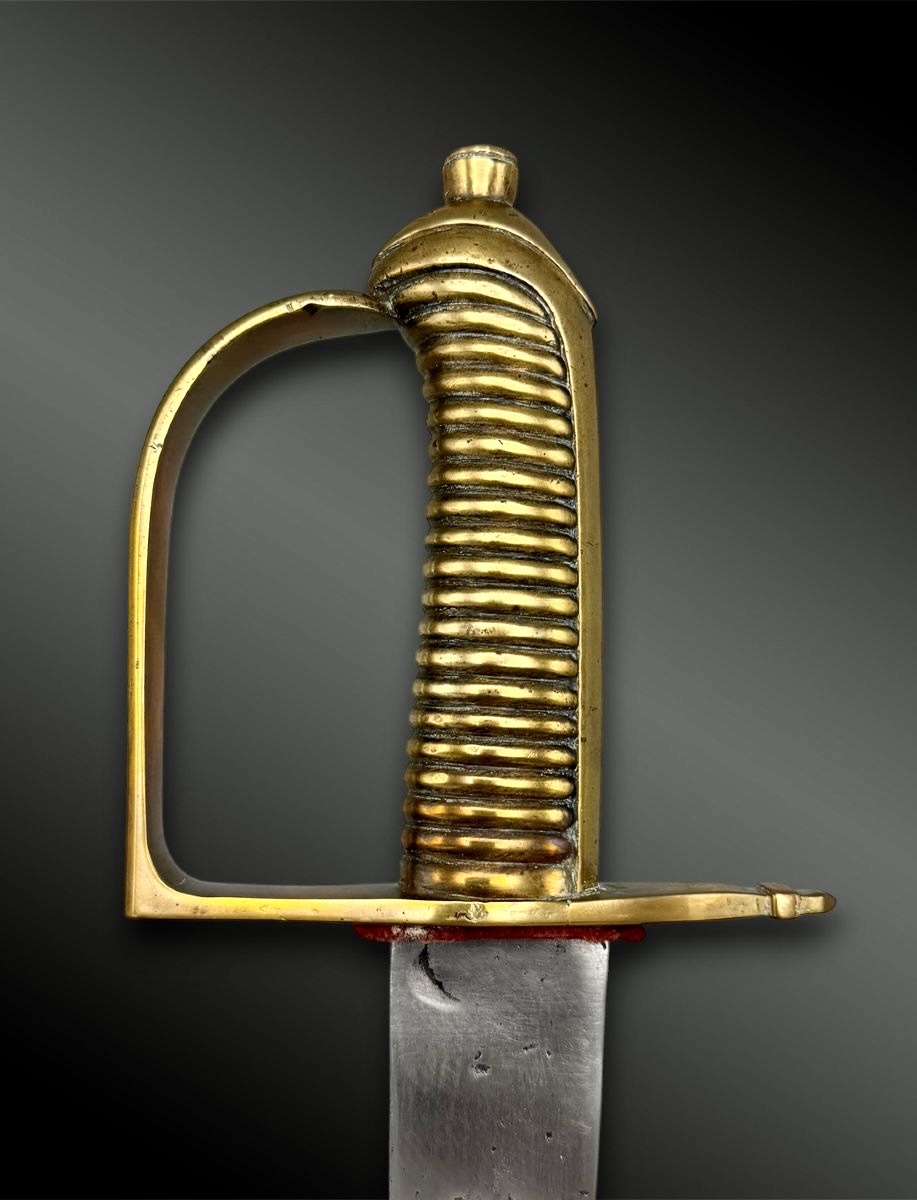
Rare standard-issue saber of the French Navy, Model 1782 modified in 1790, in an exceptional late example produced during the Consulate, between 1801 and 1804.
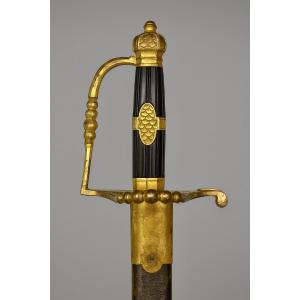
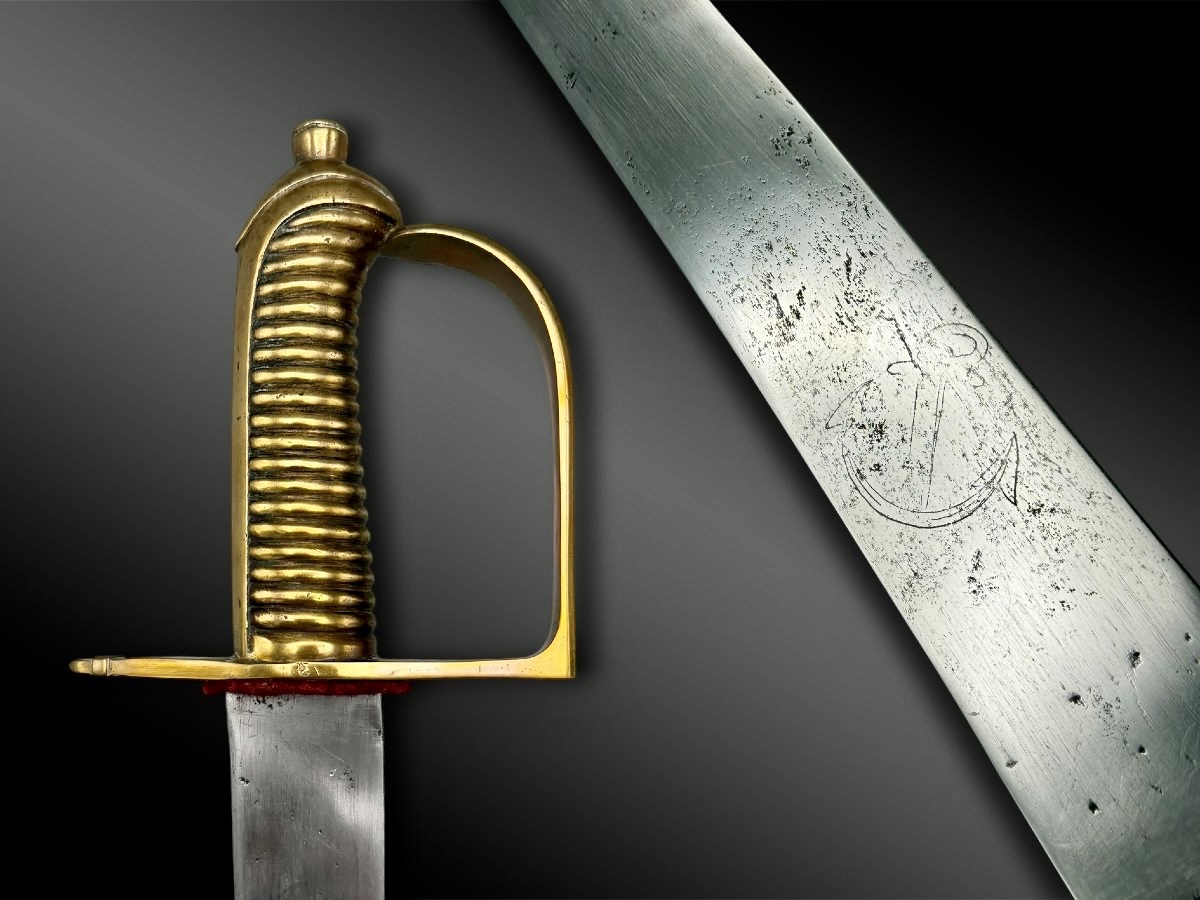
The hilt, characteristic of this Navy model, is made entirely from a single piece of cast brass. The grip features twenty pronounced transverse grooves. It is topped by a domed cap extended by a long tail and ending in its rivet button.
The single-branch guard forms a right angle with the crossguard, which extends into a curved quillon ending in a point.
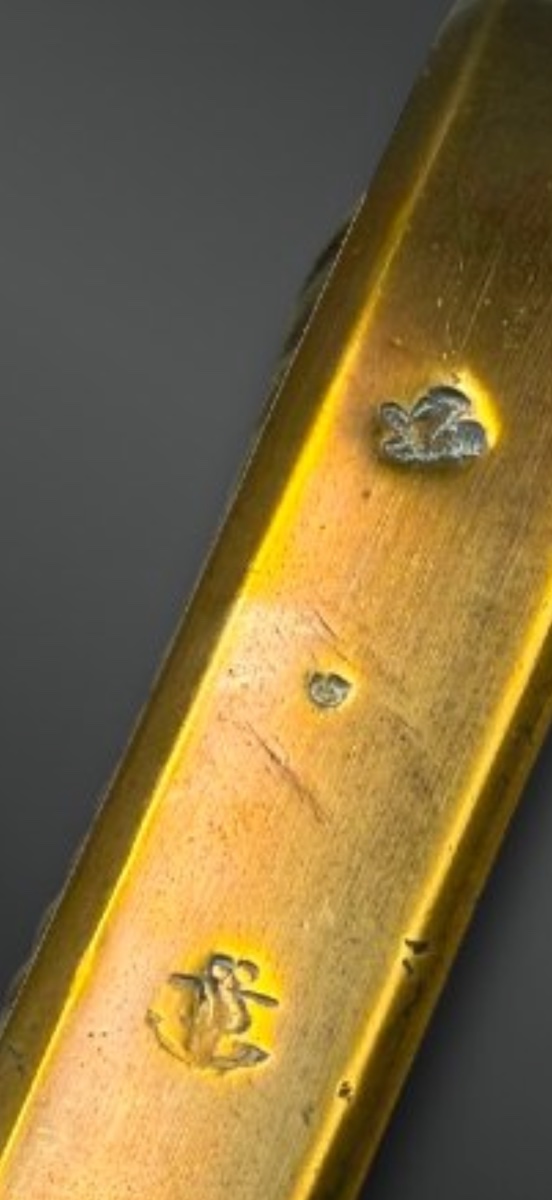
The mount bears the marking “DEVILLE” as well as several hallmarks: a “G,” a figurative hallmark yet to be identified, and, particularly noteworthy, a naval anchor stamped into the brass.
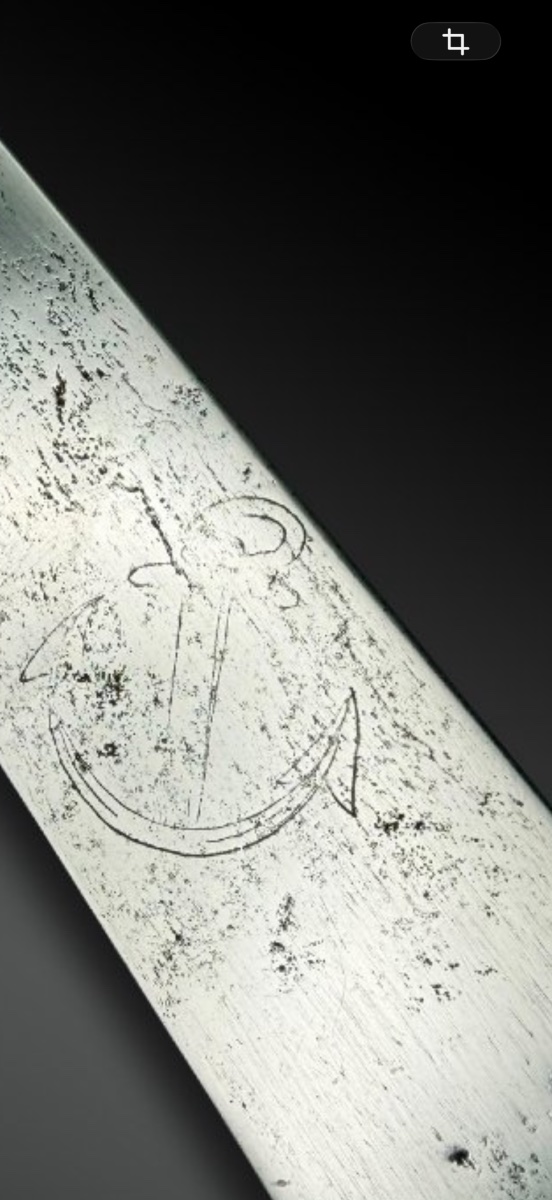
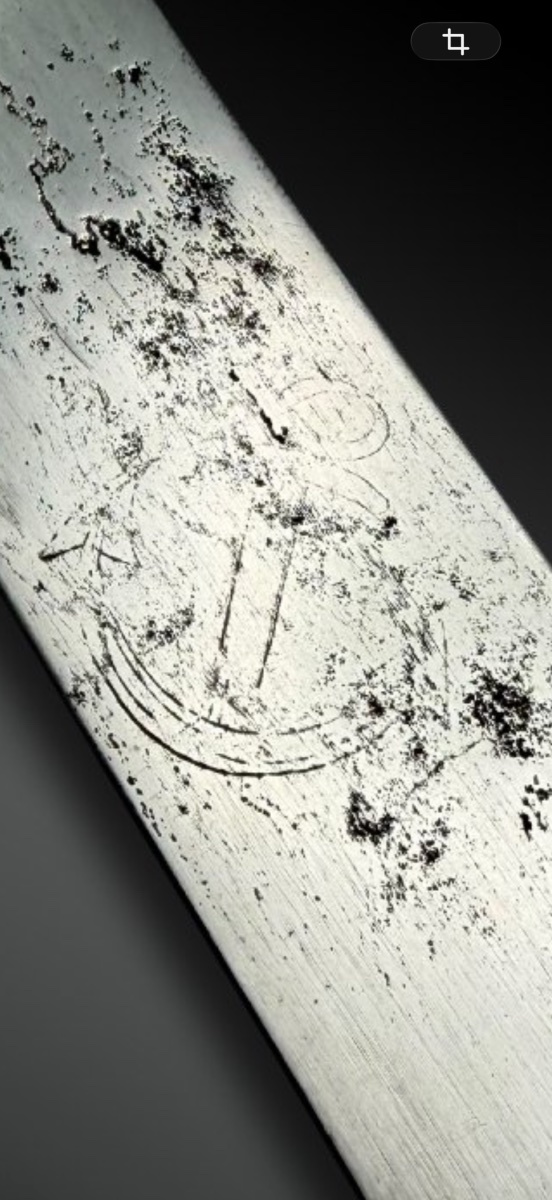
A sturdy, slightly curved steel blade with a single cutting edge. It features a large engraved naval anchor on each of its two sides, unambiguously confirming its intended use in naval service.
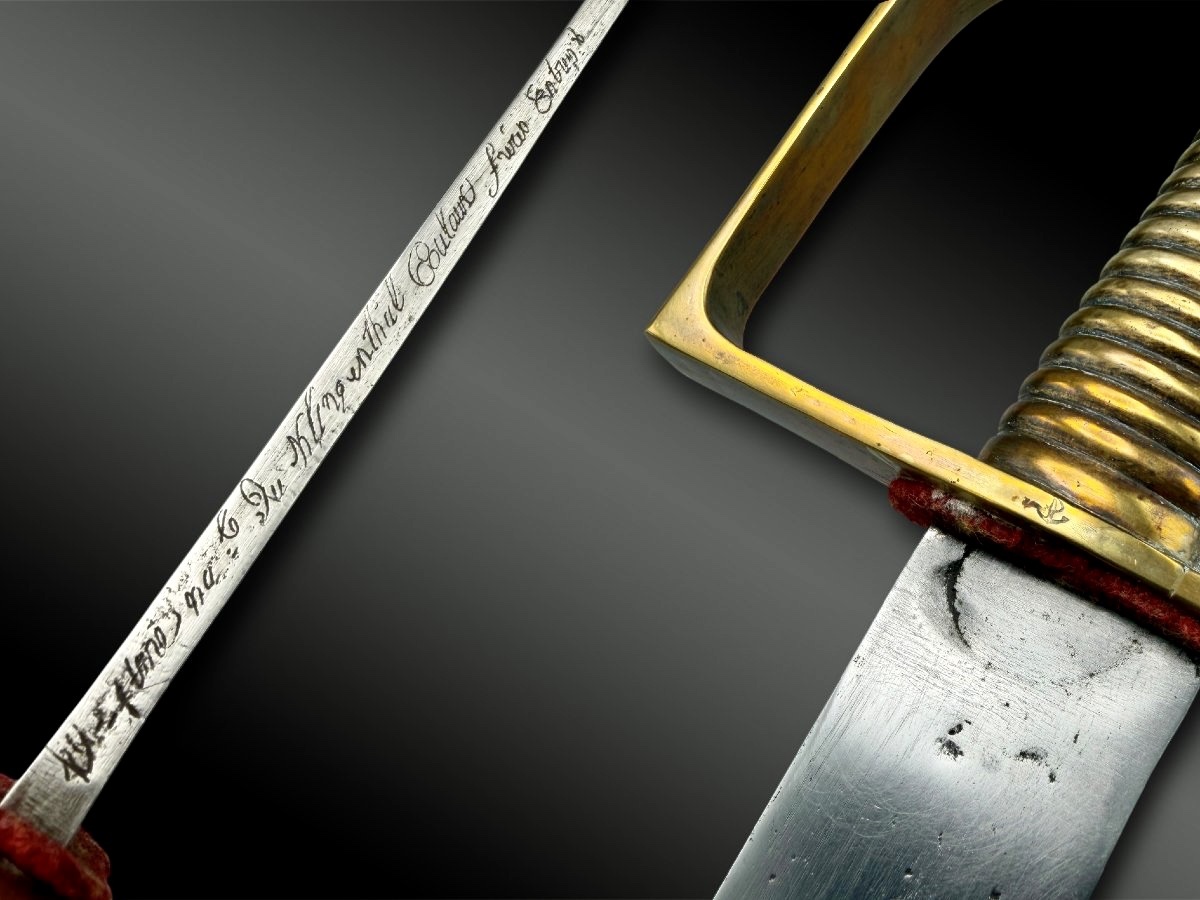
The back of the blade bears the cursive inscription:
“ Mfture Nale de Klingenthal Coulaux frères Entrepr…”
standing for “Manufacture Nationale de Klingenthal – Coulaux frères Entrepreneurs.”
This marking is an essential element for dating the weapon. The brothers Jacques and Julien Coulaux became contractors for the Klingenthal manufactory in 1801; with the advent of the Empire, the manufactory took the title of Imperial Manufactory in 1804. The combination on this blade of the inscription “Manufacture Nationale” and the name “Coulaux frères” thus allows us to date its manufacture to the brief period from 1801 to 1804, during the Consulate.
The entire weapon exhibits remarkable consistency: a regulation mount based on the 1782 model modified in 1790, DEVILLE markings, inspection hallmarks and an anchor stamped on the hilt, large anchors engraved on both sides of the blade, and the Consular signature of the Manufacture Nationale de Klingenthal.
This is thus a late Consular-era production of the 1782/1790 model, dating from the final years of use of this older type of naval saber before the introduction of the new generation of shipboard sabers at the beginning of the Empire.
The red felt tie is still preserved at the base of the blade.
In good overall condition for a service weapon that has seen action. The mount has an antique patina; the blade shows signs of use, oxidation, and small pitting.
No scabbard.
Ship’s sabers were part of a vessel’s collective armament, kept on board under the responsibility of the armory officer and distributed to the crew during a general alarm. The current absence of the scabbard must therefore be understood within the specific context of how these shipboard weapons were used.
France, Consulate, 1801–1804.
Comparisons
A Navy troop saber, Model 1782 (modified in 1790), is cataloged in Bertrand Malvaux’s specialized archives.
The reference literature on the French boarding saber, particularly the works of Michel Pétard, documents the succession of standard Navy models from the Revolution through the Year IX model to the models of the First Empire.
What makes this particular example especially interesting is the combination of the old 1782/1790 regulation mount with a blade from the Manufacture Nationale de Klingenthal signed “Coulaux frères,” which allows the weapon to be precisely dated to the brief period of the Consulate, 1801–1804.
Period: 19th century
Style: Consulat, Empire
Condition: En l'etat
Reference (ID): 1806962
Availability: In stock