

"bacchanale," A Bronze Sculpture Signed "clodion"
Artist: Clodion
This bronze group, signed “Clodion,” refers to the work of theFrench sculptor Claude Michel, known as Clodion (1738–1814), a major figure inlate 18th-century sculpture.
A student of Lambert-Sigisbert Adam andwinner of the Prix de Rome, Clodion is distinguished by his penchant formythological and bacchanalian subjects, rendered with a sensuality anddynamism characteristic of the late Rococo style.
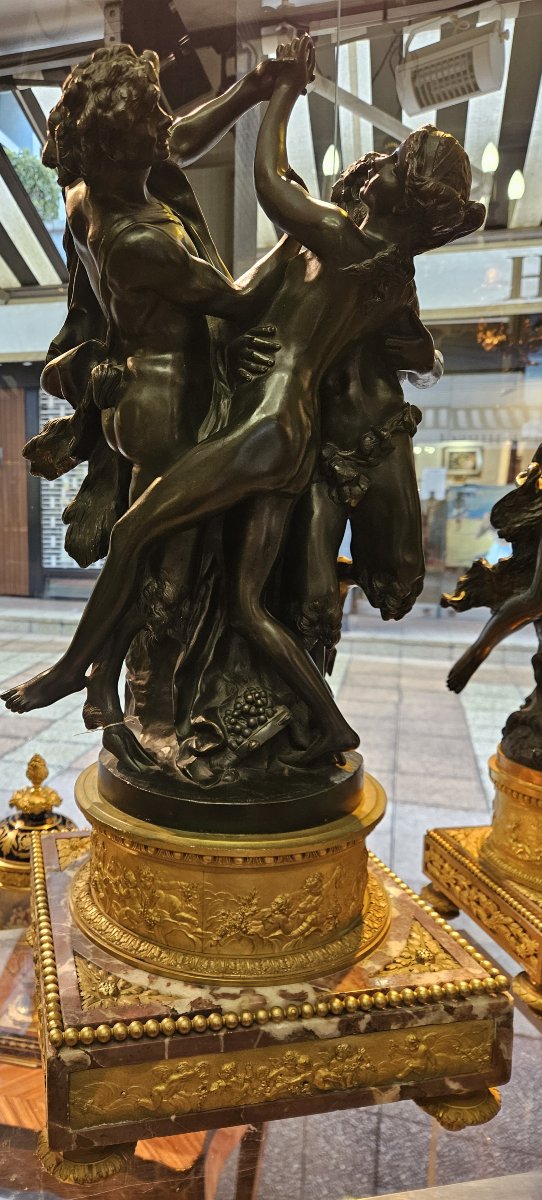
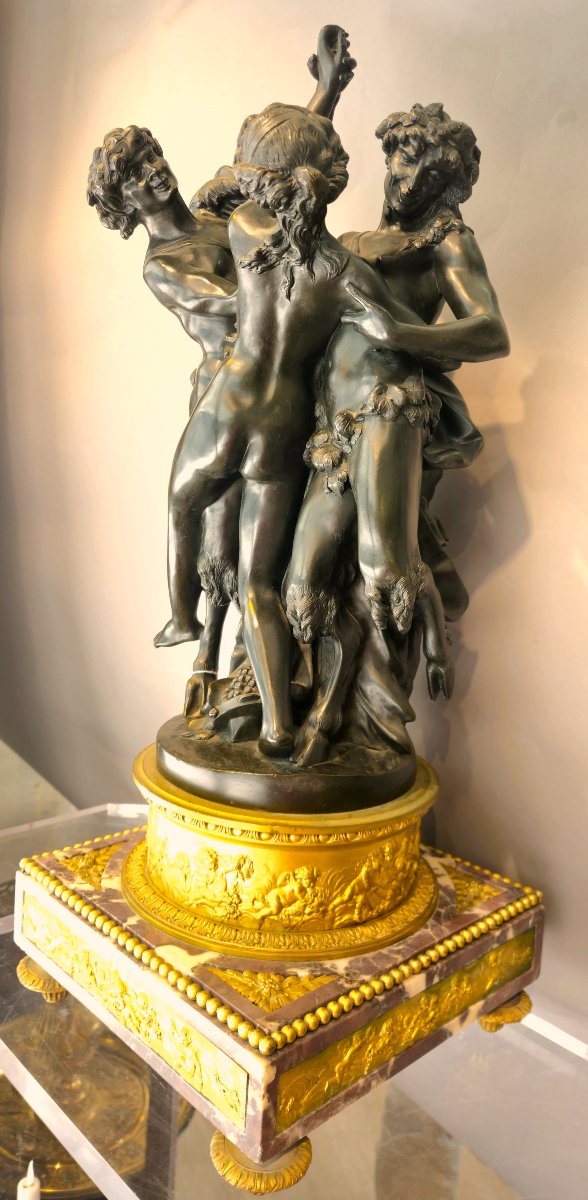
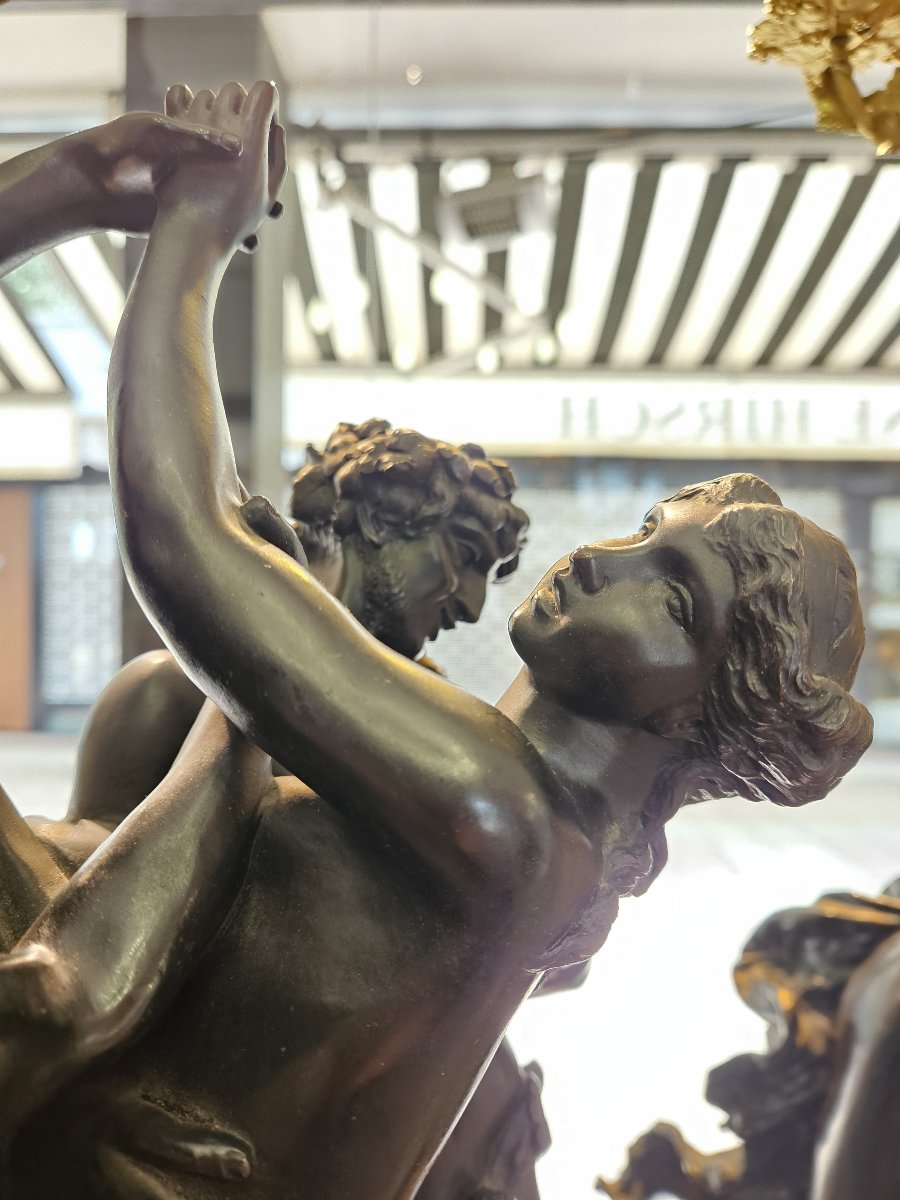
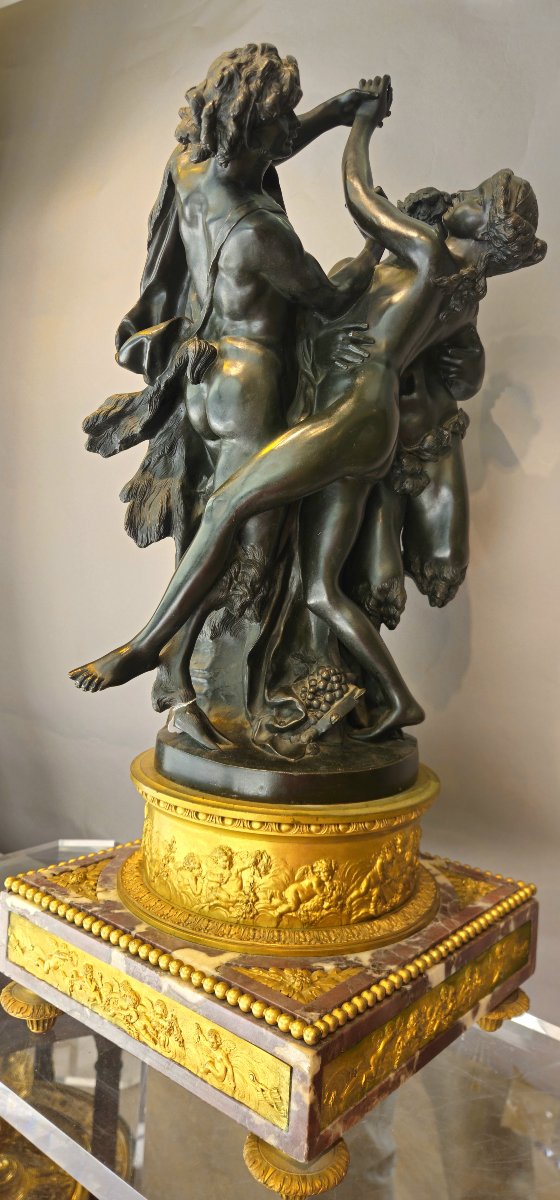
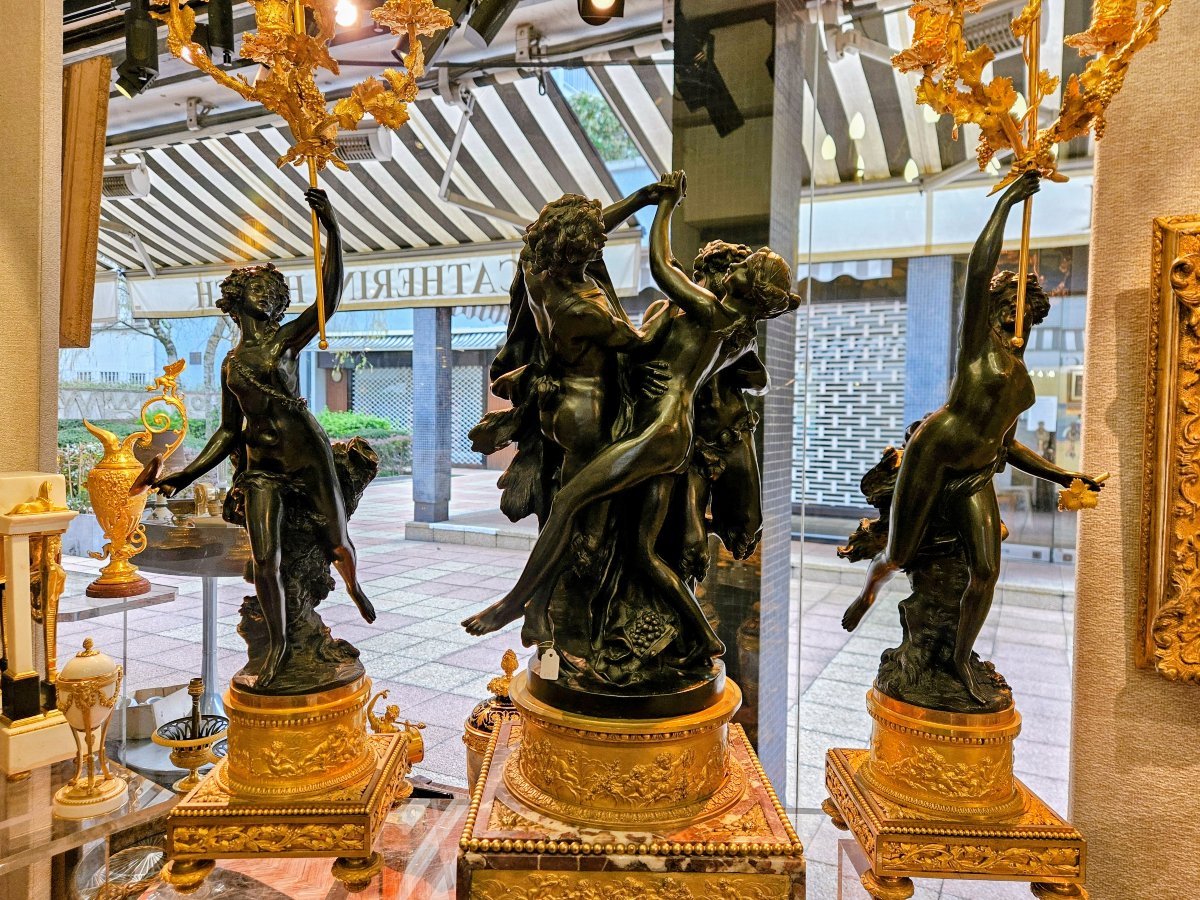
The scene depicted here is entirely in keeping with thistradition: a bacchanal, a recurring theme in Clodion’s work, in which youthful figures,satyrs, and nymphs mingle in a swirling composition. Inspiredby the processions of Bacchus, god of wine and intoxication, these scenes celebratenature, pleasure, and a certain freedom of the body.
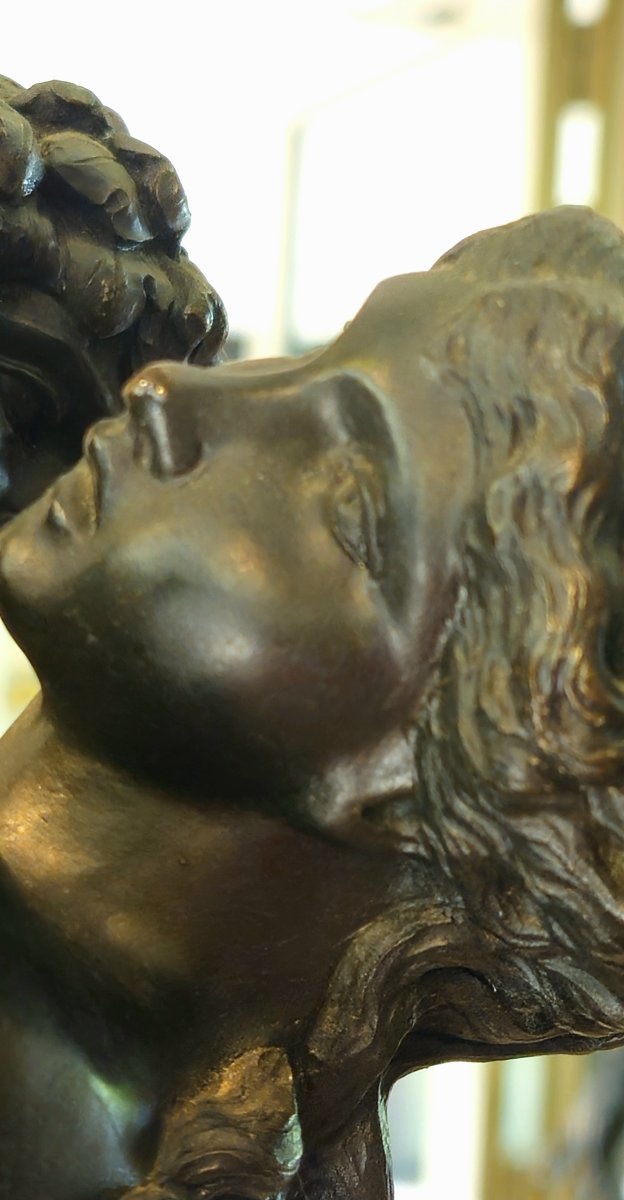
The composition, dense yet legible, rests on a subtleplay of balance and counterpoint, characteristic of Clodion’s aesthetic. Thesupple and vibrant modeling, combined with a pursuit of grace and lightness,gives the work as a whole an almost painterly quality. Theentwined poses and the liveliness of the movement reflect the influence ofAntiquity, rediscovered in the 18th century, while retaining a decorative gracethat is distinctly French.
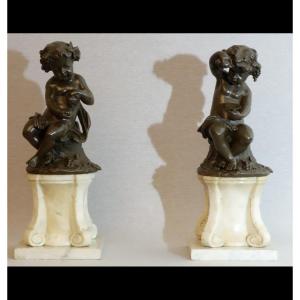
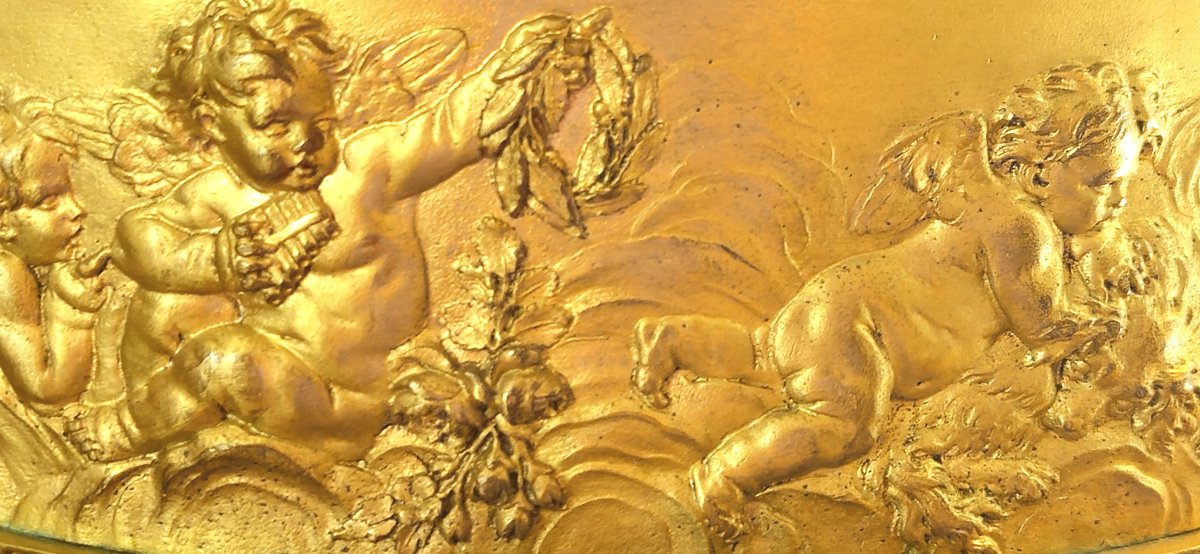
The base, adorned with friezes of putti and neoclassical motifs,reinforces the work’s refined and decorative character.
It reflects the19th-century taste for works inspired by the 18th century, intended for abourgeois and aristocratic clientele seeking elegance and scholarly references.
Thus, this group illustrates both the direct legacy ofClodion and the enduring success of his aesthetic, blending classical grace, sensuality,and decorative virtuosity.
A student of Lambert-Sigisbert Adam andwinner of the Prix de Rome, Clodion is distinguished by his penchant formythological and bacchanalian subjects, rendered with a sensuality anddynamism characteristic of the late Rococo style.
The scene depicted here is entirely in keeping with thistradition: a bacchanal, a recurring theme in Clodion’s work, in which youthful figures,satyrs, and nymphs mingle in a swirling composition. Inspiredby the processions of Bacchus, god of wine and intoxication, these scenes celebratenature, pleasure, and a certain freedom of the body.
The composition, dense yet legible, rests on a subtleplay of balance and counterpoint, characteristic of Clodion’s aesthetic. Thesupple and vibrant modeling, combined with a pursuit of grace and lightness,gives the work as a whole an almost painterly quality. Theentwined poses and the liveliness of the movement reflect the influence ofAntiquity, rediscovered in the 18th century, while retaining a decorative gracethat is distinctly French.
The base, adorned with friezes of putti and neoclassical motifs,reinforces the work’s refined and decorative character.
It reflects the19th-century taste for works inspired by the 18th century, intended for abourgeois and aristocratic clientele seeking elegance and scholarly references.
Thus, this group illustrates both the direct legacy ofClodion and the enduring success of his aesthetic, blending classical grace, sensuality,and decorative virtuosity.
19 000 €
Period: 19th century
Style: Louis 16th, Directory
Condition: Excellent condition
Material: Bronze
Height: 62
Reference (ID): 1806923
Availability: In stock
Print