

The Volunteer Of 1792 - P. Choppin 1856-1937
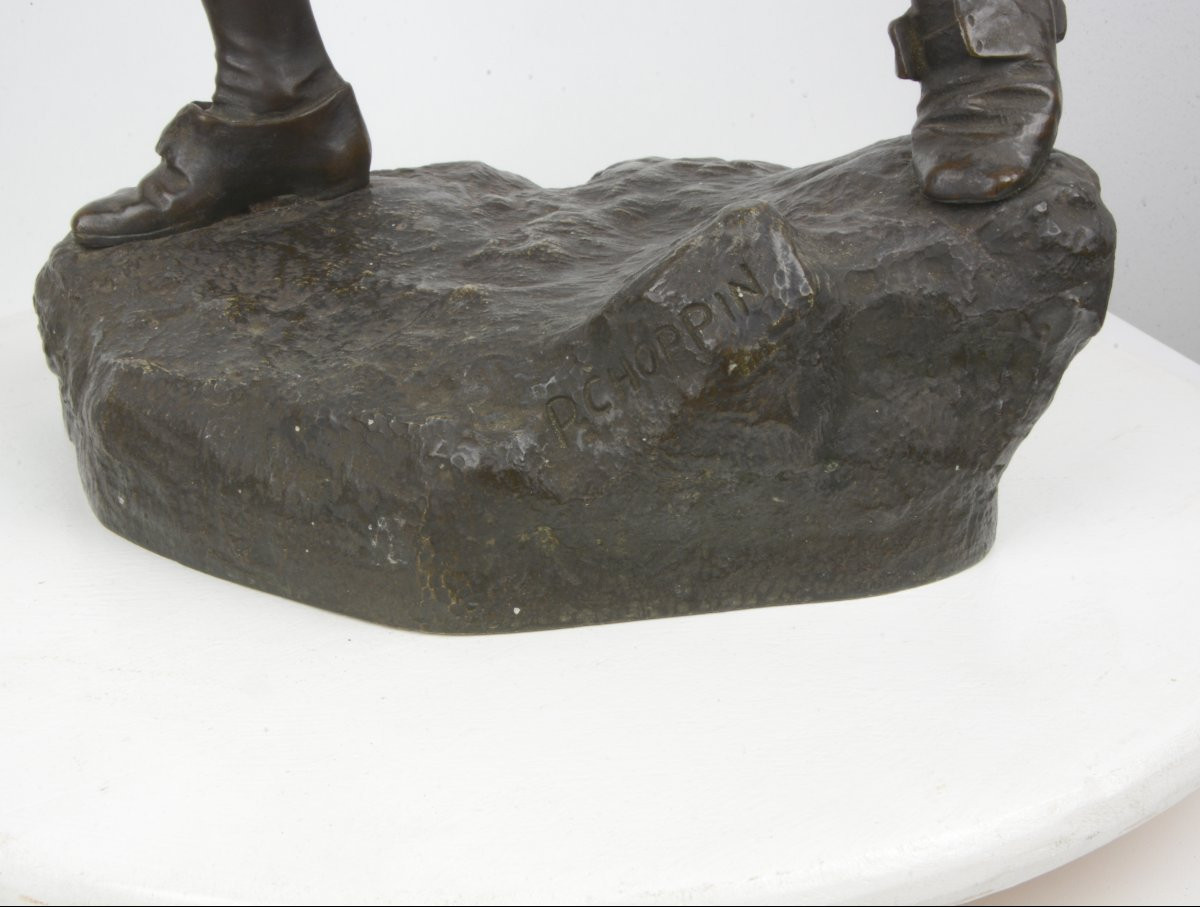
Artist: Paul Choppin 1856-1937
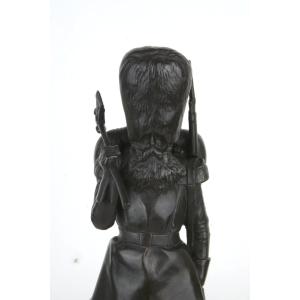
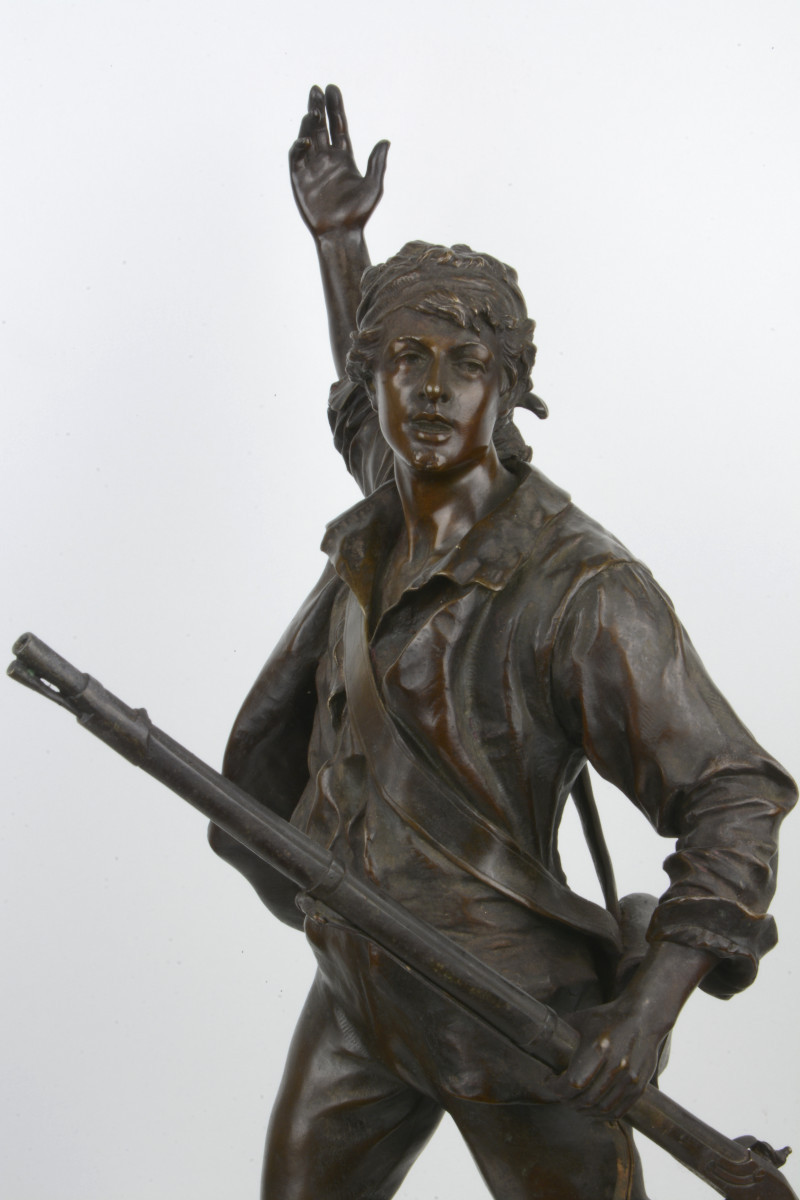
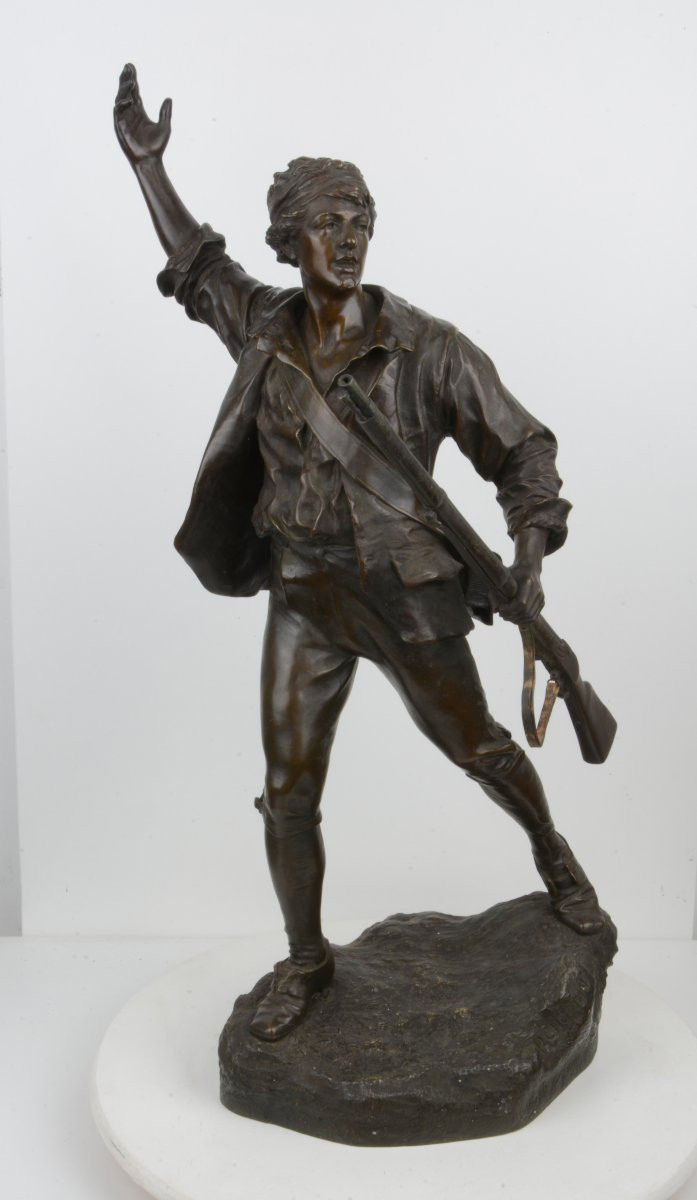
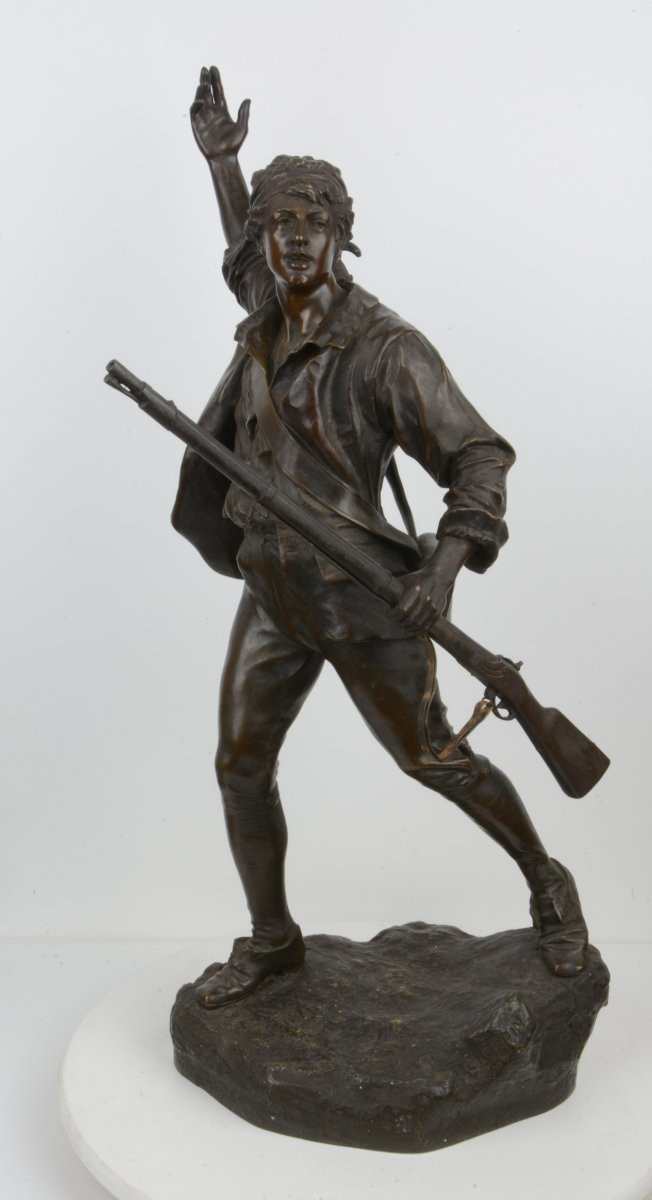
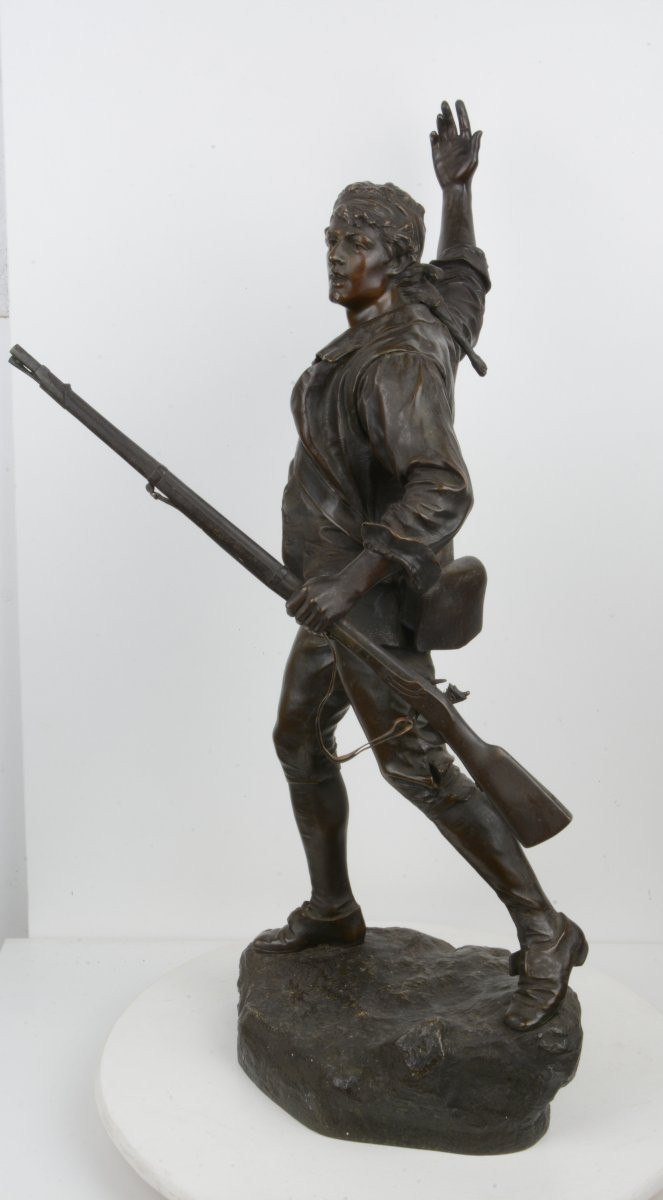
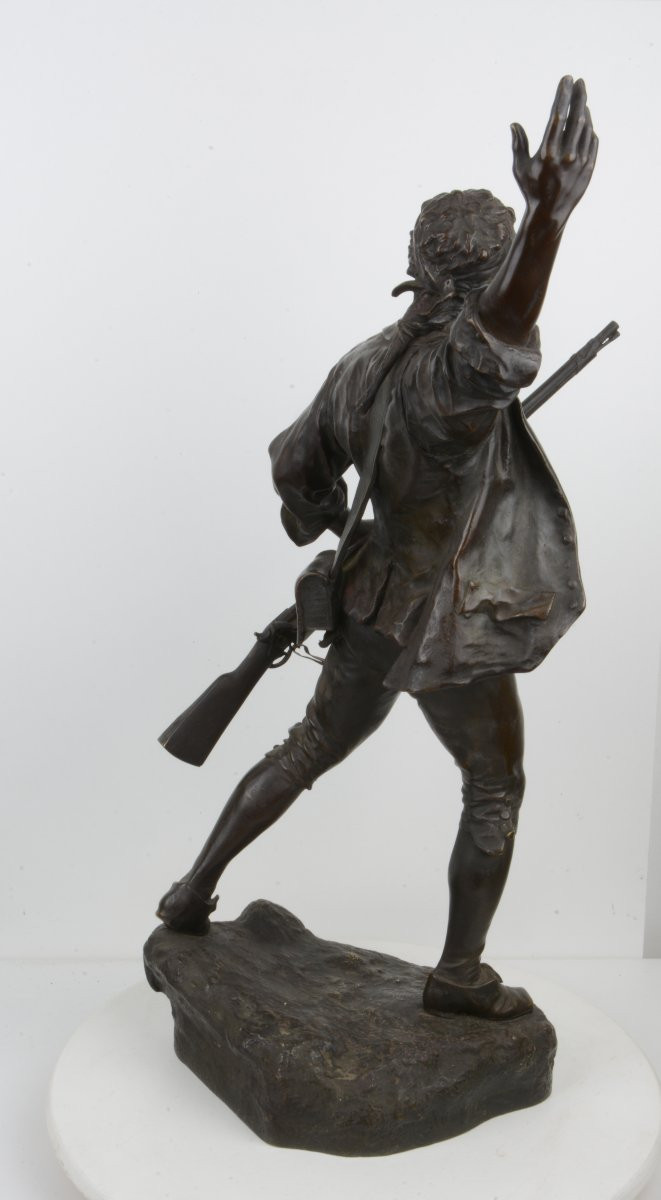
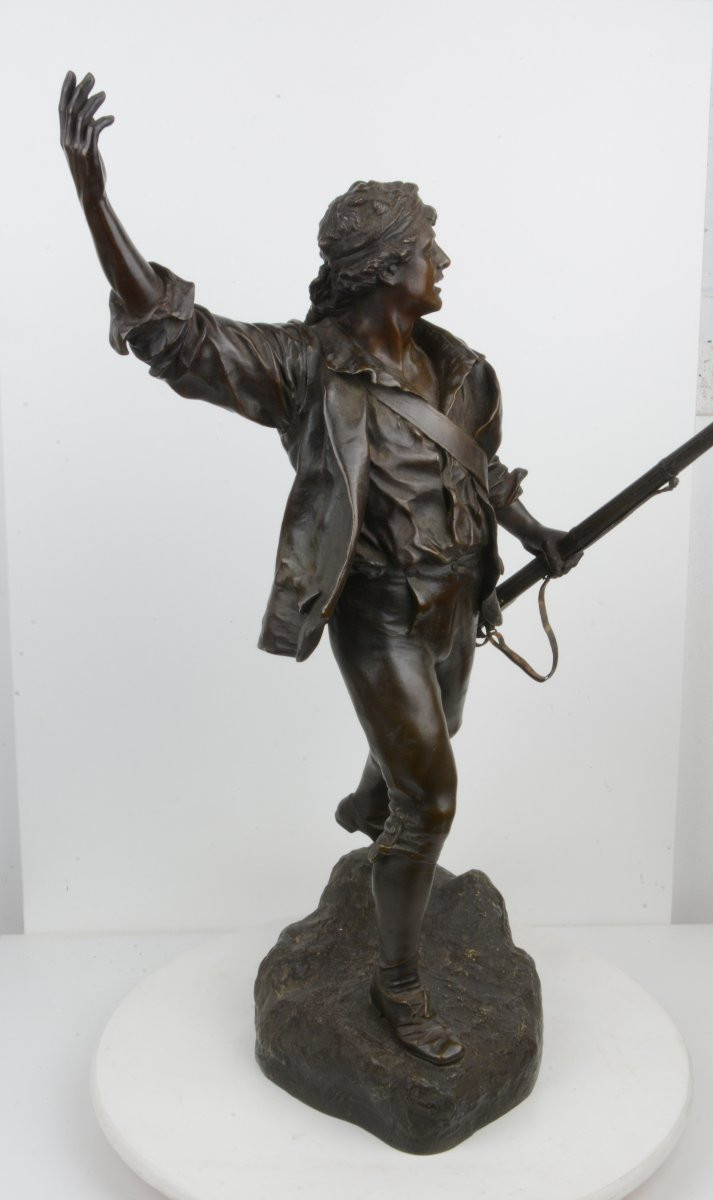
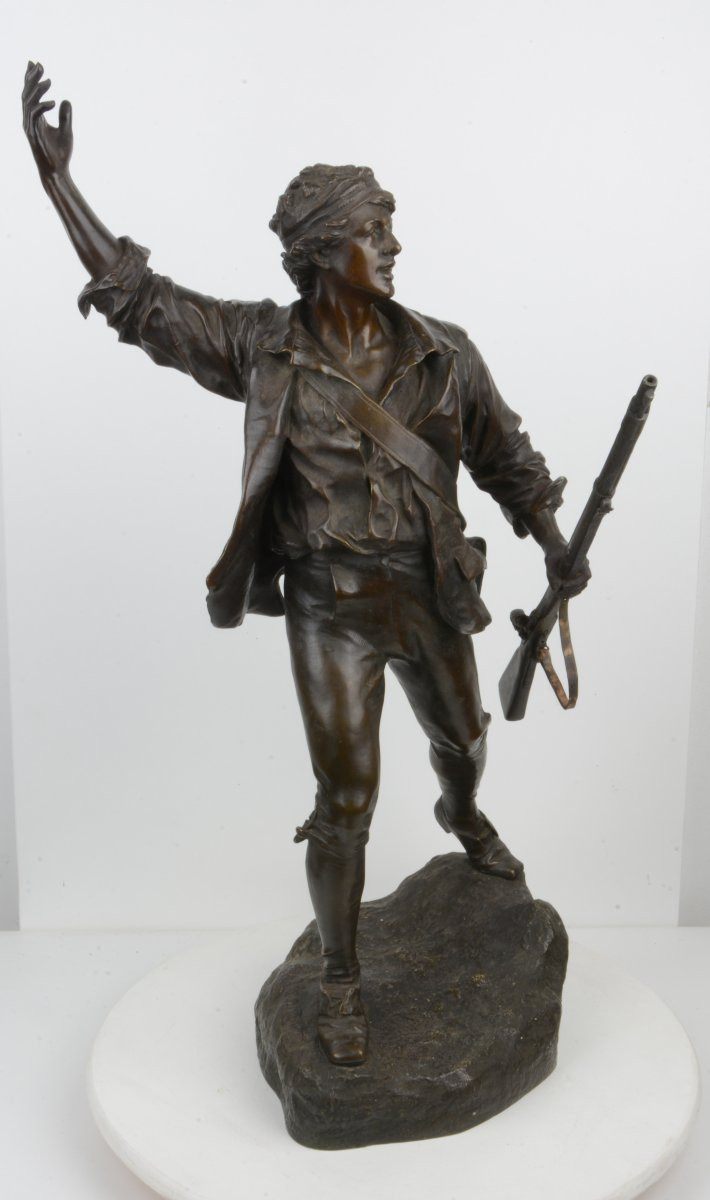
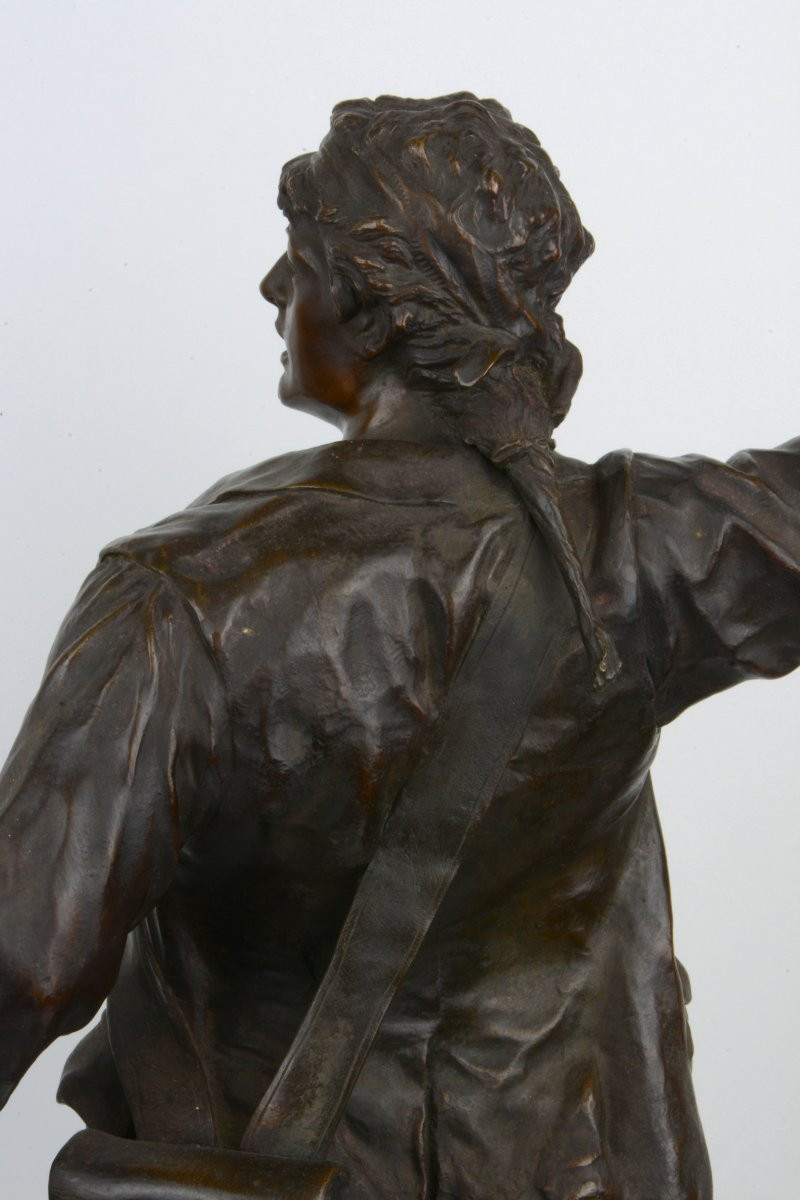
Paul CHOPPIN chiseled his Volontaire in full action, launched in a movement of march. The rifle gripped in his left hand, he raises his right arm in a gesture of invitation as if to say "Follow me! join me!" Let’s go defend the Homeland!».
His expressive face is turned to the left, his mouth open on a catchy song, perhaps this already famous contredanse "Ah it’s going to be, it’s going to be, it’s going to be, the aristocrats with the lantern...?" , or this Carmagnole, the anthem of the Sans-culottes, all newly created, whose words fluttered on all the lips since the feast of the Federation of July 14, 1790 "Let us sing our victory, Long live the sound, long live the sound, Let us sing our victory, Long live the sound of the cannon."
On April 20, 1792, there was the fragile republic at war against the Austrian Empire allied with the Kingdom of Prussia. He must call on volunteers, because his new army of citizen-soldiers is in weakness. 50,000 men are thus recruited allowing the creation of 42 new battalions. Volunteers are recruited by department, and divided into battalions composed of 8 to 10 companies of 50 men and 3 elected officers.
The armies of the coalition of the Holy Empire cross the borders of the East, a few months later. They were arrested at Valmy on September 20, 1792.
The Volunteer of '92, sculpted by Paul Choppin illustrates this episode in the history of France, when, in a fierce patriotic impulse, the youngest citizens commit en masse to defend their endangered homeland. A first statue, in plaster, is presented at the 1888 Salon titled Winner of the Bastille. She is rewarded with a third-class medal. The following year, Paul CHOPPIN exhibits his bronze version at the Universal Exhibition. Renamed A Volunteer in 92, it is awarded a bronze medal. The City of Paris acquires it for 7000 francs. The statue is installed in the square Parmentier, and inaugurated later, in 1891. But alas, it did not resist the power of Vichy who, as well as many other monumental works of the capital, was chosen to be melted in 1942 for the benefit of the German army, as well as many other statues of the capital.
The small town of Remiremont in fact, also acquired to celebrate the enrollment of its Children, first volunteers of the Republic. A slightly different version is proposed to him, the Volontaire being topped with a bicorne, and between his feet, a canon accentuates the revolutionary character of the work.
The Museum of Fine Arts in Reims also has a copy of this beautiful sculpture, unfortunately, it is not on display at the moment..
His expressive face is turned to the left, his mouth open on a catchy song, perhaps this already famous contredanse "Ah it’s going to be, it’s going to be, it’s going to be, the aristocrats with the lantern...?" , or this Carmagnole, the anthem of the Sans-culottes, all newly created, whose words fluttered on all the lips since the feast of the Federation of July 14, 1790 "Let us sing our victory, Long live the sound, long live the sound, Let us sing our victory, Long live the sound of the cannon."
On April 20, 1792, there was the fragile republic at war against the Austrian Empire allied with the Kingdom of Prussia. He must call on volunteers, because his new army of citizen-soldiers is in weakness. 50,000 men are thus recruited allowing the creation of 42 new battalions. Volunteers are recruited by department, and divided into battalions composed of 8 to 10 companies of 50 men and 3 elected officers.
The armies of the coalition of the Holy Empire cross the borders of the East, a few months later. They were arrested at Valmy on September 20, 1792.
The Volunteer of '92, sculpted by Paul Choppin illustrates this episode in the history of France, when, in a fierce patriotic impulse, the youngest citizens commit en masse to defend their endangered homeland. A first statue, in plaster, is presented at the 1888 Salon titled Winner of the Bastille. She is rewarded with a third-class medal. The following year, Paul CHOPPIN exhibits his bronze version at the Universal Exhibition. Renamed A Volunteer in 92, it is awarded a bronze medal. The City of Paris acquires it for 7000 francs. The statue is installed in the square Parmentier, and inaugurated later, in 1891. But alas, it did not resist the power of Vichy who, as well as many other monumental works of the capital, was chosen to be melted in 1942 for the benefit of the German army, as well as many other statues of the capital.
The small town of Remiremont in fact, also acquired to celebrate the enrollment of its Children, first volunteers of the Republic. A slightly different version is proposed to him, the Volontaire being topped with a bicorne, and between his feet, a canon accentuates the revolutionary character of the work.
The Museum of Fine Arts in Reims also has a copy of this beautiful sculpture, unfortunately, it is not on display at the moment..
1 650 €
Period: 19th century
Style: Louis 16th, Directory
Condition: Good condition
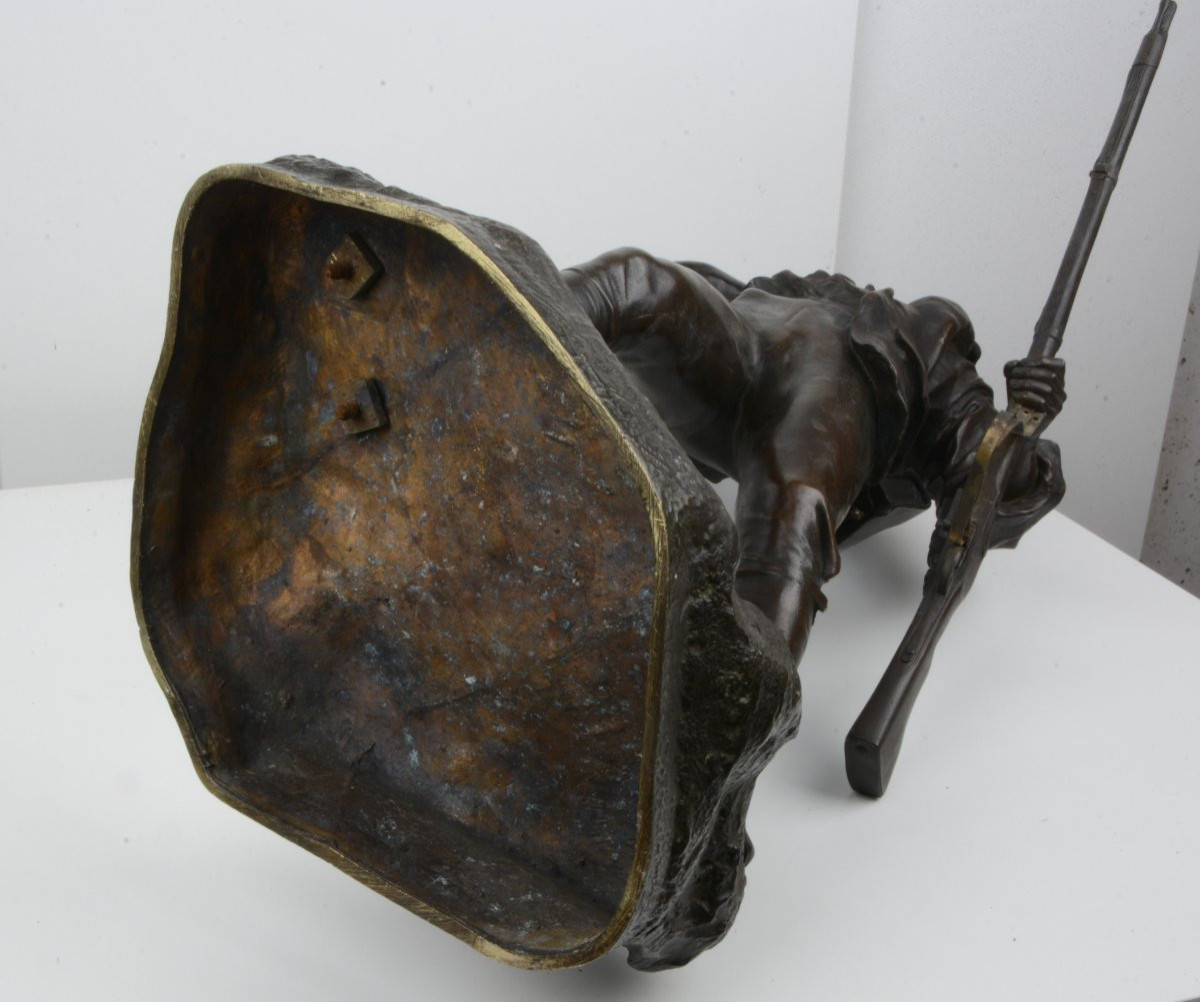
Material: Bronze
Width: 28
Height: 60
Depth: 24
Reference (ID): 1664740
Availability: In stock
Print