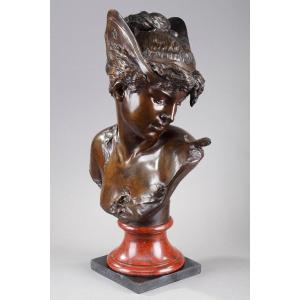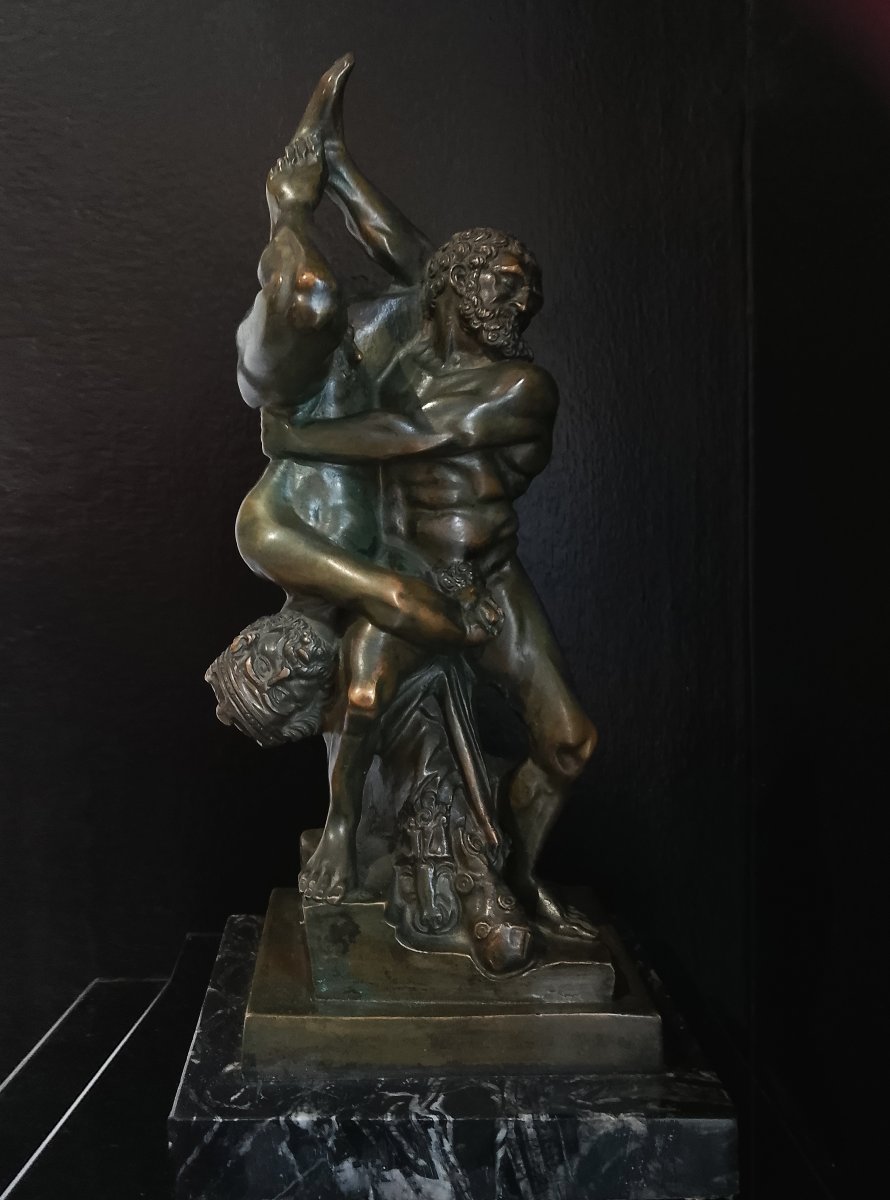
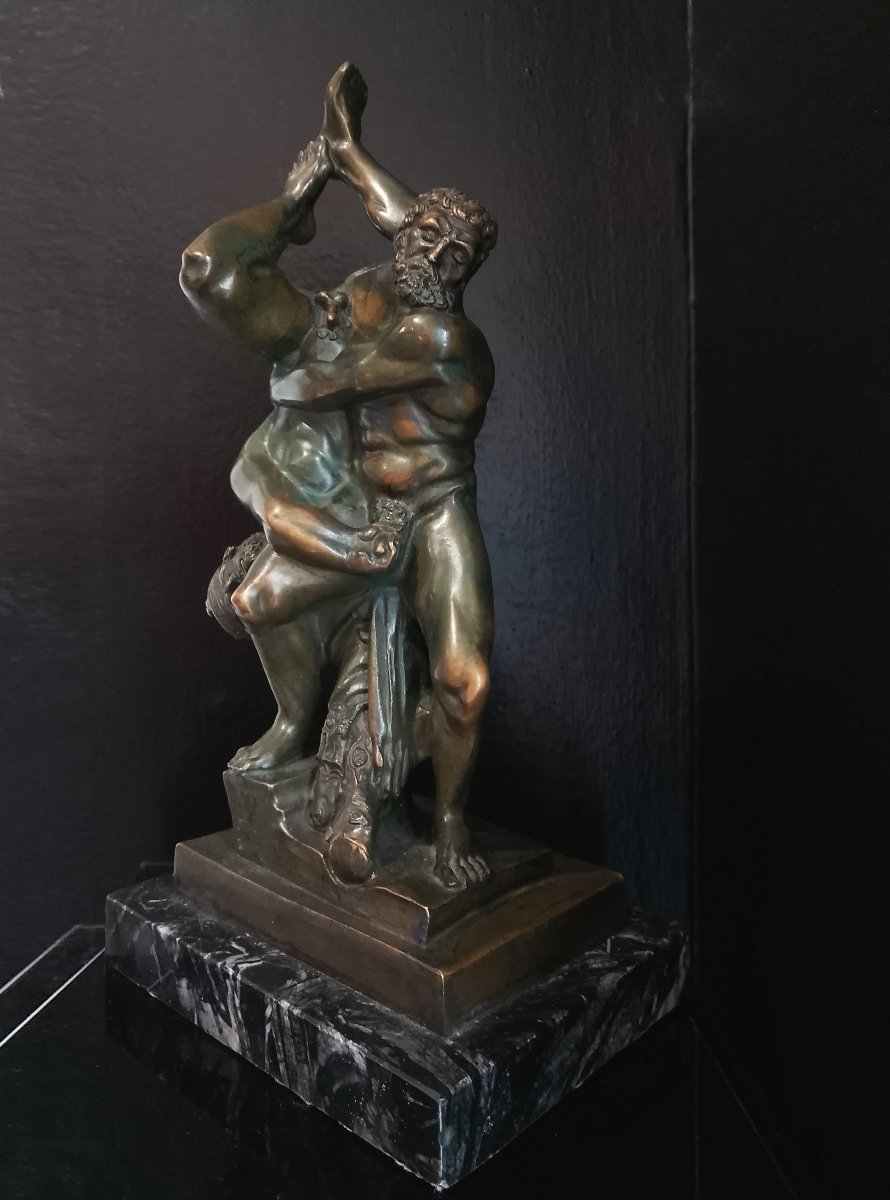
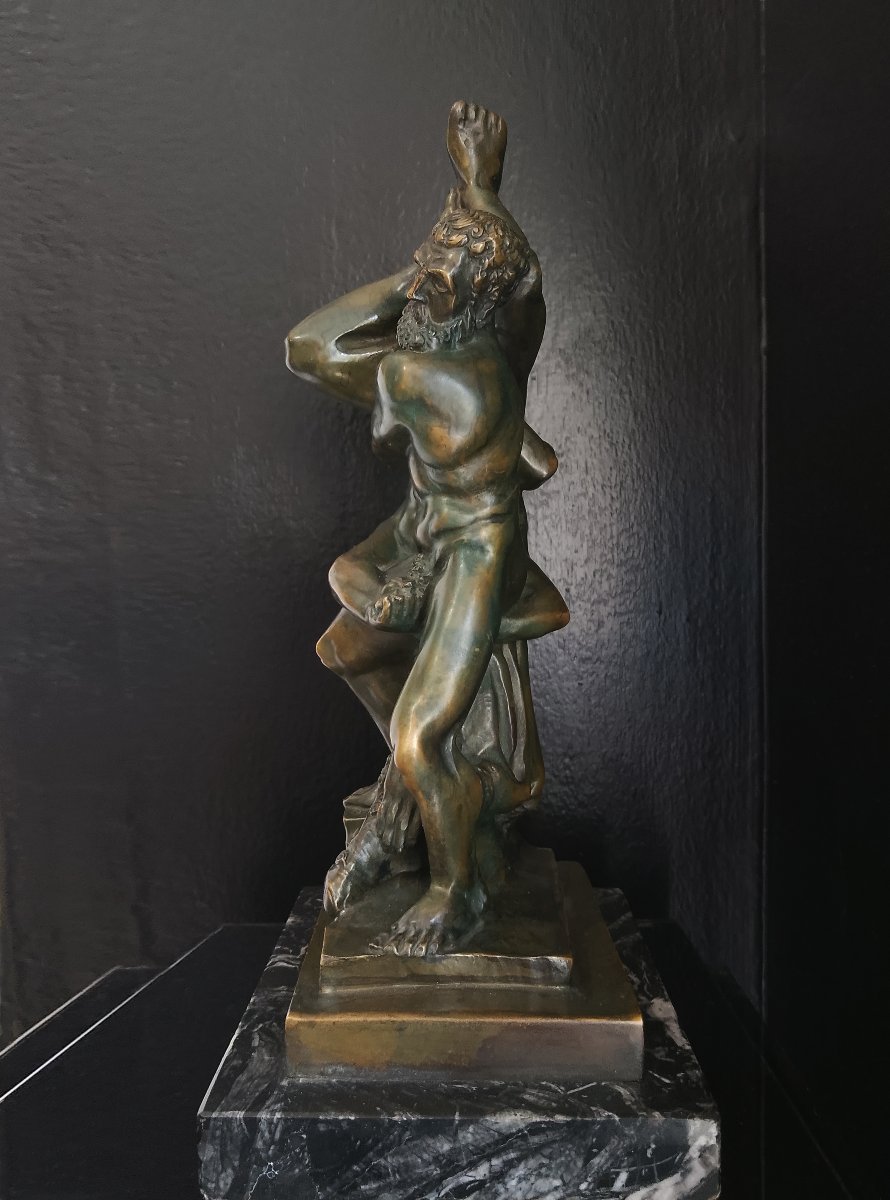
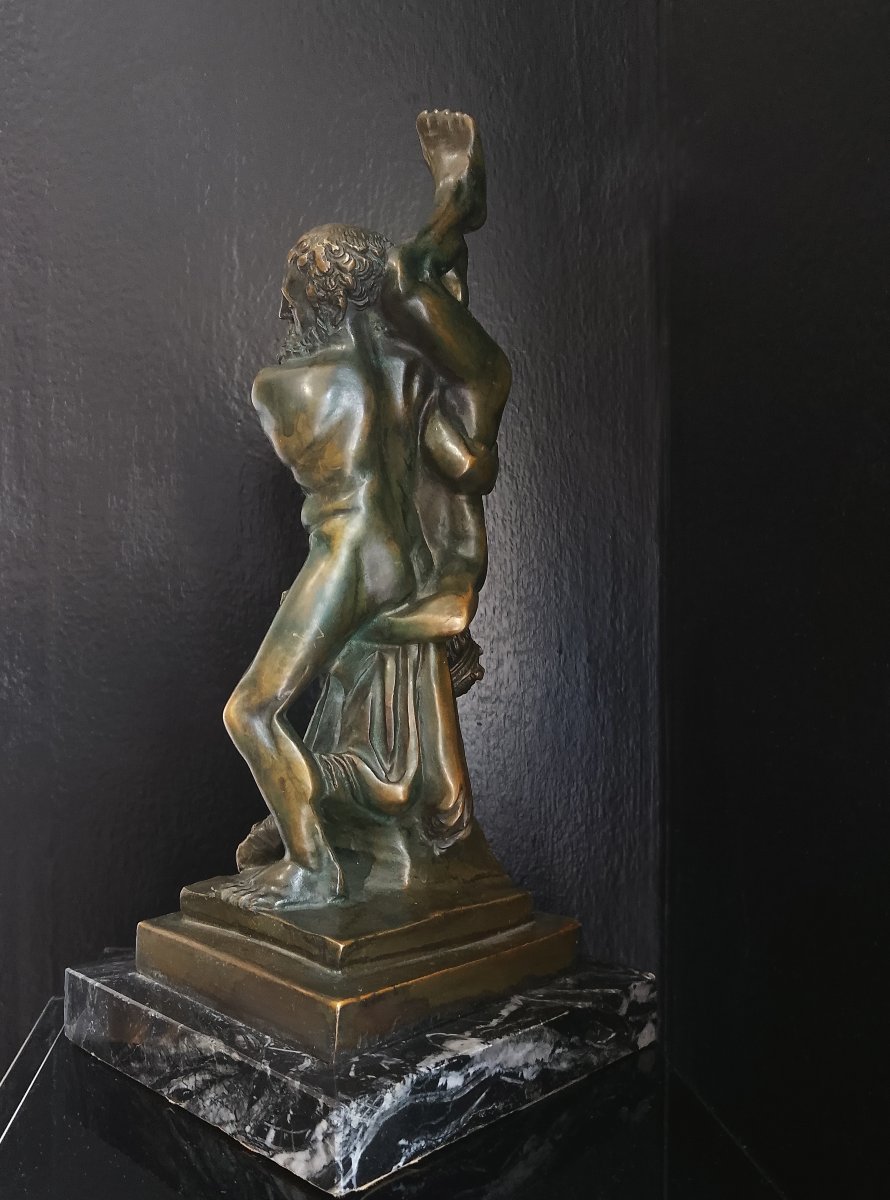
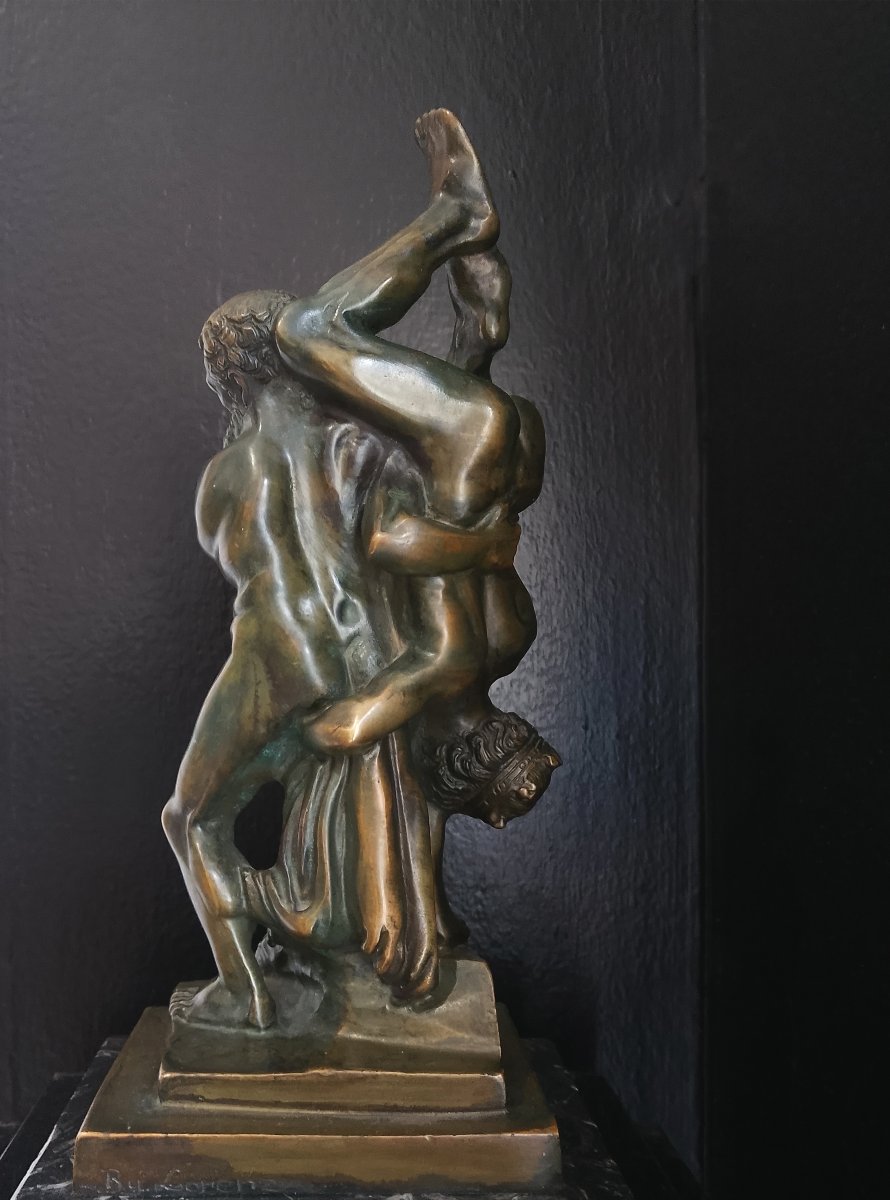
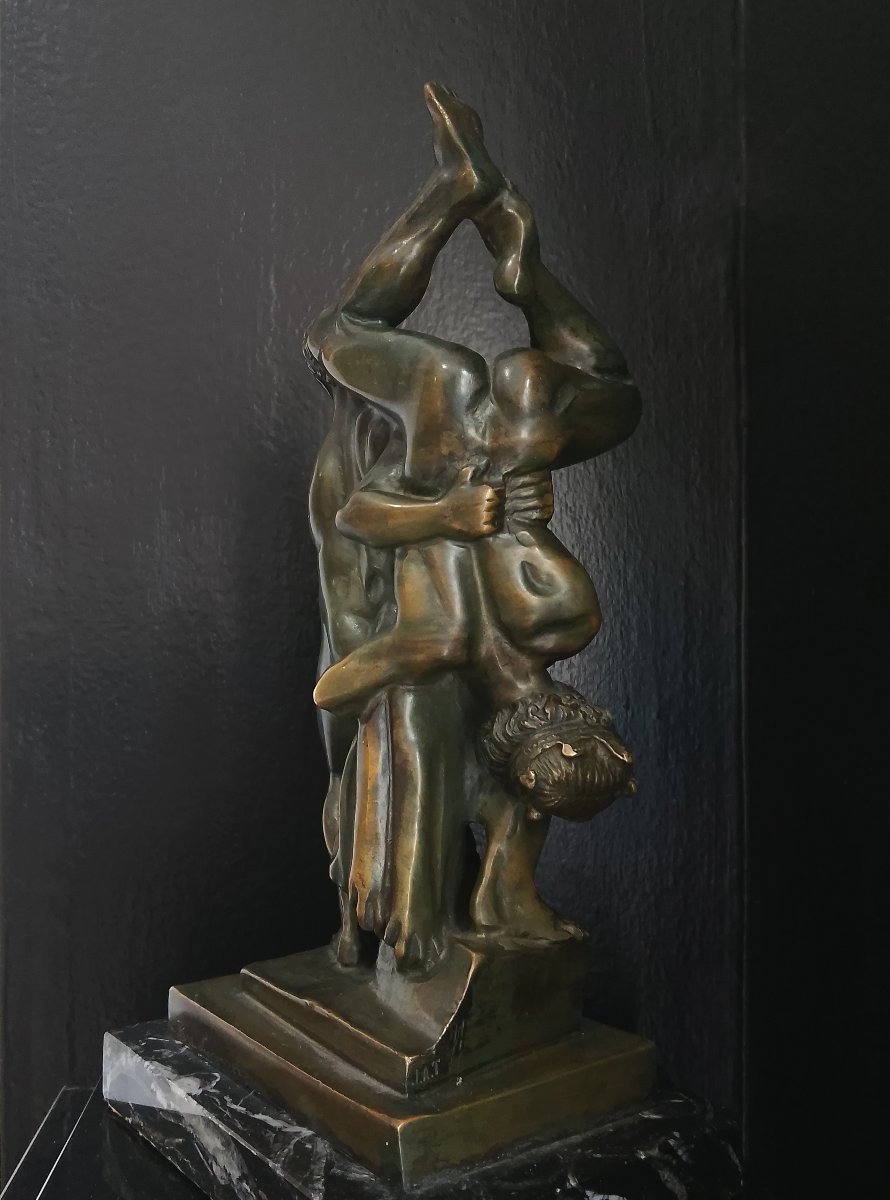
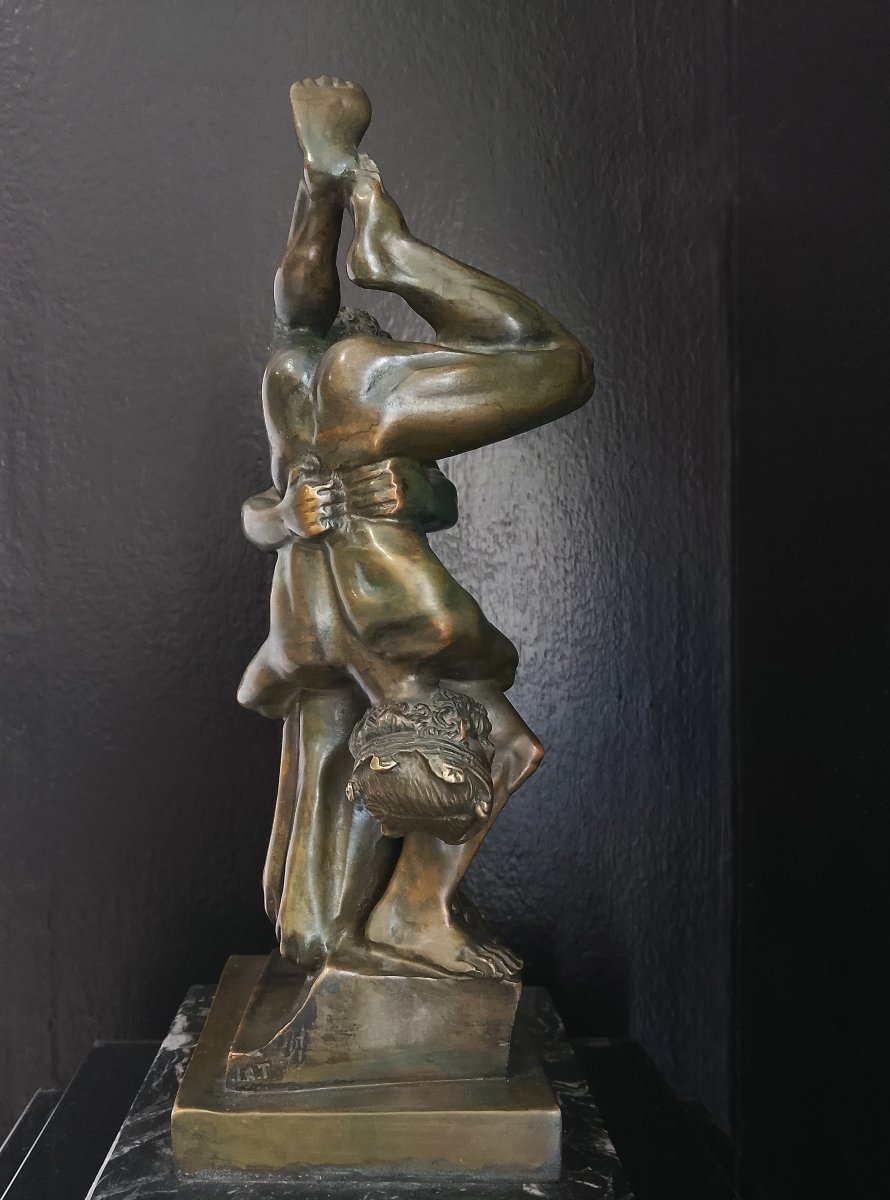
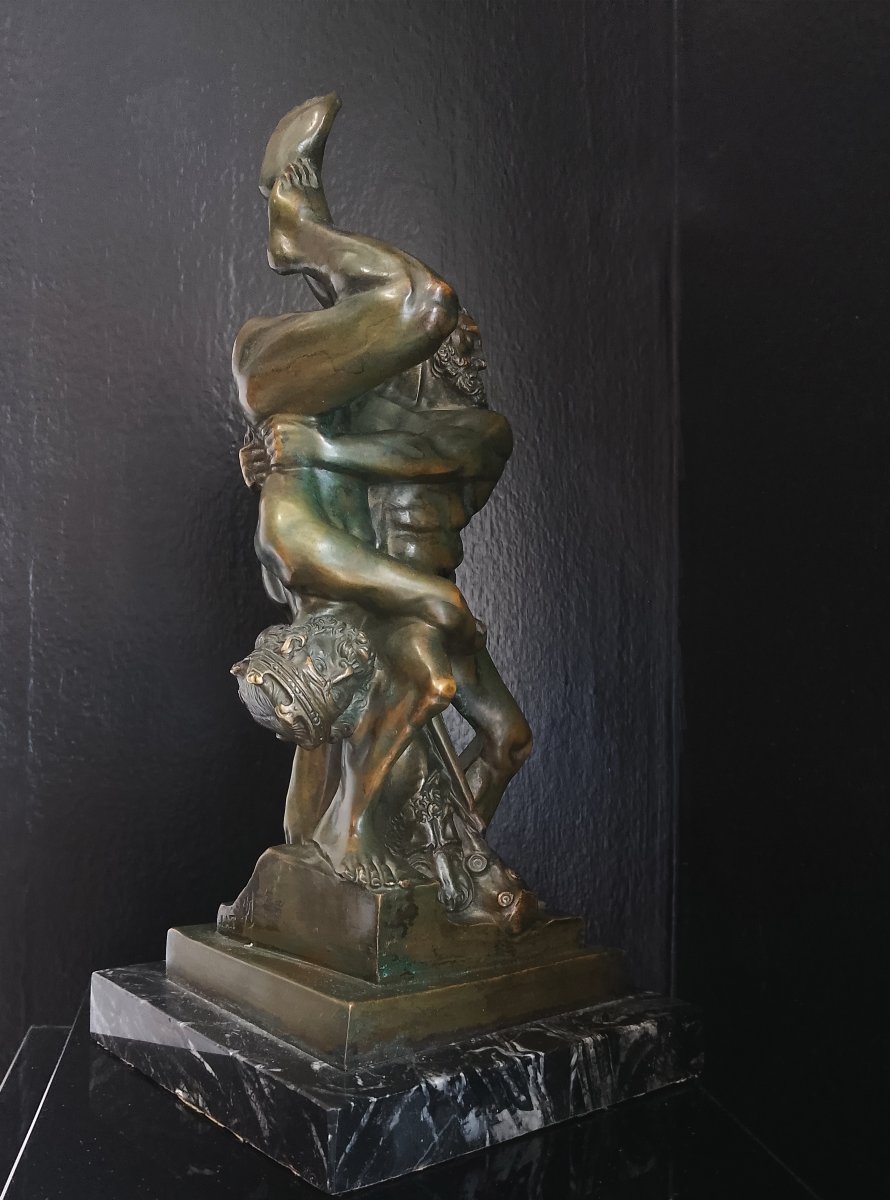
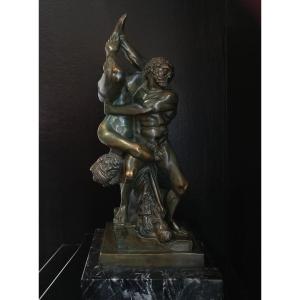


“hercules And Diomedes.” Bronze Cast By Lorenz.
Artist: Lorenz D'après Vincenzo De Rossi.
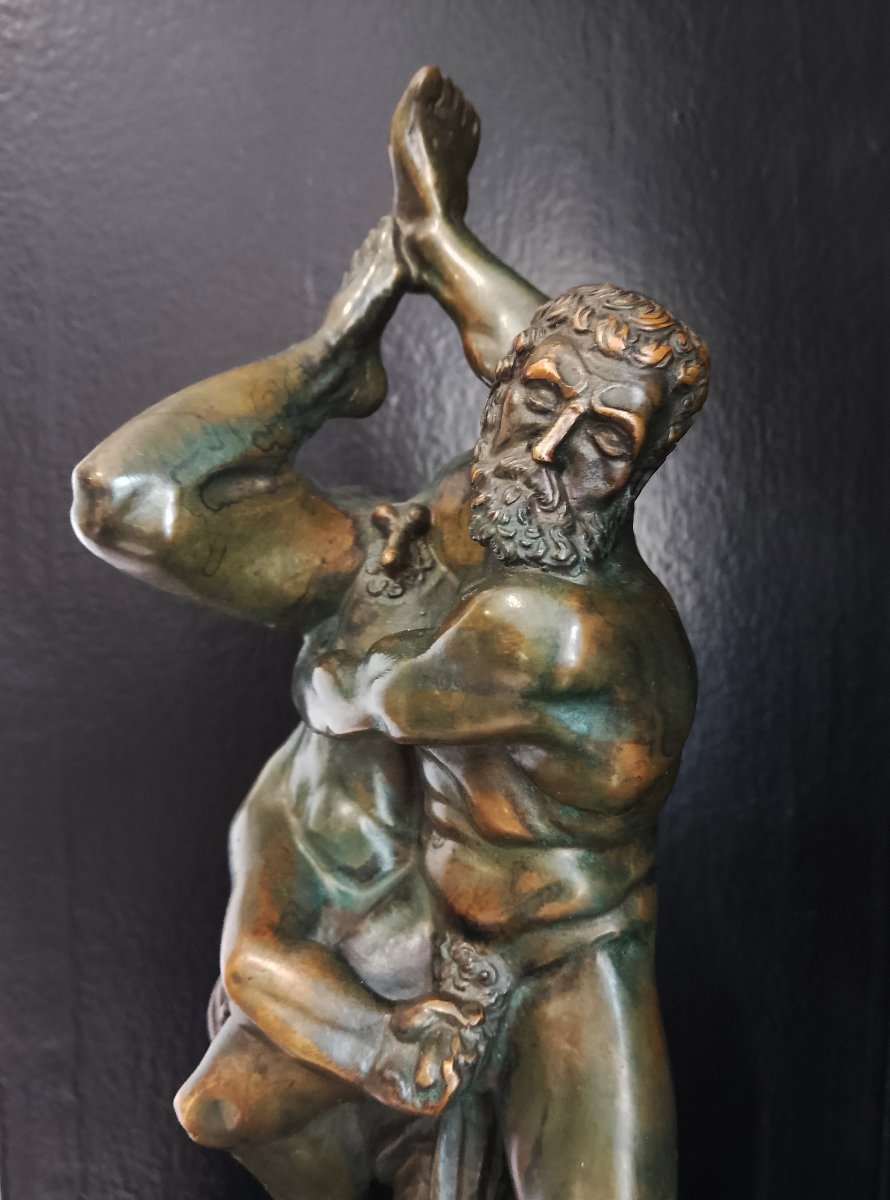
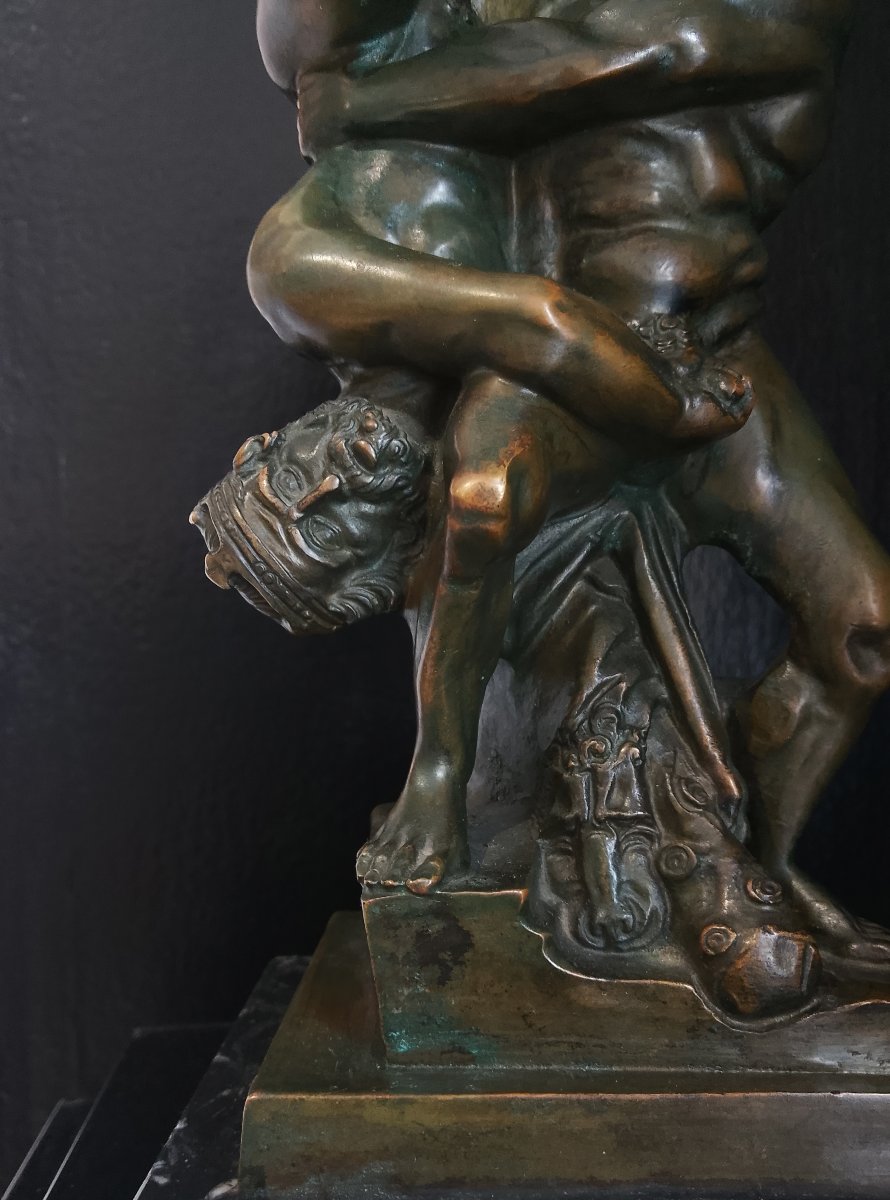
Hercules grabs Diomedes upside down, ready to throw him into the trough
of the mares, whileDiomedes tries to cling to Hercules,
one of his hands gripping the hero’s genitals.
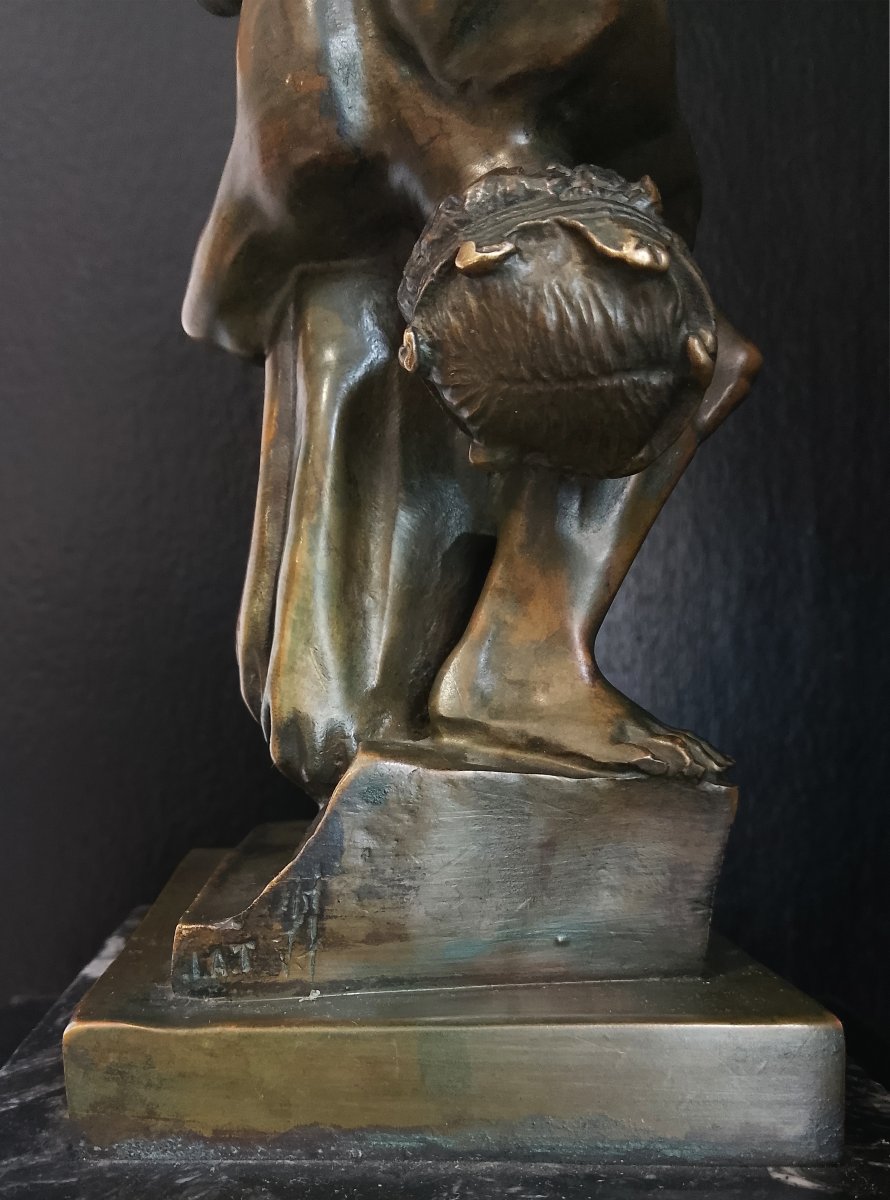
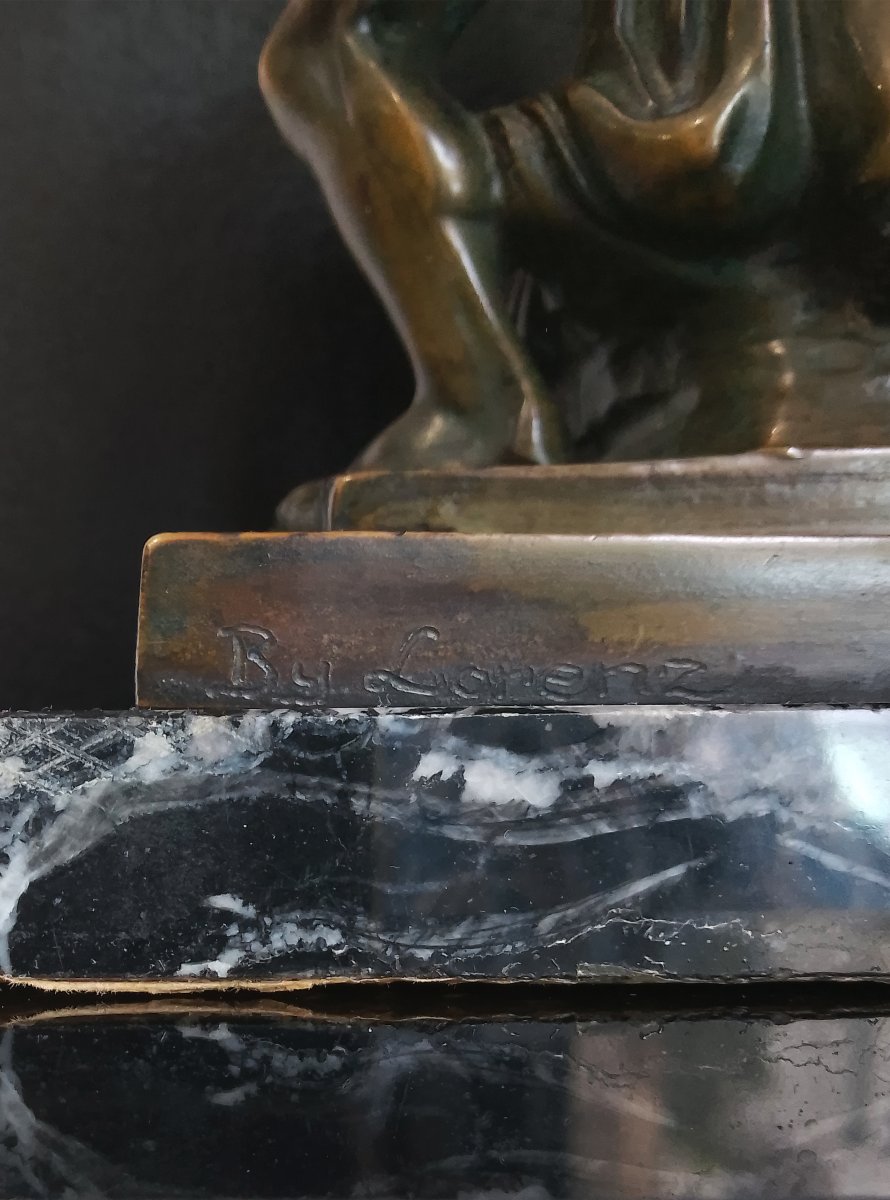
Bronzepatinated relief by Lorenz, signed on the base
and monogrammed: I. A. T.
Base inblack marble with white veining.
Cast from an early edition.
Date: late 19th century.
Very good condition.
Dimensions excluding base:
Height = 24.5 cm. Width = 11 cm. Depth = 9.5 cm.
Base dimensions: 13 cm x 11 cm x 2 cm.
“Hercules Punishes King Diomedes,” based on the original marble sculpture
byVincenzo de Rossi, housed at the Palazzo Vecchio in Florence.
This episode corresponds to the eighth of Hercules’ labors.
Hercules has been part of Florentine iconography since the 13th century.
Hewas regarded as the one capable of thwarting the will of tyrants
and various oppressors,just as David did against Goliath.
The Florentines therefore associated the image of the hero’s resistance
with that of Florence in the face of all those who sought to dominate it.
In 1562, CosimoI de’ Medici commissioned Vincenzo de Rossi
to create the sculptures of the “Labor of Hercules,” whichcan be seen
in the Hall of the Five Hundred in the Palazzo Vecchio.
In this way, he demonstrated his desire to associatethe image of Hercules with that of Florence.
Indeed, for the Medici, Hercules represented the
capable of overcoming the adversities endured by the Medici family
over the centuries—exiled, driven out, yet always able
to regain power by triumphing over their adversaries.
Duke Cosimo I de’ Medici exploited the myth of Hercules politically
to his advantage in order todemonstrate to the Florentines the importance of upholding
traditional values and… consolidate hisown power.
This political philosophy is perfectly highlighted
in the sculptures ofHercules’ labors created by Vincenzo de Rossi
, which depict a powerful Hercules, showingno hesitation or mercy toward his adversaries.
of the mares, whileDiomedes tries to cling to Hercules,
one of his hands gripping the hero’s genitals.
Bronzepatinated relief by Lorenz, signed on the base
and monogrammed: I. A. T.
Base inblack marble with white veining.
Cast from an early edition.
Date: late 19th century.
Very good condition.
Dimensions excluding base:
Height = 24.5 cm. Width = 11 cm. Depth = 9.5 cm.
Base dimensions: 13 cm x 11 cm x 2 cm.
“Hercules Punishes King Diomedes,” based on the original marble sculpture
byVincenzo de Rossi, housed at the Palazzo Vecchio in Florence.
This episode corresponds to the eighth of Hercules’ labors.
Hercules has been part of Florentine iconography since the 13th century.
Hewas regarded as the one capable of thwarting the will of tyrants
and various oppressors,just as David did against Goliath.
The Florentines therefore associated the image of the hero’s resistance
with that of Florence in the face of all those who sought to dominate it.
In 1562, CosimoI de’ Medici commissioned Vincenzo de Rossi
to create the sculptures of the “Labor of Hercules,” whichcan be seen
in the Hall of the Five Hundred in the Palazzo Vecchio.
In this way, he demonstrated his desire to associatethe image of Hercules with that of Florence.
Indeed, for the Medici, Hercules represented the
capable of overcoming the adversities endured by the Medici family
over the centuries—exiled, driven out, yet always able
to regain power by triumphing over their adversaries.
Duke Cosimo I de’ Medici exploited the myth of Hercules politically
to his advantage in order todemonstrate to the Florentines the importance of upholding
traditional values and… consolidate hisown power.
This political philosophy is perfectly highlighted
in the sculptures ofHercules’ labors created by Vincenzo de Rossi
, which depict a powerful Hercules, showingno hesitation or mercy toward his adversaries.
1 800 €
Period: 19th century
Style: Other Style
Condition: Excellent condition
Material: Bronze
Width: 11 cm.
Height: 24,5 cm.
Depth: 9,5 cm.
Reference (ID): 1804788
Availability: In stock
Print