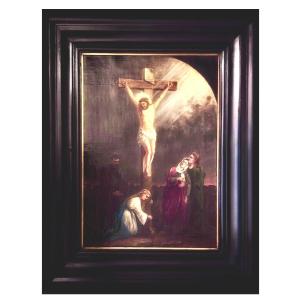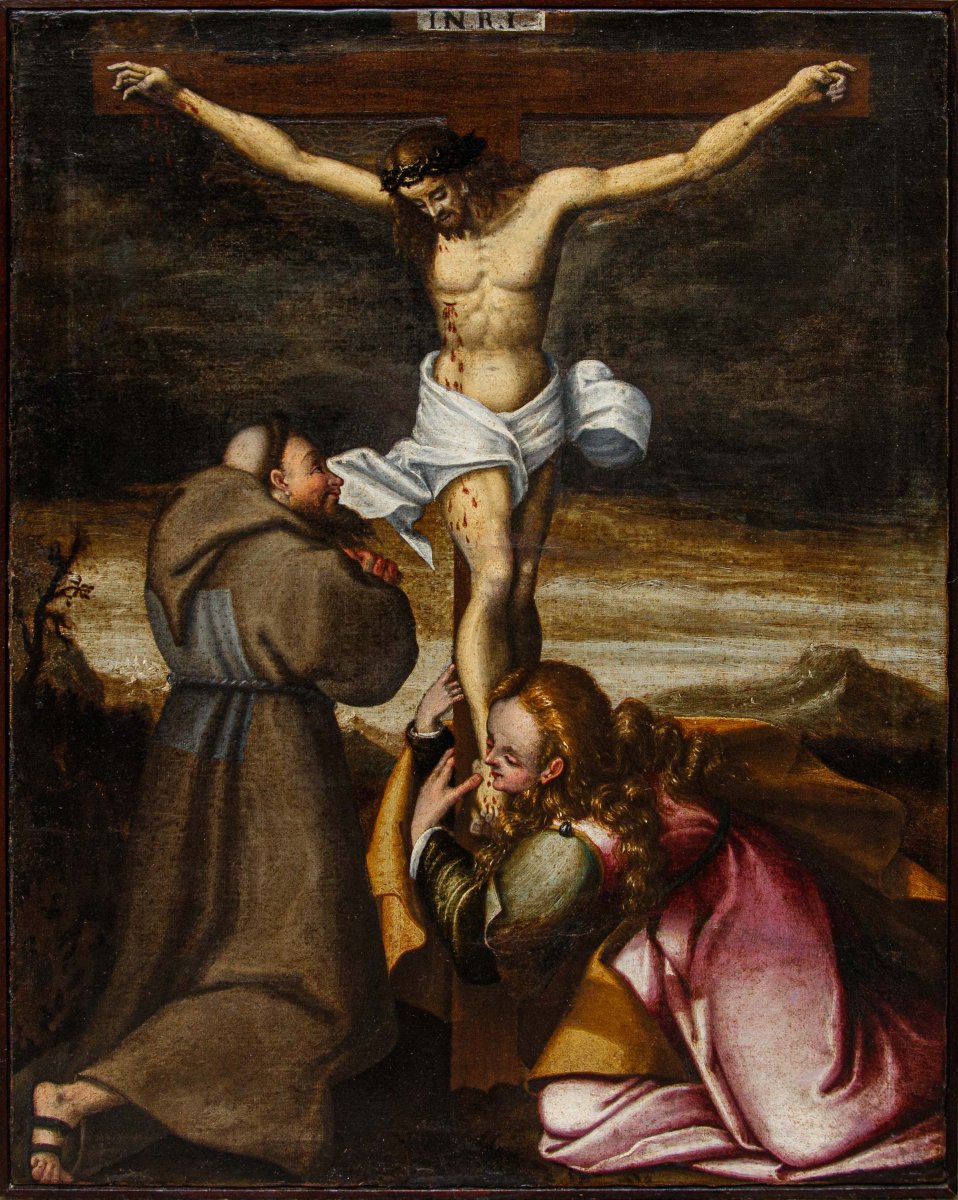
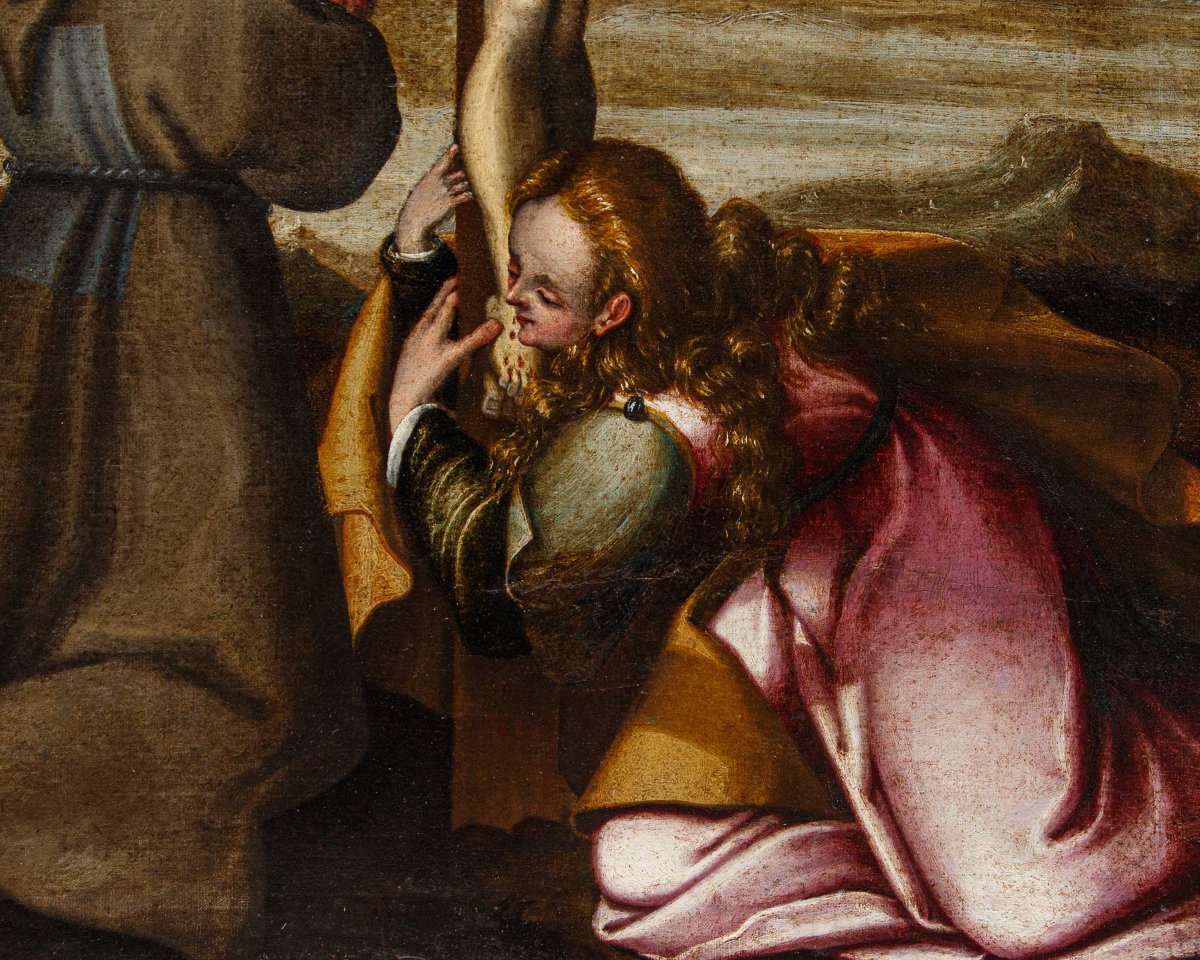
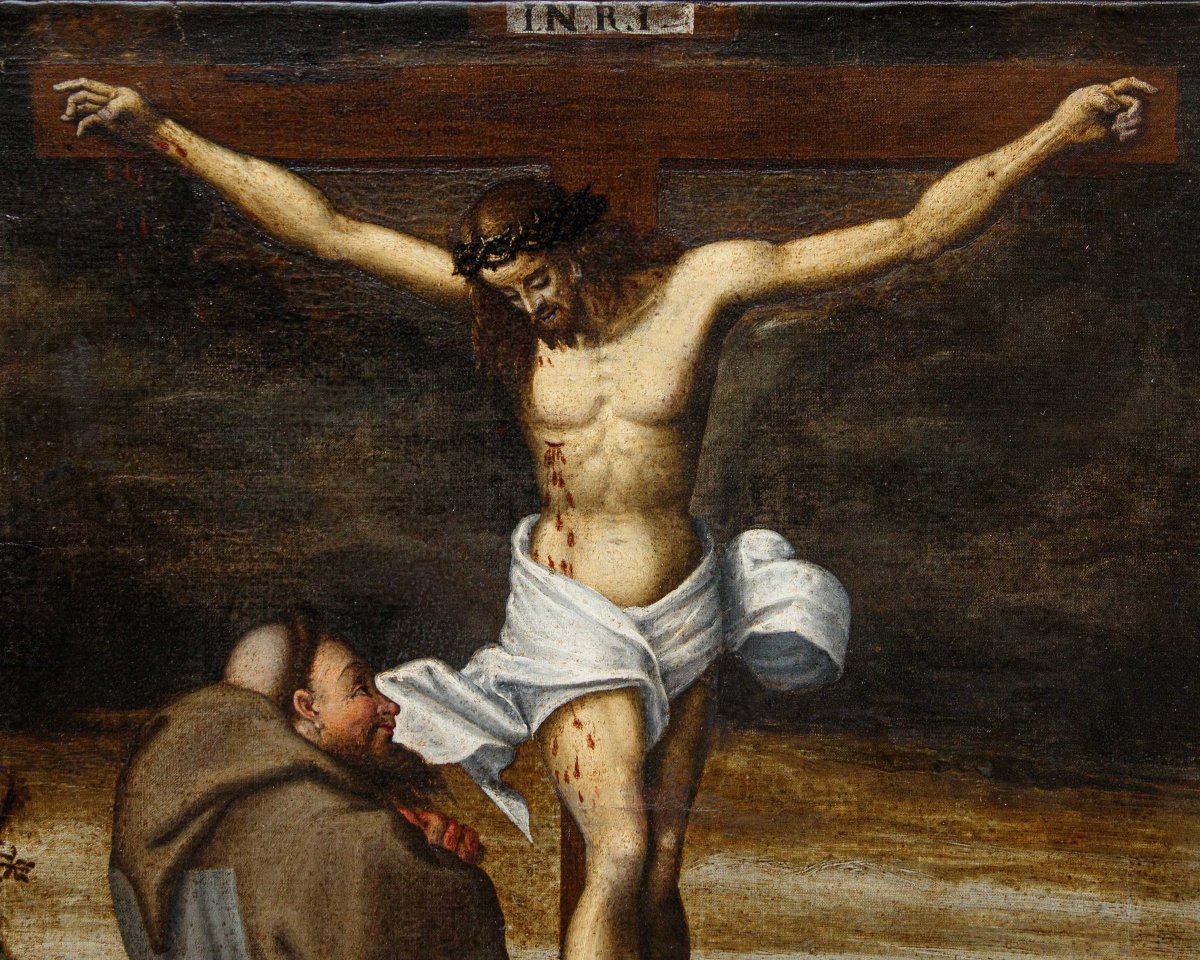
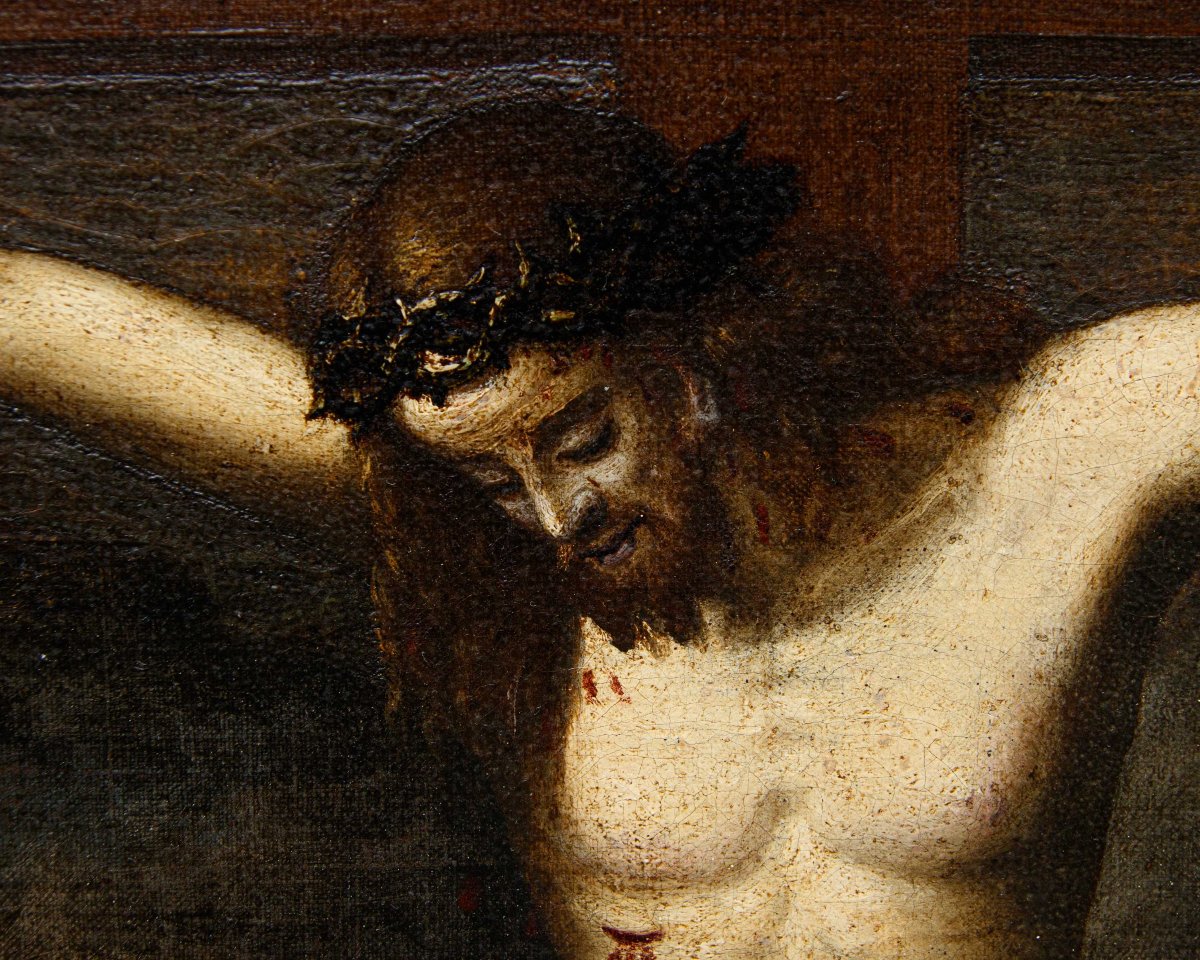
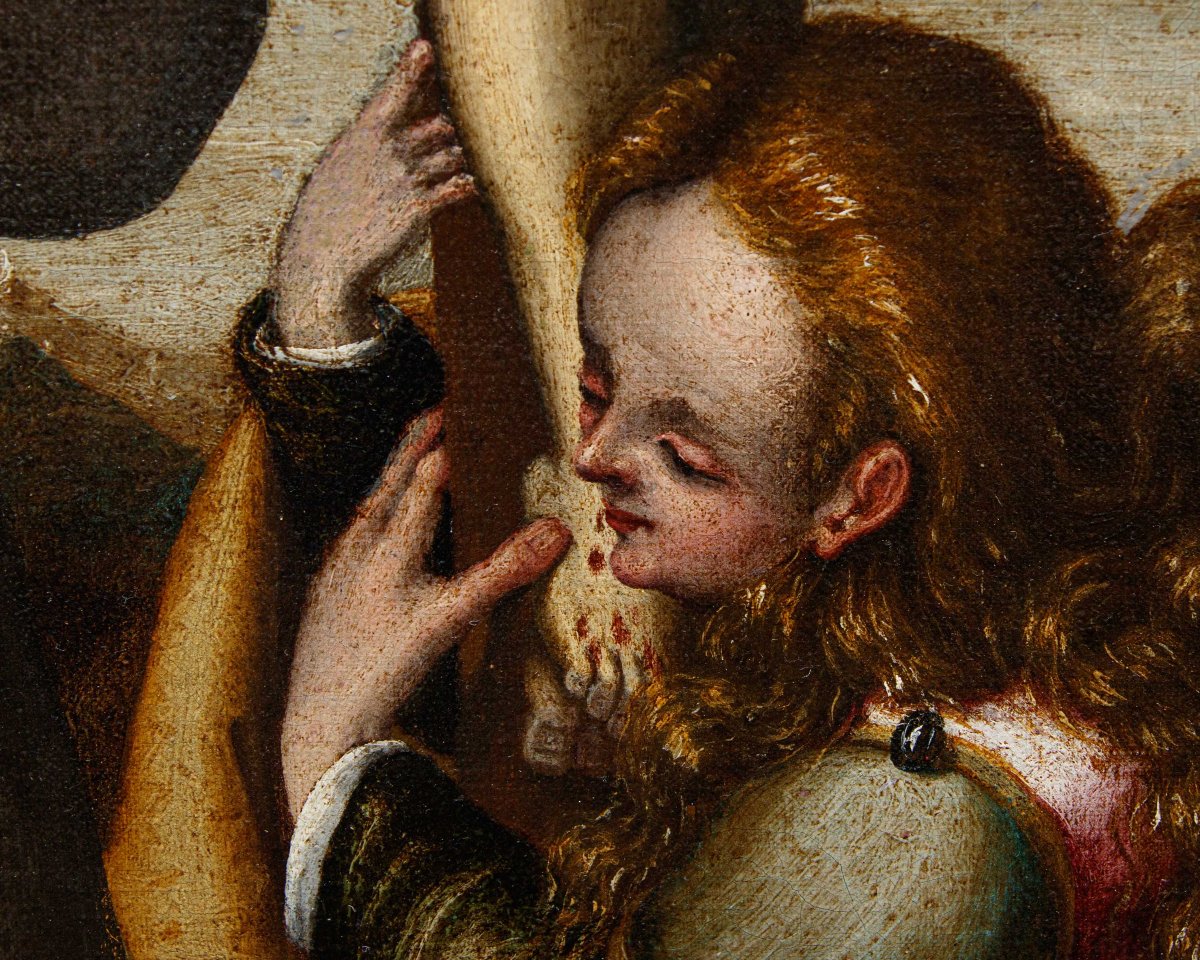
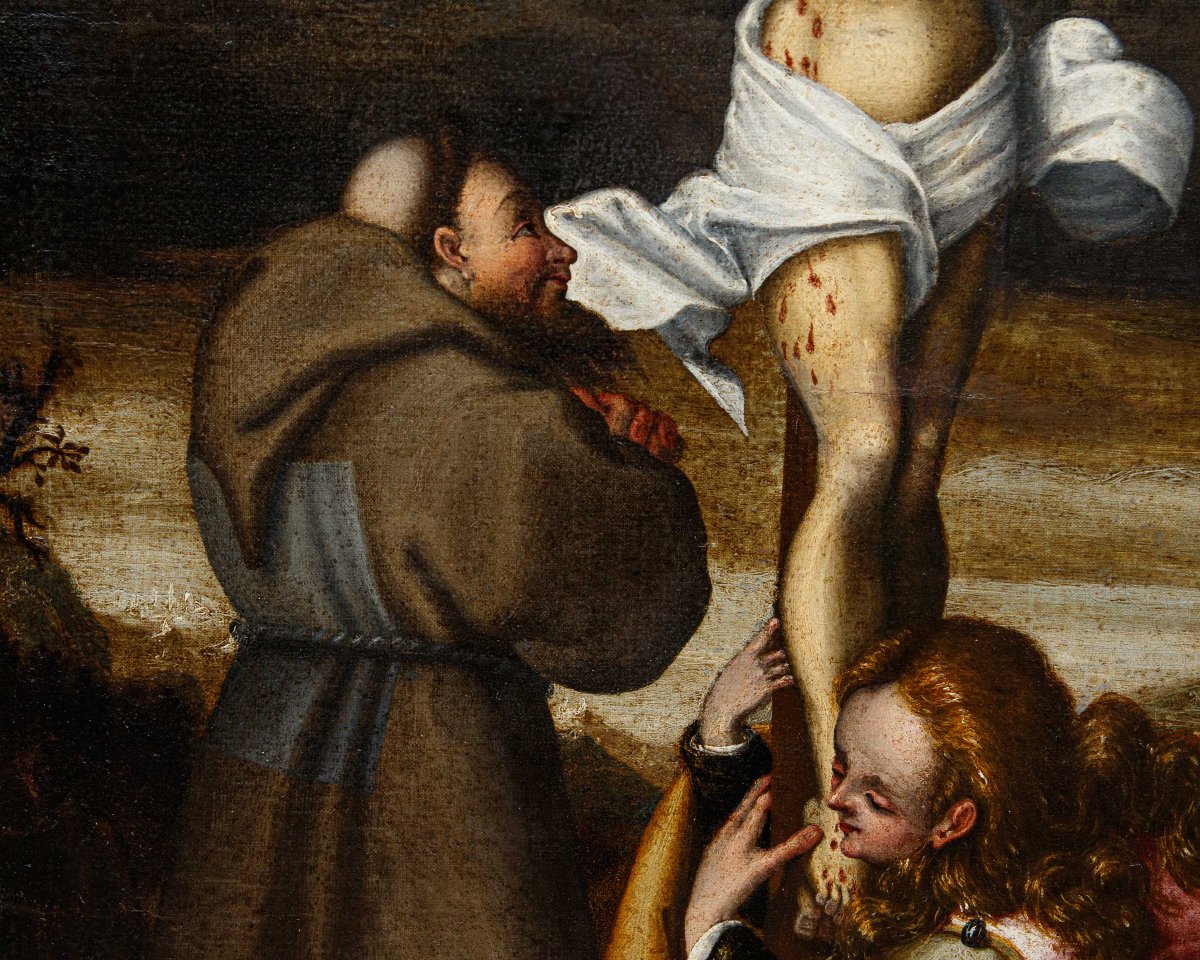
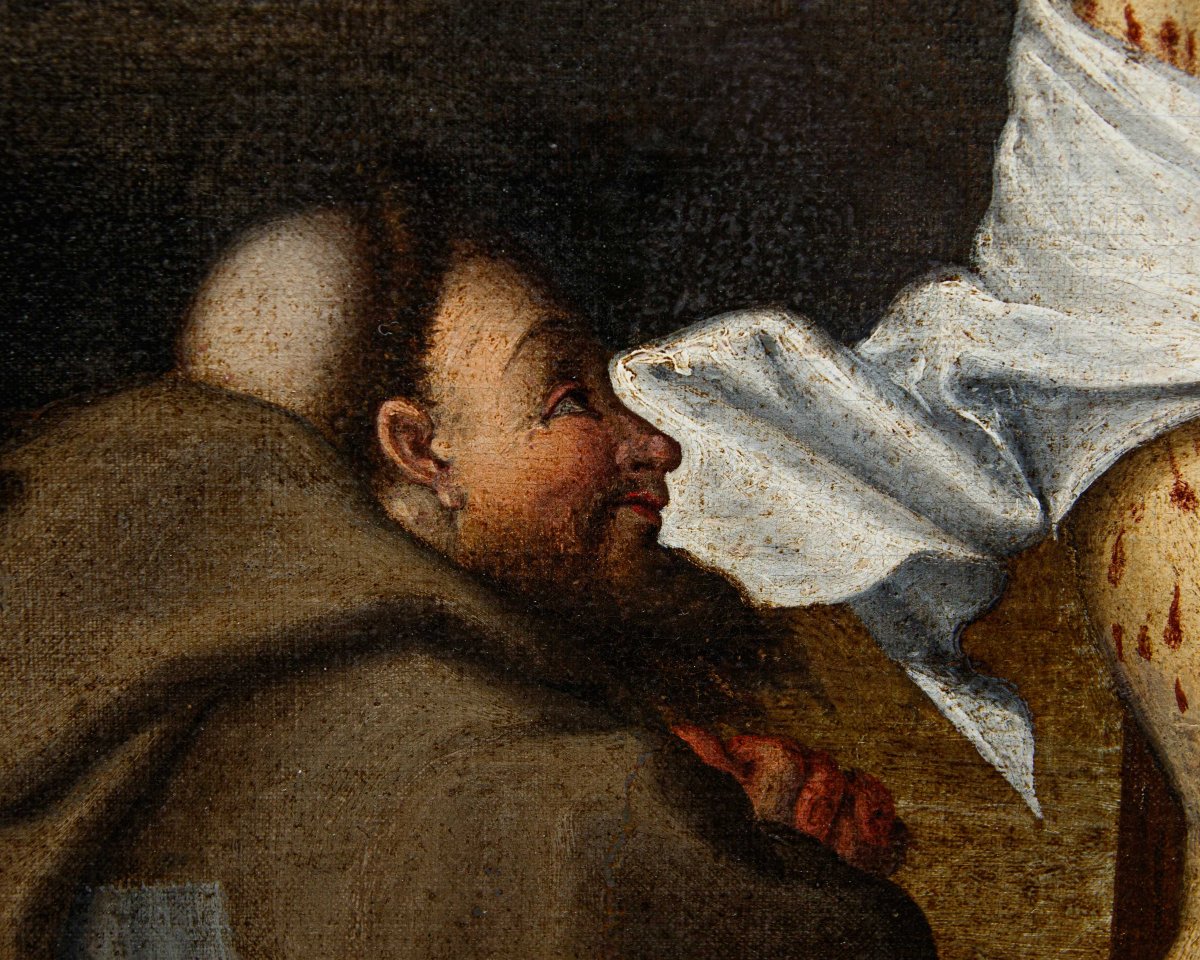
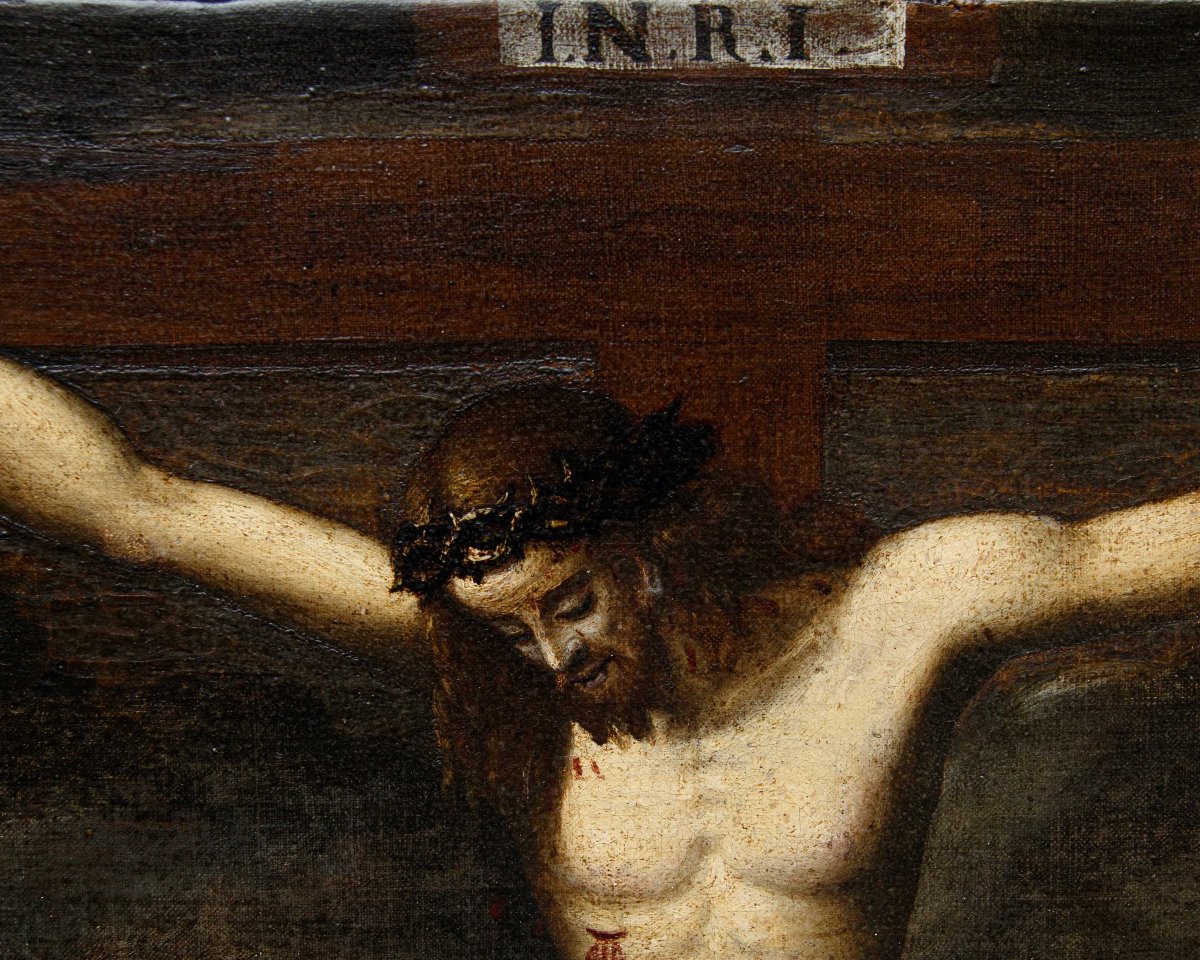
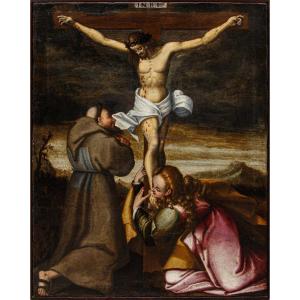


Marcantonio Mainardi (cremona, C. 1570 – 1629), *crucifixion With Mary Magdalene And Saint Francis*
Marcantonio Mainardi (Cremona, c. 1570 – 1629)
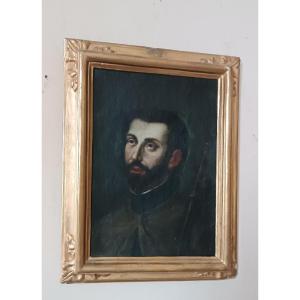
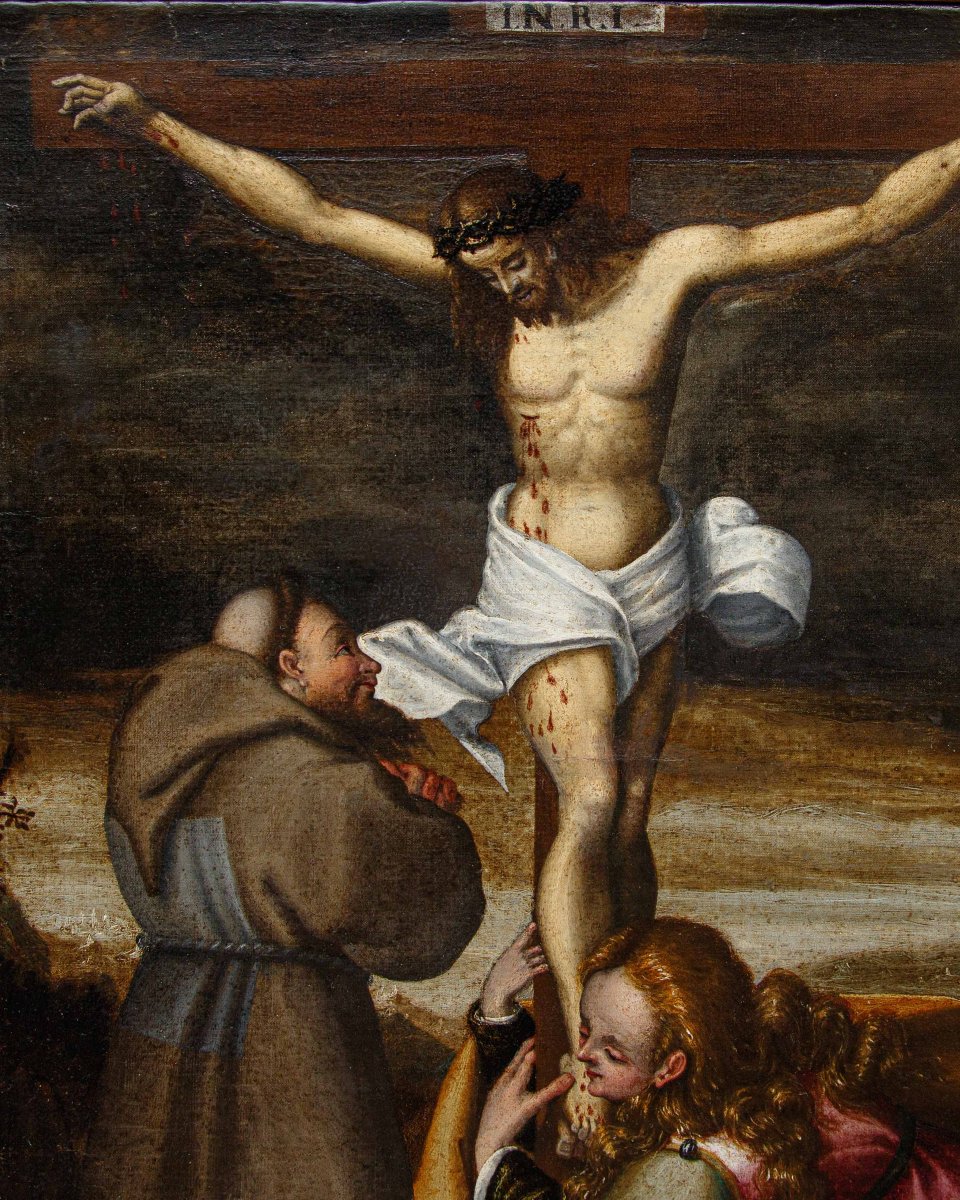
Crucifixion with Mary Magdalene and a Franciscan Saint
oil on canvas, 73 x 57 cm – with frame, 90.5 x 74 cm
Critical Analysis by Prof. Alberto Crispo
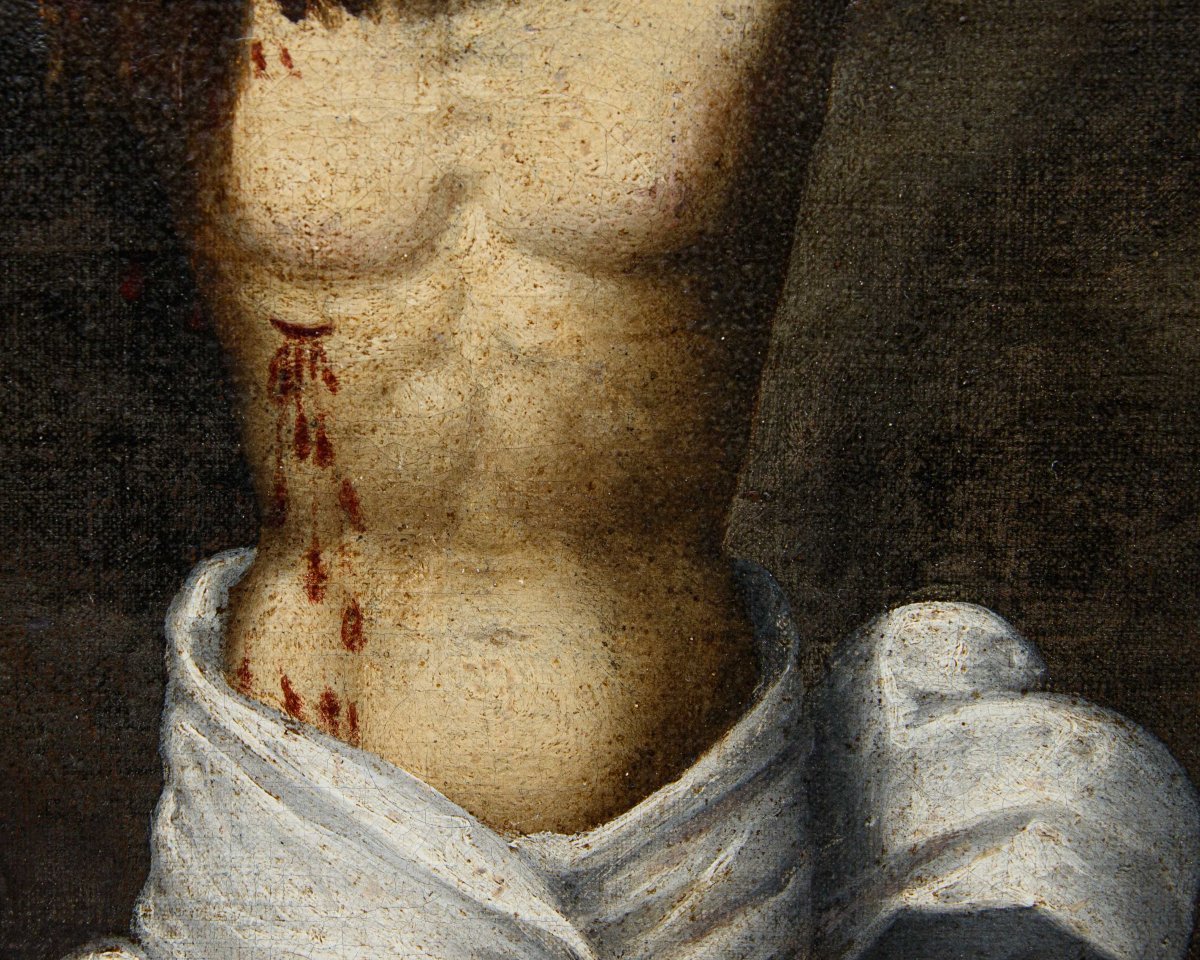
The painting in question represents a previously unpublished example of Cremonese painting from the late 16th to the early 17th century. Although the painting exhibits stylistic characteristics very similar to those of Andrea Mainardi, known as “il Chiaveghino,” an analysis of the brushwork allows us to attribute the work to his nephew Marcantonio Mainardi (Cremona, c. 1570 – 1629). Compared to his uncle’s masterful style, Marcantonio displays here a less subtle execution and a tendency toward more ornate forms. In particular, one notes a sculptural emphasis on the bodies and a schematic approach to the drapery, which are clearly reflected in other works by him, such as the Crucifix and Mary Magdalene in Ospedaletto Lodigiano (painted between 1598 and 1600) and the Madonna "Salus Populi Romani" in Martignana di Po.
Marcantonio Mainardi was born in Cremona, likely around 1570. The son of Francesco Giuseppe and brother of Andrea Mainardi, the young Marcantonio trained with and went to live with his uncle, the painter. His career is documented from 1591 onward and included major commissions such as *St. George and the Dragon* in Casalbuttano (1593) and the decoration of the Hieronymite Abbey in Ospedaletto Lodigiano (1598–1600). In 1610, he painted *The Presentation of the Chasuble to Saint Ildefonso* in Casalmorano, and in 1626, *The Martyrdom of Saint Catherine* in Antegnate. He died in 1629, leaving several unfinished works in Polengo.
The Mainardi family was a pillar of the Cremonese School, serving as the principal heirs and continuators of Bernardino Campi’s artistic legacy. Through Andrea’s apprenticeship with Campi, the Mainardi workshop was able to bridge the elegance of the late Renaissance with the strict demands of the Counter-Reformation. While Bernardino Campi had introduced a Raphael-inspired formal grace, Marcantonio—as this painting demonstrates—developed that approach toward a greater emphasis on volume and a robust plasticity, consolidating a style that remained the benchmark for the region until the first three decades of the 17th century.
Period: 17th century
Style: Other Style
Condition: Good condition
Material: Oil painting
Width: 57
Height: 73
Reference (ID): 1801958
Availability: In stock