THIS OBJECT WAS SOLD
Claude Galle & Piolaine - "the Study Of Astronomy" Clock, Mercury-gilded Bronze, Empire Period
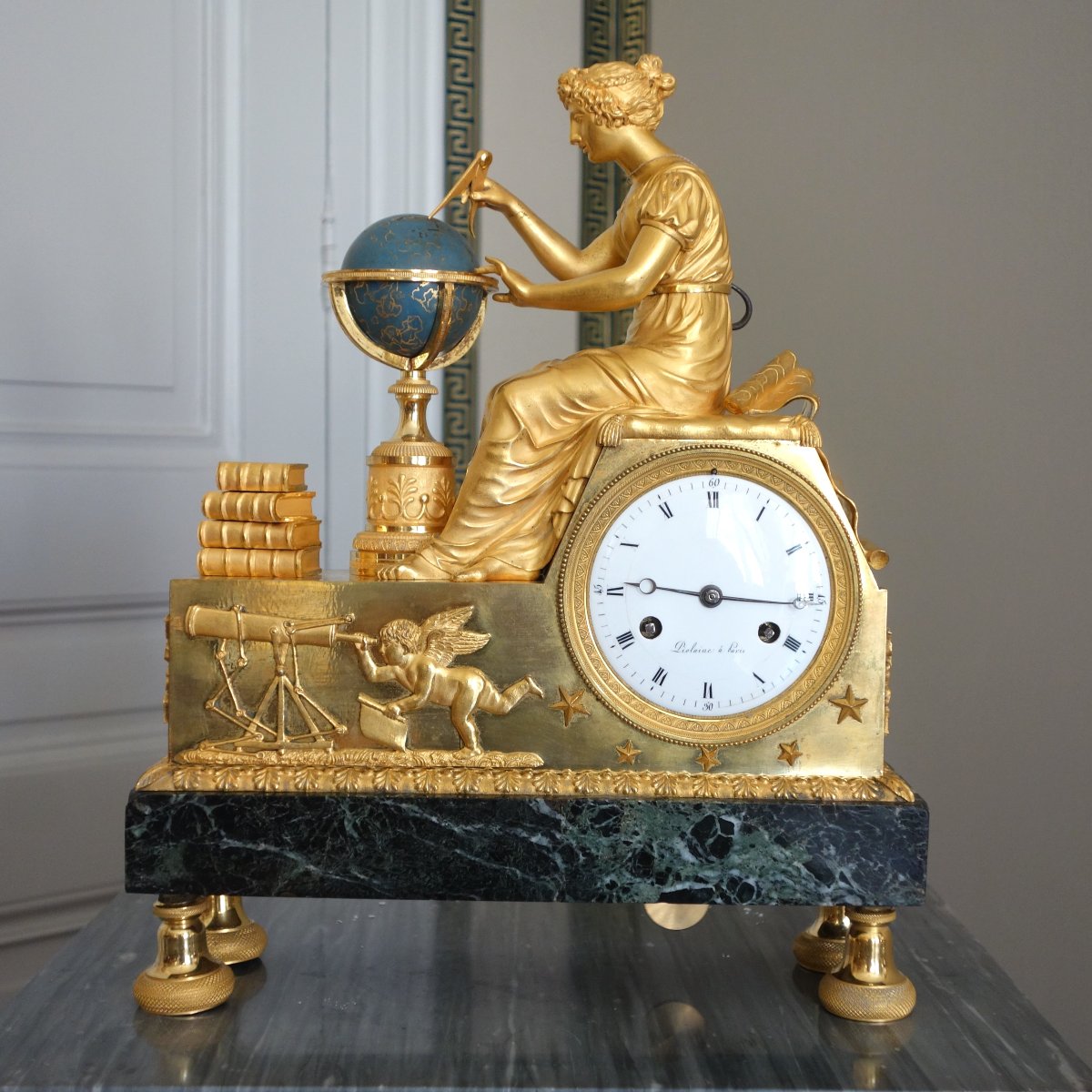
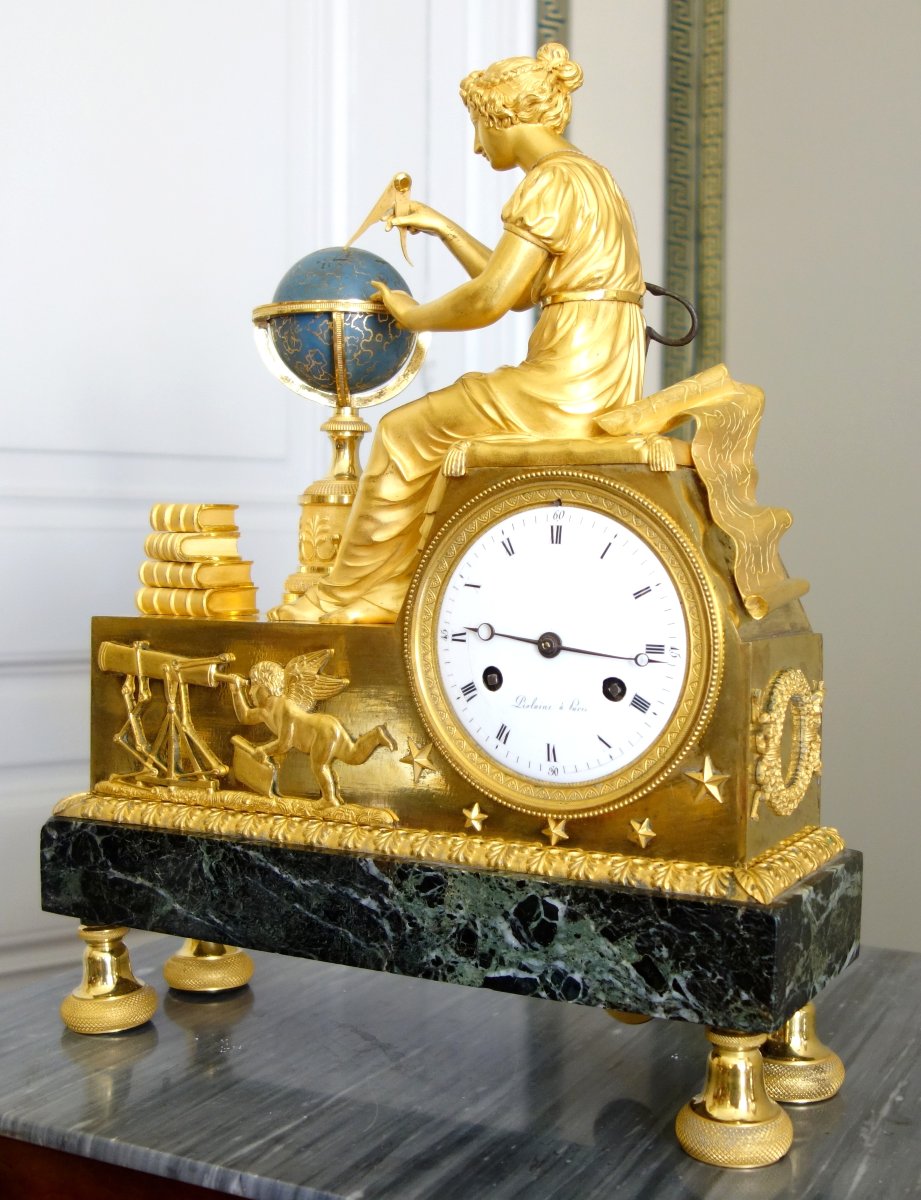
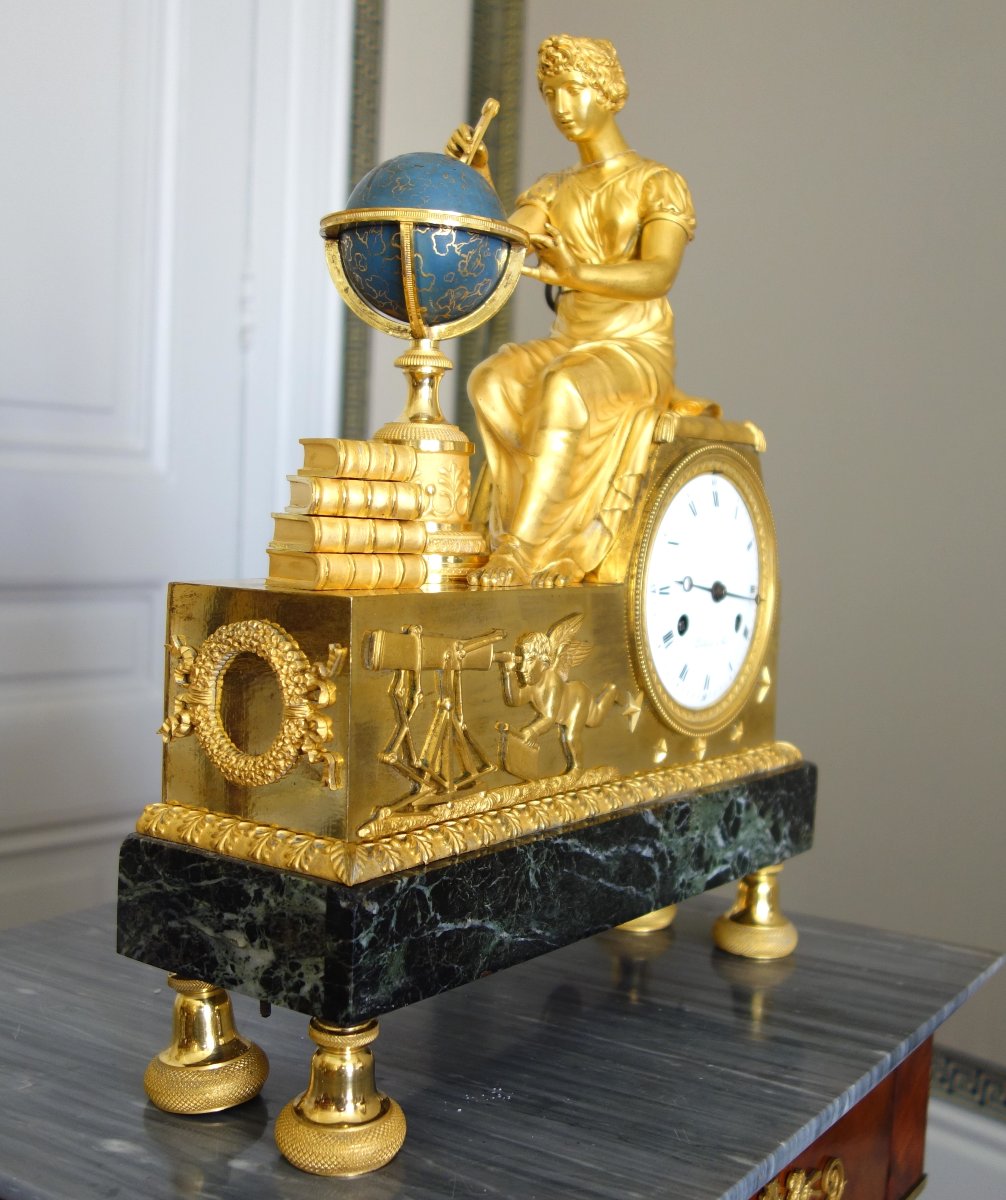
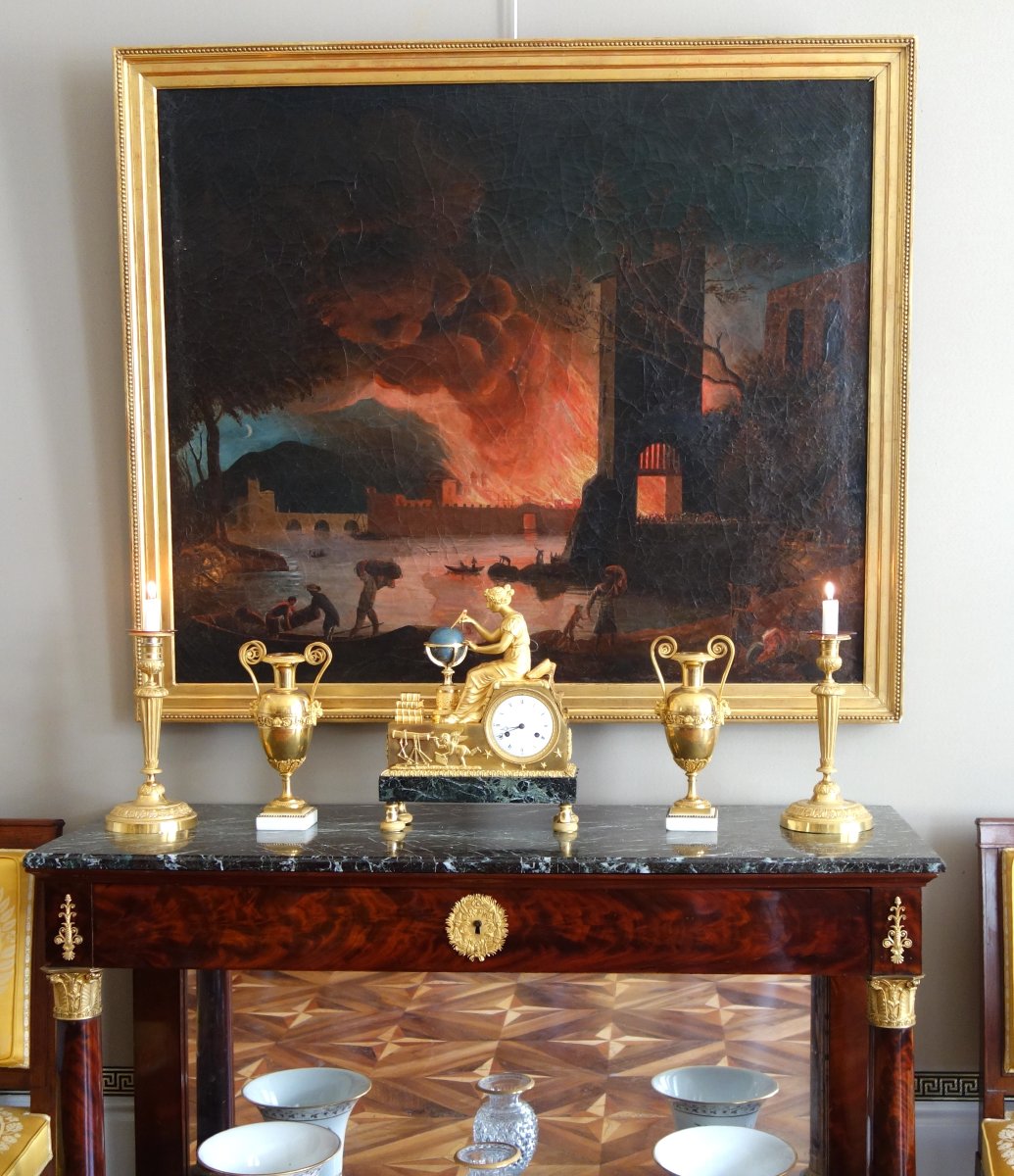


Clock: *The Study of Astronomy*, based on a model by Jean-André Reiche (1752–1817), who deposited this model and registered it at the Imperial Library on February 19, 1805.
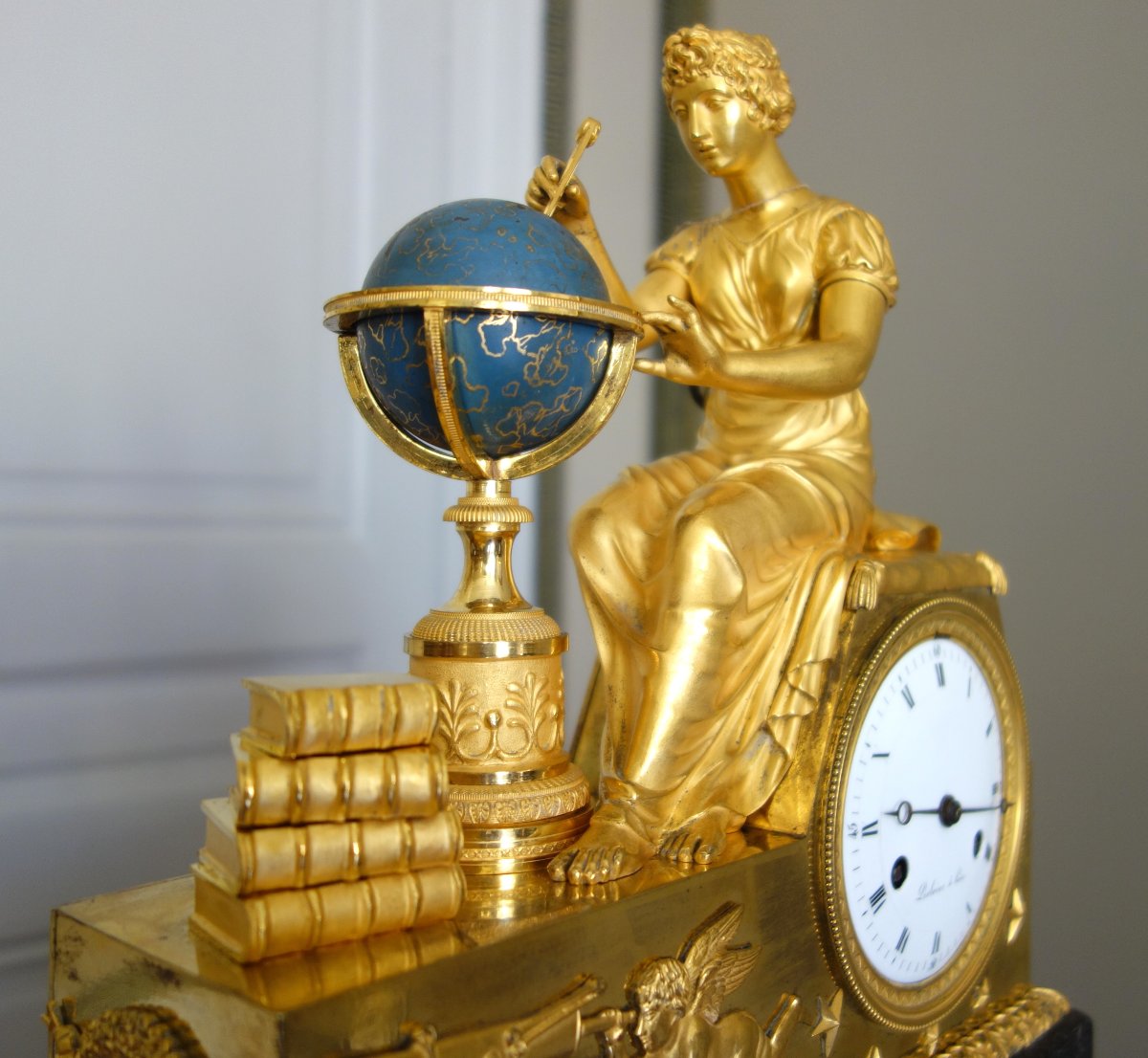
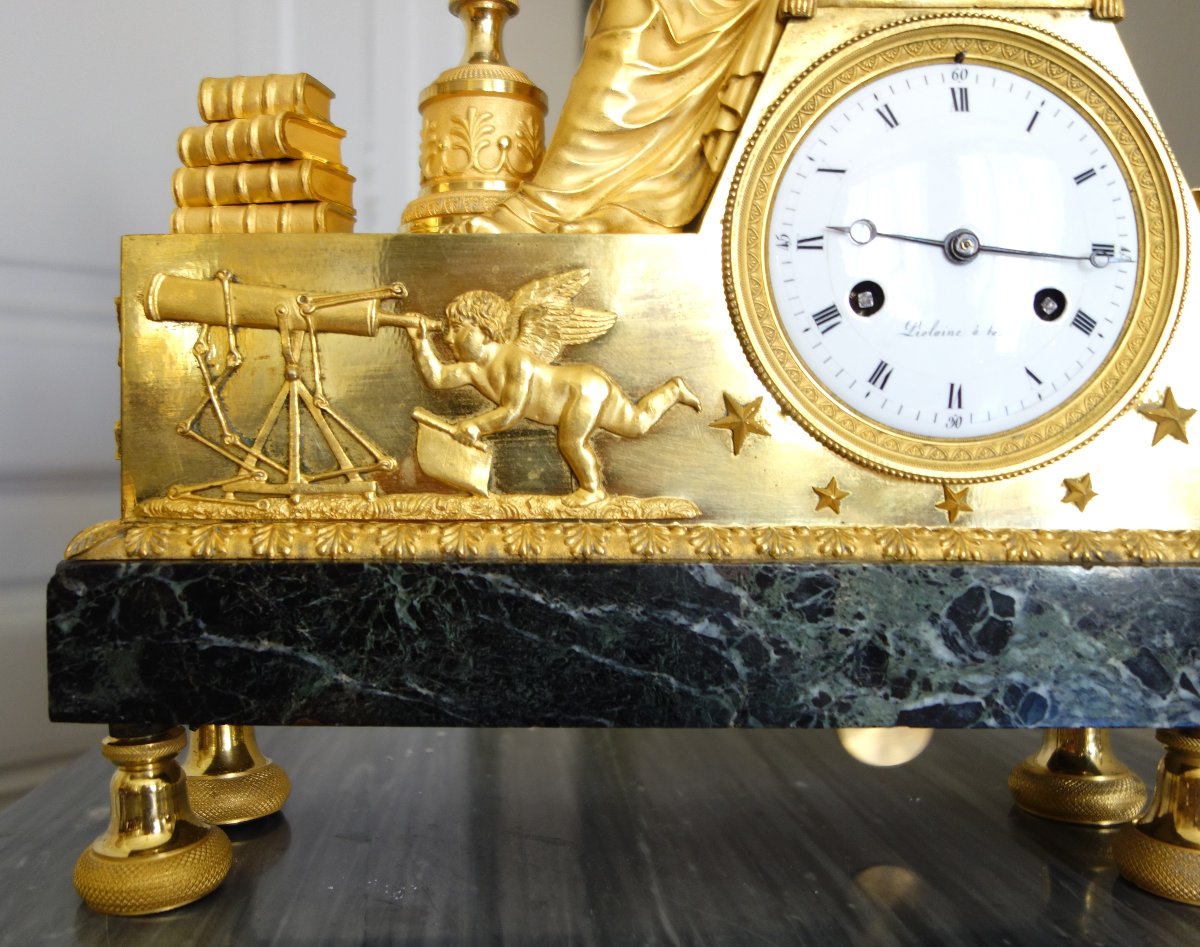
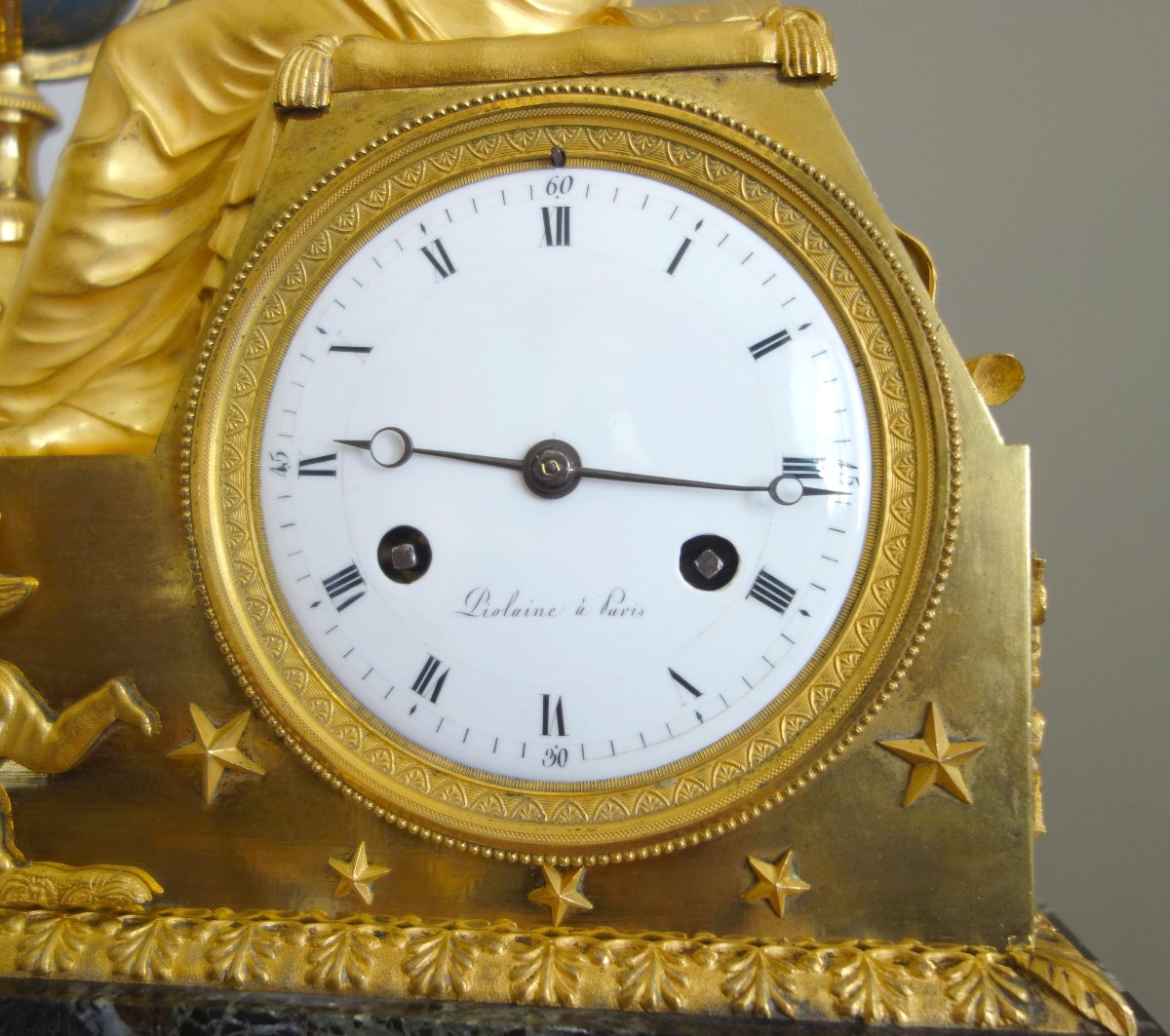
Bronze gilded with mercury in a matte and glossy finish, attributed to Claude Galle—the close collaboration between Reiche and Galle is documented in the archives. The enamel on the dial is signed “Piolaine” in Paris. Suspended by a wire. Early Empire period, circa 1805–1810.
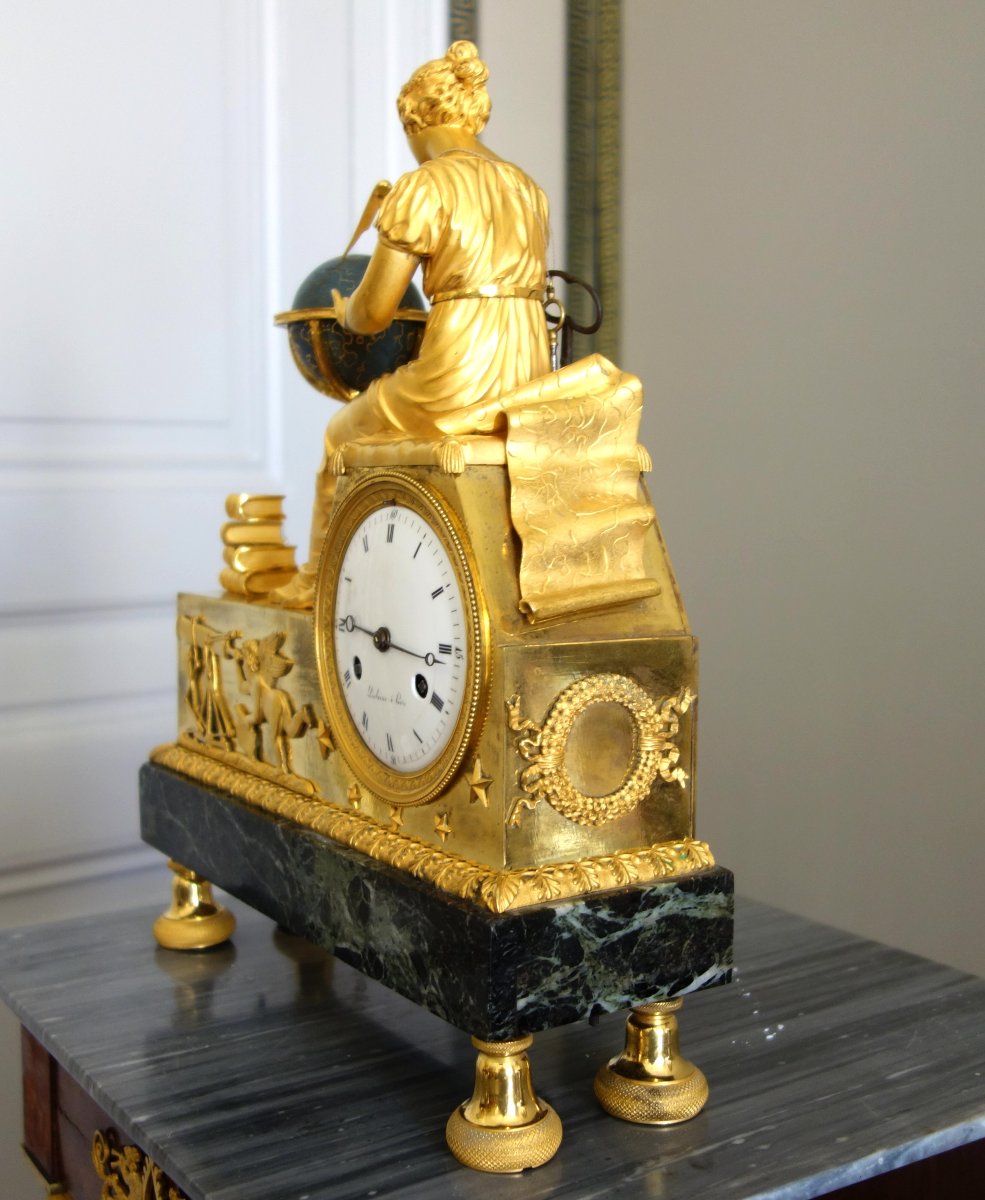
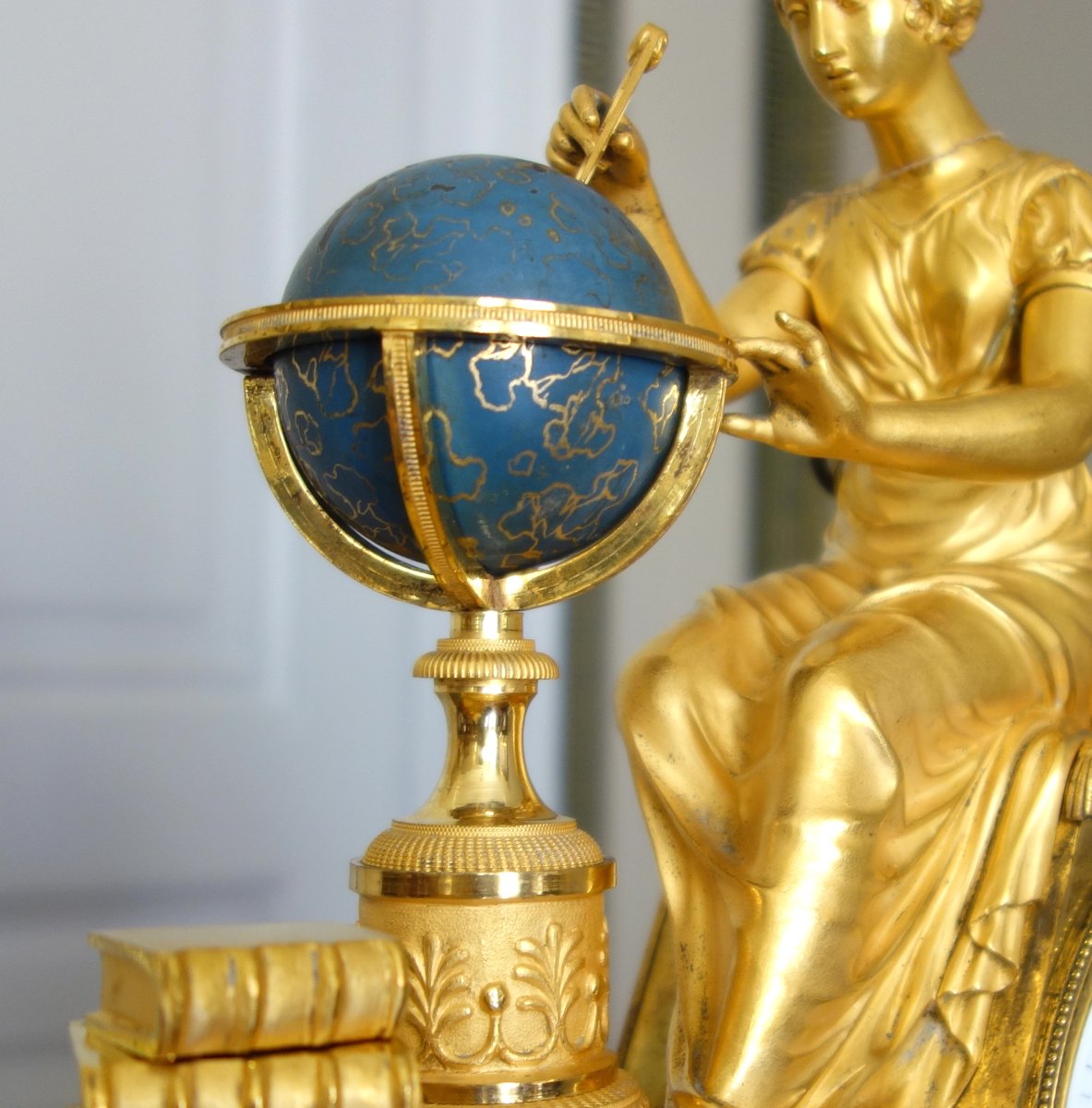
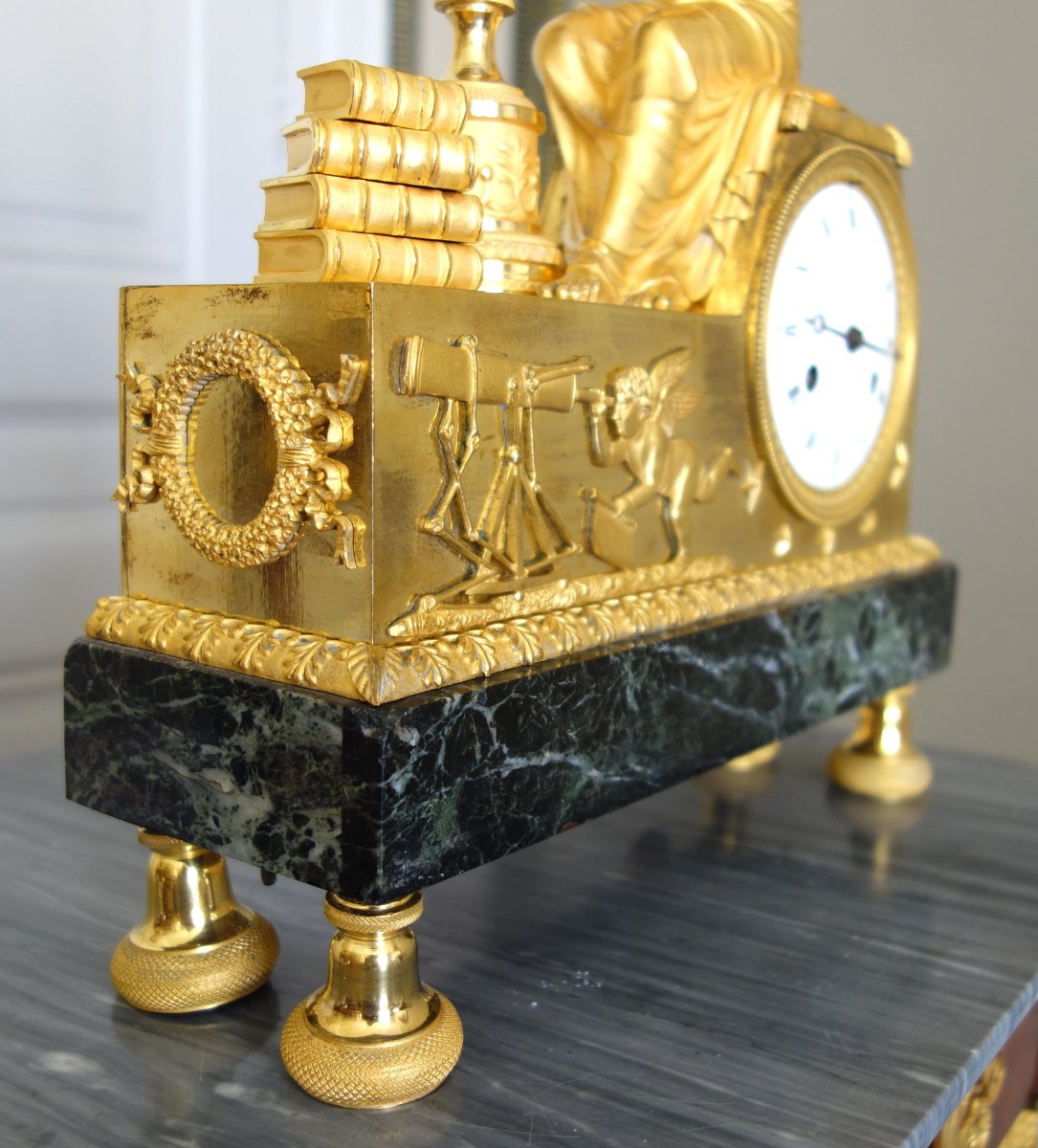
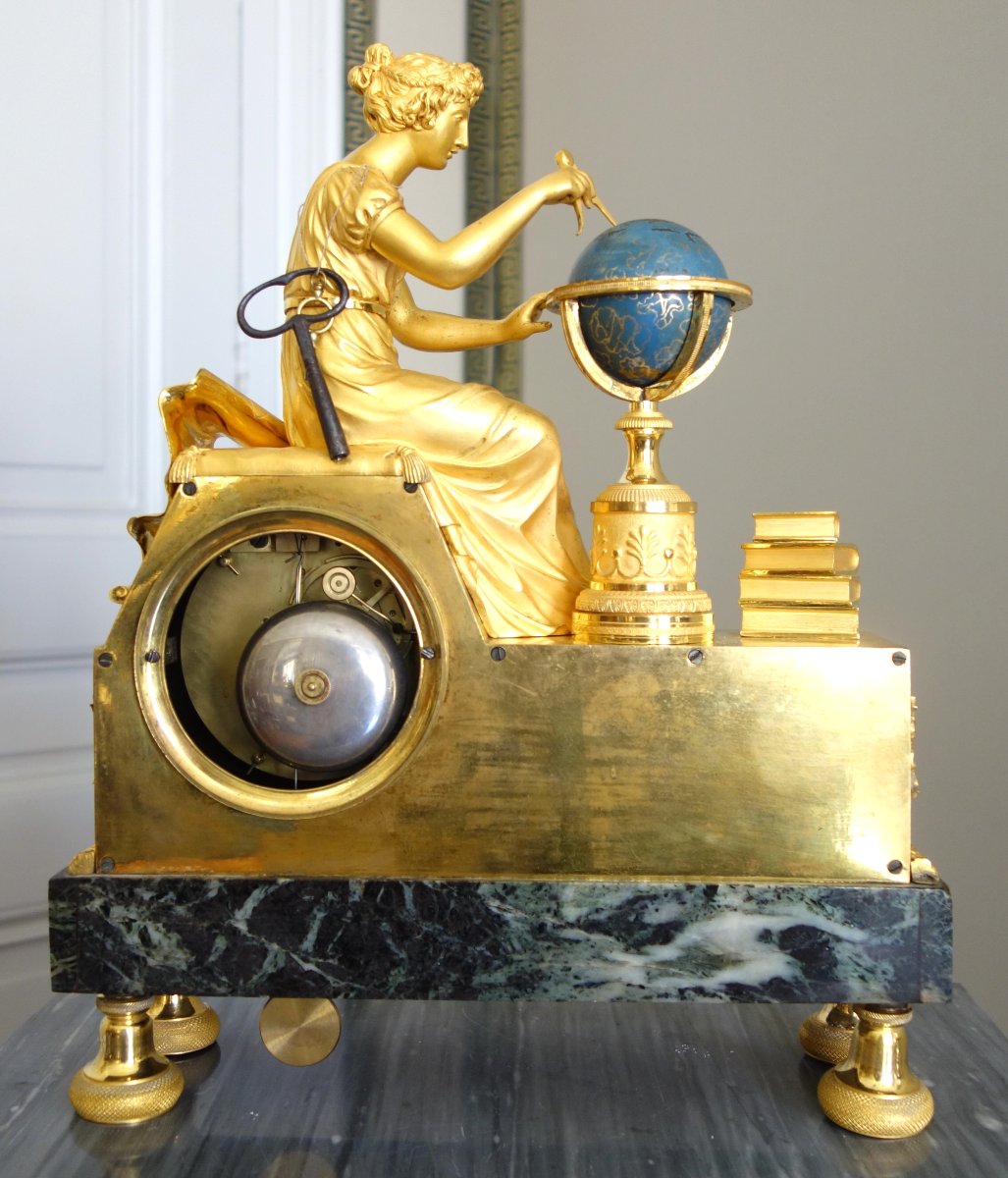
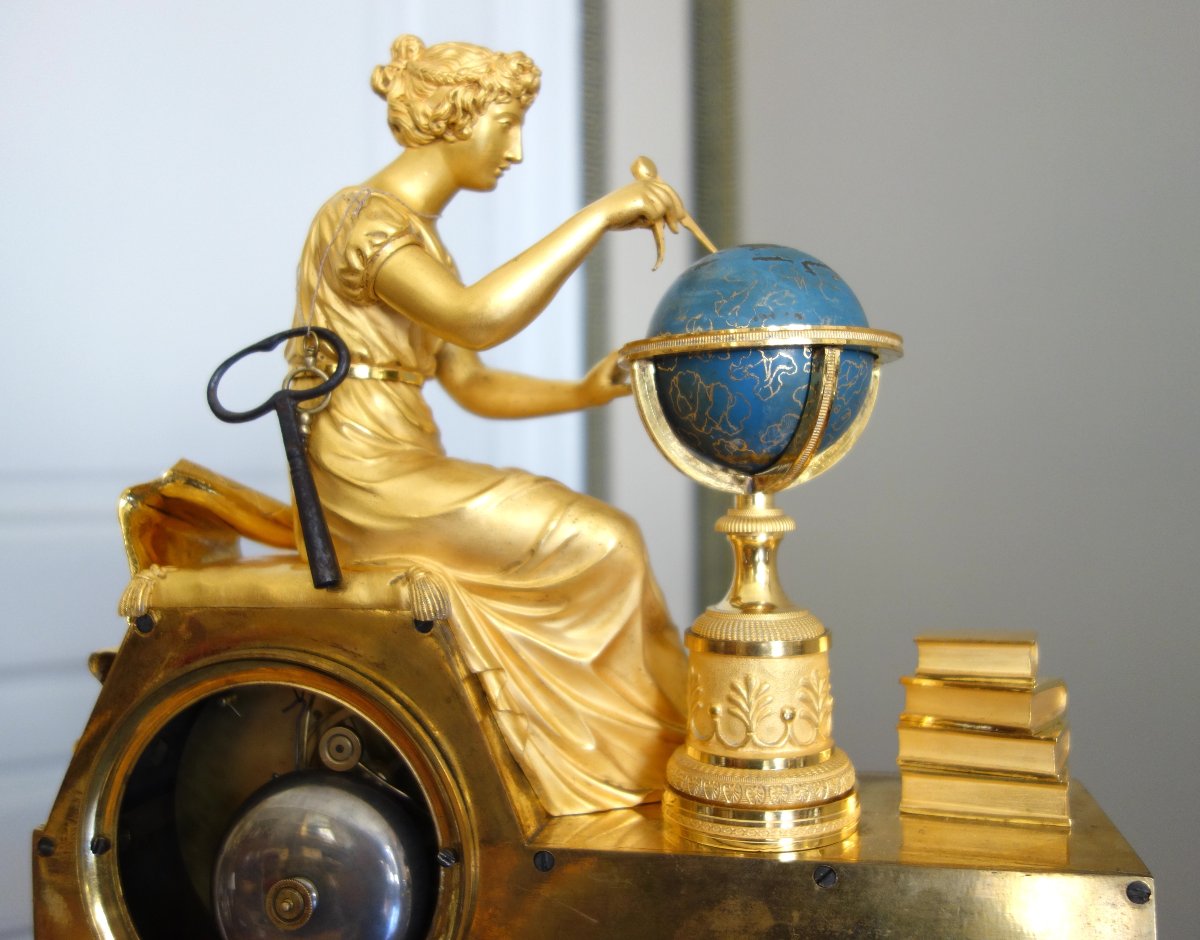
This clock, known as “The Study of Astronomy,” depicts a young woman dressed in the Greek style, seated on a cushion placed on the dial. She holds a compass in her hand, which she rests on a celestial globe. A star chart is unfurled and placed behind her. At the base of the globe lies a stack of books, a symbol of knowledge. On the terrace, a cupid observes the sky through a telescope.
This clock model is based on a drawing by Jean-André Reiche published in a bronze dealer’s sales catalog dated 1806. It enjoyed considerable success because it perfectly embodies the major aesthetic principles of the Empire style, characterized by rigor, wisdom, and moderation. The composition, precision, and care taken in rendering the details—enhanced by the interplay of matte and glossy finishes—are particularly noteworthy. The decoration is appliedto both the front and back of the clock so that the ornate reverse sideis reflected in a mantel mirror.
Claude Galle (1759–1815), a bronze artist and foundryman-engraver, was granted master status in 1786 and worked on Rue Vivienne. He was one of the greatest French bronze artists of the late 18th and early 19th centuries. He supplied the Garde-Meuble de la Couronne under Louis XVI but also, and above all, during the Empire. In particular, he made works for the palaces of Trianon, Fontainebleau, Saint-Cloud, Compiègne, and the Tuileries Palace.
Michel-François Piolaine (Piaulaine), a Parisian clockmaker, became a master craftsman in 1787; he was based on Rue des Écrivains from 1789 to Year VII, then on Rue des Gravilliers until 1810. He ranks among the most important Parisian clockmakers of the late 18th and early 19th centuries.
Note: It is interesting to observe in Claude Galle’s work that certain design elements recur from one candlestick or candelabra model to another. Our clock features the marble base and the palmette frieze from the “Reading Lady” clock, and the astronomer putto also appears on the “Astronomy Lesson” clock, known as the “Double Reading Lady.”
An identical model with a dial also signed by Piolaine is listed in the Russian Imperial Collections (Pavlovsk Palace)
Very good condition; fresh, original mercury gilding in both matte and glossy finisheswith no wear (except for slight marks on the back).Movement serviced by our clockmaker. The clock is in working order and chimes.
Height: 36.7 cm
Length: 30 cm
Bronze gilded with mercury in a matte and glossy finish, attributed to Claude Galle—the close collaboration between Reiche and Galle is documented in the archives. The enamel on the dial is signed “Piolaine” in Paris. Suspended by a wire. Early Empire period, circa 1805–1810.
This clock, known as “The Study of Astronomy,” depicts a young woman dressed in the Greek style, seated on a cushion placed on the dial. She holds a compass in her hand, which she rests on a celestial globe. A star chart is unfurled and placed behind her. At the base of the globe lies a stack of books, a symbol of knowledge. On the terrace, a cupid observes the sky through a telescope.
This clock model is based on a drawing by Jean-André Reiche published in a bronze dealer’s sales catalog dated 1806. It enjoyed considerable success because it perfectly embodies the major aesthetic principles of the Empire style, characterized by rigor, wisdom, and moderation. The composition, precision, and care taken in rendering the details—enhanced by the interplay of matte and glossy finishes—are particularly noteworthy. The decoration is appliedto both the front and back of the clock so that the ornate reverse sideis reflected in a mantel mirror.
Claude Galle (1759–1815), a bronze artist and foundryman-engraver, was granted master status in 1786 and worked on Rue Vivienne. He was one of the greatest French bronze artists of the late 18th and early 19th centuries. He supplied the Garde-Meuble de la Couronne under Louis XVI but also, and above all, during the Empire. In particular, he made works for the palaces of Trianon, Fontainebleau, Saint-Cloud, Compiègne, and the Tuileries Palace.
Michel-François Piolaine (Piaulaine), a Parisian clockmaker, became a master craftsman in 1787; he was based on Rue des Écrivains from 1789 to Year VII, then on Rue des Gravilliers until 1810. He ranks among the most important Parisian clockmakers of the late 18th and early 19th centuries.
Note: It is interesting to observe in Claude Galle’s work that certain design elements recur from one candlestick or candelabra model to another. Our clock features the marble base and the palmette frieze from the “Reading Lady” clock, and the astronomer putto also appears on the “Astronomy Lesson” clock, known as the “Double Reading Lady.”
An identical model with a dial also signed by Piolaine is listed in the Russian Imperial Collections (Pavlovsk Palace)
Very good condition; fresh, original mercury gilding in both matte and glossy finisheswith no wear (except for slight marks on the back).Movement serviced by our clockmaker. The clock is in working order and chimes.
Height: 36.7 cm
Length: 30 cm
Explore similar pieces and discover your ideal find:
Mantel Clocks