



Sculpture - Mare And Foal , Christophe Fratin (1801–1864) - Bronze
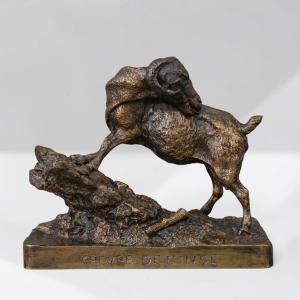
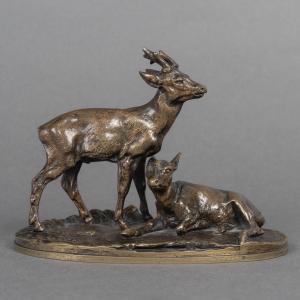
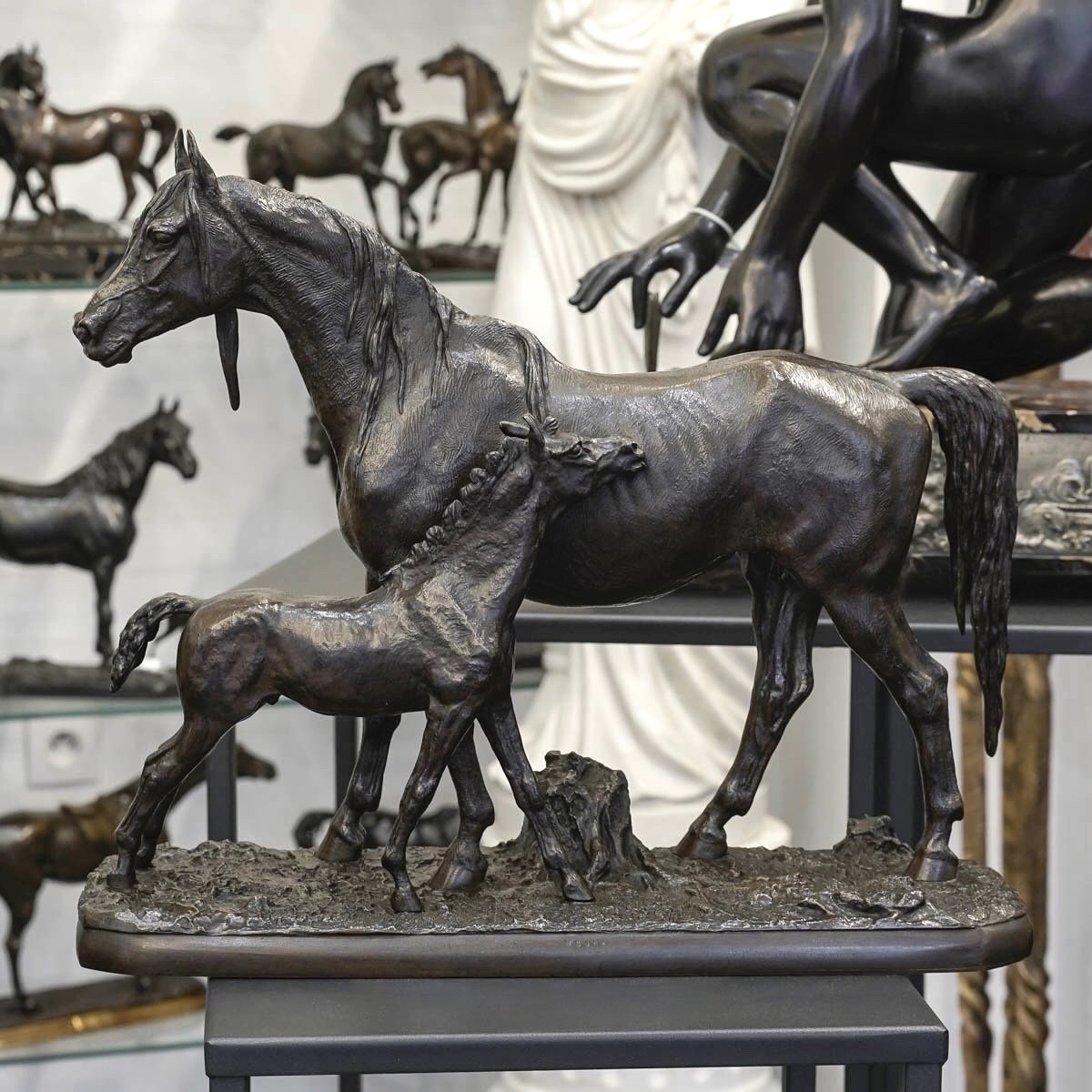
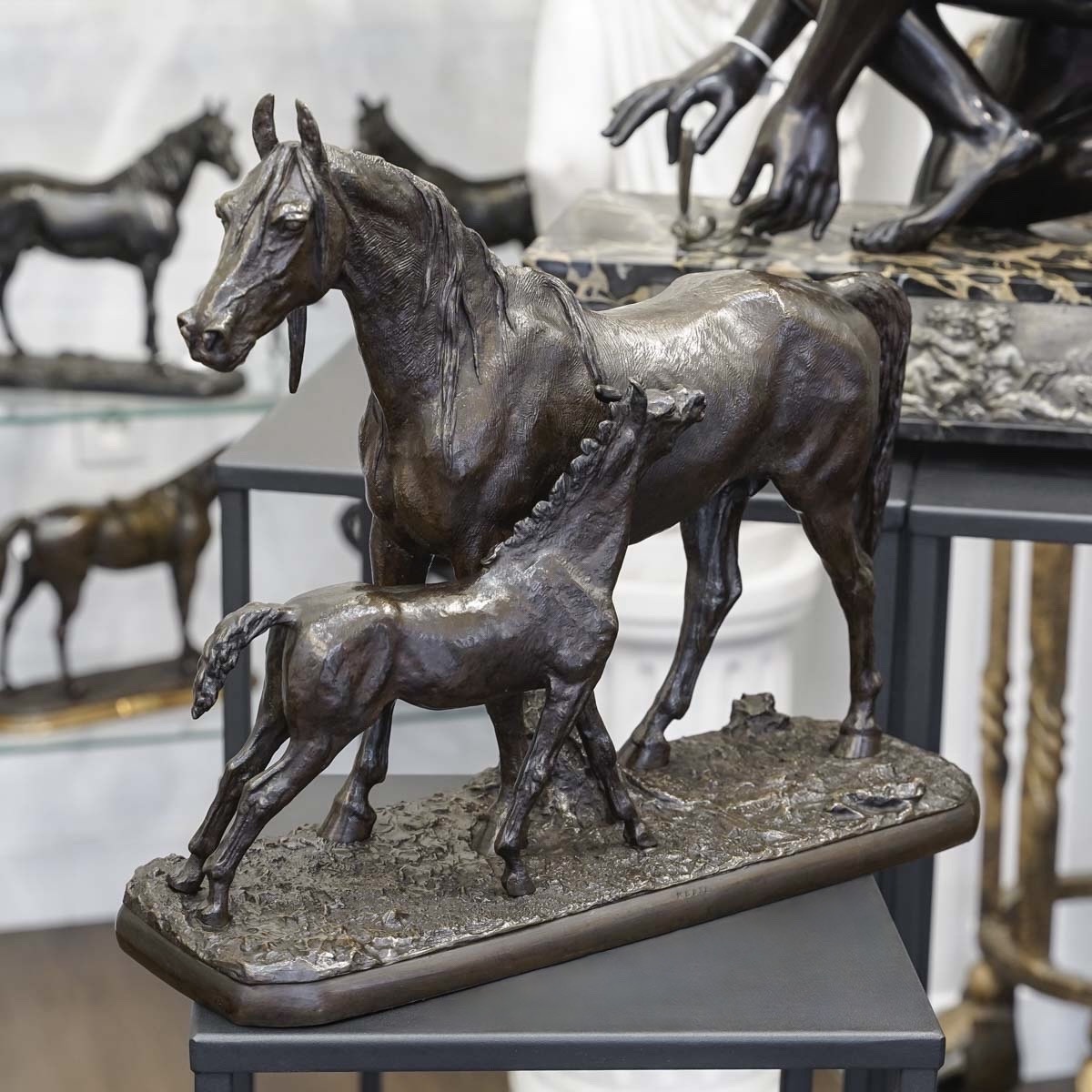
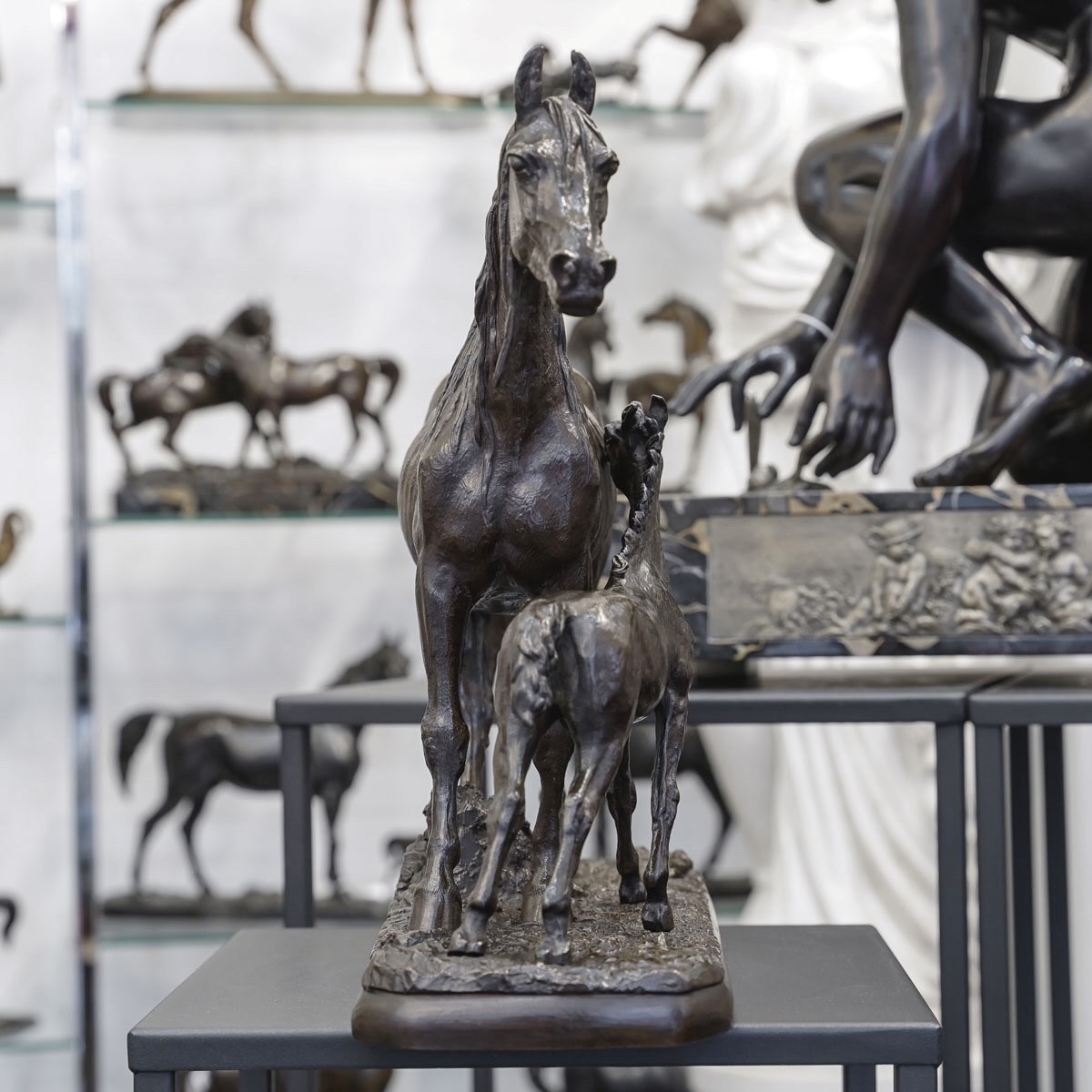
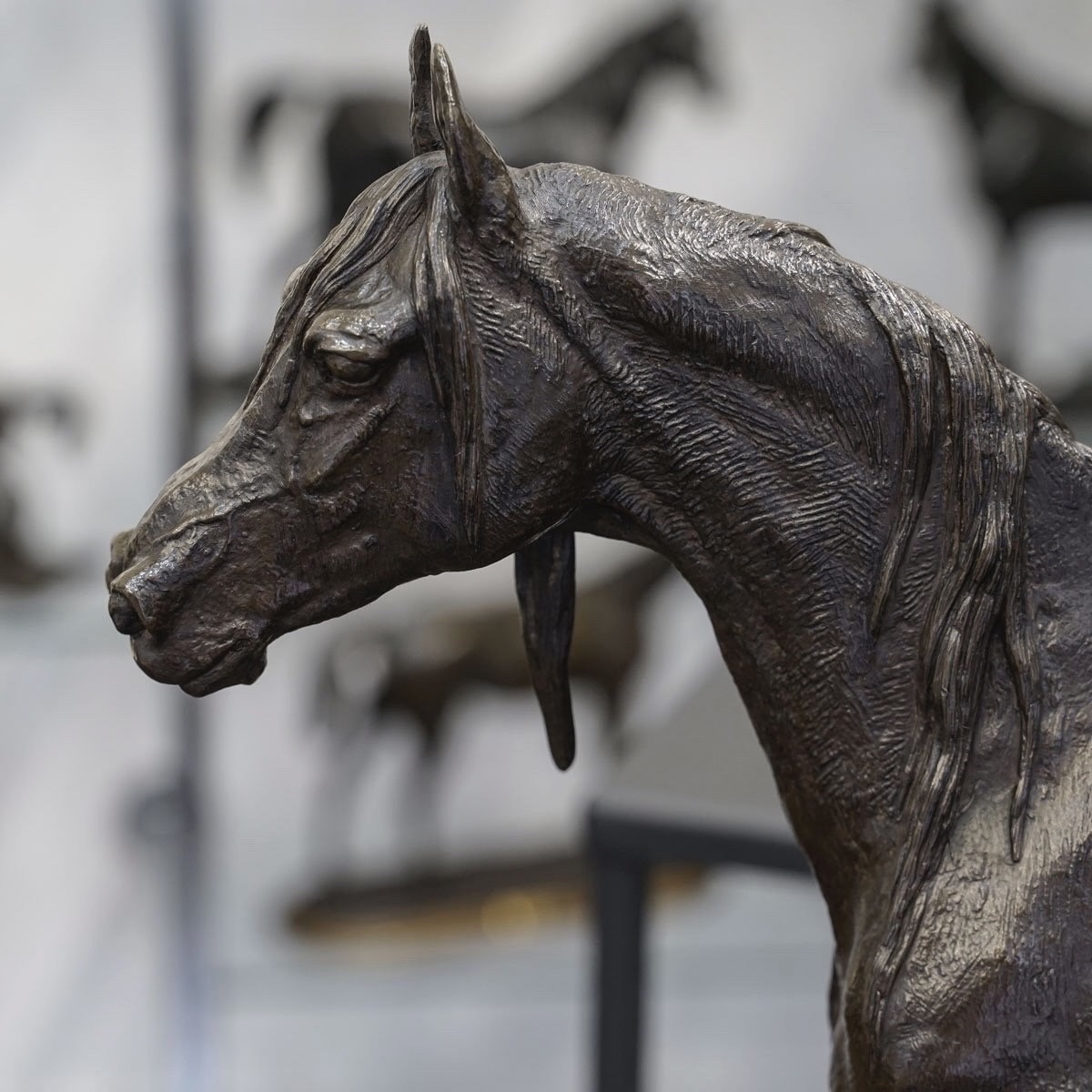
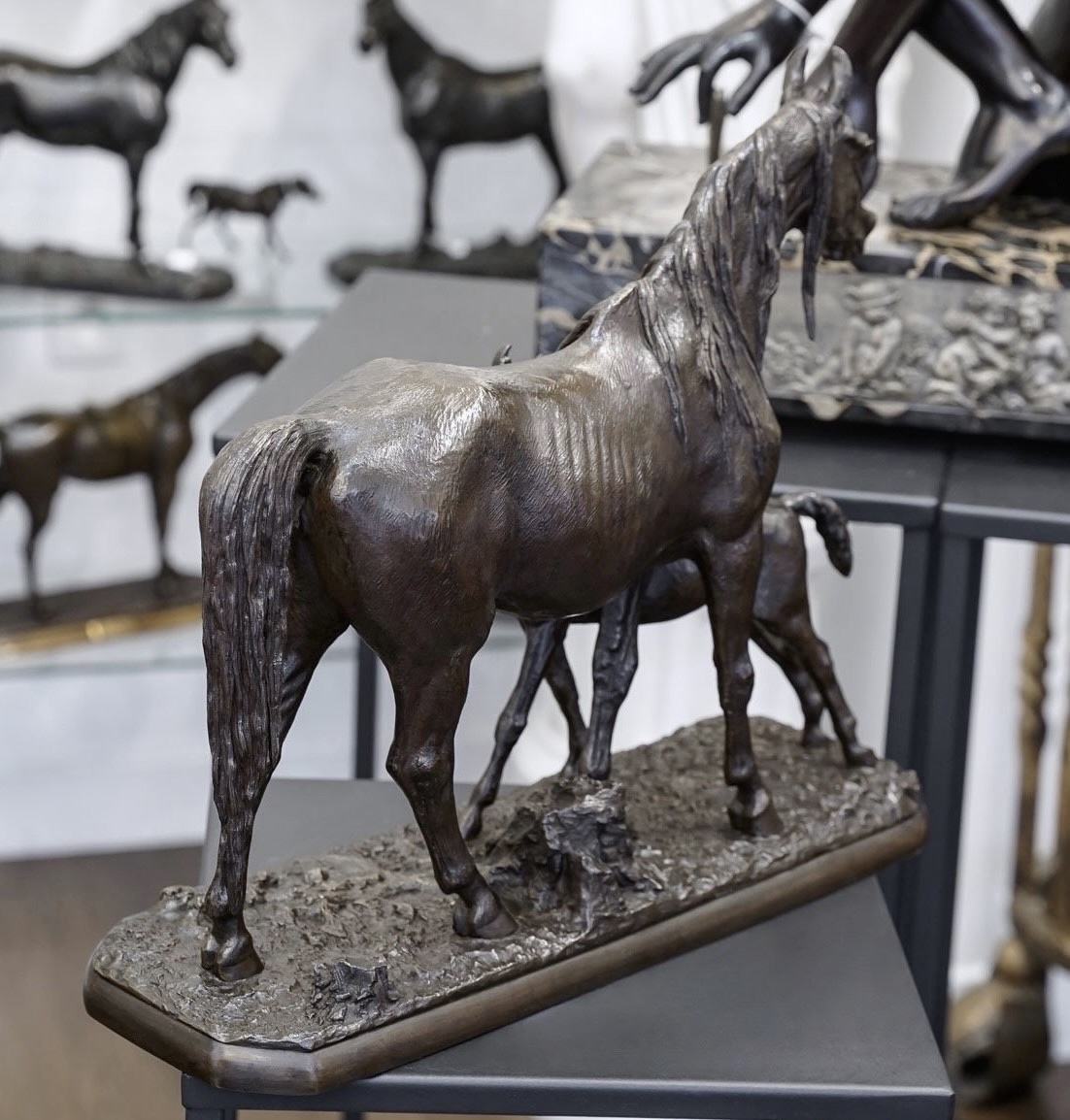
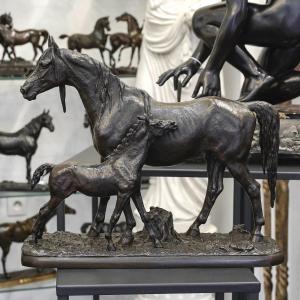
Important bronze group with brown patina , featuring "The Broodmare" , an emblematic work by the sculptor , Christophe Fratin (1801-1864) .
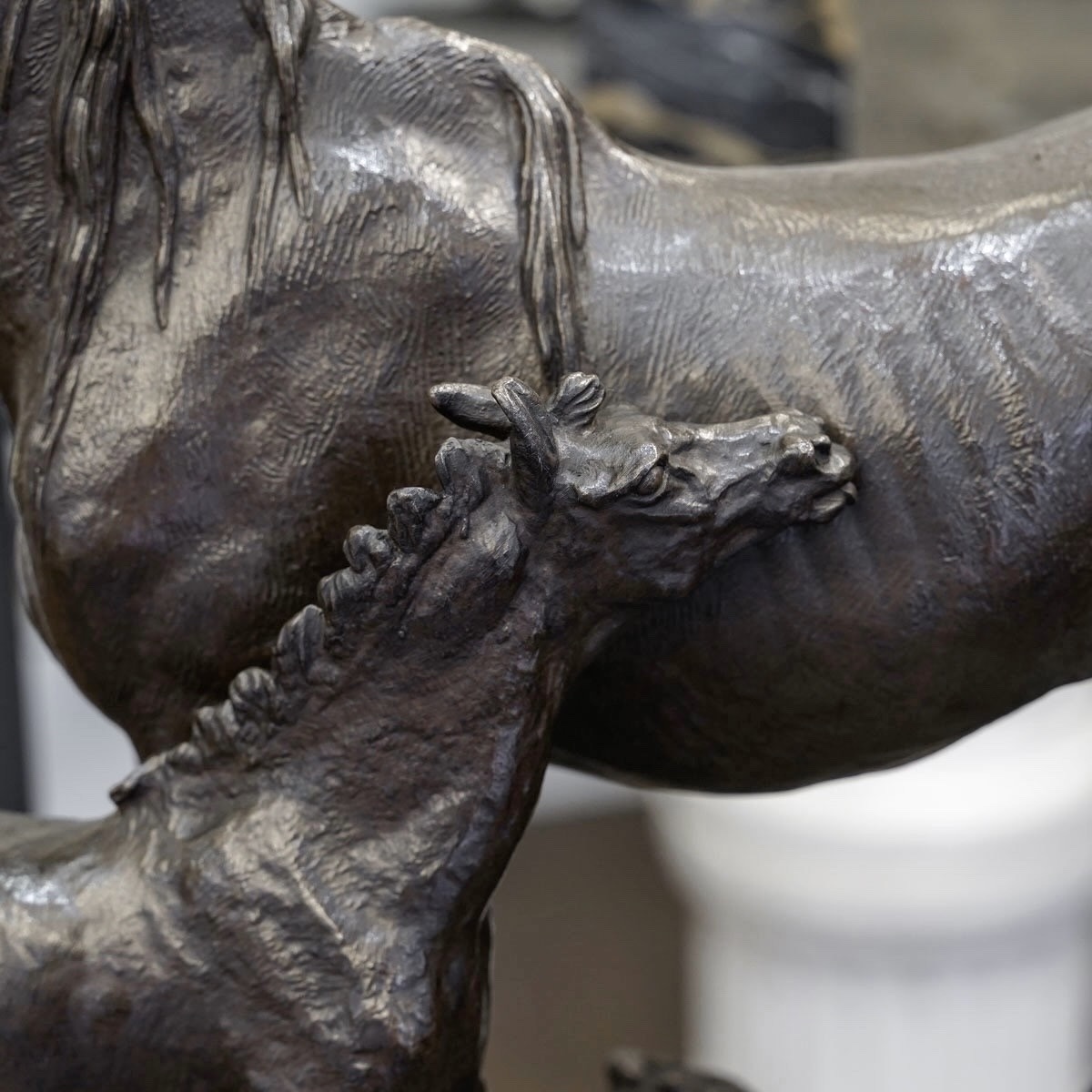
This group features a mare and her foal , illustrating both the maternal tenderness and the power of the animal .
Romanticism is evident in his subjects , in which the horse plays an important role .
The work bears witness to the growing infatuation with the realistic representation of animals during this period , and positions the sculptor as a precursor in the field of animal sculpture .
Fine details and expressions contribute to making this composition lively and expressive .
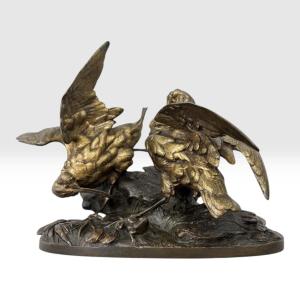
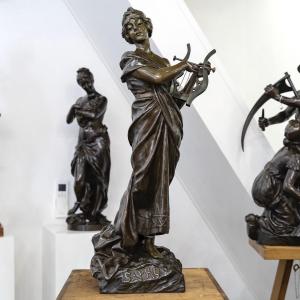
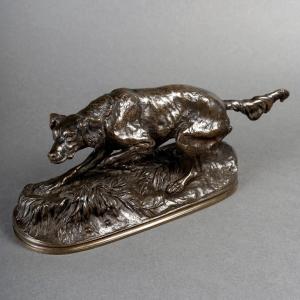
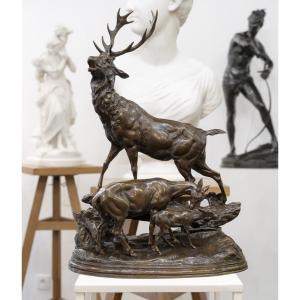
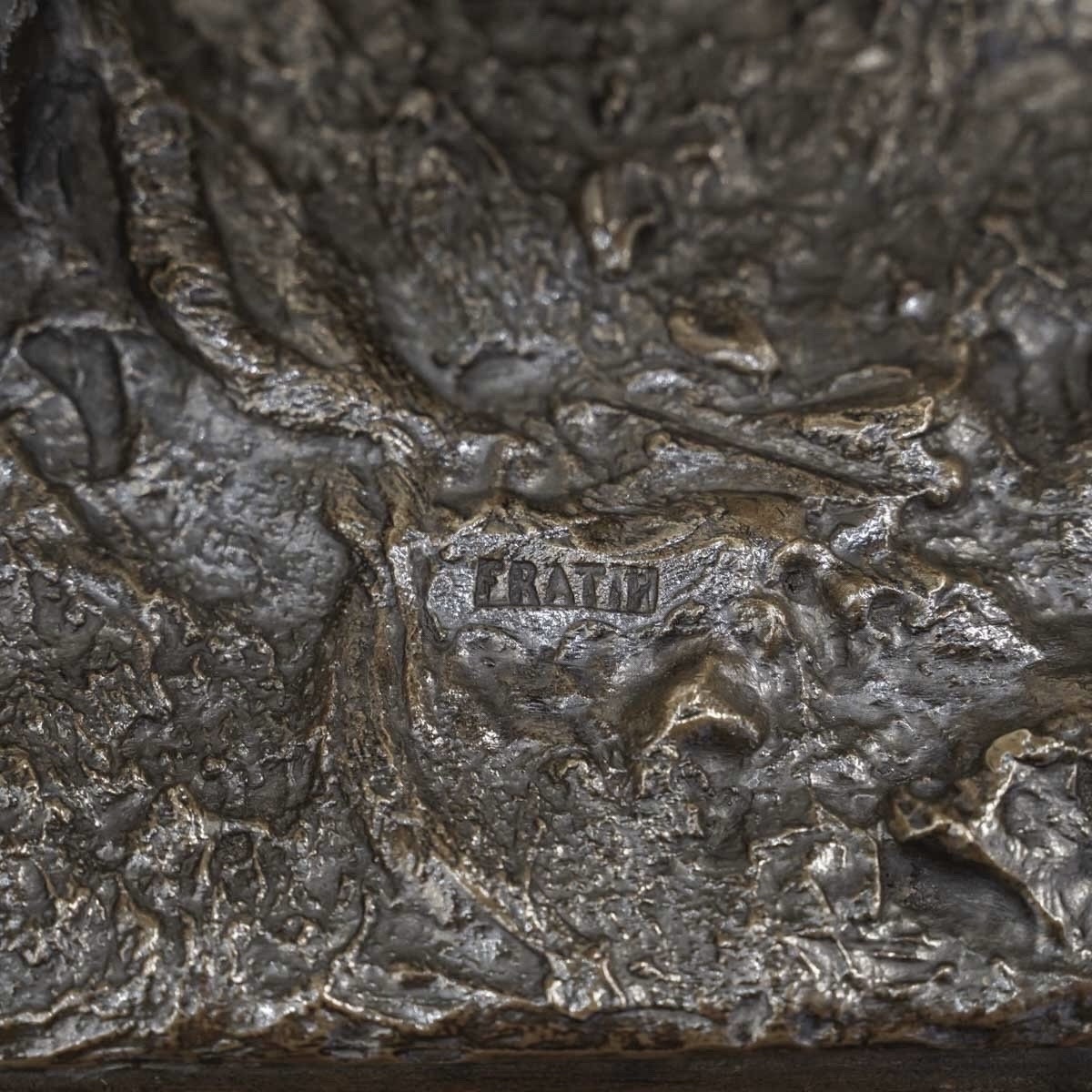
Group resting on a naturalistic terrace , richly chased and treed , bearing the sculptor's signature "FRATIN".
Bronze titled "MÉDÉE" , on the front of the terrace .
Sculpture dating from the second part of the XIX th century , circa 1860 .
Perfect state of preservation and patina .
Dimensions: 36 cm x 43 cm x 15 cm
Christophe Fratin (1801 - 1864)
Christophe Fratin was a French sculptor , pioneer of the animal style , he is presented as "the formidable rival" of Antoine-Louis Barye , in the representation of animals .
The sculptor began his apprenticeship at the Art School in Metz .
He was a pupil of Carle Vernet and Theodore Gericault in Paris .
From 1831 , he exhibited regularly at the Salon .
The sculptor's repeated successes at the Salons of 1834 , 1835 and 1836 aroused the interest of the aristocracy .
Christophe Fratin stood out from other sculptors of his time for his eagerness to create models , and his ability to provide large-scale works .
His works were exhibited at Susse House , which ran a store Passage of Panoramas in Paris , where they were then offered in plaster .
It was really in 1835 that Fratin's bronze editions began .
His bronzes were produced using the sand casting technique and in variable dimensions .
He was one of the first , if not the first , to engage in edition sculpture .
Christophe Fratin's audience quickly became international .
He left for England between 1833 and 1834 .
Throughout his career , the interest of his English clientele never waned .
The artist also produced large-scale Romantic groups in Germany , in Potsdam , at the castles of Sans-Souci and Babelsberg , where some are still preserved .
This tireless worker even exported his works as far as St. Petersburg , where they decorated the Park of the Russian Emperor.
Romanticism is evident in his subjects , where the horse plays an important role .
In 1837, the Salon became hostile to the young Romantic generation , and C.Fratin's participation was reduced to his "The Broodmare" .
The sculptor then concentrated on editions and the realization of small commercial models .
In 1862 , he carried out his last commission by ministerial decision , "Goat and Kid" .
He also took part in various exhibitions , such as the Exposition of the Society of Friends of the Arts in Bordeaux , Metz World's Fair , under the patronage of the Empress in 1861 , and the 1862 Universal Exhibition in London .
Today , Christophe Fratin's sculptures can be found in the permanent collections of the Louvre , and Museums in Metz , Lyon , Strasbourg and Nîmes ...
Christophe Fratin died on August 17, 1864 , in Raincy .
He is buried in the Montmartre cemetery.
Period: 19th century
Style: Napoleon 3rd
Condition: Perfect condition
Material: Bronze
Length: 43 cm
Height: 36 cm
Depth: 15 cm
Reference (ID): 1799335
Availability: In stock