


Large Bronze Mantel Clock From The Revolutionary Period, Post-louis XVI, 16th–18th Centuries
Artist: Allier
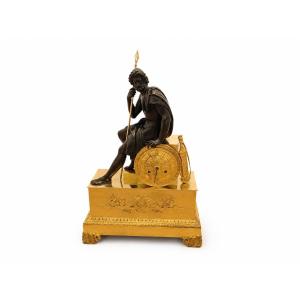
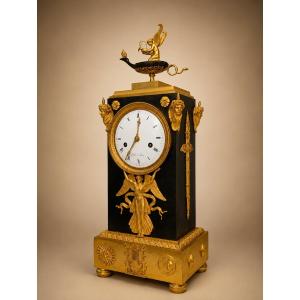
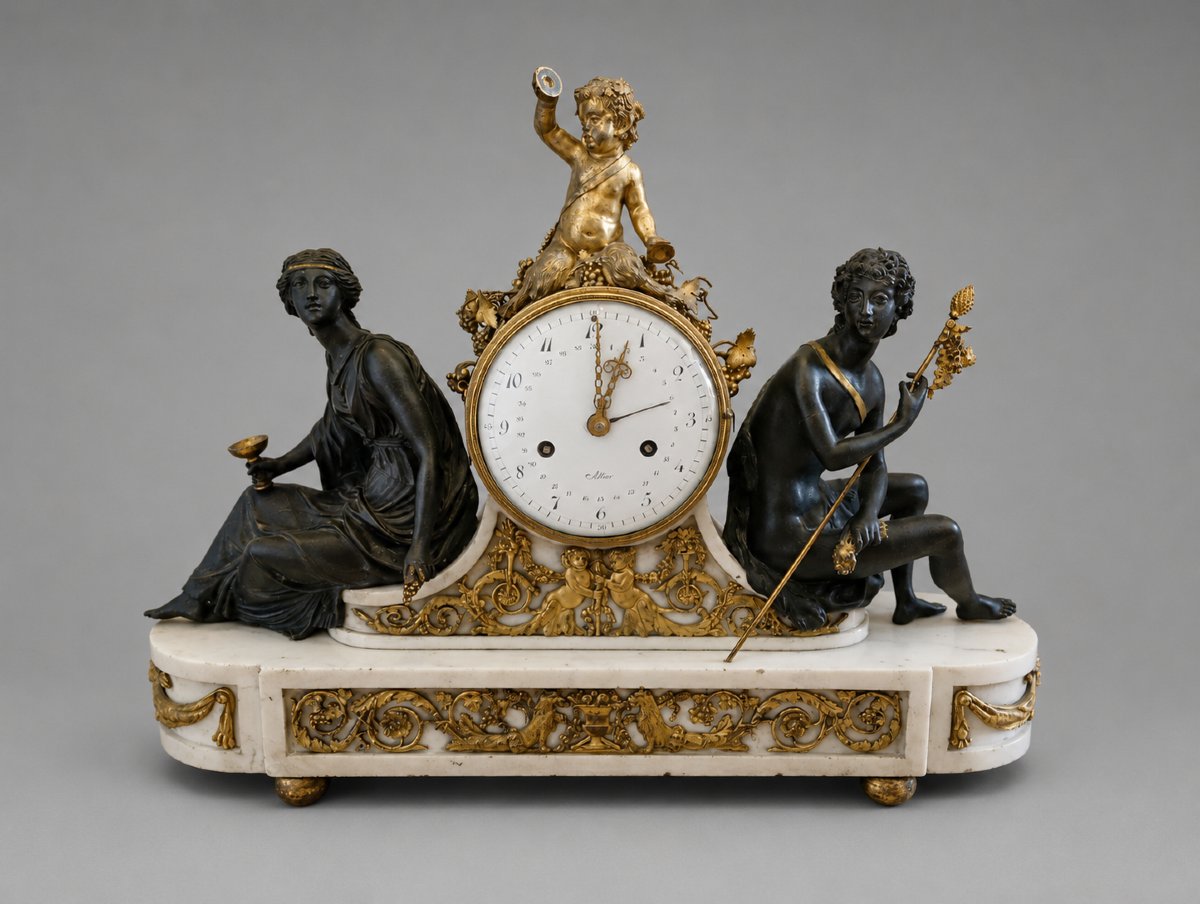
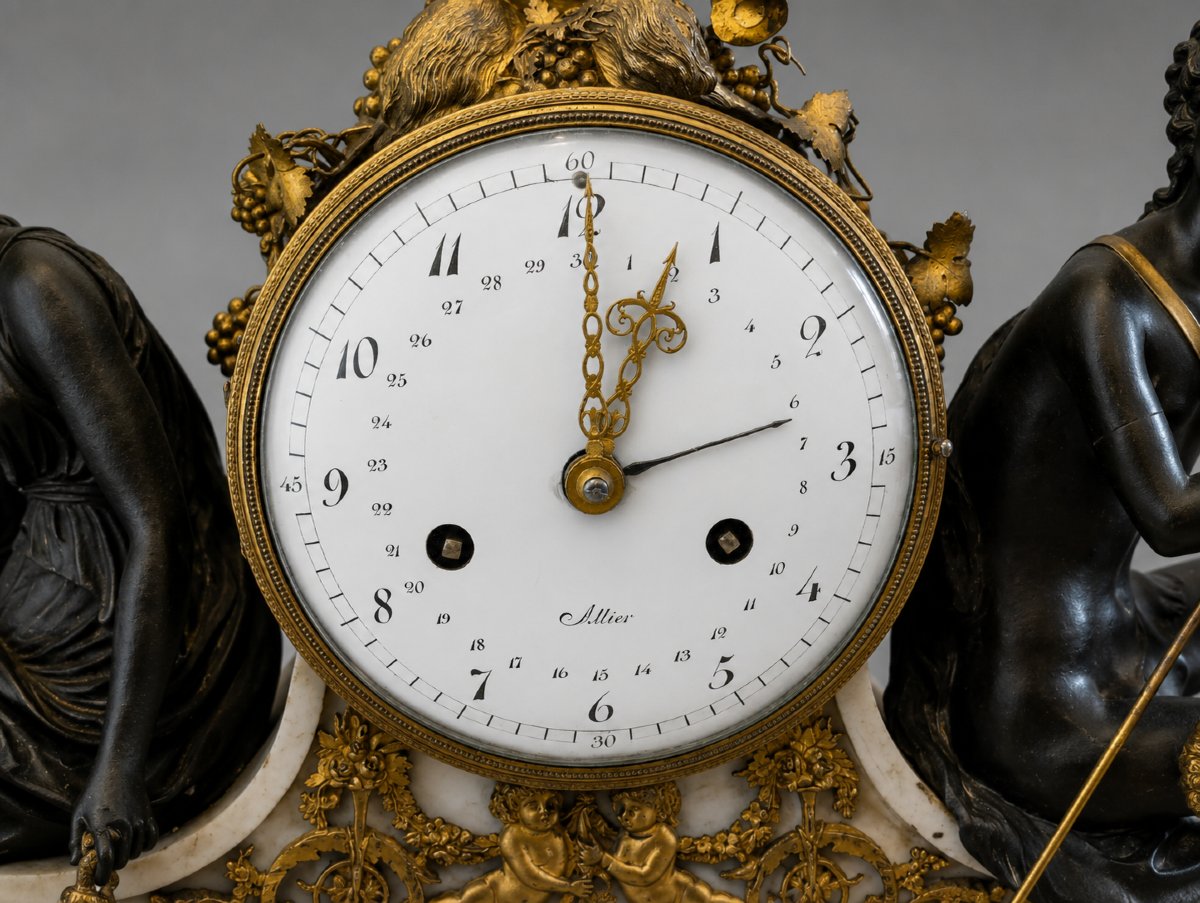
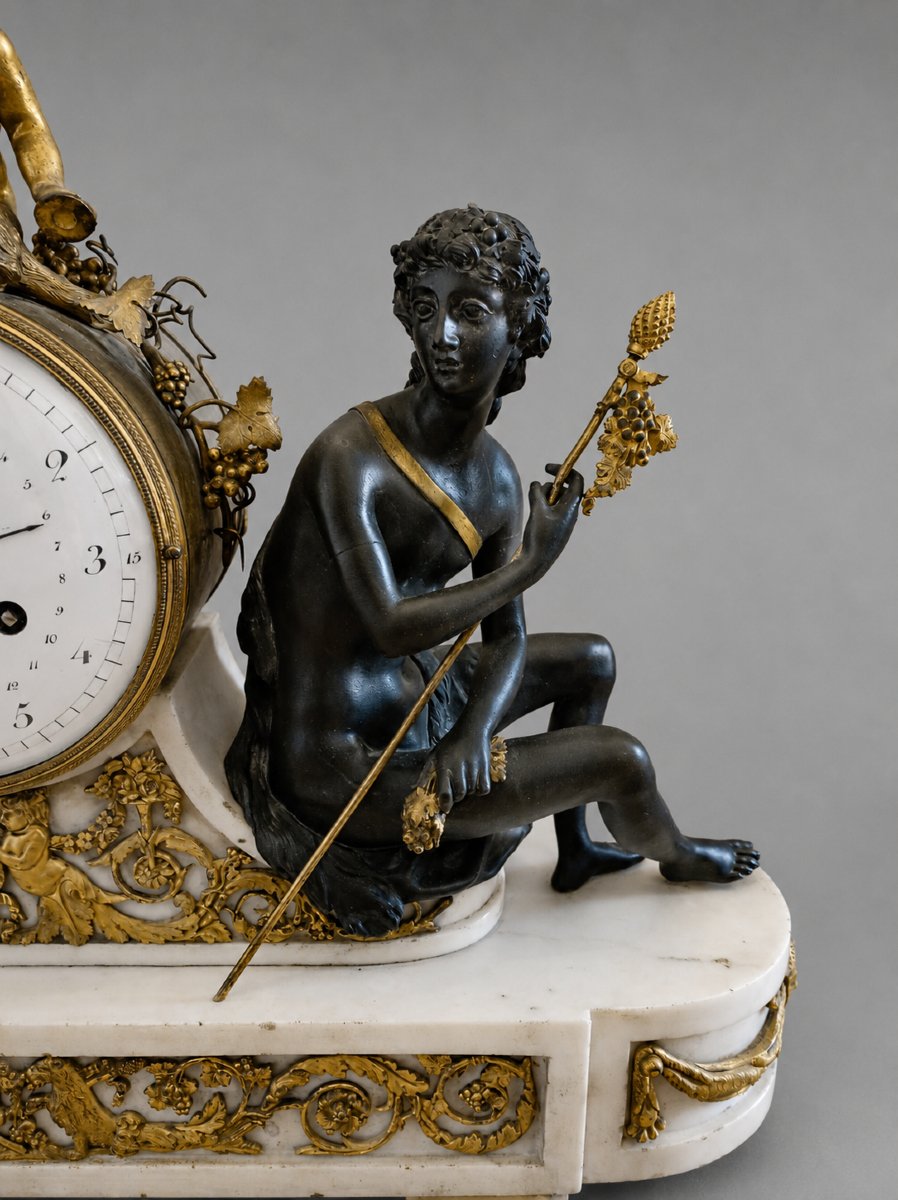
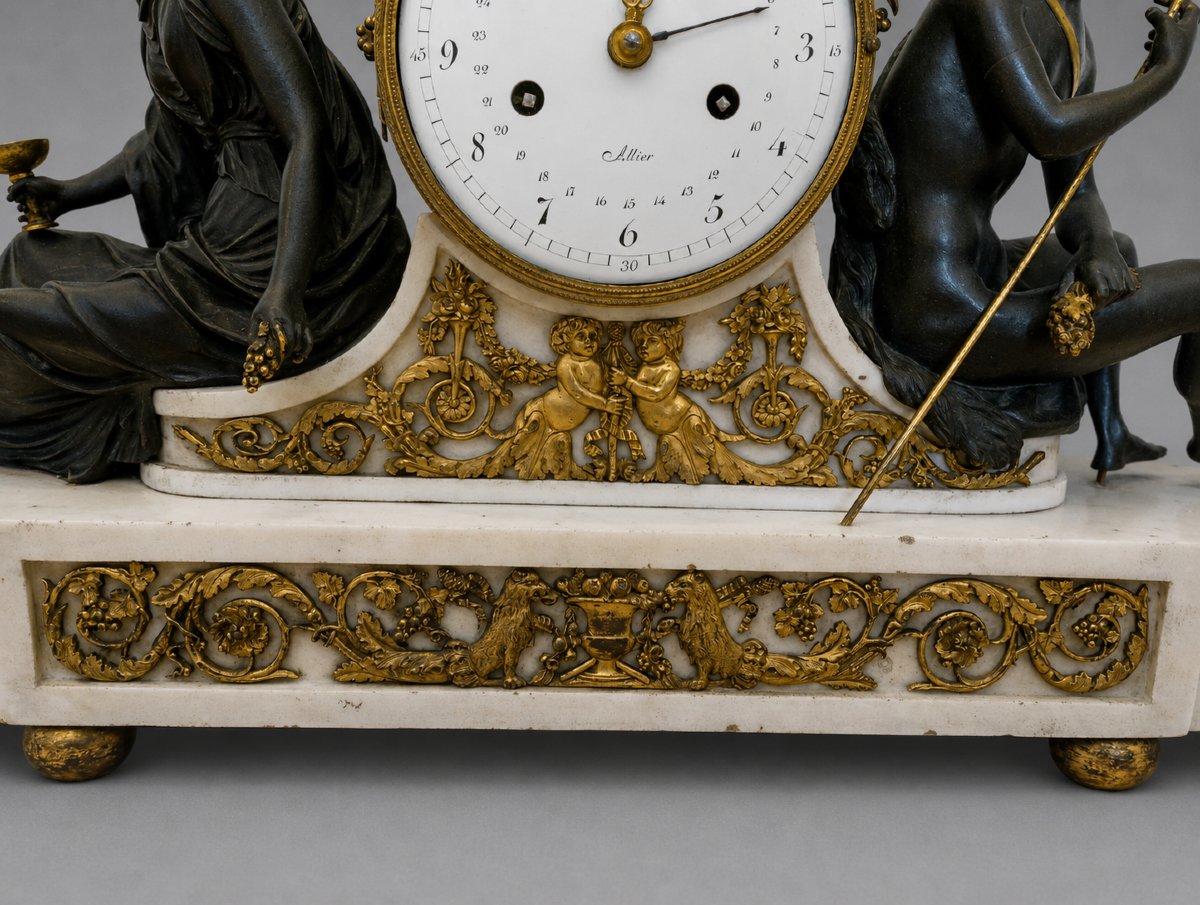
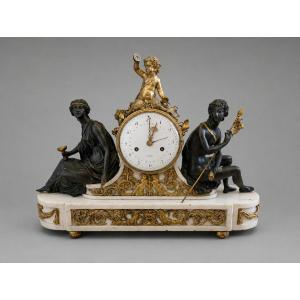
Large Carrara marble clock with double-patina bronze figures depicting Bacchus and Erigone, dating from the late 18th century; the movement is signed Allier.
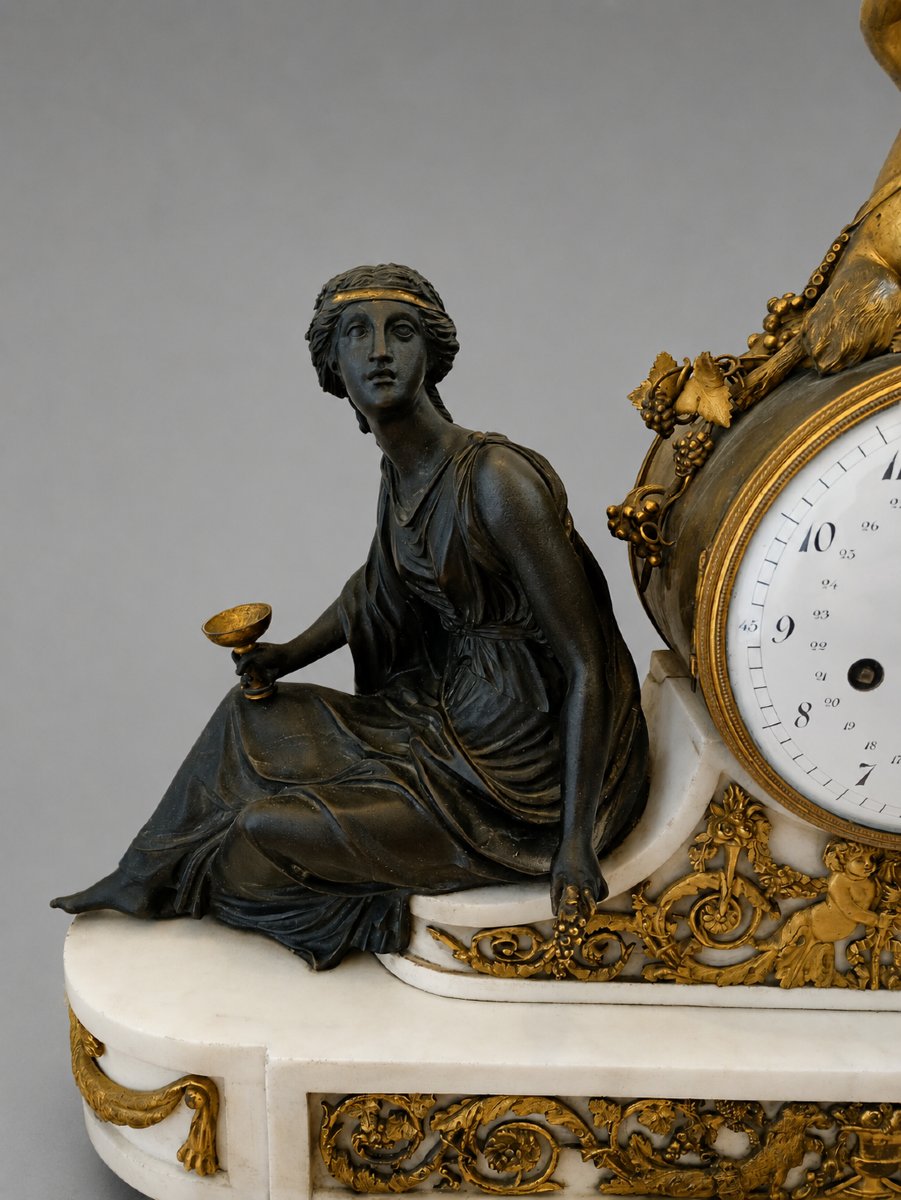
This clock depicts a subject drawn from mythology. Two deities are featured on either side of the movement. Bacchus is recognizable by his leopard skin, the bunch of grapes, and the thyrsus he holds in his hands, while Erigone is depicted holding a cup with a bunch of grapes, echoing the teachings she received from Bacchus on viticulture and winemaking. A young faun perches on the crown, playing cymbals atop vine branches. He carries a syrinx slung over his shoulder.
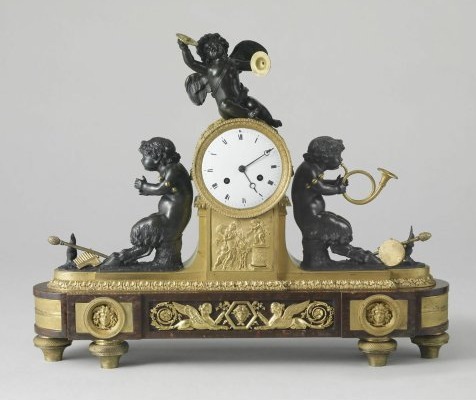
The composition of this clock is inspired by the successful model created by Louis-Simon Boizot (1743–1809), known as “Study and Philosophy” (an example is held at the Musée des Arts Décoratifs, Inv. 2014.112.26), in which the two allegorical figures are positioned on either side of the dial on an oblong base. Another variant of this model is held at the Louvre, Inv. OA 5310. The side figures are replaced by musician fauns, and the shock absorber features a putto. One example of this clock with musician fauns is signed by Thomire (Giacomo and Aurélie Wannenes, *Les plus belles pendules françaises*, Polistampa, p. 222).
The movement is signed by Allier, a clockmaker listed in the Tardy directory as early as 1789, who was based on Rue Saint-Antoine in Paris. The mechanism’s dial features a day indicator numbered from 1 to 30, added during the Revolution between 1792 and 1805.
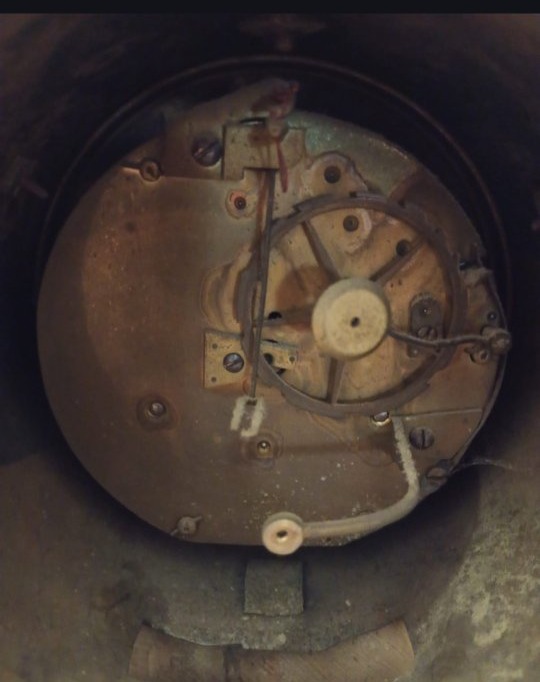
Condition: movement requires servicing; the back glass and pendulum are missing; there is a small chip in an ornamental bronze piece on the side and minor wear on the patina
Bibliography:
Tardy, Dictionnaire des Horlogers, p. 5
Pierre Kjellberg, *Encyclopedia of the French Clock*, p. 259
This clock depicts a subject drawn from mythology. Two deities are featured on either side of the movement. Bacchus is recognizable by his leopard skin, the bunch of grapes, and the thyrsus he holds in his hands, while Erigone is depicted holding a cup with a bunch of grapes, echoing the teachings she received from Bacchus on viticulture and winemaking. A young faun perches on the crown, playing cymbals atop vine branches. He carries a syrinx slung over his shoulder.
The composition of this clock is inspired by the successful model created by Louis-Simon Boizot (1743–1809), known as “Study and Philosophy” (an example is held at the Musée des Arts Décoratifs, Inv. 2014.112.26), in which the two allegorical figures are positioned on either side of the dial on an oblong base. Another variant of this model is held at the Louvre, Inv. OA 5310. The side figures are replaced by musician fauns, and the shock absorber features a putto. One example of this clock with musician fauns is signed by Thomire (Giacomo and Aurélie Wannenes, *Les plus belles pendules françaises*, Polistampa, p. 222).
The movement is signed by Allier, a clockmaker listed in the Tardy directory as early as 1789, who was based on Rue Saint-Antoine in Paris. The mechanism’s dial features a day indicator numbered from 1 to 30, added during the Revolution between 1792 and 1805.
Condition: movement requires servicing; the back glass and pendulum are missing; there is a small chip in an ornamental bronze piece on the side and minor wear on the patina
Bibliography:
Tardy, Dictionnaire des Horlogers, p. 5
Pierre Kjellberg, *Encyclopedia of the French Clock*, p. 259
3 900 €
Period: 18th century
Style: Louis 16th, Directory
Condition: Condition of use
Material: Bronze
Length: 55
Height: 42
Reference (ID): 1798174
Availability: In stock
Print