

Titian Vecellio And Workshop. 'ecce Homo', Expertise By The Late Prof. Maurizio Marini
Artist: Tiziano Vecellio
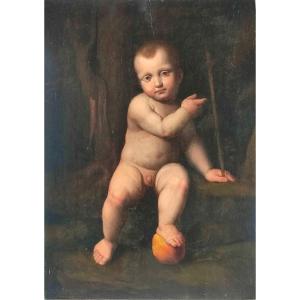
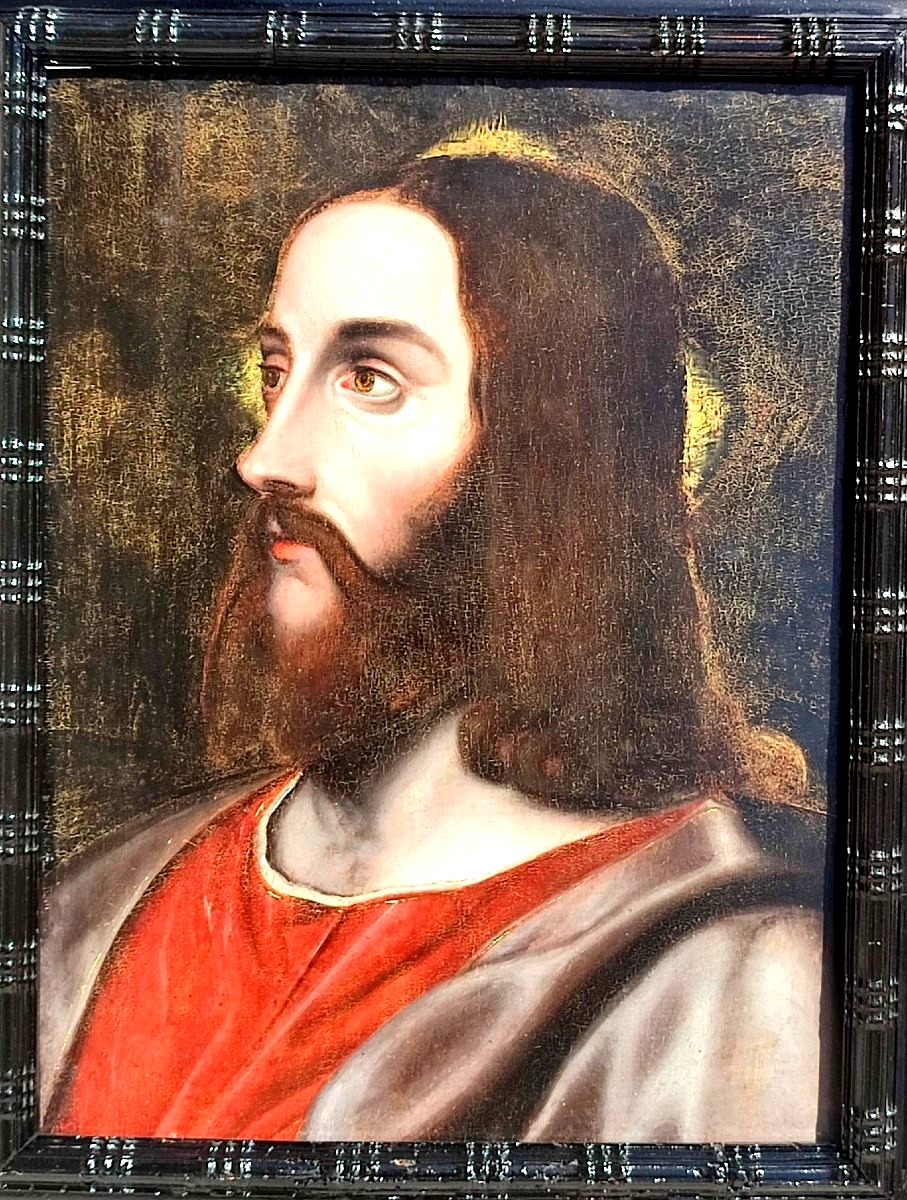
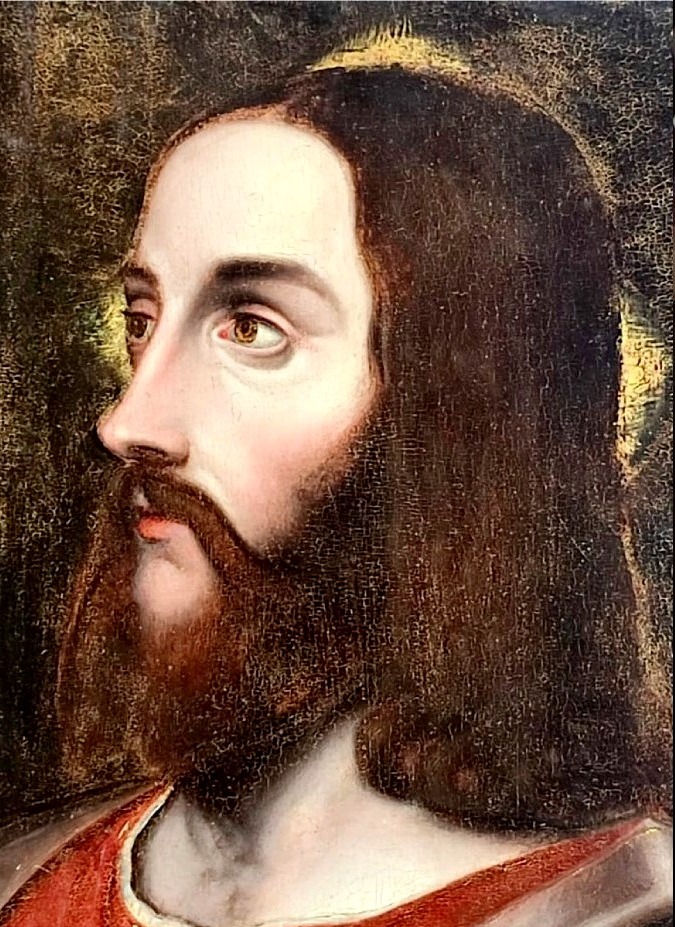
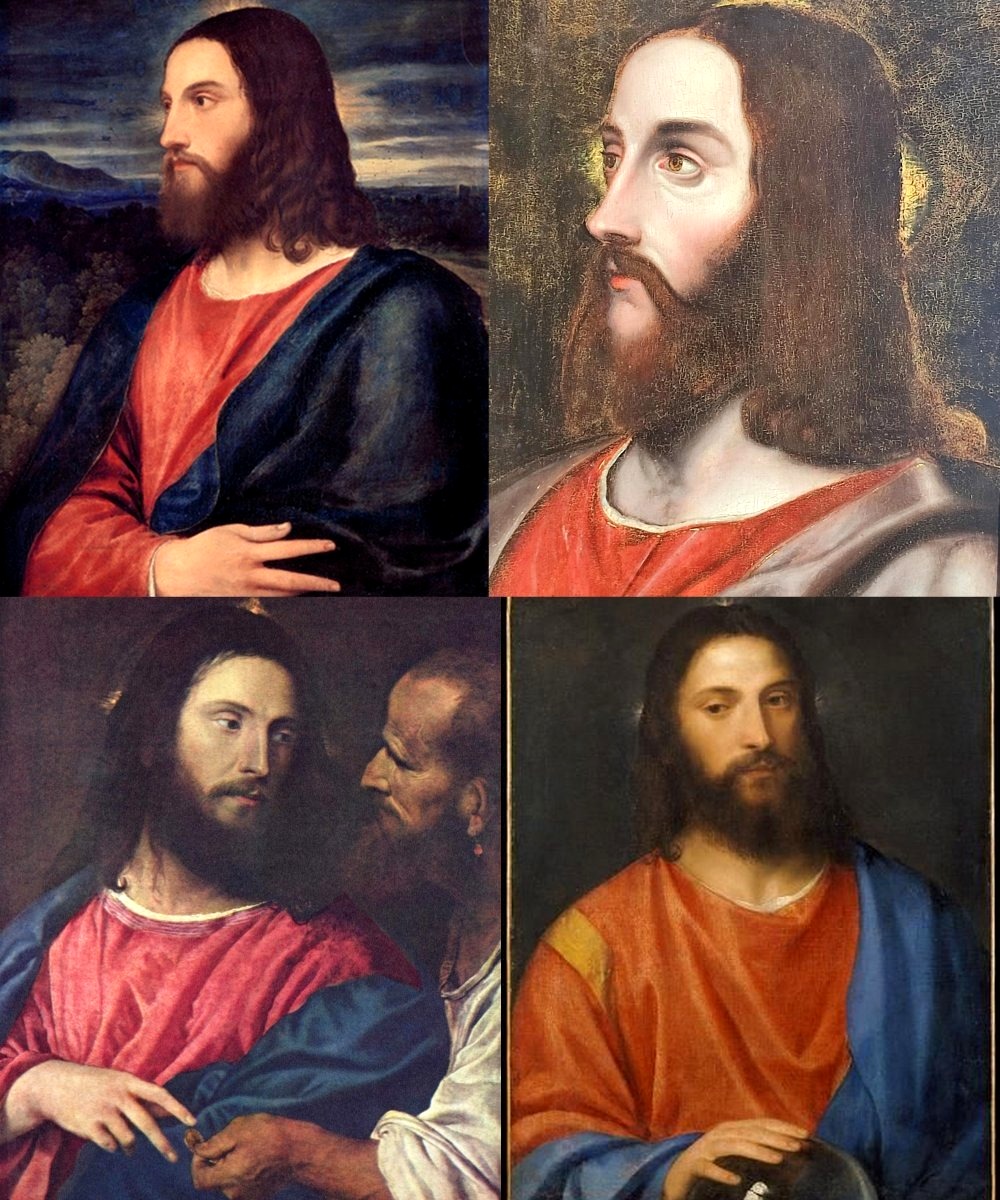
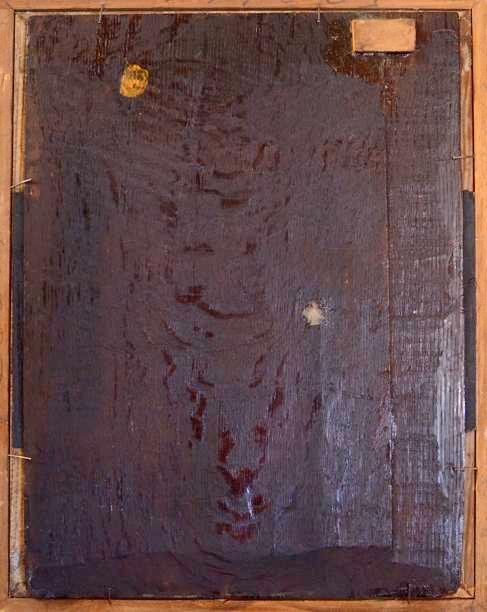
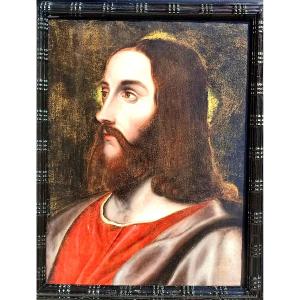
This superb painting, "Ecce Homo," an oil on panel from a prestigious private Sicilian collection, has not received the attention it deserves, despite the interest shown by the late art historian Maurizio Marini and despite a clear and remarkable expressive synergy with other works by Titian. The similarities in character with other "Ecce Homo" paintings by Titian are evident: the same physiognomy, the same Renaissance period, and a meticulous attention to detail that testifies to a talent that is neither that of a copyist nor a mere imitator. The technique employed, from the shaded background prepared with gold to the halo and the reflections in the background, reveals a mastery possessed only by the greatest artists. Sadly, Professor Puppi has passed away, and I am convinced that with his profound knowledge of Titian, he would have given this panel particular attention. We present here some comparative parameters that we consider exhaustive, along with the expert opinion of Maurizio Marini, to support an attribution that remains uncertain. This painting (50 x 40 cm), depicting a "BUST OF CHRIST," was carefully examined by the late Professor Maurizio Marini, who identified it, based on an autograph expert report, as a work by Titian with assistants. Thanks to a new, meticulous cleaning of the panel carried out by Professor Franco Fazzio of Palermo, subtle golden reflections, evoking a starry halo, have reappeared. These shimmering reflections delicately surround the face of Christ, like a divine light. These details had disappeared under a patina of natural oxidation due to time, which had also altered the original paint layer. Delicate glazes have thus reappeared, reinforcing the plasticity and softness of expression characteristic of the Venetian master, revealing the finesse of the brushstrokes that give the work its three-dimensionality and refuting Marini's hypothesis of a probable workshop collaboration. The graceful and homogeneous craquelure, which appears in all its period spontaneity, confirms a spontaneous, unhesitating application. The
three-dimensionality achieved reflects both the style and the energy usually
displayed by the Venetian master. A crucial comparison is that of the
"Bust of Christ" exhibited in Florence, at the Pitti Palace, where the
physiognomy of Christ is identical and where Christ, depicted in the same position as ours,
also shows his arm and hand lowered, against a background of
a cloudy landscape. In the Urbino correspondence, we find documents where a "Christ" from 1532-1533 is mentioned several times,
which could well be the one we are studying.
three-dimensionality achieved reflects both the style and the energy usually
displayed by the Venetian master. A crucial comparison is that of the
"Bust of Christ" exhibited in Florence, at the Pitti Palace, where the
physiognomy of Christ is identical and where Christ, depicted in the same position as ours,
also shows his arm and hand lowered, against a background of
a cloudy landscape. In the Urbino correspondence, we find documents where a "Christ" from 1532-1533 is mentioned several times,
which could well be the one we are studying.
38 000 €
Period: 16th century
Style: Renaissance, Louis 13th
Condition: Good condition
Material: Oil painting on wood
Width: cm.40
Height: cm.50
Reference (ID): 1797268
Availability: In stock
Print