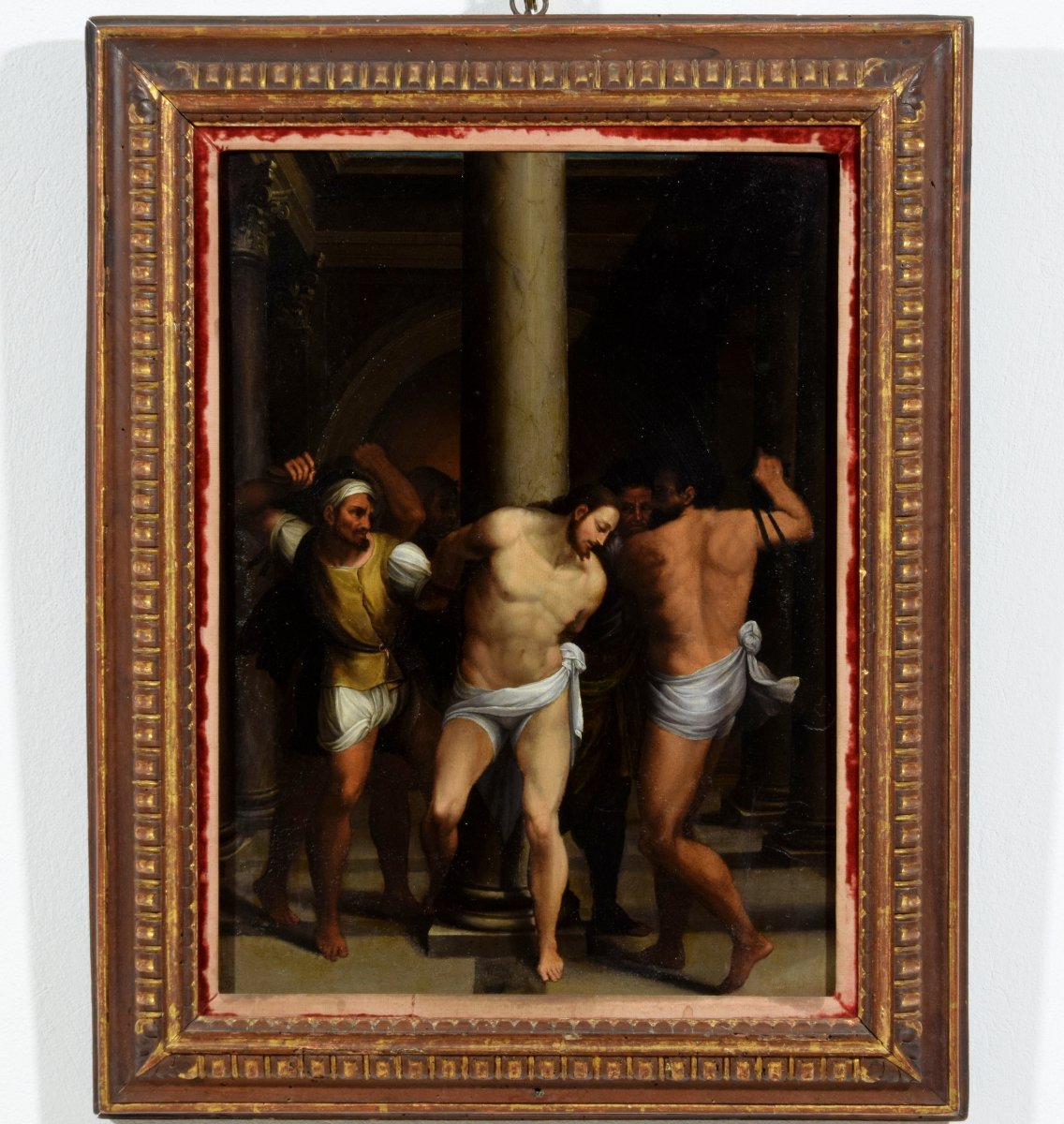
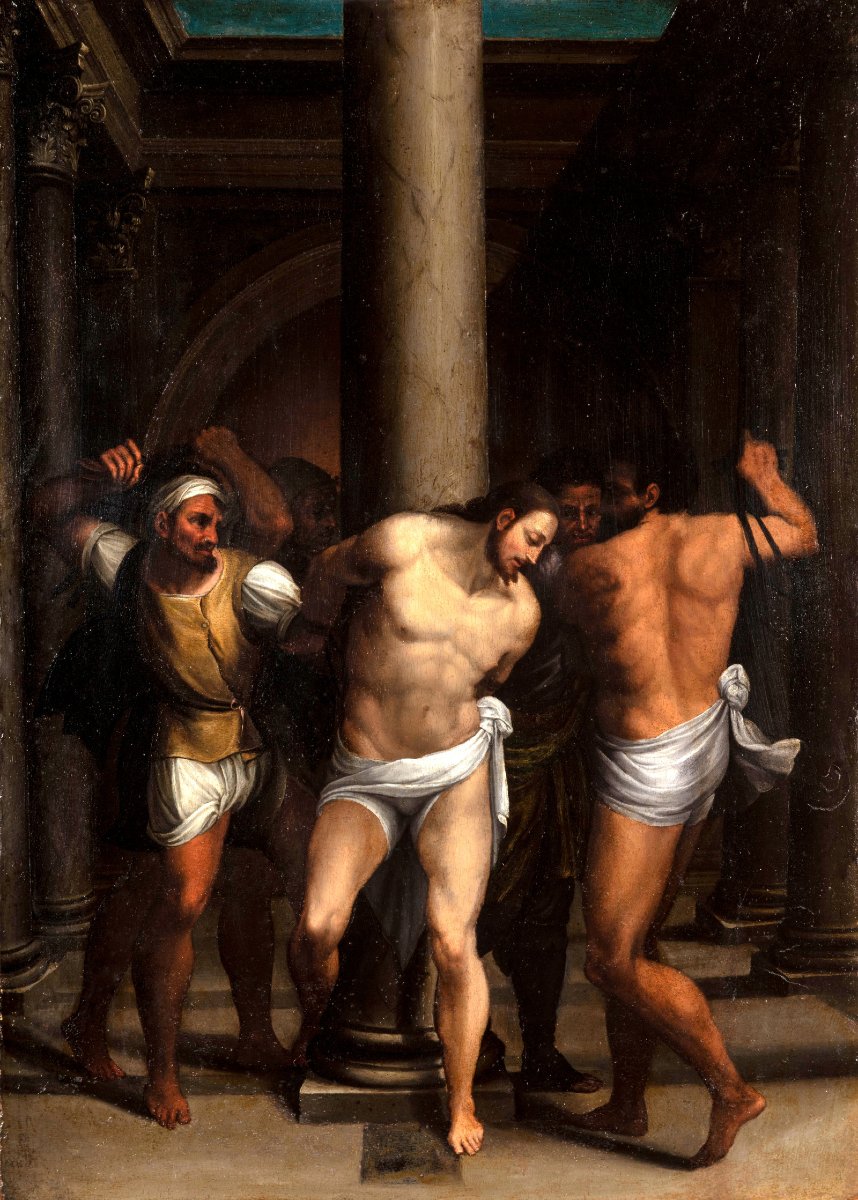
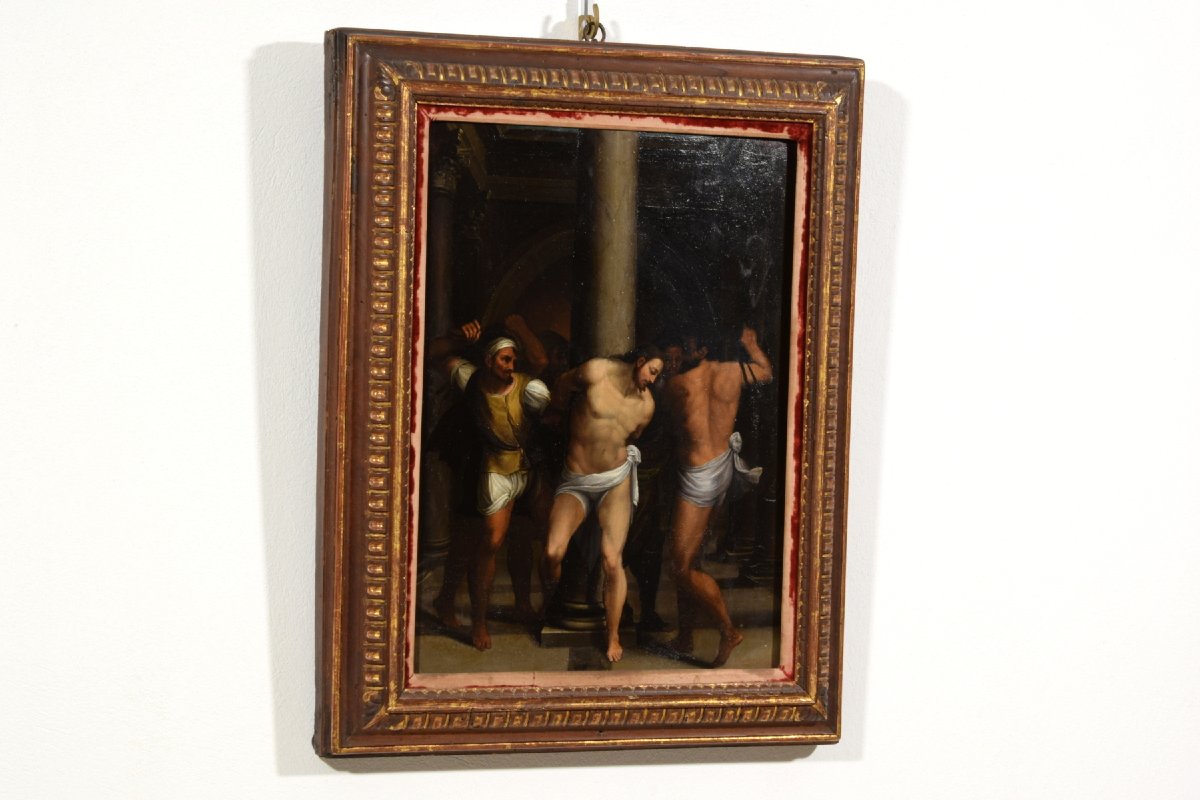
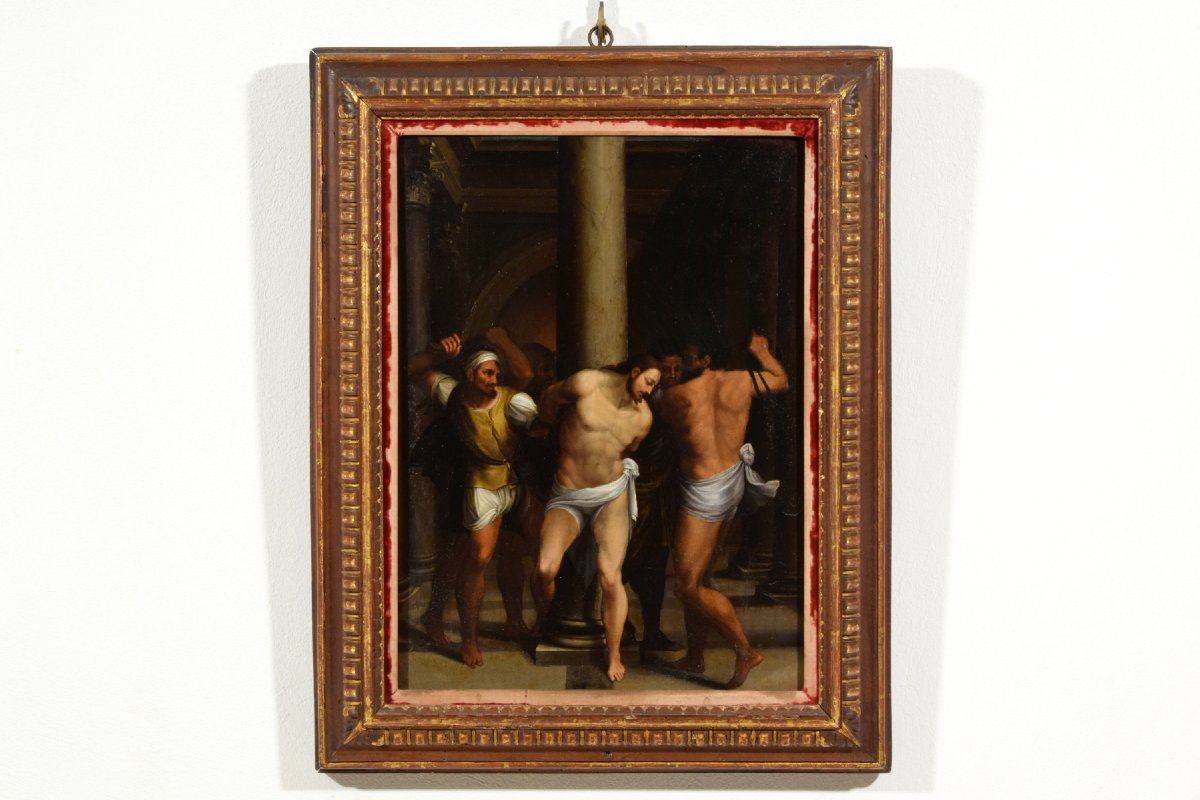

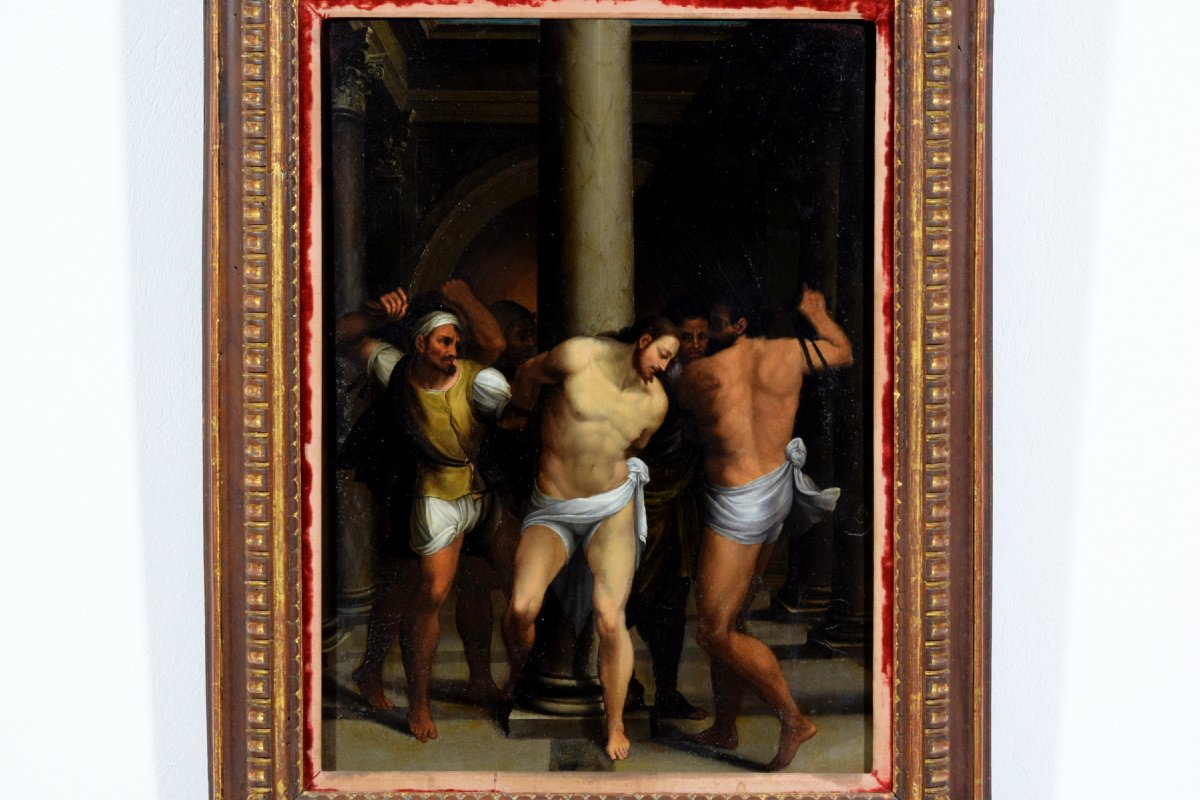

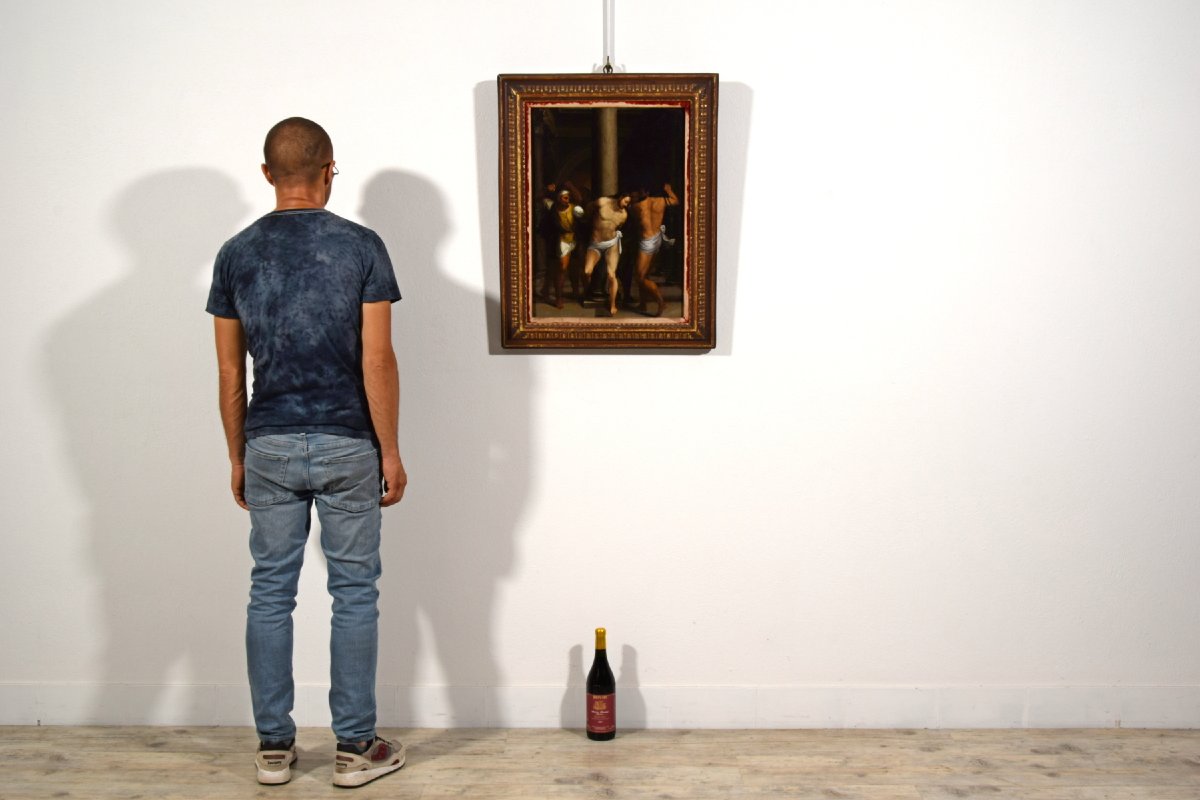
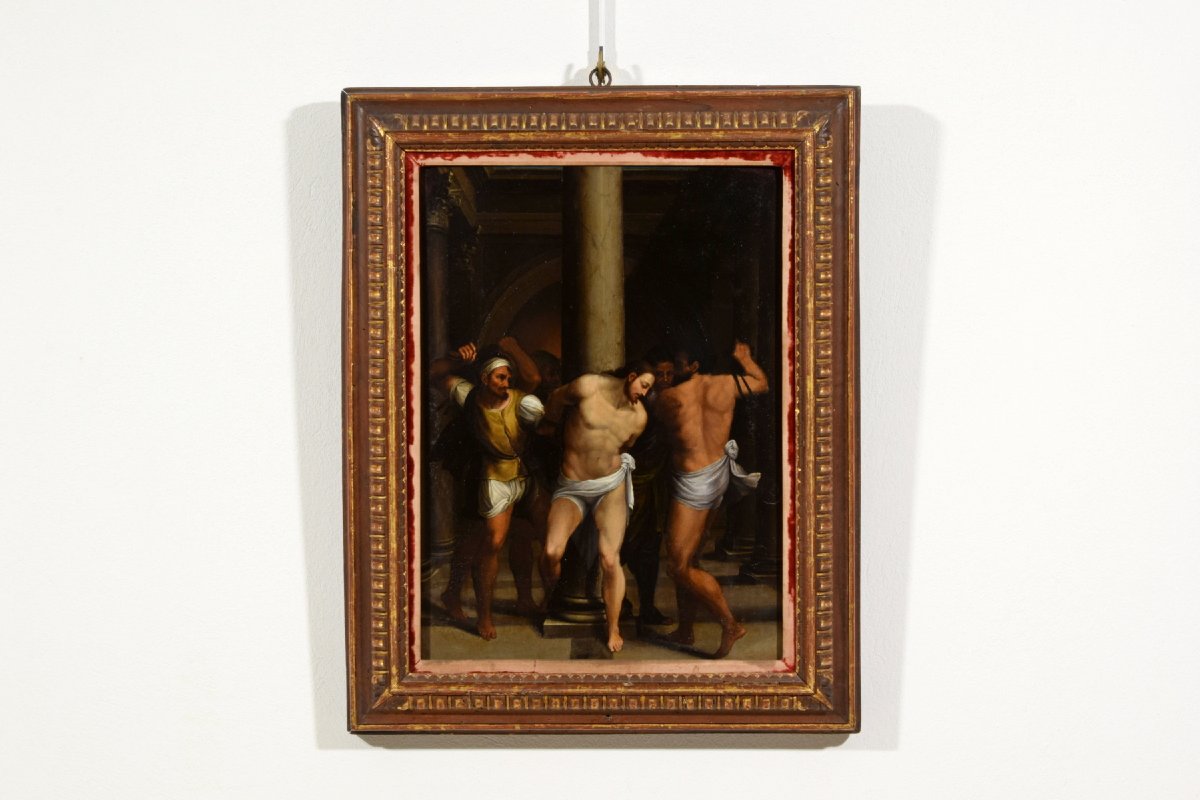


The Flagellation Of Christ, By A Roman Painter From The Second Half Of The 16th Century, Oil On Panel
Artist: Disciple De Sebastiano Del Piombo
The Flagellationof Christ, a Roman painter of the second half of the 16th century, a follower of Sebastiano del Piombo
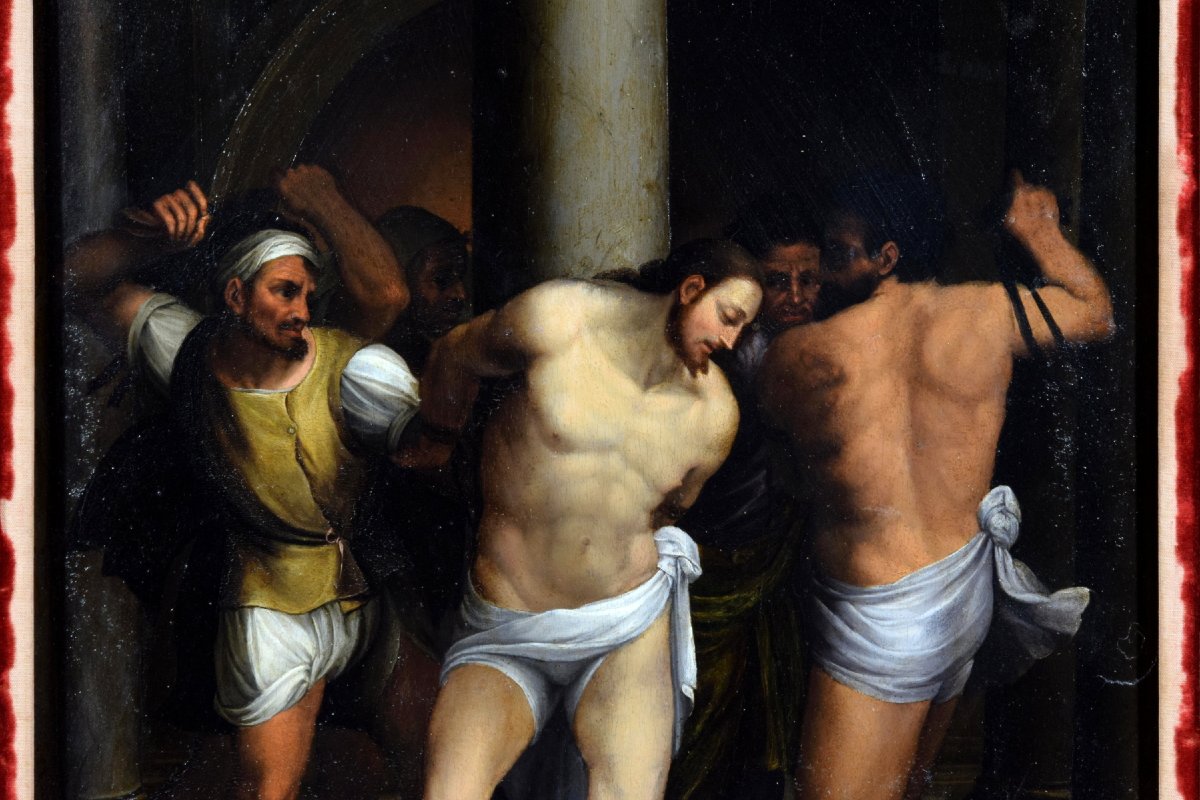
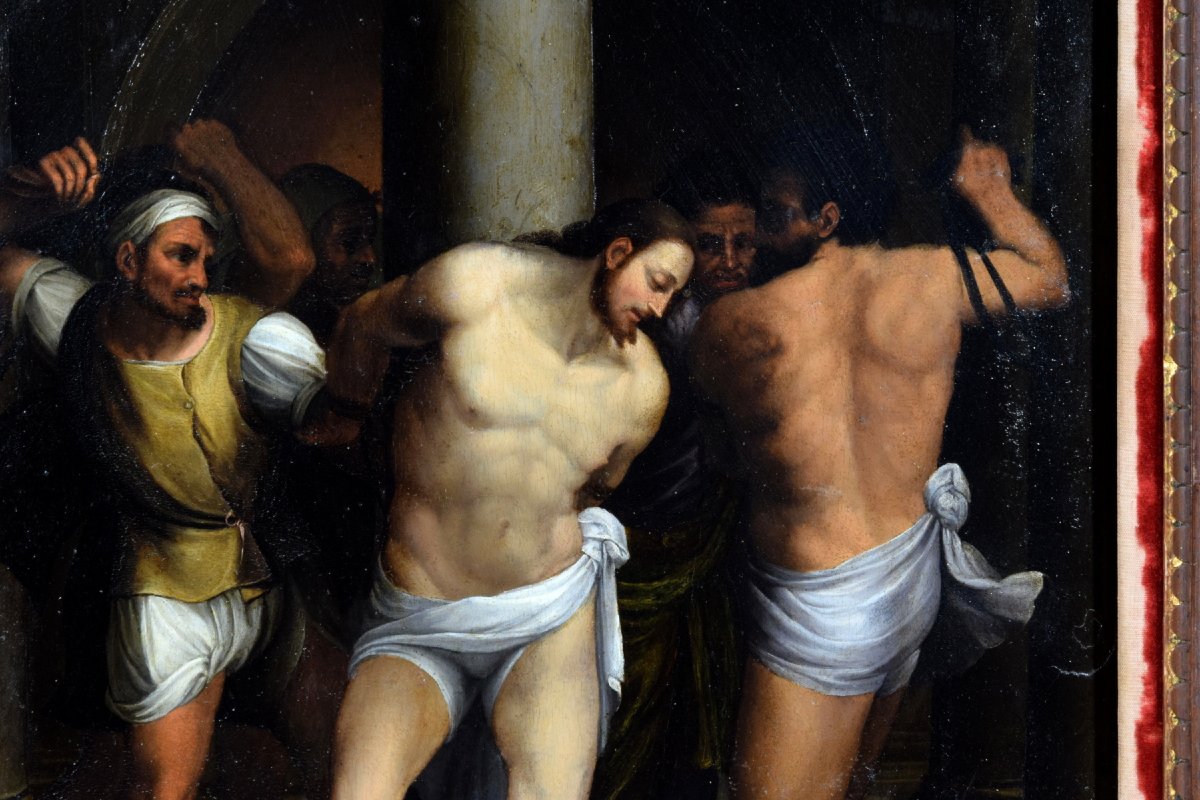
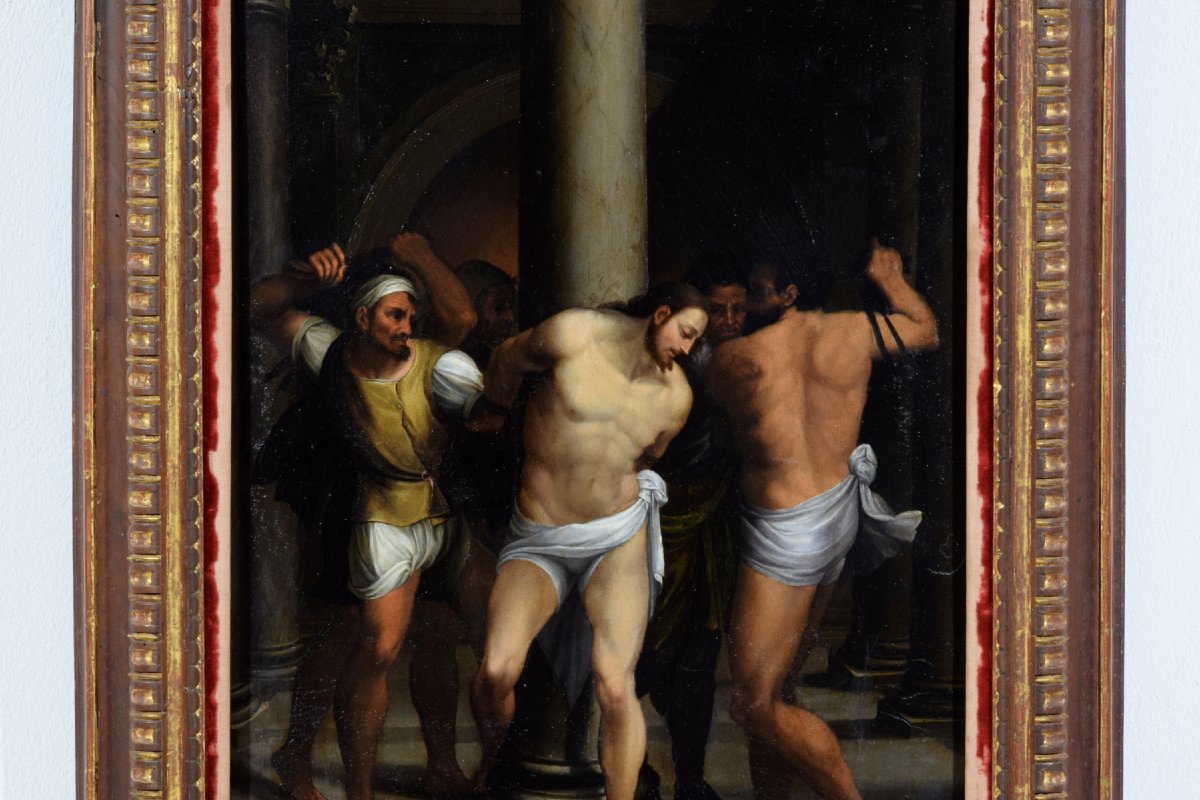
The work, executed in oil on wood, is an interpretationof the famous Flagellation of Christ painted by Luciani Sebastiano, known as Sebastianodel Piombo (Venice, ca. 1485 – Rome, 1547) in the church of San Pietro inMontorio in Rome.The subject was very popular and was repeatedly reinterpreted oncanvas and panel by artists active in the 16th century. Sebastiano delPiombo’s work, executed in oil on a wall, was commissioned from the painter by the bankerPierfrancesco Borgherini and completed between 1516 and 1524. Critics havelong debated Michelangelo Buonarroti’s role as the creator of thecomposition. The treatment of the subject outside its narrative context—as an iconic and contemplative image—already had illustrious precedents,but no one had ever approached it on such a monumental scale for a publicaltarpiece, a factor that helped ensure the work’s immediateand widespread impact. It established itself as an iconographic source and benchmarkfor subsequent interpretations of the theme, including Caravaggio’s *Flagellation*held in the Capodimonte Museum. Also worth noting is the versionin the Borghese Gallery, which critics associate with the work of Marcello Venusti,dating it to 1570. The work’s extraordinary success is attested not onlyby the replica that Sebastiano himself painted for the Church of the Osservanzaof the Paradiso in Viterbo (now in the city’s Civic Museum), but also by the numerousreproductions—whether faithful copies or variations—that spread within the realm ofeasel painting intended for private collections. It is within this context thatthe painting presented here fits.Christ is depicted at the center of the composition, wrappedonly in the shroud and bound to a column situated in the center of a largeRenaissance hall. His executioners are depicted behind and to the side of him,placed in the background. The figures stand out from the darkness thanks to a lightcoming from the right, which contributes to the drama of the scene. The light, strikingChrist’s half-naked body directly, emphasizes the centrality of the figureby highlighting its anatomical rendering. Compared to the mural bySebastiano del Piombo, the arrangement of the group ofexecutioners and the architectural setting here is very similar to that of the panel in theBorghese Gallery.Of high painterly quality and in excellent condition,the work is a valuable testament to the great popularity thatthe subject enjoyed among the nobility and the wealthy bourgeoisie of the time. Presented in a contemporary carved wooden framefinished in natural wood with gold highlights.
The object is accompanied by anXRF analysis
23 500 €
Period: 16th century
Style: Renaissance, Louis 13th
Condition: Good condition
Material: Oil painting on wood
Width: 58
Height: 72,5
Depth: 7,5
Reference (ID): 1841886
Availability: In stock
Print