THIS OBJECT WAS SOLD
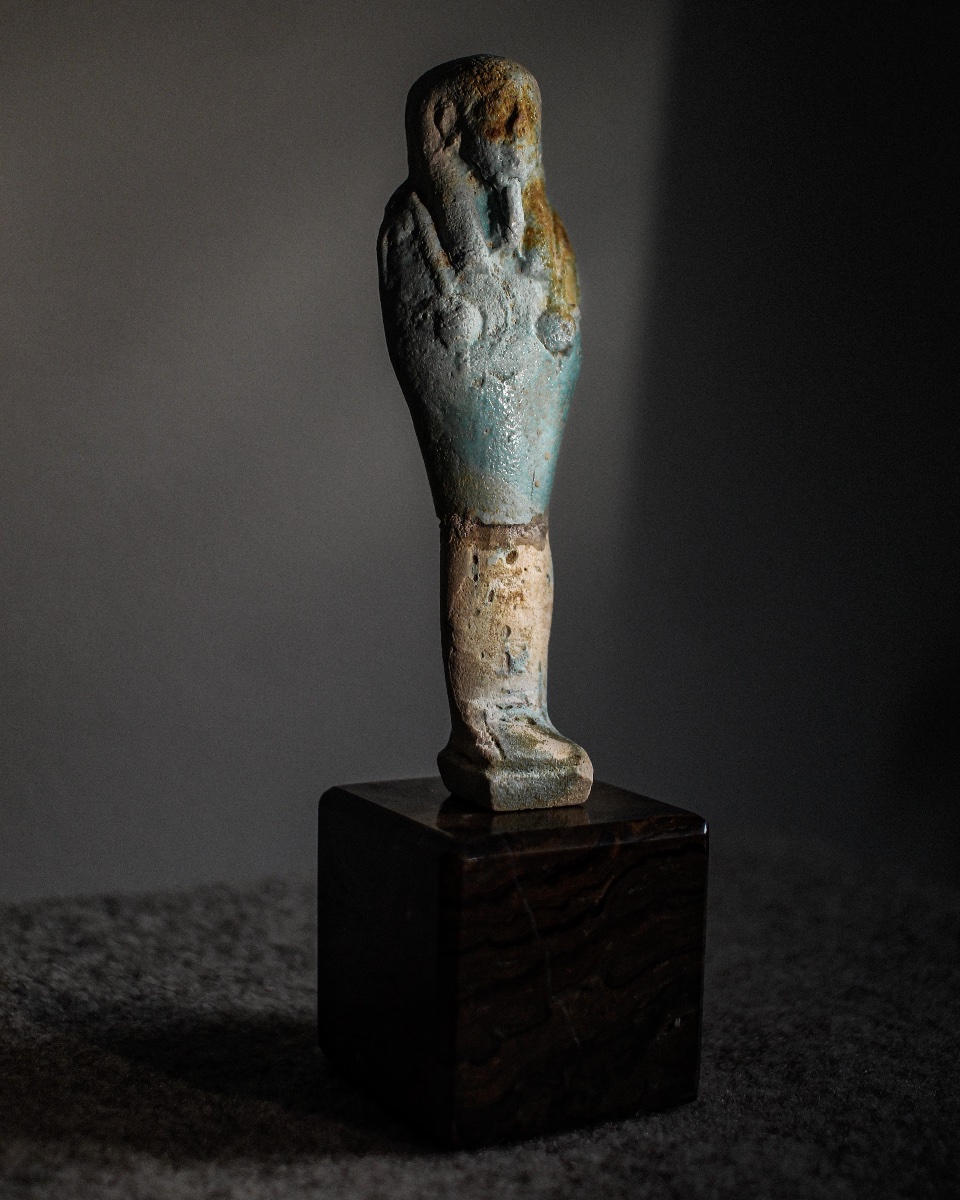
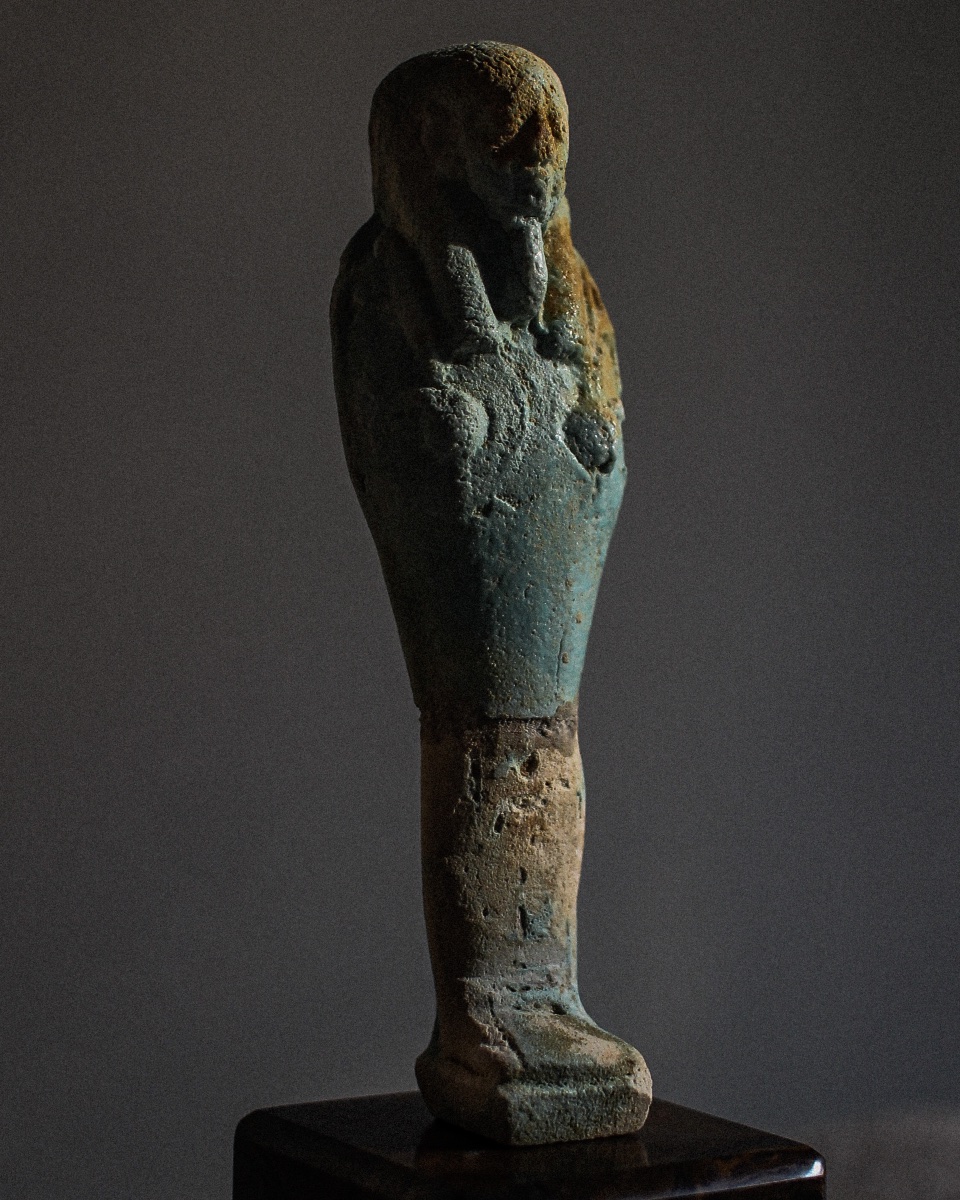
Late Period Faience Ushabti On Stand


Origin: Egypt
Period: Late Period (664–332 B.C.)
Dimensions: 17.8 cm (H) x 7.6 cm (W) x 7.6 cm (W)
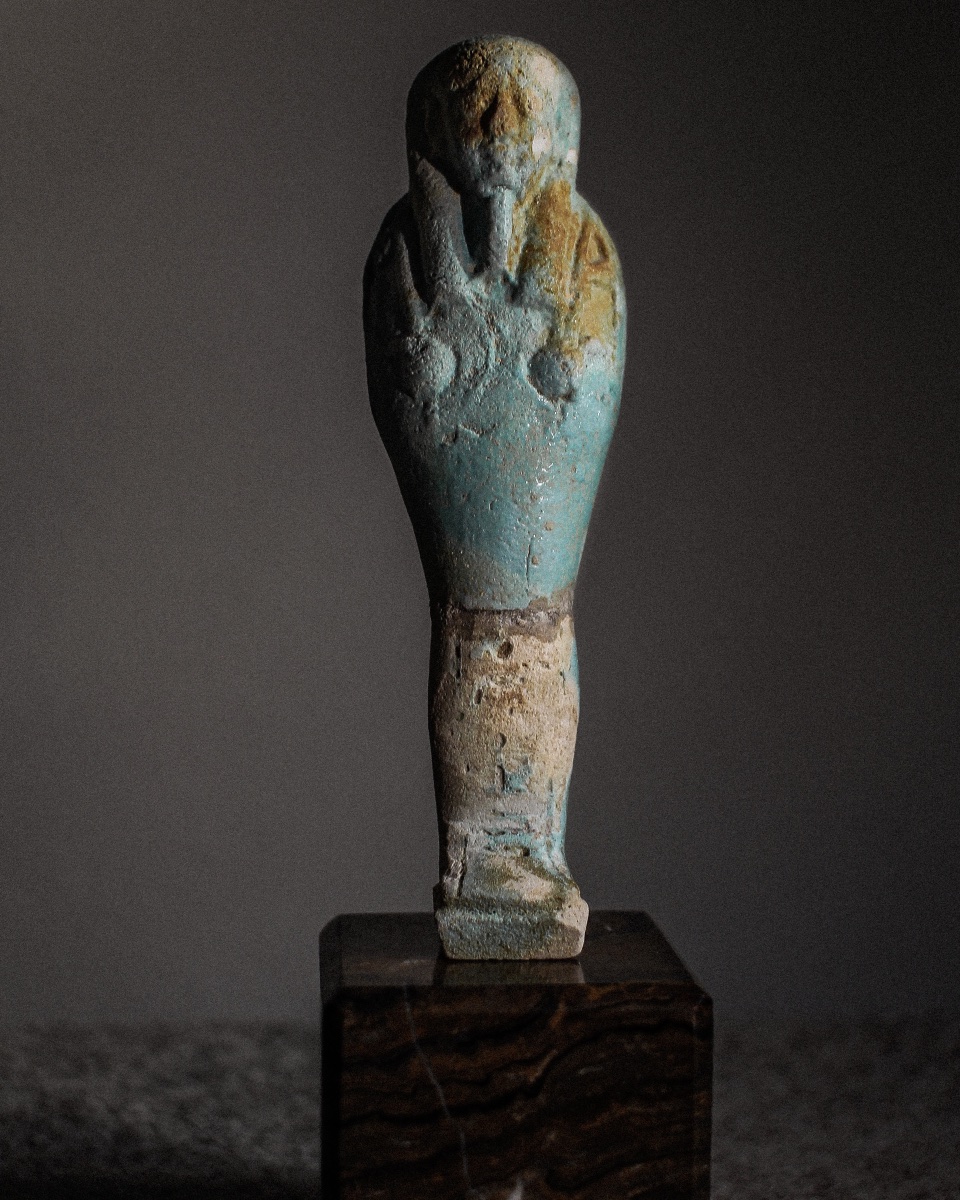
A large, highly expressive glazed faience ushabti dating from the Late Period (664–332 B.C.). This piece is impressively large (17.8 cm tall including its base) and adopts the characteristic mummy-like posture with crossed arms; the statuette is likely holding a hoe and a spade, tools intended for cultivating wheat in the afterlife. The ushabti, or “those who answer,” were votive objects placed in tombs to accompany the deceased into the afterlife and serve them. Traces of an inscription are visible on the lower part of the body, and an old crack has been repaired near the legs. The object is displayed on a base made from a block of fossilized stromatolite.
Provenance: Montreal collection, 2000s.
Period: Late Period (664–332 B.C.)
Dimensions: 17.8 cm (H) x 7.6 cm (W) x 7.6 cm (W)
A large, highly expressive glazed faience ushabti dating from the Late Period (664–332 B.C.). This piece is impressively large (17.8 cm tall including its base) and adopts the characteristic mummy-like posture with crossed arms; the statuette is likely holding a hoe and a spade, tools intended for cultivating wheat in the afterlife. The ushabti, or “those who answer,” were votive objects placed in tombs to accompany the deceased into the afterlife and serve them. Traces of an inscription are visible on the lower part of the body, and an old crack has been repaired near the legs. The object is displayed on a base made from a block of fossilized stromatolite.
Provenance: Montreal collection, 2000s.
Explore similar pieces and discover your ideal find:
Other Sculptures