THIS OBJECT WAS SOLD
19th-century Gold Ring Set With A Roman Intaglio On Carnelian. Melpomene, Muse Of Tragedy


Stone: 9 × 13 mm · Ring size: R (UK) · 8.5 (US) · TDD ~58 · Total weight: 4.61 g
Gold ring, 19th century, set with an oval intaglio on carnelian.
Intaglio: Roman, 1st century AD.
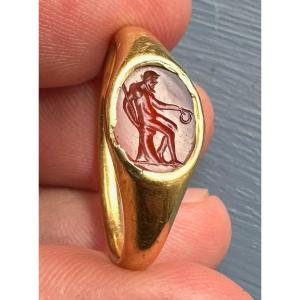
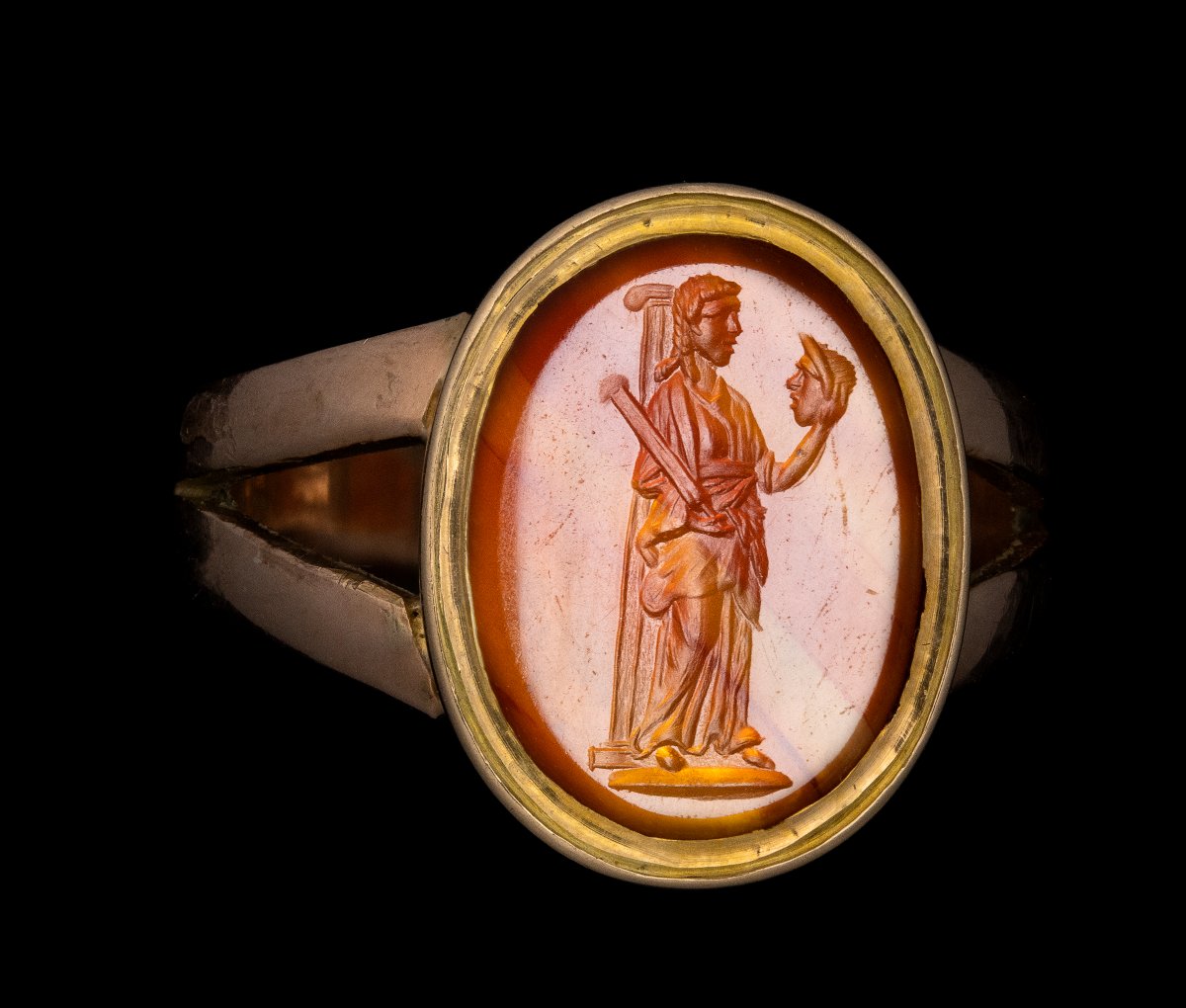
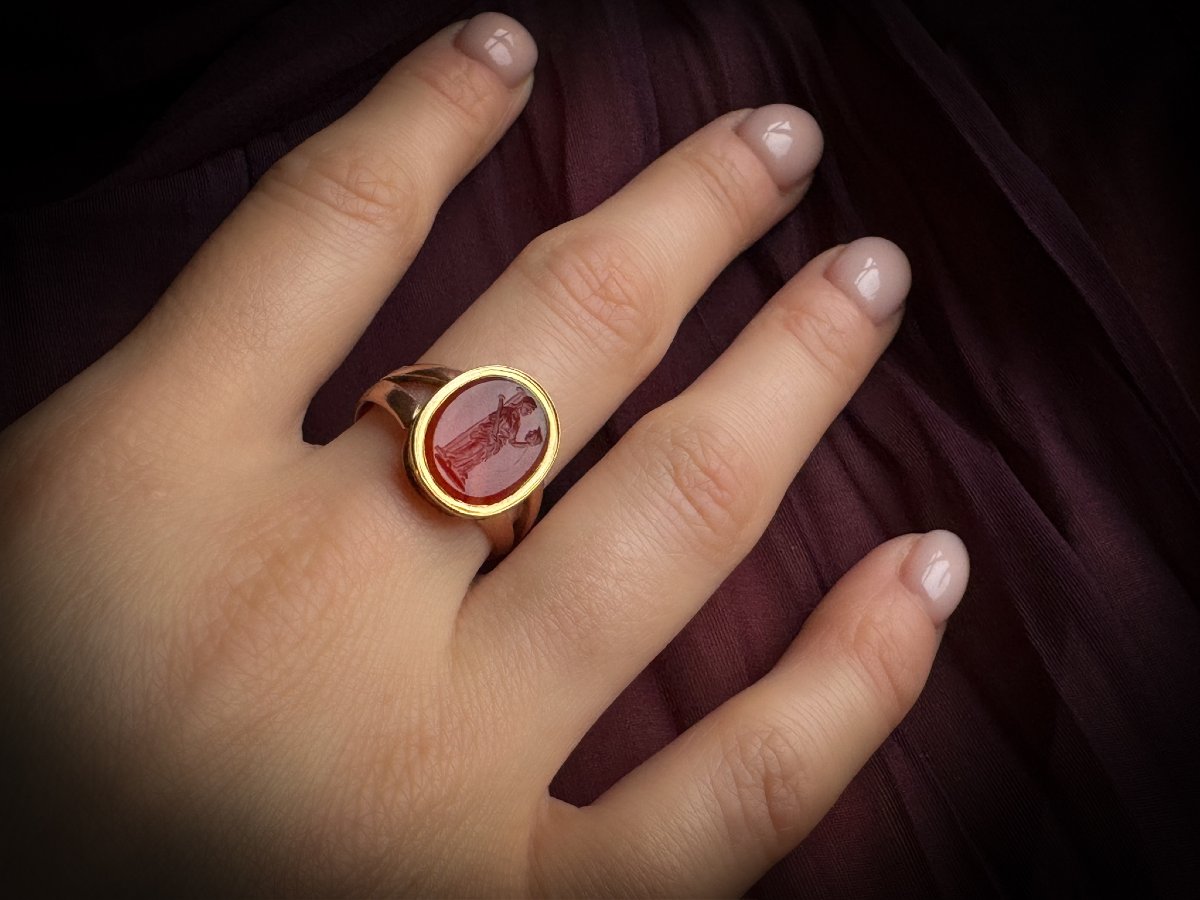
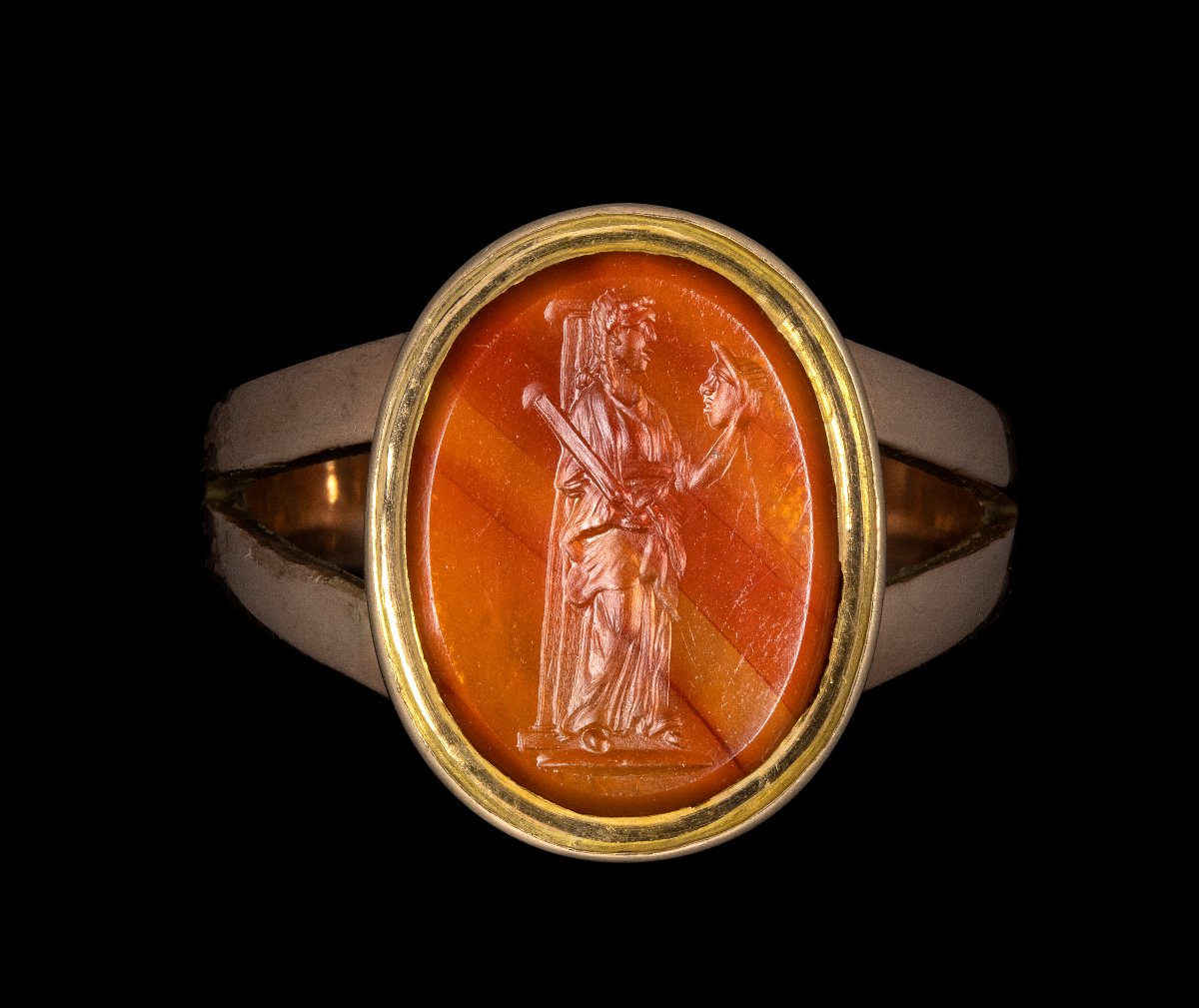
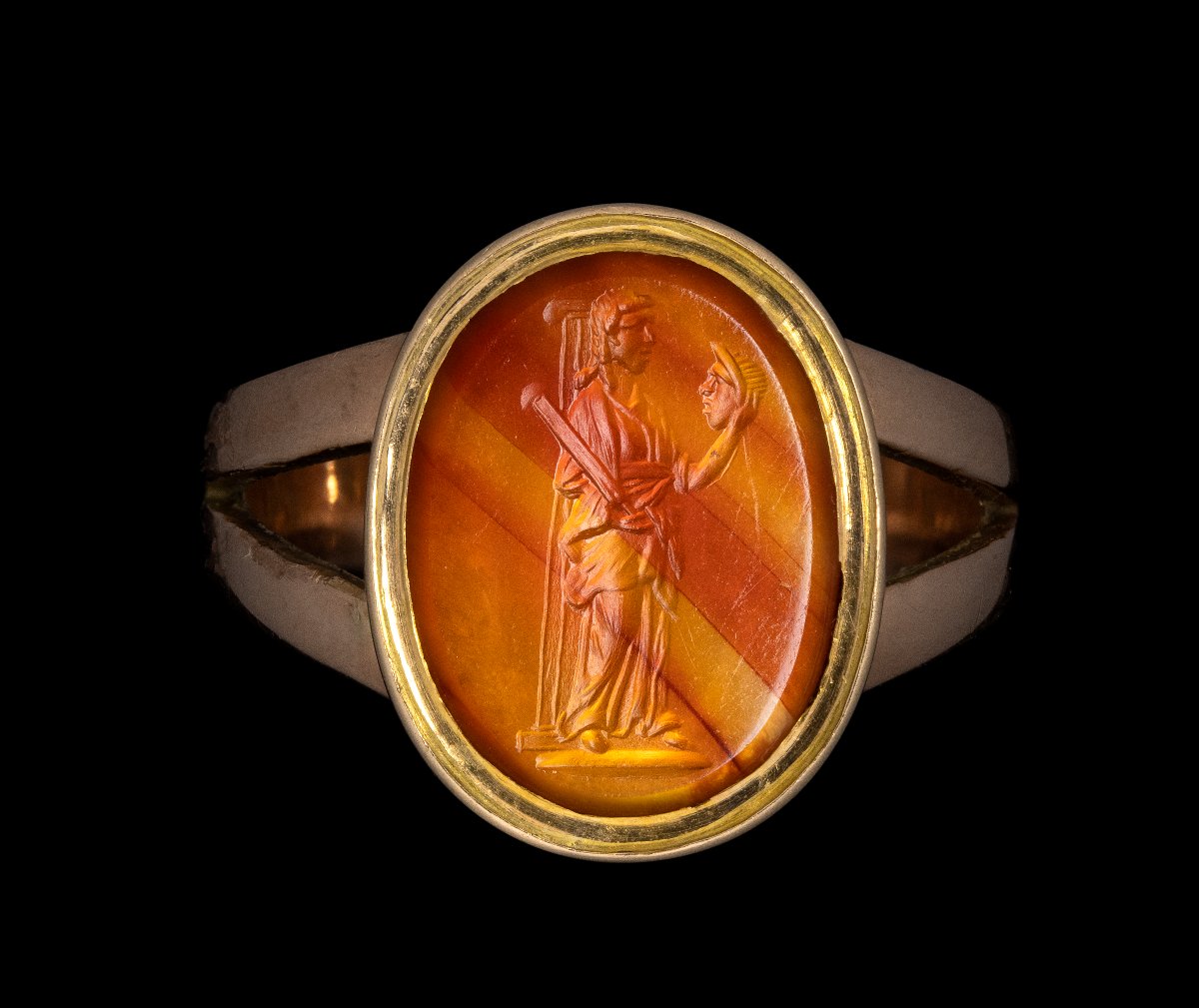
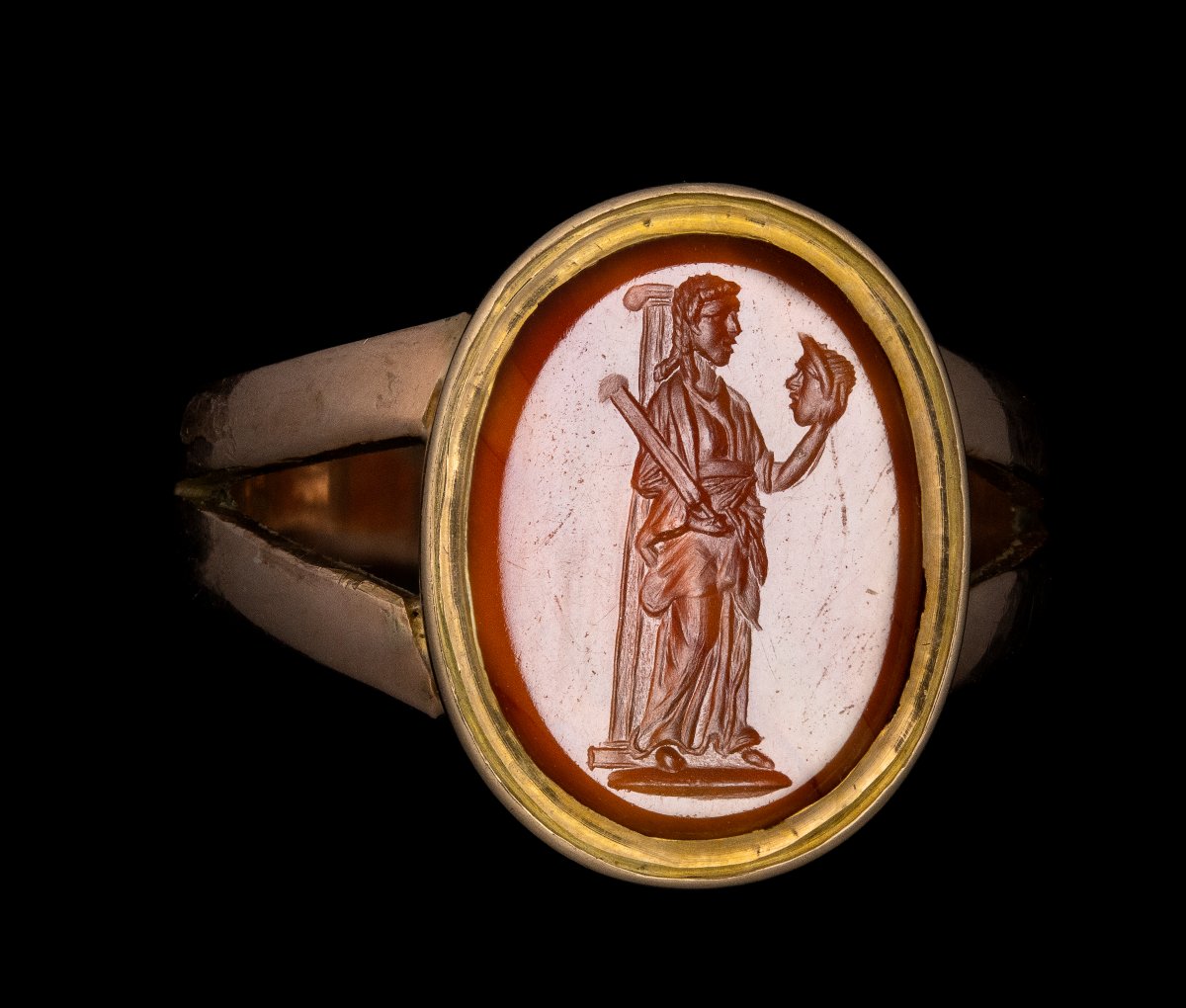
19th-century gold ring set with a Roman oval intaglio on carnelian. The engraved stone depicts Melpomene, the muse of tragedy, standing and draped in a peplos with a high belt: with one hand she raises a tragic mask surmounted by the onkos, and with the other, held across her body, she holds an inverted parazonium—a short sword—with a column rising behind her. The warm orange carnelian is set in a closed bezel, and the ring is made of plain polished gold.
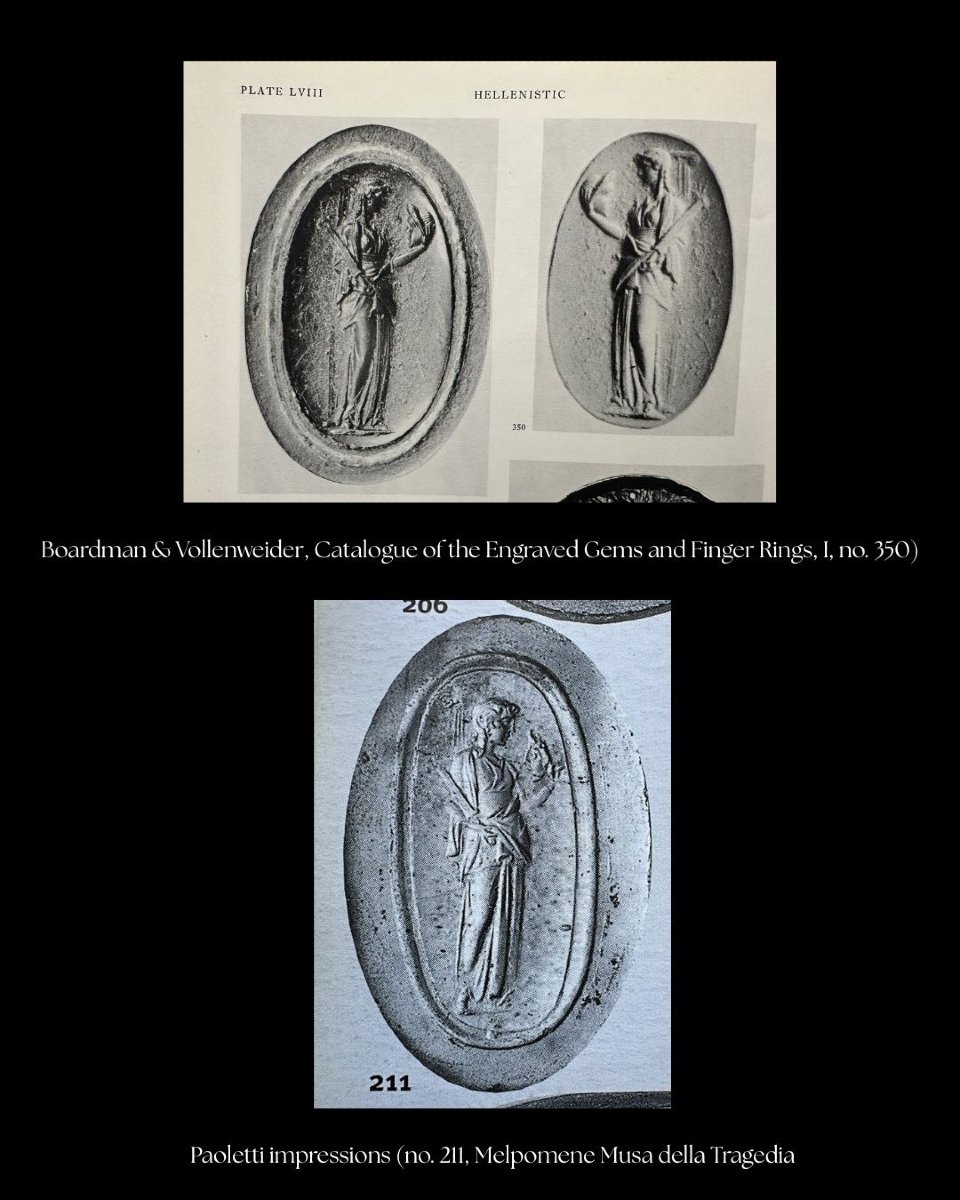
The tragic muse—mask, sword, and column—belongs to an iconography long established in ancient gemstone carving; a well-known Hellenistic prototype of this type is preserved at the Ashmolean Museum (Boardman & Vollenweider, *Catalogue of the Engraved Gems and Finger Rings*, I, no. 350). The same subject on carnelian is listed among the Paoletti impressions (no. 211, Melpomene, Muse of Tragedy), the original of which is described as an intaglio on carnelian from the Jenkins Collection in Rome (Dolce 1772, II, p. 8, L 42; impressions: Dolce 1790, II, 89; Raccolta 1802, no. 331; Cades 15, II C, 14). The stone was later set in a 19th-century gold ring.
Gold ring, 19th century, set with an oval intaglio on carnelian.
Intaglio: Roman, 1st century AD.
19th-century gold ring set with a Roman oval intaglio on carnelian. The engraved stone depicts Melpomene, the muse of tragedy, standing and draped in a peplos with a high belt: with one hand she raises a tragic mask surmounted by the onkos, and with the other, held across her body, she holds an inverted parazonium—a short sword—with a column rising behind her. The warm orange carnelian is set in a closed bezel, and the ring is made of plain polished gold.
The tragic muse—mask, sword, and column—belongs to an iconography long established in ancient gemstone carving; a well-known Hellenistic prototype of this type is preserved at the Ashmolean Museum (Boardman & Vollenweider, *Catalogue of the Engraved Gems and Finger Rings*, I, no. 350). The same subject on carnelian is listed among the Paoletti impressions (no. 211, Melpomene, Muse of Tragedy), the original of which is described as an intaglio on carnelian from the Jenkins Collection in Rome (Dolce 1772, II, p. 8, L 42; impressions: Dolce 1790, II, 89; Raccolta 1802, no. 331; Cades 15, II C, 14). The stone was later set in a 19th-century gold ring.
Explore similar pieces and discover your ideal find:
rings