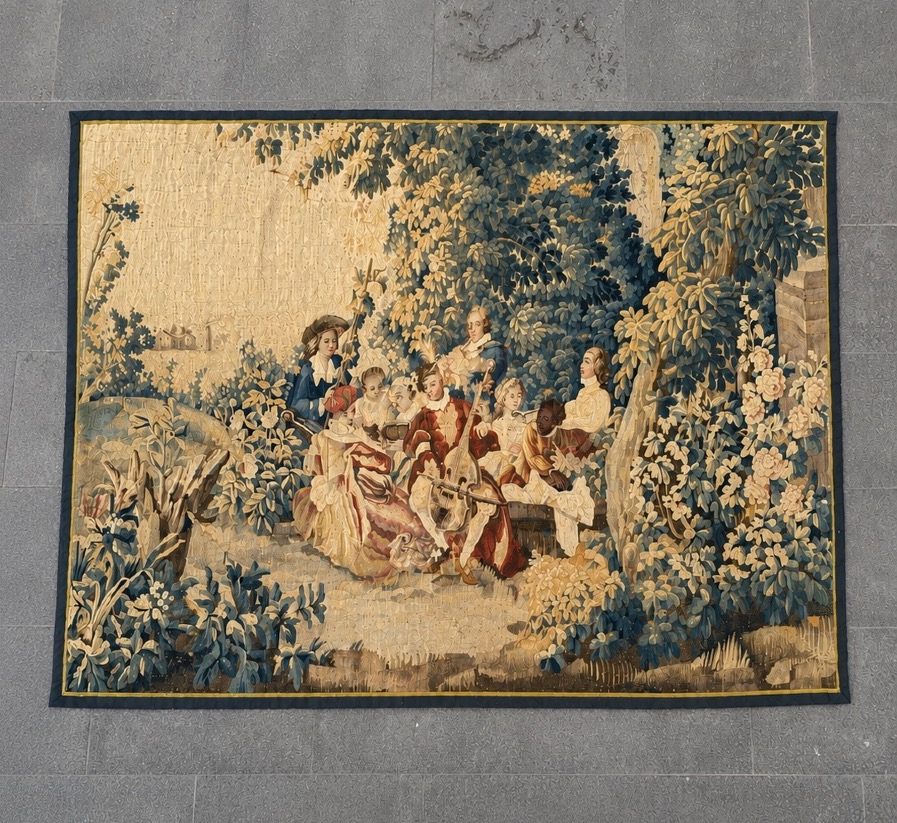
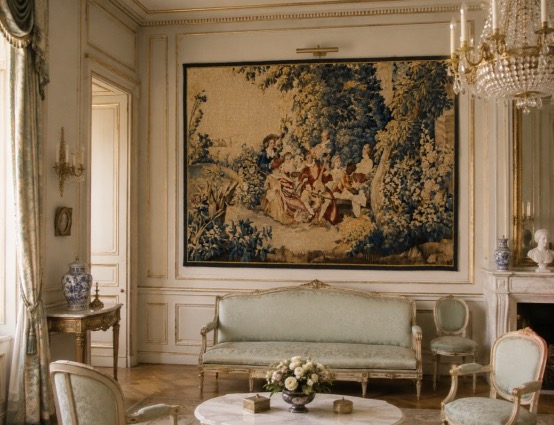
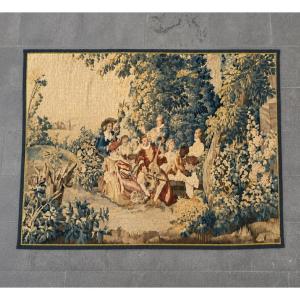


The Country Concert, 18th-century Aubusson Tapestry After Watteau
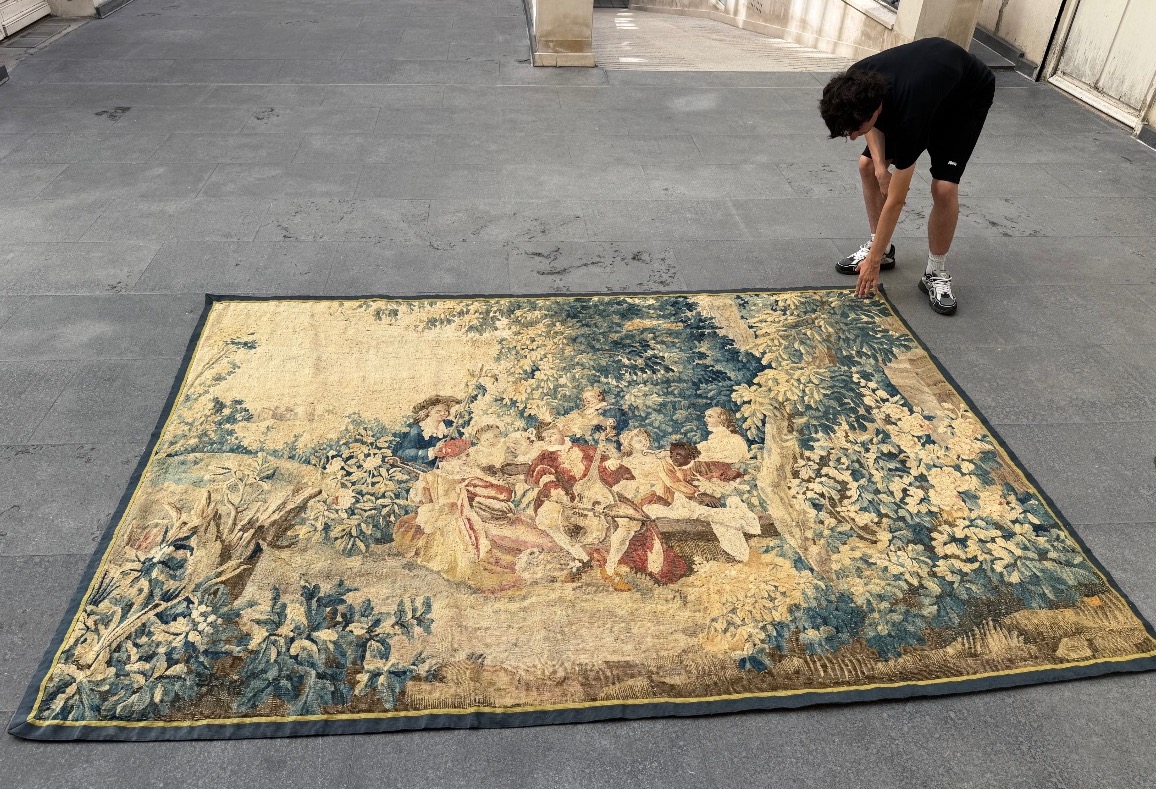
Aubusson tapestry after Antoine Watteau – *Le Concert champêtre* – Louis XV period, mid-18th century
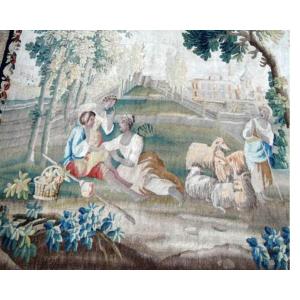
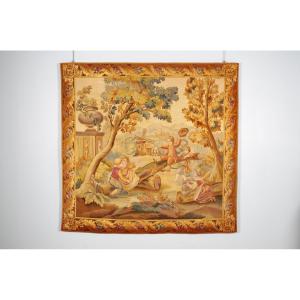
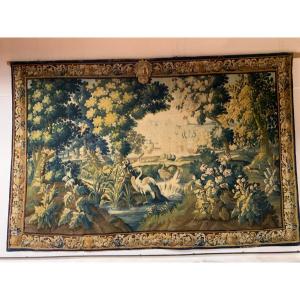
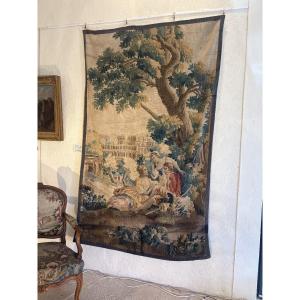
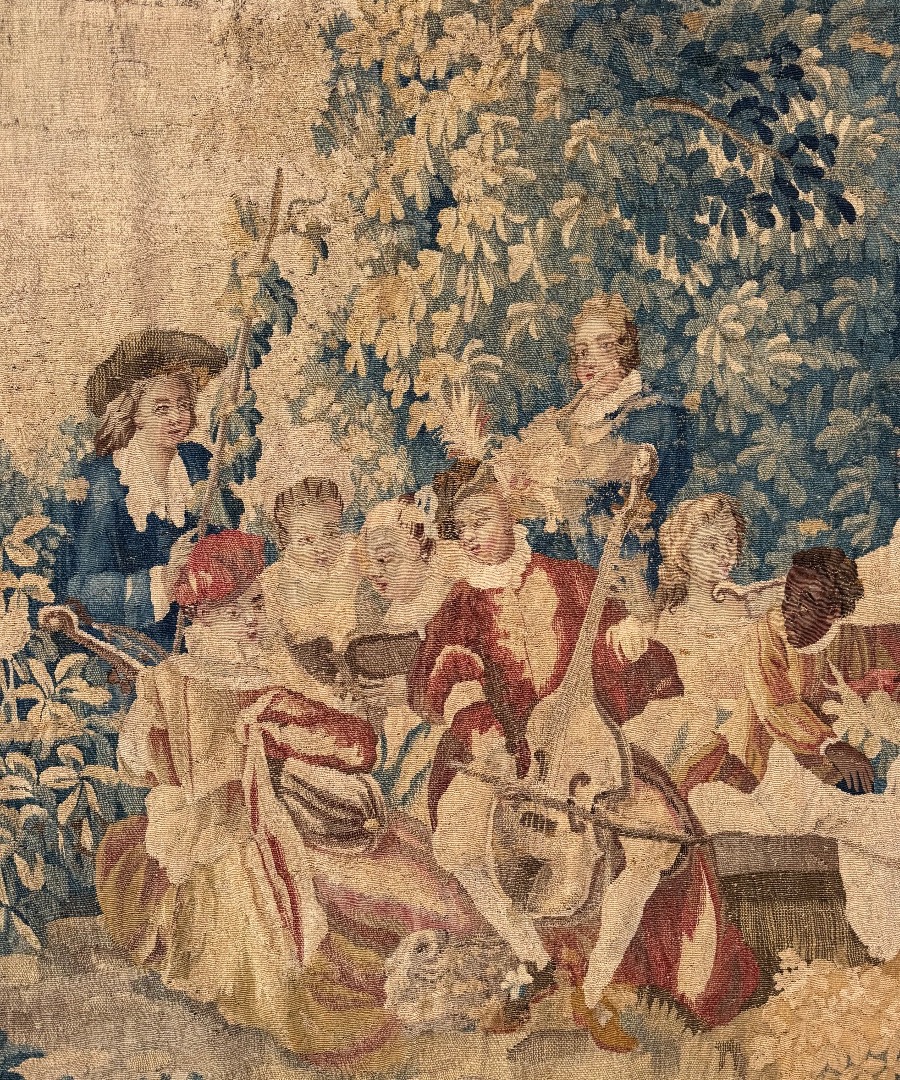
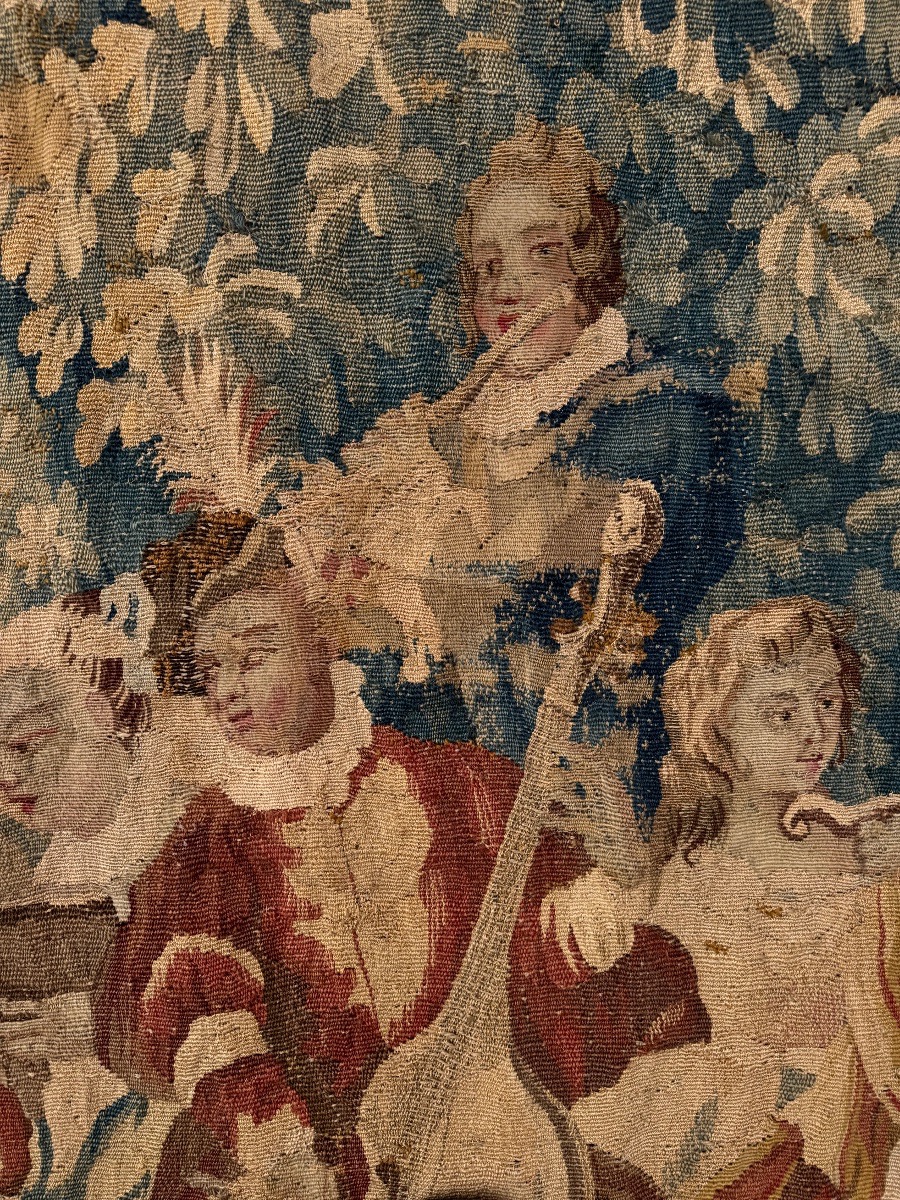
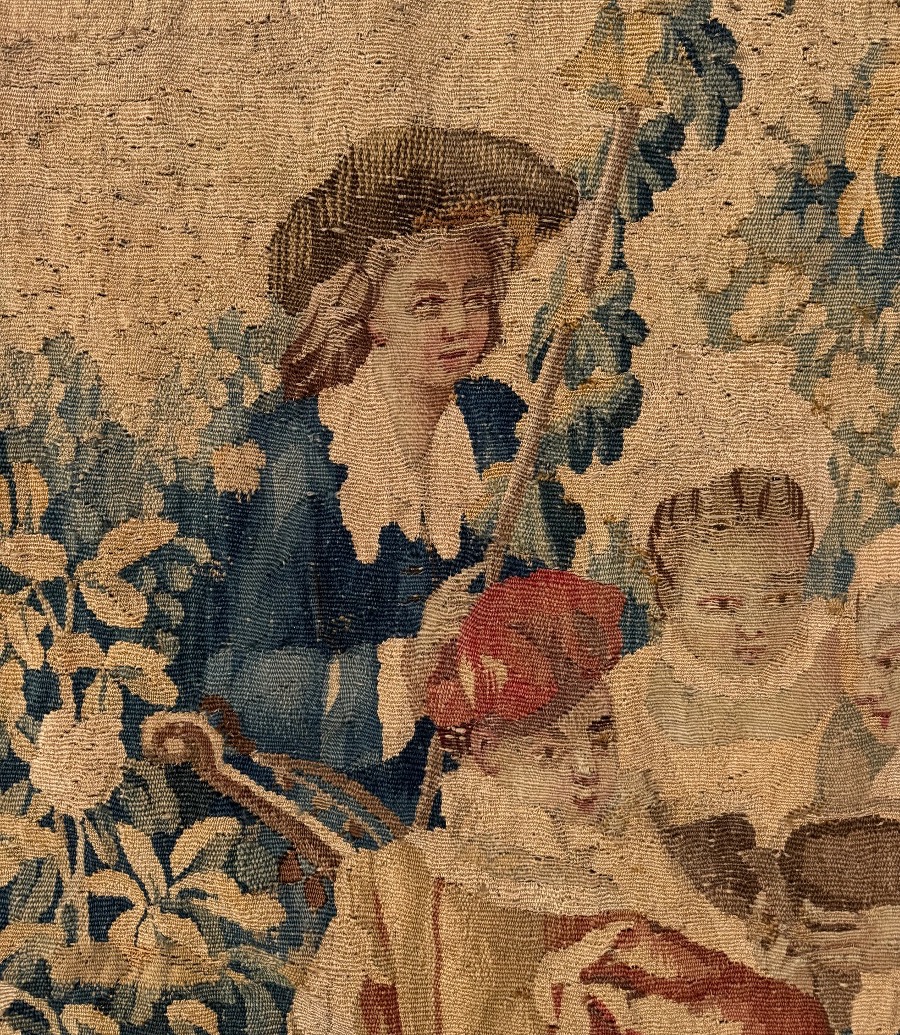
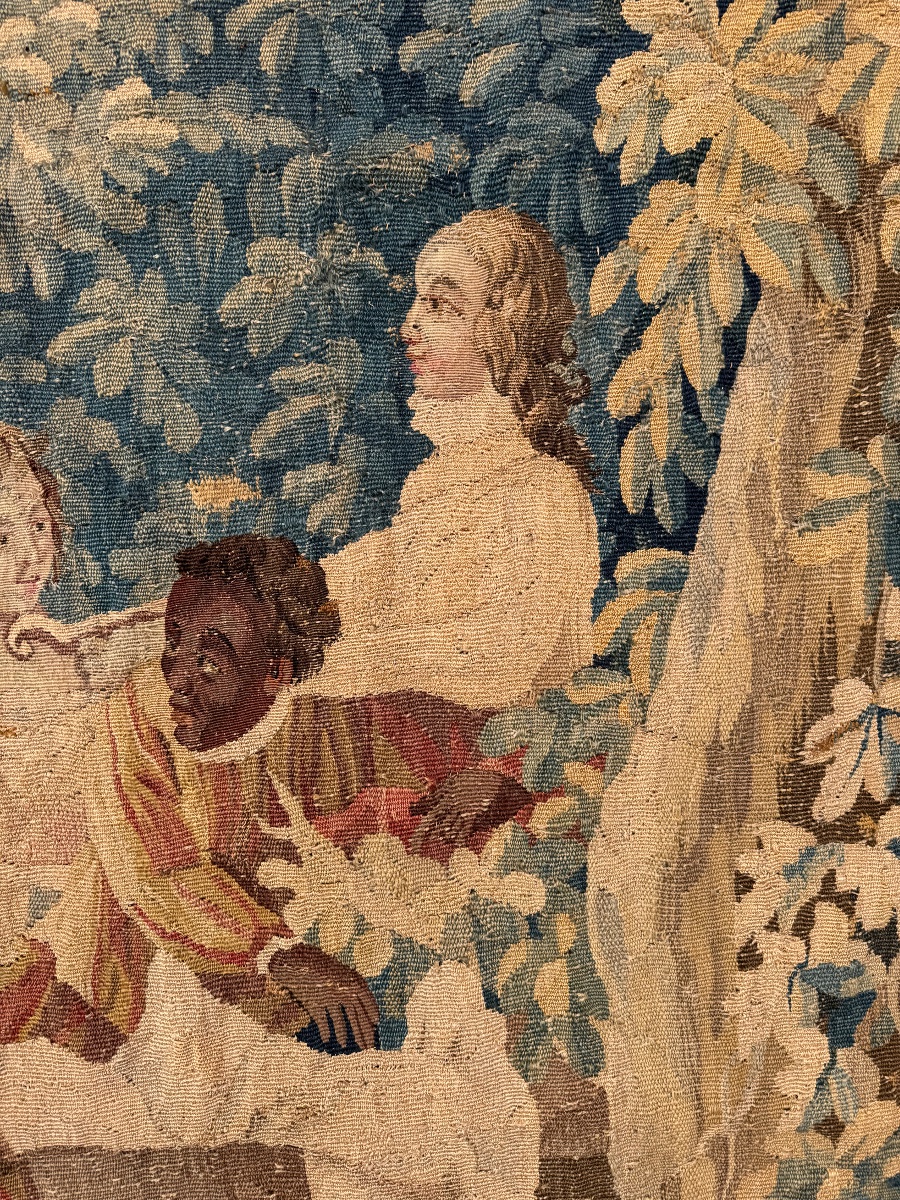
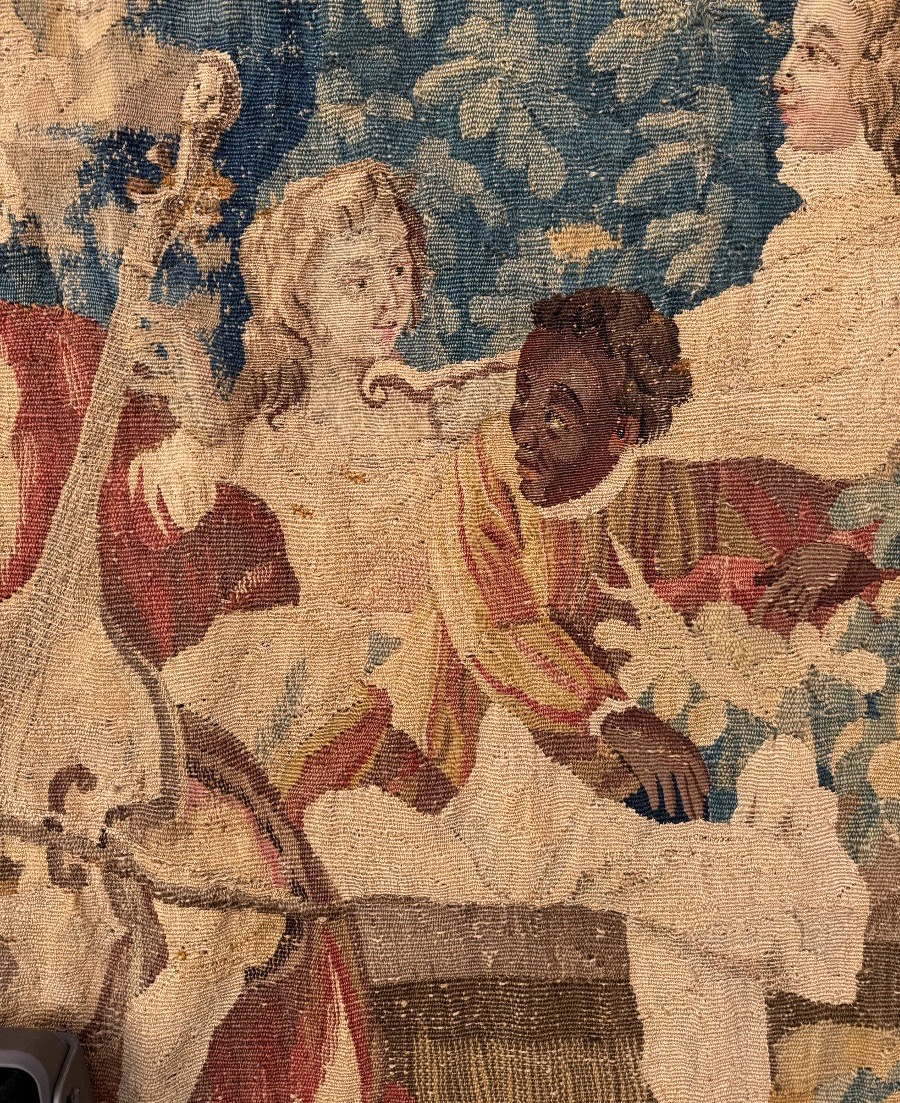
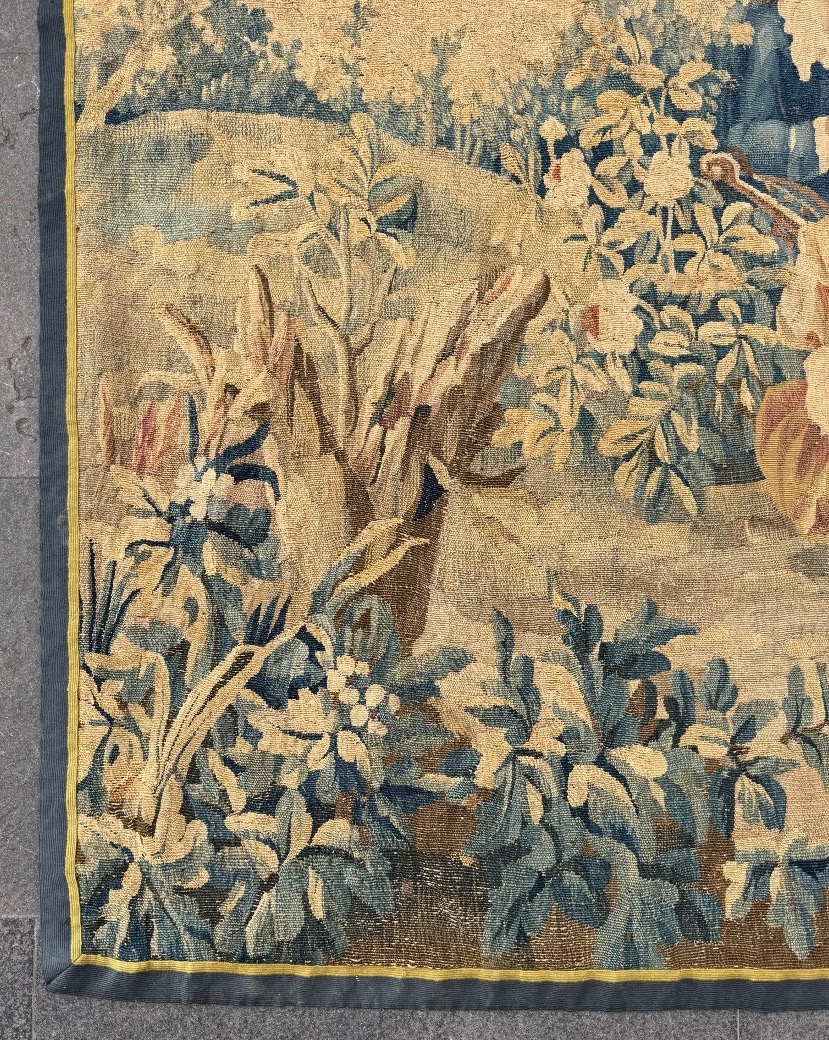
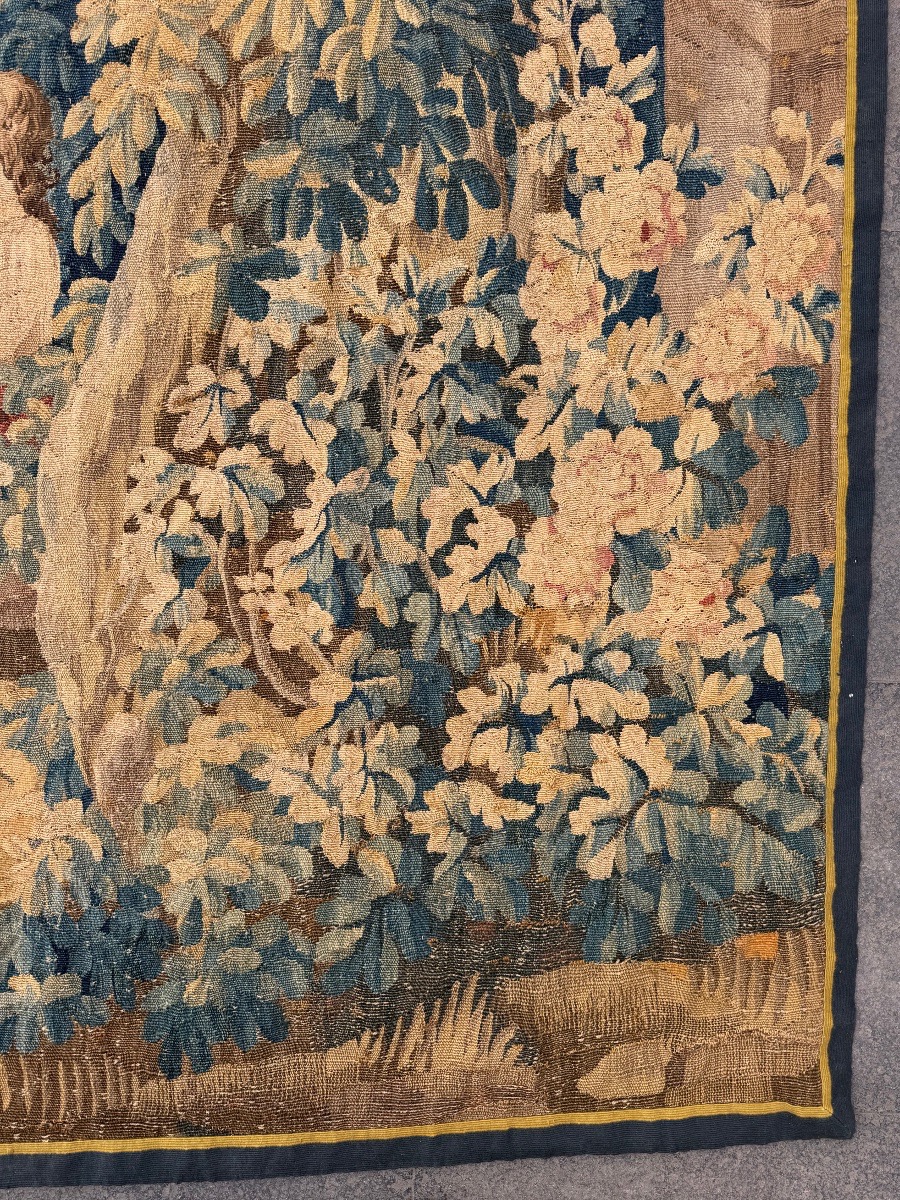
A beautiful Aubusson tapestry in wool and silk depicting a country concert, woven around 1740–1760. The scene takes place in a wooded park where a group of aristocrats has gathered to enjoy the music. In the center, a musician plays the theorbo while a flutist leads the gathering. The young women follow the score; a small dog rests in the foreground; and a young Black servant—a figure characteristic of 18th-century exotic taste—is part of the scene. This elegant gathering is set beneath large trees amid blooming rosebushes, in a landscape opening up in the distance to a mansion.
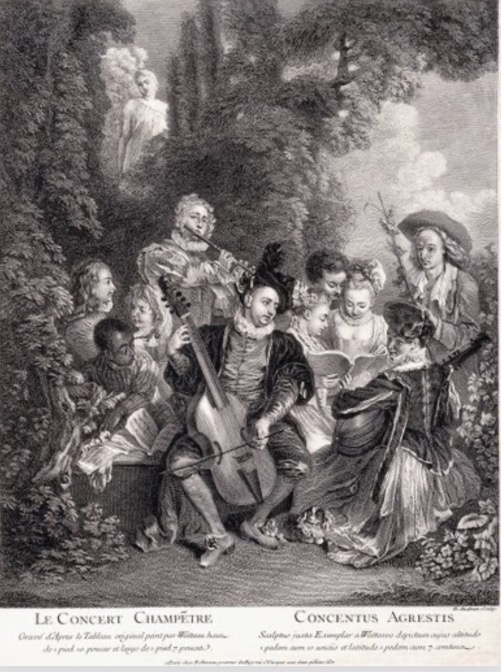
This composition belongs to the repertoire of “festes galantes” popularized by Antoine Watteau in the early 18th century. After the painter’s death, his poetic world was widely disseminated through the engravings published in the *Recueil Jullienne*, which inspired the painters and design artists at the Aubusson manufactories. This tapestry thus captures the spirit of Watteau’s *Concert champêtre*, while adapting the composition to create a more expansive and monumental setting, perfectly suited to the wall hanging.
The Aubusson weaving mill was then in its golden age. Commissions from the nobility and the upper middle class favored these refined scenes of music, conversation, and strolls, whose elegance perfectly complemented the interiors of the Louis XV era. The delicate color palette, dominated by blues, soft greens, and cream tones, as well as the richness of the botanical motifs, are characteristic of mid-18th-century Aubusson productions.
The Black figure, rarely depicted with such prominence in Aubusson tapestries, is a particularly original element that underscores the refinement and taste for the exotic characteristic of the Age of Enlightenment.
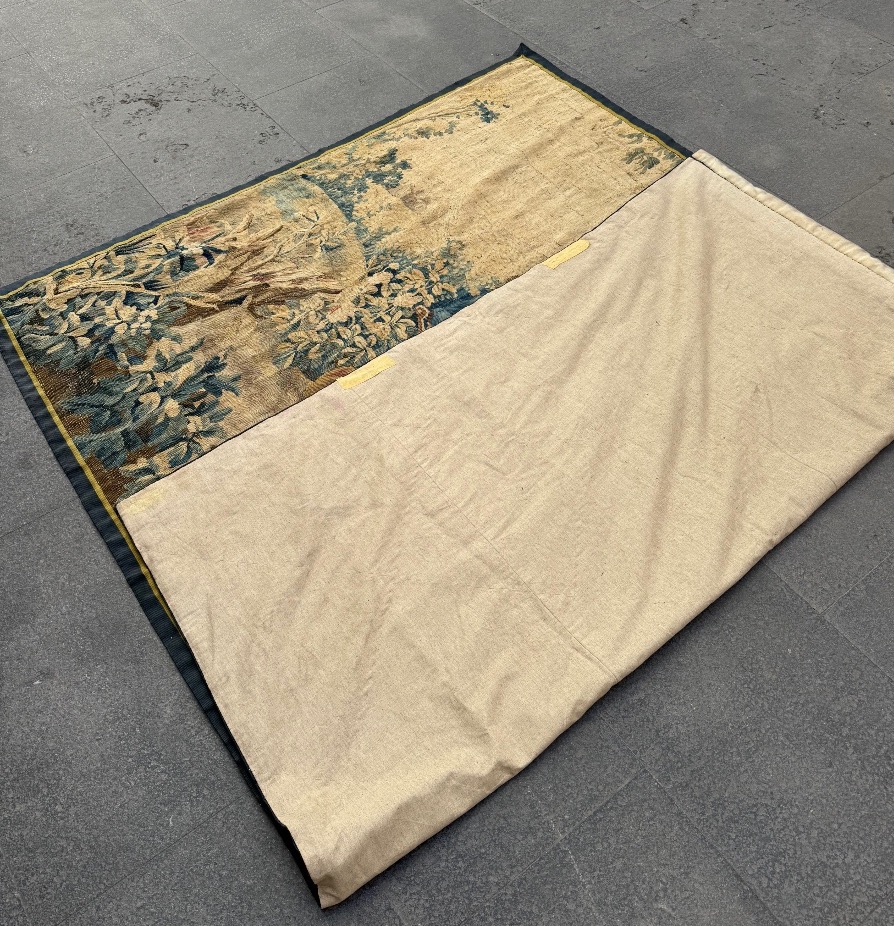
Historic conservation backing on the reverse and later braiding. In good overall condition, with a few small historic restorations and slight wear in the lightest areas.
Antoine Watteau (1684–1721) was one of the greatest French painters of the 18th century and the creator of the “fêtes galantes” genre, a status cemented by his admission to the Royal Academy of Painting in 1717. Born in Valenciennes, he developed a poetic world in which young aristocrats gather in idealized parks, combining music, dance, theater, and conversation. His art is distinguished by a highly delicate touch, a luminous palette, and a profound melancholic sensibility. Inspired by the commedia dell’arte, he profoundly revitalized French painting by emphasizing the elegance of gestures and atmosphere rather than narrative. After his untimely death at the age of thirty-six, his work enjoyed immense success thanks to the engravings published by his friend and collector Jean de Jullienne, which widely disseminated his compositions throughout Europe. Tapestry workshops, notably Aubusson, then drew inspiration from these designs to create sumptuous tapestries for aristocratic residences. Watteau’s influence left a lasting mark on the entire Rococo style and inspired artists such as Nicolas Lancret, Jean-Baptiste Pater, and François Boucher. Even today, he is considered one of the undisputed masters of 18th-century French painting.
Period: 18th century
Style: Louis 15th - Transition
Condition: Good condition
Material: Wool
Length: 290
Height: 190
Reference (ID): 1792868
Availability: In stock