

Francesco Fieravino, Known As “il Maltese” (malta 1611 – Rome 1654), Attributed To Him, Still Life With Armor
Francesco Fieravino, known as Il Maltese (Malta 1611 – Rome 1654), attributed to
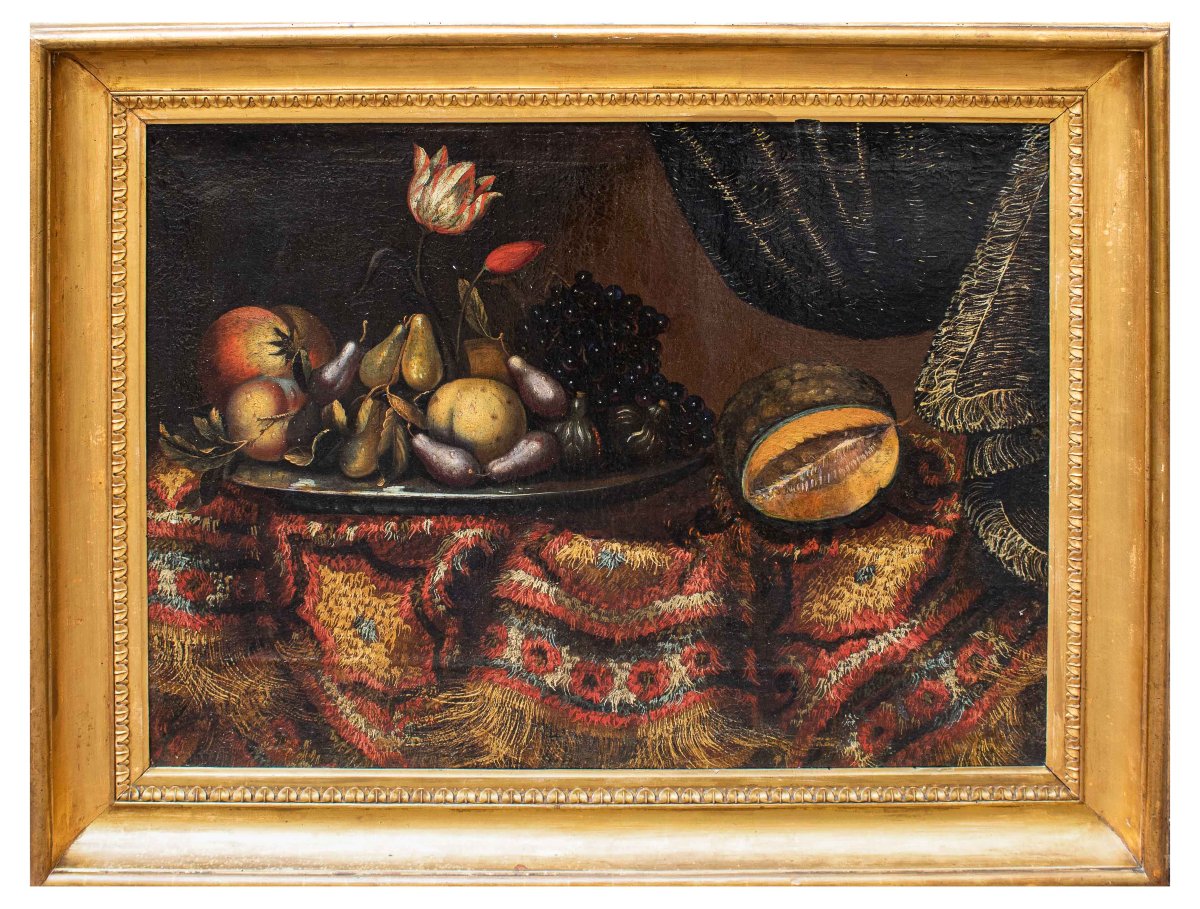
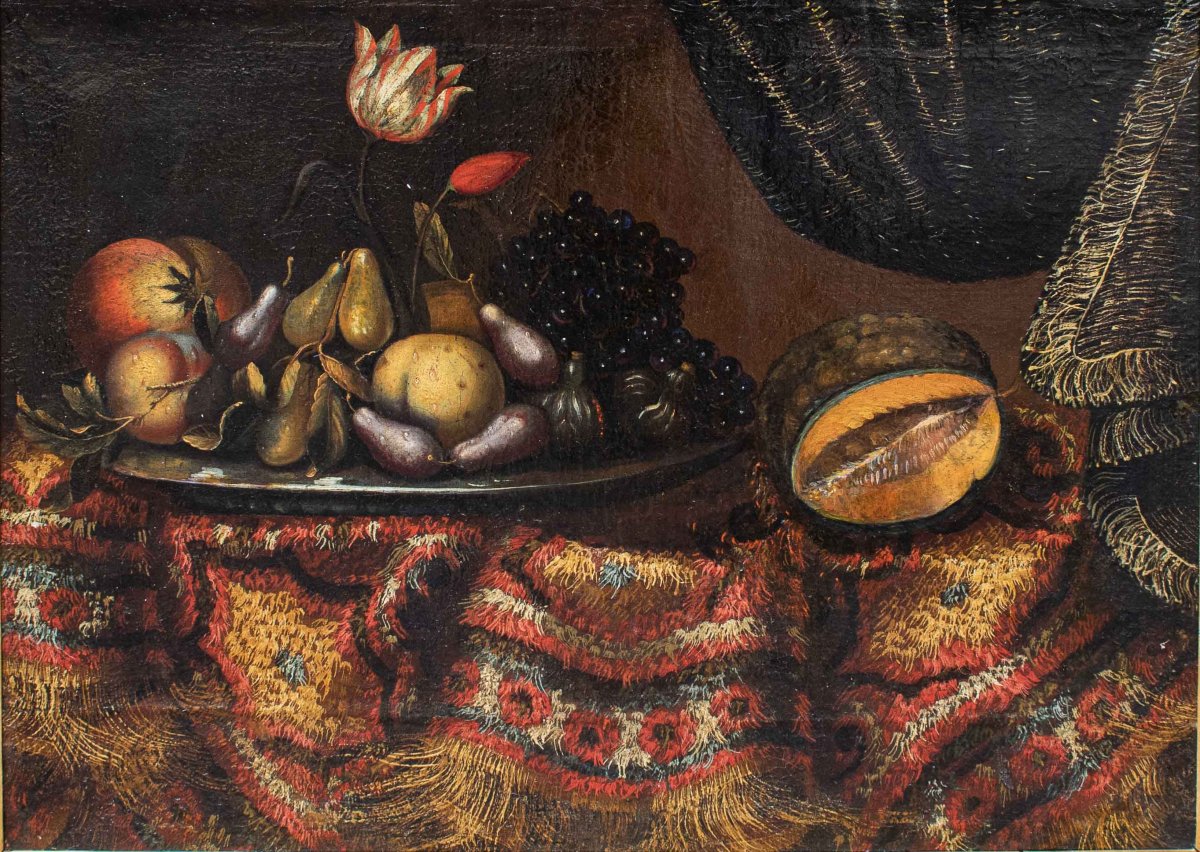
Still Life with Armor, Rug, and Curtains
Oil on canvas, 94 x 120 cm
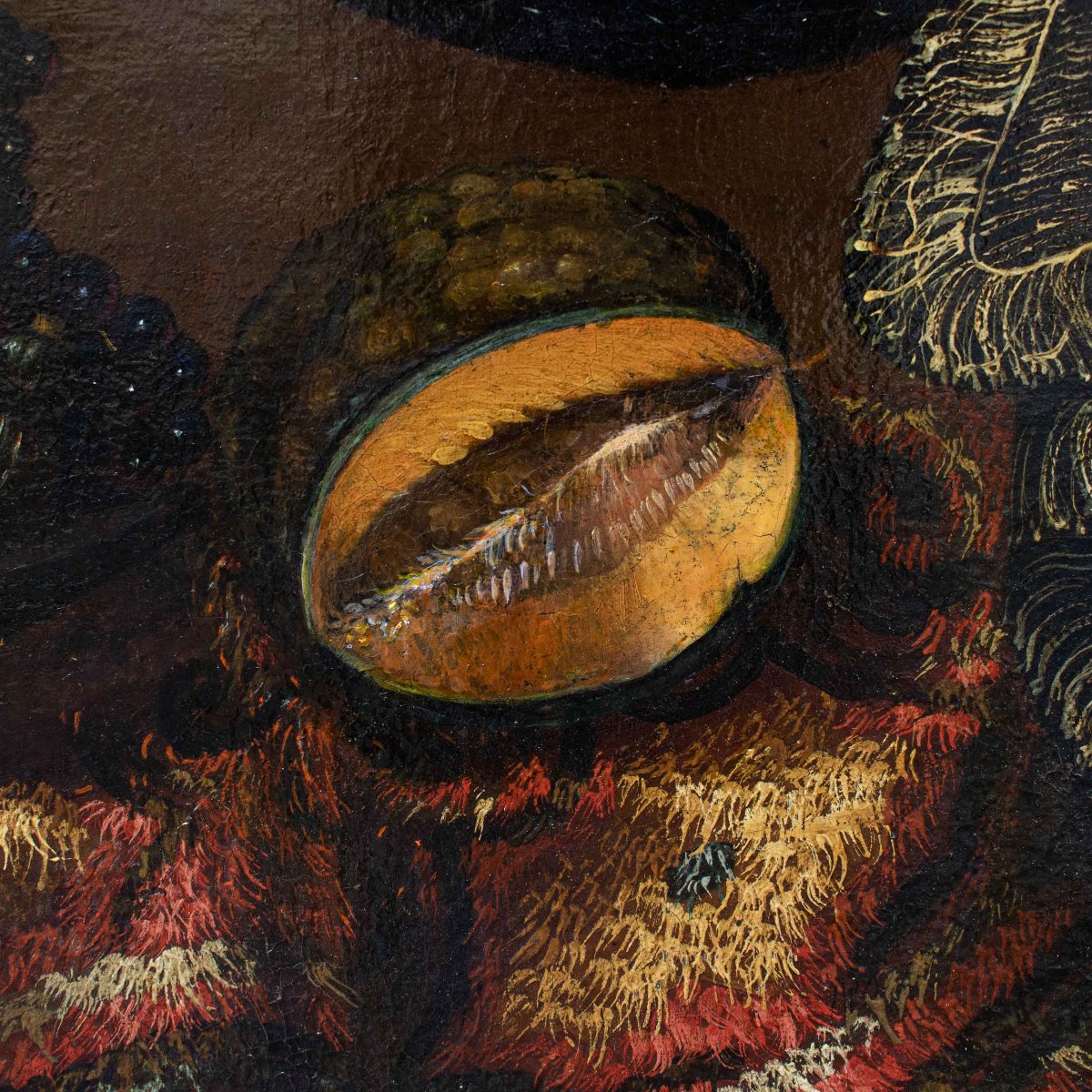
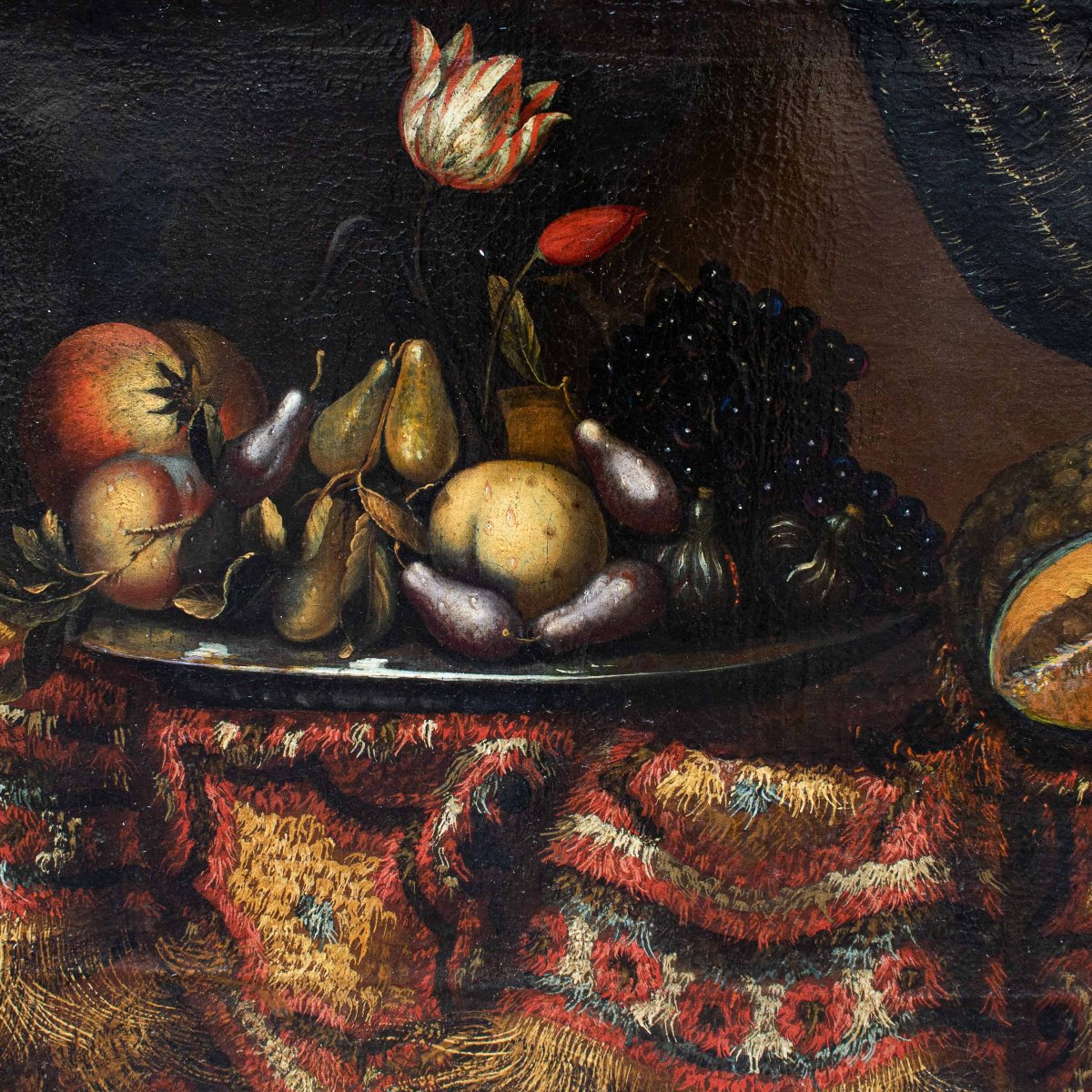
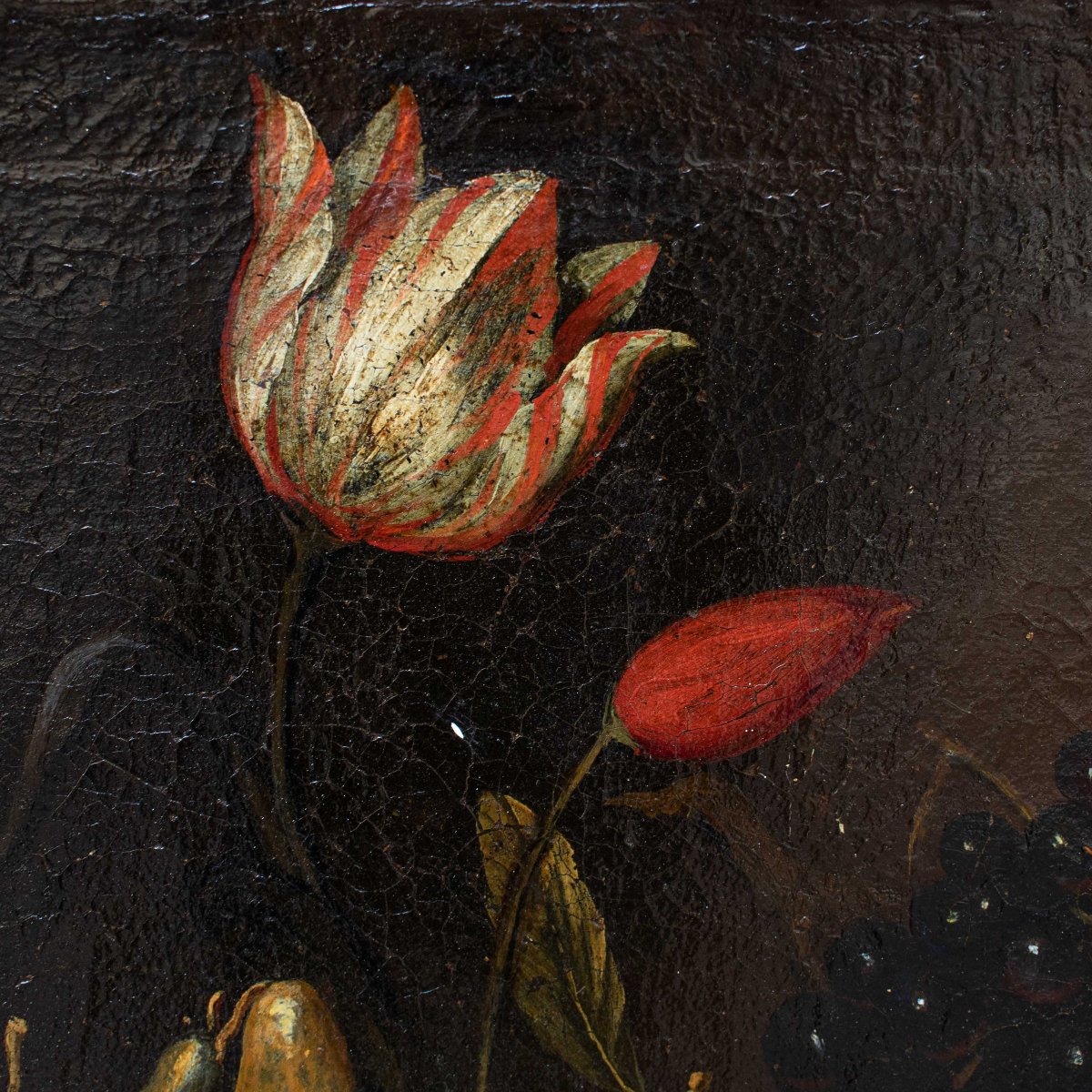
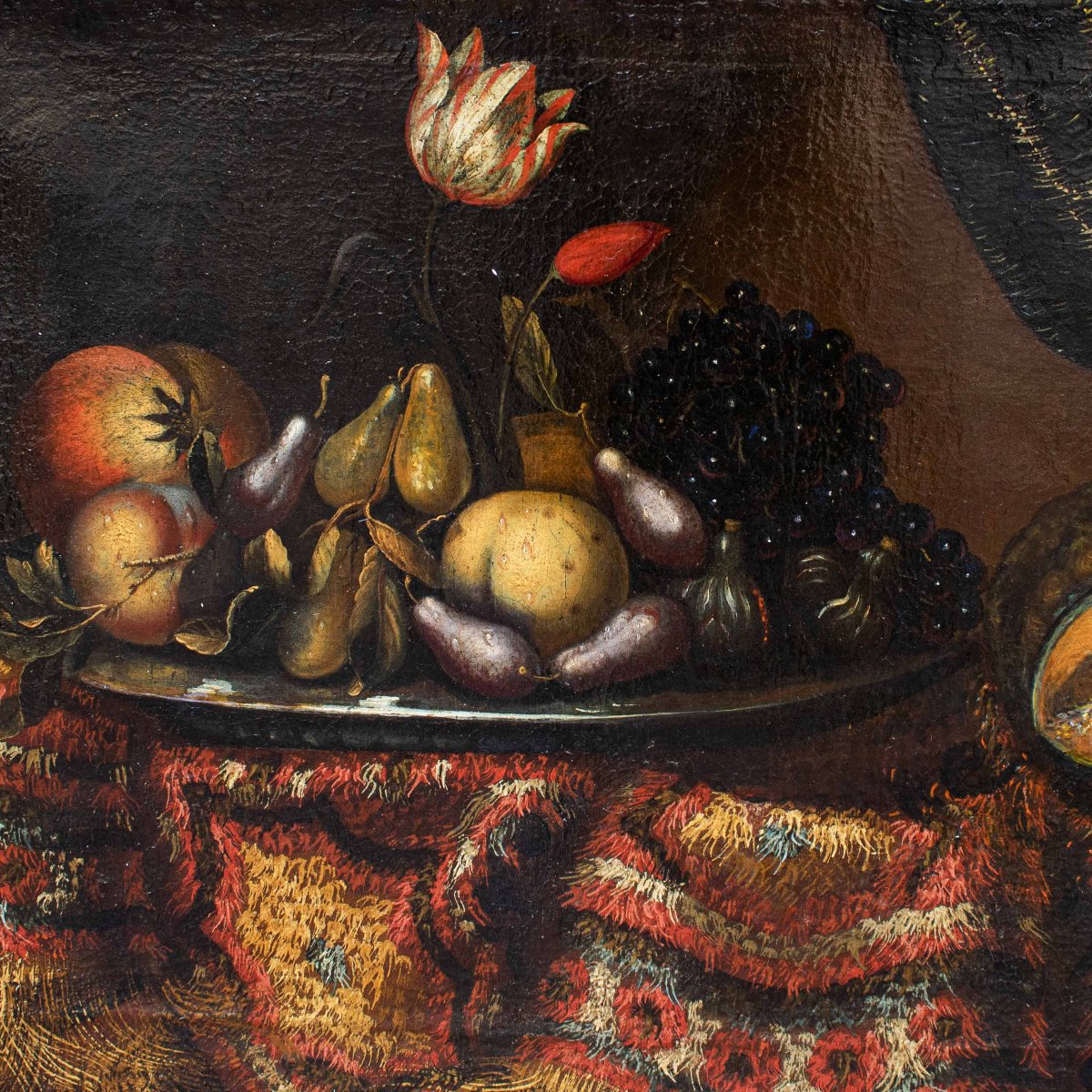
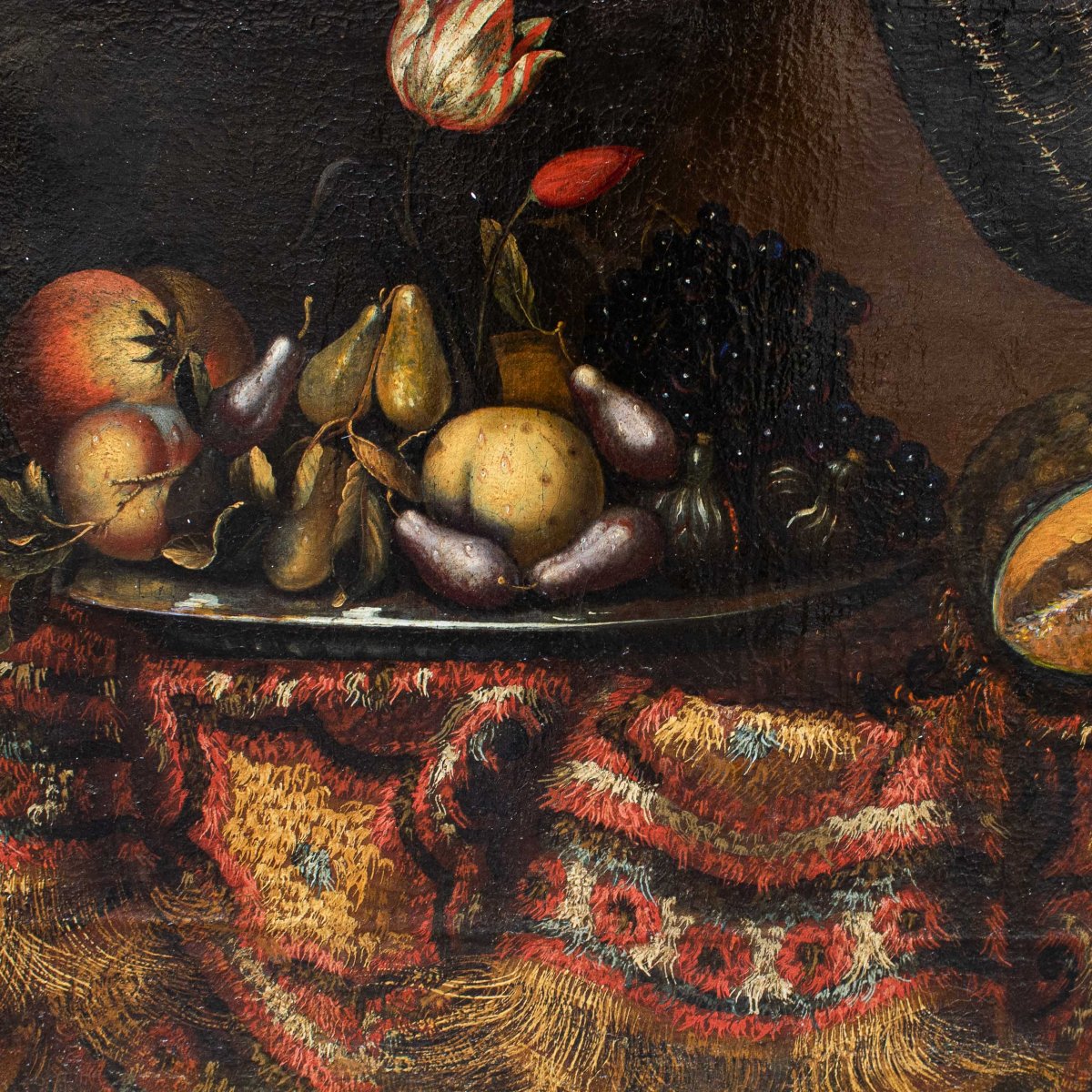
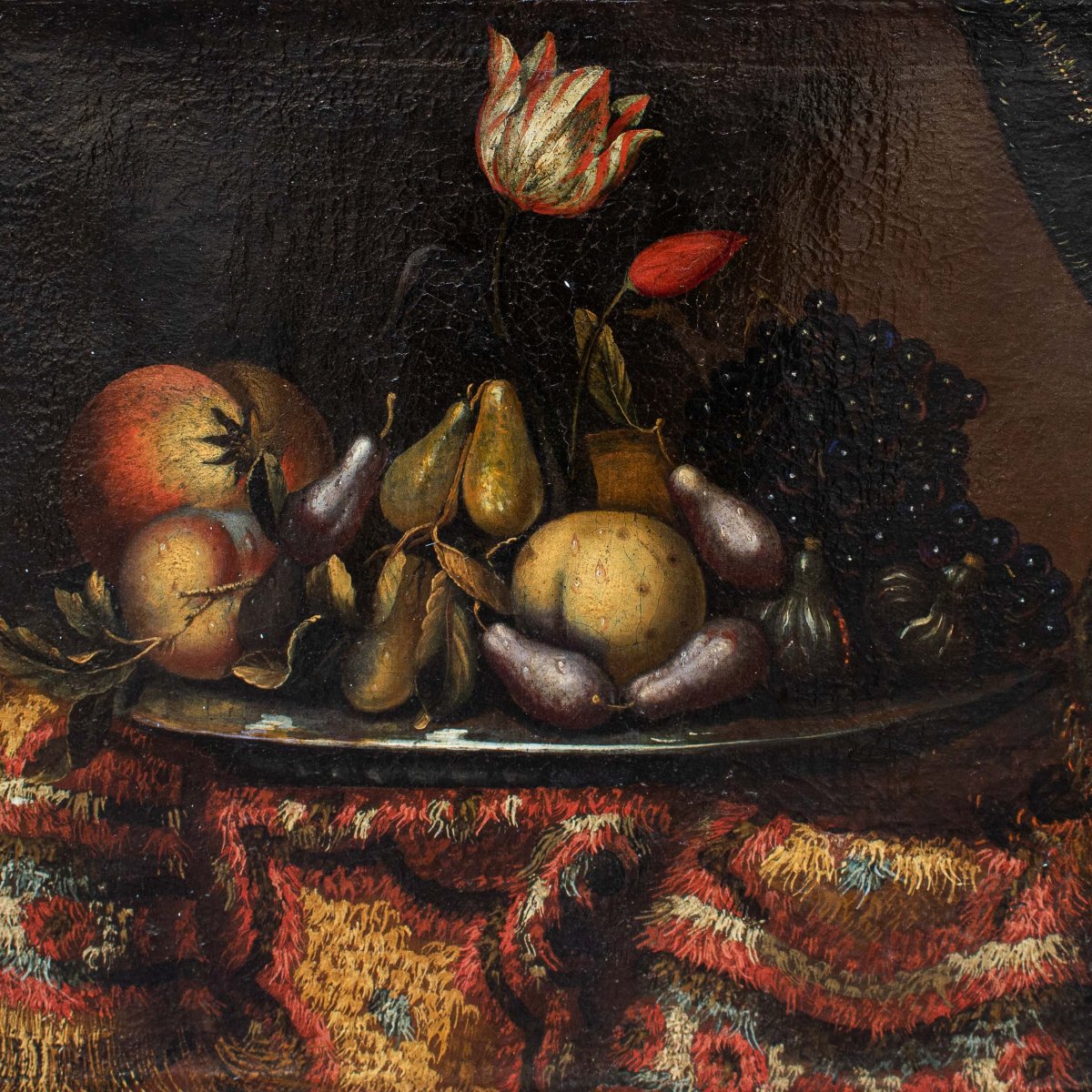
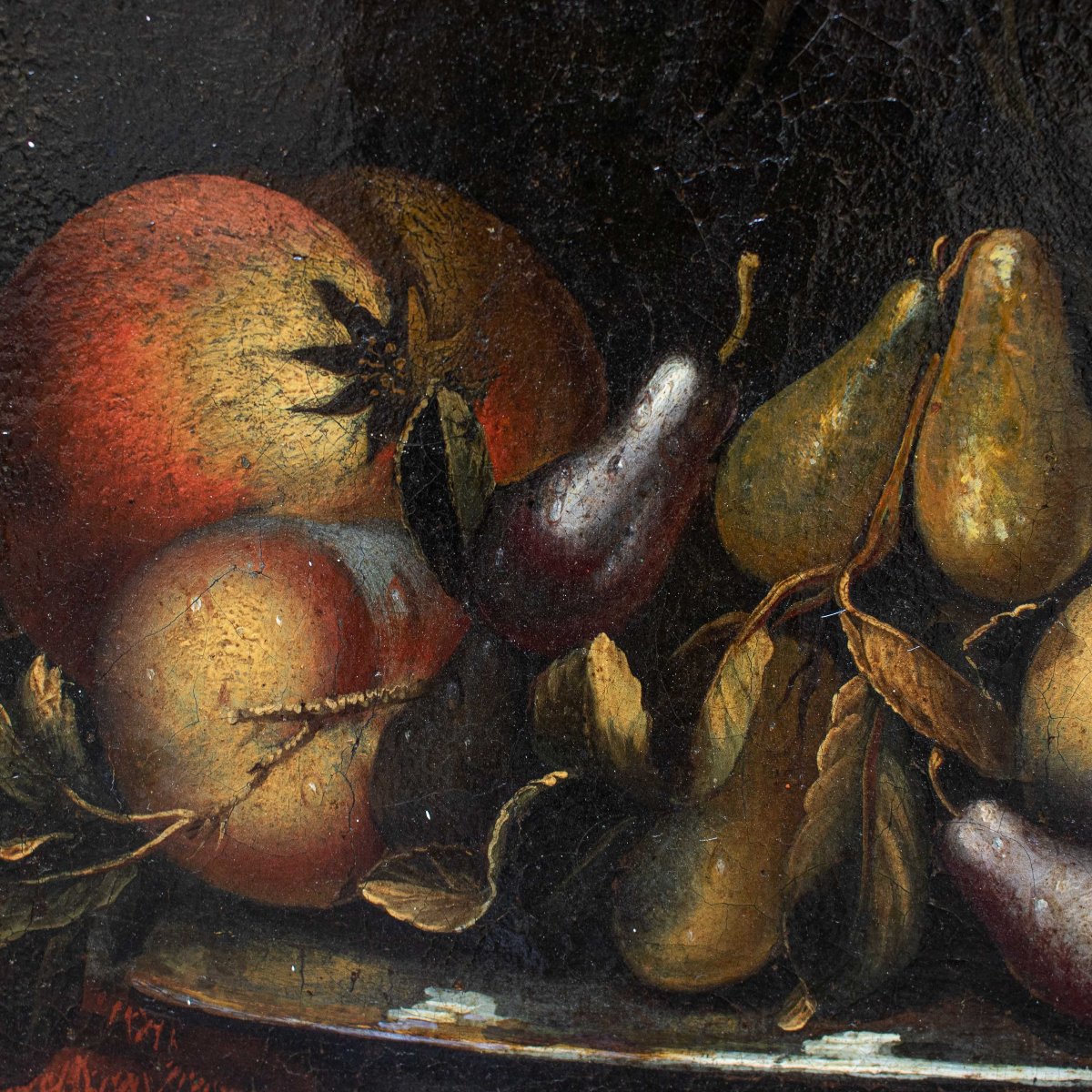
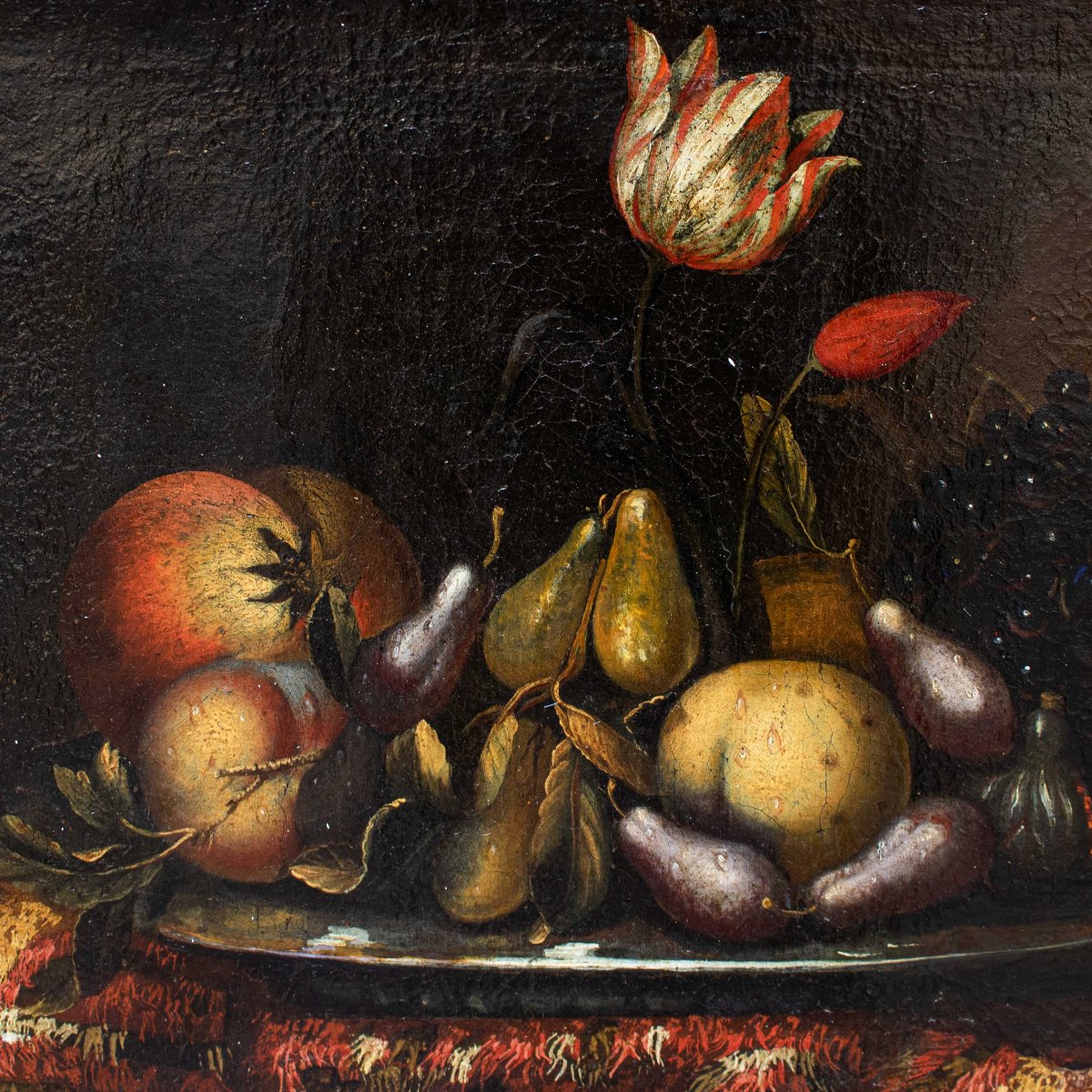
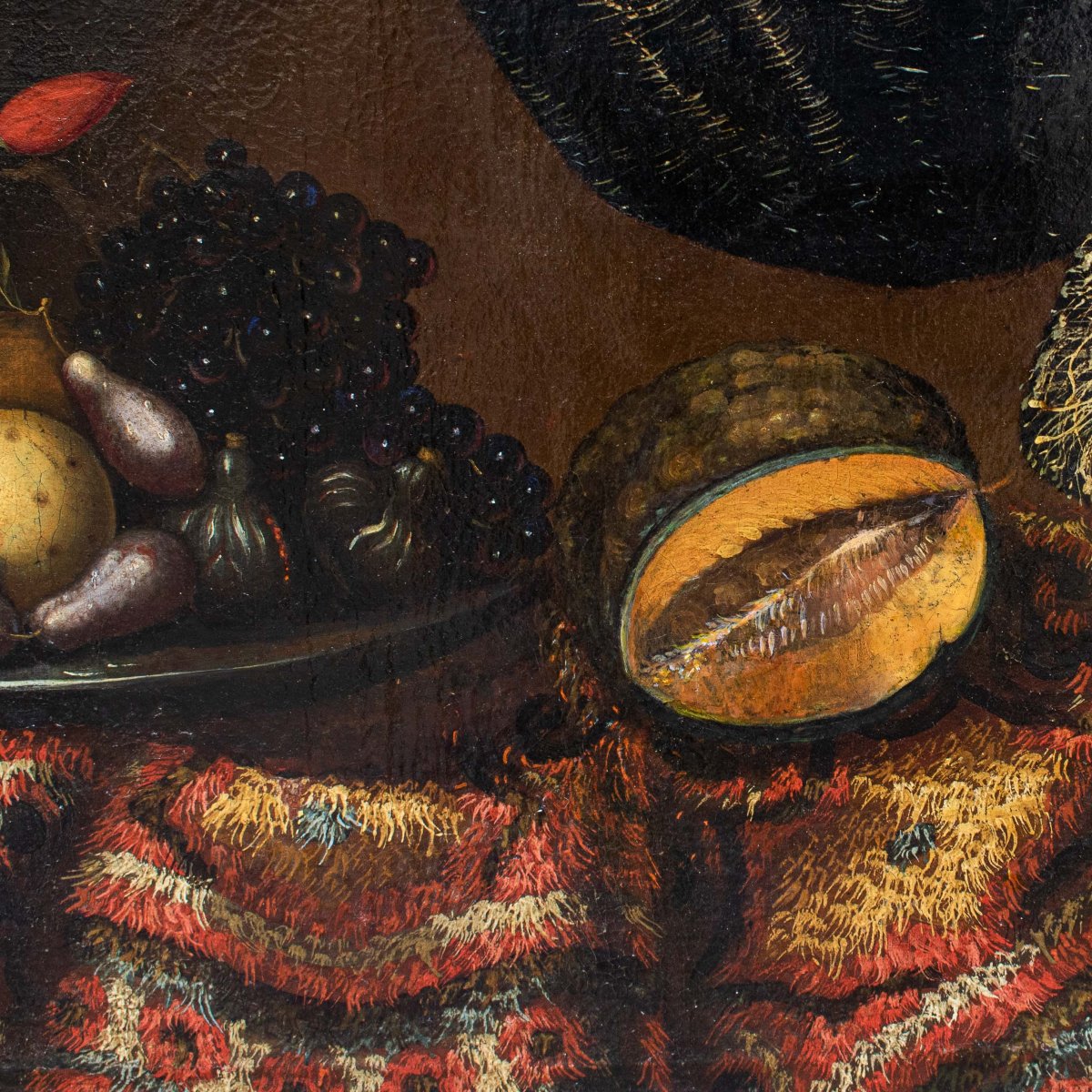
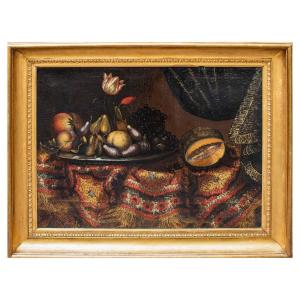
The canvas attributed to Francesco Fieravino, known as “Il Maltese,” depicts a still life with armor, a rug, and drapery—elements frequently used by other artists of the time, such as Giovanni Domenico Valentini, Carlo Manieri, and Antonio Tibaldi; the canvas’s dimensions, 90 x 130 cm—also known as a “tela d’imperatore”—were among the most common in Baroque Rome. Our artist was long confused with Benedetto Fioravanti and with the painter Francesco Noletti, who was also of Maltese origin and was therefore given the same nickname upon his arrival in Rome. It was only after the discovery of a portrait painted by Noletti, housed at the Foundation for International Studies in Valletta, that it became possible to distinguish between the two artists. Francesco Fieravino was born in Malta in 1611 and worked primarily in Rome between 1630 and 1654, where his principal patron, the Knight of Malta Pietro Casarini, resided. His was a successful career, given that his still lifes were highly sought after by the Roman nobility, so much so that some of them were part of the collection of the powerful Barberini family, whose inventories are the first to mention the “Maltese” between 1631 and 1636 as the artist of an *Agony in the Garden* and, subsequently, in 1661, a Francesco Maltese is noted as a specialist in paintings featuring tapestries, two of which are reproduced in engravings by Jacobus Coelemans in 1703 and 1704 (Omins salus in ferrus est and Quaedam sensum instrumenta). In the absence of signed works, these two engravings have served as starting points for identifying the artist’s hand. Upon his death, the anonymous compiler of his death certificate took care to describe him as a celebrated painter, attesting to his widespread fame. However, the body of work attributed to Maltese remains limited even today, although studies over the past few decades have strived to better define the profile of this painter, one of the best-known and most interesting figures in the still-life genre during the reigns of Pope Urban VIII Barberini and Pope Alexander VII Chigi in Rome, both of whom belonged to two of the wealthiest patron families of 17th-century art collecting. In more recent years, Fieravino’s hand has been recognized in three works housed at the Bilbao Museum of Fine Arts. His opulent still lifes are characterized by the presence of sumptuous Oriental rugs, richly colored tapestries, and drapery that envelops tables and shelves, as well as flowers and fruits arranged in a jumble alongside a few precious objects, musical instruments, and framed pictures or mirrors. The work in question exhibits precisely these characteristics: on a large surface covered by a black damask rug, parts of a fine suit of armor, spears, feathers, and a small statue on the far right, as well as a bowl of flowers in the lower left corner and a large red drape, which offers a glimpse of part of a bas-relief in the background. The choice of objects is not random but stems from a high-ranking patron who wished to express his values in this way: namely, warrior honor—hence the choice of weapons—and an interest in culture and the arts, as indicated by the presence of sculptures. Note the painter’s remarkable ability to depict objects in minute detail, reaching the pinnacle of virtuosity in the rendering of the fabric and the chiseled bronze details of the armor
Period: 17th century
Style: Other Style
Condition: Good condition
Material: Oil painting
Width: 120
Height: 94
Reference (ID): 1791240
Availability: In stock