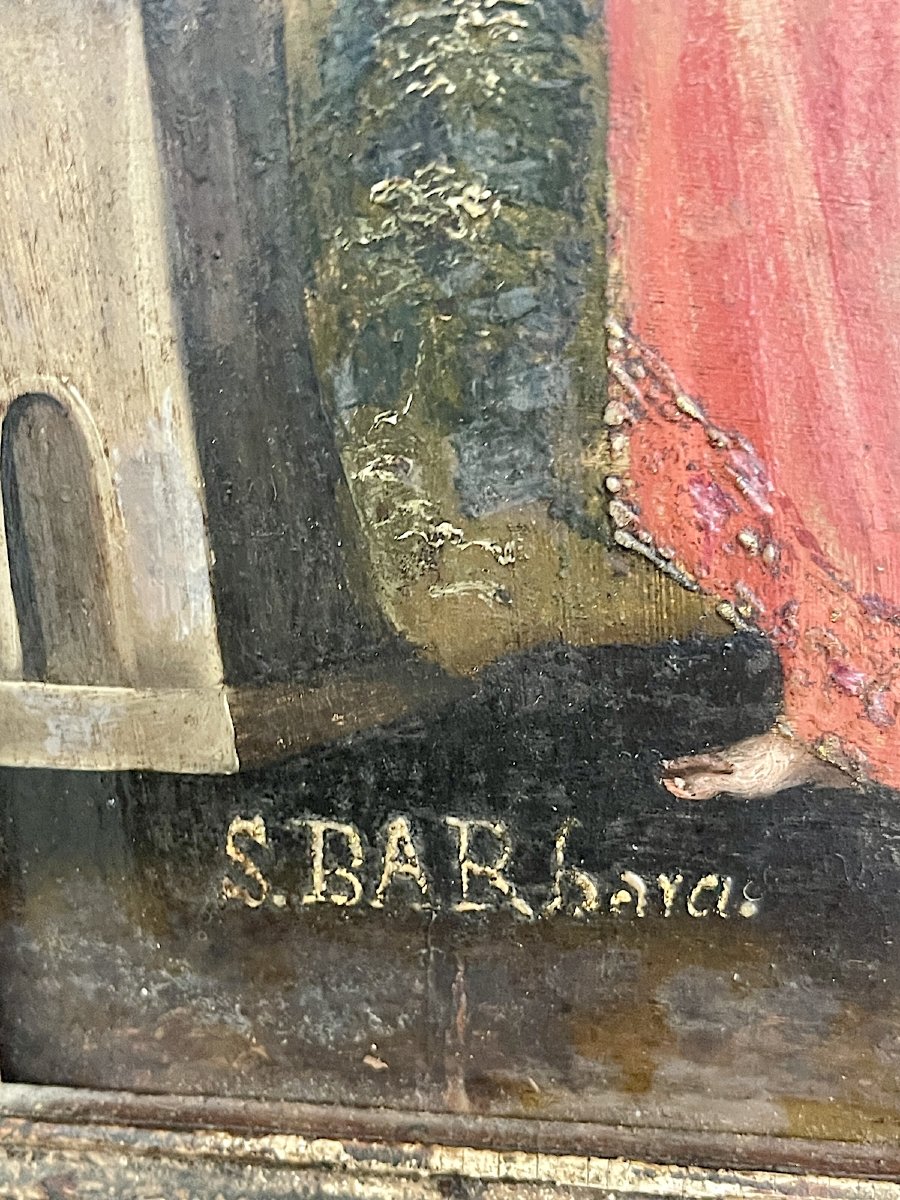


Saint Barbara, Oil On Panel, Devotional Altarpiece, Hispano-colonial School, 17th Century
Artist: Ecole Hispano-coloniale Du 17ème Siècle
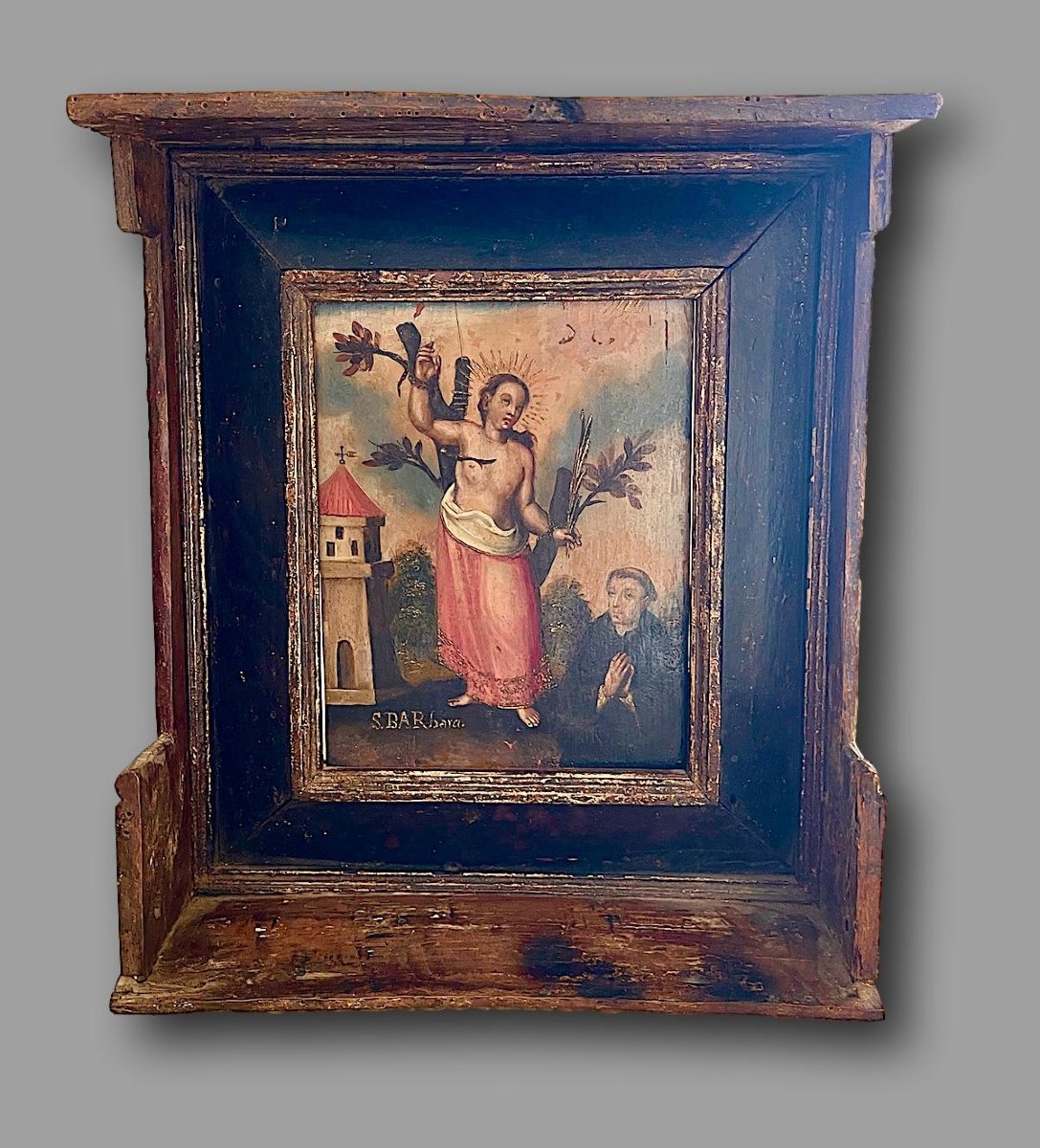
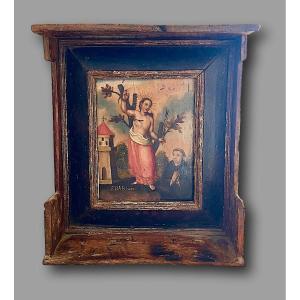
A rare and deeply appealing devotional painting of Saint Barbara, executed in oil on a wooden panel and preserved in its exceptional original architectural frame, which forms a veritable miniature domestic altarpiece.
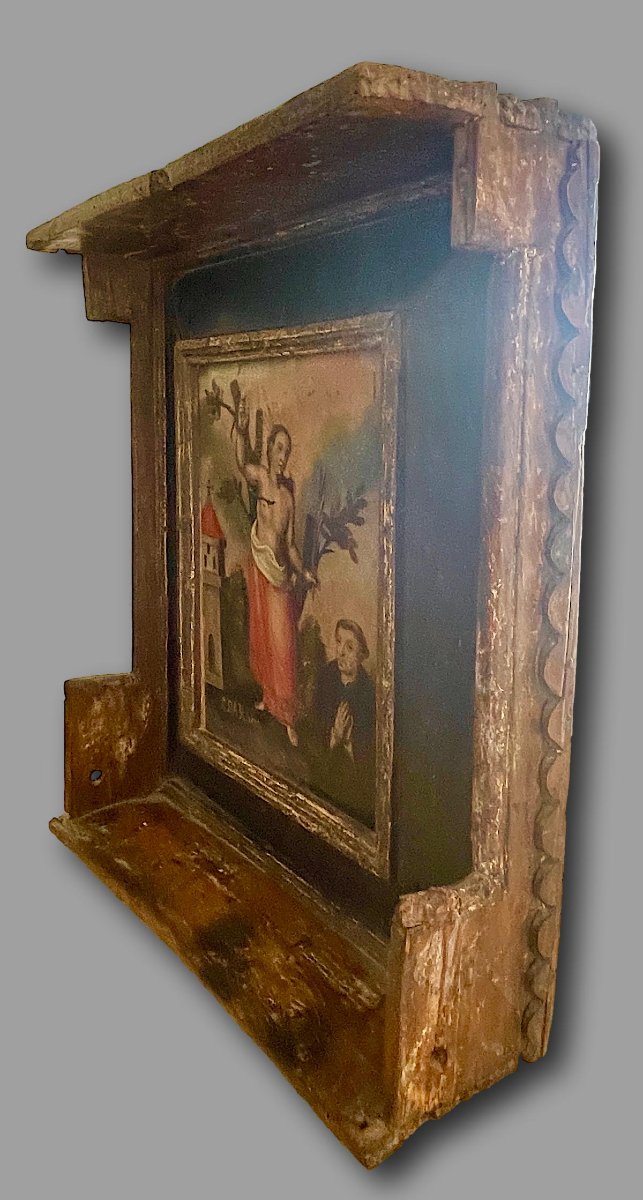
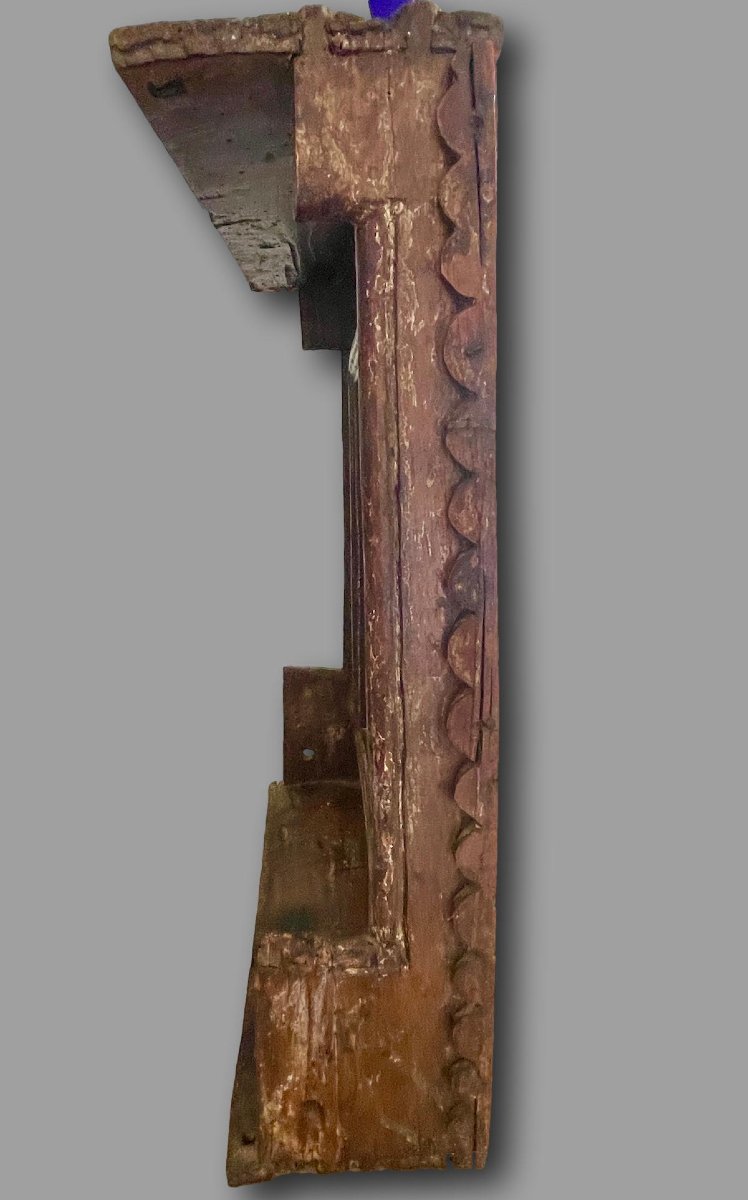
The panel measures 24 × 19.5 cm, while the complete piece—including the frame—measures 39 × 35 cm with a remarkable depth of 10 cm, transforming the work into a true liturgical object intended for private devotion.
The entire piece appears to be completely period-authentic.
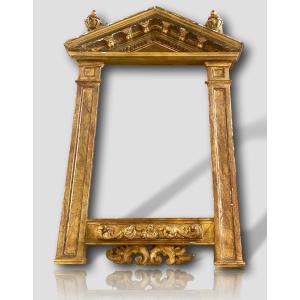
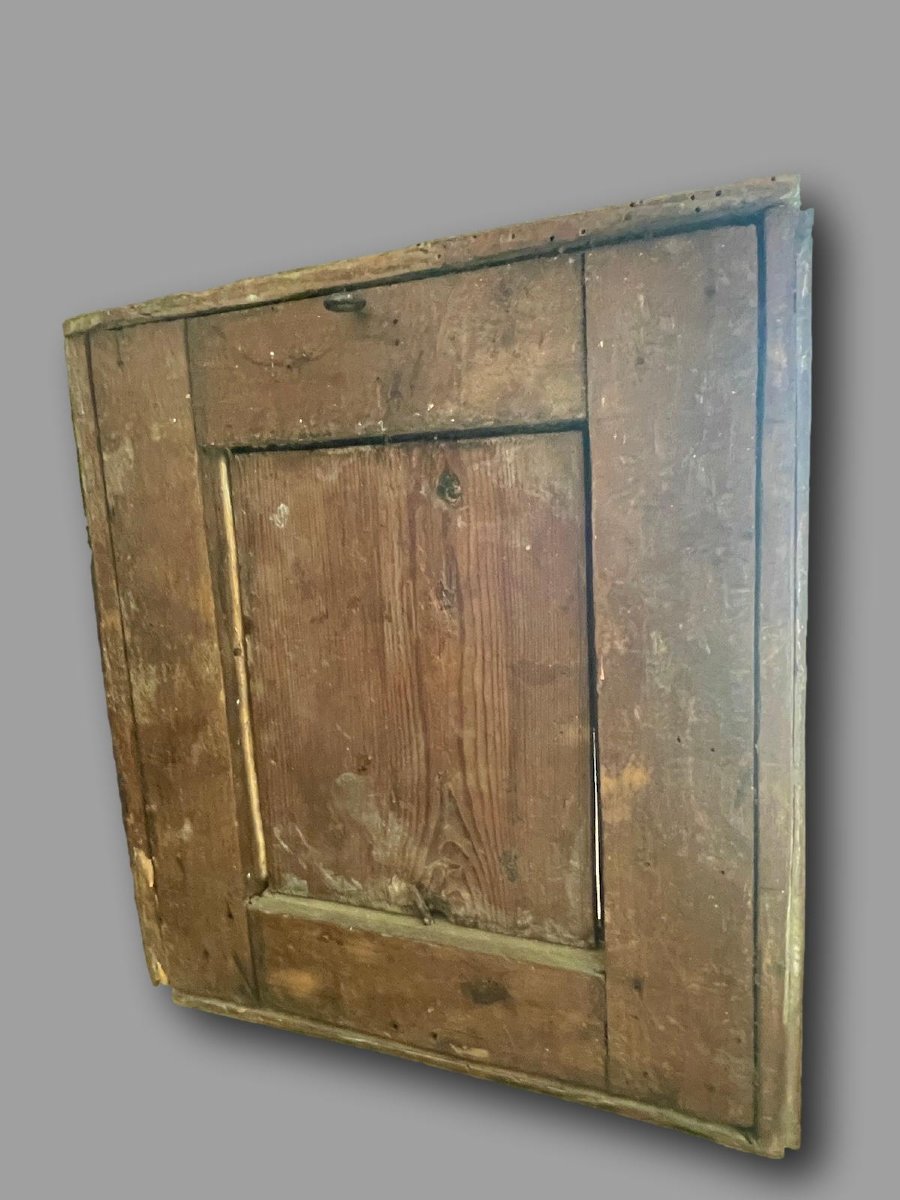
The frame is almost a work of art in its own right.
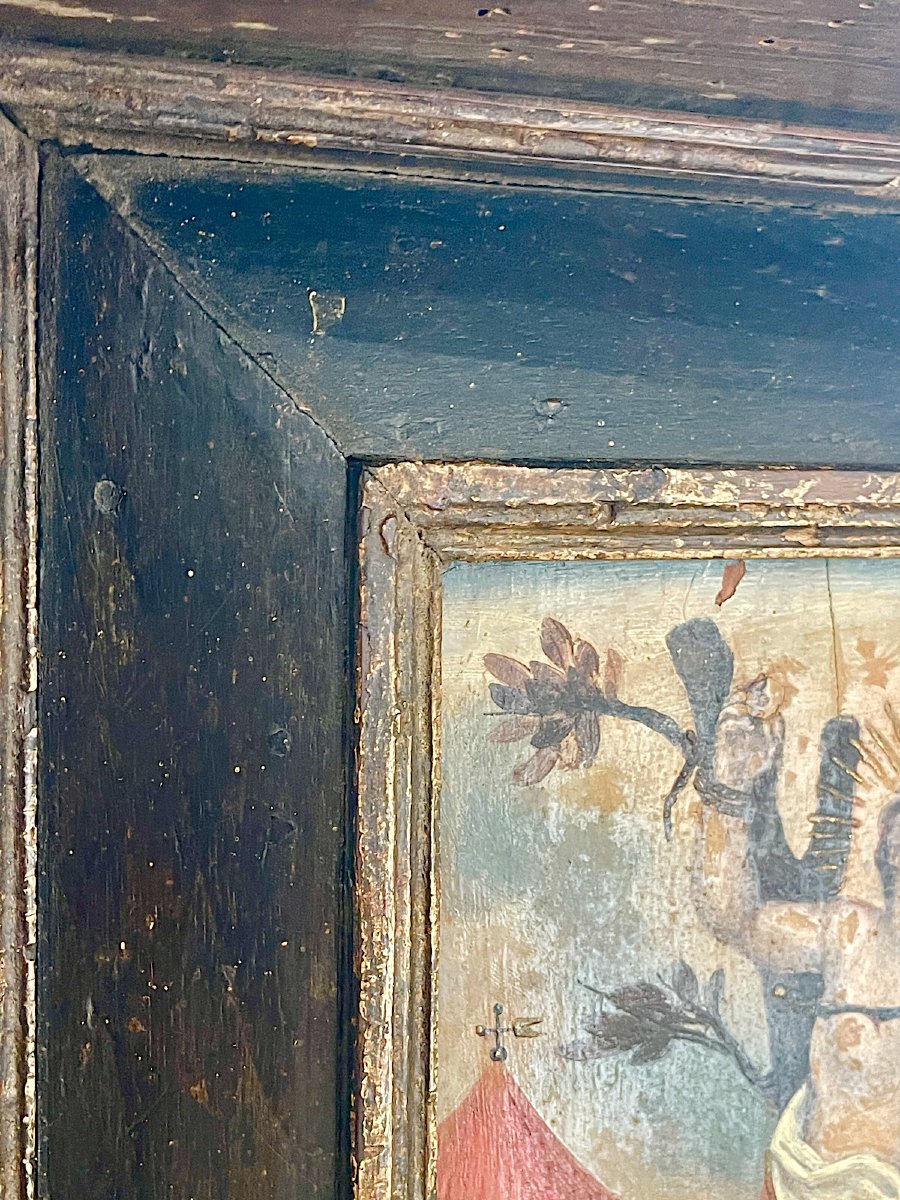
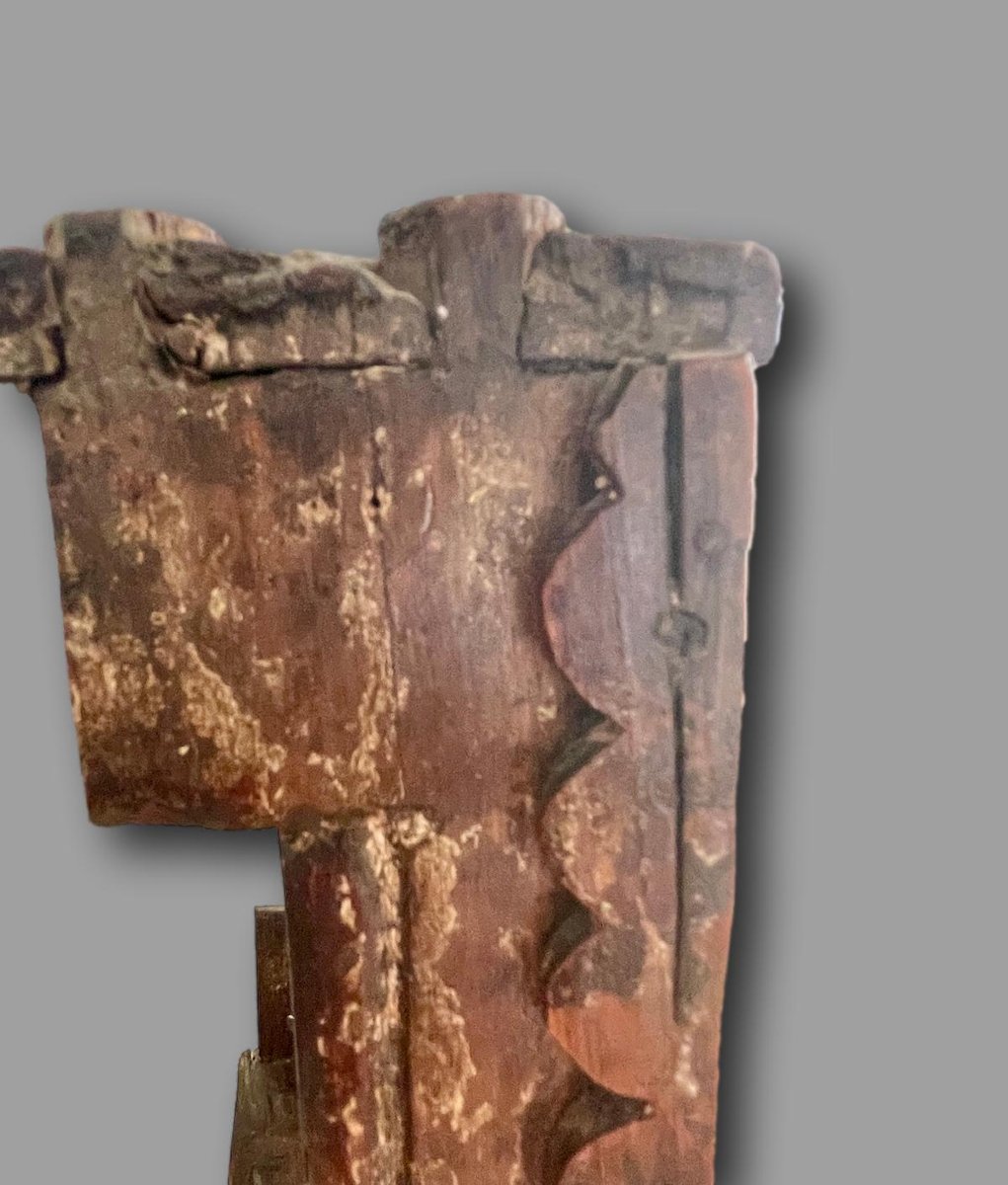
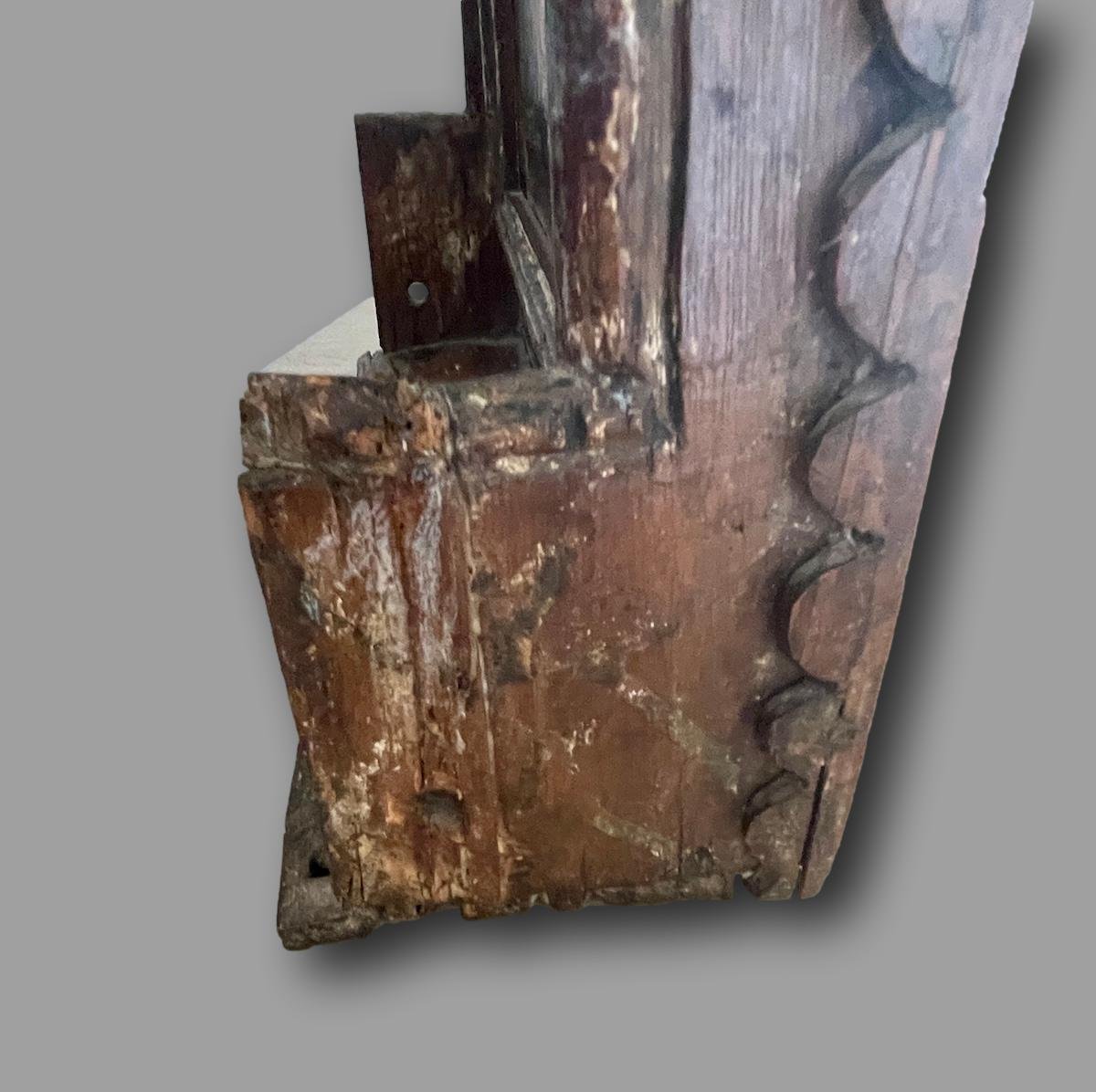
It is constructed from solid wood using traditional joinery techniques and features a projecting cornice, a lower ledge, deeply molded sides, and side ornamentation carved with gadroons or simplified ovolo motifs—reminiscent of certain 17th-century Spanish provincial altarpieces.
The painting is recessed within a black-painted niche, an arrangement that enhances the sense of depth and reinforces the saint's spiritual presence.
This layout directly evokes the small altarpieces found in domestic chapels.
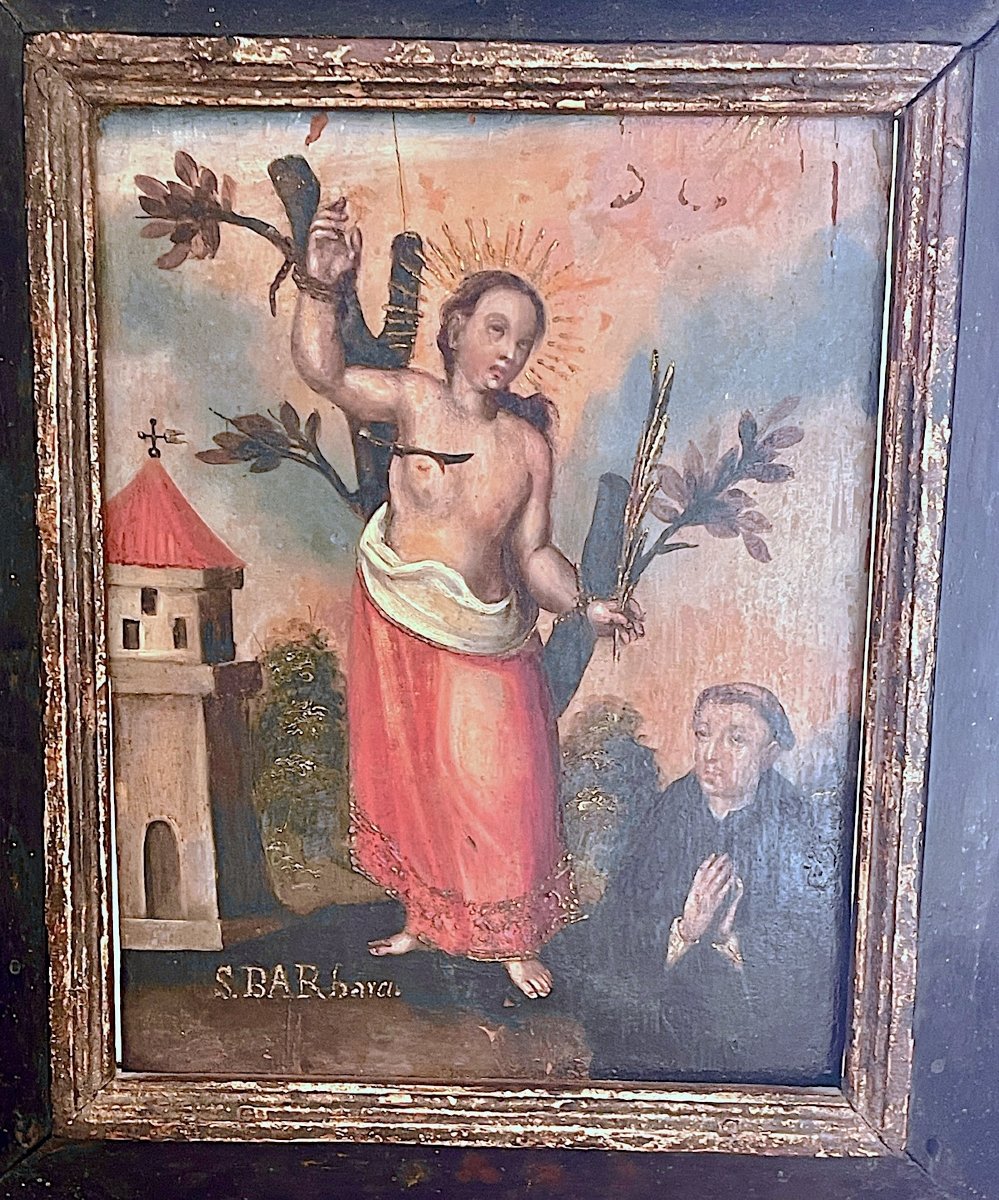
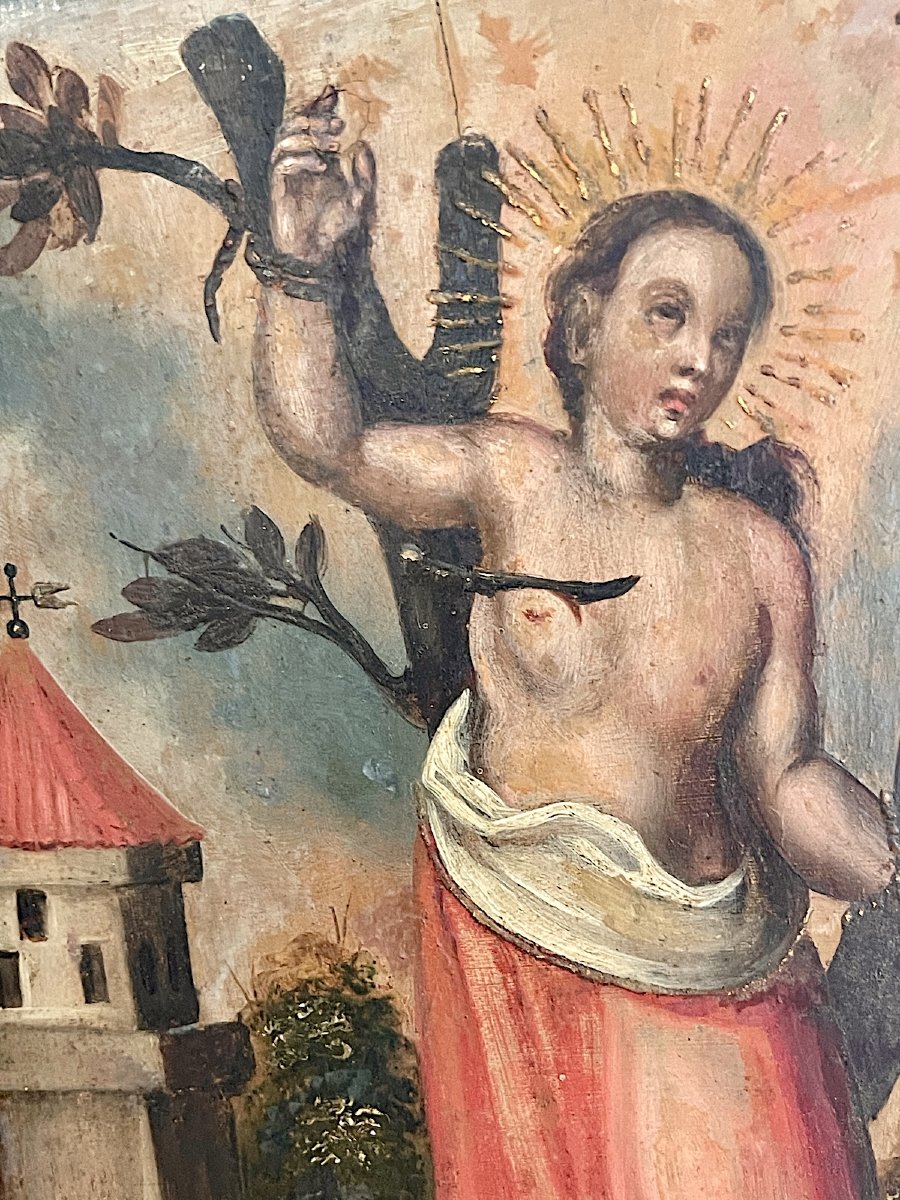
The saint is depicted standing, posed with a slight sway of the hips.
She wears a long red gown overlaid with a white veil tied at the waist.
Her face, radiating great gentleness, is turned toward the heavens in an expression of mystical surrender.
Her radiant halo is rendered in gold leaf.
To her left appears the famous tower with three openings—her primary attribute.
According to tradition, Barbara herself had this third window pierced in honor of the Holy Trinity.
She also holds a palm branch, the universal symbol of martyrdom.
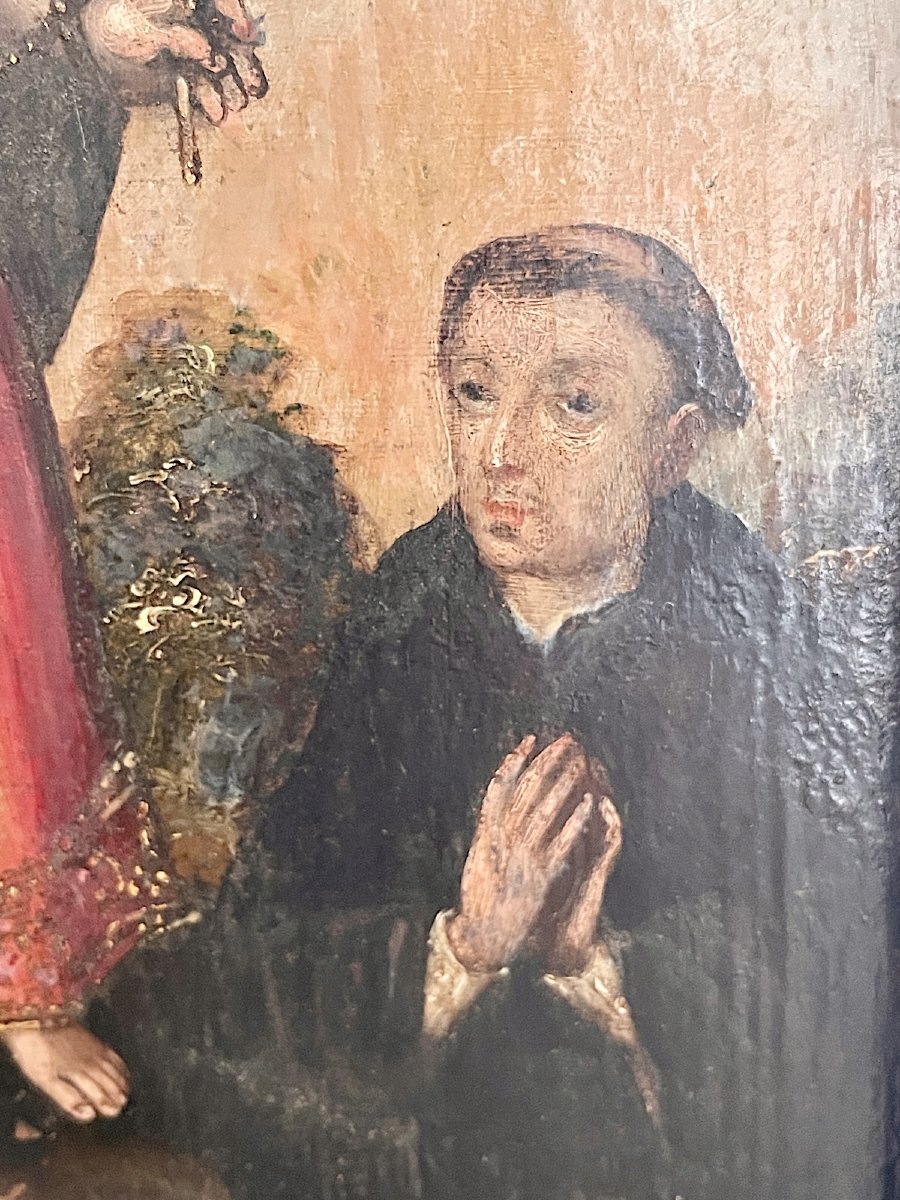
At her feet, a kneeling religious figure is depicted—likely the painting's patron or a friar from a monastic order.
This figure is of particular interest, as it personalizes the scene and suggests a commission intended for a convent or a monastic cell.
Stylistic Analysis
Several elements are particularly noteworthy:
fluid yet perfectly mastered draftsmanship; delicate facial modeling;
flesh tones achieved through successive glazes;
elegantly simplified drapery;
stylized vegetation still reflecting late Mannerism;
sky rendered with broad blue-pink gradations.
The palette is exceptionally harmonious.
The painter contrasts:
the vermilion reds of the dress,
the muted greens of the landscape,
the blue-grays of the sky,
the deep blacks of the donor's cloak,
the golden highlights of the halo.
The overall effect creates an atmosphere of deep reverence.
Technique
Oil on softwood panel.
Traditional light-colored ground.
Gold leaf gilding on the halo.
Executed using fine glazes.
Craquelure consistent with an old painting.
The panel appears stable.
Signs of wear are consistent with centuries of display.
Comparisons
This work can be compared to:
small 17th-century altarpieces from Toledo;
*retablos* from Cuzco;
folk paintings from Puebla;
works produced in Seville convents.
It also shares stylistic traits found in workshops associated with:
Francisco de Zurbarán (in a simplified form),
Juan Sánchez Cotán,
certain Mexican Franciscan workshops.
It is clearly not a work by these masters, but a piece belonging to the same devotional tradition.
Historical Significance
Objects of this type were intended for daily prayer.
Hung in a monastic cell or a private home, it served as a miniature altar.
The deep frame created the impression of a tiny shrine.
Few examples have retained their original frames.
This is now one of the work's key features.
Condition
Good overall condition.
Normal signs of wear.
Minor, old paint lifting.
Possible localized areas of retouching.
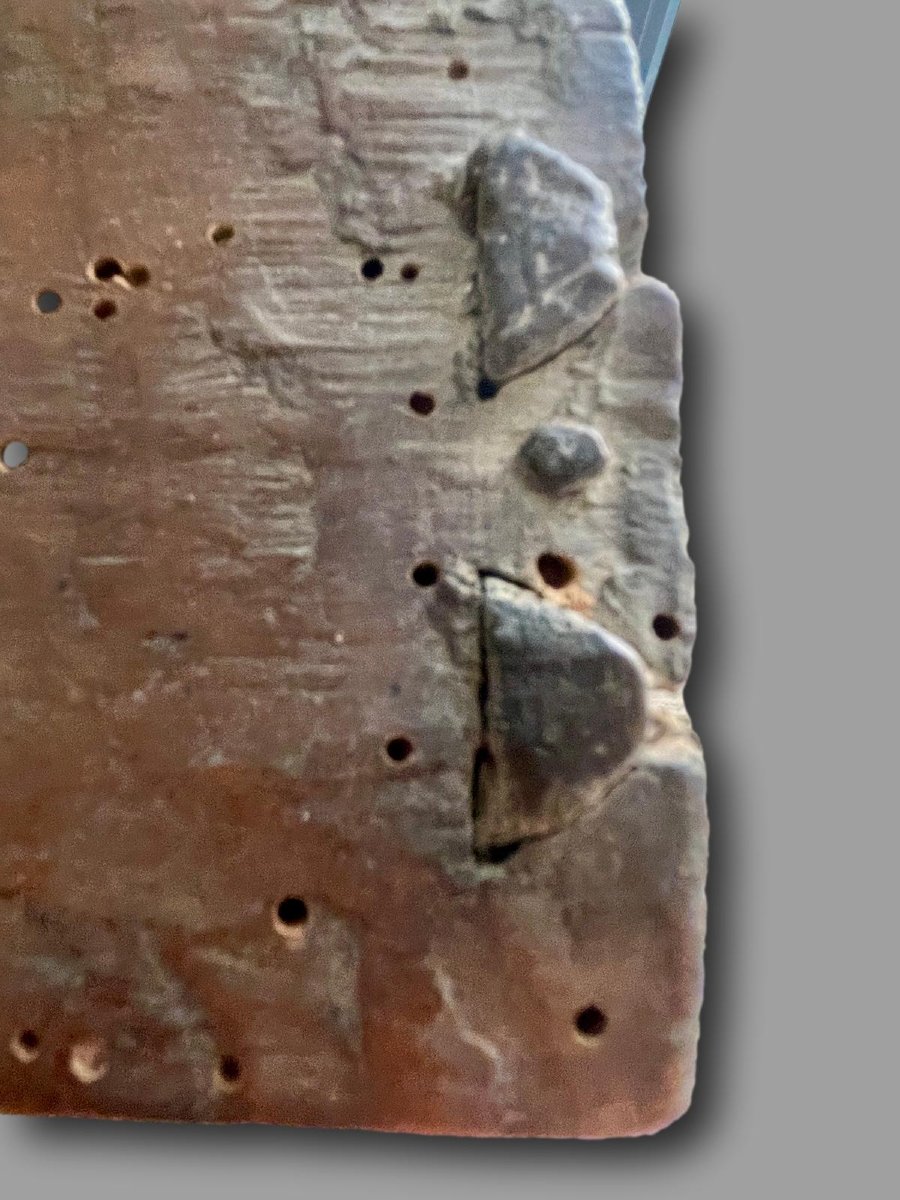
Period frame showing natural signs of age.
An authentic ensemble.
Historical Note
Saint Barbara is one of the great martyr saints of the early centuries of Christianity.
According to tradition, she lived during the 3rd century.
Her father, Dioscorus, confined her in a tower to shield her from the outside world.
Having secretly converted to Christianity, she had a third window opened in the tower to honor the Holy Trinity.
Upon her discovery, she was subjected to torture and subsequently beheaded by her own father.
He was immediately struck by lightning, making Barbara the patron saint against sudden death, lightning, explosions, and professions involving fire.
To this day, she remains the patron saint of artillerymen, firefighters, miners, quarrymen, pyrotechnicians, and military engineers.
Expert Assessment
The primary interest of this work lies less in a prestigious attribution than in its authenticity, its excellent condition, and—above all—the exceptional preservation of its original tabernacle-style frame.
Complete ensembles of this type are becoming increasingly rare on the European market.
Shipping and insurance information:
All our packages are prepared by MBE (Mail Boxes Etc.) Narbonne, ensuring meticulous and highly secure packaging.
Shipment is then handled by UPS, FedEx, or GLS, providing reliable, trackable delivery worldwide.
For any purchase exceeding €2,500, an *ad valorem* insurance policy is automatically taken out with Trans-Pass, offering optimal coverage for your acquisition throughout the entire shipping process.
#SainteBarbe #SantaBarbara #ArtSacré #PeintureAncienne #Retable #Retablo #ÉcoleEspagnole #ArtColonial #XVIIeSiècle #HuileSurBois #PeintureReligieuse #DévotionPrivée #ArteCollection #Proantic #Saints #Collectionneur #HauteÉpoque #PatrimoineReligieux #ArtChrétien #Antiquités
The panel measures 24 × 19.5 cm, while the complete piece—including the frame—measures 39 × 35 cm with a remarkable depth of 10 cm, transforming the work into a true liturgical object intended for private devotion.
The entire piece appears to be completely period-authentic.
The frame is almost a work of art in its own right.
It is constructed from solid wood using traditional joinery techniques and features a projecting cornice, a lower ledge, deeply molded sides, and side ornamentation carved with gadroons or simplified ovolo motifs—reminiscent of certain 17th-century Spanish provincial altarpieces.
The painting is recessed within a black-painted niche, an arrangement that enhances the sense of depth and reinforces the saint's spiritual presence.
This layout directly evokes the small altarpieces found in domestic chapels.
The saint is depicted standing, posed with a slight sway of the hips.
She wears a long red gown overlaid with a white veil tied at the waist.
Her face, radiating great gentleness, is turned toward the heavens in an expression of mystical surrender.
Her radiant halo is rendered in gold leaf.
To her left appears the famous tower with three openings—her primary attribute.
According to tradition, Barbara herself had this third window pierced in honor of the Holy Trinity.
She also holds a palm branch, the universal symbol of martyrdom.
At her feet, a kneeling religious figure is depicted—likely the painting's patron or a friar from a monastic order.
This figure is of particular interest, as it personalizes the scene and suggests a commission intended for a convent or a monastic cell.
Stylistic Analysis
Several elements are particularly noteworthy:
fluid yet perfectly mastered draftsmanship; delicate facial modeling;
flesh tones achieved through successive glazes;
elegantly simplified drapery;
stylized vegetation still reflecting late Mannerism;
sky rendered with broad blue-pink gradations.
The palette is exceptionally harmonious.
The painter contrasts:
the vermilion reds of the dress,
the muted greens of the landscape,
the blue-grays of the sky,
the deep blacks of the donor's cloak,
the golden highlights of the halo.
The overall effect creates an atmosphere of deep reverence.
Technique
Oil on softwood panel.
Traditional light-colored ground.
Gold leaf gilding on the halo.
Executed using fine glazes.
Craquelure consistent with an old painting.
The panel appears stable.
Signs of wear are consistent with centuries of display.
Comparisons
This work can be compared to:
small 17th-century altarpieces from Toledo;
*retablos* from Cuzco;
folk paintings from Puebla;
works produced in Seville convents.
It also shares stylistic traits found in workshops associated with:
Francisco de Zurbarán (in a simplified form),
Juan Sánchez Cotán,
certain Mexican Franciscan workshops.
It is clearly not a work by these masters, but a piece belonging to the same devotional tradition.
Historical Significance
Objects of this type were intended for daily prayer.
Hung in a monastic cell or a private home, it served as a miniature altar.
The deep frame created the impression of a tiny shrine.
Few examples have retained their original frames.
This is now one of the work's key features.
Condition
Good overall condition.
Normal signs of wear.
Minor, old paint lifting.
Possible localized areas of retouching.
Period frame showing natural signs of age.
An authentic ensemble.
Historical Note
Saint Barbara is one of the great martyr saints of the early centuries of Christianity.
According to tradition, she lived during the 3rd century.
Her father, Dioscorus, confined her in a tower to shield her from the outside world.
Having secretly converted to Christianity, she had a third window opened in the tower to honor the Holy Trinity.
Upon her discovery, she was subjected to torture and subsequently beheaded by her own father.
He was immediately struck by lightning, making Barbara the patron saint against sudden death, lightning, explosions, and professions involving fire.
To this day, she remains the patron saint of artillerymen, firefighters, miners, quarrymen, pyrotechnicians, and military engineers.
Expert Assessment
The primary interest of this work lies less in a prestigious attribution than in its authenticity, its excellent condition, and—above all—the exceptional preservation of its original tabernacle-style frame.
Complete ensembles of this type are becoming increasingly rare on the European market.
Shipping and insurance information:
All our packages are prepared by MBE (Mail Boxes Etc.) Narbonne, ensuring meticulous and highly secure packaging.
Shipment is then handled by UPS, FedEx, or GLS, providing reliable, trackable delivery worldwide.
For any purchase exceeding €2,500, an *ad valorem* insurance policy is automatically taken out with Trans-Pass, offering optimal coverage for your acquisition throughout the entire shipping process.
#SainteBarbe #SantaBarbara #ArtSacré #PeintureAncienne #Retable #Retablo #ÉcoleEspagnole #ArtColonial #XVIIeSiècle #HuileSurBois #PeintureReligieuse #DévotionPrivée #ArteCollection #Proantic #Saints #Collectionneur #HauteÉpoque #PatrimoineReligieux #ArtChrétien #Antiquités
2 750 €
Period: 17th century
Style: Renaissance, Louis 13th
Condition: Good condition
Material: Oil painting on wood
Width: 35 cm
Height: 39 cm
Depth: 10 cm
Reference (ID): 1786931
Availability: In stock
Print